Stay Ahead, Stay ONMINE

Four things we’d need to put data centers in space

MIT Technology Review Explains: Let our writers untangle the complex, messy world of technology to help you understand what’s coming next. You can read more from the series here. In January, Elon Musk’s SpaceX filed an application with the US Federal Communications Commission to launch up to one million data centers into Earth’s orbit. The goal? To fully unleash the potential of AI without triggering an environmental crisis on Earth. But could it work? SpaceX is the latest in a string of high-tech companies extolling the potential of orbital computing infrastructure. Last year, Amazon founder Jeff Bezos said that the tech industry will move toward large-scale computing in space. Google has plans to loft data-crunching satellites, aiming to launch a test constellation of 80 as early as next year. And last November Starcloud, a startup based in Washington State, launched a satellite fitted with a high-performance Nvidia H100 GPU, marking the first orbital test of an advanced AI chip. The company envisions orbiting data centers as large as those on Earth by 2030. Proponents believe that putting data centers in space makes sense. The current AI boom is straining energy grids and adding to the demand for water, which is needed to cool the computers. Communities in the vicinity of large-scale data centers worry about increasing prices for those resources as a result of the growing demand, among other issues. In space, advocates say, the water and energy problems would be solved. In constantly illuminated sun-synchronous orbits, space-borne data centers would have uninterrupted access to solar power. At the same time, the excess heat they produce would be easily expelled into the cold vacuum of space. And with the cost of space launches decreasing, and mega-rockets such as SpaceX’s Starship promising to push prices even lower, there could be a point at which moving the world’s data centers into space makes sound business sense. Detractors, on the other hand, tell a different story and point to a variety of technological hurdles, though some say it’s possible they may be surmountable in the not-so-distant future. Here are four of the must-haves we’d need to make space-based data centers a reality.  A way to carry away heat  AI data centers produce a lot of heat. Space might seem like a great place to dispel that heat without using up massive amounts of water. But it’s not so simple. To get the power needed to run 24-7, a space-based data center would have to be in a constantly illuminated orbit, circling the planet from pole to pole, and never hide in Earth’s shadow. And in that orbit, the temperature of the equipment would never drop below 80 °C, which is way too hot for electronics to operate safely in the long term.  Getting the heat out of such a system is surprisingly challenging. “Thermal management and cooling in space is generally a huge problem,” says Lilly Eichinger, CEO of the Austrian space tech startup Satellives. On Earth, heat dissipates mostly through the natural process of convection, which relies on the movement of gases and liquids like air and water. In the vacuum of space, heat has to be removed through the far less efficient process of radiation. Safely removing the heat produced by the computers, as well as what’s absorbed from the sun, requires large radiative surfaces. The bulkier the satellite, the harder it is to send all the heat inside it out into space. But Yves Durand, former director of technology at the European aerospace giant Thales Alenia Space, says that technology already exists to tackle the problem. The company previously developed a system for large telecommunications satellites that can pipe refrigerant fluid through a network of tubing using a mechanical pump, ultimately transferring heat from within a spacecraft to radiators on the exterior. Durand led a 2024 feasibility study on space-based data centers, which found that although challenges exist, it should be possible for Europe to put gigawatt-scale data centers (on par with the largest Earthbound facilities) into orbit before 2050. These would be considerably larger than those envisioned by SpaceX, featuring solar arrays hundreds of meters in size—larger than the International Space Station. Computer chips that can withstand a radiation onslaught The space around Earth is constantly battered by cosmic particles and lashed by solar radiation. On Earth’s surface, humans and their electronic devices are protected from this corrosive soup of charged particles by the planet’s atmosphere and magnetosphere. But the farther away from Earth you venture, the weaker that protection becomes. Studies show that aircraft crews have a higher risk of developing cancer because of their frequent exposure to high radiation at cruising altitude, where the atmosphere is thin and less protective. Electronics in space are at risk of three types of problems caused by high radiation levels, says Ken Mai, a principal systems scientist in electrical and computer engineering at Carnegie Mellon University. Phenomena known as single-event upsets can cause bit flips and corrupt stored data when charged particles hit chips and memory devices. Over time, electronics in space accumulate damage from ionizing radiation that degrades their performance. And sometimes a charged particle can strike the component in a way that physically displaces atoms on the chip, creating permanent damage, Mai explains. Traditionally, computers launched to space had to undergo years of testing and were specifically designed to withstand the intense radiation present in Earth’s orbit. These space-hardened electronics are much more expensive, though, and their performance is also years behind the state-of-the-art devices for Earth-based computing. Launching conventional chips is a gamble. But Durand says cutting-edge computer chips use technologies that are by default more resistant to radiation than past systems. And in mid-March, Nvidia touted hardware, including a new GPU, that is “bringing AI compute to orbital data centers.”  Nvidia’s head of edge AI marketing, Chen Su, told MIT Technology Review, that “Nvidia systems are inherently commercial off the shelf, with radiation resilience achieved at the system level rather than through radiation‑hardened silicon alone.” He added that satellite makers increase the chips’ resiliency with the help of shielding, advanced software for error detection, and architectures that combine the consumer-grade devices with bespoke, hardened technologies. Still, Mai says that the data-crunching chips are only one issue. The data centers would also need memory and storage devices, both of which are vulnerable to damage by excessive radiation. And operators would need the ability to swap things out or adapt when issues arise. The feasibility and affordability of using robots or astronaut missions for maintenance is a major question mark hanging over the idea of large-scale orbiting data centers. “You not only need to throw up a data center to space that meets your current needs; you need redundancy, extra parts, and reconfigurability, so when stuff breaks, you can just change your configuration and continue working,” says Mai. “It’s a very challenging problem because on one hand you have free energy and power in space, but there are a lot of disadvantages. It’s quite possible that those problems will outweigh the advantages that you get from putting a data center into space.” In addition to the need for regular maintenance, there’s also the potential for catastrophic loss. During periods of intense space weather, satellites can be flooded with enough radiation to kill all their electronics. The sun has just passed the most active phase of its 11-year cycle with relatively little impact on satellites. Still, experts warn that since the space age began, the planet has not experienced the worst the sun is capable of. Many doubt whether the low-cost new space systems that dominate Earth’s orbits today are prepared for that. A plan to dodge space debris Both large-scale orbiting data centers such as those envisioned by Thales Alenia Space and the mega-constellations of smaller satellites as proposed by SpaceX give a headache to space sustainability experts. The space around Earth is already quite crowded with satellites. Starlink satellites alone perform hundreds of thousands of collision avoidance maneuvers every year to dodge debris and other spacecraft. The more stuff in space, the higher the likelihood of a devastating collision that would clutter the orbit with thousands of dangerous fragments. Large structures with hundreds of square meters of solar arrays would quickly suffer damage from small pieces of space debris and meteorites, which would over time degrade the performance of their solar panels and create more debris in orbit. Operating one million satellites in low Earth orbit, the region of space at the altitude of up to 2,000 kilometers, might be impossible to do safely unless all satellites in that area are part of the same network so they can communicate effectively to maneuver around each other, Greg Vialle, the founder of the orbital recycling startup Lunexus Space, told MIT Technology Review. “You can fit roughly four to five thousand satellites in one orbital shell,” Vialle says. “If you count all the shells in low Earth orbit, you get to a number of around 240,000 satellites maximum.” And spacecraft must be able to pass each other at a safe distance to avoid collisions, he says.  “You also need to be able to get stuff up to higher orbits and back down to de-orbit,” he adds. “So you need to have gaps of at least 10 kilometers between the satellites to do that safely. Mega-constellations like Starlink can be packed more tightly because the satellites communicate with each other. But you can’t have one million satellites around Earth unless it’s a monopoly.” On top of that, Starlink would likely want to regularly upgrade its orbiting data centers with more modern technology. Replacing a million satellites perhaps every five years would mean even more orbital traffic—and it could increase the rate of debris reentry into Earth’s atmosphere from around three or four pieces of junk a day to about one every three minutes, according to a group of astronomers who filed objections against SpaceX’s FCC application. Some scientists are concerned that reentering debris could damage the ozone layer and alter Earth’s thermal balance.  Economical launch and assembly The longer hardware survives in orbit, the better the return on investment. But for orbital data centers to make economic sense, companies will have to find a relatively cheap way to get that hardware in orbit. SpaceX is betting on its upcoming Starship mega-rocket, which will be able to carry up to six times as much payload as the current workhorse, Falcon 9. The Thales Alenia Space study concluded that if Europe were to build its own orbital data centers, it would have to develop a similarly potent launcher.  But launch is only part of the equation. A large-scale orbital data center won’t fit in a rocket—even a mega-rocket. It will need to be assembled in orbit. And that will likely require advanced robotic systems that do not exist yet. Various companies have conducted Earth-based tests with precursors of such systems, but they are still far from real-world use. Durand says that in the short term, smaller-scale data centers are likely to establish themselves as an integral part of the orbital infrastructure, by processing images from Earth-observing satellites directly in space without having to send them to Earth. That would be a huge help for companies selling insights from space, as many of these data sets are extremely large, and competition for opportunities to downlink them to Earth for processing via ground stations is growing. “The good thing with orbital data centers is that you can start with small servers and gradually increase and build up larger data centers,” says Durand. “You can use modularity. You can learn little by little and gradually develop industrial capacity in space. We have all the technology, and the demand for space-based data processing infrastructure is huge, so it makes sense to think about it.” Smaller facilities probably won’t do much to offset the strain that terrestrial data centers are placing on the planet’s water and electricity, though. That vision of the future might take decades to come to fruition, some critics think—if it even gets off the ground at all. 
MIT Technology Review Explains: Let our writers untangle the complex, messy world of technology to help you understand what’s coming next. You can read more from the series here.

In January, Elon Musk’s SpaceX filed an application with the US Federal Communications Commission to launch up to one million data centers into Earth’s orbit. The goal? To fully unleash the potential of AI without triggering an environmental crisis on Earth. But could it work?

SpaceX is the latest in a string of high-tech companies extolling the potential of orbital computing infrastructure. Last year, Amazon founder Jeff Bezos said that the tech industry will move toward large-scale computing in space. Google has plans to loft data-crunching satellites, aiming to launch a test constellation of 80 as early as next year. And last November Starcloud, a startup based in Washington State, launched a satellite fitted with a high-performance Nvidia H100 GPU, marking the first orbital test of an advanced AI chip. The company envisions orbiting data centers as large as those on Earth by 2030.

Proponents believe that putting data centers in space makes sense. The current AI boom is straining energy grids and adding to the demand for water, which is needed to cool the computers. Communities in the vicinity of large-scale data centers worry about increasing prices for those resources as a result of the growing demand, among other issues.

In space, advocates say, the water and energy problems would be solved. In constantly illuminated sun-synchronous orbits, space-borne data centers would have uninterrupted access to solar power. At the same time, the excess heat they produce would be easily expelled into the cold vacuum of space. And with the cost of space launches decreasing, and mega-rockets such as SpaceX’s Starship promising to push prices even lower, there could be a point at which moving the world’s data centers into space makes sound business sense. Detractors, on the other hand, tell a different story and point to a variety of technological hurdles, though some say it’s possible they may be surmountable in the not-so-distant future. Here are four of the must-haves we’d need to make space-based data centers a reality. 

A way to carry away heat 

AI data centers produce a lot of heat. Space might seem like a great place to dispel that heat without using up massive amounts of water. But it’s not so simple. To get the power needed to run 24-7, a space-based data center would have to be in a constantly illuminated orbit, circling the planet from pole to pole, and never hide in Earth’s shadow. And in that orbit, the temperature of the equipment would never drop below 80 °C, which is way too hot for electronics to operate safely in the long term. 

Getting the heat out of such a system is surprisingly challenging. “Thermal management and cooling in space is generally a huge problem,” says Lilly Eichinger, CEO of the Austrian space tech startup Satellives.

On Earth, heat dissipates mostly through the natural process of convection, which relies on the movement of gases and liquids like air and water. In the vacuum of space, heat has to be removed through the far less efficient process of radiation. Safely removing the heat produced by the computers, as well as what’s absorbed from the sun, requires large radiative surfaces. The bulkier the satellite, the harder it is to send all the heat inside it out into space.

But Yves Durand, former director of technology at the European aerospace giant Thales Alenia Space, says that technology already exists to tackle the problem.

The company previously developed a system for large telecommunications satellites that can pipe refrigerant fluid through a network of tubing using a mechanical pump, ultimately transferring heat from within a spacecraft to radiators on the exterior. Durand led a 2024 feasibility study on space-based data centers, which found that although challenges exist, it should be possible for Europe to put gigawatt-scale data centers (on par with the largest Earthbound facilities) into orbit before 2050. These would be considerably larger than those envisioned by SpaceX, featuring solar arrays hundreds of meters in size—larger than the International Space Station.

Computer chips that can withstand a radiation onslaught

The space around Earth is constantly battered by cosmic particles and lashed by solar radiation. On Earth’s surface, humans and their electronic devices are protected from this corrosive soup of charged particles by the planet’s atmosphere and magnetosphere. But the farther away from Earth you venture, the weaker that protection becomes. Studies show that aircraft crews have a higher risk of developing cancer because of their frequent exposure to high radiation at cruising altitude, where the atmosphere is thin and less protective.

Electronics in space are at risk of three types of problems caused by high radiation levels, says Ken Mai, a principal systems scientist in electrical and computer engineering at Carnegie Mellon University. Phenomena known as single-event upsets can cause bit flips and corrupt stored data when charged particles hit chips and memory devices. Over time, electronics in space accumulate damage from ionizing radiation that degrades their performance. And sometimes a charged particle can strike the component in a way that physically displaces atoms on the chip, creating permanent damage, Mai explains.

Traditionally, computers launched to space had to undergo years of testing and were specifically designed to withstand the intense radiation present in Earth’s orbit. These space-hardened electronics are much more expensive, though, and their performance is also years behind the state-of-the-art devices for Earth-based computing. Launching conventional chips is a gamble. But Durand says cutting-edge computer chips use technologies that are by default more resistant to radiation than past systems. And in mid-March, Nvidia touted hardware, including a new GPU, that is “bringing AI compute to orbital data centers.” 

Nvidia’s head of edge AI marketing, Chen Su, told MIT Technology Review, that “Nvidia systems are inherently commercial off the shelf, with radiation resilience achieved at the system level rather than through radiation‑hardened silicon alone.” He added that satellite makers increase the chips’ resiliency with the help of shielding, advanced software for error detection, and architectures that combine the consumer-grade devices with bespoke, hardened technologies.

Still, Mai says that the data-crunching chips are only one issue. The data centers would also need memory and storage devices, both of which are vulnerable to damage by excessive radiation. And operators would need the ability to swap things out or adapt when issues arise. The feasibility and affordability of using robots or astronaut missions for maintenance is a major question mark hanging over the idea of large-scale orbiting data centers.

“You not only need to throw up a data center to space that meets your current needs; you need redundancy, extra parts, and reconfigurability, so when stuff breaks, you can just change your configuration and continue working,” says Mai. “It’s a very challenging problem because on one hand you have free energy and power in space, but there are a lot of disadvantages. It’s quite possible that those problems will outweigh the advantages that you get from putting a data center into space.”

In addition to the need for regular maintenance, there’s also the potential for catastrophic loss. During periods of intense space weather, satellites can be flooded with enough radiation to kill all their electronics. The sun has just passed the most active phase of its 11-year cycle with relatively little impact on satellites. Still, experts warn that since the space age began, the planet has not experienced the worst the sun is capable of. Many doubt whether the low-cost new space systems that dominate Earth’s orbits today are prepared for that.

A plan to dodge space debris

Both large-scale orbiting data centers such as those envisioned by Thales Alenia Space and the mega-constellations of smaller satellites as proposed by SpaceX give a headache to space sustainability experts. The space around Earth is already quite crowded with satellites. Starlink satellites alone perform hundreds of thousands of collision avoidance maneuvers every year to dodge debris and other spacecraft. The more stuff in space, the higher the likelihood of a devastating collision that would clutter the orbit with thousands of dangerous fragments.

Large structures with hundreds of square meters of solar arrays would quickly suffer damage from small pieces of space debris and meteorites, which would over time degrade the performance of their solar panels and create more debris in orbit. Operating one million satellites in low Earth orbit, the region of space at the altitude of up to 2,000 kilometers, might be impossible to do safely unless all satellites in that area are part of the same network so they can communicate effectively to maneuver around each other, Greg Vialle, the founder of the orbital recycling startup Lunexus Space, told MIT Technology Review.

“You can fit roughly four to five thousand satellites in one orbital shell,” Vialle says. “If you count all the shells in low Earth orbit, you get to a number of around 240,000 satellites maximum.”

And spacecraft must be able to pass each other at a safe distance to avoid collisions, he says. 

“You also need to be able to get stuff up to higher orbits and back down to de-orbit,” he adds. “So you need to have gaps of at least 10 kilometers between the satellites to do that safely. Mega-constellations like Starlink can be packed more tightly because the satellites communicate with each other. But you can’t have one million satellites around Earth unless it’s a monopoly.”

On top of that, Starlink would likely want to regularly upgrade its orbiting data centers with more modern technology. Replacing a million satellites perhaps every five years would mean even more orbital traffic—and it could increase the rate of debris reentry into Earth’s atmosphere from around three or four pieces of junk a day to about one every three minutes, according to a group of astronomers who filed objections against SpaceX’s FCC application. Some scientists are concerned that reentering debris could damage the ozone layer and alter Earth’s thermal balance. 

Economical launch and assembly

The longer hardware survives in orbit, the better the return on investment. But for orbital data centers to make economic sense, companies will have to find a relatively cheap way to get that hardware in orbit. SpaceX is betting on its upcoming Starship mega-rocket, which will be able to carry up to six times as much payload as the current workhorse, Falcon 9. The Thales Alenia Space study concluded that if Europe were to build its own orbital data centers, it would have to develop a similarly potent launcher. 

But launch is only part of the equation. A large-scale orbital data center won’t fit in a rocket—even a mega-rocket. It will need to be assembled in orbit. And that will likely require advanced robotic systems that do not exist yet. Various companies have conducted Earth-based tests with precursors of such systems, but they are still far from real-world use.

Durand says that in the short term, smaller-scale data centers are likely to establish themselves as an integral part of the orbital infrastructure, by processing images from Earth-observing satellites directly in space without having to send them to Earth. That would be a huge help for companies selling insights from space, as many of these data sets are extremely large, and competition for opportunities to downlink them to Earth for processing via ground stations is growing.

“The good thing with orbital data centers is that you can start with small servers and gradually increase and build up larger data centers,” says Durand. “You can use modularity. You can learn little by little and gradually develop industrial capacity in space. We have all the technology, and the demand for space-based data processing infrastructure is huge, so it makes sense to think about it.”

Smaller facilities probably won’t do much to offset the strain that terrestrial data centers are placing on the planet’s water and electricity, though. That vision of the future might take decades to come to fruition, some critics think—if it even gets off the ground at all. 

Shape
Shape
Stay Ahead

Explore More Insights

Stay ahead with more perspectives on cutting-edge power, infrastructure, energy,  bitcoin and AI solutions. Explore these articles to uncover strategies and insights shaping the future of industries.

Shape

NetScaler admins told to patch critical zero-days in ADC and Gateway now

NetScaler appliances are an important part of many enterprise networks, providing VPN and remote access, load balancing and other application delivery services. Citrix is tracking the two exploited vulnerabilities as CVE-2026-88771 and CVE-2026-88772. It has released fixes in NetScaler ADC and Gateway 14.1-73.37 and later, 13.1-64.23 and later, with corresponding

Read More »

TotalEnergies takes FID for Absheron full field development offshore Azerbaijan

TotalEnergies has taken final investment decision (FID) for the full field development of Absheron gas and condensate field in the Caspian Sea offshore Azerbaijan. Absheron field, which lies 100 km southeast of Baku, is estimated to hold about 140 bcm of recoverable gas reserves, TotalEnergies said in a release Sept. 26. The first development phase, with a production capacity of 1.5 bcmy of gas and 12,000 b/d of condensate, came on stream in 2023. Absheron Full Field development is expected to increase overall field production to 6 bcmy and 47,000 b/d of condensate. Startup is expected in 2029. Gas will be supplied to the domestic market and exported to Türkiye through the existing gas infrastructure connecting Azerbaijan to the European gas market. Gas will be produced by 4 subsea wells, transported to shore through a subsea pipeline equipped with advanced automation solutions and processed in a new onshore plant, fully electrified and designed to minimize energy consumption and greenhouse gas emissions, TotalEnergies said. The scope 1 & 2 greenhouse gas emissions intensity of the project is below 4 kg CO2e/boe. TotalEnergies is operator of the project with 35% interest. Partners are State Oil Co. of the Republic of Azerbaijan (SOCAR, 35%) and XRG, a unit of ADNOC (30%).  

Read More »

Trump Administration Mitigates Blackout Risks by Keeping Colorado Coal Plant Online

WASHINGTON—U.S. Secretary of Energy Chris Wright today issued an emergency order to keep a Colorado coal plant operational to ensure Americans maintain access to affordable, reliable, and secure electricity. The order directs Tri-State Generation and Transmission Association (Tri-State), Southwest Power Pool (SPP), Platte River Power Authority, Salt River Project, PacifiCorp, and Public Service Company of Colorado to take all measures necessary to ensure that Unit 1 at the Craig Station in Craig, Colorado is available to operate. For the duration of this Order, SPP is directed to take every step to employ economic dispatch of Craig Unit 1 to mitigate the risk of blackouts and minimize costs to taxpayers. Unit 1 of the coal plant was originally scheduled to shut down at the end of 2025, but in December 2025 and twice in 2026, Secretary Wright issued emergency orders directing Tri-State and the co-owners to ensure that Craig Unit 1 remains available to operate. “For over the past decade, state and federal leaders have harmed Coloradans’ wallets and energy security with efforts to force reliable generation off the grid,” said Secretary Wright. “The Trump Administration will continue taking action to ensure we don’t lose critical generation sources. Americans deserve access to affordable, reliable, and secure energy to power their homes all the time, regardless of whether the wind is blowing or the sun is shining.” Thanks to President Trump’s leadership, coal generating plants across the country are being saved from premature retirement. For example, since 2025 more than 17 gigawatts of coal power electricity generation were saved from going offline. The availability of Craig Unit 1 to operate will continue to be an asset to maintain reliability in the Western Electricity Coordinating Council (WECC) Rocky Mountain region and is necessary to address elevated reliability risks in the region during atypical weather and reduce

Read More »

MOL wraps repairs on major unit at Hungarian refinery

Hungary’s MOL Group has completed repairs to a main crude processing unit that suffered major damage resulting from a late-2025 fire at its 8.1-million tonnes/year (163,000-b/cd) refinery along the Danube River in Százhalombatta, near Budapest. Repair-related construction works amounting to 18 billion forints (Hun.; US$57.1 million) were completed as of Sept. 22 on the refinery’s atmospheric-vacuum distillation (AV-3) unit, paving the way for the unit’s gradual restart once construction equipment is removed, MOL said in a release. Completed according to schedule, the year-long comprehensive repair project entailed the demolition and rebuilding of the unit’s reinforced concrete structure, as well as restoration works on all unit equipment impacted by the fire, including related control and electrical systems, the operator said. Alongside mechanical repairs, the project also included: Installation of 27 new, high-capacity pumps. Replacement of 8 km of piping. Installation of 100 km of electrical cables. With construction activities now wrapped, MOL said the refinery is preparing for the unit’s gradual restart following a series of next steps that will include: Flushing of unidentified unit systems. Executing pressure tests. Performing functional tests of the process control and safety equipment. Connecting of all associated auxiliary power supplies. Coordinating operation of the repaired AV-3 unit with associated plants of the refinery. Once all preliminary restart activities and complementary operational safety inspections and tests have been completed, crude throughputs will be reintroduced into the unit for phased restart of production activities beginning in October, MOL said. Requisite repairs to AV-3 follow a fire that broke out in the unit on Oct. 20, 2025, which led to a temporary shutdown of the refinery and a 50% drop in crude distillation capacity at the site following the incident, according to the operator’s 2025 annual report to investors. While plants not affected by the fire were quickly

Read More »

A volatile week for crude ends with lower prices

Oil, fundamental analysis Several factors whipsawed crude prices this week with WTI seeing a $12/bbl  Hi/Lo spread. Varying accounts of flowing oil, ongoing infrastructure attacks, and sparse diplomatic efforts provided a great deal of market uncertainty. WTI’s High was Monday’s $101.10/bbl for October while the Low was Wednesday’s $88.70. October Brent crude hit its High on Thursday at $108.25/bbl with the low on Tuesday at $97.35. WTI is down on the week while Brent is essentially flat. The WTI/Brent spread has blown out to $11.70. Analysts attribute this anomaly to a possible US diesel export ban making the domestic crude less desirable. Saudi Arabia reported that flows in their East-West pipeline have resumed. However, Houthi rebels continue their strikes against Saudi Arabia which now includes attacks near Riyadh. The Yemeni-based rebel group has also targeted Saudi Aramco facilities at the port of Yanbu, the terminus for the East-West oil pipeline where it is loaded for export. The Kingdom’s military has been able to intercept several missiles launched by the Houthis. France has promised to send varied aid to help protect this key port and refinery there. Both the Saudis and Oman have appealed to Washington to keep the economic and military pressure on Iran even if the Iranians wish to start diplomatic talks again. Qatar is proposing that negotiations begin again as soon as next week in Oman. Some sources are indicating that Iran would consider opening the Strait of Hormuz if the US would rollback the naval blockade. This despite the strong words of defiance spoken by the leaders of both Iran and Israel at the UN this week. Even with the continuing attacks, an estimated 5.5 million b/d of oil has been moving out of Yanbu and from UAE’s Fujairah port in the Gulf of Oman. However, that

Read More »

DOE Releases Up to $41M Lab Call to Accelerate Commercialization of American Energy Technologies

WASHINGTON, D.C. — The U.S. Department of Energy (DOE) Office of Technology Commercialization (OTC) today announced the opening of the Fiscal Year 2026 and Fiscal Year 2027 Technology Commercialization Fund (TCF) Core Laboratory Infrastructure for Market Readiness (CLIMR) Technology-Specific Topics lab call, making up to $41 million available to advance the commercialization of promising technologies in five priority areas. The final funding amount is based on the Fiscal Year (FY) 2026 budget and is subject to FY 2027 Congressional appropriations.   The lab call creates new opportunities for industry, entrepreneurs, investors, universities, nonprofits, and other organizations to engage with DOE National Laboratories, plants, and sites and help move DOE technologies from research and development toward the marketplace. National Laboratories can submit proposals to DOE, and organizations interested in participating as potential project partners can add their information to the Teaming Partner List.  The CLIMR lab calls serve the TCF mission by strengthening the lab-to-market pipeline, fostering collaboration, and ensuring that federally funded research delivers tangible benefits to the nation’s economy and energy security.    This lab call advances President Trump’s energy dominance agenda by leveraging American science and innovation to strengthen U.S. economic competitiveness and national security. Connecting DOE technologies with private-sector expertise, capital, manufacturing capabilities, and market insight helps accelerate commercialization, strengthen domestic industry, and ensure that more American innovations are developed and deployed in the United States.  “President Trump’s agenda is about ensuring America leads not only in producing energy, but also in developing and commercializing the technologies that will strengthen our economy and national security,” said DOE Chief Commercialization Officer and Director of the Office of Technology Commercialization Anthony Pugliese. “This lab call is an opportunity for American companies, entrepreneurs, investors, and innovators to work alongside our National Labs to move promising technologies into the marketplace. By bringing

Read More »

Aker BP increases projected size of North Sea discovery

Aker BP ASA increased the projected size of a recent North Sea discovery following results of an apprasial well. The operator and its license partners are now considering profitability and whether the discovery could be tied back to Aker BP-operated Symra field. Well 16/1-EA-4 H was drilled by the Deep Sea Nordkapp drilling rig in 116 m of water from the subsea template on Symra field as a horizontal appraisal wellbore about 200 km west of Stavanger. It was the 11th exploration well in production licence 167, which contains the Verdandi and Lillefix discoveries. The well was drilled to 1,864 m TVD subsea. It was terminated in the Heimdal formation from the Palaeocene. The objective was to prove reservoir rocks from the Palaeocene in the Heimdal formation, as well as to confirm the extent of the reservoir and presumed oil-water contact. The well encountered a 14-m gas column and a 44-m oil column in sandstone layers in the Heimdal formation. The gas-oil contact was encountered at 1,776 m subsea. A total of 1,515 reservoir m were drilled horizontally through the oil zone in the Heimdal formation with moderate reservoir quality. Data acquisition has been carried out, which included obtaining fluid samples and pressure points. The well has been permanently plugged. Results from the appraisal well increase the projected discovery size. Prior to drilling, the companies presumed that the discovery was 0.6–1.9 million std cu m oil equivalent (4-12 million bbl). Preliminary calculations after drilling amount to 1.3–2.4 million std cu m oil equivalent (8-15 million bbl). Aker BP is operator at PL 167 (50%) with partners Equinor Energy AS (30%) and DNO Norge AS (20%).  

Read More »

Rewiring global capability centers for the AI era

When a global capability center (GCC) underdelivers, the diagnosis is usually people: wrong hires, wrong scope, not enough seniority. It’s rarely the honest answer. More often the center was wired like a branch office and asked to behave like a headquarters. The GCC has evolved from an offshore cost play to a strategic extension of HQ, owning engineering, product, and, increasingly, the AI build. This is no longer solely for the Fortune 500. Leaner centers of 50–200 people, as well as ‘GCC-as-a-service’ and managed models, put it within reach of many US midmarket companies. Demand for AI is accelerating this trend further. India alone now has more than 2,000 GCCs, generating $98.4 billion in revenue in the fiscal year 2026. “A GCC is never about cost effectiveness, it’s about tapping the best talent to take enterprises to the next technological orbit. The GCC model is shifting to intellectual arbitrage,” says Murali Krishnan, AVP & Head of Business – Enterprise Network at Tata Communications. With lower barriers to entry, midmarket companies are looking to tap into this opportunity. However, this size of business tends to carry a domestic, branch-office playbook into a GCC and wire it accordingly. While that network was good enough for a branch office, it actively limits what a GCC can do and can limit their return on investment. Midmarket companies looking to tap into this opportunity face a structural mismatch. Existing networks connect offices to a data center inside one country, with bandwidth sized accordingly. A GCC introduces AI workloads across several clouds and two continents, and the branch office network reaches its design limits. What AI-driven workflows demand from the network The growth in GCCs, alongside the rapid adoption of AI, has increased strain on the network, driving demand for high-performance connectivity across geographies. Model training, data-pipeline engineering,

Read More »

Google’s first prototype satellite is going up, kicking off its space-based data center project

Google announced its Project Suncatcher space-based data center plan last November. The goal is to take advantage of the unlimited sunlight of space and to minimize the impact of data centers here on Earth. Next week, the first satellite is going up on the SpaceX Transporter-18 mission, Google announced yesterday. The prototype satellite will test how Google’s AI chips—its Tensor Processing Units—perform in space, says Travis Beals, Google’s Senior Director, Paradigms of Intelligence, in the announcement. Google has already conducted some testing here on Earth. The TPU chips were able to handle the level of vibration and acceleration that they would see during the launch, and be able to survive a bigger radiation dose than they would receive during a five-year space mission. In addition, the team has tested a cooling system—a combination of heat pipes and radiators—in a thermal vacuum chamber that simulates space.

Read More »

Anthropic, OpenAI Keep Expanding the AI Data Center Map — and the Financing Gets Harder

September has offered one of the clearest pictures yet of what the frontier AI race looks like when translated from models and tokens into physical infrastructure. Anthropic has moved aggressively to lock down dedicated compute in the United States while establishing its first major data center foothold in Australia. OpenAI, meanwhile, has expanded into Malaysia through Nvidia-backed Firmus as the financing behind its much larger infrastructure ambitions continues to grow more complicated. All in all, the developments suggest that competition between the leading AI labs is entering another phase. Securing GPUs remains essential, but the harder problem is increasingly assembling the entire chain around them: land, power, cooling, networks, project finance and counterparties capable of delivering capacity measured in hundreds of megawatts — and increasingly gigawatts. That distinction is important for the data center industry. The AI infrastructure story is no longer simply about projected demand. It is increasingly about which commitments can actually become operating megawatts. Anthropic’s $45 Billion Bet Gets More Concrete The most revealing new detail came not from Anthropic itself, but from Nscale. The Nvidia-backed AI infrastructure provider filed for a U.S. initial public offering on Sept. 18, providing new financial and technical detail around a massive compute agreement first reported in August. Nscale’s SEC filing says it entered four GPU services agreements with Anthropic on Aug. 25 that could generate approximately $44.6 billion in aggregate payments. The agreements call for Nscale to provide Anthropic with dedicated infrastructure built around Nvidia Vera Rubin NVL72 systems at the company’s planned Monarch Compute Campus in Mason County, West Virginia. The deployments are structured in four tranches with multiyear service terms. Reuters previously reported the agreement at roughly $45 billion over six years, covering about 460 MW of compute capacity at Monarch. (The agreement follows Anthropic’s $19 billion, 401-MW

Read More »

Amazon-Generac Deal Puts Backup Power in the AI Infrastructure Spotlight

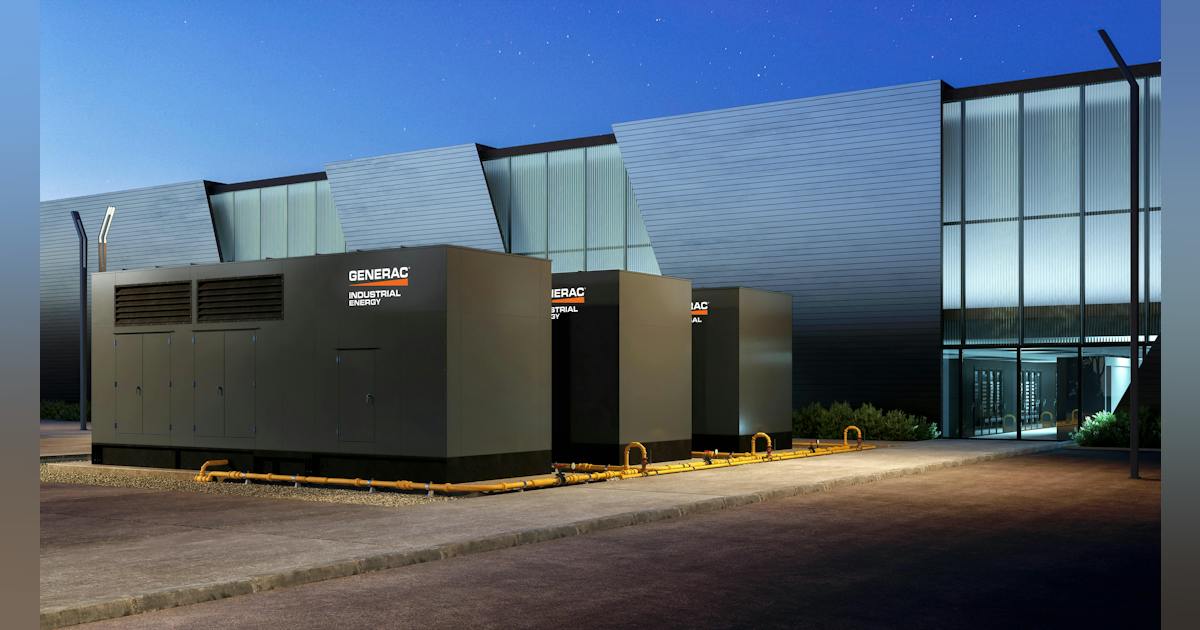
Amazon has struck a long-term supply agreement with Generac for backup generators supporting its data center buildout, tying one of the cloud industry’s largest infrastructure programs to a manufacturer that has been rapidly expanding into the hyperscale power market. Under the agreement disclosed in a Sept. 16 regulatory filing, Generac expects initial deliveries to Amazon totaling approximately $2.4 billion during 2027 and 2028. The commercial relationship could ultimately involve as much as $8 billion in qualifying generator purchases. The agreement also gives Amazon an equity interest in Generac’s success. Generac issued Amazon.com NV Investment Holdings a warrant to acquire as many as 1.69 million Generac shares at an exercise price of approximately $200.93 per share. About 308,000 shares vested when the agreement was signed, with additional tranches vesting as Amazon’s purchases increase. The warrant remains exercisable through September 2033. The distinction is important: the frequently cited $8 billion figure represents potential cumulative payments by Amazon for backup power generators, rather than an $8 billion equity investment. The maximum warrant covers roughly $340 million of Generac stock at the stated exercise price. CNBC first highlighted the equity component of the transaction, reporting that Generac shares surged more than 40% in extended trading following disclosure of the agreement. The shares ultimately gained about 18% during the following regular trading session. Generac Was Already Scaling for the Data Center Market For the data center industry, however, the more consequential part of the transaction may be the size and duration of Amazon’s equipment commitment. Generac has spent much of the past two years positioning itself as an alternative large-megawatt generator supplier as AI infrastructure development puts pressure on established power-equipment supply chains. DCF previously examined Generac’s push into hyperscale backup power, including its effort to shorten generator lead times and support campuses requiring hundreds

Read More »

Executive Roundtable: Speed Without Compromise

Matt Vincent is Editor in Chief of Data Center Frontier, where he leads editorial strategy and coverage focused on the infrastructure powering cloud computing, artificial intelligence, and the digital economy. A veteran B2B technology journalist with more than two decades of experience, Vincent specializes in the intersection of data centers, power, cooling, and emerging AI-era infrastructure. Since assuming the EIC role in 2023, he has helped guide Data Center Frontier’s coverage of the industry’s transition into the gigawatt-scale AI era, with a focus on hyperscale development, behind-the-meter power strategies, liquid cooling architectures, and the evolving energy demands of high-density compute, while working closely with the Digital Infrastructure Group at Endeavor Business Media to expand the brand’s analytical and multimedia footprint. Vincent also hosts The Data Center Frontier Show podcast, where he interviews industry leaders across hyperscale, colocation, utilities, and the data center supply chain to examine the technologies and business models reshaping digital infrastructure. Since its inception he serves as Head of Content for the Data Center Frontier Trends Summit. Before becoming Editor in Chief, he served in multiple senior editorial roles across Endeavor Business Media’s digital infrastructure portfolio, with coverage spanning data centers and hyperscale infrastructure, structured cabling and networking, telecom and datacom, IP physical security, and wireless and Pro AV markets. He began his career in 2005 within PennWell’s Advanced Technology Division and later held senior editorial positions supporting brands such as Cabling Installation & Maintenance, Lightwave Online, Broadband Technology Report, and Smart Buildings Technology. Vincent is a frequent moderator, interviewer, and keynote speaker at industry events including the HPC Forum, where he delivers forward-looking analysis on how AI and high-performance computing are reshaping digital infrastructure. He graduated with honors from Indiana University Bloomington with a B.A. in English Literature and Creative Writing and lives in southern New Hampshire with

Read More »

Floating Data Centers Move Toward Infrastructure Scale

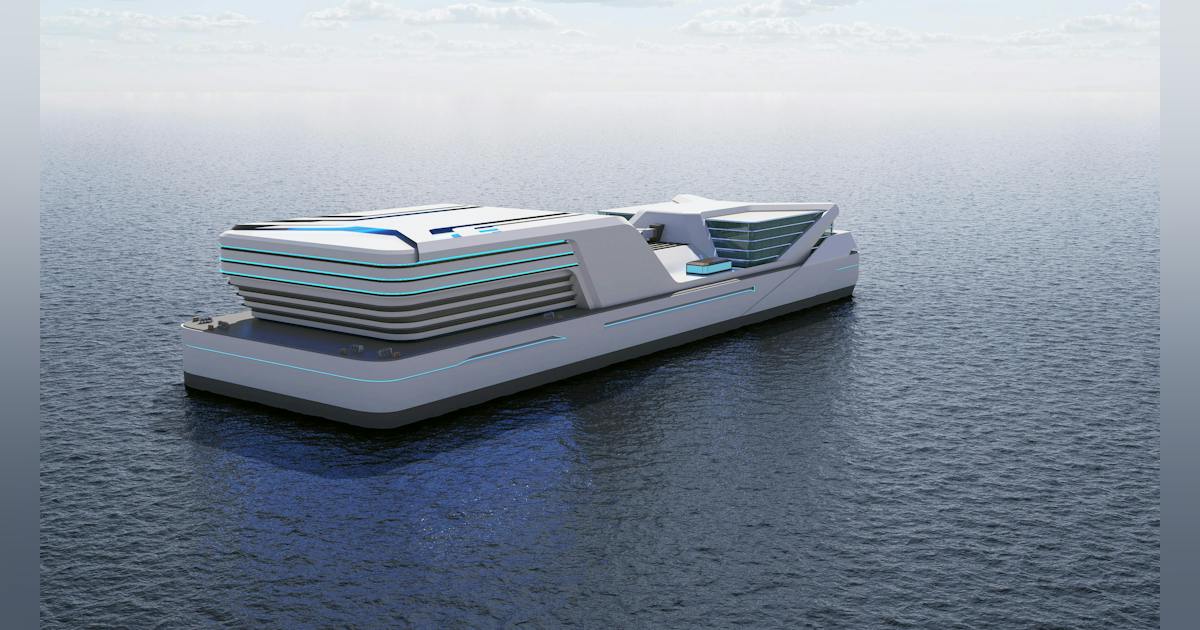
Rather than constructing the building sequentially on a conventional site, Samsung can fabricate the floating structure and integrate much of the electrical, mechanical and cooling infrastructure in a shipyard. Site work at the eventual mooring location can proceed simultaneously. This has the potential to compress one of the longest parts of the data center development schedule. Modern shipyards already operate as enormous industrialized manufacturing environments capable of constructing highly complex LNG carriers, offshore production platforms and other structures containing power generation, electrical distribution, piping, controls and mechanical systems. Adding a floating data center effectively applies those capabilities to digital infrastructure. Samsung and Mousterian describe the facility as being fabricated off-site to shipyard standards. Instead of pouring foundations and constructing a data center building around the infrastructure, the facility becomes a manufactured asset that can be transported to its operating location. Samsung has also been building a broader development ecosystem around floating data centers. In June, the shipbuilder signed agreements with Greece-based Capital and Lloyd’s Register covering project development, investment sourcing and regulatory requirements, while LR Advisory is working with Samsung on North American market analysis, infrastructure assessments and commercial feasibility. Samsung also entered a joint development project with Supermicro to validate AI server infrastructure for offshore conditions, where vibration, vessel inclination, salt-laden air and rapid humidity changes can affect equipment reliability and lifespan. Samsung says it will develop positioning-control and salt- and humidity-protection technologies while Supermicro conducts operational verification of AI server infrastructure in river and marine environments. Unlocking Power That Data Centers Can’t Reach Mousterian’s model also addresses perhaps the biggest constraint facing today’s data center industry: power. The facilities are intended to be positioned near existing generation and maritime infrastructure, allowing them to reach electrical capacity that may be difficult to serve through a conventional land-based development. The

Read More »

Microsoft will invest $80B in AI data centers in fiscal 2025

And Microsoft isn’t the only one that is ramping up its investments into AI-enabled data centers. Rival cloud service providers are all investing in either upgrading or opening new data centers to capture a larger chunk of business from developers and users of large language models (LLMs).  In a report published in October 2024, Bloomberg Intelligence estimated that demand for generative AI would push Microsoft, AWS, Google, Oracle, Meta, and Apple would between them devote $200 billion to capex in 2025, up from $110 billion in 2023. Microsoft is one of the biggest spenders, followed closely by Google and AWS, Bloomberg Intelligence said. Its estimate of Microsoft’s capital spending on AI, at $62.4 billion for calendar 2025, is lower than Smith’s claim that the company will invest $80 billion in the fiscal year to June 30, 2025. Both figures, though, are way higher than Microsoft’s 2020 capital expenditure of “just” $17.6 billion. The majority of the increased spending is tied to cloud services and the expansion of AI infrastructure needed to provide compute capacity for OpenAI workloads. Separately, last October Amazon CEO Andy Jassy said his company planned total capex spend of $75 billion in 2024 and even more in 2025, with much of it going to AWS, its cloud computing division.

Read More »

John Deere unveils more autonomous farm machines to address skill labor shortage

Join our daily and weekly newsletters for the latest updates and exclusive content on industry-leading AI coverage. Learn More Self-driving tractors might be the path to self-driving cars. John Deere has revealed a new line of autonomous machines and tech across agriculture, construction and commercial landscaping. The Moline, Illinois-based John Deere has been in business for 187 years, yet it’s been a regular as a non-tech company showing off technology at the big tech trade show in Las Vegas and is back at CES 2025 with more autonomous tractors and other vehicles. This is not something we usually cover, but John Deere has a lot of data that is interesting in the big picture of tech. The message from the company is that there aren’t enough skilled farm laborers to do the work that its customers need. It’s been a challenge for most of the last two decades, said Jahmy Hindman, CTO at John Deere, in a briefing. Much of the tech will come this fall and after that. He noted that the average farmer in the U.S. is over 58 and works 12 to 18 hours a day to grow food for us. And he said the American Farm Bureau Federation estimates there are roughly 2.4 million farm jobs that need to be filled annually; and the agricultural work force continues to shrink. (This is my hint to the anti-immigration crowd). John Deere’s autonomous 9RX Tractor. Farmers can oversee it using an app. While each of these industries experiences their own set of challenges, a commonality across all is skilled labor availability. In construction, about 80% percent of contractors struggle to find skilled labor. And in commercial landscaping, 86% of landscaping business owners can’t find labor to fill open positions, he said. “They have to figure out how to do

Read More »

2025 playbook for enterprise AI success, from agents to evals

Join our daily and weekly newsletters for the latest updates and exclusive content on industry-leading AI coverage. Learn More 2025 is poised to be a pivotal year for enterprise AI. The past year has seen rapid innovation, and this year will see the same. This has made it more critical than ever to revisit your AI strategy to stay competitive and create value for your customers. From scaling AI agents to optimizing costs, here are the five critical areas enterprises should prioritize for their AI strategy this year. 1. Agents: the next generation of automation AI agents are no longer theoretical. In 2025, they’re indispensable tools for enterprises looking to streamline operations and enhance customer interactions. Unlike traditional software, agents powered by large language models (LLMs) can make nuanced decisions, navigate complex multi-step tasks, and integrate seamlessly with tools and APIs. At the start of 2024, agents were not ready for prime time, making frustrating mistakes like hallucinating URLs. They started getting better as frontier large language models themselves improved. “Let me put it this way,” said Sam Witteveen, cofounder of Red Dragon, a company that develops agents for companies, and that recently reviewed the 48 agents it built last year. “Interestingly, the ones that we built at the start of the year, a lot of those worked way better at the end of the year just because the models got better.” Witteveen shared this in the video podcast we filmed to discuss these five big trends in detail. Models are getting better and hallucinating less, and they’re also being trained to do agentic tasks. Another feature that the model providers are researching is a way to use the LLM as a judge, and as models get cheaper (something we’ll cover below), companies can use three or more models to

Read More »

OpenAI’s red teaming innovations define new essentials for security leaders in the AI era

Join our daily and weekly newsletters for the latest updates and exclusive content on industry-leading AI coverage. Learn More OpenAI has taken a more aggressive approach to red teaming than its AI competitors, demonstrating its security teams’ advanced capabilities in two areas: multi-step reinforcement and external red teaming. OpenAI recently released two papers that set a new competitive standard for improving the quality, reliability and safety of AI models in these two techniques and more. The first paper, “OpenAI’s Approach to External Red Teaming for AI Models and Systems,” reports that specialized teams outside the company have proven effective in uncovering vulnerabilities that might otherwise have made it into a released model because in-house testing techniques may have missed them. In the second paper, “Diverse and Effective Red Teaming with Auto-Generated Rewards and Multi-Step Reinforcement Learning,” OpenAI introduces an automated framework that relies on iterative reinforcement learning to generate a broad spectrum of novel, wide-ranging attacks. Going all-in on red teaming pays practical, competitive dividends It’s encouraging to see competitive intensity in red teaming growing among AI companies. When Anthropic released its AI red team guidelines in June of last year, it joined AI providers including Google, Microsoft, Nvidia, OpenAI, and even the U.S.’s National Institute of Standards and Technology (NIST), which all had released red teaming frameworks. Investing heavily in red teaming yields tangible benefits for security leaders in any organization. OpenAI’s paper on external red teaming provides a detailed analysis of how the company strives to create specialized external teams that include cybersecurity and subject matter experts. The goal is to see if knowledgeable external teams can defeat models’ security perimeters and find gaps in their security, biases and controls that prompt-based testing couldn’t find. What makes OpenAI’s recent papers noteworthy is how well they define using human-in-the-middle

Read More »