Stay Ahead, Stay ONMINE

Developers submit offshore consent application Cenos floating wind farm

Developers Flotation Energy and Vårgrønn have submitted the offshore consent application for their 1.35GW Cenos floating offshore wind farm. Delivered as part of Crown Estate Scotland’s Innovation and Targeted Oil and Gas (INTOG) leasing round, the project will provide renewable power to the UK grid and to offshore oil and gas platforms in the UK […]

Developers Flotation Energy and Vårgrønn have submitted the offshore consent application for their 1.35GW Cenos floating offshore wind farm.

Delivered as part of Crown Estate Scotland’s Innovation and Targeted Oil and Gas (INTOG) leasing round, the project will provide renewable power to the UK grid and to offshore oil and gas platforms in the UK North Sea.

The applications cover the offshore elements of the project proposals to construct and operate the floating offshore wind farm, along with the associated offshore transmission assets.

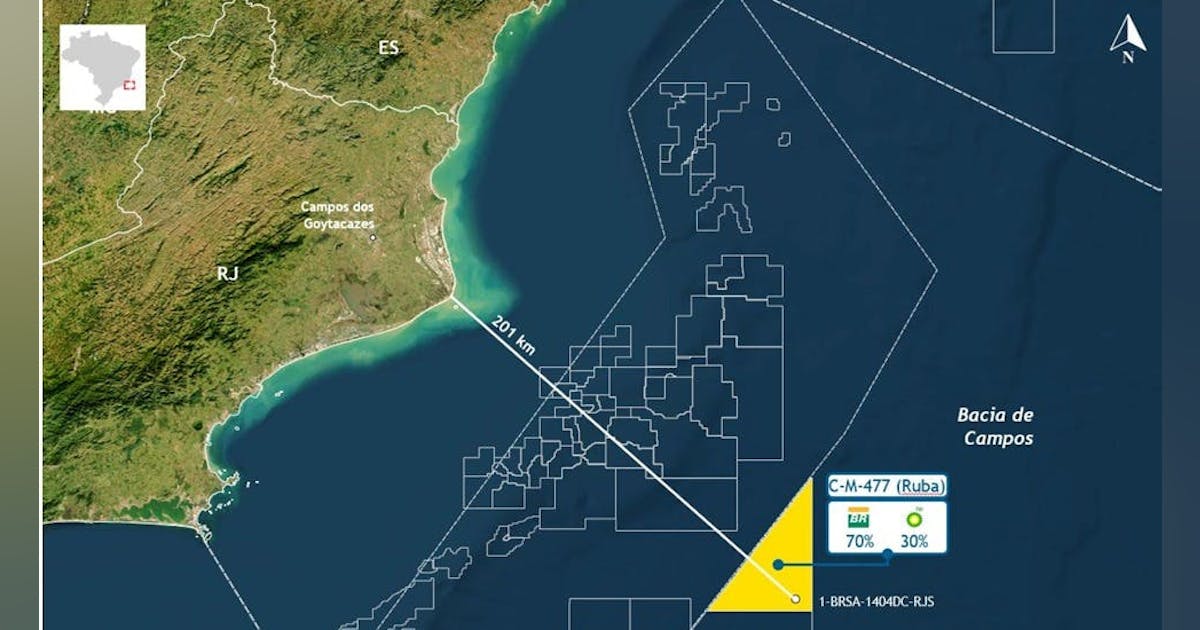
According to the application, Cenos will comprise up to 95 floating turbine units, each with a maximum height of 320m. These will be based around 190km from the coastline near Peterhead.

In addition, the project will use up to two offshore substations built on fixed-bottom jacket foundations.

The project’s 143 miles (230km) direct current export cable will connect the substations to shore, making landfall at Longhaven in Aberdeenshire.

In addition, Cenos will use up to 217 miles (350km) of inter-array cables, including 174 miles (280km) of buried, static cabling, and 43 miles (70km) of dynamic cabling.

Cenos project director Christopher Pearson said: “This is an important milestone in the development of the project and demonstration of the hard work and dedication from our collaborative Vårgrønn and Flotation Energy teams.

“We are taking the learnings and synergies gained from delivering our sister project Green Volt as we progress Cenos, enabling us to capitalise on our first-mover advantage to deliver this innovative and complex development at scale.”

Flotation Energy and Vårgrønn have seen recent success progressing their 560MW Green Volt floating offshore wind farm. This will be the first utility scale floating project in the world, and the largest once completed.

Pearson added: “Cenos is set to be one of the world’s largest floating offshore windfarms, strengthening Scotland and the UK’s position as a global leader in floating wind. It is expected to play a critical role in speeding up the energy transition, providing renewable power to the UK grid and offshore oil and gas platforms in the North Sea.

“Whilst we have already engaged with a range of stakeholders and the local community about the project, it is important that the application now undergoes a further round of consultation, with feedback invited now until 4 April 2025.”

Once commissioned, the developers expect the Cenos project to have an operational life of 35 years.

Recommended for you

Shape
Shape
Stay Ahead

Explore More Insights

Stay ahead with more perspectives on cutting-edge power, infrastructure, energy,  bitcoin and AI solutions. Explore these articles to uncover strategies and insights shaping the future of industries.

Shape

NRF 2026: HPE expands network, server products for retailers

The package also integrates information from HPE Aruba Networking User Experience Insight sensors and agents, which now include support for WiFi 7 networks. The combination can measure end-user activity and allow IT teams to baseline network performance, continuously test network health, track trends, and plan for device growth and AI-native

Read More »

Italy fines Cloudflare for refusing to block pirate sites

Italy’s communications authority AGCOM has fined Cloudflare €14.2 million for refusing to block pirate sites via its public DNS service 1.1.1.1, in accordance with the country’s controversial Piracy Shield law, reports Ars Technica. The law, which was introduced in 2024, requires network operators and DNS services to block websites and

Read More »

Global tech-sector layoffs surpass 244,000 in 2025

The RationalFX report summarizes the U.S. states with the highest tech layoffs in 2025: California: 73,499 jobs (43.08%) Washington: 42,221 jobs (24.74%) New York: 26,900 jobs (15.8%) Texas: 9,816 jobs (6%) Massachusetts: 3,477 jobs Intel leads workforce reductions Intel contributed the single largest number of layoffs in 2025, according to

Read More »

What enterprises think about quantum computing

And speaking of chips, our third point is that the future of quantum computing depends on improvement of the chips. There are already some heady advances claimed by chip startups, but the hype is going to outrun the reality for some time. Eventually, quantum computing will be, like digital computing,

Read More »

Oil Surges as Iran Tensions Fuel Supply Risk

Oil climbed to the highest since late October after US President Donald Trump amped up rhetoric over Iran, heightening investor concerns about supply disruptions in OPEC’s fourth-biggest producer and possible American intervention. West Texas Intermediate futures rose by 2.8% to settle at $61.15 a barrel on Tuesday, reaching the highest level in over two months. Trump told reporters in Detroit that he thinks it’s a good idea if US citizens evacuate from Iran, and reiterated an earlier pledge that “help is on its way” to Iranian protesters amid the biggest challenge to the regime in the Islamic Republic since the 1979 Iranian Revolution. Traders are closely watching the political unrest in Iran and possible American intervention, which could threaten disruption to the country’s roughly 3.3 million barrels-per-day oil production. In a post on Truth Social, Trump urged Iranians to continue demonstrations, saying he had “cancelled all meetings” with the country’s officials. The death toll from ongoing protests may be in the thousands, activist groups said. Iran’s Defense Minister Aziz Nasirzadeh, in response to Trump, pledged to “defend the country with full force.” Oil has gained ground in the early new year, following a run of five monthly losses spurred by expectations for a glut. The climb has come amid US intervention in Venezuela, with Washington’s capture of leader Nicolas Maduro, followed by the worsening wave of unrest in Iran. The rally caught off guard an oil market that was steeped with bearish bets. Trump also said he would impose a 25% tariff on goods from countries “doing business” with Iran. “Geopolitical risk is at an all-time high,” Jeff Currie, chief strategy officer of energy pathways at Carlyle, said in a Bloomberg television interview. “That’s a recipe for a spike in prices now.” The developments in Iran have also compounded existing

Read More »

Iran Releases Oil Tanker Seized in 2024

An oil tanker seized by Iran two years ago was released, with satellite images showing the vessel off the coast of Oman, against a backdrop of mounting US pressure on the Persian Gulf state. The St Nikolas — seized in January 2024 in retaliation for what Iran called at the time the US “theft” of Iranian oil — was released on Jan. 9, its managers Empire Navigation Inc. said in a statement. The ship arrived near Oman on Jan. 10, they said.  The vessel was seen north of the Sohar anchorage off the coast of Oman, TankerTrackers.com Inc., which specializes in using satellite imagery and other tools to track vessels, said earlier.  Iran’s Foreign Ministry didn’t respond to phone and email requests for comment.  US President Donald Trump has threatened to intervene in Iran to stop a deadly state crackdown on protests that have rocked the country for the past two weeks and left at least 2,000 people dead, according to activists. Trump announced 25% tariffs late Monday on any country “doing business” with Tehran, hours after he said Iran had reached out for negotiations.  Empire said the crew are in good health and that the ship’s satellite tracking system has been reconnected, though it’s inoperable.  WHAT DO YOU THINK? Generated by readers, the comments included herein do not reflect the views and opinions of Rigzone. All comments are subject to editorial review. Off-topic, inappropriate or insulting comments will be removed.

Read More »

2 Oil Tankers Attacked Near Key CPC Terminal

(Update) January 13, 2026, 4:29 PM GMT: Article updated with Kazakh, Chevron, Delta Tankers statements throughout. Two oil tankers were attacked near the Black Sea loading terminal for the Caspian Pipeline Consortium, the latest significant incident complicating Kazakhstan’s crude exports. The two ships — the Delta Harmony and the Matilda — were due to load barrels from Kazakhstan at the CPC offshore mooring, according to a person familiar with the matter, who asked not to be identified because the information isn’t public. Managers for both ships confirmed the incidents and said their ships had sailed away from the area.  Prior to the attack, the vessels had moved away from the CPC facility, awaiting their turn to collect the cargoes, the person said. The extent of the damage to both ships wasn’t immediately clear.  The attacks risk further disrupting loadings at CPC, where planned shipments have already plunged due to bad winter weather and a mooring damage in a November drone strike. Those disruptions are helping dial back a significant surplus in the global oil market this quarter and have bolstered key futures prices.  At times last year, CPC exported as much as 1.7 million barrels a day of crude, but loadings in January are set to be between 800,000 and 900,000 barrels a day this month.  Kazakhstan’s energy ministry confirmed the incidents in a statement on Telegram. It said the Matilda suffered an explosion without a subsequent fire and no critical damages to its hull, while the Delta Harmony had a fire that was quickly put out, with no injuries to the crews of either vessel. The press office of the Caspian Pipeline Consortium declined to comment. Thenamaris, which manages Matilda, said its ship was struck by an unspecified number of drones while outside the CPC Terminal. It suffered minor damage to the

Read More »

EPA final rule on NOx limits emphasizes cost savings to turbine owners

The U.S. Environmental Protection Agency on Friday issued a final rule on nitrogen oxide standards for new gas-fired power plants and other stationary turbines. The standards are significantly more lenient than a proposal issued in November during the Biden administration. The EPA determined that the “best systems of emissions reduction,” or BSER, for NOx emissions is the continued use of combustion controls for all but one subcategory of new, modified or reconstructed turbines. The BSER for new large turbines with 12-month capacity factors over 45% is combustion controls combined with post-combustion selective catalytic reduction, or SCR. In November, the Biden EPA proposed finding that for most combustion turbines, the use of combustion controls plus SCR is the BSER. The EPA estimated its final new source performance standards for stationary combustion turbines will cut annual NOx emissions by up to 296 tons by 2032 — significantly less than the 2,659 tons the proposed rule was estimated to cut. The new standards cover facilities that started construction, modification or reconstruction after Dec. 13, 2024. The standards were last updated in 2006. NOx contributes to asthma, bronchitis, respiratory infections and premature mortality by reacting with other volatile organic compounds to form ozone and fine particulate matter, according to the EPA. The standards come amid a surge in proposed gas-fired power plants across the United States, in part driven by rising electric demand forecasts from data centers. The PJM Interconnection, for example, has approved about 8.1 GW of gas-fired capacity for fast-track interconnection review. The Midcontinent Independent System Operator has approved or is reviewing about 9.2 GW of gas-fired generation in its fast-track interconnection process and the Southwest Power Pool is studying about 9.6 GW of gas-fired capacity in its similar interconnection review. The EPA estimated that the final rule will save power plant owners $87 million

Read More »

Analyst Reveals What Spurred Monday’s Gas Price Recovery

A “recovering” late January forecast “spur[red]…” the NYMEX gas “recovery” yesterday, Eli Rubin, an energy analyst at EBW Analytics Group, outlined in an EBW report sent to Rigzone by the EBW team on Tuesday. “The February contract netted a 24.0 cent gain yesterday – reversing Friday’s 23.8 cent decline – as weather forecasts swung back in a colder direction to close January,” Rubin said in the report. “Speculators rotating out of the heaviest short positioning in 13 months may amplify upside, while yesterday’s bounce reset short-term technicals in a bullish direction,” he added. “Today may be the mildest day nationally until late February. Week 2 could see weekly heating demand soar 53 gHDDs and more than 100 billion cubic feet as blowtorch weather flips colder,” he continued. “The Week 3 forecast added 15 gHDDs in the past 24 hours. Other meteorologists also point to chances for reloading cold risks in early February,” Rubin stated. Rubin went on to note in the report that daily LNG feedgas nominations “suggest a record high at 20.4 billion cubic feet per day”. He added, however, that “soaring storage surpluses to year-ago and five-year average levels, and likelihood that the market will manage the coldest days of winter next week without massive disruption, suggest the near-term relief rally may wobble and retreat in the most-likely scenario”. The EBW report highlighted that the February natural gas contract closed at $3.409 per million British thermal units (MMBtu) on Monday. It outlined that this marked a 7.6 percent increase from Friday’s close. In Tuesday’s report, EBW predicted a “test higher and relent” trend for the NYMEX front-month natural gas contract price over the next 7-10 days and a “rebound and retreat” trend over the next 30-45 days. In an EBW report sent to Rigzone on Monday by the

Read More »

USA Compression Seals Acquisition of J-W Power

USA Compression Partners LP said Monday it had completed the acquisition of J-W Power Co for around $860 million. “The acquired assets add over 0.8 million active horsepower across key regions, including the Northeast, Mid-Continent, Rockies, Gulf Coast and Permian Basin, creating a combined fleet of approximately 4.4 million active horsepower”, Dallas, Texas-based USA Compression said in an online statement. “This acquisition also brings a diversified, high-quality customer base to USA Compression’s commercial portfolio while further strengthening its position in mid-to-large horsepower compression”. According to the companies’ joint announcement of the deal December 1, 2025, the acquisition includes “aftermarket services and parts distribution, as well as additional optionality associated with specialized manufacturing services”. USA Compression expects “attractive ~5.8x 2026 estimated adjusted EBITDA multiple before expected synergies”, the December statement said. According to the December statement, the J-W Power team was to transfer to USA Compression. USA Compression said it had drawn $430 million from its revolving credit facility to help pay the acquisition. For the remainder of the purchase price, USA Compression said it had issued about 18.2 million common units “based on an effective price at signing of $23.5 per common unit (the 10-day volume-weighted average price as of November 26, 2025 with a collar of $23.25-23.5, resulting in an effective price utilized of $23.5), subject to certain purchase price adjustments”. USA Compression had a revenue of $250.26 million for the third quarter of 2025, according to its latest results published November 5, 2025. That was up from $239.96 million for Q3 2024, despite average horsepower utilization slipping from 94.6 percent to 94 percent. Net profit totaled $34.49 million, while adjusted EBITDA landed at $160.27 million – up from $19.33 million and $145.69 million for Q3 2024 respectively. Distributable cash flow was $103.85 million, compared to $86.61 million for Q3

Read More »

Can retired naval power plants solve the data center power crunch?

HGP’s plan includes a revenue share with the government, and the company would create a decommissioning fund, according to Bloomberg. The alternative? After a lengthy decommissioning process, the reactors are shipped to a remote storage facility in Washington state together dust along with dozens of other retired nuclear reactors. So the carrier itself isn’t going to be turned into a data center, but its power plants are being proposed for a data center on land. And even with the lengthening decommissioning process, that’s still faster than building a nuclear power plant from scratch. Don’t hold your breath, says Kristen Vosmaer, managing director, JLL Work Dynamics Data Center team. The idea of converting USS Nimitz’s nuclear reactors to power AI data centers sounds compelling but faces insurmountable obstacles, he argues. “Naval reactors use weapons-grade uranium that civilian entities cannot legally possess, and the Nuclear Regulatory Commission has no pathway to license such facilities. Even setting aside the fuel issue, these military-designed systems would require complete reconstruction to meet civilian safety standards, eliminating any cost advantages over purpose-built nuclear plants,” Vosmaer said. The maritime concept itself, however, does have some merit, said Vosmaer. “Ocean cooling can reduce energy consumption compared to land-based data centers, and floating platforms offer positioning flexibility that fixed facilities cannot match,” Vosmaer said.

Read More »

What exactly is an AI factory?

Others, however, seem to use the word to mean something smaller than a data center, referring more to the servers, software, and other systems used to run AI. For example, the AWS AI Factory is a combination of hardware and software that runs on-premises but is managed by AWS and comes with AWS services such as Bedrock, networking, storage and databases, and security.  At Lenovo, AI factories appear to be packaged servers designed to be used for AI. “We’re looking at the architecture being a fixed number of racks, all working together as one design,” said Scott Tease, vice president and general manager of AI and high-performance computing at Lenovo’s infrastructure solutions group. That number of racks? Anything from a single rack to hundreds, he told Computerworld. Each rack is a little bigger than a refrigerator, comes fully assembled, and is often fully preconfigured for the customer’s use case. “Once it arrives at the customer site, we’ll have service personnel connect power and networking,” Tease said. For others, the AI factory concept is more about the software.

Read More »

Meta establishes Meta Compute to lead AI infrastructure buildout

At that scale, infrastructure constraints are becoming a binding limit on AI expansion, influencing decisions like where new data centers can be built and how they are interconnected. The announcement follows Meta’s recent landmark agreements with Vistra, TerraPower, and Oklo aimed at supporting access to up to 6.6 gigawatts of nuclear energy to fuel its Ohio and Pennsylvania data center clusters. Implications for hyperscale networking Analysts say Meta’s approach indicates how hyperscalers are increasingly treating networking and interconnect strategy as first-order concerns in the AI race. Tulika Sheel, senior vice president at Kadence International, said that Meta’s initiative signals that hyperscale networking will need to evolve rapidly to handle massive internal data flows with high bandwidth and ultra-low latency. “As data centers grow in size and GPU density, pressure on networking and optical supply chains will intensify, driving demand for more advanced interconnects and faster fiber,” Sheel added. Others pointed to the potential architectural shifts from this. “Meta is using Disaggregated Scheduled Fabric and Non-Scheduled Fabric, along with new 51 Tbps switches and Ethernet for Scale-Up Networking, which is intensifying pressure on switch silicon, optical modules, and open rack standards,” said Biswajeet Mahapatra, principal analyst at Forrester. “This shift is forcing the ecosystem to deliver faster optical interconnects and greater fiber capacity, as Meta targets significant backbone growth and more specialized short-reach and coherent optical technologies to support cluster expansion.” The network is no longer a secondary pipe but a primary constraint. Next-generation connectivity, Sheel said, is becoming as critical as access to compute itself, as hyperscalers look to avoid network bottlenecks in large-scale AI deployments.

Read More »

AI, edge, and security: Shaping the need for modern infrastructure management

The rapidly evolving IT landscape, driven by artificial intelligence (AI), edge computing, and rising security threats, presents unprecedented challenges in managing compute infrastructure. Traditional management tools struggle to provide the necessary scalability, visibility, and automation to keep up with business demand, leading to inefficiencies and increased business risk. Yet organizations need their IT departments to be strategic business partners that enable innovation and drive growth. To realize that goal, IT leaders should rethink the status quo and free up their teams’ time by adopting a unified approach to managing infrastructure that supports both traditional and AI workloads. It’s a strategy that enables companies to simplify IT operations and improve IT job satisfaction. 5 IT management challenges of the AI era Cisco recently commissioned Forrester Consulting to conduct a Total Economic Impact™ analysis of Cisco Intersight. This IT operations platform provides visibility, control, and automation capabilities for the Cisco Unified Computing System (Cisco UCS), including Cisco converged, hyperconverged, and AI-ready infrastructure solutions across data centers, colocation facilities, and edge environments. Intersight uses a unified policy-driven approach to infrastructure management and integrates with leading operating systems, storage providers, hypervisors, and third-party IT service management and security tools. The Forrester study first uncovered the issues IT groups are facing: Difficulty scaling: Manual, repetitive processes cause lengthy IT compute infrastructure build and deployment times. This challenge is particularly acute for organizations that need to evolve infrastructure to support traditional and AI workloads across data centers and distributed edge environments. Architectural specialization and AI workloads: AI is altering infrastructure requirements, Forrester found.  Companies design systems to support specific AI workloads — such as data preparation, model training, and inferencing — and each demands specialized compute, storage, and networking capabilities. Some require custom chip sets and purpose-built infrastructure, such as for edge computing and low-latency applications.

Read More »

DCF Poll: Analyzing AI Data Center Growth

@import url(‘https://fonts.googleapis.com/css2?family=Inter:[email protected]&display=swap’); a { color: var(–color-primary-main); } .ebm-page__main h1, .ebm-page__main h2, .ebm-page__main h3, .ebm-page__main h4, .ebm-page__main h5, .ebm-page__main h6 { font-family: Inter; } body { line-height: 150%; letter-spacing: 0.025em; font-family: Inter; } button, .ebm-button-wrapper { font-family: Inter; } .label-style { text-transform: uppercase; color: var(–color-grey); font-weight: 600; font-size: 0.75rem; } .caption-style { font-size: 0.75rem; opacity: .6; } #onetrust-pc-sdk [id*=btn-handler], #onetrust-pc-sdk [class*=btn-handler] { background-color: #1796c1 !important; border-color: #1796c1 !important; } #onetrust-policy a, #onetrust-pc-sdk a, #ot-pc-content a { color: #1796c1 !important; } #onetrust-consent-sdk #onetrust-pc-sdk .ot-active-menu { border-color: #1796c1 !important; } #onetrust-consent-sdk #onetrust-accept-btn-handler, #onetrust-banner-sdk #onetrust-reject-all-handler, #onetrust-consent-sdk #onetrust-pc-btn-handler.cookie-setting-link { background-color: #1796c1 !important; border-color: #1796c1 !important; } #onetrust-consent-sdk .onetrust-pc-btn-handler { color: #1796c1 !important; border-color: #1796c1 !important; } Coming out of 2025, AI data center development remains defined by momentum. But momentum is not the same as certainty. Behind the headlines, operators, investors, utilities, and policymakers are all testing the assumptions that carried projects forward over the past two years, from power availability and capital conditions to architecture choices and community response. Some will hold. Others may not. To open our 2026 industry polling, we’re taking a closer look at which pillars of AI data center growth are under the most pressure. What assumption about AI data center growth feels most fragile right now?

Read More »

JLL’s 2026 Global Data Center Outlook: Navigating the AI Supercycle, Power Scarcity and Structural Market Transformation

Sovereign AI and National Infrastructure Policy JLL frames artificial intelligence infrastructure as an emerging national strategic asset, with sovereign AI initiatives representing an estimated $8 billion in cumulative capital expenditure by 2030. While modest relative to hyperscale investment totals, this segment carries outsized strategic importance. Data localization mandates, evolving AI regulation, and national security considerations are increasingly driving governments to prioritize domestic compute capacity, often with pricing premiums reaching as high as 60%. Examples cited across Europe, the Middle East, North America, and Asia underscore a consistent pattern: digital sovereignty is no longer an abstract policy goal, but a concrete driver of data center siting, ownership structures, and financing models. In practice, sovereign AI initiatives are accelerating demand for locally controlled infrastructure, influencing where capital is deployed and how assets are underwritten. For developers and investors, this shift introduces a distinct set of considerations. Sovereign projects tend to favor jurisdictional alignment, long-term tenancy, and enhanced security requirements, while also benefiting from regulatory tailwinds and, in some cases, direct state involvement. As AI capabilities become more tightly linked to economic competitiveness and national resilience, policy-driven demand is likely to remain a durable (if specialized) component of global data center growth. Energy and Sustainability as the Central Constraint Energy availability emerges as the report’s dominant structural constraint. In many major markets, average grid interconnection timelines now extend beyond four years, effectively decoupling data center development schedules from traditional utility planning cycles. As a result, operators are increasingly pursuing alternative energy strategies to maintain project momentum, including: Behind-the-meter generation Expanded use of natural gas, particularly in the United States Private-wire renewable energy projects Battery energy storage systems (BESS) JLL points to declining battery costs, seen falling below $90 per kilowatt-hour in select deployments, as a meaningful enabler of grid flexibility, renewable firming, and

Read More »

Microsoft will invest $80B in AI data centers in fiscal 2025

And Microsoft isn’t the only one that is ramping up its investments into AI-enabled data centers. Rival cloud service providers are all investing in either upgrading or opening new data centers to capture a larger chunk of business from developers and users of large language models (LLMs).  In a report published in October 2024, Bloomberg Intelligence estimated that demand for generative AI would push Microsoft, AWS, Google, Oracle, Meta, and Apple would between them devote $200 billion to capex in 2025, up from $110 billion in 2023. Microsoft is one of the biggest spenders, followed closely by Google and AWS, Bloomberg Intelligence said. Its estimate of Microsoft’s capital spending on AI, at $62.4 billion for calendar 2025, is lower than Smith’s claim that the company will invest $80 billion in the fiscal year to June 30, 2025. Both figures, though, are way higher than Microsoft’s 2020 capital expenditure of “just” $17.6 billion. The majority of the increased spending is tied to cloud services and the expansion of AI infrastructure needed to provide compute capacity for OpenAI workloads. Separately, last October Amazon CEO Andy Jassy said his company planned total capex spend of $75 billion in 2024 and even more in 2025, with much of it going to AWS, its cloud computing division.

Read More »

John Deere unveils more autonomous farm machines to address skill labor shortage

Join our daily and weekly newsletters for the latest updates and exclusive content on industry-leading AI coverage. Learn More Self-driving tractors might be the path to self-driving cars. John Deere has revealed a new line of autonomous machines and tech across agriculture, construction and commercial landscaping. The Moline, Illinois-based John Deere has been in business for 187 years, yet it’s been a regular as a non-tech company showing off technology at the big tech trade show in Las Vegas and is back at CES 2025 with more autonomous tractors and other vehicles. This is not something we usually cover, but John Deere has a lot of data that is interesting in the big picture of tech. The message from the company is that there aren’t enough skilled farm laborers to do the work that its customers need. It’s been a challenge for most of the last two decades, said Jahmy Hindman, CTO at John Deere, in a briefing. Much of the tech will come this fall and after that. He noted that the average farmer in the U.S. is over 58 and works 12 to 18 hours a day to grow food for us. And he said the American Farm Bureau Federation estimates there are roughly 2.4 million farm jobs that need to be filled annually; and the agricultural work force continues to shrink. (This is my hint to the anti-immigration crowd). John Deere’s autonomous 9RX Tractor. Farmers can oversee it using an app. While each of these industries experiences their own set of challenges, a commonality across all is skilled labor availability. In construction, about 80% percent of contractors struggle to find skilled labor. And in commercial landscaping, 86% of landscaping business owners can’t find labor to fill open positions, he said. “They have to figure out how to do

Read More »

2025 playbook for enterprise AI success, from agents to evals

Join our daily and weekly newsletters for the latest updates and exclusive content on industry-leading AI coverage. Learn More 2025 is poised to be a pivotal year for enterprise AI. The past year has seen rapid innovation, and this year will see the same. This has made it more critical than ever to revisit your AI strategy to stay competitive and create value for your customers. From scaling AI agents to optimizing costs, here are the five critical areas enterprises should prioritize for their AI strategy this year. 1. Agents: the next generation of automation AI agents are no longer theoretical. In 2025, they’re indispensable tools for enterprises looking to streamline operations and enhance customer interactions. Unlike traditional software, agents powered by large language models (LLMs) can make nuanced decisions, navigate complex multi-step tasks, and integrate seamlessly with tools and APIs. At the start of 2024, agents were not ready for prime time, making frustrating mistakes like hallucinating URLs. They started getting better as frontier large language models themselves improved. “Let me put it this way,” said Sam Witteveen, cofounder of Red Dragon, a company that develops agents for companies, and that recently reviewed the 48 agents it built last year. “Interestingly, the ones that we built at the start of the year, a lot of those worked way better at the end of the year just because the models got better.” Witteveen shared this in the video podcast we filmed to discuss these five big trends in detail. Models are getting better and hallucinating less, and they’re also being trained to do agentic tasks. Another feature that the model providers are researching is a way to use the LLM as a judge, and as models get cheaper (something we’ll cover below), companies can use three or more models to

Read More »

OpenAI’s red teaming innovations define new essentials for security leaders in the AI era

Join our daily and weekly newsletters for the latest updates and exclusive content on industry-leading AI coverage. Learn More OpenAI has taken a more aggressive approach to red teaming than its AI competitors, demonstrating its security teams’ advanced capabilities in two areas: multi-step reinforcement and external red teaming. OpenAI recently released two papers that set a new competitive standard for improving the quality, reliability and safety of AI models in these two techniques and more. The first paper, “OpenAI’s Approach to External Red Teaming for AI Models and Systems,” reports that specialized teams outside the company have proven effective in uncovering vulnerabilities that might otherwise have made it into a released model because in-house testing techniques may have missed them. In the second paper, “Diverse and Effective Red Teaming with Auto-Generated Rewards and Multi-Step Reinforcement Learning,” OpenAI introduces an automated framework that relies on iterative reinforcement learning to generate a broad spectrum of novel, wide-ranging attacks. Going all-in on red teaming pays practical, competitive dividends It’s encouraging to see competitive intensity in red teaming growing among AI companies. When Anthropic released its AI red team guidelines in June of last year, it joined AI providers including Google, Microsoft, Nvidia, OpenAI, and even the U.S.’s National Institute of Standards and Technology (NIST), which all had released red teaming frameworks. Investing heavily in red teaming yields tangible benefits for security leaders in any organization. OpenAI’s paper on external red teaming provides a detailed analysis of how the company strives to create specialized external teams that include cybersecurity and subject matter experts. The goal is to see if knowledgeable external teams can defeat models’ security perimeters and find gaps in their security, biases and controls that prompt-based testing couldn’t find. What makes OpenAI’s recent papers noteworthy is how well they define using human-in-the-middle

Read More »