The energy transition isn’t coming — it’s here. Across North America, utilities are navigating an unprecedented convergence of challenges: exponential load growth from data centers and electrification, rising reliability expectations and an accelerating influx of distributed energy resources (DERs).
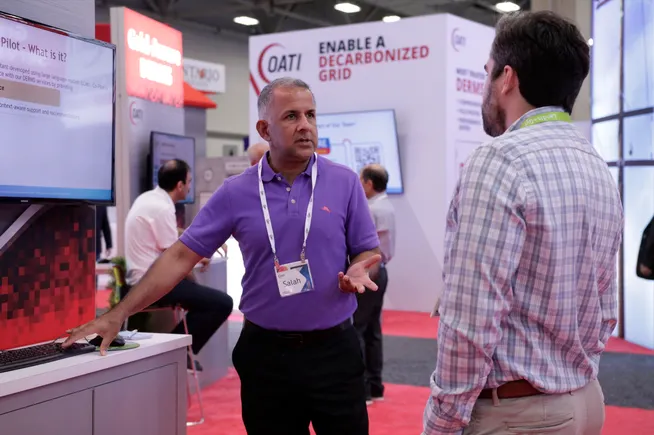
At DTECH 2026, Feb. 2-5 in San Diego, OATI will showcase how utilities can turn these pressures into opportunities through a simple, unifying concept: flexibility.
“Flexibility is no longer optional — it’s the operating principle of the modern grid,” says Sasan Mokhtari, OATI’s president & CEO. “The future belongs to the utilities that can orchestrate DERs, manage load growth intelligently and connect operations from meters to markets.”
1. From DER chaos to DERMS clarity
Distributed Energy Resource Management Systems (DERMS) have evolved from niche pilots to mission-critical platforms. OATI would know—we deployed the first DERMS in North America in 2009 and created what would define a generation of grid modernization. What was once an experiment in aggregation is now the foundation of reliable, data-driven grid management.
Modern DERMS platforms, like OATI DERMS, enable utilities to see, forecast and control a complex web of rooftop solar, battery storage, EV chargers and flexible loads in real time.
They bring together three critical capabilities:
- Visibility — a unified picture of all DERs across the grid
- Optimization — dispatch decisions that balance economics, carbon and reliability
- Market Integration — the ability to monetize flexibility through participation in wholesale markets
At DTECH 2026, OATI will demonstrate how its DERMS platform bridges the divide between bulk power and distribution operations, uniting IT and OT operations and helping utilities truly manage the grid from meters to markets.
2. The new face of load growth: Data centers, EVs and electrification
The growth of data centers and electric transportation is transforming grid demand faster than many planners ever imagined. In 2024 alone, U.S. data center load grew by nearly 20%, and the next decade could see electricity demand rise by 30% or more.
What used to be predictable base load is now dynamic, volatile and spiky. EV charging stations, fleets and AI data clusters can swing local demand patterns hour by hour.
Managing this future requires flexible infrastructure — and that’s where DERMS and advanced asset controls converge.
With OATI DERMS, utilities can coordinate system-wide flexibility to offset load peaks. With OATI GridMind®, they can create microgrids that generate and store energy locally, keeping critical loads powered while easing system stress. Together, these tools transform grid into dynamic, flexible systems capable of not only meeting the moment, but also fortifying reliability and resilience for the communities they serve.
3. Microgrids move from resilience to optimization
Microgrids are no longer a side project — they’re a strategy.
With OATI GridMind®, utilities, campuses and cities are deploying microgrids that do far more than island during an outage. They now optimize how distributed assets operate every minute of the day and serve as a bridge to the grid for large electric loads, like data centers.
At DTECH, OATI will showcase how GridMind can:
- Seamlessly transition between grid-connected and islanded modes
- Optimize multiple generation and storage assets in real time
- Integrate with utility operations for coordinated dispatch and control
Microgrids powered by GridMind are proving that resilience and economics aren’t mutually exclusive — they’re two sides of intelligent energy management.
4. Flexibility is the new baseload
For decades, the industry defined reliability through baseload generation. In the future, reliability will be defined by flexibility — the ability to respond to fluctuations with precision and speed.
DERMS provides the digital backbone. Microgrids provide local autonomy. Together, they transform static infrastructure into an agile, data-driven network.
At OATI’s booth 2428, visitors will see flexibility in action:
- Real-time DER orchestration across feeders and substations
- GridMind microgrids balancing campus and community loads
- OATI Genie™, the industry’s first generative and agentic AI platform, analyzing and predicting grid behavior to assist operators
5. From Meters to Markets: Building a Connected Grid
The power system of tomorrow won’t be defined by size — it will be defined by connection.
At DTECH 2026, OATI’s theme, “Into the Future,” reflects a simple truth: utilities that can connect assets, data and decisions will lead the next decade of innovation.
With the convergence of DERMS, GridMind and Genie, OATI is helping utilities:
- Operate holistically from transmission to distribution to end customer.
- Engage flexible load in real time.
- Turn data into actionable intelligence.
The road ahead: Flexibility as the foundation
The energy transition will continue to challenge every assumption about how we plan, operate and invest in the grid. But it will also unlock opportunities for creativity, collaboration and reinvention.
DERMS and microgrids — once seen as niche — are now essential infrastructure. They make the grid smarter, faster and more adaptive to whatever comes next.
OATI invites you to see that future firsthand at DTECH 2026 in San Diego.
Booth 2428 | February 2-5, 2026
Enter our car giveaway and join the movement toward a more flexible, resilient grid.