Stay Ahead, Stay ONMINE

JMSL: A full-service provider on the global stage

Over the past two decades JMSL has become a dynamic force in the energy sector. The company, founded in 2003, built its reputation in energy industry recruitment, delivering skilled resources both to the UK’s oil and gas sector and major projects abroad.   About partnership content Some Energy Voice online content is funded by outside […]

Over the past two decades JMSL has become a dynamic force in the energy sector. The company, founded in 2003, built its reputation in energy industry recruitment, delivering skilled resources both to the UK’s oil and gas sector and major projects abroad.


Now it has expanded those capabilities to include fabrication and comprehensive project delivery services.

That offering is complemented by a management team that boasts extensive project delivery experience, having provided tailored solutions across several sectors and global locations.

Managing director Campbell Jamieson said: “Our history is steeped in the traditional energy sector. But as the industry transitions, so have we, embracing renewables, nuclear, infrastructure and defence, while maintaining our expertise in oil and gas. We’ve also expanded our geographical footprint, delivering projects in Europe and West Africa. Our commitment to HSEQ is underlined by recent award of triple ISO certification, accredited to 9001/14001/45001.”

Trusted experts in energy sector recruitment

Campbell Jamieson © Supplied by JMSL
Campbell Jamieson says JMSL’s expertise allows it to provide tailored solutions to firms’ recruitment needs.

What makes JMSL stand out is its holistic understanding of the energy sector and the skills required.

As Campbell said: “We’re not just putting CVs on desks. We provide tailored solutions backed by our management’s deep expertise in project delivery. We’ve got a national and international network of personnel, possessing the ability to bridge the gaps in capacity across workforces in the UK and globally.

“Manpower is vital in any business and getting the right skilled people is a major issue across various industry sectors at present. We can help with this.”

The company has an extensive 25-year track record of sourcing highly skilled personnel. It can help fill any role within a project from blue-collar to white-collar positions such as management, engineering, supervision and inspection. Its expertise also extends to executive roles for permanent placement.

Beyond recruitment, the company’s ability to manage projects end-to-end highlights its excellent positioning.

Campbell added: “Manpower is our foundation, but we’ve expanded to deliver full-service project management and fabrication solutions.”

This combination of services ensures JMSL meets the ever-changing demands of global energy projects with precision and efficiency.

A proven record of delivery on a global scale

JMSL’s portfolio reveals successful delivery of projects across the world.

Throughout 2024 it delivered 120,000 man hours to a variety of oil and gas, renewables and infrastructure projects.

It also recently provided fabrication management consultancy for subsea fabrication projects across Europe and West Africa. Services included development of production procedures, fabrication sequence, schedule, method statements and quality documentation, prior to deployment of key fabrication representatives to support production delivery at project location.

In addition, in the largest single project to date, it supported delivery of 180 trades personnel to an FPSO upgrade project.

Each project showcases JMSL’s commitment to quality and its ability to adapt to the distinct requirements of its clients, whether in offshore oil fields or renewable energy installations.

Campbell noted: “We’re also in the process of expanding our geographical footprint with a new location in the Middle East which will allow us to efficiently service this region. Our geographical expansion and ability to deliver complex projects underline our capability as a trusted partner.”

Workshop facilities
Welder at work. © Supplied by JMSL
JMSL’s new workshop further extends its services after making its name as an energy recruitment agency.

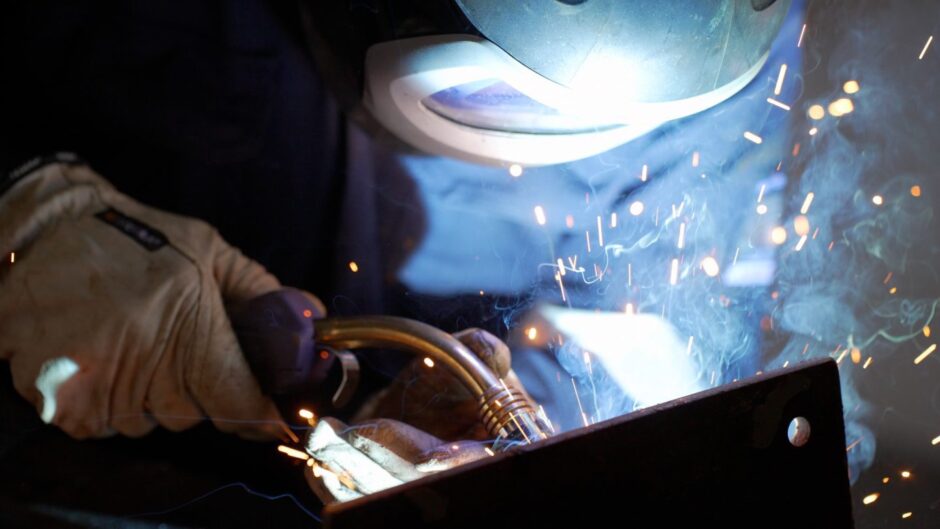
A major milestone in 2024 was the opening of JMSL’s 1,800sq m workshop, providing a platform to provide a broad range of workshop services including training, procedure qualification and fabrication whilst also serving to support site operations by streamlining mobilisation preparation activities.

The workshop has external laydown and office facilities and offers lifting and welding capabilities, along with a range of other services.

“Our new workshop is a game-changer,” Campbell shared. “We’re now equipped to deliver full-service fabrication solutions, specialising in process pipework and associated structural components for onshore and offshore applications, through use of our range of pre qualified weld procedures.”

Located within the Inverness and Cromarty Firth Green Freeport zone, the workshop supports the company’s commitment to sustainable energy solutions while maintaining its strong presence in oil and gas.

A trusted partner across all energy sectors
Oil rig © Supplied by JMSL
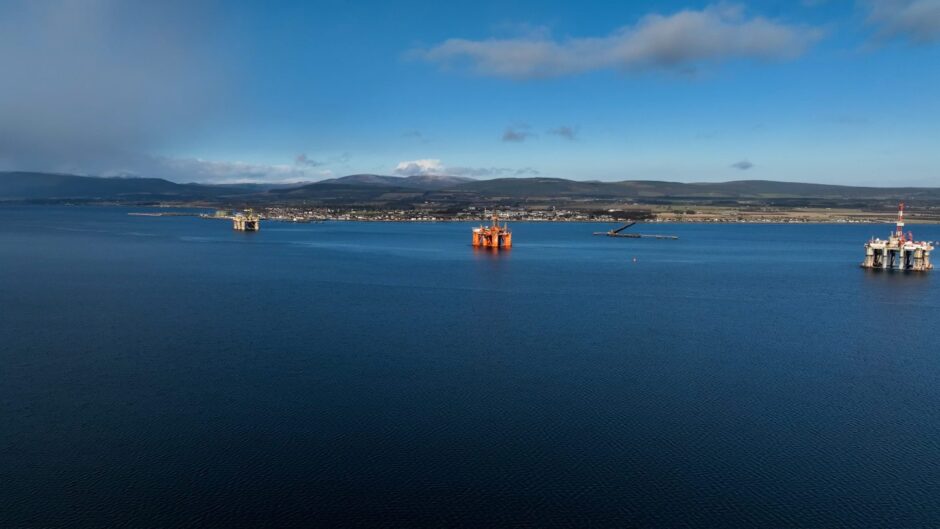
JMSL can work in all areas of the energy sector and provides a range of services.

JMSL is also focused on collaboration, inviting like-minded organisations to explore joint ventures. “We’re open to partnerships that enhance service delivery and innovation,” Campbell added.

With its extensive track record, excellent facilities, and commitment to innovation, JMSL is well-positioned to provide unparalleled service across all energy sectors. From traditional oil and gas to renewables and infrastructure projects, the company delivers expertise, reliability and quality at every stage.

Campbell concluded: “Our unique business model and fresh approach brings demonstrable customer savings across all service offerings, without compromise to health and safety, quality and delivery. Whatever the challenge, we have the capability, expertise, and experience to exceed expectations.”


To find out more about how JMSL can help your business visit the company’s website.

Recommended for you

Shape
Shape
Stay Ahead

Explore More Insights

Stay ahead with more perspectives on cutting-edge power, infrastructure, energy,  bitcoin and AI solutions. Explore these articles to uncover strategies and insights shaping the future of industries.

Shape

TotalEnergies farms out 40% participating interest in certain licenses offshore Nigeria to Chevron

@import url(‘https://fonts.googleapis.com/css2?family=Inter:[email protected]&display=swap’); a { color: var(–color-primary-main); } .ebm-page__main h1, .ebm-page__main h2, .ebm-page__main h3, .ebm-page__main h4, .ebm-page__main h5, .ebm-page__main h6 { font-family: Inter; } body { line-height: 150%; letter-spacing: 0.025em; font-family: Inter; } button, .ebm-button-wrapper { font-family: Inter; } .label-style { text-transform: uppercase; color: var(–color-grey); font-weight: 600; font-size: 0.75rem; } .caption-style

Read More »

AI-driven network management gains enterprise trust

The way the full process works is that the raw data feed comes in, and machine learning is used to identify an anomaly that could be a possible incident. That’s where the generative AI agents step up. In addition to the history of similar issues, the agents also look for

Read More »

Chinese cyberspies target VMware vSphere for long-term persistence

Designed to work in virtualized environments The CISA, NSA, and Canadian Cyber Center analysts note that some of the BRICKSTORM samples are virtualization-aware and they create a virtual socket (VSOCK) interface that enables inter-VM communication and data exfiltration. The malware also checks the environment upon execution to ensure it’s running

Read More »

Rigzone Holds Exclusive Interview with Aramco HR SVP

Fresh off the back of Saudi Aramco’s recently released third quarter 2025 results, Rigzone connected with Faisal A. Al-Hajji, Aramco Senior Vice President (SVP) of Human Resources, for a deep dive into a range of employment related topics. In this exclusive Q&A session, Al-Hajji talks about career progression at Aramco, which skills he thinks will be most in demand over the next 5-10 years, and the effect of automation and artificial intelligence on jobs at the company, among a host of other subjects. Rigzone: What does Aramco look for in an employee?  How many people does Aramco employ at the moment? Al-Hajji: At Aramco, we are fortunate to have a wealth of exceptional talent, both locally and internationally. Our robust talent pipeline is particularly strong within Saudi Arabia, where we consistently attract outstanding individuals from top-tier universities. These candidates typically boast high assessment scores, strong GPAs, and accredited certifications, ensuring a highly qualified and attractive talent pool, reaching an average 200+ of Saudi applicants daily. This great pool is thoroughly reviewed through rigorous assessment processes and standardized interviews. At Aramco, we’re looking for talented individuals who can thrive in a dynamic and diverse energy company. While specific skills and qualifications vary by position, we prioritize candidates who are well-rounded, academically strong, and possess a positive and adaptable mindset. We seek professionals who are eager to learn, embrace new technologies, and contribute to a collaborative and innovative work environment. We currently employ over 75,000 employees with diverse backgrounds, experiences, ages, and nationalities. Over 90 percent of our workforce is Saudi, while employees from more than 90 other nationalities make up the remainder, underscoring the remarkable diversity within our company. And that’s why we always look for candidates who are able to work seamlessly as part of a diverse, global team. Rigzone:

Read More »

Germany to Tweak Rosneft Trusteeship to Avert Sanctions

Germany plans to tweak the system that controls the local assets of Rosneft PJSC to ensure it is complying with the tougher US sanctions imposed on the Russian oil company last month. The government forwarded a draft law to both chambers of parliament “as a matter of particular urgency,” Chancellor Friedrich Merz wrote in a letter to the Bundestag’s president that was seen by Bloomberg. The proposal, which lawmakers will discuss in a public session of the energy committee on Dec. 17, would change the current trusteeship into a “public-law trust” under the nation’s Foreign Trade Act. Germany has received a temporary exemption from the US sanctions against Rosneft and was seeking a solution for when the general license runs out on April 29, 2026. Berlin had seized the company’s assets following Russia’s invasion of Ukraine in 2022 and has extended its trusteeship of Rosneft Deutschland multiple times, leaving the Moscow-based parent as the owner but cutting any financial ties to it. Rosneft Deutschland holds shares in three German refineries, which account for 12 percent of the nation’s total processing capacity, including PCK Raffinerie GmbH’s Schwedt plant near Berlin. The government has so far steered clear of nationalizing the entities amid concerns that such a move could risk retaliatory measures by the Kremlin against German operations in Russia. The public law trust would allow any company or organization with headquarters in Germany to become a trustee of the Rosneft assets, which have so far been held by the nation’s energy regulator, the Federal Network Agency. This so-called “sanctions trusteeship” should be accompanied by an independent share custodian appointed by a court, according to the document.  The proposal doesn’t resolve two key issues, said Michael Kellner, an energy lawmaker from the opposition Green party and a former parliamentary state secretary of the Economy Ministry. “It

Read More »

Equinor Completes Hybrid Renewable Power Complex in Brazil

Equinor ASA said the 140-megawatt (MW) Serra da Babilônia Solar in the Brazilian state of Bahia is now commercially operational. Co-located with the existing 223-MW Serra da Babilônia Wind, the solar unit completes the Norwegian majority state-owned company’s first hybrid power complex, Equinor said in an online statement. The wind farm came online 2018, before Equinor took over through the acquisition of Rio Energy in 2023. “Accumulated annual production from Serra da Babilônia Solar is estimated at 236 GWh of power per year, which is equivalent to the consumption of 143,000 Brazilian households”, Equinor said. “The produced energy will be sold in the Brazilian power market by Equinor’s energy trading house, Danske Commodities”. “Hybrid projects take advantage of the complementary nature of solar and wind resources, which generate power at different times of the day and throughout different seasons”, it said. “This helps to reduce the intermittency associated with renewable power generation and enhance grid stability. “Further, Serra da Babilônia Solar leverages synergies from the operating wind facility by sharing existing infrastructure on site, and by achieving efficiencies during the operations and maintenance phase. This results in material cost savings for the hybrid complex compared to a standalone solar asset”. Serra da Babilônia Solar is the first project delivered by Rio Energy as a wholly owned subsidiary of Equinor, according to Equinor. “Brazil is a key area for Equinor’s long-term growth”, said Equinor manager for Brazil Veronica Coelho. “Building on a solid portfolio of oil and natural gas, including Raia that will supply around 15 percent of Brazil’s total gas demand, we are advancing towards a more integrated and diverse energy offering in the country. “With Serra da Babilônia Solar operational, we now have around 600 MW of solar and wind capacity in power production, which we can further optimize

Read More »

Kistos to Acquire Minority Stakes in Omani Producing Blocks

Kistos Holdings PLC said Tuesday it has entered into a binding deal with Mitsui & Co Ltd to buy the Japanese diversified company’s stakes in Blocks 3, 4 and 9 onshore Oman, marking its entry into the Middle East. Mitsui, through Mitsui E&P Middle East BV, will divest 20 percent in Blocks 3 and 4 and five percent in Block 9 to London-based explorer and producer Kistos for $148 million, Kistos said in a stock filing. It expects the acquisitions to contribute 9,000-10,000 barrels of oil equivalent per day (boepd) net, with liquids comprising about 91 percent, to its production this year. Based on operator estimates as of the start of 2025, the assets would add 25.6 million barrels of oil equivalent (MMboe) net to Kistos’ proven and probable (2P) reserves, Kistos said. “The acquisition equates to a valuation of approximately $5.80/boe of 2P reserves”, it said. Block 9, in northwestern Oman, is operated by Warren Buffett-backed Occidental Petroleum Corp with a 50 percent stake. Block 9 contains the producing Safah and Wadi Latham fields. The Gulf country’s state-owned OQ SAOC owns 45 percent. Blocks 3 and 4, in eastern Oman, are operated by Lebanon’s CC Energy Development SAL with a 50 percent interest. Sweden’s Tethys Oil AB holds 30 percent. Kistos noted seven fields have been put onstream in Blocks 3 and 4, which span about 29,000 square kilometers (11,196.95 square miles). “Kistos’ entry into the Middle East adds geographical and onshore production diversification to the company’s existing portfolio”, Kistos said. “Representing an evolution in the company’s M&A [merger and acquisition] strategy, the acquisition aligns with the board’s core ambition of pursuing assets that have strong near-term production with significant development and exploration upside”. Kistos executive chair Andrew Austin said, “Our entry into the MENA [Middle East and North Africa] region represents

Read More »

Russian Crude Output Lags OPEC+ Quota

Russia’s crude oil output last month was well below its OPEC+ quota, as the country struggled to find buyers for its sanctioned barrels and Ukrainian drone attacks hampered refineries. An average 9.43 million barrels a day were pumped in November, according to people with knowledge of the data, who asked not to be identified discussing confidential information. While that was 19,000 barrels a day above the October level, it lagged the nation’s November target by more than 100,000 barrels a day, Bloomberg calculations show. That’s also the most that Russia’s actual reported production has lagged its monthly OPEC+ quota, including compensation cuts, in over two years. It’s another sign that Moscow faces a challenge in offloading its oil, a key source of revenue that the Kremlin uses to fund its war with Ukraine. Russia had historically been one of the biggest laggards in complying with OPEC+ output agreements, pumping above the targets, and even had to make additional cuts to compensate for overproduction. The final cuts were made in October, according to the Organization of Petroleum Exporting Countries. US sanctions that hit oil giants Rosneft PJSC and Lukoil PJSC have in recent weeks reduced appetite for Russian barrels in key buyer India. Still, traders and refiners have said that volumes could rebound as unsanctioned suppliers and new trading intermediaries appear. The difficulty in finding buyers has led to the amount of Russian oil on water growing. In addition to vessels idling for long periods, some are taking longer voyages. Drone Attacks Meanwhile, Ukraine carried out record attacks on Russian refineries last month, pressuring crude-processing volumes as refinery owners rushed to repair infrastructure. The two sides are fighting an increasingly intense energy war as they attempt to gain a meaningful advantage as peace efforts drag on. The Energy Ministry didn’t immediately respond to a request for comment on

Read More »

Oil Falls Again on Oversupply Signs

Oil declined for a second day, dragged lower by weakness in refined products as traders await data expected to shed light on the extent of crude surpluses. West Texas Intermediate dipped 1.1% to settle near $58 a barrel, pressured by routs in diesel, gasoline and other products. The difference between the price of US gasoline and crude oil, known as a crack spread, fell to the weakest since February, while a comparable gauge for diesel also slid. Refined products had been one of few tailwinds for crude this year, and the recent demand-driven weakness is exacerbating a sense of bearish gloom ahead of a widely telegraphed glut. Some trend-following commodity trading advisers were selling positions in the products, according to data from Bridgeton Research Group. Such market participants can intensify price momentum. Traders are looking ahead to a slew of reports from the International Energy Agency and OPEC set to be published this week, as well as a Wednesday decision on monetary policy from the Federal Reserve. US crude output is expected to hit a record 13.61 million barrels a day this year, according to the Energy Information Administration’s Short-Term Energy Outlook released Tuesday, adding to short-term oversupply concerns. The IEA has predicted a record oil surplus next year, and the volume of crude crossing oceans is rising. Fuel prices have softened in recent days, removing one factor that had supported crude during the past few weeks. Still, the US oil benchmark remains in the tight $4-a-barrel range it has traded in since the start of November. “Eventually, the current huge blob of oil at sea will move onshore where the sensation of rising crude oil stocks will be more tangible,” said Bjarne Schieldrop, chief commodities analyst at SEB AB. “The only reason why Brent crude hasn’t fallen faster and

Read More »

Aviz Networks launches enterprise-grade community SONiC distribution

First, the company enabled FRR (Free Range Routing) features that exist in the community code but aren’t consistently implemented across different ASICs. VRRP (Virtual Router Redudancy Protocol) provides router redundancy for high availability. Spanning tree variants prevent network loops in layer 2 topologies. MLAG allows two switches to act as a single logical device for link aggregation. EVPN enhancements support layer 2 and layer 3 VPN services over VXLAN overlays. These protocols work differently depending on the underlying silicon, so Aviz normalized their implementation across Broadcom, Nvidia, Cisco and Marvell chips. Second, Aviz fixed bugs discovered in production deployments. One customer deployed community SONiC with OpenStack and started migrating virtual machines between hosts. The network fabric couldn’t handle the workload and broke. Aviz identified the failure modes and patched them.  Third, Aviz built a software component that normalizes monitoring data across vendors. Broadcom’s Tomahawk ASIC generates different telemetry formats than Nvidia’s Spectrum or Cisco’s Silicon One. Network operators need consistent data for troubleshooting and capacity planning. The software collects ASIC-specific logs and network operating system telemetry, then translates them into a standardized format that works the same way regardless of which silicon vendor’s chips are running in the switches. Validated for enterprise deployment scenarios The distribution supports common enterprise network architectures.  IP CLOS provides the leaf-spine topology used in modern data centers for predictable latency and scalability. EVPN/VXLAN creates layer 2 and layer 3 overlay networks that span physical network boundaries. MLAG configurations provide link redundancy without spanning tree limitations. Aviz provides validated runbooks for these deployments across data center, edge and AI fabric use cases. 

Read More »

US approves Nvidia H200 exports to China, raising questions about enterprise GPU supply

Shifting demand scenarios What remains unclear is how much demand Chinese firms will actually generate, given Beijing’s recent efforts to steer its tech companies away from US chips. Charlie Dai, VP and principal analyst at Forrester, said renewed H200 access is likely to have only a modest impact on global supply, as China is prioritizing domestic AI chips and the H200 remains below Nvidia’s latest Blackwell-class systems in performance and appeal. “While some allocation pressure may emerge, most enterprise customers outside China will see minimal disruption in pricing or lead times over the next few quarters,” Dai added. Neil Shah, VP for research and partner at Counterpoint Research, agreed that demand may not surge, citing structural shifts in China’s AI ecosystem. “The Chinese ecosystem is catching up fast, from semi to stack, with models optimized on the silicon and software,” Shah said. Chinese enterprises might think twice before adopting a US AI server stack, he said. Others caution that even selective demand from China could tighten global allocation at a time when supply of high-end accelerators remains stretched, and data center deployments continue to rise.

Read More »

What does Arm need to do to gain enterprise acceptance?

But in 2017, AMD released the Zen architecture, which was equal if not superior to the Intel architecture. Zen made AMD competitive, and it fueled an explosive rebirth for a company that was near death a few years prior. AMD now has about 30% market share, while Intel suffers from a loss of technology as well as corporate leadership. Now, customers have a choice of Intel or AMD, and they don’t have to worry about porting their applications to a new platform like they would have to do if they switched to Arm. Analysts weigh in on Arm Tim Crawford sees no demand for Arm in the data center. Crawford is president of AVOA, a CIO consultancy. In his role, he talks to IT professionals all the time, but he’s not hearing much interest in Arm. “I don’t see Arm really making a dent, ever, into the general-purpose processor space,” Crawford said. “I think the opportunity for Arm is special applications and special silicon. If you look at the major cloud providers, their custom silicon is specifically built to do training or optimized to do inference. Arm is kind of in the same situation in the sense that it has to be optimized.” “The problem [for Arm] is that there’s not necessarily a need to fulfill at this point in time,” said Rob Enderle, principal analyst with The Enderle Group. “Obviously, there’s always room for other solutions, but Arm is still going to face the challenge of software compatibility.” And therein lies what may be Arm’s greatest challenge: software compatibility. Software doesn’t care (usually) if it’s on Intel or AMD, because both use the x86 architecture, with some differences in extensions. But Arm is a whole new platform, and that requires porting and testing. Enterprises generally don’t like disruption —

Read More »

Intel decides to keep networking business after all

That doesn’t explain why Intel made the decision to pursue spin-off in the first place. In July, NEX chief Sachin Katti issued a memo that outlined plans to establish key elements of the Networking and Communications business as a stand-alone company. It looked like a done deal, experts said. Jim Hines, research director for enabling technologies and semiconductors at IDC, declined to speculate on whether Intel could get a decent offer but noted NEX is losing ground. IDC estimates Intel’s market share in overall semiconductors at 6.8% in Q3 2025, which is down from 7.4% for the full year 2024 and 9.2% for the full year 2023. Intel’s course reversal “is a positive for Intel in the long term, and recent improvements in its financial situation may have contributed to the decision to keep NEX in house,” he said. When Tan took over as CEO earlier this year, prioritized strengthening the balance sheet and bringing a greater focus on execution. Divest NEX was aligned with these priorities, but since then, Intel has secured investments from the US Government, Nvidia and SoftBank that have reduced the need to raise cash through other means, Hines notes. “The NEX business will prove to be a strategic asset for Intel as it looks to protect and expand its position in the AI datacenter market. Success in this market now requires processor suppliers to offer a full-stack solution, not just silicon. Scale-up and scale-out networking solutions are a key piece of the package, and Intel will be able to leverage its NEX technologies and software, including silicon photonics, to develop differentiated product offerings in this space,” Hines said.

Read More »

At the Crossroads of AI and the Edge: Inside 1623 Farnam’s Rising Role as a Midwest Interconnection Powerhouse

That was the thread that carried through our recent conversation for the DCF Show podcast, where Severn walked through the role Farnam now plays in AI-driven networking, multi-cloud connectivity, and the resurgence of regional interconnection as a core part of U.S. digital infrastructure. Aggregation, Not Proximity: The Practical Edge Severn is clear-eyed about what makes the edge work and what doesn’t. The idea that real content delivery could aggregate at the base of cell towers, he noted, has never been realistic. The traffic simply isn’t there. Content goes where the network already concentrates, and the network concentrates where carriers, broadband providers, cloud onramps, and CDNs have amassed critical mass. In Farnam’s case, that density has grown steadily since the building changed hands in 2018. At the time an “underappreciated asset,” the facility has since become a meeting point for more than 40 broadband providers and over 60 carriers, with major content operators and hyperscale platforms routing traffic directly through its MMRs. That aggregation effect feeds on itself; as more carrier and content traffic converges, more participants anchor themselves to the hub, increasing its gravitational pull. Geography only reinforces that position. Located on the 41st parallel, the building sits at the historical shortest-distance path for early transcontinental fiber routes. It also lies at the crossroads of major east–west and north–south paths that have made Omaha a natural meeting point for backhaul routes and hyperscale expansions across the Midwest. AI and the New Interconnection Economy Perhaps the clearest sign of Farnam’s changing role is the sheer volume of fiber entering the building. More than 5,000 new strands are being brought into the property, with another 5,000 strands being added internally within the Meet-Me Rooms in 2025 alone. These are not incremental upgrades—they are hyperscale-grade expansions driven by the demands of AI traffic,

Read More »

Schneider Electric’s $2.3 Billion in AI Power and Cooling Deals Sends Message to Data Center Sector

When Schneider Electric emerged from its 2025 North American Innovation Summit in Las Vegas last week with nearly $2.3 billion in fresh U.S. data center commitments, it didn’t just notch a big sales win. It arguably put a stake in the ground about who controls the AI power-and-cooling stack over the rest of this decade. Within a single news cycle, Schneider announced: Together, the deals total about $2.27 billion in U.S. data center infrastructure, a number Schneider confirmed in background with multiple outlets and which Reuters highlighted as a bellwether for AI-driven demand.  For the AI data center ecosystem, these contracts function like early-stage fuel supply deals for the power and cooling systems that underpin the “AI factory.” Supply Capacity Agreements: Locking in the AI Supply Chain Significantly, both deals are structured as supply capacity agreements, not traditional one-off equipment purchase orders. Under the SCA model, Schneider is committing dedicated manufacturing lines and inventory to these customers, guaranteeing output of power and cooling systems over a multi-year horizon. In return, Switch and Digital Realty are providing Schneider with forecastable volume and visibility at the scale of gigawatt-class campus build-outs.  A Schneider spokesperson told Reuters that the two contracts are phased across 2025 and 2026, underscoring that this arrangement is about pipeline, as opposed to a one-time backlog spike.  That structure does three important things for the market: Signals confidence that AI demand is durable.You don’t ring-fence billions of dollars of factory output for two customers unless you’re highly confident the AI load curve runs beyond the current GPU cycle. Pre-allocates power & cooling the way the industry pre-allocated GPUs.Hyperscalers and neoclouds have already spent two years locking up Nvidia and AMD capacity. These SCAs suggest power trains and thermal systems are joining chips on the list of constrained strategic resources.

Read More »

Microsoft will invest $80B in AI data centers in fiscal 2025

And Microsoft isn’t the only one that is ramping up its investments into AI-enabled data centers. Rival cloud service providers are all investing in either upgrading or opening new data centers to capture a larger chunk of business from developers and users of large language models (LLMs).  In a report published in October 2024, Bloomberg Intelligence estimated that demand for generative AI would push Microsoft, AWS, Google, Oracle, Meta, and Apple would between them devote $200 billion to capex in 2025, up from $110 billion in 2023. Microsoft is one of the biggest spenders, followed closely by Google and AWS, Bloomberg Intelligence said. Its estimate of Microsoft’s capital spending on AI, at $62.4 billion for calendar 2025, is lower than Smith’s claim that the company will invest $80 billion in the fiscal year to June 30, 2025. Both figures, though, are way higher than Microsoft’s 2020 capital expenditure of “just” $17.6 billion. The majority of the increased spending is tied to cloud services and the expansion of AI infrastructure needed to provide compute capacity for OpenAI workloads. Separately, last October Amazon CEO Andy Jassy said his company planned total capex spend of $75 billion in 2024 and even more in 2025, with much of it going to AWS, its cloud computing division.

Read More »

John Deere unveils more autonomous farm machines to address skill labor shortage

Join our daily and weekly newsletters for the latest updates and exclusive content on industry-leading AI coverage. Learn More Self-driving tractors might be the path to self-driving cars. John Deere has revealed a new line of autonomous machines and tech across agriculture, construction and commercial landscaping. The Moline, Illinois-based John Deere has been in business for 187 years, yet it’s been a regular as a non-tech company showing off technology at the big tech trade show in Las Vegas and is back at CES 2025 with more autonomous tractors and other vehicles. This is not something we usually cover, but John Deere has a lot of data that is interesting in the big picture of tech. The message from the company is that there aren’t enough skilled farm laborers to do the work that its customers need. It’s been a challenge for most of the last two decades, said Jahmy Hindman, CTO at John Deere, in a briefing. Much of the tech will come this fall and after that. He noted that the average farmer in the U.S. is over 58 and works 12 to 18 hours a day to grow food for us. And he said the American Farm Bureau Federation estimates there are roughly 2.4 million farm jobs that need to be filled annually; and the agricultural work force continues to shrink. (This is my hint to the anti-immigration crowd). John Deere’s autonomous 9RX Tractor. Farmers can oversee it using an app. While each of these industries experiences their own set of challenges, a commonality across all is skilled labor availability. In construction, about 80% percent of contractors struggle to find skilled labor. And in commercial landscaping, 86% of landscaping business owners can’t find labor to fill open positions, he said. “They have to figure out how to do

Read More »

2025 playbook for enterprise AI success, from agents to evals

Join our daily and weekly newsletters for the latest updates and exclusive content on industry-leading AI coverage. Learn More 2025 is poised to be a pivotal year for enterprise AI. The past year has seen rapid innovation, and this year will see the same. This has made it more critical than ever to revisit your AI strategy to stay competitive and create value for your customers. From scaling AI agents to optimizing costs, here are the five critical areas enterprises should prioritize for their AI strategy this year. 1. Agents: the next generation of automation AI agents are no longer theoretical. In 2025, they’re indispensable tools for enterprises looking to streamline operations and enhance customer interactions. Unlike traditional software, agents powered by large language models (LLMs) can make nuanced decisions, navigate complex multi-step tasks, and integrate seamlessly with tools and APIs. At the start of 2024, agents were not ready for prime time, making frustrating mistakes like hallucinating URLs. They started getting better as frontier large language models themselves improved. “Let me put it this way,” said Sam Witteveen, cofounder of Red Dragon, a company that develops agents for companies, and that recently reviewed the 48 agents it built last year. “Interestingly, the ones that we built at the start of the year, a lot of those worked way better at the end of the year just because the models got better.” Witteveen shared this in the video podcast we filmed to discuss these five big trends in detail. Models are getting better and hallucinating less, and they’re also being trained to do agentic tasks. Another feature that the model providers are researching is a way to use the LLM as a judge, and as models get cheaper (something we’ll cover below), companies can use three or more models to

Read More »

OpenAI’s red teaming innovations define new essentials for security leaders in the AI era

Join our daily and weekly newsletters for the latest updates and exclusive content on industry-leading AI coverage. Learn More OpenAI has taken a more aggressive approach to red teaming than its AI competitors, demonstrating its security teams’ advanced capabilities in two areas: multi-step reinforcement and external red teaming. OpenAI recently released two papers that set a new competitive standard for improving the quality, reliability and safety of AI models in these two techniques and more. The first paper, “OpenAI’s Approach to External Red Teaming for AI Models and Systems,” reports that specialized teams outside the company have proven effective in uncovering vulnerabilities that might otherwise have made it into a released model because in-house testing techniques may have missed them. In the second paper, “Diverse and Effective Red Teaming with Auto-Generated Rewards and Multi-Step Reinforcement Learning,” OpenAI introduces an automated framework that relies on iterative reinforcement learning to generate a broad spectrum of novel, wide-ranging attacks. Going all-in on red teaming pays practical, competitive dividends It’s encouraging to see competitive intensity in red teaming growing among AI companies. When Anthropic released its AI red team guidelines in June of last year, it joined AI providers including Google, Microsoft, Nvidia, OpenAI, and even the U.S.’s National Institute of Standards and Technology (NIST), which all had released red teaming frameworks. Investing heavily in red teaming yields tangible benefits for security leaders in any organization. OpenAI’s paper on external red teaming provides a detailed analysis of how the company strives to create specialized external teams that include cybersecurity and subject matter experts. The goal is to see if knowledgeable external teams can defeat models’ security perimeters and find gaps in their security, biases and controls that prompt-based testing couldn’t find. What makes OpenAI’s recent papers noteworthy is how well they define using human-in-the-middle

Read More »