Stay Ahead, Stay ONMINE

Land and Expand: The Gigawatt Credibility Test

The midsummer wave of U.S. data center development is not defined by a single market, developer or technology company. It stretches from the Georgia coast to West Texas, from the industrial Midwest to the Mississippi River. What links the projects announced since early June is not just their scale, it is the realization that scale […]

The midsummer wave of U.S. data center development is not defined by a single market, developer or technology company. It stretches from the Georgia coast to West Texas, from the industrial Midwest to the Mississippi River. What links the projects announced since early June is not just their scale, it is the realization that scale alone is not enough.

Developers are still announcing multibillion-dollar campuses and gigawatt power requirements, but the language surrounding those announcements has changed. Companies are emphasizing who will pay for new generation and transmission, how cooling systems will limit water consumption, what communities will receive beyond temporary construction employment, and when contracted customers will begin occupying capacity. In several cases, the announcement is less about acquiring land than proving that a project has become commercially and electrically credible.  As we have seen progressing through the industry, the latest announcements point toward campuses that combine compute, power, financing and community agreements in one development package.

OpenAI Goes Direct in Georgia

OpenAI, on July 22 disclosed Project Camellia, a long-term data center development in Effingham County, Georgia. OpenAI said it is designing and developing the campus itself and has contracted with Georgia Power for 3.2 gigawatts of electricity, to be delivered in phases from 2028 through 2032. The project has been reported as a roughly $20 billion investment on approximately 1,400 acres, making it one of the largest individual data center proposals currently moving through the U.S. pipeline.

Project Camellia is notable not only for its size but for OpenAI’s more direct role. The company has traditionally secured capacity through cloud providers and infrastructure partners. By taking responsibility for designing and developing the Georgia campus, OpenAI is signaling that control over power, schedule and facility design has become strategically important as AI companies compete for increasingly scarce large-scale capacity. The project remains early in development, with infrastructure, phasing, financing and operating details still to be completed.

OpenAI paired the announcement with a detailed community compact framework. It pledged to pay the full cost of infrastructure and electric service, use a closed-loop cooling system, provide $80 million in community benefits, make as much as $71 million in Codex credits available to eligible Georgia students, and commission an annual independent audit of its commitments. It also said the campus would be designed to reduce power consumption during periods of high grid demand before residential customers are affected.

The package treats community engagement as part of the infrastructure stack rather than a public-relations exercise begun after zoning approval.

Microsoft Pairs 2 Gigawatts of Capacity With Dedicated West Texas Power

Microsoft delivered another defining announcement on June 22, unveiling a new data center campus in Pecos, Texas, that would add approximately 2 gigawatts to its global capacity. The company described the project as one of the largest single capacity additions in its history and said the multibillion-dollar investment would unfold over five to seven years, supporting more than 6,000 construction jobs at peak and hundreds of permanent operating positions.

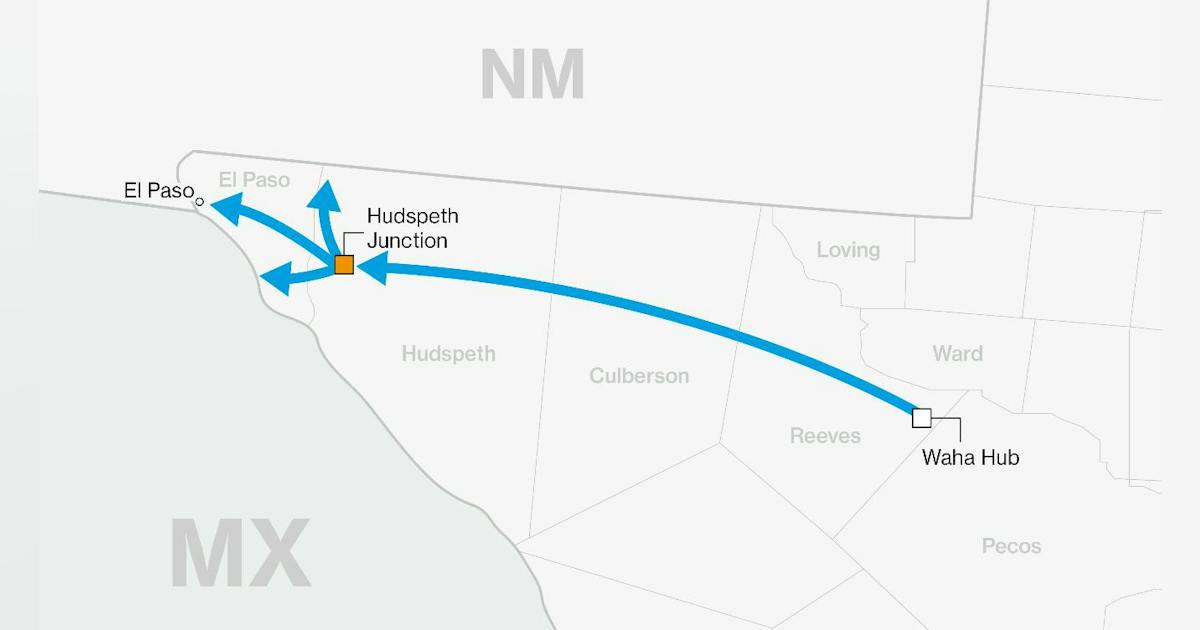
The central feature of the Pecos plan is its power arrangement. Microsoft said the campus would initially operate with a co-located natural-gas generation facility behind the meter, allowing the site to receive dedicated electricity without drawing its opening load from the existing public grid. Chevron separately announced a 20-year power agreement with Microsoft for the West Texas facility. Microsoft said it would fund the new generation and supporting infrastructure, while the power plant and campus could eventually connect to the broader regional grid.

Microsoft also emphasized water conservation. The campus is planned around closed-loop cooling that requires an initial water charge but little additional water during steady-state operation, and the company said it would use non-potable water where possible. In an arid West Texas market, those design choices are not secondary sustainability features; they are fundamental to whether the development can maintain local support.

PowerPlay AI Adds 400 Megawatts to the Abilene Power-First Corridor

The concentration of behind-the-meter development in West Texas expanded again on July 20, when PowerPlay AI announced plans for an initial 400-megawatt AI data center development in the greater Abilene area. The project is being advanced through a joint venture with an unidentified Nasdaq-listed neocloud company and is targeting delivery of its first 400 megawatts of power in 2028.

PowerPlay AI said the joint venture has completed site-feasibility work, infrastructure assessments, land assembly and property acquisition. The partners are now progressing natural-gas service agreements and completing a request-for-proposals process to select an independent power producer. The planned generation would operate behind the meter, supplying electricity directly to the data center rather than depending initially on a conventional utility interconnection.

The company has not disclosed the joint venture partner, the project’s anticipated capital cost, the precise location of the site or whether the initial 400 megawatts represents utility capacity or fully deliverable critical IT load. The announcement should therefore be viewed as an early development milestone rather than a final construction commitment. Nevertheless, PowerPlay AI said the site already benefits from installed natural-gas infrastructure, nearby fiber, assembled land and a location outside an incorporated municipality where conventional municipal zoning restrictions would not apply.

PowerPlay AI’s model also represents another variation of the emerging power-secured development platform. The company is not presenting itself solely as a data center operator. Instead, it aims to transform undeveloped land into energized, construction-ready campuses that can be leased, sold or jointly developed with hyperscalers, neocloud providers and other large computing customers.

The Abilene project joins Microsoft’s Pecos campus in demonstrating how West Texas is becoming a testing ground for gas-powered, behind-the-meter AI infrastructure. The approach may accelerate delivery, but it will also bring greater scrutiny of emissions, fuel-price exposure and the long-term relationship between privately supplied generation and the regional electric grid.

Hut 8 Turns a Texas Campus Into a Contracted Infrastructure Asset

Three days before OpenAI’s Georgia announcement, Hut 8 reported that it had fully commercialized its 1-gigawatt Beacon Point AI data center campus in Nueces County, Texas. The company signed a second 15-year lease covering 352 megawatts of IT capacity, doubling the unnamed investment-grade tenant’s commitment to 704 megawatts. Hut 8 valued the new lease at $9.8 billion over its base term and placed total base-term contract value for the campus at $19.6 billion.

Beacon Point demonstrates how AI campuses are increasingly being underwritten before delivery. Hut 8 said its contracted AI portfolio now totals 949 megawatts of IT capacity supported by 1,330 megawatts of utility capacity, with aggregate base-term contract value of $26.6 billion.

The company expects the first Phase 2 data hall at Beacon Point to be delivered in the second quarter of 2028. That timetable reinforces another pattern in the latest announcements: customers are reserving capacity years before delivery. AI infrastructure demand is being translated into long-duration leases that allow developers to finance construction, electrical equipment and site work well ahead of occupancy.

Kansas City Emerges as a Multi-Gigawatt Market

Digital Realty’s June 22 acquisition of roughly 1,440 acres at Astra Enterprise Park in De Soto, Kansas, marked another major expansion beyond the traditional primary markets. Digital Realty acquired the site for approximately $475 million in cash and common units in its operating partnership and entered into a utility agreement that could provide 600 megawatts by early 2028, rising to 2 gigawatts at full delivery.

The first phase, Astra North, is expected to cover about 280 acres and accommodate nine data center buildings totaling approximately 3 million square feet. Digital Realty estimates that the initial phase could employ more than 1,000 workers at peak construction, while the completed campus could support approximately 250 full-time jobs. The broader site includes the former Sunflower Army Ammunition Plant property, an industrial tract already undergoing redevelopment.

Amazon Builds a New Missouri Cluster and Spends Another $3 Billion in Mississippi

On June 15, Amazon announced a $10 billion data center campus in Montgomery City, Missouri. State officials said the project would create approximately 400 direct jobs, thousands of construction jobs and hundreds of millions of dollars in property-tax revenue over 25 years. Amazon also committed more than $7 million to community programs and infrastructure.

The power arrangement was again a central part of the announcement. Amazon and Ameren Missouri said the company would pay 100% of the cost of providing electric service to the campus, including the infrastructure required to connect it to the grid, without incentives or discounted electric rates. Missouri’s large-load tariff framework is designed to prevent data center costs from being shifted to residential and commercial customers.

Amazon also plans to build water infrastructure and transfer the completed system to the local water district. Its related water-efficiency program with Arable Labs is expected to help farmers reduce groundwater withdrawals by 100 million gallons annually. These commitments reflect the new competitive landscape among states: winning a hyperscale campus increasingly requires not only incentives and available land, but credible rules governing utility cost allocation and resource use.

The Missouri project follows Amazon’s Nov. 20, 2025 commitment to invest at least $3 billion in a new Warren County, Mississippi, data center campus serving AI and cloud workloads. Amazon estimated that the project would create at least 200 direct data center jobs, support more than 300 additional full-time-equivalent positions in the region and sustain thousands of construction and supply-chain jobs across the state.

The Warren County campus builds on Amazon’s previously announced $10 billion investment in two Madison County data center campuses. Together, the projects are creating a substantial Mississippi footprint supported by state development programs, regional power infrastructure and a growing construction and operations workforce. Amazon described the Warren County project as the largest private investment in the county’s history and launched a $150,000 community fund supporting STEM education and other local priorities.

The Development Boom Meets Its Limits?

The past 45 days also supplied a warning about projects that fail to maintain political and legal support. On July 2, Blackstone-owned QTS terminated its portion of the Prince William Digital Gateway project in Virginia and withdrew related filings after years of litigation and local opposition. Compass Datacenters had already exited its portion in April. The court fight centered on the county’s rezoning process and public-notice requirements.

The Digital Gateway collapse matters because it occurred in Northern Virginia, the country’s most established data center region. It demonstrates that market demand, capital and proximity to fiber cannot overcome every entitlement failure. Developers now have to treat community consent, procedural compliance and environmental review as schedule-critical inputs alongside substations, transformers and generators.

That reality explains a focus of these announcements. OpenAI’s community compact, Amazon’s ratepayer protections, Microsoft’s behind-the-meter power strategy and the long-term leases signed by Hut 8 are all responses to the same question: what makes a giant project believable?

The gigawatt era has arrived, but the projects most likely to survive it will be those that can prove, from the beginning, exactly who will power them, who will pay for them and who will benefit when they are built.


Shape
Shape
Stay Ahead

Explore More Insights

Stay ahead with more perspectives on cutting-edge power, infrastructure, energy,  bitcoin and AI solutions. Explore these articles to uncover strategies and insights shaping the future of industries.

Shape

Samsung offers future AI memory roadmap

It is already being used now in NAND flash memory for 3D stacking. Rather than spread the memory circuits out, they are stacked on top of each other like stories on a high-rise building. The technique was first introduced in 2014, with 24-layer NAND flash period last year it broke

Read More »

Agentic AI could force a rethink of enterprise AI server design, researchers say

Researchers propose workflow-aware server design Based on those findings, the researchers proposed a server architecture, called Agora, that dynamically reallocates CPU and GPU resources, separates scheduling, orchestration, and tool execution into dedicated host roles, and adapts resource allocation to workload behavior. “Agora dynamically harvests idle CPU cores for co-located throughput

Read More »

Energy Secretary Keeps Guam Power On

WASHINGTON—U.S. Secretary of Energy Chris Wright today issued an emergency order to mitigate the risk of blackouts for hardworking families and businesses in Guam. The emergency order permits the Guam Power Authority (GPA) to operate specified generation units to meet anticipated electricity demand and maintain reliability. The order follows a request from GPA. “President Trump and the Department of Energy remain committed to using every available tool to reduce the risk of power outages and lower energy costs for hardworking families and businesses,” said Secretary Wright. “Today’s order responds to the urgent need to strengthen grid reliability while ensuring the people of Guam have access to affordable, reliable, and secure electricity.” GPA has limited generation options to meet demand due to limitations, including but not limited to, constraints with the Ukudu steam turbine going offline for emergency repairs. This order is effective 10:00 AM Guam Standard Time on August 6, 2026, through 11:59 PM Guam Standard Time on November 4, 2026.                                                                                            ###

Read More »

DOE’s Office of Energy Dominance Financing Closes Loan to Strengthen Puerto Rico’s Grid, Delivering Hundreds of Millions in Electricity Cost Savings

WASHINGTON – The U.S. Department of Energy’s (DOE) Office of Energy Dominance Financing (EDF) today announced it has closed a $489.4 million loan to Amanecer Puerto Rico LLC, a subsidiary of Pattern Energy, to lower electricity costs and strengthen Puerto Rico’s electric grid. Thanks to President Trump’s Working Families Tax Cuts Act, the investment is expected to save Puerto Rican families and businesses approximately $312.5 million in electricity costs over the next 25 years while improving grid reliability, strengthening energy security, supporting American manufacturing, and reducing dependence on foreign-controlled supply chains. “President Trump’s Working Families Tax Cuts Act is driving investments that strengthen America’s energy infrastructure while lowering costs for hardworking families,” said EDF Director Gregory A. Beard. “This investment will strengthen Puerto Rico’s electric grid, lower electricity costs, support American manufacturing, and provide a pathway for the reliable, dispatchable power needed to deliver affordable, reliable, and secure energy for the people of Puerto Rico.” Puerto Rico’s grid has experienced chronic outages and prolonged service interruptions that have imposed significant costs on families, businesses, and critical infrastructure. Following a comprehensive review by the Trump Administration, DOE restructured the financing to better align with the Administration’s priorities of lowering energy costs, strengthening American manufacturing, and ensuring the deployment of reliable, secure energy infrastructure. The financing will support: 220 megawatts of battery energy storage systems in Arecibo and Santa Isabel using American-manufactured battery technology and secure domestic supply chains. Battery storage capable of providing backup electricity for more than 100,000 customers during power shortages and helping avoid approximately 13 million customer interruption hours based on 2025 operating data. A pathway for the future development of reliable, dispatchable natural gas-fired generation to improve grid stability and strengthen Puerto Rico’s long-term energy security. This financing builds on the Trump Administration’s broader efforts to restore

Read More »

United States to Host International Atomic Energy Agency Launch for New Maritime Nuclear Initiative

WASHINGTON—The United States will host the ministerial launch of the International Atomic Energy Agency’s (IAEA) new initiative, Atomic Technologies Licensed for Applications at Sea (ATLAS), in Washington, D.C., on August 26–27, 2026. This landmark event will bring together ministers, policymakers, and industry leaders from around the world to advance the safe and secure use of nuclear technologies in the maritime sector. The ATLAS initiative aims to create an international framework to address legal and regulatory complexities to enable the deployment of nuclear applications at sea. It builds upon the IAEA’s extensive experience and global authority in nuclear safety, security, and safeguards to support the deployment of innovative civil nuclear technologies. The initiative is technology-neutral and focuses on establishing and maintaining the highest standards for safety, security, and nonproliferation. “DOE remains focused on unleashing American energy dominance, accelerating innovation, and advancing sources of energy that are affordable, reliable, and secure for the American people,” said U.S. Secretary of Energy Chris Wright. “Hosting the launch of ATLAS supports this critical mission, positioning the U.S. nuclear and maritime sectors at the forefront of advanced energy innovation, while promoting safety and security for the United States and the world.”  Leading up to the launch, the United States will hold an “Industry Day” on August 25, 2026. This event will serve as a platform for America’s leading nuclear and maritime companies to showcase cutting-edge technologies. The Industry Day will highlight American innovation and underscore American energy dominance that will support the global expansion of civil maritime nuclear applications. “The global maritime sector is at a critical turning point, facing urgent pressure to sustain long-distance, high-speed operations while ensuring reliability and energy security,” said IAEA Director General Rafael Mariano Grossi. “Nuclear energy is fast emerging as a game-changer. Small modular reactors offer a safe and viable option for

Read More »

Vista seeks RIGI approval for $5.8 billion Bandurria Norte development

Vista Energy SAB de CV has applied to include its Bandurria Norte shale oil development in Argentina’s Large Investment Incentive Regime (RIGI). The $5.8-billion project targets peak production of 50,000 boe/d. Bandurria Norte is the largest oil project submitted under RIGI, which provides tax, customs, and foreign-exchange incentives for qualifying investments, and follows approval of Pampa Energía SA’s $4.521 billion Rincón de Aranda development, which established the first framework for qualifying incremental shale oil production under the regime. Together, the projects represent more than $10.3 billion in planned investment and would extend RIGI-backed development into undeveloped Vaca Muerta oil acreage. Bandurria Norte spans 26,500 acres in Vaca Muerta’s oil window and currently has no producing wells. Vista plans to drill and complete 332 horizontal wells and build dedicated infrastructure, including a 40,000-b/d oil treatment plant, a gas compression plant, gathering systems, pipelines, and associated infrastructure. The project would be Vista’s first large-scale development outside its core Bajada del Palo hub, where existing roads, processing capacity, and gathering networks support lower-cost drilling. Bandurria Norte requires full greenfield development, increasing upfront capital requirements, and execution risk. Vista said RIGI incentives are material to developing its undeveloped acreage because incremental production from new areas can qualify separately from existing output if volumes remain physically and operationally traceable. Export capacity remains critical Bandurria Norte forms part of Vista’s plan to increase production to 208,000 boe/d in 2028 and 250,000 boe/d in 2030. Development depends on additional crude transportation capacity from the Neuquén basin, particularly the Vaca Muerta Oil Sur (VMOS) pipeline under construction between Allen and Punta Colorada in Río Negro province. Designed for an initial capacity of 550,000 b/d and expandable to 700,000 b/d, VMOS is scheduled for start-up in first-half 2027. Vista averaged 156,000 boe/d of production in second-quarter 2026, up 16%

Read More »

Oil prices surge on renewed Middle East tensions

@import url(‘https://fonts.googleapis.com/css2?family=Inter:wght@100..900&display=swap’); .ebm-page__main h1, .ebm-page__main h2, .ebm-page__main h3, .ebm-page__main h4, .ebm-page__main h5, .ebm-page__main h6 { font-family: Inter; } body { line-height: 150%; letter-spacing: 0.025em; } button, .ebm-button-wrapper { font-family: Inter; } .label-style { text-transform: uppercase; color: var(–color-grey); font-weight: 600; font-size: 0.75rem; } .caption-style { font-size: 0.75rem; opacity: .6; } #onetrust-pc-sdk [id*=btn-handler], #onetrust-pc-sdk [class*=btn-handler] { background-color: #c19a06 !important; border-color: #c19a06 !important; } #onetrust-policy a, #onetrust-pc-sdk a, #ot-pc-content a { color: #c19a06 !important; } #onetrust-consent-sdk #onetrust-pc-sdk .ot-active-menu { border-color: #c19a06 !important; } #onetrust-consent-sdk #onetrust-accept-btn-handler, #onetrust-banner-sdk #onetrust-reject-all-handler, #onetrust-consent-sdk #onetrust-pc-btn-handler.cookie-setting-link { background-color: #c19a06 !important; border-color: #c19a06 !important; } #onetrust-consent-sdk .onetrust-pc-btn-handler { color: #c19a06 !important; border-color: #c19a06 !important; } Global oil prices rallied sharply July 29 as renewed military escalation in the Middle East ended several days of relative calm and revived concerns over crude flows from the region. Brent crude surged 7% to above $90/bbl, while US WTI climbed above $84/bbl. The rally followed joint US-Saudi airstrikes on Iran-backed militias in Iraq—which killed at least 20 fighters, according to Iraq’s Popular Mobilization Forces—and a retaliatory Iranian missile barrage targeting US forces in the region. Stay updated on oil price volatility, shipping disruptions, LNG market analysis, and production output through OGJ’s Iran war content hub. This operation marks the first time Saudi Arabia has publicly acknowledged a combat role in the conflict. Washington and Riyadh stated that the strikes were launched in response to drone attacks on oil facilities in Saudi Arabia’s Eastern Province—attacks that originated from within Iraq. The sudden escalation across multiple fronts has raised concerns that the 5-month-old conflict could expand further, threatening critical shipping lanes—the Strait of Hormuz and, following the Houthis’ declared blockade of Saudi shipping, the Bab el-Mandeb strait. Adding support to prices, US commercial crude inventories fell by 7.2 million bbl in the week ended July 24, according

Read More »

Türkiye signs partnership deal with bp for Kirkuk oil field redevelopment

bp plc has farmed out a 15% interest in BP Energy Co. of Kirkuk Ltd. (BP ECKL) to state-owned Turkish Petroleum Corp. (TPAO), expanding on a partnership to support the redevelopment of major oil and gas fields in the Kirkuk region of northern Iraq. The move comes as Iraq aims to increase oil and gas production through various international partnerships. Signed during the official visit of Iraqi Prime Minister Ali Al-Zaidi to Türkiye, the agreement builds on a strategic cooperation memorandum of understanding (MoU) signed by the companies in February 2026.  The development and production contract covers an initial phase of oil and gas production of more than 3 billion boe from the Baba and Avanah domes of Kirkuk oil field and the adjacent Bai Hassan, Jambur, and Khabbaz fields in Federal Iraq, all currently operated by the North Oil Co. (NOC) and North Gas Co. (NGC), bp said in a release July 28. The contract area holds potential for additional exploration, the companies said. The deal follows one that saw ConocoPhillips acquire a 42% interest in BP ECKL. Together, bp said, the transactions support the next phase of redevelopment in Kirkuk. Türkiye Energy and Natural Resources Minister Bayraktar said the agreement is a step “towards making Turkish Petroleum a company that produces 1 million barrels of oil and natural gas per day.” Following completion of the transaction, which is subject to regulatory approvals, bp will remain the majority shareholder and a key participant in BP ECKL (bp 43%, ConocoPhillips 42%, TPAO 15%).

Read More »

Polish data center plans to send its waste heat to the neighbors

As Europe swelters in a heatwave, residents probably don’t want to hear about ways to make their homes even hotter, but that’s what Polish property developer Citylink is talking about, with plans to dump waste heat from a new data center in Wrocław into the municipal district heating network. Citylink is designing the data center so that heat from servers can be recovered instead of being dissipated via cooling systems — and as the data center grows, any increase in computing power will mean more energy available for recovery. The collaboration with local power company Kogeneracja will provide “valuable experience in designing and operating modern data centers, with a particular focus on infrastructure dedicated to AI nodes,” said Michał Starybrat, development director at Citylink.

Read More »

The Data Center Industry’s Permission to Build

The data center industry has spent the past several years announcing the future. Gigawatts. AI factories. New regions. New power architectures. Campuses at a scale that would have seemed extraordinary before generative AI reset the industry’s expectations. Now the public has entered the room. Communities are asking harder questions about who pays for electrical infrastructure, where the water comes from, how much noise reaches neighboring properties and what remains locally after construction crews leave. Utilities are being pressed to protect ratepayers from speculative load and costly system upgrades. Elected officials who once treated data centers primarily as economic-development wins are finding that the politics have changed. The defining question is no longer whether demand is real. It is whether the data center industry can keep earning the permission required to build at the scale it has promised. I mean permission in a broader sense than zoning approval, an environmental permit or a signed utility agreement. I mean the political and social room to develop infrastructure measured in hundreds of megawatts and billions of dollars—often in places whose residents have only recently begun to understand what is being proposed around them. That room is narrowing. A Different Kind of Constraint On July 18, opponents organized 142 demonstrations across 42 states in what Reuters described as the first coordinated national protest against the data center buildout. The movement crossed familiar political boundaries, bringing together environmental advocates, rural landowners and residents concerned about power prices, water, noise and the pace of development. A June Reuters/Ipsos poll found that 57% of respondents would oppose a data center in their community. Only 14% said they would be comfortable with one nearby. Those findings deserve the industry’s full attention. New York has imposed a one-year pause on certain environmental approvals for new hyperscale data centers while

Read More »

NVIDIA’s Reported $50B Lease and the Nuclear-Powered AI Factory

Aalo and Crusoe Pursue the Nuclear-Powered AI Factory The Aalo-Crusoe partnership addresses the industry’s power problem by bringing power generation directly to the compute. In this case, skipping intermediary power stages such as minimal grid or custom BTM gas turbine solutions and going straight to nuclear. Aalo Atomics and Crusoe said they plan to deploy a Crusoe Spark modular data center running Crusoe Cloud at Idaho National Laboratory in 2027. The proof-of-concept project is intended to demonstrate an AI workload operating on power from an Aalo advanced reactor. Crusoe continues to expand their other data center campus projects. The companies then intend to deploy Aalo Pods, Aalo’s 50-megawatt-electric nuclear power plants, at Crusoe data centers by the end of 2029. Aalo has already begun work on a second reactor beside its initial test unit at the Idaho site. That reactor is expected to produce electricity for the Crusoe installation. On July 4, 2026, Aalo’s zero-power Critical Test Reactor reached criticality, sustaining a nuclear chain reaction without generating commercial electricity. The test reactor contains a full-scale core and components analogous to those planned for the 10-megawatt-electric Aalo-X power reactor being built next door, but it operates before sodium coolant and electricity-generating systems are added. Aalo plans to continue experiments with the Critical Test Reactor to refine its reactor-physics models, characterize control behavior and generate data supporting development and licensing of the full-power Aalo-X system. Advanced nuclear announcements sometimes blur the line between a successful test, an electricity-producing demonstration and a commercially licensed fleet. Aalo has achieved an important technical milestone, but substantial work remains before reactors can be manufactured, licensed, financed and operated at commercial data center sites. The pairing with Crusoe should be noted because it connects a reactor developer with a company that can provide the data center load,

Read More »

Data Center Jobs: Engineering, Construction, Commissioning, Sales, Field Service and Facility Tech Jobs Available in Major Data Center Hotspots

Each month Data Center Frontier, in partnership with Pkaza, posts some of the hottest data center career opportunities in the market. Here’s a look at some of the latest data center jobs posted on the Data Center Frontier jobs board, powered by Pkaza Critical Facilities Recruiting. Looking for Data Center Candidates? Check out Pkaza’s Active Candidate / Featured Candidate Hotlist  CFD Engineer – Data Center Mechanical DesignNew York, NY (remote)This position is also available as a remote role anywhere in the US in addition to key markets such as Cedar Rapids, IA; Kansas City, CA or White Plains, NY. Our client is an engineering design and commissioning company that has a national footprint and specializes in MEP critical facilities design. They provide design, commissioning, consulting and management expertise in the critical facilities space. They have a mindset to provide reliability, energy efficiency, and sustainable design expertise when providing these consulting services for enterprise, colocation and hyperscale companies. This career-growth minded opportunity offers exciting projects with leading-edge technology and innovation as well as competitive salaries and benefits. Electrical Commissioning Agent – Data CentersColumbus, OH (limited travel) Non-traveling CxA positions available in: Indianapolis, IN; Cedar Rapids, IA; Phoenix, AZ; Atlanta, GA and Austin, TX. Traveling CxA based really near any major airport, otherwise traveling to: New York, NY; White Plains, NY; Dallas, TX; Richmond, VA; Montvale, NJ; Charlotte, NC; Salt Lake City, UT; Kansas City, MO; Chesterton, IN or Chicago, IL. ***Also looking for a lead EE and ME CxA Agents and CxA PMs.*** This opportunity is with a leading EPC company of data center design / build / commissioning solutions. This company provides a complete life cycle of solutions that are custom-fit to the requirements of their client’s mission-critical facilities. This opportunity provides a career-growth minded role with exciting projects with leading-edge technology

Read More »

Navigating Virginia’s Data Center Boom: Policy Shifts, Local Projects, and Future Challenges

Virginia’s newest high profile data center story is no longer the announcement of the next generation AI data center campus, it is now how the state is beginning to set the trend for legislative process to protect its communities while still encouraging the data center industry development. On August 3, state Senators Richard Stuart, a Republican, and Russet Perry, a Democrat, called on Gov. Abigail Spanberger to convene a special legislative session to address groundwater strain. Their request followed a state study warning that eastern Virginia’s groundwater supply is constrained and that large new industrial withdrawals may be difficult to sustain. The debate has expanded into calls for a broader pause: Senator Glen Sturtevant has asked for an immediate statewide moratorium on new data center development, while Senate President Pro Tempore Louise Lucas has said such a moratorium deserves serious consideration. Those proposals are not yet law, but they are the clearest indication that Virginia’s policy discussion has moved beyond incremental regulation. The Commonwealth spent years treating data centers primarily as an economic-development and tax-base success. It is now evaluating them simultaneously as power, water, land-use, air-quality and ratepayer issues. That shift is especially important for projects outside Northern Virginia, where developers are increasingly pursuing large sites in communities with less experience reviewing hyperscale infrastructure. The calls for a special session arrive only weeks after a significant package of data center laws and budget provisions took effect July 1. Virginia’s new budget established what the administration describes as a first-of-its-kind electricity consumption tax on data centers. The charge is 1.1 cents per kilowatt-hour, began July 1 and is capped at $600 million in annual collections, with excess revenue refunded to data center taxpayers. The compromise preserved Virginia’s sales-and-use-tax exemption for qualifying data center equipment, avoiding the abrupt repeal sought by

Read More »

Land and Expand: The Gigawatt Credibility Test

The midsummer wave of U.S. data center development is not defined by a single market, developer or technology company. It stretches from the Georgia coast to West Texas, from the industrial Midwest to the Mississippi River. What links the projects announced since early June is not just their scale, it is the realization that scale alone is not enough. Developers are still announcing multibillion-dollar campuses and gigawatt power requirements, but the language surrounding those announcements has changed. Companies are emphasizing who will pay for new generation and transmission, how cooling systems will limit water consumption, what communities will receive beyond temporary construction employment, and when contracted customers will begin occupying capacity. In several cases, the announcement is less about acquiring land than proving that a project has become commercially and electrically credible.  As we have seen progressing through the industry, the latest announcements point toward campuses that combine compute, power, financing and community agreements in one development package. OpenAI Goes Direct in Georgia OpenAI, on July 22 disclosed Project Camellia, a long-term data center development in Effingham County, Georgia. OpenAI said it is designing and developing the campus itself and has contracted with Georgia Power for 3.2 gigawatts of electricity, to be delivered in phases from 2028 through 2032. The project has been reported as a roughly $20 billion investment on approximately 1,400 acres, making it one of the largest individual data center proposals currently moving through the U.S. pipeline. Project Camellia is notable not only for its size but for OpenAI’s more direct role. The company has traditionally secured capacity through cloud providers and infrastructure partners. By taking responsibility for designing and developing the Georgia campus, OpenAI is signaling that control over power, schedule and facility design has become strategically important as AI companies compete for increasingly scarce large-scale

Read More »

Microsoft will invest $80B in AI data centers in fiscal 2025

And Microsoft isn’t the only one that is ramping up its investments into AI-enabled data centers. Rival cloud service providers are all investing in either upgrading or opening new data centers to capture a larger chunk of business from developers and users of large language models (LLMs).  In a report published in October 2024, Bloomberg Intelligence estimated that demand for generative AI would push Microsoft, AWS, Google, Oracle, Meta, and Apple would between them devote $200 billion to capex in 2025, up from $110 billion in 2023. Microsoft is one of the biggest spenders, followed closely by Google and AWS, Bloomberg Intelligence said. Its estimate of Microsoft’s capital spending on AI, at $62.4 billion for calendar 2025, is lower than Smith’s claim that the company will invest $80 billion in the fiscal year to June 30, 2025. Both figures, though, are way higher than Microsoft’s 2020 capital expenditure of “just” $17.6 billion. The majority of the increased spending is tied to cloud services and the expansion of AI infrastructure needed to provide compute capacity for OpenAI workloads. Separately, last October Amazon CEO Andy Jassy said his company planned total capex spend of $75 billion in 2024 and even more in 2025, with much of it going to AWS, its cloud computing division.

Read More »

John Deere unveils more autonomous farm machines to address skill labor shortage

Join our daily and weekly newsletters for the latest updates and exclusive content on industry-leading AI coverage. Learn More Self-driving tractors might be the path to self-driving cars. John Deere has revealed a new line of autonomous machines and tech across agriculture, construction and commercial landscaping. The Moline, Illinois-based John Deere has been in business for 187 years, yet it’s been a regular as a non-tech company showing off technology at the big tech trade show in Las Vegas and is back at CES 2025 with more autonomous tractors and other vehicles. This is not something we usually cover, but John Deere has a lot of data that is interesting in the big picture of tech. The message from the company is that there aren’t enough skilled farm laborers to do the work that its customers need. It’s been a challenge for most of the last two decades, said Jahmy Hindman, CTO at John Deere, in a briefing. Much of the tech will come this fall and after that. He noted that the average farmer in the U.S. is over 58 and works 12 to 18 hours a day to grow food for us. And he said the American Farm Bureau Federation estimates there are roughly 2.4 million farm jobs that need to be filled annually; and the agricultural work force continues to shrink. (This is my hint to the anti-immigration crowd). John Deere’s autonomous 9RX Tractor. Farmers can oversee it using an app. While each of these industries experiences their own set of challenges, a commonality across all is skilled labor availability. In construction, about 80% percent of contractors struggle to find skilled labor. And in commercial landscaping, 86% of landscaping business owners can’t find labor to fill open positions, he said. “They have to figure out how to do

Read More »

2025 playbook for enterprise AI success, from agents to evals

Join our daily and weekly newsletters for the latest updates and exclusive content on industry-leading AI coverage. Learn More 2025 is poised to be a pivotal year for enterprise AI. The past year has seen rapid innovation, and this year will see the same. This has made it more critical than ever to revisit your AI strategy to stay competitive and create value for your customers. From scaling AI agents to optimizing costs, here are the five critical areas enterprises should prioritize for their AI strategy this year. 1. Agents: the next generation of automation AI agents are no longer theoretical. In 2025, they’re indispensable tools for enterprises looking to streamline operations and enhance customer interactions. Unlike traditional software, agents powered by large language models (LLMs) can make nuanced decisions, navigate complex multi-step tasks, and integrate seamlessly with tools and APIs. At the start of 2024, agents were not ready for prime time, making frustrating mistakes like hallucinating URLs. They started getting better as frontier large language models themselves improved. “Let me put it this way,” said Sam Witteveen, cofounder of Red Dragon, a company that develops agents for companies, and that recently reviewed the 48 agents it built last year. “Interestingly, the ones that we built at the start of the year, a lot of those worked way better at the end of the year just because the models got better.” Witteveen shared this in the video podcast we filmed to discuss these five big trends in detail. Models are getting better and hallucinating less, and they’re also being trained to do agentic tasks. Another feature that the model providers are researching is a way to use the LLM as a judge, and as models get cheaper (something we’ll cover below), companies can use three or more models to

Read More »

OpenAI’s red teaming innovations define new essentials for security leaders in the AI era

Join our daily and weekly newsletters for the latest updates and exclusive content on industry-leading AI coverage. Learn More OpenAI has taken a more aggressive approach to red teaming than its AI competitors, demonstrating its security teams’ advanced capabilities in two areas: multi-step reinforcement and external red teaming. OpenAI recently released two papers that set a new competitive standard for improving the quality, reliability and safety of AI models in these two techniques and more. The first paper, “OpenAI’s Approach to External Red Teaming for AI Models and Systems,” reports that specialized teams outside the company have proven effective in uncovering vulnerabilities that might otherwise have made it into a released model because in-house testing techniques may have missed them. In the second paper, “Diverse and Effective Red Teaming with Auto-Generated Rewards and Multi-Step Reinforcement Learning,” OpenAI introduces an automated framework that relies on iterative reinforcement learning to generate a broad spectrum of novel, wide-ranging attacks. Going all-in on red teaming pays practical, competitive dividends It’s encouraging to see competitive intensity in red teaming growing among AI companies. When Anthropic released its AI red team guidelines in June of last year, it joined AI providers including Google, Microsoft, Nvidia, OpenAI, and even the U.S.’s National Institute of Standards and Technology (NIST), which all had released red teaming frameworks. Investing heavily in red teaming yields tangible benefits for security leaders in any organization. OpenAI’s paper on external red teaming provides a detailed analysis of how the company strives to create specialized external teams that include cybersecurity and subject matter experts. The goal is to see if knowledgeable external teams can defeat models’ security perimeters and find gaps in their security, biases and controls that prompt-based testing couldn’t find. What makes OpenAI’s recent papers noteworthy is how well they define using human-in-the-middle

Read More »