Stay Ahead, Stay ONMINE

Monumental Agrees New Funding for NZEC

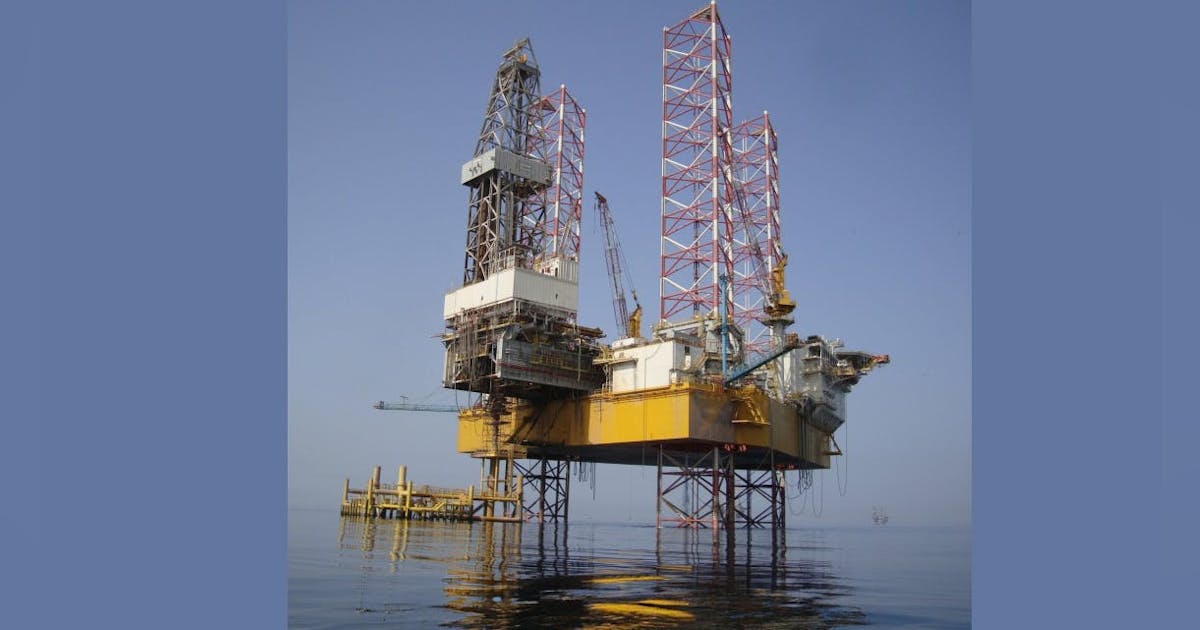
Monumental Energy Corp said Tuesday it had signed a definitive deal to help fund New Zealand Energy Corp’s (NZEC) planned increase of oil and gas production in the Taranaki basin onshore New Zealand. The agreement extends a partnership that already saw the restart of production in the nearby Copper Moki field in 2025. “The agreement […]

Monumental Energy Corp said Tuesday it had signed a definitive deal to help fund New Zealand Energy Corp’s (NZEC) planned increase of oil and gas production in the Taranaki basin onshore New Zealand.

The agreement extends a partnership that already saw the restart of production in the nearby Copper Moki field in 2025.

“The agreement will enable the company [Monumental] to participate in certain mutually agreed upon appraisal and development workover projects with NZEC to increase oil and gas production” in the Waihapa-Ngaere area, Vancouver, Canada-based Monumental said in an online statement.

NZEC, a 50 percent owner in the relevant licenses, and Monumental must agree on the budget for each project, the statement said.

“In consideration for Monumental funding NZEC’s share of any additional project, NZEC grants to Monumental a royalty applicable to such additional project effective upon satisfaction of all conditions precedent and commencement of production”, said Monumental, already a shareholder in NZEC.

“In summary, the initial royalty will be payable in an amount equal to 75 percent of net receipts, on a quarterly basis, until such time as a sum equal to the costs that have been paid by Monumental has been paid back, and thereafter the final royalty will commence and will be payable by NZEC to Monumental in an amount equal to 25 percent of net receipts”, it said.

The companies expect the first project under the funding agreement to start in the first quarter of 2026 subject to conditions including the receipt of regulatory approvals.

On November 18, 2025, Monumental said it had completed a capital raise with gross proceeds of CAD 810,000 ($583,000) “to fund cost overruns on Copper Moki 1 oil and gas well, to fund the costs and expenses to formally enter into and fund additional workover projects with New Zealand Energy Corp and L&M Energy and for general working capital purposes and corporate expenses”.

On October 15, 2025, Monumental said it had agreed to fund NZEC’s share of workover costs to restart flows at several wells in Waihapa-Ngaere.

“These workovers will follow the same royalty structure as that established for the successful Copper Moki programs, whereas Monumental will earn a 25 percent royalty on NZEC’s production share after full recovery of its capital investment, which will be repaid from 75 percent of NZEC’s net revenue interest”, Monumental said.

L&M Energy Ltd would shoulder the remaining investment as NZEC’s equal partner in the campaign, Monumental said.

The workovers involve the Waihapa-H1 well and the Ngaere 1, 2, and 3 wells.

“The Waihapa-H1 well, drilled in the early 2000s, initially flowed oil at rates of approximately 1,500 barrels per day from fracture porosity within the Tikorangi horizontal section”, Monumental said. “Production ceased due to a collapse in the upper section of the wellbore.

“A workover program proposed to return the well to production includes jetting clean-out and the installation of new tubing. The well site is located approximately 600 meters from, and easily connected to, the Waihapa production facility.

“The Ngaere 1, 2, and 3 wells historically produced oil from the Tikorangi Formation. However, a review of electric logs and drilling data has identified multiple shallower, hydrocarbon-charged sand intervals in each well that present opportunities for additional oil and gas production. A field redevelopment program has been designed to access and produce these bypassed pay zones.

“The steel casing in each well will be perforated at the target intervals, followed by production testing. All three wells are connected via existing pipelines to the Waihapa production and export facilities, allowing for immediate oil and gas sales upon successful completion.

“In the event of success, anticipated flow rates per well are expected to range from the tens to low hundreds of barrels of oil per day”.

In late July 2025 Monumental restarted production at the Copper Moki-1 well, marking the completion of its workover campaign in the Copper Moki field with the earlier reactivation of Copper Moki-2, according to announcements by the company.

It said in an update August 19, 2025, “Both Copper Moki-1 and Copper Moki-2 have been onstream for almost a month delivering a combined production rate of approximately 125 barrels of oil per day. These rates continue to trend upward as pump speeds are gradually increased to optimize flow while preventing sand from entering the borehole”.

“In addition to oil production, both wells are now exporting associated gas to the neighboring Waihapa Production Station for processing and sale”, Monumental added.

Copper Moki, which started production 2011, halted production 2022, according to data from New Zealand’s Business, Innovation and Employment Ministry.

To contact the author, email [email protected]

Shape
Shape
Stay Ahead

Explore More Insights

Stay ahead with more perspectives on cutting-edge power, infrastructure, energy,  bitcoin and AI solutions. Explore these articles to uncover strategies and insights shaping the future of industries.

Shape

BPCL lets contracts for expansions at Bina, Mumbai refineries

Bharat Petroleum Corp. Ltd. (BPCL) has awarded separate contracts to Technip Energies NV for delivery of major works on key projects designed to support expanded production of petrochemicals at two of the operator’s Indian refineries. Under a first contract revealed on Jan. 7, Technip Energies said it will provide engineering,

Read More »

Saudi Aramco to resume Perro Negro 7 offshore operations

@import url(‘https://fonts.googleapis.com/css2?family=Inter:[email protected]&display=swap’); a { color: var(–color-primary-main); } .ebm-page__main h1, .ebm-page__main h2, .ebm-page__main h3, .ebm-page__main h4, .ebm-page__main h5, .ebm-page__main h6 { font-family: Inter; } body { line-height: 150%; letter-spacing: 0.025em; font-family: Inter; } button, .ebm-button-wrapper { font-family: Inter; } .label-style { text-transform: uppercase; color: var(–color-grey); font-weight: 600; font-size: 0.75rem; } .caption-style

Read More »

NRF 2026: HPE expands network, server products for retailers

The package also integrates information from HPE Aruba Networking User Experience Insight sensors and agents, which now include support for WiFi 7 networks. The combination can measure end-user activity and allow IT teams to baseline network performance, continuously test network health, track trends, and plan for device growth and AI-native

Read More »

Italy fines Cloudflare for refusing to block pirate sites

Italy’s communications authority AGCOM has fined Cloudflare €14.2 million for refusing to block pirate sites via its public DNS service 1.1.1.1, in accordance with the country’s controversial Piracy Shield law, reports Ars Technica. The law, which was introduced in 2024, requires network operators and DNS services to block websites and

Read More »

Uniper Approves 219 MWp Solar Projects in Poland

Uniper SE said Tuesday it had sanctioned four new solar projects in Poland with a combined capacity of 219 megawatts peak (MWp). The Domanowo, Kłodawa, Krotoszyce and Pakosc projects are among five solar projects on which it made a positive final investment decision (FID) last month, the German power and gas utility said in a press release Tuesday. Uniper already announced a FID to proceed constructing its first solar project in Scotland on December 11, 2025. It said it expects the 45-MW Berryhill Solar Farm just north of Dundee to start construction “early 2026” and start operation later in the year. Berryhill’s output, from about 150,000 solar panels, would be enough “to power the equivalent of over 12,500 UK households each year, 1/5th the population of Angus – contributing to the UK’s net zero targets”, Uniper said. “The project has been developed jointly with partner Solar2 and Uniper plans to start the construction process as its sole owner”, the Düsseldorf-based company said last month. Uniper had announced two other UK solar projects in 2025: the Tamworth Solar Farm with a capacity of around 44.2 MWp and the 21.33-MWp Totmonslow Solar Farm. The two projects’ combined capacity can power about 23,300 homes a year, according to Uniper. Uniper aims to connect the projects to the grid in 2026, it said in a press release February 25, 2025. According to Tuesday’s statement, Uniper’s generation portfolio now has 568 MWp “in execution”. “Uniper’s investments in these solar projects are part of its strategic commitment to invest around EUR 8 billion [$9.31 billion] in growth and transformation projects by the early 2030s”, Uniper said Tuesday. “In addition to the five new projects, six further projects with a total capacity of up to 280 MWp are already in the construction phase”. Uniper targets a power generation capacity of

Read More »

Monumental Agrees New Funding for NZEC

Monumental Energy Corp said Tuesday it had signed a definitive deal to help fund New Zealand Energy Corp’s (NZEC) planned increase of oil and gas production in the Taranaki basin onshore New Zealand. The agreement extends a partnership that already saw the restart of production in the nearby Copper Moki field in 2025. “The agreement will enable the company [Monumental] to participate in certain mutually agreed upon appraisal and development workover projects with NZEC to increase oil and gas production” in the Waihapa-Ngaere area, Vancouver, Canada-based Monumental said in an online statement. NZEC, a 50 percent owner in the relevant licenses, and Monumental must agree on the budget for each project, the statement said. “In consideration for Monumental funding NZEC’s share of any additional project, NZEC grants to Monumental a royalty applicable to such additional project effective upon satisfaction of all conditions precedent and commencement of production”, said Monumental, already a shareholder in NZEC. “In summary, the initial royalty will be payable in an amount equal to 75 percent of net receipts, on a quarterly basis, until such time as a sum equal to the costs that have been paid by Monumental has been paid back, and thereafter the final royalty will commence and will be payable by NZEC to Monumental in an amount equal to 25 percent of net receipts”, it said. The companies expect the first project under the funding agreement to start in the first quarter of 2026 subject to conditions including the receipt of regulatory approvals. On November 18, 2025, Monumental said it had completed a capital raise with gross proceeds of CAD 810,000 ($583,000) “to fund cost overruns on Copper Moki 1 oil and gas well, to fund the costs and expenses to formally enter into and fund additional workover projects with New Zealand Energy

Read More »

China to Sustain Energy Storage Leadership, WoodMac Projects

China accounted for 54 percent of last year’s record global energy storage installations and looks set to maintain its dominant position in the sector beyond the decade despite policy headwinds, Wood Mackenzie said Tuesday. Worldwide energy storage installations in 2025 totaled 106 gigawatts (GW), up 43 percent from 2024. Global capacity now stands at about 270 GW, the Edinburgh, Scotland-based energy consultancy firm said in an insights piece on its website. “Energy storage has established itself as a critical component of the global energy transition”, WoodMac said.  By 2034 global energy storage capacity is expected to reach 1,545 GW, with China poised to contribute around half of additions in the 10-year period from 2025. “However, the Chinese market faces considerable challenges entering 2026-27”, it said. “The removal of mandatory renewable-storage coupling requirements and the absence of established revenue frameworks create substantial uncertainty”. Nonetheless the world’s second-biggest economy is growing renewable energy and storage to displace the more expensive gas power, WoodMac said earlier. “China’s battery costs have dropped by over 50 percent in the last three years while its 42 GW of grid-connected energy storage additions last year (excluding pumped hydro installations) were double that of gas power in 2024”, WoodMac wrote October 30, 2025. “Consequently, China’s gas power generation share of output has remained broadly flat in 2025 as energy storage eats into gas’s market share.  The global LNG industry should take note”. U.S. Growth WoodMac said Tuesday the United States energy storage market appears to also continue displaying resilience against a backdrop of policy reversals, with installations growing 53 percent year-on-year in 2025. “The passage of reconciliation legislation introduced supply chain restrictions for projects seeking federal tax credits, creating initial market uncertainty”, it said. “However, U.S. large-scale forecast actually increased following the bill’s passage, driven by announcements of domestic cell manufacturing

Read More »

Venezuela to turn over 30-50 million bbl of oil to US; Washington seizes additional tankers

Venezuela’s state-owned oil company Petróleos de Venezuela SA (PDVSA) will turn over 30-50 million bbl of oil to the US to refine and sell, President Trump said late Jan. 6, just days after the US launched an airstrike in the oil-rich South American country and captured its leader, Nicolas Maduro. “I am pleased to announce that the Interim Authorities in Venezuela will be turning over between 30 and 50 MILLION Barrels of High Quality, Sanctioned Oil, to the United States of America,” Trump wrote on Truth Social. “This Oil will be sold at its Market Price, and that money will be controlled by me, as President of the United States of America, to ensure it is used to benefit the people of Venezuela and the United States!” Secretary of State Marco Rubio said Venezuela’s Interim President Delcy Rodriguez agreed to the deal because the country “can’t move oil because of US sanctions and the enforcement of those sanctions.” Speaking on Capitol Hill between classified briefings to Senate and House lawmakers, Rubio said the US would work with PDVSA to get the oil on the market “as quickly as possible.” Venezuela holds the world’s largest cache of untapped oil, with over 300 million bbl of proven reserves. Mismanagement, underinvestment and sanctions have limited production to roughly 1.1 million b/d from a peak of about 3.5-million b/d in the late 1990s, according to the US Energy Information Administration. China purchases a large share of Venezuela’s exported oil. Rubio said PDVSA asked the US to include the oil the US seized from Venezuela-linked tankers on Jan. 7 in the sales agreement. Department of Homeland Security (DHS) Secretary Kristi Noem announced the tanker seizures—the third and fourth such seizure by the US in the past month—with a post on X of a video of the

Read More »

Goldman conference wrap: Northern boss says ‘we’re at the bottom of the cycle’

“When you think about it, it’s exceptionally good geology work and geophysics work. It’s ground-floor leasing of land. It’s drilling horizontal wells, completing horizontal wells and then building surface facilities,” Gaspar said of the blocking and tackling of Fervo’s work. “That kind of sounds familiar to what we do. Now, we don’t market electrons today. But hey, we’re smart enough to figure out how to partner, how to close that gap […] I think that really could be something that’s interesting when you look further out kind of into the next decade.” Expand’s Dell’Osso talks Western Haynesville advantage Executives of Expand Energy Corp., Oklahoma City, raised a few eyebrows last fall with the announcement that they had committed nearly $180 million to build a nearly 75,000-acre position in the Western Haynesville region. Nick Dell’Osso, the company’s president and chief executive officer, told Goldman attendees the move is part of the company’s view that the industry’s existing Haynesville operations won’t be able to meet expected demand growth. Asked about the Western Haynesville being potentially more expensive to develop—Expand is drilling its first well there now—because some of its zones are hotter and deeper than others in the region, Dell’Osso said he’s counting on Expand’s experience elsewhere with such zones as well as its ability to bring newer tools and technologies to the table. “There’s no question about it; it is higher-cost than some other areas,” Dell’Osso said. “But again, we have assets that are high-cost today and we’re able to drill those pretty attractively. In the NFZ [Northwest Louisiana], which is the higher-cost area on the Louisiana side, we sit at about $1,500 a foot for drill completion turn-in-line in aggregate. […] Our peers are significantly higher than that—20%, 25% higher than that in a lot of cases. We think we can

Read More »

TotalEnergies to enter Block 8 offshore Lebanon

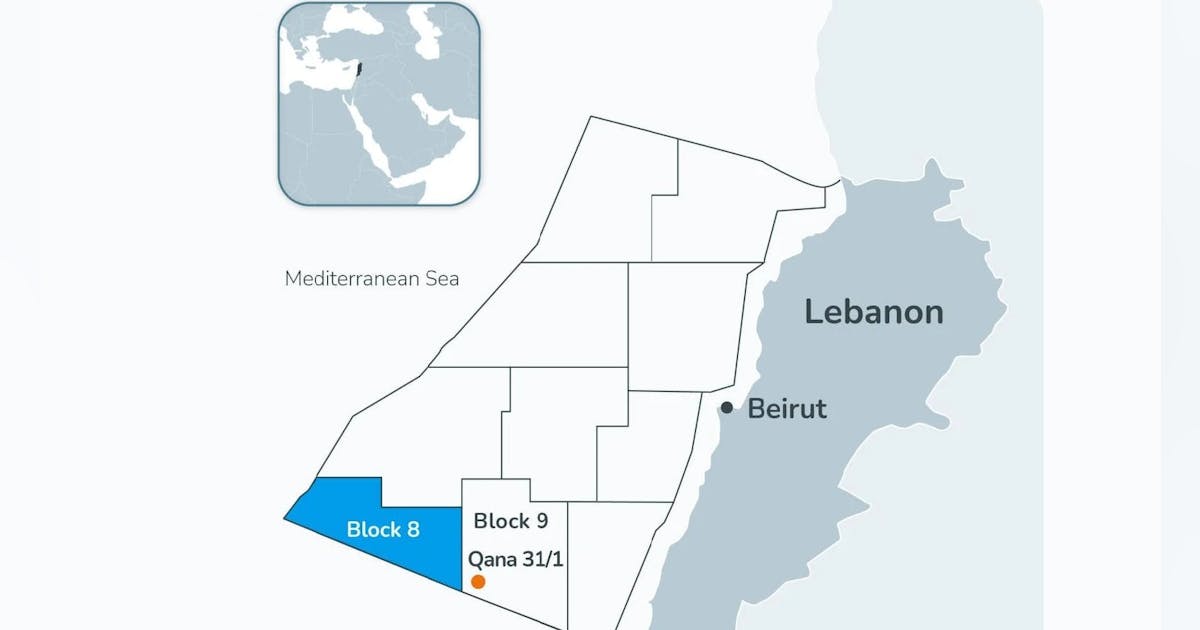
@import url(‘https://fonts.googleapis.com/css2?family=Inter:[email protected]&display=swap’); a { color: var(–color-primary-main); } .ebm-page__main h1, .ebm-page__main h2, .ebm-page__main h3, .ebm-page__main h4, .ebm-page__main h5, .ebm-page__main h6 { font-family: Inter; } body { line-height: 150%; letter-spacing: 0.025em; font-family: Inter; } button, .ebm-button-wrapper { font-family: Inter; } .label-style { text-transform: uppercase; color: var(–color-grey); font-weight: 600; font-size: 0.75rem; } .caption-style { font-size: 0.75rem; opacity: .6; } #onetrust-pc-sdk [id*=btn-handler], #onetrust-pc-sdk [class*=btn-handler] { background-color: #c19a06 !important; border-color: #c19a06 !important; } #onetrust-policy a, #onetrust-pc-sdk a, #ot-pc-content a { color: #c19a06 !important; } #onetrust-consent-sdk #onetrust-pc-sdk .ot-active-menu { border-color: #c19a06 !important; } #onetrust-consent-sdk #onetrust-accept-btn-handler, #onetrust-banner-sdk #onetrust-reject-all-handler, #onetrust-consent-sdk #onetrust-pc-btn-handler.cookie-setting-link { background-color: #c19a06 !important; border-color: #c19a06 !important; } #onetrust-consent-sdk .onetrust-pc-btn-handler { color: #c19a06 !important; border-color: #c19a06 !important; } TotalEnergies signed an agreement with the Lebanese government for the Block 8 exploration permit offshore Lebanon. As part of the initial work program, TotalEnergies will acquire a 1,200-sq-km 3D seismic survey to further assess the area’s exploration potential. TotalEnergies was awarded Block 8 in the Third Offshore Licensing round. TotalEnergies is operator of the block (35%) with partners Eni (35%) and QatarEnergy (30%). Block 8 lies about 70 km off the southern coast of Lebanon in water depths of 1,700-2,100 m. 

Read More »

Microsoft tells communities it will ‘pay its way’ as AI data center resource usage sparks backlash

It will work with utilities and public commissions to set the rates it pays high enough to cover data center electricity costs (including build-outs, additions, and active use). “Our goal is straightforward: To ensure that the electricity cost of serving our data centers is not passed on to residential customers,” Smith emphasized. For example, the company is supporting a new rate structure Wisconsin that would charge a class of “very large customers,” including data centers, the true cost of the electricity required to serve them. It will collaborate “early, closely, and transparently” with local utilities to add electricity and supporting infrastructure to existing grids when needed. For instance, Microsoft has contracted with the Midcontinent Independent System Operator (MISO) to add 7.9GW of new electricity generation to the grid, “more than double our current consumption,” Smith noted. It will pursue ways to make data centers more efficient. For example, it is already experimenting with AI to improve planning, extract more electricity from existing infrastructure, improve system resilience, and speed development of new infrastructure and technologies (like nuclear energy). It will advocate for state and national public policies that ensure electricity access that is affordable, reliable, and sustainable in neighboring communities. Microsoft previously established priorities for electricity policy advocacy, Smith noted, but “progress has been uneven. This needs to change.” Microsoft is similarly committed when it comes to data center water use, promising four actions: Reducing the overall amount of water its data centers use, initially improving it by 40% by 2030. The company is exploring innovations in cooling, including closed-loop systems that recirculate cooling liquids. It will collaborate with local utilities to map out water, wastewater, and pressure needs, and will “fully fund” infrastructure required for growth. For instance, in Quincy, Washington, Microsoft helped construct a water reuse utility that recirculates

Read More »

Can retired naval power plants solve the data center power crunch?

HGP’s plan includes a revenue share with the government, and the company would create a decommissioning fund, according to Bloomberg. The alternative? After a lengthy decommissioning process, the reactors are shipped to a remote storage facility in Washington state together dust along with dozens of other retired nuclear reactors. So the carrier itself isn’t going to be turned into a data center, but its power plants are being proposed for a data center on land. And even with the lengthening decommissioning process, that’s still faster than building a nuclear power plant from scratch. Don’t hold your breath, says Kristen Vosmaer, managing director, JLL Work Dynamics Data Center team. The idea of converting USS Nimitz’s nuclear reactors to power AI data centers sounds compelling but faces insurmountable obstacles, he argues. “Naval reactors use weapons-grade uranium that civilian entities cannot legally possess, and the Nuclear Regulatory Commission has no pathway to license such facilities. Even setting aside the fuel issue, these military-designed systems would require complete reconstruction to meet civilian safety standards, eliminating any cost advantages over purpose-built nuclear plants,” Vosmaer said. The maritime concept itself, however, does have some merit, said Vosmaer. “Ocean cooling can reduce energy consumption compared to land-based data centers, and floating platforms offer positioning flexibility that fixed facilities cannot match,” Vosmaer said.

Read More »

What exactly is an AI factory?

Others, however, seem to use the word to mean something smaller than a data center, referring more to the servers, software, and other systems used to run AI. For example, the AWS AI Factory is a combination of hardware and software that runs on-premises but is managed by AWS and comes with AWS services such as Bedrock, networking, storage and databases, and security.  At Lenovo, AI factories appear to be packaged servers designed to be used for AI. “We’re looking at the architecture being a fixed number of racks, all working together as one design,” said Scott Tease, vice president and general manager of AI and high-performance computing at Lenovo’s infrastructure solutions group. That number of racks? Anything from a single rack to hundreds, he told Computerworld. Each rack is a little bigger than a refrigerator, comes fully assembled, and is often fully preconfigured for the customer’s use case. “Once it arrives at the customer site, we’ll have service personnel connect power and networking,” Tease said. For others, the AI factory concept is more about the software.

Read More »

Meta establishes Meta Compute to lead AI infrastructure buildout

At that scale, infrastructure constraints are becoming a binding limit on AI expansion, influencing decisions like where new data centers can be built and how they are interconnected. The announcement follows Meta’s recent landmark agreements with Vistra, TerraPower, and Oklo aimed at supporting access to up to 6.6 gigawatts of nuclear energy to fuel its Ohio and Pennsylvania data center clusters. Implications for hyperscale networking Analysts say Meta’s approach indicates how hyperscalers are increasingly treating networking and interconnect strategy as first-order concerns in the AI race. Tulika Sheel, senior vice president at Kadence International, said that Meta’s initiative signals that hyperscale networking will need to evolve rapidly to handle massive internal data flows with high bandwidth and ultra-low latency. “As data centers grow in size and GPU density, pressure on networking and optical supply chains will intensify, driving demand for more advanced interconnects and faster fiber,” Sheel added. Others pointed to the potential architectural shifts from this. “Meta is using Disaggregated Scheduled Fabric and Non-Scheduled Fabric, along with new 51 Tbps switches and Ethernet for Scale-Up Networking, which is intensifying pressure on switch silicon, optical modules, and open rack standards,” said Biswajeet Mahapatra, principal analyst at Forrester. “This shift is forcing the ecosystem to deliver faster optical interconnects and greater fiber capacity, as Meta targets significant backbone growth and more specialized short-reach and coherent optical technologies to support cluster expansion.” The network is no longer a secondary pipe but a primary constraint. Next-generation connectivity, Sheel said, is becoming as critical as access to compute itself, as hyperscalers look to avoid network bottlenecks in large-scale AI deployments.

Read More »

AI, edge, and security: Shaping the need for modern infrastructure management

The rapidly evolving IT landscape, driven by artificial intelligence (AI), edge computing, and rising security threats, presents unprecedented challenges in managing compute infrastructure. Traditional management tools struggle to provide the necessary scalability, visibility, and automation to keep up with business demand, leading to inefficiencies and increased business risk. Yet organizations need their IT departments to be strategic business partners that enable innovation and drive growth. To realize that goal, IT leaders should rethink the status quo and free up their teams’ time by adopting a unified approach to managing infrastructure that supports both traditional and AI workloads. It’s a strategy that enables companies to simplify IT operations and improve IT job satisfaction. 5 IT management challenges of the AI era Cisco recently commissioned Forrester Consulting to conduct a Total Economic Impact™ analysis of Cisco Intersight. This IT operations platform provides visibility, control, and automation capabilities for the Cisco Unified Computing System (Cisco UCS), including Cisco converged, hyperconverged, and AI-ready infrastructure solutions across data centers, colocation facilities, and edge environments. Intersight uses a unified policy-driven approach to infrastructure management and integrates with leading operating systems, storage providers, hypervisors, and third-party IT service management and security tools. The Forrester study first uncovered the issues IT groups are facing: Difficulty scaling: Manual, repetitive processes cause lengthy IT compute infrastructure build and deployment times. This challenge is particularly acute for organizations that need to evolve infrastructure to support traditional and AI workloads across data centers and distributed edge environments. Architectural specialization and AI workloads: AI is altering infrastructure requirements, Forrester found.  Companies design systems to support specific AI workloads — such as data preparation, model training, and inferencing — and each demands specialized compute, storage, and networking capabilities. Some require custom chip sets and purpose-built infrastructure, such as for edge computing and low-latency applications.

Read More »

DCF Poll: Analyzing AI Data Center Growth

@import url(‘https://fonts.googleapis.com/css2?family=Inter:[email protected]&display=swap’); a { color: var(–color-primary-main); } .ebm-page__main h1, .ebm-page__main h2, .ebm-page__main h3, .ebm-page__main h4, .ebm-page__main h5, .ebm-page__main h6 { font-family: Inter; } body { line-height: 150%; letter-spacing: 0.025em; font-family: Inter; } button, .ebm-button-wrapper { font-family: Inter; } .label-style { text-transform: uppercase; color: var(–color-grey); font-weight: 600; font-size: 0.75rem; } .caption-style { font-size: 0.75rem; opacity: .6; } #onetrust-pc-sdk [id*=btn-handler], #onetrust-pc-sdk [class*=btn-handler] { background-color: #1796c1 !important; border-color: #1796c1 !important; } #onetrust-policy a, #onetrust-pc-sdk a, #ot-pc-content a { color: #1796c1 !important; } #onetrust-consent-sdk #onetrust-pc-sdk .ot-active-menu { border-color: #1796c1 !important; } #onetrust-consent-sdk #onetrust-accept-btn-handler, #onetrust-banner-sdk #onetrust-reject-all-handler, #onetrust-consent-sdk #onetrust-pc-btn-handler.cookie-setting-link { background-color: #1796c1 !important; border-color: #1796c1 !important; } #onetrust-consent-sdk .onetrust-pc-btn-handler { color: #1796c1 !important; border-color: #1796c1 !important; } Coming out of 2025, AI data center development remains defined by momentum. But momentum is not the same as certainty. Behind the headlines, operators, investors, utilities, and policymakers are all testing the assumptions that carried projects forward over the past two years, from power availability and capital conditions to architecture choices and community response. Some will hold. Others may not. To open our 2026 industry polling, we’re taking a closer look at which pillars of AI data center growth are under the most pressure. What assumption about AI data center growth feels most fragile right now?

Read More »

Microsoft will invest $80B in AI data centers in fiscal 2025

And Microsoft isn’t the only one that is ramping up its investments into AI-enabled data centers. Rival cloud service providers are all investing in either upgrading or opening new data centers to capture a larger chunk of business from developers and users of large language models (LLMs).  In a report published in October 2024, Bloomberg Intelligence estimated that demand for generative AI would push Microsoft, AWS, Google, Oracle, Meta, and Apple would between them devote $200 billion to capex in 2025, up from $110 billion in 2023. Microsoft is one of the biggest spenders, followed closely by Google and AWS, Bloomberg Intelligence said. Its estimate of Microsoft’s capital spending on AI, at $62.4 billion for calendar 2025, is lower than Smith’s claim that the company will invest $80 billion in the fiscal year to June 30, 2025. Both figures, though, are way higher than Microsoft’s 2020 capital expenditure of “just” $17.6 billion. The majority of the increased spending is tied to cloud services and the expansion of AI infrastructure needed to provide compute capacity for OpenAI workloads. Separately, last October Amazon CEO Andy Jassy said his company planned total capex spend of $75 billion in 2024 and even more in 2025, with much of it going to AWS, its cloud computing division.

Read More »

John Deere unveils more autonomous farm machines to address skill labor shortage

Join our daily and weekly newsletters for the latest updates and exclusive content on industry-leading AI coverage. Learn More Self-driving tractors might be the path to self-driving cars. John Deere has revealed a new line of autonomous machines and tech across agriculture, construction and commercial landscaping. The Moline, Illinois-based John Deere has been in business for 187 years, yet it’s been a regular as a non-tech company showing off technology at the big tech trade show in Las Vegas and is back at CES 2025 with more autonomous tractors and other vehicles. This is not something we usually cover, but John Deere has a lot of data that is interesting in the big picture of tech. The message from the company is that there aren’t enough skilled farm laborers to do the work that its customers need. It’s been a challenge for most of the last two decades, said Jahmy Hindman, CTO at John Deere, in a briefing. Much of the tech will come this fall and after that. He noted that the average farmer in the U.S. is over 58 and works 12 to 18 hours a day to grow food for us. And he said the American Farm Bureau Federation estimates there are roughly 2.4 million farm jobs that need to be filled annually; and the agricultural work force continues to shrink. (This is my hint to the anti-immigration crowd). John Deere’s autonomous 9RX Tractor. Farmers can oversee it using an app. While each of these industries experiences their own set of challenges, a commonality across all is skilled labor availability. In construction, about 80% percent of contractors struggle to find skilled labor. And in commercial landscaping, 86% of landscaping business owners can’t find labor to fill open positions, he said. “They have to figure out how to do

Read More »

2025 playbook for enterprise AI success, from agents to evals

Join our daily and weekly newsletters for the latest updates and exclusive content on industry-leading AI coverage. Learn More 2025 is poised to be a pivotal year for enterprise AI. The past year has seen rapid innovation, and this year will see the same. This has made it more critical than ever to revisit your AI strategy to stay competitive and create value for your customers. From scaling AI agents to optimizing costs, here are the five critical areas enterprises should prioritize for their AI strategy this year. 1. Agents: the next generation of automation AI agents are no longer theoretical. In 2025, they’re indispensable tools for enterprises looking to streamline operations and enhance customer interactions. Unlike traditional software, agents powered by large language models (LLMs) can make nuanced decisions, navigate complex multi-step tasks, and integrate seamlessly with tools and APIs. At the start of 2024, agents were not ready for prime time, making frustrating mistakes like hallucinating URLs. They started getting better as frontier large language models themselves improved. “Let me put it this way,” said Sam Witteveen, cofounder of Red Dragon, a company that develops agents for companies, and that recently reviewed the 48 agents it built last year. “Interestingly, the ones that we built at the start of the year, a lot of those worked way better at the end of the year just because the models got better.” Witteveen shared this in the video podcast we filmed to discuss these five big trends in detail. Models are getting better and hallucinating less, and they’re also being trained to do agentic tasks. Another feature that the model providers are researching is a way to use the LLM as a judge, and as models get cheaper (something we’ll cover below), companies can use three or more models to

Read More »

OpenAI’s red teaming innovations define new essentials for security leaders in the AI era

Join our daily and weekly newsletters for the latest updates and exclusive content on industry-leading AI coverage. Learn More OpenAI has taken a more aggressive approach to red teaming than its AI competitors, demonstrating its security teams’ advanced capabilities in two areas: multi-step reinforcement and external red teaming. OpenAI recently released two papers that set a new competitive standard for improving the quality, reliability and safety of AI models in these two techniques and more. The first paper, “OpenAI’s Approach to External Red Teaming for AI Models and Systems,” reports that specialized teams outside the company have proven effective in uncovering vulnerabilities that might otherwise have made it into a released model because in-house testing techniques may have missed them. In the second paper, “Diverse and Effective Red Teaming with Auto-Generated Rewards and Multi-Step Reinforcement Learning,” OpenAI introduces an automated framework that relies on iterative reinforcement learning to generate a broad spectrum of novel, wide-ranging attacks. Going all-in on red teaming pays practical, competitive dividends It’s encouraging to see competitive intensity in red teaming growing among AI companies. When Anthropic released its AI red team guidelines in June of last year, it joined AI providers including Google, Microsoft, Nvidia, OpenAI, and even the U.S.’s National Institute of Standards and Technology (NIST), which all had released red teaming frameworks. Investing heavily in red teaming yields tangible benefits for security leaders in any organization. OpenAI’s paper on external red teaming provides a detailed analysis of how the company strives to create specialized external teams that include cybersecurity and subject matter experts. The goal is to see if knowledgeable external teams can defeat models’ security perimeters and find gaps in their security, biases and controls that prompt-based testing couldn’t find. What makes OpenAI’s recent papers noteworthy is how well they define using human-in-the-middle

Read More »