Stay Ahead, Stay ONMINE

Neudesic launches in Australia in a bid to speed up AI adoption for IT teams

Artificial intelligence (AI) has gained significant traction among business leaders keen to explore ways it can drive operational efficiencies and cost savings. But while top leadership is sold on its potential, it’s a different tale for IT teams working the ground. In Australia, the challenges of implementing AI are particularly pronounced, ranging from limited expertise […]

Artificial intelligence (AI) has gained significant traction among business leaders keen to explore ways it can drive operational efficiencies and cost savings.

But while top leadership is sold on its potential, it’s a different tale for IT teams working the ground. In Australia, the challenges of implementing AI are particularly pronounced, ranging from limited expertise and siloed operations to the rising tide of cybersecurity risks. It’s no surprise then that in the face of complexity, companies are not sure how to take the first step towards smooth and successful AI deployments.

Australia’s AI challenges

Access to skilled resources, funding issues, and having to keep ahead of AI’s rapid evolution are just some of the challenges that make it difficult to implement AI solutions uniformly in Australia. For mid-market companies in highly regulated industries, such as finance, energy, and utilities, addressing cybersecurity concerns and responsible AI implementation are also on the list. This is further made complex by the widespread use of legacy systems, which are unable to cope with AI’s demands.

“From an AI context, their challenges are similar to other sectors. This includes access to talent, quality of data, integration with legacy systems, change management, and ethical and regulatory concerns. However, they also face heightened cyber threats and fraud, driven by threat actors leveraging AI to become more sophisticated. The consequence of a breach can be significant from both a financial and consumer trust perspective,” explains John Hanna, Neudesic Australia.

Ultimately, the breadth of data mid-market companies in finance, energy, and utilities need to deal with is beyond the capabilities of existing systems that rely on the identification of known patterns or human analysis. Hanna added that adopting AI, unlocks a company’s capability to analyse information at scale and speed to identify and stop these threats before they significantly impact the business.

To overcome these challenges, Neudesic helps organisations through its expertise, cutting-edge technology, and strong partnerships with Microsoft, having won the Microsoft Partner of the Year award over 20 times. As a global professional services firm, Neudesic is now bringing decades of experience delivering capabilities spanning data and AI, cloud migration and modernisation, application development, and business strategy to Australia.

Hanna shares Neudesic’s approach, which comprises four pillars.

  • People: Its diverse array of internal experts spanning industries, skillsets, and Microsoft Azure and OpenAI solutions help clients address a wide spectrum of business challenges for any organisation
  • Approach: It achieves results not only by implementing Microsoft and OpenAI solutions, but also by addressing today’s challenges, identifying tomorrow’s opportunities, and designing the best path forward
  • Technology: It focuses on innovation to develop solutions that meet clients’ needs while accelerating time to value
  • Expertise: With 20 years of expertise in Microsoft’s stack, it offers clients expert knowledge to tackle critical IT challenges and unlock new opportunities

Neudesic’s process starts with understanding each client’s business needs, followed by collaborative workshops and rapid prototyping. The team will then develop a roadmap aligned with a client’s goals and ensure ongoing model refinement, data updates, and process improvements.

“We are also back by IBM and an awarded Microsoft partner. What this means for customers is access to the expertise and experience of experts across both tech stacks dedicated to solving the most critical IT challenges of Australian businesses and capturing new growth opportunities,” says Hanna.

Simplifying critical industry processes with AI

A clear example of how Neudesic is driving AI is in simplifying the Know Your Customer (KYC) process in finance, also known as identity verification.

KYC is where good customer experience is critical, but traditional KYC processes can take days or even weeks. According to a report conducted by financial compliance software company Fenergo, eight out of 10 survey respondents would lose clients to an inefficient onboarding process. More than ever, there is a need for streamlined and intelligent document processing solutions to stay competitive.  

Neudesic’s Document Intelligence Platform helps automate the KYC process by capturing customer data from various formats, cross-referencing it with databases, and validating the information in real-time. It also streamlines compliance with customer identification programs. 

What does this mean for financial organisations? They can now handle high volumes of KYC checks without additional staffing, while automation cuts operational costs. Real-time verification speeds up processes like account openings and loan approvals so that banks can acquire and manage customer assets sooner. What’s more, the platform integrates seamlessly with existing systems like Fenergo for a more robust and efficient workflow.

By partnering with integrators like Neudesic, Australian businesses can deploy AI through a proven, logical methodology and unlock the ability to invest and accelerate AI use based on business demand and available capital

“Every business dreams big with AI but can stumble when turning ambition into action. Success demands strategy, tailored solutions, and expert guidance. With a trusted partner, businesses can avoid common pitfalls and mistakes that will result in less investment remorse and create business confidence in AI faster than would otherwise be possible,” concludes Hanna.

Learn more about how Neudesic can help Australian organisations go forward in AI, confidently.

Shape
Shape
Stay Ahead

Explore More Insights

Stay ahead with more perspectives on cutting-edge power, infrastructure, energy,  bitcoin and AI solutions. Explore these articles to uncover strategies and insights shaping the future of industries.

Shape

Nvidia moves deeper into AI infrastructure with SchedMD acquisition

“Slurm excels at orchestrating multi-node distributed training, where jobs span hundreds or thousands of GPUs,” said Lian Jye Su, chief analyst at Omdia. “The software can optimize data movement within servers by deciding where jobs should be placed based on resource availability. With strong visibility into the network topology, Slurm

Read More »

ExxonMobil bumps up 2030 target for Permian production

ExxonMobil Corp., Houston, is looking to grow production in the Permian basin to about 2.5 MMboe/d by 2030, an increase of 200,000 boe/d from executives’ previous forecasts and a jump of more than 45% from this year’s output. Helping drive that higher target is an expected 2030 cost profile that

Read More »

Phillips 66 Budgets $2.4B for 2026

Phillips 66 said Monday it expects a $2.4 billion budget for next year, consisting of $1.1 billion in sustaining capital and $1.3 billion in growth capital. “The 2026 capital budget reflects our ongoing commitment to capital discipline and maximizing shareholder returns”, chair and chief executive Mark Lashier said in an online statement. “We are investing growth capital in our NGL value chain and high-return refining projects, while also investing sustaining capital to support safe and reliable operations”. Houston, Texas-based Phillips 66 expects to shell out $1.1 billion into its refining business, comprising $590 million in sustaining capital and $520 million into growth projects. “With the consolidation of WRB Refining, we incorporated approximately $200 million of sustaining capital and $100 million of growth capital into the budget”, Lashier said. Phillips 66 recently acquired an additional 50 percent stake in WRB Refining LP from Cenovus Energy Inc for $1.4 billion, fully taking over the Wood River and Borger refineries, as confirmed by Phillips 66 in its third quarter report October 29. Wood River in Roxana, Illinois, has a gasoline and distillates production capacity of 176,000 bpd and 140,000 bpd respectively. Borger in Borger, Texas, produces up to 100,000 bpd of gasoline and 70,000 bpd of distillates, according to Phillips 66. The refining allotment for 2026 also includes a multiyear investment at the Humber refinery to enable the production of higher-quality gasoline and expand the facility’s access to “higher-value global markets”, the company said. Phillips 66 expects to start up the project in the second quarter of 2027. Located in North Lincolnshire on the English east coast, the Humber site produces up to 95,000 barrels per day (bpd) of gasoline and 115,000 bpd of distillates, according to Phillips 66. The refining budget also includes “over 100 low-capital, high-return projects to improve market capture

Read More »

USA Emerges as World’s Hydrocarbon Superpower

The U.S. has emerged as the world’s hydrocarbon superpower, exemplified by its meteoric rise in the liquefied natural gas (LNG) market.   That’s what Wood Mackenzie (WoodMac) said in a statement sent to Rigzone recently, which highlighted several charts that “spotlight the most significant trends reshaping the [energy and resources] sector globally” and were included in the company’s latest Horizons report. “You don’t need to look too far back to find a U.S. which was building LNG import infrastructure and now in under 10 years it has become the world’s largest LNG exporter,” WoodMac said in the statement. The company noted in the statement that, by 2030, the U.S. is projected to account for 30 percent of global LNG output. A chart included in the statement outlined that the U.S. would continue as the world’s largest LNG exporter in 2030, followed by Qatar and Australia. WoodMac also highlighted in its statement that the U.S. “leads global oil production (including oil, condensate, and natural gas liquids), delivering one-fifth of the world’s volumes”. “In comparison, its closest competitors, Saudi Arabia and Russia, produce only 65 percent and 50 percent of U.S. volumes, respectively,” it added.   Malcolm Forbes-Cable, Vice President, Upstream and Carbon Management Consulting at Wood Mackenzie, said in the statement, “the resurrection of U.S. LNG is a crucial reminder of what a resource-rich, free-market country like the U.S. can do”. “This hydrocarbon hegemony is now being leveraged as a diplomatic tool,” he added. In its latest short term energy outlook (STEO), which was released on December 9, the U.S. Energy Information Administration (EIA) projected that gross U.S. LNG exports will average 14.9 billion cubic feet per day in 2025 and 16.3 billion cubic feet per day in 2026. Gross U.S. LNG exports averaged 11.9 billion cubic feet per day in 2024, this STEO highlighted. A quarterly breakdown included in the EIA’s latest STEO forecasted that gross U.S. LNG exports will come in at

Read More »

North America Rig Count Stays Flat

North America’s rig count stayed flat week on week, according to Baker Hughes’ latest North America rotary rig count, which was published on December 12. The total U.S. rig count dropped by one week on week and the total Canada rig count rose by one during the same period, keeping the total North America rig count at 740, the count outlined. The total North America rig count comprised 548 rigs from the U.S. and 192 rigs from Canada, the count showed. Of the total U.S. rig count of 548, 528 rigs are categorized as land rigs, 17 are categorized as offshore rigs, and three are categorized as inland water rigs. The total U.S. rig count is made up of 414 oil rigs, 127 gas rigs, and seven miscellaneous rigs, according to Baker Hughes’ count, which revealed that the U.S. total comprises 478 horizontal rigs, 54 directional rigs, and 16 vertical rigs. Week on week, the U.S. land rig count rose by one, its offshore rig count dropped by two, and its inland water rig count remained unchanged, Baker Hughes highlighted. The U.S. oil rig count rose by one week on week, its gas rig count dropped by two by week on week, and its miscellaneous rig count remained unchanged week on week, the count showed. The U.S. horizontal rig count rose by two, its directional rig count dropped by four, and its vertical rig count increased by one, week on week, the count revealed. A major state variances subcategory included in the rig count showed that, week on week, Texas added two rigs, and Ohio and Louisiana each added one rig. This subcategory revealed that New Mexico dropped three rigs and Colorado dropped one rig week on week. A major basin variances subcategory included in Baker Hughes’ rig count showed

Read More »

Pembina Completes Remarketing of Cedar LNG Share

Pembina Pipeline Corp said Monday it had signed a 12-year agreement allowing Ovintiv Inc to use 0.5 million tonnes per annum (MMtpa) of liquefaction capacity at the under-construction Cedar LNG on Canada’s West Coast. “Pembina has now remarketed the full 1.5 mtpa [million tonnes per annum] of its Cedar LNG capacity to third parties and further demonstrated its commitment to delivering growth and executing its strategy within the company’s long-standing financial guardrails and prudent risk profile”, Calgary-based Pembina said in an online statement. It owns 49.9 percent in the project. The Haisla Nation, who host Cedar LNG on tribal territory, holds 50.1 percent. According to the developers, Cedar LNG is the world’s first liquefied natural gas facility primarily owned by Indigenous people. Expected to start operation 2028, the project has a declared capacity of 3.3 MMtpa. “The agreement enables the export of 0.5 mtpa of LNG, under which Pembina will provide transportation and liquefaction capacity to Ovintiv over a 12-year term, commencing with commercial operations at Cedar LNG, anticipated in late 2028”, Denver, Colorado-based Ovintiv said separately. “It provides Ovintiv, one of Canada’s largest natural gas producers, with access to additional export markets, complementary to the company’s existing portfolio of natural gas transportation arrangements. Export from the west coast of Canada offers the shortest shipping distance to Asian LNG markets from North America”. Meghan Eilers, midstream and marketing executive vice president at Ovintiv, said, “Today’s announcement marks a significant advancement in our strategy to expand market access and maximize the profitability of our Montney gas resource through participation in global LNG markets”. Pembina senior vice president and corporate development officer Stu Taylor said, “Ovintiv is a significant customer to Pembina across our natural gas processing and transportation, and NGL transportation, fractionation and marketing businesses”. Pembina added in its statement, in which it also announced a capital investment

Read More »

TotalEnergies, Galp Agree Exchange Involving Mopane, Venus Discoveries

TotalEnergies and Galp Energia SGPS SA have entered into a deal under which TotalEnergies will acquire a 40 percent operating stake in the block containing the Mopane discoveries and Galp will obtain a 10 percent interest in the Venus discovery license, both on Namibia’s side of the Orange Basin. Currently Portugal’s Galp operates Petroleum Exploration License (PEL) 83, which includes Mopane, with an 80 percent stake. The National Petroleum Corporation of Namibia (Namcor) owns 10 percent. Local player Custos Energy (Pty) Ltd holds 10 percent. In PEL56 France’s TotalEnergies has a 45.25 percent operating stake. State-owned QatarEnergy owns 35.25 percent. Namcor owns 10 percent. London-based Impact Oil & Gas Ltd owns 9.5 percent. After the completion of the transaction, subject to approvals from Namibian authorities and their partners in the PELs, Galp would retain 40 percent in PEL83 and TotalEnergies would keep operatorship and a 35.25 percent stake in PEL56. Galp would also receive a 9.4 percent stake in PEL 91, also in the Namibian Orange Basin. Operator TotalEnergies would keep a 33.09 percent stake. QatarEnergy owns 33.03 percent, Namcor 15 percent and Impact 9.5 percent. “The transaction positions TotalEnergies as the operator of the two largest oil discoveries in Namibia and opens the way for the development of a major producing hub, generating long-term value for the country and partners”, TotalEnergies said in an online statement. Galp has announced five discoveries in PEL83’s Mopane area. Mopane-1X, Mopane-2X, appraisal well Mopane-1A and appraisal well Mopane 2A were proven 2024. Mopane-3X was proven 2025. In PEL56, TotalEnergies announced a “significant discovery” through the Venus 1-X well on February 24, 2022. “TotalEnergies and Galp agreed to launch an exploration and appraisal campaign including three wells over the next two years, with a first well planned in 2026, to further derisk resources and progress diligently

Read More »

Venezuela Reports Oil Export Outage after Cyberattack

Venezuela’s state oil company is still struggling to restore key administrative systems after what it called a cyberattack that hit over the weekend. Petroleos de Venezuela SA’s network, which manages export and import data at the country’s main crude terminal of Jose, remained offline Monday after the breach early Saturday. The outage has delayed scheduled loadings and forced contingency measures across the company, according to three people familiar with the situation. PDVSA told staff to shut down computers, disconnect external hardware and cut off WiFi and Starlink connections, the people said, citing an internal memo seen by Bloomberg. Security at company facilities has also been reinforced since Sunday. In a statement Monday, the company said it had neutralized a “sabotage attempt” aimed at disrupting its operations. It added that oil output wasn’t affected. A PDVSA press official didn’t immediately respond to questions.  President Nicolás Maduro has frequently accused the US of orchestrating cyberattacks and other forms of sabotage. He also blamed a hack he said originated in Macedonia for delaying the tally of last year’s presidential election. In October, President Donald Trump said he authorized the Central Intelligence Agency to undertake covert action in Venezuela to curb drug shipments and illegal migration into the US. Since early September, the US has struck nearly two dozen boats in the southern Caribbean, saying they were carrying narcotics bound for the US. The operations have heightened tensions with Maduro and fueled speculation that Washington may be preparing broader military action in Venezuela. Last week, the US seized a sanctioned oil tanker carrying a load of Venezuelan crude. Years of limited maintenance have further eroded PDVSA’s administrative networks, making them more susceptible to breaches, the people said. The company also lost key software licenses after US sanctions barred dealings with American tech providers. While PDVSA

Read More »

Executive Roundtable: Converging Disciplines in the AI Buildout

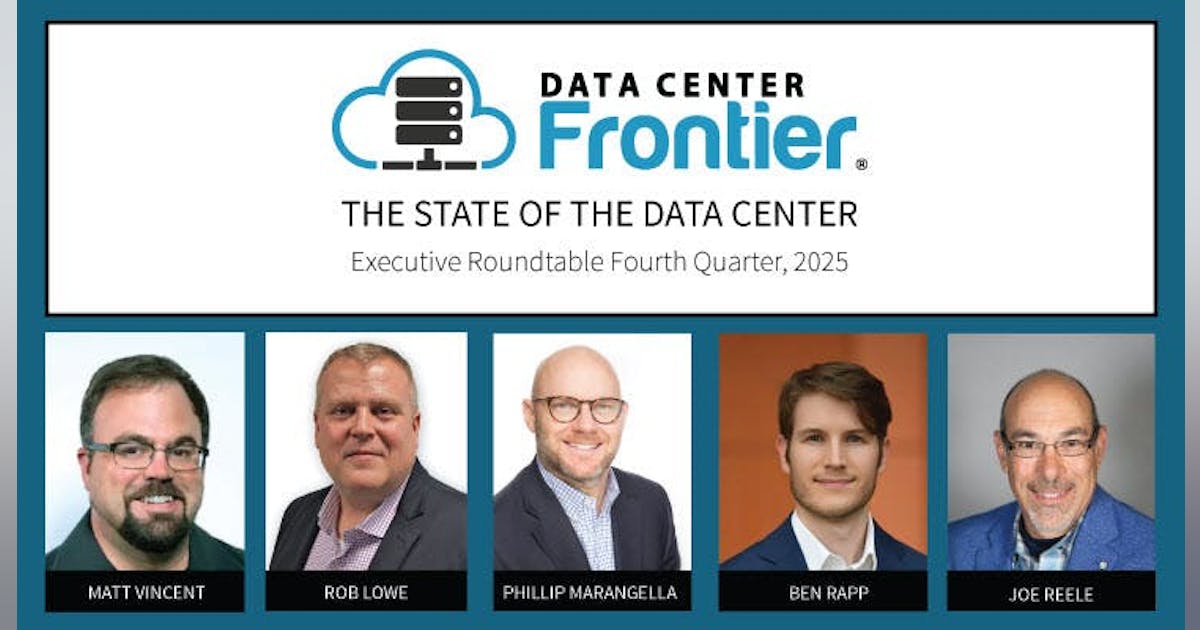
At Data Center Frontier, we rely on industry leaders to help us understand the most urgent challenges facing digital infrastructure. And in the fourth quarter of 2025, the data center industry is adjusting to a new kind of complexity.  AI-scale infrastructure is redefining what “mission critical” means, from megawatt density and modular delivery to the chemistry of cooling fluids and the automation of energy systems. Every project has arguably in effect now become an ecosystem challenge, demanding that electrical, mechanical, construction, and environmental disciplines act as one.  For this quarter’s Executive Roundtable, DCF convened subject matter experts from Ecolab, EdgeConneX, Rehlko and Schneider Electric – leaders spanning the full chain of facilities design, deployment, and operation. Their insights illuminate how liquid cooling, energy management, and sustainable process design in data centers are now converging to set the pace for the AI era. Our distinguished executive panelists for this quarter include: Rob Lowe, Director RD&E – Global High Tech, Ecolab Phillip Marangella, Chief Marketing and Product Officer, EdgeConneX Ben Rapp, Manager, Strategic Project Development, Rehlko Joe Reele, Vice President, Datacenter Solution Architects, Schneider Electric Today: Engineering the New Normal – Liquid Cooling at Scale  Today’s kickoff article grapples with how, as liquid cooling technology transitions to default hyperscale design, the challenge is no longer if, but how to scale builds safely, repeatably, and globally.  Cold plates, immersion, dielectric fluids, and liquid-to-chip loops are converging into factory-integrated building blocks, yet variability in chemistry, serviceability, materials, commissioning practices, and long-term maintenance threatens to fragment adoption just as demand accelerates.  Success now hinges on shared standards and tighter collaboration across OEMs, builders, and process specialists worldwide. So how do developers coordinate across the ecosystem to make liquid cooling a safe, maintainable global default? What’s Ahead in the Roundtable Over the coming days, our panel

Read More »

DCF Trends Summit 2025: AI for Good – How Operators, Vendors and Cooling Specialists See the Next Phase of AI Data Centers

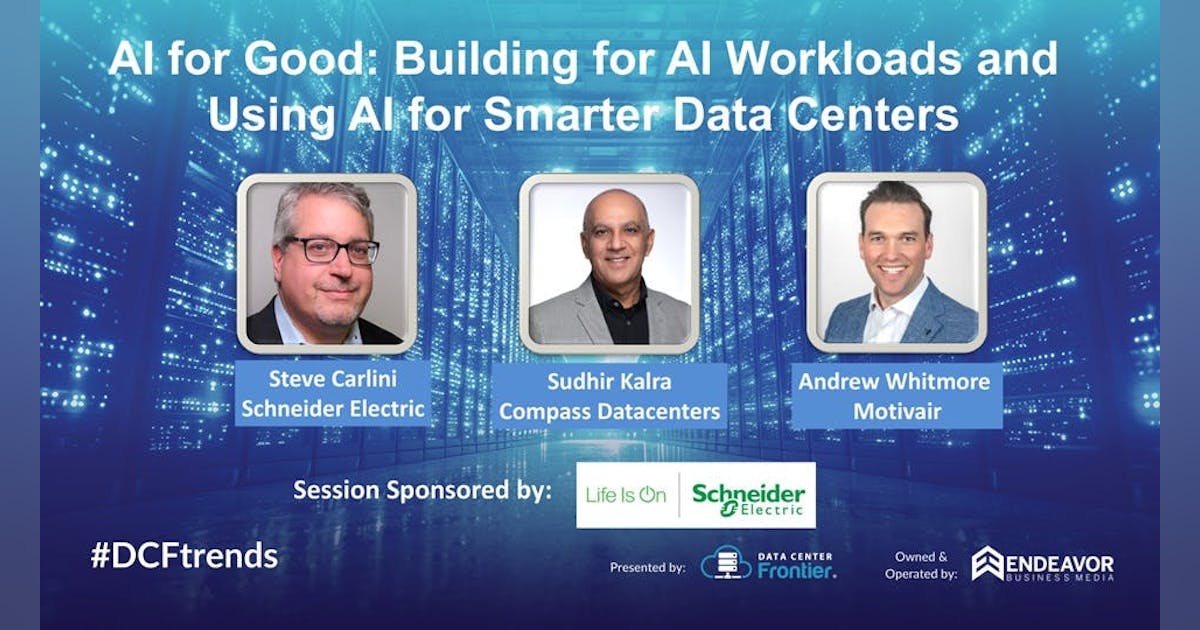
At the 2025 Data Center Frontier Trends Summit (Aug. 26-28) in Reston, Va., the conversation around AI and infrastructure moved well past the hype. In a panel sponsored by Schneider Electric—“AI for Good: Building for AI Workloads and Using AI for Smarter Data Centers”—three industry leaders explored what it really means to design, cool and operate the new class of AI “factories,” while also turning AI inward to run those facilities more intelligently. Moderated by Data Center Frontier Editor in Chief Matt Vincent, the session brought together: Steve Carlini, VP, Innovation and Data Center Energy Management Business, Schneider Electric Sudhir Kalra, Chief Data Center Operations Officer, Compass Datacenters Andrew Whitmore, VP of Sales, Motivair Together, they traced both sides of the “AI for Good” equation: building for AI workloads at densities that would have sounded impossible just a few years ago, and using AI itself to reduce risk, improve efficiency and minimize environmental impact. From Bubble Talk to “AI Factories” Carlini opened by acknowledging the volatility surrounding AI investments, citing recent headlines and even Sam Altman’s public use of the word “bubble” to describe the current phase of exuberance. “It’s moving at an incredible pace,” Carlini noted, pointing out that roughly half of all VC money this year has flowed into AI, with more already spent than in all of the previous year. Not every investor will win, he said, and some companies pouring in hundreds of billions may not recoup their capital. But for infrastructure, the signal is clear: the trajectory is up and to the right. GPU generations are cycling faster than ever. Densities are climbing from high double-digits per rack toward hundreds of kilowatts. The hyperscale “AI factories,” as NVIDIA calls them, are scaling to campus capacities measured in gigawatts. Carlini reminded the audience that in 2024,

Read More »

FinOps Foundation sharpens FOCUS to reduce cloud cost chaos

“The big change that’s really started to happen in late 2024 early 2025 is that the FinOps practice started to expand past the cloud,” Storment said. “A lot of organizations got really good at using FinOps to manage the value of cloud, and then their organizations went, ‘oh, hey, we’re living in this happily hybrid state now where we’ve got cloud, SaaS, data center. Can you also apply the FinOps practice to our SaaS? Or can you apply it to our Snowflake? Can you apply it to our data center?’” The FinOps Foundation’s community has grown to approximately 100,000 practitioners. The organization now includes major cloud vendors, hardware providers like Nvidia and AMD, data center operators and data cloud platforms like Snowflake and Databricks. Some 96 of the Fortune 100 now participate in FinOps Foundation programs. The practice itself has shifted in two directions. It has moved left into earlier architectural and design processes, becoming more proactive rather than reactive. It has also moved up organizationally, from director-level cloud management roles to SVP and COO positions managing converged technology portfolios spanning multiple infrastructure types. This expansion has driven the evolution of FOCUS beyond its original cloud billing focus. Enterprises are implementing FOCUS as an internal standard for chargeback reporting even when their providers don’t generate native FOCUS data. Some newer cloud providers, particularly those focused on AI infrastructure, are using the FOCUS specification to define their billing data structures from the ground up rather than retrofitting existing systems. The FOCUS 1.3 release reflects this maturation, addressing technical gaps that have emerged as organizations apply cost management practices across increasingly complex hybrid environments. FOCUS 1.3 exposes cost allocation logic for shared infrastructure The most significant technical enhancement in FOCUS 1.3 addresses a gap in how shared infrastructure costs are allocated and

Read More »

Aetherflux joins the race to launch orbital data centers by 2027

Enterprises will connect to and manage orbital workloads “the same way they manage cloud workloads today,” using optical links, the spokesperson added. The company’s approach is to “continuously launch new hardware and quickly integrate the latest architectures,” with older systems running lower-priority tasks to serve out the full useful lifetime of their high-end GPUs. The company declined to disclose pricing. Aetherflux plans to launch about 30 satellites at a time on SpaceX Falcon 9 rockets. Before the data center launch, the company will launch a power-beaming demonstration satellite in 2026 to test transmission of one kilowatt of energy from orbit to ground stations, using infrared lasers. Competition in the sector has intensified in recent months. In November, Starcloud launched its Starcloud-1 satellite carrying an Nvidia H100 GPU, which is 100 times more powerful than any previous GPU flown in space, according to the company, and demonstrated running Google’s Gemma AI model in orbit. In the same month, Google announced Project Suncatcher, with a 2027 demonstration mission planned. Analysts see limited near-term applications Despite the competitive activity, orbital data centers won’t replace terrestrial cloud regions for general hosting through 2030, said Ashish Banerjee, senior principal analyst at Gartner. Instead, they suit specific workloads, including meeting data sovereignty requirements for jurisdictionally complex scenarios, offering disaster recovery immune to terrestrial risks, and providing asynchronous high-performance computing, he said. “Orbital centers are ideal for high-compute, low-I/O batch jobs,” Banerjee said. “Think molecular folding simulations for pharma, massive Monte Carlo financial simulations, or training specific AI model weights. If the job takes 48 hours, the 500ms latency penalty of LEO is irrelevant.” One immediate application involves processing satellite-generated data in orbit, he said. Earth observation satellites using synthetic aperture radar generate roughly 10 gigabytes per second, but limited downlink bandwidth creates bottlenecks. Processing data in

Read More »

Here’s what Oracle’s soaring infrastructure spend could mean for enterprises

He said he had earlier told analysts in a separate call that margins for AI workloads in these data centers would be in the 30% to 40% range over the life of a customer contract. Kehring reassured that there would be demand for the data centers when they were completed, pointing to Oracle’s increasing remaining performance obligations, or services contracted but not yet delivered, up $68 billion on the previous quarter, saying that Oracle has been seeing unprecedented demand for AI workloads driven by the likes of Meta and Nvidia. Rising debt and margin risks raise flags for CIOs For analysts, though, the swelling debt load is hard to dismiss, even with Oracle’s attempts to de-risk its spend and squeeze more efficiency out of its buildouts. Gogia sees Oracle already under pressure, with the financial ecosystem around the company pricing the risk — one of the largest debts in corporate history, crossing $100 billion even before the capex spend this quarter — evident in the rising cost of insuring the debt and the shift in credit outlook. “The combination of heavy capex, negative free cash flow, increasing financing cost and long-dated revenue commitments forms a structural pressure that will invariably finds its way into the commercial posture of the vendor,” Gogia said, hinting at an “eventual” increase in pricing of the company’s offerings. He was equally unconvinced by Magouyrk’s assurances about the margin profile of AI workloads as he believes that AI infrastructure, particularly GPU-heavy clusters, delivers significantly lower margins in the early years because utilisation takes time to ramp.

Read More »

New Nvidia software gives data centers deeper visibility into GPU thermals and reliability

Addressing the challenge Modern AI accelerators now draw more than 700W per GPU, and multi-GPU nodes can reach 6kW, creating concentrated heat zones, rapid power swings, and a higher risk of interconnect degradation in dense racks, according to Manish Rawat, semiconductor analyst at TechInsights. Traditional cooling methods and static power planning increasingly struggle to keep pace with these loads. “Rich vendor telemetry covering real-time power draw, bandwidth behavior, interconnect health, and airflow patterns shifts operators from reactive monitoring to proactive design,” Rawat said. “It enables thermally aware workload placement, faster adoption of liquid or hybrid cooling, and smarter network layouts that reduce heat-dense traffic clusters.” Rawat added that the software’s fleet-level configuration insights can also help operators catch silent errors caused by mismatched firmware or driver versions. This can improve training reproducibility and strengthen overall fleet stability. “Real-time error and interconnect health data also significantly accelerates root-cause analysis, reducing MTTR and minimizing cluster fragmentation,” Rawat said. These operational pressures can shape budget decisions and infrastructure strategy at the enterprise level.

Read More »

Microsoft will invest $80B in AI data centers in fiscal 2025

And Microsoft isn’t the only one that is ramping up its investments into AI-enabled data centers. Rival cloud service providers are all investing in either upgrading or opening new data centers to capture a larger chunk of business from developers and users of large language models (LLMs).  In a report published in October 2024, Bloomberg Intelligence estimated that demand for generative AI would push Microsoft, AWS, Google, Oracle, Meta, and Apple would between them devote $200 billion to capex in 2025, up from $110 billion in 2023. Microsoft is one of the biggest spenders, followed closely by Google and AWS, Bloomberg Intelligence said. Its estimate of Microsoft’s capital spending on AI, at $62.4 billion for calendar 2025, is lower than Smith’s claim that the company will invest $80 billion in the fiscal year to June 30, 2025. Both figures, though, are way higher than Microsoft’s 2020 capital expenditure of “just” $17.6 billion. The majority of the increased spending is tied to cloud services and the expansion of AI infrastructure needed to provide compute capacity for OpenAI workloads. Separately, last October Amazon CEO Andy Jassy said his company planned total capex spend of $75 billion in 2024 and even more in 2025, with much of it going to AWS, its cloud computing division.

Read More »

John Deere unveils more autonomous farm machines to address skill labor shortage

Join our daily and weekly newsletters for the latest updates and exclusive content on industry-leading AI coverage. Learn More Self-driving tractors might be the path to self-driving cars. John Deere has revealed a new line of autonomous machines and tech across agriculture, construction and commercial landscaping. The Moline, Illinois-based John Deere has been in business for 187 years, yet it’s been a regular as a non-tech company showing off technology at the big tech trade show in Las Vegas and is back at CES 2025 with more autonomous tractors and other vehicles. This is not something we usually cover, but John Deere has a lot of data that is interesting in the big picture of tech. The message from the company is that there aren’t enough skilled farm laborers to do the work that its customers need. It’s been a challenge for most of the last two decades, said Jahmy Hindman, CTO at John Deere, in a briefing. Much of the tech will come this fall and after that. He noted that the average farmer in the U.S. is over 58 and works 12 to 18 hours a day to grow food for us. And he said the American Farm Bureau Federation estimates there are roughly 2.4 million farm jobs that need to be filled annually; and the agricultural work force continues to shrink. (This is my hint to the anti-immigration crowd). John Deere’s autonomous 9RX Tractor. Farmers can oversee it using an app. While each of these industries experiences their own set of challenges, a commonality across all is skilled labor availability. In construction, about 80% percent of contractors struggle to find skilled labor. And in commercial landscaping, 86% of landscaping business owners can’t find labor to fill open positions, he said. “They have to figure out how to do

Read More »

2025 playbook for enterprise AI success, from agents to evals

Join our daily and weekly newsletters for the latest updates and exclusive content on industry-leading AI coverage. Learn More 2025 is poised to be a pivotal year for enterprise AI. The past year has seen rapid innovation, and this year will see the same. This has made it more critical than ever to revisit your AI strategy to stay competitive and create value for your customers. From scaling AI agents to optimizing costs, here are the five critical areas enterprises should prioritize for their AI strategy this year. 1. Agents: the next generation of automation AI agents are no longer theoretical. In 2025, they’re indispensable tools for enterprises looking to streamline operations and enhance customer interactions. Unlike traditional software, agents powered by large language models (LLMs) can make nuanced decisions, navigate complex multi-step tasks, and integrate seamlessly with tools and APIs. At the start of 2024, agents were not ready for prime time, making frustrating mistakes like hallucinating URLs. They started getting better as frontier large language models themselves improved. “Let me put it this way,” said Sam Witteveen, cofounder of Red Dragon, a company that develops agents for companies, and that recently reviewed the 48 agents it built last year. “Interestingly, the ones that we built at the start of the year, a lot of those worked way better at the end of the year just because the models got better.” Witteveen shared this in the video podcast we filmed to discuss these five big trends in detail. Models are getting better and hallucinating less, and they’re also being trained to do agentic tasks. Another feature that the model providers are researching is a way to use the LLM as a judge, and as models get cheaper (something we’ll cover below), companies can use three or more models to

Read More »

OpenAI’s red teaming innovations define new essentials for security leaders in the AI era

Join our daily and weekly newsletters for the latest updates and exclusive content on industry-leading AI coverage. Learn More OpenAI has taken a more aggressive approach to red teaming than its AI competitors, demonstrating its security teams’ advanced capabilities in two areas: multi-step reinforcement and external red teaming. OpenAI recently released two papers that set a new competitive standard for improving the quality, reliability and safety of AI models in these two techniques and more. The first paper, “OpenAI’s Approach to External Red Teaming for AI Models and Systems,” reports that specialized teams outside the company have proven effective in uncovering vulnerabilities that might otherwise have made it into a released model because in-house testing techniques may have missed them. In the second paper, “Diverse and Effective Red Teaming with Auto-Generated Rewards and Multi-Step Reinforcement Learning,” OpenAI introduces an automated framework that relies on iterative reinforcement learning to generate a broad spectrum of novel, wide-ranging attacks. Going all-in on red teaming pays practical, competitive dividends It’s encouraging to see competitive intensity in red teaming growing among AI companies. When Anthropic released its AI red team guidelines in June of last year, it joined AI providers including Google, Microsoft, Nvidia, OpenAI, and even the U.S.’s National Institute of Standards and Technology (NIST), which all had released red teaming frameworks. Investing heavily in red teaming yields tangible benefits for security leaders in any organization. OpenAI’s paper on external red teaming provides a detailed analysis of how the company strives to create specialized external teams that include cybersecurity and subject matter experts. The goal is to see if knowledgeable external teams can defeat models’ security perimeters and find gaps in their security, biases and controls that prompt-based testing couldn’t find. What makes OpenAI’s recent papers noteworthy is how well they define using human-in-the-middle

Read More »