Stay Ahead, Stay ONMINE

No one’s sure if synthetic mirror life will kill us all

For four days in February 2019, some 30 synthetic biologists and ethicists hunkered down at a conference center in Northern Virginia to brainstorm high-risk, cutting-­edge, irresistibly exciting ideas that the National Science Foundation should fund. By the end of the meeting, they’d landed on a compelling contender: making “mirror” bacteria. Should they come to be, the lab-created microbes would be structured and organized like ordinary bacteria, with one important exception: Key biological molecules like proteins, sugars, and lipids would be the mirror images of those found in nature. DNA, RNA, and many other components of living cells are chiral, which means they have a built-in rotational structure. Their mirrors would twist in the opposite direction.  Researchers thrilled at the prospect. “Everybody—everybody—thought this was cool,” says John Glass, a synthetic biologist at the J. Craig Venter Institute in La Jolla, California, who attended the 2019 workshop and is a pioneer in developing synthetic cells. It was “an incredibly difficult project that would tell us potentially new things about how to design and build cells, or about the origin of life on Earth.” The group saw enormous potential for medicine, too. Mirror microbes might be engineered as biological factories, producing mirror molecules that could form the basis for new kinds of drugs. In theory, such therapeutics could perform the same functions as their natural counterparts, but without triggering unwelcome immune responses.  After the meeting, the biologists recommended NSF funding for a handful of research groups to develop tools and carry out preliminary experiments, the beginnings of a path through the looking glass. The excitement was global. The National Natural Science Foundation of China funded major projects in mirror biology, as did the German Federal Ministry of Research, Technology, and Space. By five years later, in 2024, many researchers involved in that NSF meeting had reversed course. They’d become convinced that in the worst of all possible futures, mirror organisms could trigger a catastrophic event threatening every form of life on Earth; they’d proliferate without predators and evade the immune defenses of people, plants, and animals.  “I wish that one sunny afternoon we were having coffee and we realized the world’s about to end, but that’s not what happened.” Kate Adamala, synthetic biologist, University of Minnesota Over the past two years, they’ve been ringing alarm bells. They published an article in Science in December 2024, accompanied by a 299-page technical report addressing feasibility and risks. They’ve written essays and convened panels and cofounded the Mirror Biology Dialogues Fund (MBDF), a broadly funded nonprofit charged with supporting work on understanding and addressing the risk. The issue has received a blaze of media attention and ignited dialogues among not only chemists and synthetic biologists but also bioethicists and policymakers.   What’s received less attention, however, is how we got here and what uncertainties still remain about any potential threat. Creating a mirror-life organism would be tremendously complicated and expensive. And although the scientific community is taking the alarm seriously, some scientists doubt whether it’s even possible to create a mirror organism anytime soon. “The hypothetical creation of mirror-­image organisms lies far beyond the reach of present-day science,” says Ting Zhu, a molecular biologist at Westlake University, in China, whose lab focuses on synthesizing mirror-image peptides and other molecules. He and others have urged colleagues not to let speculation and anxiety guide decision-making and argued that it’s premature to call for a broad moratorium on early-stage research, which they say could have medical benefits.  But the researchers who are raising flags describe a pathway, even multiple pathways, to bringing mirror life into existence—and they say we urgently need guardrails to figure out what kinds of mirror-biology research might still be safe. That means they’re facing a question that others have encountered before, multiple times over the last several decades and with mixed results—one that doesn’t have a neat home in the scientific method. What should scientists do when they see the shadow of the end of the world in their own research?  Looking-glass life The French chemist and microbiologist Louis Pasteur was the first to recognize that biological molecules had built-in handedness. In the late 19th century, he described all living species as “functions of cosmic asymmetry.” What would happen, he mused, if one could replace these chiral components with their mirror opposites?  Scientists now recognize that chirality is central to life itself, though no one knows why. In humans, 19 of the 20 so-called “standard” amino acids that make up proteins are chiral, and all in the same way. (The outlier, glycine, is symmetrical.) The functions of proteins are intricately tied to their shapes, and they mostly interact with other molecules through chiral structures. Almost all receptors on the surface of a cell are chiral. During an infection, the immune system’s sentinels use chirality to detect and bind to antigens—substances that trigger an immune response—and to start the process of building antibodies.  By the late 20th century, researchers had begun to explore the idea of reversing chirality. In 1992, one team reported having synthesized the first mirror-image protein. That, in turn, set off the first clarion call about the risk: In response to the discovery, chemists at Purdue University pointed out, briefly, that mirror-life organisms, if they escaped from a lab, would be immune to any attack by “normal” life. A 2010 story in Wired highlighting early findings in the area noted that if a such a microbe developed the ability to photosynthesize, it could obliterate life as we know it.  The synthetic biology community didn’t seriously weigh those threats then, says David Relman, a specialist who bridges infectious disease and microbiology at Stanford University and a trailblazer in studying the gut and oral microbiomes. The idea of a mirror microbe seemed too far beyond the actual progress on proteins. “This was almost a solely theoretical argument 20 years ago,” he says.  Now the research landscape has changed.  Scientists are quickly making progress on mirror images of the machinery cells use to make proteins and to self-replicate. Those components include DNA, which encodes the recipes for proteins; DNA polymerases, which help copy genetic material; and RNA, which carries recipes to ribosomes, the cell’s protein factories. If researchers could make self-replicating mirror ribosomes, then they would have an efficient way to produce mirror proteins. That could be used as a biological manufacturing method for therapeutics. But embedded in a self-­replicating, metabolizing synthetic cell, all these pieces could give rise to a mirror microbe.  When synthetic biologists convened in Northern Virginia in 2019, they didn’t recognize how quickly the technology was advancing, and if they saw a threat at all, it may have been obscured by the blinding appeal of pushing the science forward. What’s become apparent now, says Glass, is that scientists in different disciplines, all related to mirror life, were largely unaware of what other scientists had been doing. Chemists didn’t know that synthetic biologists had made so much progress on creating mirror cells with natural chirality from scratch. Biologists didn’t appreciate that chemists were building ever-larger mirror macromolecules. “We tend to be siloed,” Glass says. And nobody, he says, had thought to seriously examine the immune system concerns that had already been raised in response to earlier work. “There was not an immunologist or an infectious disease person in the room,” Glass says, reflecting on the 2019 meeting. “I may have come closest, given that I work with pathogenic bacteria and viruses,” he adds, but his work doesn’t address how they cause infections in their hosts. GETTY IMAGES These scientists also didn’t know that around the same time as their meeting, another conversation about mirror life was happening—a darker dialogue that was as focused on danger as it was on discovery. Starting around 2016, researchers with a nonprofit called Open Philanthropy had begun compiling research files on catastrophic biological risks. The organization, which rebranded as Coefficient Giving in 2025, funds projects across a range of focus areas; it adheres to a divisive philanthropic philosophy called effective altruism, which advocates giving money to projects with the highest potential benefit to the most people. While that might not sound objectionable, critics point out that the metrics devotees use to gauge “effectiveness” can prioritize long-term solutions while neglecting social injustices or systemic problems.  Someone in Open Philanthropy’s bio­security group had suggested looking into the risks posed by mirror life. In 2019 the organization began funding research by Kevin Esvelt, who leads the Sculpting Evolution group at the MIT Media Lab, on biosecurity issues, including mirror life. He began reading up to see whether mirror life was something to worry about. Esvelt made waves in 2013 for pioneering the use of CRISPR to develop a gene drive, a technology that could spread genetic changes introduced into a living organism through a whole population. Researchers are exploring its use, for example, to make mosquitoes hostile to the parasite that causes malaria—and, as a result, lower their chance of spreading it to humans. But almost immediately after he developed the tool, Esvelt argued against using it for profit, at least until proper safeguards could be set and its use in fighting malaria had been established. “Do you really have the right to run an experiment where if you screw up, it affects the whole world?” he asked, in this magazine, in 2016. At the Media Lab, Esvelt leads efforts to safely develop gene drives that can be deployed locally but prevented from spreading globally.  Esvelt says he’s often thinking about the security risks posed by self-sustaining genetically engineered technologies, and research led him to suspect that the threat of mirror organisms hadn’t been seriously interrogated. The more he learned about microbial growth rates, predator-prey and microbe-microbe interactions, and immunology, the more he began to worry that mirror organisms, if impervious to the innate defenses of natural ones, could cause unstoppable infections in the event that they escaped the lab.  Even if the first experimental iteration of such a germ were too fragile to survive in the environment or a human body, Esvelt says, it would be a light lift to genetically engineer new, more resilient versions with existing technology. Even worse, he says, the results could be weaponized. The possible path from 2019 to global annihilation seemed almost too direct, he found.  But he wasn’t an expert in all the scientific fields involved in research on mirror life, so he started making calls. He first described his concerns to Relman one night in February 2022, at a restaurant outside Washington, DC. Esvelt hoped Relman would tell him he was wrong, that he’d missed something over the years of gathering data. Instead, he was troubled.  The concern spreads When Relman returned to California, he read more about the technology, the risks, and the role of chirality in the immune system and the environment. And he consulted experts he knew well—ecologists, other microbiologists, immunologists, all of them leaders in their fields—in an attempt to assuage his concerns. “I was hoping that they’d be able to say, I’ve thought about this, and I see a problem with your logic. I see that it’s really not so bad,” he says. “At every turn, that did not happen. Something about it was new to every person.”  The concern spread. Relman worked with Jack Szostak, a professor of chemistry at the University of Chicago, and a group of researchers to see if it was possible to make an argument that mirror life wasn’t going to wipe out humanity. Included in that group was Kate Adamala, a synthetic biologist at the University of Minnesota. She was a natural choice: Adamala had shared the initial grant from the NSF, in 2019, to explore mirror-life technologies.  She also became convinced the risk was real—and was dumbfounded that she hadn’t seen it earlier. “I wish that one sunny afternoon we were having coffee and we realized the world’s about to end, but that’s not what happened,” she says. “I’m embarrassed to admit that I wasn’t even the one that brought up the risks first.” Through late 2023 and early 2024, the endeavor began to take on the form of a rigorous scientific investigation. Experts were presented with a hypothesis—namely, that if mirror cells were built, they would pose an existential threat—and asked to challenge it. The goal was to falsify the hypothesis. “It would be great if we were wrong,” says Vaughn Cooper, a microbiologist at the University of Pittsburgh and president-elect of the American Society for Microbiology.  Relman says that as the chemists and biologists learned more about one another’s work and began to understand what immunologists know about how living things defend themselves, they started to connect the dots and see an emerging picture of an unstoppable synthetic threat. Some scientists have pushed back against the doomsday scenario, suggesting that the case against mirror life offers an “inflated view of the danger.” Timothy Hand, an immunologist at the University of Pittsburgh who hadn’t participated in the 2019 NSF meeting, wasn’t initially worried when he heard about mirror life, in 2024. “The mammalian immune system has this incredible capability to make antibodies against any shape,” he says. “Who cares if it’s a mirror?” But when he took a closer look at that process, he could see a cascade of potential problems far upstream of antibody production. Start with detection: Macrophages, which are cells the immune system uses to identify and dispatch invaders, use chiral sensing receptors on their surfaces. The proteins they use to grab on to those invaders, too, are chiral. That suggests the possibility that an organism could be infected with a mirror organism but not be able to detect it or defend against it. “The lack of innate immune sensing is an incredibly dangerous circumstance for the host,” Hand says. By early 2024, Glass had become concerned as well. Relman and James Wagstaff, a structural biologist from Open Philanthropy, visited him at the Venter Institute to talk about the possibility of using synthetic cell technology—Glass’s specialty—to build mirror life. “At first I thought, This can’t be real,” Glass says. They walked through arguments and counterarguments. “The more this went on, the more I started feeling ill,” he says. “It made me realize that work I had been doing for much of the last 20 years could be setting the world up for this incredible catastrophe.”  In the second half of 2024, the growing group of scientists assembled the report and wrote the policy forum for Science. Relman briefed policymakers at the White House, members of the defense community, and the National Security Agency. Researchers met with the National Institutes of Health and the National Science Foundation. “We briefed the United Nations, the UK government, the government of Singapore, scientific funding organizations from Brazil,” says Glass. “We’ve talked to the Chinese government indirectly. We were trying to not blindside anybody.”  A year and a half on, the push has had an impact. UNESCO has recommended a precautionary global moratorium on creating mirror-life cells, and major philanthropic organizations that fund science, including the Alfred P. Sloan Foundation, have announced they will not finance research leading to a mirror microorganism. The Bulletin of the Atomic Scientists highlighted considerations about mirror life in its most recent report on the Doomsday Clock. In March, the United Nations Secretary-General’s Scientific Advisory Board issued a brief highlighting the risks—noting, for example, that recent progress on building mirror molecules could reduce the cost of creating a mirror microbe.  “I think no one really believes at this stage that we should make mirror life, based on the evidence that’s available,” says James Smith, the scientist who leads the MBDF, the nonprofit focused on assessing the risks of mirror life, which is funded by Coefficient Giving, the Sloan Foundation, and other organizations. The challenge now, Smith says, is for scientists to work with policymakers and bioethicists to figure out how much research on mirror life should be permitted—and who will enforce the rules. Drawing the line Not everyone is convinced that mirror organisms pose an existential threat. It’s difficult to verify predictions about how mirror microbes would fare in the immune system—or the larger world—without running experiments on them. Some scientists have pushed back against the doomsday scenario, suggesting that the case against mirror life offers an “inflated view of the danger.” Others have noted that carbohydrates called glycans already exist in both left- and right-handed forms—even in pathogens—and the immune system can recognize both of them. Experiments focused on interactions between the immune system and mirror molecules, they say, could help clarify the risks of mirror organisms and reduce uncertainty.  Even among those convinced that the worst-case scenario is possible, researchers still disagree over where to draw the line. What inquiries should be allowed and what should be prohibited? Andy Ellington, a biotechnologist and synthetic biologist at the University of Texas at Austin, doesn’t think mirror organisms will come to fruition anytime soon. Even if they do, he isn’t sure they will pose a threat. “If there is going to be harm done to the human race, this is about position 382 on my list,” he says. But at the same time, he says it’s a complicated issue worth studying more, and he wants to see the conversations continue: “We’re operating in a space where there’s so much unknown that it’s very difficult for us to do risk assessment.”  Even among those convinced that the worst-case scenario is possible, researchers still disagree over where to draw the line. What inquiries should be allowed and what should be prohibited?  Adamala, of the University of Minnesota, and others see a natural line at ribosomes, the cellular factories that transform chains of amino acids into proteins. These would be a critical ingredient in creating a self-replicating organism, and Adamala says the path to getting there once mirror ribosomes are in place would be pretty straightforward. But Zhu, at Westlake, and others counter that it’s worth developing mirror ribosomes because they could possibly produce medically useful peptides and proteins more efficiently than traditional chemical methods. He sees a clear distinction, and a foundational gap, between that kind of technology and the creation of a living synthetic organism. “It is crucial to distinguish mirror-image molecular biology from mirror-image life,” he says. That said, he points out that many synthetic molecules and organisms containing unnatural components, including but not limited to the mirror-image subset, might pose health risks. Researchers, he says, should focus on developing holistic guidelines to cover such risks—not just those from mirror molecules.  Even if the exact risk remains uncertain, Esvelt remains more convinced than ever that the work should be paused, perhaps indefinitely. No one has taken a meaningful swing at the hypothesis that mirror life could wipe out everything, he says. The primary uncertainties aren’t around whether mirror life is dangerous, he points out; they have more to do with identifying which bacterium—including what genes it encodes, what it eats, how it evades the immune system’s sentinels—could lead to the most serious consequences. “The risk of losing everything, like the entire future of humanity integrated over time, is not worth any small fraction of the economy. You just don’t muck around with existential risk like that,” he says.  In some ways, scientists have been here before, working out rules and limits for research. Two years after the start of the covid-19 pandemic, for example, the World Health Organization published guidelines for managing risks in biological research. But the history is much deeper: Horrific episodes of human experimentation led to the establishment of institutional review boards to provide ethical oversight. In the early 1970s, in response to concerns over lab-acquired infections and growing use of biological warfare, the US Centers for Disease Control and Prevention established biohazard safety levels (BSLs), which govern work on potentially dangerous biological experiments. And in 1975—at the dawn of recombinant DNA research, which allows researchers to put genetic material from one organism into another—geneticists met at the Asilomar conference center in Pacific Grove, California, to hammer out rules governing the work. There were concerns over what would happen if some virus or bacterium, genetically engineered to have traits that would make it particularly dangerous for people, escaped from a lab. Scientists agreed to self-imposed restrictions, like a moratorium on research until new safety guidelines were in place. As a result of the meeting, in June 1976 the NIH issued rules that, among other things, categorized the risks associated with rDNA experiments and aligned them with the newly adopted BSL system. Asilomar is often hailed as a successful model for scientific self-governance. But that perception reflects a tendency to recall the meeting through a nostalgic haze. “In fact, it was incredibly messy and human,” says Luis Campos, a historian of science at Rice University. Equally brilliant Nobelists argued on either side of the question of whether to rein in rDNA research. Technical discussions dominated; talks about who would be affected by the technology were missing. The meeting didn’t start establishing guidelines, says Campos, until the lawyers mentioned liability and lab leaks.  For now it’s unclear whether these examples of self-­governance, which arose from the demonstrated risks of existing technologies, hold useful lessons for the mirror-life community. Three competing images of the future are coming into focus: Mirror life might not be possible, it might be possible but not threatening, or it might be possible and capable of obliterating all life on Earth.  Scientists may be censoring themselves out of fear and speculation. To some, shutting down the work seems necessary and urgent; to others, it is unnecessarily limiting. What’s clear is that the question of what to do about mirror life has been both illuminating and disorienting, pushing scientists to interrogate not only their current research but where it might lead. This is uncharted territory.  Stephen Ornes is a science writer based in Nashville, Tennessee.

For four days in February 2019, some 30 synthetic biologists and ethicists hunkered down at a conference center in Northern Virginia to brainstorm high-risk, cutting-­edge, irresistibly exciting ideas that the National Science Foundation should fund. By the end of the meeting, they’d landed on a compelling contender: making “mirror” bacteria. Should they come to be, the lab-created microbes would be structured and organized like ordinary bacteria, with one important exception: Key biological molecules like proteins, sugars, and lipids would be the mirror images of those found in nature. DNA, RNA, and many other components of living cells are chiral, which means they have a built-in rotational structure. Their mirrors would twist in the opposite direction. 

Researchers thrilled at the prospect. “Everybody—everybody—thought this was cool,” says John Glass, a synthetic biologist at the J. Craig Venter Institute in La Jolla, California, who attended the 2019 workshop and is a pioneer in developing synthetic cells. It was “an incredibly difficult project that would tell us potentially new things about how to design and build cells, or about the origin of life on Earth.” The group saw enormous potential for medicine, too. Mirror microbes might be engineered as biological factories, producing mirror molecules that could form the basis for new kinds of drugs. In theory, such therapeutics could perform the same functions as their natural counterparts, but without triggering unwelcome immune responses. 

After the meeting, the biologists recommended NSF funding for a handful of research groups to develop tools and carry out preliminary experiments, the beginnings of a path through the looking glass. The excitement was global. The National Natural Science Foundation of China funded major projects in mirror biology, as did the German Federal Ministry of Research, Technology, and Space.

By five years later, in 2024, many researchers involved in that NSF meeting had reversed course. They’d become convinced that in the worst of all possible futures, mirror organisms could trigger a catastrophic event threatening every form of life on Earth; they’d proliferate without predators and evade the immune defenses of people, plants, and animals. 

“I wish that one sunny afternoon we were having coffee and we realized the world’s about to end, but that’s not what happened.”

Kate Adamala, synthetic biologist, University of Minnesota

Over the past two years, they’ve been ringing alarm bells. They published an article in Science in December 2024, accompanied by a 299-page technical report addressing feasibility and risks. They’ve written essays and convened panels and cofounded the Mirror Biology Dialogues Fund (MBDF), a broadly funded nonprofit charged with supporting work on understanding and addressing the risk. The issue has received a blaze of media attention and ignited dialogues among not only chemists and synthetic biologists but also bioethicists and policymakers.  

What’s received less attention, however, is how we got here and what uncertainties still remain about any potential threat. Creating a mirror-life organism would be tremendously complicated and expensive. And although the scientific community is taking the alarm seriously, some scientists doubt whether it’s even possible to create a mirror organism anytime soon. “The hypothetical creation of mirror-­image organisms lies far beyond the reach of present-day science,” says Ting Zhu, a molecular biologist at Westlake University, in China, whose lab focuses on synthesizing mirror-image peptides and other molecules. He and others have urged colleagues not to let speculation and anxiety guide decision-making and argued that it’s premature to call for a broad moratorium on early-stage research, which they say could have medical benefits. 

But the researchers who are raising flags describe a pathway, even multiple pathways, to bringing mirror life into existence—and they say we urgently need guardrails to figure out what kinds of mirror-biology research might still be safe. That means they’re facing a question that others have encountered before, multiple times over the last several decades and with mixed results—one that doesn’t have a neat home in the scientific method. What should scientists do when they see the shadow of the end of the world in their own research? 

Looking-glass life

The French chemist and microbiologist Louis Pasteur was the first to recognize that biological molecules had built-in handedness. In the late 19th century, he described all living species as “functions of cosmic asymmetry.” What would happen, he mused, if one could replace these chiral components with their mirror opposites? 

Scientists now recognize that chirality is central to life itself, though no one knows why. In humans, 19 of the 20 so-called “standard” amino acids that make up proteins are chiral, and all in the same way. (The outlier, glycine, is symmetrical.) The functions of proteins are intricately tied to their shapes, and they mostly interact with other molecules through chiral structures. Almost all receptors on the surface of a cell are chiral. During an infection, the immune system’s sentinels use chirality to detect and bind to antigens—substances that trigger an immune response—and to start the process of building antibodies. 

By the late 20th century, researchers had begun to explore the idea of reversing chirality. In 1992, one team reported having synthesized the first mirror-image protein. That, in turn, set off the first clarion call about the risk: In response to the discovery, chemists at Purdue University pointed out, briefly, that mirror-life organisms, if they escaped from a lab, would be immune to any attack by “normal” life. A 2010 story in Wired highlighting early findings in the area noted that if a such a microbe developed the ability to photosynthesize, it could obliterate life as we know it. 

The synthetic biology community didn’t seriously weigh those threats then, says David Relman, a specialist who bridges infectious disease and microbiology at Stanford University and a trailblazer in studying the gut and oral microbiomes. The idea of a mirror microbe seemed too far beyond the actual progress on proteins. “This was almost a solely theoretical argument 20 years ago,” he says. 

Now the research landscape has changed. 

Scientists are quickly making progress on mirror images of the machinery cells use to make proteins and to self-replicate. Those components include DNA, which encodes the recipes for proteins; DNA polymerases, which help copy genetic material; and RNA, which carries recipes to ribosomes, the cell’s protein factories. If researchers could make self-replicating mirror ribosomes, then they would have an efficient way to produce mirror proteins. That could be used as a biological manufacturing method for therapeutics. But embedded in a self-­replicating, metabolizing synthetic cell, all these pieces could give rise to a mirror microbe. 

When synthetic biologists convened in Northern Virginia in 2019, they didn’t recognize how quickly the technology was advancing, and if they saw a threat at all, it may have been obscured by the blinding appeal of pushing the science forward. What’s become apparent now, says Glass, is that scientists in different disciplines, all related to mirror life, were largely unaware of what other scientists had been doing. Chemists didn’t know that synthetic biologists had made so much progress on creating mirror cells with natural chirality from scratch. Biologists didn’t appreciate that chemists were building ever-larger mirror macromolecules. “We tend to be siloed,” Glass says. And nobody, he says, had thought to seriously examine the immune system concerns that had already been raised in response to earlier work. “There was not an immunologist or an infectious disease person in the room,” Glass says, reflecting on the 2019 meeting. “I may have come closest, given that I work with pathogenic bacteria and viruses,” he adds, but his work doesn’t address how they cause infections in their hosts.
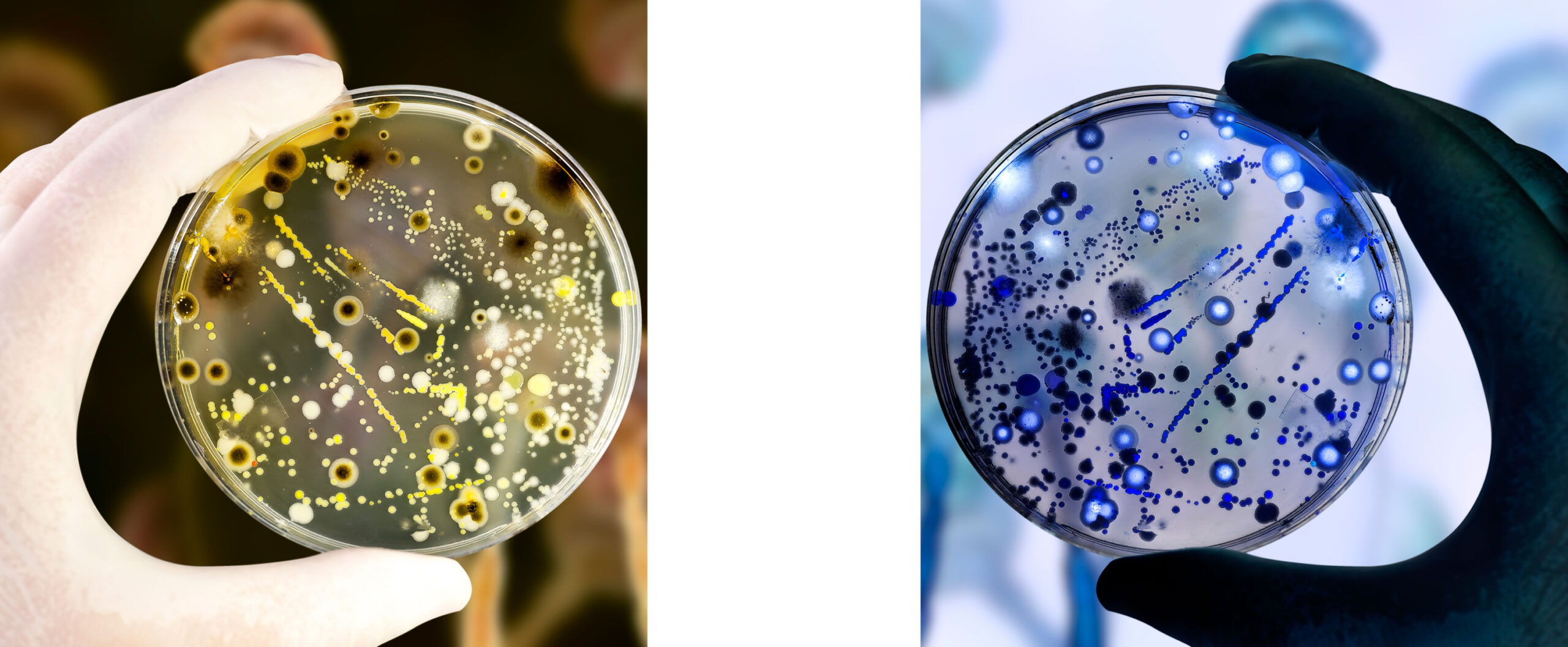
on the left, a hand with petri dish and the same image inverted on the right

GETTY IMAGES

These scientists also didn’t know that around the same time as their meeting, another conversation about mirror life was happening—a darker dialogue that was as focused on danger as it was on discovery. Starting around 2016, researchers with a nonprofit called Open Philanthropy had begun compiling research files on catastrophic biological risks. The organization, which rebranded as Coefficient Giving in 2025, funds projects across a range of focus areas; it adheres to a divisive philanthropic philosophy called effective altruism, which advocates giving money to projects with the highest potential benefit to the most people. While that might not sound objectionable, critics point out that the metrics devotees use to gauge “effectiveness” can prioritize long-term solutions while neglecting social injustices or systemic problems. 

Someone in Open Philanthropy’s bio­security group had suggested looking into the risks posed by mirror life. In 2019 the organization began funding research by Kevin Esvelt, who leads the Sculpting Evolution group at the MIT Media Lab, on biosecurity issues, including mirror life. He began reading up to see whether mirror life was something to worry about.

Esvelt made waves in 2013 for pioneering the use of CRISPR to develop a gene drive, a technology that could spread genetic changes introduced into a living organism through a whole population. Researchers are exploring its use, for example, to make mosquitoes hostile to the parasite that causes malaria—and, as a result, lower their chance of spreading it to humans. But almost immediately after he developed the tool, Esvelt argued against using it for profit, at least until proper safeguards could be set and its use in fighting malaria had been established. “Do you really have the right to run an experiment where if you screw up, it affects the whole world?” he asked, in this magazine, in 2016. At the Media Lab, Esvelt leads efforts to safely develop gene drives that can be deployed locally but prevented from spreading globally. 

Esvelt says he’s often thinking about the security risks posed by self-sustaining genetically engineered technologies, and research led him to suspect that the threat of mirror organisms hadn’t been seriously interrogated. The more he learned about microbial growth rates, predator-prey and microbe-microbe interactions, and immunology, the more he began to worry that mirror organisms, if impervious to the innate defenses of natural ones, could cause unstoppable infections in the event that they escaped the lab. 

Even if the first experimental iteration of such a germ were too fragile to survive in the environment or a human body, Esvelt says, it would be a light lift to genetically engineer new, more resilient versions with existing technology. Even worse, he says, the results could be weaponized. The possible path from 2019 to global annihilation seemed almost too direct, he found. 

But he wasn’t an expert in all the scientific fields involved in research on mirror life, so he started making calls. He first described his concerns to Relman one night in February 2022, at a restaurant outside Washington, DC. Esvelt hoped Relman would tell him he was wrong, that he’d missed something over the years of gathering data. Instead, he was troubled. 

The concern spreads

When Relman returned to California, he read more about the technology, the risks, and the role of chirality in the immune system and the environment. And he consulted experts he knew well—ecologists, other microbiologists, immunologists, all of them leaders in their fields—in an attempt to assuage his concerns. “I was hoping that they’d be able to say, I’ve thought about this, and I see a problem with your logic. I see that it’s really not so bad,” he says. “At every turn, that did not happen. Something about it was new to every person.” 

The concern spread. Relman worked with Jack Szostak, a professor of chemistry at the University of Chicago, and a group of researchers to see if it was possible to make an argument that mirror life wasn’t going to wipe out humanity. Included in that group was Kate Adamala, a synthetic biologist at the University of Minnesota. She was a natural choice: Adamala had shared the initial grant from the NSF, in 2019, to explore mirror-life technologies. 

She also became convinced the risk was real—and was dumbfounded that she hadn’t seen it earlier. “I wish that one sunny afternoon we were having coffee and we realized the world’s about to end, but that’s not what happened,” she says. “I’m embarrassed to admit that I wasn’t even the one that brought up the risks first.” Through late 2023 and early 2024, the endeavor began to take on the form of a rigorous scientific investigation. Experts were presented with a hypothesis—namely, that if mirror cells were built, they would pose an existential threat—and asked to challenge it. The goal was to falsify the hypothesis. “It would be great if we were wrong,” says Vaughn Cooper, a microbiologist at the University of Pittsburgh and president-elect of the American Society for Microbiology. 

Relman says that as the chemists and biologists learned more about one another’s work and began to understand what immunologists know about how living things defend themselves, they started to connect the dots and see an emerging picture of an unstoppable synthetic threat.

Some scientists have pushed back against the doomsday scenario, suggesting that the case against mirror life offers an “inflated view of the danger.”

Timothy Hand, an immunologist at the University of Pittsburgh who hadn’t participated in the 2019 NSF meeting, wasn’t initially worried when he heard about mirror life, in 2024. “The mammalian immune system has this incredible capability to make antibodies against any shape,” he says. “Who cares if it’s a mirror?” But when he took a closer look at that process, he could see a cascade of potential problems far upstream of antibody production. Start with detection: Macrophages, which are cells the immune system uses to identify and dispatch invaders, use chiral sensing receptors on their surfaces. The proteins they use to grab on to those invaders, too, are chiral. That suggests the possibility that an organism could be infected with a mirror organism but not be able to detect it or defend against it. “The lack of innate immune sensing is an incredibly dangerous circumstance for the host,” Hand says.

By early 2024, Glass had become concerned as well. Relman and James Wagstaff, a structural biologist from Open Philanthropy, visited him at the Venter Institute to talk about the possibility of using synthetic cell technology—Glass’s specialty—to build mirror life. “At first I thought, This can’t be real,” Glass says. They walked through arguments and counterarguments. “The more this went on, the more I started feeling ill,” he says. “It made me realize that work I had been doing for much of the last 20 years could be setting the world up for this incredible catastrophe.” 

In the second half of 2024, the growing group of scientists assembled the report and wrote the policy forum for Science. Relman briefed policymakers at the White House, members of the defense community, and the National Security Agency. Researchers met with the National Institutes of Health and the National Science Foundation. “We briefed the United Nations, the UK government, the government of Singapore, scientific funding organizations from Brazil,” says Glass. “We’ve talked to the Chinese government indirectly. We were trying to not blindside anybody.” 

A year and a half on, the push has had an impact. UNESCO has recommended a precautionary global moratorium on creating mirror-life cells, and major philanthropic organizations that fund science, including the Alfred P. Sloan Foundation, have announced they will not finance research leading to a mirror microorganism. The Bulletin of the Atomic Scientists highlighted considerations about mirror life in its most recent report on the Doomsday Clock. In March, the United Nations Secretary-General’s Scientific Advisory Board issued a brief highlighting the risks—noting, for example, that recent progress on building mirror molecules could reduce the cost of creating a mirror microbe. 

“I think no one really believes at this stage that we should make mirror life, based on the evidence that’s available,” says James Smith, the scientist who leads the MBDF, the nonprofit focused on assessing the risks of mirror life, which is funded by Coefficient Giving, the Sloan Foundation, and other organizations. The challenge now, Smith says, is for scientists to work with policymakers and bioethicists to figure out how much research on mirror life should be permitted—and who will enforce the rules.

Drawing the line

Not everyone is convinced that mirror organisms pose an existential threat. It’s difficult to verify predictions about how mirror microbes would fare in the immune system—or the larger world—without running experiments on them. Some scientists have pushed back against the doomsday scenario, suggesting that the case against mirror life offers an “inflated view of the danger.” Others have noted that carbohydrates called glycans already exist in both left- and right-handed forms—even in pathogens—and the immune system can recognize both of them. Experiments focused on interactions between the immune system and mirror molecules, they say, could help clarify the risks of mirror organisms and reduce uncertainty. 

Even among those convinced that the worst-case scenario is possible, researchers still disagree over where to draw the line. What inquiries should be allowed and what should be prohibited?

Andy Ellington, a biotechnologist and synthetic biologist at the University of Texas at Austin, doesn’t think mirror organisms will come to fruition anytime soon. Even if they do, he isn’t sure they will pose a threat. “If there is going to be harm done to the human race, this is about position 382 on my list,” he says. But at the same time, he says it’s a complicated issue worth studying more, and he wants to see the conversations continue: “We’re operating in a space where there’s so much unknown that it’s very difficult for us to do risk assessment.” 

Even among those convinced that the worst-case scenario is possible, researchers still disagree over where to draw the line. What inquiries should be allowed and what should be prohibited? 

Adamala, of the University of Minnesota, and others see a natural line at ribosomes, the cellular factories that transform chains of amino acids into proteins. These would be a critical ingredient in creating a self-replicating organism, and Adamala says the path to getting there once mirror ribosomes are in place would be pretty straightforward. But Zhu, at Westlake, and others counter that it’s worth developing mirror ribosomes because they could possibly produce medically useful peptides and proteins more efficiently than traditional chemical methods. He sees a clear distinction, and a foundational gap, between that kind of technology and the creation of a living synthetic organism. “It is crucial to distinguish mirror-image molecular biology from mirror-image life,” he says. That said, he points out that many synthetic molecules and organisms containing unnatural components, including but not limited to the mirror-image subset, might pose health risks. Researchers, he says, should focus on developing holistic guidelines to cover such risks—not just those from mirror molecules. 

Even if the exact risk remains uncertain, Esvelt remains more convinced than ever that the work should be paused, perhaps indefinitely. No one has taken a meaningful swing at the hypothesis that mirror life could wipe out everything, he says. The primary uncertainties aren’t around whether mirror life is dangerous, he points out; they have more to do with identifying which bacterium—including what genes it encodes, what it eats, how it evades the immune system’s sentinels—could lead to the most serious consequences. “The risk of losing everything, like the entire future of humanity integrated over time, is not worth any small fraction of the economy. You just don’t muck around with existential risk like that,” he says. 

In some ways, scientists have been here before, working out rules and limits for research. Two years after the start of the covid-19 pandemic, for example, the World Health Organization published guidelines for managing risks in biological research. But the history is much deeper: Horrific episodes of human experimentation led to the establishment of institutional review boards to provide ethical oversight. In the early 1970s, in response to concerns over lab-acquired infections and growing use of biological warfare, the US Centers for Disease Control and Prevention established biohazard safety levels (BSLs), which govern work on potentially dangerous biological experiments.

And in 1975—at the dawn of recombinant DNA research, which allows researchers to put genetic material from one organism into another—geneticists met at the Asilomar conference center in Pacific Grove, California, to hammer out rules governing the work. There were concerns over what would happen if some virus or bacterium, genetically engineered to have traits that would make it particularly dangerous for people, escaped from a lab. Scientists agreed to self-imposed restrictions, like a moratorium on research until new safety guidelines were in place. As a result of the meeting, in June 1976 the NIH issued rules that, among other things, categorized the risks associated with rDNA experiments and aligned them with the newly adopted BSL system.

Asilomar is often hailed as a successful model for scientific self-governance. But that perception reflects a tendency to recall the meeting through a nostalgic haze. “In fact, it was incredibly messy and human,” says Luis Campos, a historian of science at Rice University. Equally brilliant Nobelists argued on either side of the question of whether to rein in rDNA research. Technical discussions dominated; talks about who would be affected by the technology were missing. The meeting didn’t start establishing guidelines, says Campos, until the lawyers mentioned liability and lab leaks. 

For now it’s unclear whether these examples of self-­governance, which arose from the demonstrated risks of existing technologies, hold useful lessons for the mirror-life community. Three competing images of the future are coming into focus: Mirror life might not be possible, it might be possible but not threatening, or it might be possible and capable of obliterating all life on Earth. 

Scientists may be censoring themselves out of fear and speculation. To some, shutting down the work seems necessary and urgent; to others, it is unnecessarily limiting. What’s clear is that the question of what to do about mirror life has been both illuminating and disorienting, pushing scientists to interrogate not only their current research but where it might lead. This is uncharted territory. 

Stephen Ornes is a science writer based in Nashville, Tennessee.
Shape
Shape
Stay Ahead

Explore More Insights

Stay ahead with more perspectives on cutting-edge power, infrastructure, energy,  bitcoin and AI solutions. Explore these articles to uncover strategies and insights shaping the future of industries.

Shape

U.S. Department of Energy Announces $14 Million for Enhanced Geothermal Systems Demonstration Project in Pennsylvania

WASHINGTON—The U.S. Department of Energy’s Hydrocarbons and Geothermal Energy Office (HGEO) today announced a $14 million project to support field tests for enhanced geothermal systems (EGS). EGS demonstration projects explore the greater potential for geothermal technology to provide reliable, cost-effective electricity using the earth’s abundant heat resources, supporting the Trump Administration’s commitments to advance energy addition and reduce energy costs for American families and businesses. Led by the Pennsylvania Department of Environmental Protection, the project will leverage the significant thermal resources in the Appalachian Utica Shale to assess the efficacy and scalability of EGS in the eastern United States.  “The Department of Energy’s investments in enhanced geothermal systems represent a key advancement in our national energy strategy as we explore innovative ways to reach and use geothermal resources beyond what is currently possible,” said Kyle Haustveit, Assistant Secretary of the Hydrocarbons and Geothermal Energy Office. “As the first enhanced geothermal systems demonstration site located in the eastern United States, this project offers an important opportunity to assess the ability of such systems to deliver reliable, affordable geothermal electricity to Americans nationwide.” Using geothermal resources for electricity production requires fluid to flow among hot rocks in the subsurface and then be drawn to the surface in the form of steam or hot water. While underground heat exists everywhere, many locations lack adequate water or conditions that facilitate fluid flow necessary to recover that heat energy. In those cases, EGS can be used to create a human-made underground reservoir to tap that heat for energy. Demonstration projects are vital to help expand knowledge and data about EGS reservoirs and how they function, and to understand EGS in a variety of geographic locations, geologic formations, and subsurface conditions. Successful demonstrations will help spur further growth of geothermal energy. The Pennsylvania EGS project activities will include converting a horizontal shale gas

Read More »

Wright, Zeldin, and Burgum Break Ground on NESE Pipeline in New York City to Deliver Reliable, Affordable Natural Gas to the Northeast

NEW YORK—U.S. Secretary of Energy Chris Wright, U.S. Environmental Protection Agency Administrator Lee Zeldin, and U.S. Secretary of the Interior Doug Burgum today participated in a groundbreaking ceremony for the Northeast Supply Enhancement (NESE) Pipeline. This pipeline, of Williams Companies, will transport natural gas from Pennsylvania into New York City and Long Island, providing affordable and reliable energy for millions of Americans while meeting the growing energy demands of the region. President Trump and his National Energy Dominance Council worked across party lines to secure the necessary permits for this project from the states of New York and New Jersey last fall. NESE is an expansion of Williams’ Transco pipeline system across Pennsylvania, New Jersey, and New York that will add 400,000 dekatherms per day of capacity. This is enough energy to serve the equivalent of 2.3 million homes. NESE remains on track to be in service by the fourth quarter of 2027. “For decades, poor political choices obstructed the building of energy infrastructure, leading to higher energy costs for millions of Americans. President Trump promised to lower energy costs and to get America building again—that is exactly what the groundbreaking of the NESE pipeline will accomplish,” said Energy Secretary Chris Wright. “This project is a win-win: natural gas is a reliable, low-cost, clean burning option for New Yorkers to heat and power their homes and businesses. President Trump, Secretary Burgum, Administrator Zeldin and I will continue fighting to build more energy infrastructure so that all Americans have access to affordable, reliable, and secure American energy.” “Breaking ground on the NESE pipeline marks a massive milestone for millions of New Yorkers seeking access to reliable, affordable natural gas. Delivering natural gas from Pennsylvania to New York City and Long Island will lower costs while helping to meet the growing energy

Read More »

BW Energy granted 25-year extension of license offshore Gabon

BW Energy Gabon has received approval from the Ministry of Oil and Gas of the Gabonese Republic to extend the Dussafu Marin production license offshore Gabon, West Africa. The license period has been extended to 2053 from 2028, inclusive of three 5-year option periods from 2038 onwards. The prior contract was until 2038 inclusive of two 5-year option periods from 2028 onwards. The extra time “provides long-term visibility for production, investments, and reserve development” of the operator’s “core producing asset,” the company said in a release Apr. 7. Ongoing license projects include MaBoMo Phase 2, with planned first oil in second-half 2026, and the Bourdon development following its discovery last year. The timeline also “strengthens the foundation for future infrastructure‑led growth opportunities across the adjacent Niosi and Guduma licenses, both operated by BW Energy,” the company continued. The Dussafu Marin permit is a development and exploitation license with multiple discoveries and prospects lying within a proven oil and gas play fairway within Southern Gabon basin. To the northwest of the block is the Etame-Ebouri Trend, a collection of fields producing from the pre-salt Gamba and Dentale sandstones, and to the north are Lucina and M’Bya fields which produce from the syn-rift Lucina sandstones beneath the Gamba. Oil fields within the Dussafu Permit include Moubenga, Walt Whitman, Ruche, Ruche North East, Tortue, Hibiscus, and Hibiscus North. BW Energy Gabon is operator at Dussafu (73.50%) with partners Panoro Energy ASA (17.5%) and Gabon Oil Co. (9%). Dussafu.

Read More »

Santos plans development of North Slope’s Quokka Unit

Santos Ltd. has started development planning in the Quokka Unit on Alaska’s North Slope after further delineating the Nanushuk reservoir. The Quokka-1 appraisal well spudded on Jan. 1, 2026, about 6 six miles from the Mitquq-1 discovery well drilled in 2020. It was drilled to 4,787 ft TD and encountered a high-quality reservoir with about 143 ft of net oil pay in the Nanushuk formation, demonstrating an average porosity of 19%. Following a single stage fracture stimulation, the well achieved a flow rate of 2,190 bo/d. Reservoir sands correlated between the two discoveries, coupled with fluid analyses, confirm the presence of high‑quality, light‑gravity oil, supporting strong well performance and improved pricing relative to Pikka oil. Together with additional geological data, these results underpin the potential for a two‑drill‑site development with production capacity comparable to Pikka phase 1, the company said.  Rate and resource potential for the two-drill-site development is being evaluated. Resource estimation is ongoing and appraisal results will be evaluated as part of the FY26 contingent resource assessment. In FY25, Santos reported 2C contingent resources of 177 MMboe for the Quokka Unit. Based on these results, Santos has started development planning, including the initiation of key permitting activities. Santos is operator of the Quokka Unit (51%) with partner Repsol (49%).

Read More »

Fluor, Axens secure contracts for US grassroots refinery project

Fluor Corp. and Axens Group have been awarded key contracts for America First Refining’s (AFR) proposed grassroots refinery at the Port of Brownsville, Tex., advancing development of what would be the first new US refinery to be built in more than 50 years. Fluor will execute front-end engineering and design (FEED) for the project, while Axens will serve as technology licensor of core refining process technologies to be used at the site, the service providers said in separate Apr. 7 releases. The AFR refinery is designed to process more than 60 million bbl/year—or about 164,400 b/d—of US light shale crude into transportation fuels, including gasoline, diesel, and jet fuel. Contract details Without disclosing a specific value of its contract, Fluor said the scope of its FEED study will cover early-stage engineering and design required to define project execution, cost, and schedule based on a complex that will incorporate commercially proven technologies to improve efficiency and emissions performance while processing domestic shale crude. As technology licensor, Axens said it will deliver process technologies for key refining units at the site, including those for: Naphtha, diesel hydrotreating. Continuous catalytic reforming. Isomerization. Alongside supporting improved fuel-quality specifications, the unspecified technologies to be supplied for the refinery will also help to reduce overall energy consumption at the site. Axens—which confirmed its involvement since 2017 in working with AFR on early-stage development of the project—said this latest licensing agreement will also cover engineering support, equipment, catalysts, and services across the refinery’s process configuration. Project background, commercial framework Upon first announcing the project in March 2026, AFR said the proposed development came alongside an already signed 20-year offtake agreement with a global integrated oil company covering 1.2 billion bbl of US light shale crude, as well as capital investment to support construction. As part of the

Read More »

EIA: US crude inventories up 3.1 million bbl

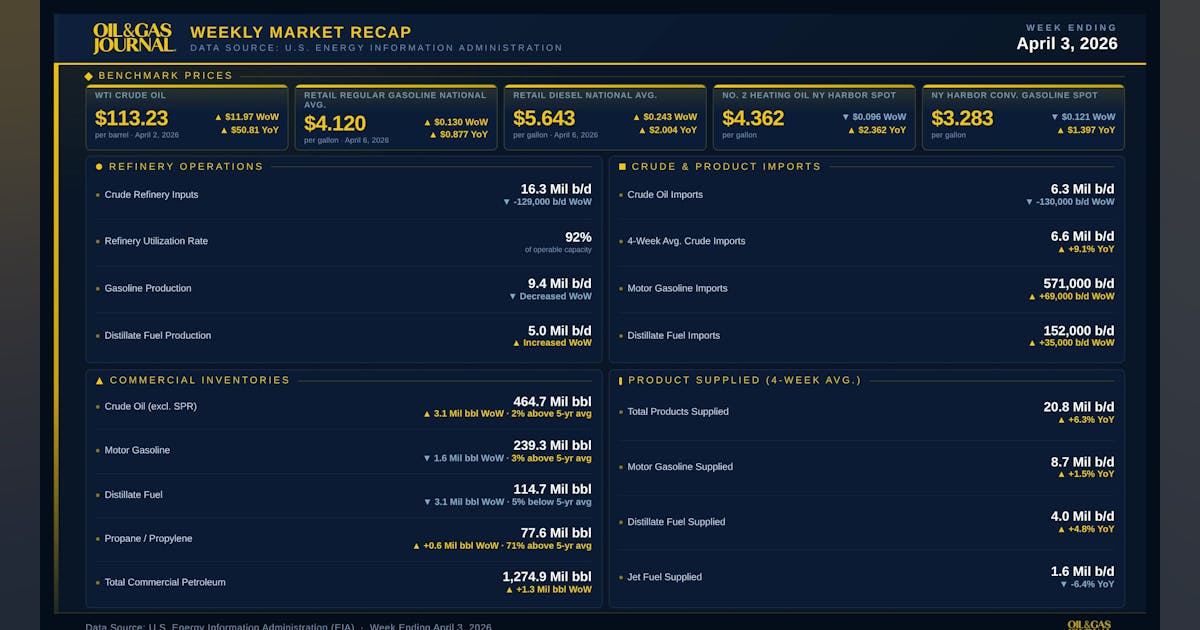
US crude oil inventories for the week ended Apr. 3, excluding the Strategic Petroleum Reserve, increased by 3.1 million bbl from the previous week, according to data from the US Energy Information Administration (EIA). At 464.7 million bbl, US crude oil inventories are about 2% above the 5-year average for this time of year, the EIA report indicated. EIA said total motor gasoline inventories decreased by 1.6 million bbl from last week and are about 3% above the 5-year average for this time of year. Finished gasoline inventories increased while blending components inventories decreased last week. Distillate fuel inventories decreased by 3.1 million bbl last week and are about 5% below the 5-year average for this time of year. Propane-propylene inventories increased by 600,000 bbl from last week and are 71% above the 5-year average for this time of year, EIA said. US crude oil refinery inputs averaged 16.3 million b/d for the week ended Apr. 3, which was 129,000 b/d less than the previous week’s average. Refineries operated at 92% of capacity. Gasoline production decreased, averaging 9.4 million b/d. Distillate fuel production increased, averaging 5.0 million b/d. US crude oil imports averaged 6.3 million b/d, down 130,000 b/d from the previous week. Over the last 4 weeks, crude oil imports averaged about 6.6 million b/d, 9.1% more than the same 4-week period last year. Total motor gasoline imports averaged 571,000 b/d. Distillate fuel imports averaged 152,000 b/d.

Read More »

Maine to put brakes on big data centers as AI expansion collides with power limits

Mills has pushed for an exemption protecting a proposed $550 million project at the former Androscoggin paper mill in Jay, arguing it would reuse existing infrastructure without straining the grid. Lawmakers rejected that exemption. Mills’ office did not immediately respond to a request for comment. A national wave, an unanswered federal question Maine is one of at least 12 states now weighing moratorium or restraint legislation, alongside more than 300 data center bills filed across 30-plus states in the current session, according to legislative tracking firm MultiState. The shared concern is energy cost. Data centers could consume up to 12% of total US electricity by 2028, according to the US Department of Energy. On March 25, Senator Bernie Sanders and Alexandria Ocasio-Cortez introduced the AI Data Center Moratorium Act in Congress, which would impose a nationwide freeze on all new data center construction until Congress passes AI safety legislation. The Trump administration has pursued a different path from the legislative approach being taken in states. On March 4, Amazon, Google, Meta, Microsoft, OpenAI, Oracle, and xAI signed the White House’s Ratepayer Protection Pledge, a voluntary commitment by hyperscalers to fund their own power generation rather than pass grid costs to ratepayers. The pledge, published in the Federal Register on March 9, carries no penalties for noncompliance or auditing requirements.

Read More »

Cisco just made two moves to own the AI infrastructure stack

In a world of autonomous agents, identity and access become the de facto safety rails. Astrix is designed to inventory these non-human identities, map their permissions, detect toxic combinations, and remediate overprivileged access before it becomes an exploit or a data leak. That capability integrates directly with Cisco’s broader zero-trust and identity-centric security strategy, in which the network enforces policy based on who or what the entity is, not on which subnet it resides in. How this strengthens Cisco’s secure networking story Cisco has positioned itself as the vendor that can deliver “AI-ready, secure networks” spanning campus, data center, cloud, and edge. Galileo and Astrix extend that narrative from infrastructure into AI behavior and identity governance: The network becomes the high‑performance, policy‑enforcing substrate for AI traffic and data. Splunk plus Galileo becomes the observability plane for AI agents, linking AI incidents to network and application signals. Security plus Astrix becomes the identity and permission-control layer that constrains what AI agents can actually do within the environment. This is the core of Cisco’s emerging “Secure AI” posture: not just using AI to improve security but securing AI itself as it is embedded across every workflow, API, and device. For customers, that means AI initiatives can be brought under the same operational and compliance disciplines already used for networks and apps, rather than existing as unmanaged risk islands. Why this matters to Cisco customers Most large Cisco accounts are exactly the enterprises now experimenting with AI agents in contact centers, IT operations, and business workflows. They face three practical problems: They cannot see what agents are doing end‑to‑end, or measure quality beyond offline benchmarks. They lack a coherent model for managing the identities, secrets, and permissions those agents depend on. Their security and networking teams are often disconnected from AI projects happening in lines of business.

Read More »

From Buildings to Token Factories: Compu Dynamics CEO Steve Altizer On Why AI Is Rewriting the Data Center Design Playbook

Not Falling Short—Just Not Optimized Altizer drew a clear distinction. Traditional data centers can run AI workloads, but they weren’t built for them. “We’re not falling short much, we’re just not optimizing.” The gap shows up most clearly in density. Legacy facilities were designed for roughly 300 to 400 watts per square foot. AI pushes that to 2,000 to 4,000 watts per square foot—changing not just rack design, but the logic of the entire facility. For Altizer, AI-ready infrastructure starts with fundamentals: access to water for heat rejection, significantly higher power density, and in some cases specific redundancy topologies favored by chip makers. It also requires liquid cooling loops extended to the rack and, critically, flexibility in the white space. That last point is the hardest to reconcile with traditional design. “The GPUs change… your power requirements change… your liquid cooling requirements change. The data center needs to change with it.” Buildings are static. AI is not. Rethinking Modular: From Containers to Systems “Modular” has been part of the data center vocabulary for years, but Altizer argues most of the industry is still thinking about it the wrong way. The old model centered on ISO containers. The emerging model focuses on modularizing the white space itself. “We’re not building buildings—we’re building assemblies of equipment.” Compu Dynamics is pushing toward factory-built IT modules that can be delivered and assembled on-site. A standard 5 MW block consists of 10 modules, stacked into a two-story configuration and designed for transport by trailer across the U.S. From there, scale becomes repeatable. Blocks can be placed adjacent or connected to create larger deployments, moving from 5 MW to 10 MW and beyond. The point is not just scalability; it’s repeatability and speed. Altizer ties this directly to a broader shift in how data centers are

Read More »

Data centers are moving inland, away from some traditional locations

The future is even less clear the further you go out. The vast majority of data centers planned for launch between 2028 and 2032 have yet to break ground and only a sliver are under construction. Those delays, it seems, appear to be twofold: first, the well-documented component shortage. Not just memory and storage, but batteries, electrical transformers, and circuit breakers. They all make up less than 10% of the cost to construct one data center, but as Andrew Likens, energy and infrastructure lead at AI data center provider Crusoe’s told Bloomberg, it’s impossible to build new data centers without them. “If one piece of your supply chain is delayed, then your whole project can’t deliver,” Likens said. “It is a pretty wild puzzle at the moment.” Second problem is the growing rebellion against data centers, both by citizens and governments alike. The latest pushback comes from the Seminole nation of Native Americans, who have banned data centers on their tribal lands. Of the data centers that are coming online in the next few months, the top states reflect what Synergy has been saying about data center migration to the interior of the country. Texas is leading the way, with 22.5 GW coming online, followed by New Mexico at 8.3 GW and Pennsylvania, which is making a major push for data centers to come to the state, at 7.1 GW.

Read More »

Hillwood, PowerHouse Advance $20B Joliet Data Campus as Midwest AI Buildout Accelerates

The approval of the Joliet Technology Center signals that the Chicago region is being pulled into the Midwest’s next phase of AI infrastructure development, one that has so far been led by Ohio and defined by scale, power demand, and rising public scrutiny. It also underscores a growing reality: local governments are beginning to understand exactly what that shift entails. On March 19, 2026, the Joliet City Council voted 8–1 to approve the conditional annexation of roughly 795 acres for the proposed Joliet Technology Center, a $20 billion data center campus backed by Hillwood and PowerHouse Data Centers. The site, near Rowell and Bernhard Roads on Joliet’s east side, is planned as a 24-building, multi-phase development that would rank among the most consequential digital infrastructure projects ever approved in Illinois. Joliet is now a clear case study in how the Midwest’s data center market is evolving: massive land assemblies, utility-scale power requirements, front-loaded community concessions, increasingly organized local opposition, and regulators working to ensure that the costs of AI infrastructure are not shifted onto ratepayers. A Project Too Large to Call Routine The Joliet Technology Center is a campus-scale industrial platform built for the AI era. Plans call for 24 two-story buildings of roughly 144,500 square feet each, with total development estimated at approximately 6.9 million square feet and up to 1.8 GW of eventual capacity. That places the project firmly in the emerging “AI factory” category, e.g. far-removed from the incremental, metro-edge data center expansions that defined earlier growth cycles. The distinction is critical. AI-scale campuses operate on a different economic and technical model. Fiber access and metro proximity are no longer enough. These developments require large, contiguous power blocks, land to support phased substation and utility infrastructure, and a political framework capable of absorbing what is effectively heavy

Read More »

AI is a Positive Catalyst for Grid Growth

Data centers, particularly those optimized for artificial intelligence workloads, are frequently characterized in public discourse as a disruptive threat to grid stability and ratepayer affordability. But behind-the-narrative as we are, the AI‑driven data center growth is simply illuminating pre‑existing systemic weaknesses in electric infrastructure that have accumulated over more than a decade of underinvestment in transmission, substations, and interconnection capacity. Over the same period, many utilities operated under planning assumptions shaped by slow demand growth and regulatory frameworks that incentivized incremental upgrades rather than large, anticipatory capital programs. As a result, the emergence of gigawatt‑scale computing campuses appears to be a sudden shock to a system that, in reality, was already misaligned with long‑term decarbonization, electrification, and digitalization objectives. Utilities have been asked to do more with aging grids, slow permitting, and chronically constrained capital, and now AI and cloud are finally putting real urgency — and real investment — behind modernizing that backbone. In that sense, large‑scale compute is not the problem; it is the catalyst that makes it impossible to ignore the problem any longer. We are at a moment when data centers, and especially AI data centers, are being blamed for exposing weaknesses that were already there, when in reality they are giving society a chance to fix a power system that has been underbuilt for more than a decade. Utilities have been asked to do more with aging grids, slow permitting, and limited investment, and now AI and cloud are finally putting real urgency — and real capital — behind modernizing that backbone. In that sense, data centers aren’t the problem; they are the catalyst that makes it impossible to ignore the problem any longer. AI Demand Provided a Long‑Overdue Stress Test The nature of AI workloads intensified this dynamic. High‑performance computing clusters concentrate substantial power

Read More »

Microsoft will invest $80B in AI data centers in fiscal 2025

And Microsoft isn’t the only one that is ramping up its investments into AI-enabled data centers. Rival cloud service providers are all investing in either upgrading or opening new data centers to capture a larger chunk of business from developers and users of large language models (LLMs).  In a report published in October 2024, Bloomberg Intelligence estimated that demand for generative AI would push Microsoft, AWS, Google, Oracle, Meta, and Apple would between them devote $200 billion to capex in 2025, up from $110 billion in 2023. Microsoft is one of the biggest spenders, followed closely by Google and AWS, Bloomberg Intelligence said. Its estimate of Microsoft’s capital spending on AI, at $62.4 billion for calendar 2025, is lower than Smith’s claim that the company will invest $80 billion in the fiscal year to June 30, 2025. Both figures, though, are way higher than Microsoft’s 2020 capital expenditure of “just” $17.6 billion. The majority of the increased spending is tied to cloud services and the expansion of AI infrastructure needed to provide compute capacity for OpenAI workloads. Separately, last October Amazon CEO Andy Jassy said his company planned total capex spend of $75 billion in 2024 and even more in 2025, with much of it going to AWS, its cloud computing division.

Read More »

John Deere unveils more autonomous farm machines to address skill labor shortage

Join our daily and weekly newsletters for the latest updates and exclusive content on industry-leading AI coverage. Learn More Self-driving tractors might be the path to self-driving cars. John Deere has revealed a new line of autonomous machines and tech across agriculture, construction and commercial landscaping. The Moline, Illinois-based John Deere has been in business for 187 years, yet it’s been a regular as a non-tech company showing off technology at the big tech trade show in Las Vegas and is back at CES 2025 with more autonomous tractors and other vehicles. This is not something we usually cover, but John Deere has a lot of data that is interesting in the big picture of tech. The message from the company is that there aren’t enough skilled farm laborers to do the work that its customers need. It’s been a challenge for most of the last two decades, said Jahmy Hindman, CTO at John Deere, in a briefing. Much of the tech will come this fall and after that. He noted that the average farmer in the U.S. is over 58 and works 12 to 18 hours a day to grow food for us. And he said the American Farm Bureau Federation estimates there are roughly 2.4 million farm jobs that need to be filled annually; and the agricultural work force continues to shrink. (This is my hint to the anti-immigration crowd). John Deere’s autonomous 9RX Tractor. Farmers can oversee it using an app. While each of these industries experiences their own set of challenges, a commonality across all is skilled labor availability. In construction, about 80% percent of contractors struggle to find skilled labor. And in commercial landscaping, 86% of landscaping business owners can’t find labor to fill open positions, he said. “They have to figure out how to do

Read More »

2025 playbook for enterprise AI success, from agents to evals

Join our daily and weekly newsletters for the latest updates and exclusive content on industry-leading AI coverage. Learn More 2025 is poised to be a pivotal year for enterprise AI. The past year has seen rapid innovation, and this year will see the same. This has made it more critical than ever to revisit your AI strategy to stay competitive and create value for your customers. From scaling AI agents to optimizing costs, here are the five critical areas enterprises should prioritize for their AI strategy this year. 1. Agents: the next generation of automation AI agents are no longer theoretical. In 2025, they’re indispensable tools for enterprises looking to streamline operations and enhance customer interactions. Unlike traditional software, agents powered by large language models (LLMs) can make nuanced decisions, navigate complex multi-step tasks, and integrate seamlessly with tools and APIs. At the start of 2024, agents were not ready for prime time, making frustrating mistakes like hallucinating URLs. They started getting better as frontier large language models themselves improved. “Let me put it this way,” said Sam Witteveen, cofounder of Red Dragon, a company that develops agents for companies, and that recently reviewed the 48 agents it built last year. “Interestingly, the ones that we built at the start of the year, a lot of those worked way better at the end of the year just because the models got better.” Witteveen shared this in the video podcast we filmed to discuss these five big trends in detail. Models are getting better and hallucinating less, and they’re also being trained to do agentic tasks. Another feature that the model providers are researching is a way to use the LLM as a judge, and as models get cheaper (something we’ll cover below), companies can use three or more models to

Read More »

OpenAI’s red teaming innovations define new essentials for security leaders in the AI era

Join our daily and weekly newsletters for the latest updates and exclusive content on industry-leading AI coverage. Learn More OpenAI has taken a more aggressive approach to red teaming than its AI competitors, demonstrating its security teams’ advanced capabilities in two areas: multi-step reinforcement and external red teaming. OpenAI recently released two papers that set a new competitive standard for improving the quality, reliability and safety of AI models in these two techniques and more. The first paper, “OpenAI’s Approach to External Red Teaming for AI Models and Systems,” reports that specialized teams outside the company have proven effective in uncovering vulnerabilities that might otherwise have made it into a released model because in-house testing techniques may have missed them. In the second paper, “Diverse and Effective Red Teaming with Auto-Generated Rewards and Multi-Step Reinforcement Learning,” OpenAI introduces an automated framework that relies on iterative reinforcement learning to generate a broad spectrum of novel, wide-ranging attacks. Going all-in on red teaming pays practical, competitive dividends It’s encouraging to see competitive intensity in red teaming growing among AI companies. When Anthropic released its AI red team guidelines in June of last year, it joined AI providers including Google, Microsoft, Nvidia, OpenAI, and even the U.S.’s National Institute of Standards and Technology (NIST), which all had released red teaming frameworks. Investing heavily in red teaming yields tangible benefits for security leaders in any organization. OpenAI’s paper on external red teaming provides a detailed analysis of how the company strives to create specialized external teams that include cybersecurity and subject matter experts. The goal is to see if knowledgeable external teams can defeat models’ security perimeters and find gaps in their security, biases and controls that prompt-based testing couldn’t find. What makes OpenAI’s recent papers noteworthy is how well they define using human-in-the-middle

Read More »