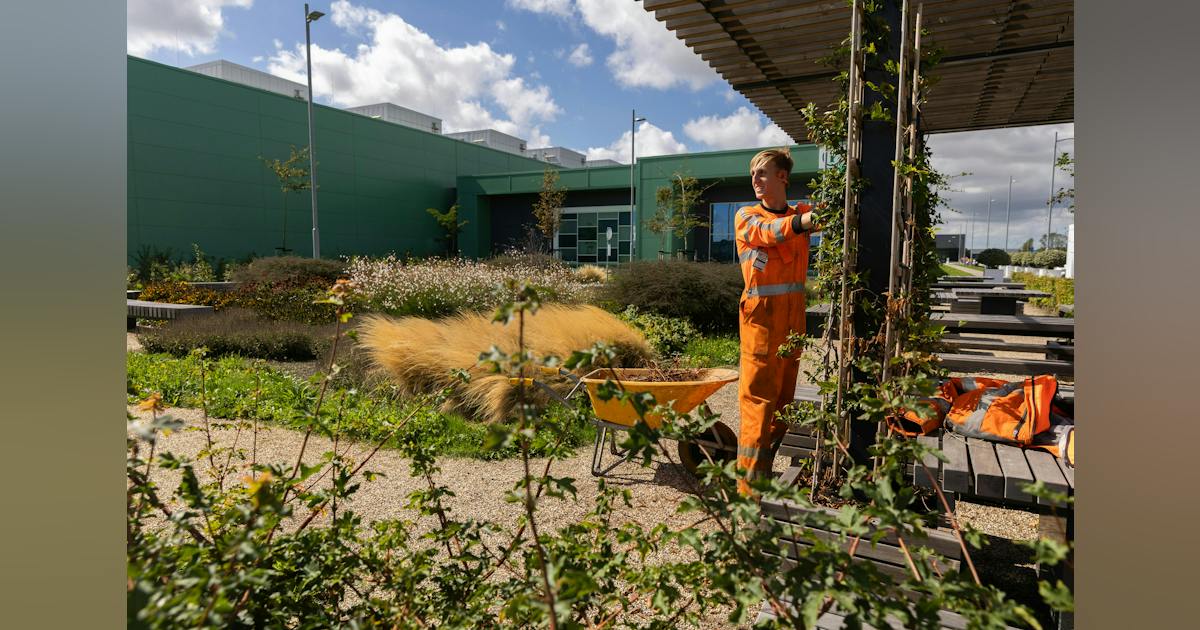
As a result, Microsoft has said six additional data centers planned in the region are being designed around biomimicry principles rather than treating landscaping as something added after the engineering work is finished. The change, from landscaping as decoration to ecology as a design input, is now being applied elsewhere. There is already a significant US example, set in Mecklenburg County, Virginia, where Microsoft originally announced the Chase City Conservancy in 2022, as part of a data center development south of Chase City. The completed project, which opened in April 2025, protects more than 230 acres from development. It includes more than eight acres of wetlands, over 16,300 linear feet of restored streams, 185 acres of native pollinator habitat, more than 25,000 planted trees and over three miles of publicly accessible walking trails. Local environmental organizations helped shift the design away from what the company describes as a more conventional recreational area toward biodiversity and habitat conservation illustrating the community-engagement side of Microsoft’s model, which, given the current temperature of such relationships, can’t be understated. For data center developers, that may be as important as the ecological results. Community impact is no longer being evaluated on just tax revenue and jobs. Turning portions of a site into protected wetlands, forests, trails or habitat potentially creates a visible local benefit in ways that renewable-energy contracts hundreds of miles away cannot. Microsoft’s commitment to the local community has been led by their Community First AI Infrastructure Plan announced in January 2026. Wetlands in Wisconsin, Screening in Georgia At Microsoft’s massive Mount Pleasant, Wisconsin, AI data center development, the company is working with the Root-Pike Watershed Initiative Network on restoration projects involving wetlands, native prairie and forested riparian buffers. One element involves returning previously straightened streams to more natural, winding channels, improving aquatic