Capital at Planetary Scale: Financing the AI Infrastructure Boom
Industry reporting and market speculation have increasingly pointed to the possibility of extremely large capital raises tied to the next phase of AI infrastructure expansion. Some estimates have suggested financing structures that could approach $100 billion or more, numbers that would be unprecedented even by Silicon Valley standards.
Whether or not deals ultimately reach those levels, the scale of investment now being discussed around leading AI developers such as OpenAI reflects something fundamentally different from traditional venture capital. At this magnitude, the financing begins to resemble infrastructure capital, designed to fund the construction of massive computing systems and the energy and data center capacity required to operate them.
Several major technology companies are positioned to benefit directly from this emerging model.
Amazon: Cloud Consumption and Infrastructure Alignment
Amazon’s relationship with OpenAI illustrates how infrastructure investment and cloud consumption can become tightly linked.
Reporting around the expanding AWS–OpenAI partnership has suggested the possibility of large strategic investments from Amazon alongside long-term cloud infrastructure agreements. Such arrangements would effectively align OpenAI’s growth with AWS compute consumption, including the potential use of Amazon’s custom AI accelerators such as Trainium.
In practical terms, this creates a reinforcing cycle: capital invested in the AI developer supports the growth of model development and deployment, while much of that infrastructure demand is ultimately delivered through the investor’s own cloud platform.
For AWS, the result could be a powerful mechanism for capturing a larger share of the rapidly expanding market for AI training and inference workloads.
Nvidia: Maintaining GPU Dominance
Even as hyperscalers promote custom silicon alternatives, Nvidia remains central to the current AI compute ecosystem.
The company’s GPUs continue to power many of the world’s largest AI training clusters, and next-generation architectures such as Vera Rubin are expected to further extend that leadership in the near term.
As a result, Nvidia’s strategic interest in the AI developer ecosystem is not surprising. Continued collaboration between leading AI labs and Nvidia’s hardware platform reinforces the company’s position at the core of the global AI infrastructure stack.
At the same time, the growing presence of hyperscaler-designed chips, including Trainium and Google’s TPUs, suggests that the future AI infrastructure landscape may evolve toward a more heterogeneous mix of compute architectures.
SoftBank: Financial Scale and Strategic Positioning
SoftBank’s involvement in the AI sector reflects a different kind of strategic role: providing access to large-scale capital.
Historically, the firm has pursued technology investments by assembling massive pools of capital and deploying them into companies positioned to define emerging platforms. In the context of AI, that strategy aligns with the enormous infrastructure costs associated with building and operating frontier-scale models.
While the long-term financial trajectory of generative AI companies remains uncertain, the scale of capital now being mobilized suggests that investors increasingly view AI infrastructure as a foundational technology platform rather than a traditional startup market.
The Emergence of a Multi-Cloud AI Infrastructure Model
One of the most important developments in OpenAI’s infrastructure strategy is that the company is no longer tied to a single hyperscale provider.
While Microsoft Azure remains a central part of OpenAI’s ecosystem by serving as a primary commercial distribution platform for its APIs and maintaining deep licensing and product integration agreements, the company has increasingly begun to expand its infrastructure footprint across multiple cloud environments.
The growing relationship with Amazon Web Services reflects that shift. By leveraging AWS infrastructure alongside Azure, OpenAI gains access to additional hyperscale compute capacity, alternative silicon platforms such as Amazon’s Trainium accelerators, and greater flexibility in where large training and inference workloads are deployed.
Beyond the two largest cloud providers, additional infrastructure partners also play important roles in the broader AI compute landscape. Companies such as Oracle Cloud and CoreWeave have emerged as significant providers of specialized GPU capacity, supporting large-scale model training and inference workloads across the industry. Oracle in particular has been linked to infrastructure supporting the ambitious Stargate AI data center initiative, which aims to deploy massive AI compute capacity in the United States.
Taken together, these relationships point to an emerging model in which leading AI developers operate across multiple hyperscale and specialized infrastructure providers simultaneously. Rather than relying on a single cloud platform, AI labs are beginning to function more like sovereign compute entities, assembling distributed infrastructure across clouds, silicon architectures, and geographic regions. In effect, the largest AI developers are beginning to assemble their own distributed compute fabrics, spanning multiple hyperscalers and specialized GPU clouds.
Infrastructure at Gigawatt Scale: The AI Factory Era
Even allowing for some uncertainty around the precise figures involved, the infrastructure commitments being discussed around next-generation AI systems point to an extraordinary escalation in scale.
Recent reporting as cited above has suggested that OpenAI’s expanding relationship with Amazon Web Services could involve as much as 2 GW of Trainium-based AI compute capacity, while the broader ecosystem supporting frontier model development continues to rely heavily on Nvidia GPU clusters deployed across multiple hyperscale environments.
Taken together, these developments point toward an emerging generation of AI infrastructure measured not in individual data centers, but in multi-gigawatt compute platforms.
At that scale, the industry is moving beyond traditional data center expansion into something closer to the industrialization of intelligence.
Historically, comparable infrastructure transitions have reshaped entire economic systems. The buildout of the railroad networks of the 19th century, the interstate highway system of the mid-20th century, and the global expansion of telecommunications fiber networks each created new platforms for economic activity.
The AI infrastructure buildout now underway shows similar characteristics: enormous capital requirements, rapidly expanding physical infrastructure, and intense competition among the companies building the platforms that will power the next generation of digital services.
There is one important distinction, however. In many cases, the organizations constructing this infrastructure are also the primary users of it. Hyperscalers and AI developers are simultaneously acting as platform builders, operators, and anchor tenants for the massive computing systems required to train and deploy frontier AI models.
The competitive dynamics are also evolving rapidly. Amazon has already invested heavily in Anthropic while simultaneously expanding its infrastructure relationship with OpenAI. That positioning could allow AWS to function as a neutral infrastructure layer where multiple frontier AI models compete for customers on a shared cloud platform. If that model holds, hyperscale cloud providers may increasingly resemble the energy and transportation networks of earlier industrial eras: neutral infrastructure platforms supporting competing AI ecosystems.
Governance Questions: Who Actually Controls OpenAI?
As OpenAI’s infrastructure partnerships expand, questions about the company’s governance structure have become increasingly relevant.
Unlike most technology companies operating at this scale, OpenAI remains governed by a nonprofit parent organization, with a for-profit subsidiary responsible for commercial operations and partnerships. Major technology companies (including Microsoft and, more recently, Amazon through its expanding infrastructure relationship) play critical roles as investors, cloud providers, and technology partners.
Microsoft in particular has been OpenAI’s closest strategic partner, providing billions of dollars in investment alongside the Azure infrastructure used to train and deploy many of the company’s models. While Microsoft has significant economic interests tied to OpenAI’s success, the company has repeatedly emphasized that OpenAI remains governed independently by its nonprofit structure.
As additional technology companies deepen their involvement – whether through infrastructure partnerships, silicon supply, or potential strategic investment – the long-term governance dynamics of the AI developer remain an open question.
What is becoming clearer, however, is that OpenAI now sits at the center of a rapidly expanding ecosystem of hyperscalers, semiconductor vendors, and capital providers.
The Rise of the AI Infrastructure Industrial Complex
Whether or not the term “AI industrial complex” ultimately sticks, the underlying trend is becoming difficult to ignore.
Hyperscale cloud providers, semiconductor manufacturers, and global investors are increasingly aligning around the infrastructure required to train and deploy frontier AI systems. Amazon’s growing partnership with OpenAI through AWS, Nvidia’s continued role at the center of the GPU ecosystem, and the involvement of large-scale capital providers all point toward a new phase in the development of AI infrastructure.
Together, these companies are helping to assemble what increasingly resembles a globally distributed, multi-cloud AI compute fabric.
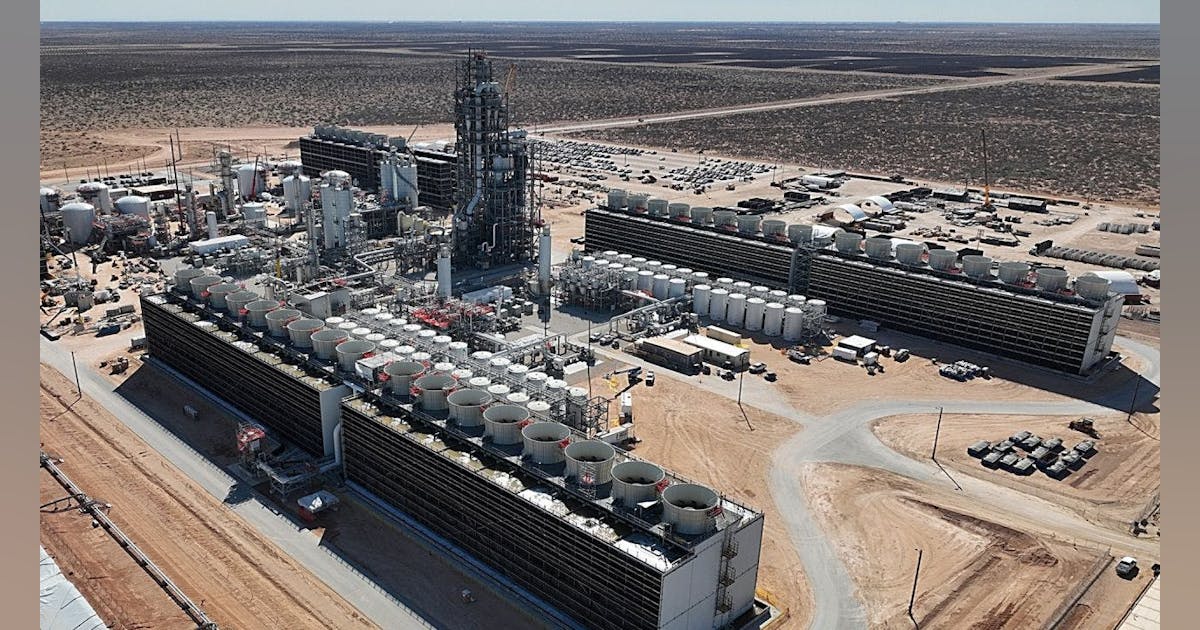
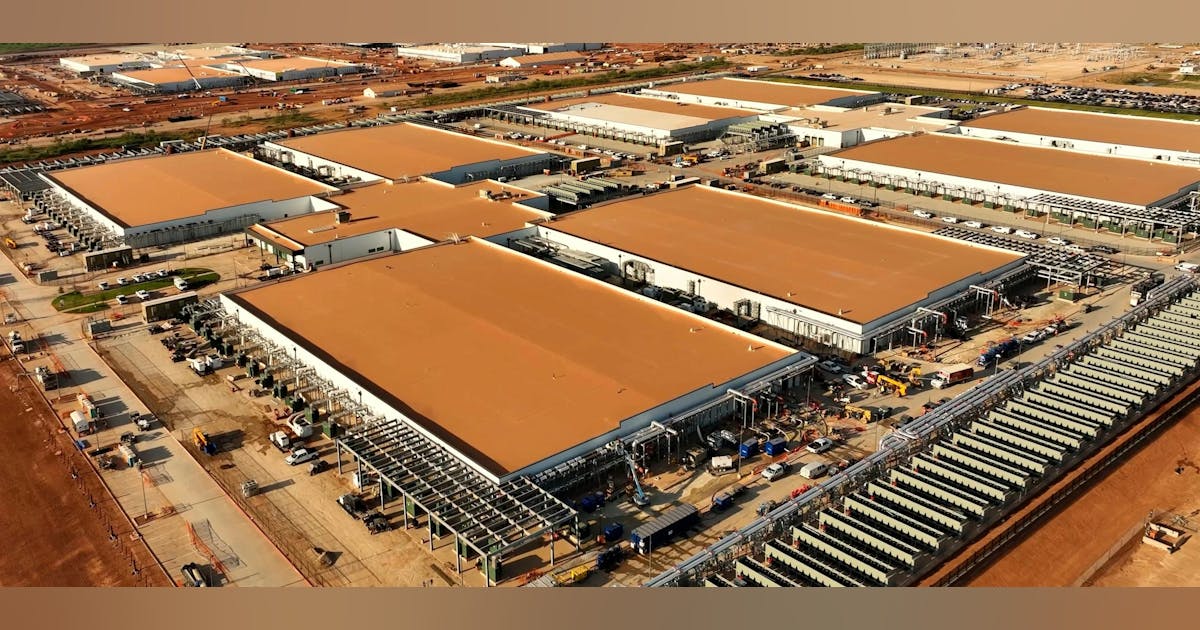
For the data center and energy ecosystem, the implications are significant. The infrastructure required to support frontier AI models now involves enormous GPU clusters, advanced cooling technologies, and power requirements measured in gigawatts rather than megawatts.
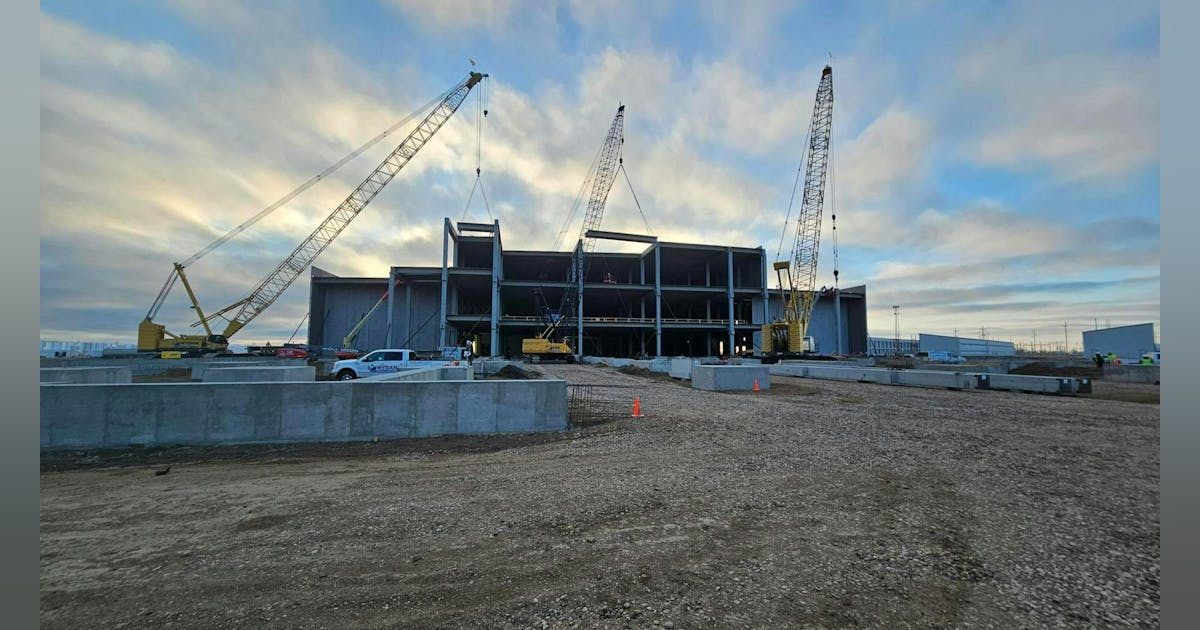
In that sense, the concept of the AI factory, once largely theoretical, has quickly become a practical reality. Massive computing platforms capable of training and operating the world’s most advanced AI systems are now being financed, constructed, and deployed across multiple regions.
And in a notable twist on earlier technology infrastructure cycles, many of the same companies funding this buildout will also be the primary operators and customers of the systems themselves.