Stay Ahead, Stay ONMINE

OpenAI responds to DeepSeek competition with detailed reasoning traces for o3-mini

Join our daily and weekly newsletters for the latest updates and exclusive content on industry-leading AI coverage. Learn More OpenAI is now showing more details of the reasoning process of o3-mini, its latest reasoning model. The change was announced on OpenAI’s X account and comes as the AI lab is under increased pressure by DeepSeek-R1, […]

Join our daily and weekly newsletters for the latest updates and exclusive content on industry-leading AI coverage. Learn More


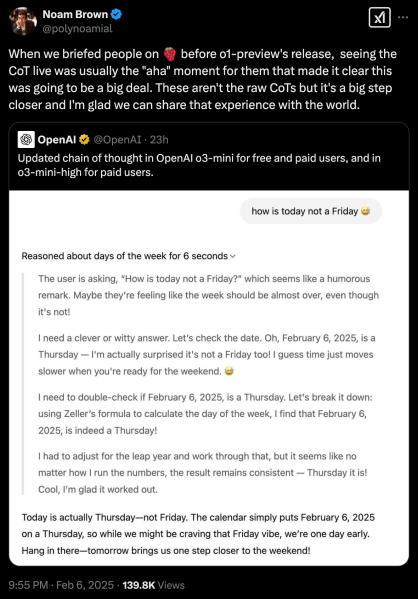
OpenAI is now showing more details of the reasoning process of o3-mini, its latest reasoning model. The change was announced on OpenAI’s X account and comes as the AI lab is under increased pressure by DeepSeek-R1, a rival open model that fully displays its reasoning tokens.
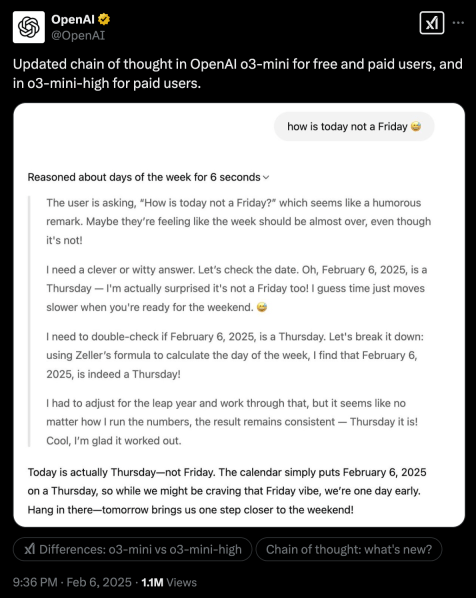
Models like o3 and R1 undergo a lengthy “chain of thought” (CoT) process in which they generate extra tokens to break down the problem, reason about and test different answers and reach a final solution. Previously, OpenAI’s reasoning models hid their chain of thought and only produced a high-level overview of reasoning steps. This made it difficult for users and developers to understand the model’s reasoning logic and change their instructions and prompts to steer it in the right direction. 

OpenAI considered chain of thought a competitive advantage and hid it to prevent rivals from copying to train their models. But with R1 and other open models showing their full reasoning trace, the lack of transparency becomes a disadvantage for OpenAI.

The new version of o3-mini shows a more detailed version of CoT. Although we still don’t see the raw tokens, it provides much more clarity on the reasoning process.
Why it matters for applications

In our previous experiments on o1 and R1, we found that o1 was slightly better at solving data analysis and reasoning problems. However, one of the key limitations was that there was no way to figure out why the model made mistakes — and it often made mistakes when faced with messy real-world data obtained from the web. On the other hand, R1’s chain of thought enabled us to troubleshoot the problems and change our prompts to improve reasoning.

For example, in one of our experiments, both models failed to provide the correct answer. But thanks to R1’s detailed chain of thought, we were able to find out that the problem was not with the model itself but with the retrieval stage that gathered information from the web. In other experiments, R1’s chain of thought was able to provide us with hints when it failed to parse the information we provided it, while o1 only gave us a very rough overview of how it was formulating its response.

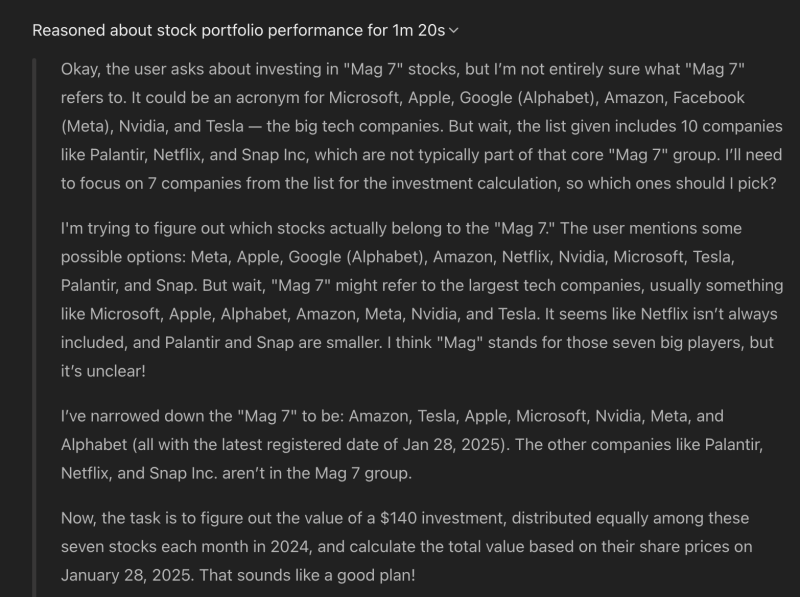
We tested the new o3-mini model on a variant of a previous experiment we ran with o1. We provided the model with a text file containing prices of various stocks from January 2024 through January 2025. The file was noisy and unformatted, a mixture of plain text and HTML elements. We then asked the model to calculate the value of a portfolio that invested $140 in the Magnificent 7 stocks on the first day of each month from January 2024 to January 2025, distributed evenly across all stocks (we used the term “Mag 7” in the prompt to make it a bit more challenging).

o3-mini’s CoT was really helpful this time. First, the model reasoned about what the Mag 7 was, filtered the data to only keep the relevant stocks (to make the problem challenging, we added a few non–Mag 7 stocks to the data), calculated the monthly amount to invest in each stock, and made the final calculations to provide the correct answer (the portfolio would be worth around $2,200 at the latest time registered in the data we provided to the model).
It will take a lot more testing to see the limits of the new chain of thought, since OpenAI is still hiding a lot of details. But in our vibe checks, it seems that the new format is much more useful.

What it means for OpenAI

When DeepSeek-R1 was released, it had three clear advantages over OpenAI’s reasoning models: It was open, cheap and transparent.

Since then, OpenAI has managed to shorten the gap. While o1 costs $60 per million output tokens, o3-mini costs just $4.40, while outperforming o1 on many reasoning benchmarks. R1 costs around $7 and $8 per million tokens on U.S. providers. (DeepSeek offers R1 at $2.19 per million tokens on its own servers, but many organizations will not be able to use it because it is hosted in China.)

With the new change to the CoT output, OpenAI has managed to somewhat work around the transparency problem.

It remains to be seen what OpenAI will do about open sourcing its models. Since its release, R1 has already been adapted, forked and hosted by many different labs and companies potentially making it the preferred reasoning model for enterprises. OpenAI CEO Sam Altman recently admitted that he was “on the wrong side of history” in open source debate. We’ll have to see how this realization will manifest itself in OpenAI’s future releases.

Shape
Shape
Stay Ahead

Explore More Insights

Stay ahead with more perspectives on cutting-edge power, infrastructure, energy,  bitcoin and AI solutions. Explore these articles to uncover strategies and insights shaping the future of industries.

Shape

Eying AI factories, Nvidia buys bigger stake in CoreWeave

Nvidia continues to throw its sizable bank account around, this time making a $2 billion investment in GPU cloud service provider CoreWeave. The company says the investment reflects Nvidia’s “confidence in CoreWeave’s business, team and growth strategy as a cloud platform built on Nvidia infrastructure.” CoreWeave is not the only

Read More »

AI, security tailwinds signal promising 2026 for Cisco

A big component of AI in communications is agentic agents talking to employees and customers, and bringing trust to the system is where Cisco should shine. It builds and runs its own infrastructure, which is secure by design. Cisco has relationships with governments all over the world, and between Webex

Read More »

Enterprise Spotlight: Manufacturing Reimagined

Emerging technologies from AI and extended reality to edge computing, digital twins, and more are driving big changes in the manufacturing world.  Download the February 2026 issue of the Enterprise Spotlight from the editors of CIO, Computerworld, CSO, InfoWorld, and Network World and learn about the new tech at the forefront

Read More »

Energy Department Announces Members of the Office of Science Advisory Committee, Strengthening Gold Standard Science in America

WASHINGTON—The U.S. Department of Energy (DOE) today announced the chair and members of the newly established Office of Science Advisory Committee (SCAC), a unified advisory body that will provide independent advice on complex scientific and technical challenges across the Department’s Office of Science. Today’s announcement advances the Department’s implementation of President Trump’s Executive Order Restoring Gold Standard Science as the cornerstone of federal research—ensuring that the Department and its National Laboratory systems’ science is collaborative, transparent, and guided by evidence to rebuild public trust in science. As DOE modernizes and strengthens its scientific enterprise, SCAC will provide expert input to help inform priorities, improve coordination, and address cross-cutting research challenges across the Office of Science. “The establishment of SCAC underscores the Department’s commitment to scientific integrity and the power of partnership,” said DOE Under Secretary for Science Darío Gil. “By bringing together leading minds from diverse institutions, we’re forging a collaborative framework that will not only enhance our scientific endeavors but also accelerate the translation of fundamental research into tangible benefits for the American people. This committee exemplifies how shared vision and collective expertise are essential for navigating the complex scientific landscape of today and tomorrow.” Members of SCAC, appointed by Under Secretary Gil, represent the full breadth of Office of Science research, drawing expertise from leaders across academia, industry, science philanthropy, and the Department’s National Laboratories. The Committee will help the Office of Science adapt to a rapidly evolving research landscape and address interdisciplinary challenges in a streamlined and flexible manner. It will also provide advice on initiatives that are priorities for the entire Office, including the Genesis Mission, scientific discovery, fusion energy, and quantum science. SCAC will be chaired by Persis Drell, professor of materials science and engineering and physics at Stanford University, provost emerita of Stanford, and

Read More »

USA Flagged Oil Tanker Hailed by Armed Ships in Hormuz

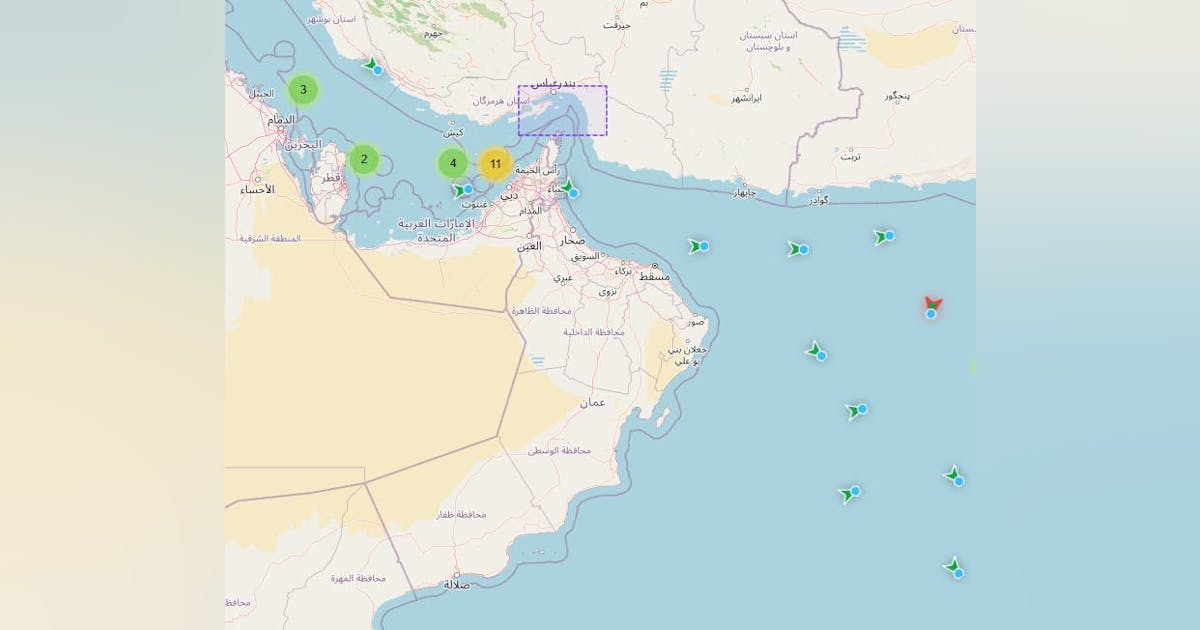
(Update) February 3, 2026, 4:42 PM GMT: Article updated with details of vessel involved. An oil tanker that’s part of a US-military fuel procurement program was hailed by small armed ships in the Strait of Hormuz off Iran’s coast on Tuesday, amid heightened tensions between the two countries.  The US-flagged Stena Imperative was hailed over radio while transiting the vital waterway, according to multiple maritime security companies, who declined to be named citing sensitive information. The tanker continued its planned route and didn’t divert, despite the requests, they said.  Iranian media said the country’s naval forces warned a vessel to leave Iranian territorial waters after failing to produce the necessary legal documents. The vessel departed immediately after the warning, Iran’s semi-official Fars News said. A spokesperson for Crowley, which manages the Stena Imperative, didn’t respond to multiple requests for comment. The vessel’s owner referred questions to Crowley. The incident, which was earlier reported by the UK’s naval liaison in the region, occurred in a part of the inbound maritime corridor into the Strait of Hormuz, the narrow chokepoint that allows ships to enter and exit the Persian Gulf and accounts for about a quarter of the world’s seaborne oil trade.  President Donald Trump last week threatened a fresh attack on Iran, heightening tensions between the two nations. He has since said talks between the two countries over a new nuclear deal could take place in the coming days. The ship is part of the US Tanker Security Program, which aims to ensure that the Department of Defense has access to a fleet of American-flagged fuel tankers at all times.  Iran has in the past both harassed and seized ships sailing near to its shores. Last year, it diverted a ship called the Talara to its waters, before unloading its cargo and releasing it. Late last week,

Read More »

UK Navy Says Ship Hailed by Armed Vessels in Hormuz

(Update) February 3, 2026, 4:42 PM GMT: Article updated with details of vessel involved. An oil tanker that’s part of a US-military fuel procurement program was hailed by small armed ships in the Strait of Hormuz off Iran’s coast on Tuesday, amid heightened tensions between the two countries.  The US-flagged Stena Imperative was hailed over radio while transiting the vital waterway, according to multiple maritime security companies, who declined to be named citing sensitive information. The tanker continued its planned route and didn’t divert, despite the requests, they said.  Iranian media said the country’s naval forces warned a vessel to leave Iranian territorial waters after failing to produce the necessary legal documents. The vessel departed immediately after the warning, Iran’s semi-official Fars News said. A spokesperson for Crowley, which manages the Stena Imperative, didn’t respond to multiple requests for comment. The vessel’s owner referred questions to Crowley. The incident, which was earlier reported by the UK’s naval liaison in the region, occurred in a part of the inbound maritime corridor into the Strait of Hormuz, the narrow chokepoint that allows ships to enter and exit the Persian Gulf and accounts for about a quarter of the world’s seaborne oil trade.  President Donald Trump last week threatened a fresh attack on Iran, heightening tensions between the two nations. He has since said talks between the two countries over a new nuclear deal could take place in the coming days. The ship is part of the US Tanker Security Program, which aims to ensure that the Department of Defense has access to a fleet of American-flagged fuel tankers at all times.  Iran has in the past both harassed and seized ships sailing near to its shores. Last year, it diverted a ship called the Talara to its waters, before unloading its cargo and releasing it. Late last week,

Read More »

Iran Risk Hands Oil Algos Early Test

Algorithmic traders have racked up a third straight year of losses in oil, the longest slump on record, with hopes for a turnaround in 2026 facing an early test amid geopolitical volatility.   Price swings sparked by tariffs and wider upheaval from Iran to Ukraine last year starved market players known as commodity-trading advisers, or CTAs, of the clear directional signals they need to profit. The algorithmic traders suffered their longest annual losing streak last year in data going back to 2000, according to analytics firm Kpler. CTAs, which seize on trends, are notorious for amplifying price moves in either direction. For a brief period, conditions appeared to be tilting in their favor. Growing consensus that the oil market will be oversupplied gave CTAs a clear signal late last year, allowing them to eke out a rare positive quarter, according to analysts. That’s compared to much of the rest of 2025, as they struggled to grasp onto a trend amid the Trump administration’s unpredictable trade policy and conflicts in the Middle East.  The positive late-year momentum spurred CTAs to increase their presence in WTI’s front-month contract, according to Kpler, amplifying volatility and complicating market conditions for participants with physical exposure. The shift could be particularly consequential as geopolitical risks, like the threat of US strikes against Iran, trigger sharp price swings. “Choppy ranges, fake breakouts against the underlying fundamentals, signals that worked for about two days before reversing,” Cayler Capital, an oil-focused commodity trading adviser run by Brent Belote, wrote of last year’s trading environment in a letter to investors seen by Bloomberg. “This is the kind of market that exists solely to humble quants and annoy traders.” The turmoil led CTAs to change their position in US oil in roughly 80% of the weeks in 2025, according to data from Kpler. The

Read More »

Trump Cuts India Tariffs

President Donald Trump said he would roll back punitive tariffs on India in return for an agreement that Prime Minister Narendra Modi would stop buying Russian oil, easing months of tension between the two countries. Following a phone call with Modi, Trump said on social media that he would cut a US levy on Indian goods to 18% from 25%. The US president is also removing an extra punitive 25% duty applied in response to India’s purchases of crude from Russia, according to officials familiar with the matter. India would “move forward to reduce their Tariffs and Non Tariff Barriers against the United States, to ZERO”, Trump wrote, as well as purchase “over $500 BILLION DOLLARS of U.S. Energy, Technology, Agricultural, Coal, and many other products.”  Modi confirmed the pact, posting on social media that “Made in India products will now have a reduced tariff of 18%.” He did not provide further details on oil or on agricultural imports, a major sticking point for New Delhi. Wonderful to speak with my dear friend President Trump today. Delighted that Made in India products will now have a reduced tariff of 18%. Big thanks to President Trump on behalf of the 1.4 billion people of India for this wonderful announcement. When two large economies and the… — Narendra Modi (@narendramodi) February 2, 2026 India has not traditionally been an importer of Russian crude, but emerged as a key buyer in the aftermath of Moscow’s 2022 invasion of Ukraine, as trade flows were upended and discounts became attractive. The Trump administration’s efforts to choke off Russia’s flows to India have slowed shipments, but not halted them. In October, Trump also announced Modi had agreed to cease purchases of Russian oil. Without a firm trade deal in place, though, Indian refiners continued to buy cheap crude from Moscow. Later

Read More »

Devon, Coterra Sign ‘Blockbuster’ Merger Deal

In a joint statement released Monday, Devon Energy and Coterra Energy announced the signing of a definitive agreement to merge in an all-stock transaction. The combination will create a “leading large-cap shale operator with a high-quality asset base anchored by a premier position in the economic core of the Delaware Basin”, according to the statement, which noted that the combined company will be named Devon Energy and will be headquartered in Houston, while maintaining a “significant presence” in Oklahoma City. “The formation of this premier company is expected to unlock substantial value by leveraging each company’s core strengths and through the realization of $1 billion in annual pre-tax synergies,” the statement said. “The realization of synergies, technology-driven capital efficiency gains, and optimized capital allocation will drive near and long-term per share growth,” it added. Under the terms of the deal, Coterra shareholders will receive a fixed exchange ratio of 0.70 share of Devon common stock for each share of Coterra common stock, the statement pointed out. “Based on Devon’s closing price on January 30, 2026, the transaction implies a combined enterprise value of approximately $58 billion,” the statement highlighted. “Upon completion, Devon shareholders will own approximately 54 percent of the go-forward company and Coterra shareholders will own approximately 46 percent on a fully diluted basis,” it added. The transaction was unanimously approved by the boards of directors of both companies, the statement revealed, adding that the deal is expected to close in the second quarter of 2026, subject to regulatory approvals and customary closing conditions, including approvals by Devon and Coterra shareholders. The joint statement noted that the merger will create “one of the world’s leading shale producers, with pro forma third quarter 2025 production exceeding 1.6 million barrels of oil equivalent per day, including over 550,000 barrels of oil

Read More »

Cisco: Infrastructure, trust, model development are key AI challenges

“The G200 chip was for the scale out, because what’s happening now is these models are getting bigger where they don’t just fit within a single data center. You don’t have enough power to just pull into a single data center,” Patel said. “So now you need to have data centers that might be hundreds of kilometers apart, that operate like an ultra-cluster that are coherent. And so that requires a completely different chip architecture to make sure that you have capabilities like deep buffering and so on and so forth… You need to make sure that these data centers can be scaled across physical boundaries.”  “In addition, we are reaching the physical limits of copper and optics, and coherent optics especially are going to be extremely important as we go start building out this data center infrastructure. So that’s an area that you’re starting to see a tremendous amount of progress being made,” Patel said. The second constraint is the AI trust deficit, Patel said. “We currently need to make sure that these systems are trusted by the people that are using them, because if you don’t trust these systems, you’ll never use them,” Patel said. “This is the first time that security is actually becoming a prerequisite for adoption. In the past, you always ask the question whether you want to be secure, or you want to be productive. And those were kind of needs that offset each other,” Patel said. “We need to make sure that we trust not just using AI for cyber defense, but we trust AI itself,” Patel said. The third constraint is the notion of a data gap. AI models get trained on human-generated data that’s publicly available on the Internet, but “we’re running out,” Patel said. “And what you’re starting to see happen

Read More »

How Robotics Is Re-Engineering Data Center Construction and Operations

Physical AI: A Reusable Robotics Stack for Data Center Operations This is where the recent collaboration between Multiply Labs and NVIDIA becomes relevant, even though the application is biomanufacturing rather than data centers. Multiply Labs has outlined a robotics approach built on three core elements: Digital twins using NVIDIA Isaac Sim to model hardware and validate changes in simulation before deployment. Foundation-model-based skill learning via NVIDIA Isaac GR00T, enabling robots to generalize tasks rather than rely on brittle, hard-coded behaviors. Perception pipelines including FoundationPose and FoundationStereo, that convert expert demonstrations into structured training data. Taken together, this represents a reusable blueprint for data center robotics. Applying the Lesson to Data Center Environments The same physical-AI techniques now being applied in lab and manufacturing environments map cleanly onto the realities of data center operations, particularly where safety, uptime, and variability intersect. Digital-twin-first deployment Before a robot ever enters a live data hall, it needs to be trained in simulation. That means modeling aisle geometry, obstacles, rack layouts, reflective surfaces, and lighting variation; along with “what if” scenarios such as blocked aisles, emergency egress conditions, ladders left in place, or spill events. Simulation-first workflows make it possible to validate behavior and edge cases before introducing any new system into a production environment. Skill learning beats hard-coded rules Data centers appear structured, but in practice they are full of variability: temporary cabling, staged parts, mixed-vendor racks, and countless human exceptions. Foundation-model approaches to manipulation are designed to generalize across that messiness far better than traditional rule-based automation, which tends to break when conditions drift even slightly from the expected state. Imitation learning captures tribal knowledge Many operational tasks rely on tacit expertise developed over years in the field, such as how to manage stiff patch cords, visually confirm latch engagement, or stage a

Read More »

Applied Digital CEO Wes Cummins On the Hard Part of the AI Boom: Execution

Designing for What Comes After the Current AI Cycle Applied Digital’s design philosophy starts with a premise many developers still resist: today’s density assumptions may not hold. “We’re designing for maximum flexibility for the future—higher density power, lower density power, higher voltage delivery, and more floor space,” Cummins said. “It’s counterintuitive because densities are going up, but we don’t know what comes next.” That choice – to allocate more floor space even as rack densities climb – signals a long-view approach. Facilities are engineered to accommodate shifts in voltage, cooling topology, and customer requirements without forcing wholesale retrofits. Higher-voltage delivery, mixed cooling configurations, and adaptable data halls are baked in from the start. The goal is not to predict the future perfectly, Cummins stressed, but to avoid painting infrastructure into a corner. Supply Chain as Competitive Advantage If flexibility is the design thesis, supply chain control is the execution weapon. “It’s a huge advantage that we locked in our MEP supply chain 18 to 24 months ago,” Cummins said. “It’s a tight environment, and more timelines are going to get missed in 2026 because of it.” Applied Digital moved early to secure long-lead mechanical, electrical, and plumbing components; well before demand pressure fully rippled through transformers, switchgear, chillers, generators, and breakers. That foresight now underpins the company’s ability to make credible delivery commitments while competitors confront procurement bottlenecks. Cummins was blunt: many delays won’t stem from poor planning, but from simple unavailability. From 100 MW to 700 MW Without Losing Control The past year marked a structural pivot for Applied Digital. What began as a single, 100-megawatt “field of dreams” facility in North Dakota has become more than 700 MW under construction, with expansion still ahead. “A hundred megawatts used to be considered scale,” Cummins said. “Now we’re at 700

Read More »

From Silicon to Cooling: Dell’Oro Maps the AI Data Center Buildout

For much of the past decade, data center growth could be measured in incremental gains: another efficiency point here, another capacity tranche there. That era is over. According to a cascade of recent research from Dell’Oro Group, the AI investment cycle has crossed into a new phase, one defined less by experimentation and more by industrial-scale execution. Across servers, networks, power, and cooling, Dell’Oro’s latest data points to a market being reshaped end-to-end by AI workloads which are pulling forward capital spending, redefining bill-of-material assumptions, and forcing architectural transitions that are rapidly becoming non-negotiable. Capex Becomes the Signal The clearest indicator of the shift is spending. Dell’Oro reported that worldwide data center capital expenditures rose 59 percent year-over-year in 3Q 2025, marking the eighth consecutive quarter of double-digit growth. Importantly, this is no longer a narrow, training-centric surge. “The Top 4 US cloud service providers—Amazon, Google, Meta, and Microsoft—continue to raise data center capex expectations for 2025, supported by increased investments in both AI and general-purpose infrastructure,” said Baron Fung, Senior Research Director at Dell’Oro Group. He added that Oracle is on track to double its data center capex as it expands capacity for the Stargate project. “What is notable this cycle is not just the pace of spending, but the expanding scope of investment,” Fung said. Hyperscalers are now scaling accelerated compute, general-purpose servers, and the supporting infrastructure required to deploy AI at production scale, while simultaneously applying tighter discipline around asset lifecycles and depreciation to preserve cash flow. The result is a capex environment that looks less speculative and more structural, with investment signals extending well into 2026. Accelerators Redefine the Hardware Stack At the component level, the AI effect is even more pronounced. Dell’Oro found that global data center server and storage component revenue jumped 40 percent

Read More »

Rethinking Water in the AI Data Center Era

Finding Water by Eliminating Waste: Leakage as a Hidden Demand Driver ION Water and Meta frame leakage not as a marginal efficiency issue, but as one of the largest and least visible sources of water demand. According to the release, more than half of the water paid for at some properties can be lost to “invisible leaks,” including running toilets, aging water heaters, and faulty fixtures that go undetected for extended periods. ION’s platform is designed to surface that hidden demand. By monitoring water consumption at the unit level, the system flags anomalies in real time and directs maintenance teams to specific fixtures, rather than entire buildings. The company says this approach can reduce leak-driven water waste by as much as 60%. This represents an important evolution in how hyperscalers defend and contextualize their water footprints: Instead of focusing solely on their own direct WUE metrics, operators are investing in demand reduction within the same watershed where their data centers operate. That shift reframes the narrative from simply managing active water consumption to actively helping stabilize stressed local water systems. The Accounting Shift: Volumetric Water Benefits (VWB) The release explicitly positions the project as a model for Volumetric Water Benefits (VWB) initiatives, projects intended to deliver measurable environmental gains while also producing operational and financial benefits for underserved communities. This framing aligns with a broader stewardship accounting movement promoted by organizations such as the World Resources Institute, which has developed Volumetric Water Benefit Accounting (VWBA) as a standardized method for quantifying and valuing watershed-scale benefits. Meta is explicit that the project supports its water-positive commitment tied to its Temple, Texas data center community. The company has set a 2030 goal to restore more water than it consumes across its global operations and has increasingly emphasized “water stewardship in our data center

Read More »

Microsoft and Meta’s Earnings Week Put the AI Data Center Cycle in Sharp Relief

If you’re trying to understand where the hyperscalers really are in the AI buildout, beyond the glossy campus renders and “superintelligence” rhetoric, this week’s earnings calls from Microsoft and Meta offered a more grounded view. Both companies are spending at a scale the data center industry has never had to absorb at once. Both are navigating the same hard constraints: power, capacity, supply chain, silicon allocation, and time-to-build.  But the market’s reaction split decisively, and that divergence tells its own story about what investors will tolerate in 2026. To wit: Massive capex is acceptable when the return narrative is already visible in the P&L…and far less so when the payoff is still being described as “early innings.” Microsoft: AI Demand Is Real. So Is the Cost Microsoft’s fiscal Q2 2026 results reinforced the core fact that has been driving North American hyperscale development for two years: Cloud + AI growth is still accelerating, and Azure remains one of the primary runways. Microsoft said Q2 total revenue rose to $81.3 billion, while Microsoft Cloud revenue reached $51.5 billion, up 26% (constant currency 24%). Intelligent Cloud revenue hit $32.9 billion, up 29%, and Azure and other cloud services revenue grew 39%. That’s the demand signal. The supply signal is more complicated. On the call and in follow-on reporting, Microsoft’s leadership framed the moment as a deliberate capacity build into persistent AI adoption. Yet the bill for that build is now impossible to ignore: Reuters reported Microsoft’s capital spending totaled $37.5 billion in the quarter, up nearly 66% year-over-year, with roughly two-thirds going toward computing chips. That “chips first” allocation matters for the data center ecosystem. It implies a procurement and deployment reality that many developers and colo operators have been living: the short pole is not only power and buildings; it’s GPU

Read More »

Microsoft will invest $80B in AI data centers in fiscal 2025

And Microsoft isn’t the only one that is ramping up its investments into AI-enabled data centers. Rival cloud service providers are all investing in either upgrading or opening new data centers to capture a larger chunk of business from developers and users of large language models (LLMs).  In a report published in October 2024, Bloomberg Intelligence estimated that demand for generative AI would push Microsoft, AWS, Google, Oracle, Meta, and Apple would between them devote $200 billion to capex in 2025, up from $110 billion in 2023. Microsoft is one of the biggest spenders, followed closely by Google and AWS, Bloomberg Intelligence said. Its estimate of Microsoft’s capital spending on AI, at $62.4 billion for calendar 2025, is lower than Smith’s claim that the company will invest $80 billion in the fiscal year to June 30, 2025. Both figures, though, are way higher than Microsoft’s 2020 capital expenditure of “just” $17.6 billion. The majority of the increased spending is tied to cloud services and the expansion of AI infrastructure needed to provide compute capacity for OpenAI workloads. Separately, last October Amazon CEO Andy Jassy said his company planned total capex spend of $75 billion in 2024 and even more in 2025, with much of it going to AWS, its cloud computing division.

Read More »

John Deere unveils more autonomous farm machines to address skill labor shortage

Join our daily and weekly newsletters for the latest updates and exclusive content on industry-leading AI coverage. Learn More Self-driving tractors might be the path to self-driving cars. John Deere has revealed a new line of autonomous machines and tech across agriculture, construction and commercial landscaping. The Moline, Illinois-based John Deere has been in business for 187 years, yet it’s been a regular as a non-tech company showing off technology at the big tech trade show in Las Vegas and is back at CES 2025 with more autonomous tractors and other vehicles. This is not something we usually cover, but John Deere has a lot of data that is interesting in the big picture of tech. The message from the company is that there aren’t enough skilled farm laborers to do the work that its customers need. It’s been a challenge for most of the last two decades, said Jahmy Hindman, CTO at John Deere, in a briefing. Much of the tech will come this fall and after that. He noted that the average farmer in the U.S. is over 58 and works 12 to 18 hours a day to grow food for us. And he said the American Farm Bureau Federation estimates there are roughly 2.4 million farm jobs that need to be filled annually; and the agricultural work force continues to shrink. (This is my hint to the anti-immigration crowd). John Deere’s autonomous 9RX Tractor. Farmers can oversee it using an app. While each of these industries experiences their own set of challenges, a commonality across all is skilled labor availability. In construction, about 80% percent of contractors struggle to find skilled labor. And in commercial landscaping, 86% of landscaping business owners can’t find labor to fill open positions, he said. “They have to figure out how to do

Read More »

2025 playbook for enterprise AI success, from agents to evals

Join our daily and weekly newsletters for the latest updates and exclusive content on industry-leading AI coverage. Learn More 2025 is poised to be a pivotal year for enterprise AI. The past year has seen rapid innovation, and this year will see the same. This has made it more critical than ever to revisit your AI strategy to stay competitive and create value for your customers. From scaling AI agents to optimizing costs, here are the five critical areas enterprises should prioritize for their AI strategy this year. 1. Agents: the next generation of automation AI agents are no longer theoretical. In 2025, they’re indispensable tools for enterprises looking to streamline operations and enhance customer interactions. Unlike traditional software, agents powered by large language models (LLMs) can make nuanced decisions, navigate complex multi-step tasks, and integrate seamlessly with tools and APIs. At the start of 2024, agents were not ready for prime time, making frustrating mistakes like hallucinating URLs. They started getting better as frontier large language models themselves improved. “Let me put it this way,” said Sam Witteveen, cofounder of Red Dragon, a company that develops agents for companies, and that recently reviewed the 48 agents it built last year. “Interestingly, the ones that we built at the start of the year, a lot of those worked way better at the end of the year just because the models got better.” Witteveen shared this in the video podcast we filmed to discuss these five big trends in detail. Models are getting better and hallucinating less, and they’re also being trained to do agentic tasks. Another feature that the model providers are researching is a way to use the LLM as a judge, and as models get cheaper (something we’ll cover below), companies can use three or more models to

Read More »

OpenAI’s red teaming innovations define new essentials for security leaders in the AI era

Join our daily and weekly newsletters for the latest updates and exclusive content on industry-leading AI coverage. Learn More OpenAI has taken a more aggressive approach to red teaming than its AI competitors, demonstrating its security teams’ advanced capabilities in two areas: multi-step reinforcement and external red teaming. OpenAI recently released two papers that set a new competitive standard for improving the quality, reliability and safety of AI models in these two techniques and more. The first paper, “OpenAI’s Approach to External Red Teaming for AI Models and Systems,” reports that specialized teams outside the company have proven effective in uncovering vulnerabilities that might otherwise have made it into a released model because in-house testing techniques may have missed them. In the second paper, “Diverse and Effective Red Teaming with Auto-Generated Rewards and Multi-Step Reinforcement Learning,” OpenAI introduces an automated framework that relies on iterative reinforcement learning to generate a broad spectrum of novel, wide-ranging attacks. Going all-in on red teaming pays practical, competitive dividends It’s encouraging to see competitive intensity in red teaming growing among AI companies. When Anthropic released its AI red team guidelines in June of last year, it joined AI providers including Google, Microsoft, Nvidia, OpenAI, and even the U.S.’s National Institute of Standards and Technology (NIST), which all had released red teaming frameworks. Investing heavily in red teaming yields tangible benefits for security leaders in any organization. OpenAI’s paper on external red teaming provides a detailed analysis of how the company strives to create specialized external teams that include cybersecurity and subject matter experts. The goal is to see if knowledgeable external teams can defeat models’ security perimeters and find gaps in their security, biases and controls that prompt-based testing couldn’t find. What makes OpenAI’s recent papers noteworthy is how well they define using human-in-the-middle

Read More »