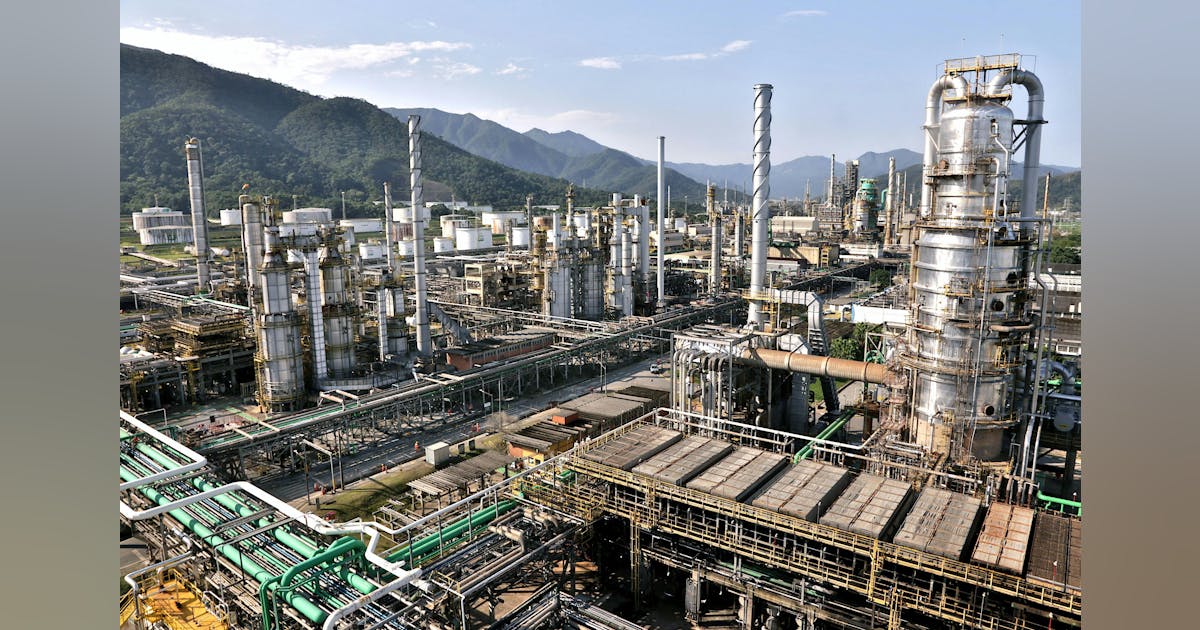
REDUC’s fist soybean oil-based SAF sale
Announcement of FID on the RPBC renewables plant followed Petrobras’ June 17 confirmation that its 239,000-b/d Duque de Caxias (REDUC) refinery in the Baixada Fluminense area of Rio de Janeiro had completed first production and sale of a first 3,800-cu m batch of SAF made from soybean oil certified under the CORSIA low Land Use Change (ILUC) risk standard, which verifies sustainability criteria and a lower risk of impact on new land areas.
Produced via co-processing and featuring 1% renewable content, the SAF batch marked “commercialization of the world’s first SAF made from certified low-ILUC-risk soy [to demonstrate] Petrobras’s commitment to sustainability, the energy transition, and the development of products aligned with market and societal demands [for lower-carbon solutions],” said Angélica Laureano, Petrobras’ director of logistics, sales, and markets.
In October 2025, the REDUC refinery secured Brazil’s first international approval to advance commercial-scale production of SAF via the hydroprocessed esters and fatty acids (HEFA) co-processing route complying with ISCC System GmbH’s International Sustainability Carbon Certification (ISCC) standards, validating that SAF produced at the site meets the highest international sustainability and lifecycle carbon emission standards.
Developed under ICAO’s CORSIA, the ISCC CORSIA certification was a prerequisite for commercial-scale SAF production following rigorous assessment of the production’s lifecycle carbon emissions and traceability.
Equipped to produce as much as 10,000 b/d of SAF using a blend of conventional petroleum and up to 1.2% renewable feedstock, REDUC’s integration of bio-based oils—such as vegetable oil—into existing refining infrastructure via the HEFA co-processing method allows the refinery to produce SAF alongside conventional jet fuel with minimal investment, Petrobras previously said.