Stay Ahead, Stay ONMINE

PJM agrees to lower price cap for upcoming capacity auctions

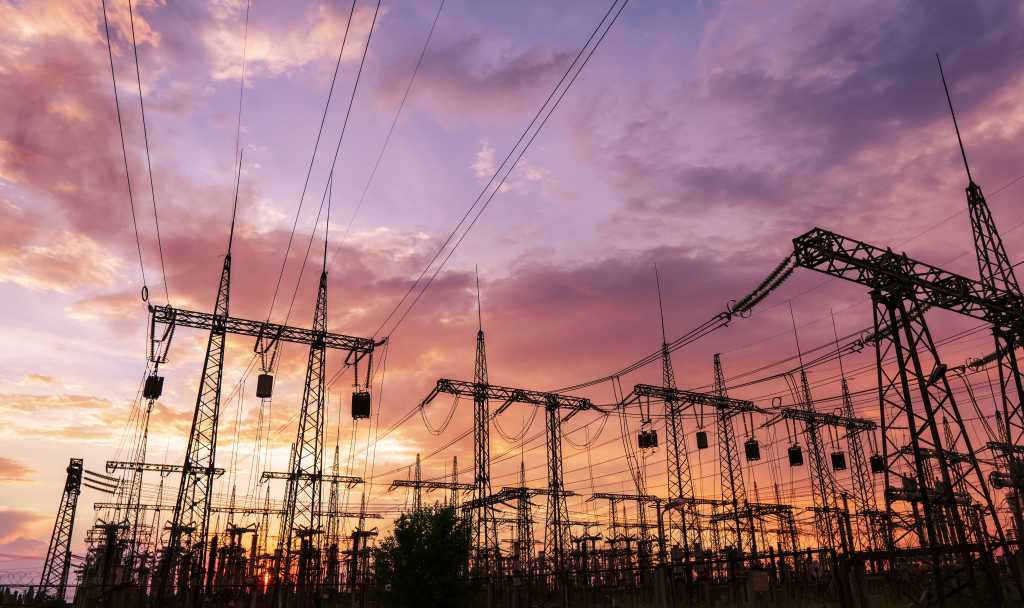
The PJM Interconnection will move to set a price cap and price floor for its next two capacity auctions under an agreement reached Tuesday with Pennsylvania Gov. Josh Shapiro, D. PJM plans to set a $325/MW-day price cap and a $175/MW-day floor for its 2026/27 and 2027/28 delivery year capacity auctions, according to a notice […]

The PJM Interconnection will move to set a price cap and price floor for its next two capacity auctions under an agreement reached Tuesday with Pennsylvania Gov. Josh Shapiro, D.

PJM plans to set a $325/MW-day price cap and a $175/MW-day floor for its 2026/27 and 2027/28 delivery year capacity auctions, according to a notice PJM sent to its members. The next base capacity auction is set to be held in July.

“The governor worked with PJM to significantly lower the capacity auction price cap — from over $500/Megawatt-day to $325/MW-day — averting a runaway auction price that would have unnecessarily increased energy bills,” Shapiro said in a press release. The price cap could save PJM consumers $21 billion over two years, according to Shapiro.

If approved, the planned price cap/floor would settle a complaint Shapiro filed in December at the Federal Energy Regulatory Commission on behalf of Pennsylvania. In part, Shapiro argued there isn’t enough time for generators to respond to high capacity prices, so consumers wouldn’t benefit from the high prices.

The complaint was supported by governors from Delaware, Illinois, Maryland and New Jersey, nine state utility commissions, ratepayer advocates and others, according to filings at FERC. Constellation Energy Generation, the Electric Power Supply Association and the PJM Power Providers Group opposed it.

PJM’s last capacity auction, held in July, produced record high capacity prices that will cost ratepayers across the grid operator’s footprint $14.7 billion for the delivery year that begins in June, up from $2.2 billion in the previous auction.

Capacity prices for most of PJM soared to $269.92/MW-day, up from $28.92/MW-day in the previous auction. Prices hit zonal caps of $466.35/MW-day for the Baltimore Gas and Electric zone in Maryland, and $444.26/MW-day for the Dominion zone in Virginia and North Carolina.

Those results triggered a series of actions, including a complaint by ratepayer advocates and proposals from PJM to change elements of its capacity auction and measures to help bring power supplies online.

The price cap/floor agreement is subject to review by PJM stakeholders and its board. PJM plans to hold a Special Members Committee meeting on Feb. 7, where the grid operator’s staff can give guidance on how the proposed cap/floor mechanism could be implemented, according to the notice.

PJM said that in order to keep its “approximate” capacity auction schedule, the grid operator would propose the cap and floor mechanism through a Federal Power Act section 205 filing at FERC.

Evergreen Action, an advocacy group focused on climate policy, said the price cap/floor agreement was a boon for consumers, but PJM needs to do more.

“PJM needs to undertake major reforms to address its current interconnection crisis and get on with the important business of rapidly connecting cheaper, affordable clean energy to the grid so we actively address the energy cost and demand crisis,” Evergreen Action Deputy State Policy Director Julia Kortrey said in a press release.

PJM runs the grid and wholesale power markets in 13 Mid-Atlantic and Midwest states and the District of Columbia.

Shape
Shape
Stay Ahead

Explore More Insights

Stay ahead with more perspectives on cutting-edge power, infrastructure, energy,  bitcoin and AI solutions. Explore these articles to uncover strategies and insights shaping the future of industries.

Shape

Nile adds microsegmentation and native NAC to its secure NaaS platform

Identity is the authentication layer that feeds the NAC replacement. For users and employees, Nile pulls identity from Active Directory, including group and role membership, which maps directly to policy enforcement. Corporate devices can authenticate through RADIUS using certificates, which carry additional device metadata. For wired connections, Nile supports 802.1X

Read More »

IDC: Dell leads server market driven by AI infrastructure needs

For calendar year 2025 the market finished growing 80.4% compared to 2024, reaching a yearly record of $444.1 billion dollars revenue. Dell Technologies clearly leads the OEM market with $12.5 billion in total revenue share, accounting for 10% of total sales. IDC attributed this to outstanding growth on accelerated servers.

Read More »

Cloud providers seek to shape European sovereignty legislation

Finally, they say, there should be taxpayer-funded investments in cloud and AI infrastructure and support for the European development of key components such as memory and chips and the incorporation of strict environmental sustainability requirements. “It’s important to realize that the proposal is not just about the technical aspects but

Read More »

Energy Department Approves Additional Time to Commence Exports of LNG from Energía Costa Azul

WASHINGTON — U.S. Secretary of Energy Chris Wright today signed an amendment order granting additional time to commence exports of U.S.-sourced natural gas as liquefied natural gas (LNG) from Sempra Energy’s Energía Costa Azul (ECA) Mid-Scale Project that is currently under construction in Baja California, Mexico. Today’s order grants ECA Liquefaction, S. de R.L. de C.V. approximately six additional months to commence exports of U.S.-sourced natural gas as LNG to non-free trade agreement (FTA) countries. Construction at the ECA Mid-Scale Project is nearly complete and ECA expects to commence exports in the near future. The ECA Mid-Scale Project began construction in 2020 and, once completed and operational, will be able to export up to 0.44 billion cubic feet per day (Bcf/d) of natural gas as LNG. A second phase of the project is authorized to export up to 1.74 Bcf/d and is pending a final investment decision. “I am pleased that the Department of Energy can take this action to provide this project the time it needs to complete construction and get U.S.-sourced LNG on the water, particularly given its strategic location on the West Coast of North America,” said Kyle Haustveit, Assistant Secretary of the Hydrocarbons and Geothermal Energy Office.  Thanks to President Trump’s leadership and American innovation, the United States is the world’s largest natural gas producer and exporter. Since the President ended the previous administration’s LNG export approval ban, the Department has approved more than 19 Bcf/d of LNG export authorizations. With recent final investment decisions, U.S. LNG exports are set to more than double from current levels by the early 2030s. 

Read More »

Energy Department Announces Partnership to Ensure Affordable Energy and Power America’s AI Future

WASHINGTON—The U.S. Department of Energy (DOE), alongside the U.S. Department of Commerce (DOC), today announced a unique public-private partnership with SoftBank and AEP Ohio to redevelop DOE land, modernize energy infrastructure, and develop advanced computing in Southern Ohio. As part of the partnership, SB Energy, a SoftBank Group company, is planning to build 10 gigawatts (GW) of new power generation—including 9.2 GW of natural gas generation—that will connect to the local grid and provide power to a new 10 GW data center development at the Portsmouth Site in Pike County, Ohio at no cost to American families. These collective efforts will deliver lower electricity costs across the region, create thousands of American jobs, and strengthen America’s national security.  Portions of this announcement were previously announced as part of President Trump’s U.S.-Japan Strategic Trade and Investment Agreement. This includes the $33.3 billion in Japanese funding for 9.2 GW of new natural gas generation. “Thanks to President Trump, the U.S. government is leveraging its assets—like our federal lands—to add power generation, create jobs, and ensure the United States wins the AI race,” said U.S. Energy Secretary Chris Wright. “I’m pleased to be working with our partners at SoftBank and AEP Ohio on this important project. By bringing new power online and upgrading our existing infrastructure, this investment supports the AI boom and cutting-edge technologies while strengthening our energy system and helping keep costs down for the American people.” “Our Japanese partnership is a direct result of President Trump’s America First trade policies,” said U.S. Commerce Secretary Howard Lutnick. “Japan has committed to invest $550 billion across America. With this historic trade deal we are reindustrializing the country through critical projects like this $33 billion dollar power project in Portsmouth, Ohio. Yesterday we announced additional mega projects in Alabama, Pennsylvania, Tennessee and Texas.”

Read More »

Energy Department Announces $500 Million to Strengthen Domestic Critical Materials Processing and Manufacturing

 Funding will expand domestic manufacturing of battery supply chains for defense, grid resilience, transportation, manufacturing and other industries WASHINGTON—The U.S. Department of Energy’s (DOE) Office of Critical Minerals and Energy Innovation (CMEI) today announced a Notice of Funding Opportunity (NOFO) for up to $500 million to expand U.S. critical mineral and materials processing and derivative battery manufacturing and recycling. Assistant Secretary of Energy (EERE) Audrey Robertson is currently in Japan meeting with regional allies at the Indo-Pacific Energy Security Ministerial and Business Forum (IPEM) to advance shared efforts on supply chain resilience and energy security issues. Her engagements at IPEM underscore the importance of close cooperation with partners as the United States strengthens its supply chain through this NOFO. “For too long, the United States has relied on hostile foreign actors to supply and process the critical materials that are essential in battery manufacturing and materials processing,” said U.S. Energy Secretary Chris Wright. “Thanks to President Trump’s leadership, the Department of Energy is playing a leading role in strengthening these domestic industries that will position the U.S. to win the AI race, meeting rising energy demand, and achieve energy dominance.” “I am delighted to be in Japan meeting with our allies, underscoring the important connection between critical materials and energy security,” said Assistant Secretary of Energy (EERE) Audrey Robertson. “Critical minerals processing is a vital component of our nation’s critical minerals supply base. Boosting domestic production, including through recycling, will bolster national security and ensure the United States and our partners are prepared to meet the energy challenges of the 21st century.” Funding awarded through this NOFO will support demonstration and/or commercial facilities for processing, recycling, or utilizing for manufacturing of critical materials which may include traditional battery minerals such as lithium, graphite, nickel, copper, aluminum, as well as other

Read More »

Energy Department Announces $293 Million in Funding to Support Genesis Mission National Science and Technology Challenges

WASHINGTON—The U.S. Department of Energy (DOE) today announced funding to advance the Genesis Mission’s efforts to tackle the nation’s most complex science and technology challenges. This includes a $293 million Request for Application (RFA),“The Genesis Mission: Transforming Science and Energy with AI.” Through this RFA, DOE invites interdisciplinary teams to leverage novel AI models and frameworks to address over 20 national challenges spanning advanced manufacturing, biotechnology, critical materials, nuclear energy, and quantum information science.    “The Genesis Mission has caught the imagination of our scientific and engineering communities to tackle national challenges in the age of AI,” said Under Secretary for Science Darío Gil and Genesis Mission Director. “With these investments we seek breakthrough ideas and novel collaborations leveraging the scientific prowess of our National Laboratories, the private sector, universities, and science philanthropies.”  The RFA is open to interdisciplinary teams from DOE National Laboratories, U.S. industry, and academia. Phase I awards will range from $500,000 to $750,000 and will support a nine month project period. Phase II awards will range from $6 million to $15 million over a three year project period. Teams may apply directly to either phase in FY 2026, and successful Phase I teams will be eligible to compete for larger Phase II awards in future cycles. Phase I applications and Phase II letters of intent are due April 28, 2026. Phase II applications are due May 19, 2026. DOE plans to hold an informational webinar about this RFA on March 26, 2026.  For full eligibility, application instructions, and challenge details, see the official NOFO: DE-FOA-0003612. Registration instructions and other details will be posted here.  ### 

Read More »

Trump Administration Keeps Coal Plant Open to Ensure Affordable, Reliable and Secure Power in the Northwest

Emergency order addresses critical grid reliability issues, lowering risk of blackouts and ensuring affordable electricity access. WASHINGTON—U.S. Secretary of Energy Chris Wright today issued an emergency order to ensure Americans in the Northwestern region of the United States have access to affordable, reliable and secure electricity. The order directs TransAlta to keep Unit 2 of the Centralia Generating Station in Centralia, Washington available to operate. Unit 2 of the coal plant was scheduled to shut down at the end of 2025. The reliable supply of power from the Centralia plant is essential to maintaining grid stability across the Northwest, and this order ensures that the region avoids unnecessary blackout risks and costs. “The last administration’s energy subtraction policies had the United States on track to likely experience significantly more blackouts in the coming years — thankfully, President Trump won’t let that happen,” said Energy Secretary Wright. “The Trump administration will continue taking action to keep America’s coal plants running so we can stop the price spikes and ensure we don’t lose critical generation sources. Americans deserve access to affordable, reliable, and secure energy to power their homes all the time, regardless of whether the wind is blowing or the sun is shining.” Thanks to President Trump’s leadership, coal plants across the country are reversing plans to shut down. On December 16, 2025, Secretary Wright issued an emergency order directing TransAlta to keep Unit 2 (729.9 MW) available to operate.According to DOE’s Resource Adequacy Report, blackouts were on track to potentially increase 100 times by 2030 if the U.S. continued to take reliable power offline as it did during the Biden administration. This order is in effect beginning on March 17, 2026, through June 14, 2026. ### 

Read More »

Brent retreats from highs after Trump signals Iran war nearing end

@import url(‘https://fonts.googleapis.com/css2?family=Inter:[email protected]&display=swap’); a { color: var(–color-primary-main); } .ebm-page__main h1, .ebm-page__main h2, .ebm-page__main h3, .ebm-page__main h4, .ebm-page__main h5, .ebm-page__main h6 { font-family: Inter; } body { line-height: 150%; letter-spacing: 0.025em; font-family: Inter; } button, .ebm-button-wrapper { font-family: Inter; } .label-style { text-transform: uppercase; color: var(–color-grey); font-weight: 600; font-size: 0.75rem; } .caption-style { font-size: 0.75rem; opacity: .6; } #onetrust-pc-sdk [id*=btn-handler], #onetrust-pc-sdk [class*=btn-handler] { background-color: #c19a06 !important; border-color: #c19a06 !important; } #onetrust-policy a, #onetrust-pc-sdk a, #ot-pc-content a { color: #c19a06 !important; } #onetrust-consent-sdk #onetrust-pc-sdk .ot-active-menu { border-color: #c19a06 !important; } #onetrust-consent-sdk #onetrust-accept-btn-handler, #onetrust-banner-sdk #onetrust-reject-all-handler, #onetrust-consent-sdk #onetrust-pc-btn-handler.cookie-setting-link { background-color: #c19a06 !important; border-color: #c19a06 !important; } #onetrust-consent-sdk .onetrust-pc-btn-handler { color: #c19a06 !important; border-color: #c19a06 !important; } Oil futures eased from recent highs Tuesday as markets reacted to comments from US President Donald Trump suggesting the war with Iran may be nearing its conclusion, easing concerns about prolonged disruptions to Middle East crude supplies. Brent crude had climbed above $100/bbl amid escalating tensions in the region and fears that the war could prolong disruptions to shipments through the Strait of Hormuz—one of the world’s most critical energy chokepoints and a transit route for roughly one-fifth of global oil supply. Prices pulled back after Pres. Trump said the war was “almost done,” prompting traders to reassess the risk premium that had built into crude markets during the latest escalation. The earlier gains were driven by the fact that the war had disrupted tanker traffic in the Strait of Hormuz, raising concerns about wider supply disruptions from major Gulf oil producers. While the latest remarks helped calm markets, analysts note that geopolitical risks remain elevated and price volatility is likely to persist as traders monitor developments in the region. Any renewed escalation could quickly send crude prices higher again.

Read More »

Nvidia overhauls the data center for OpenClaw era

Nvidia’s products for data centers now encompass a full stack with all the pieces, said Sandeep Gupta, executive managing director and head of global strategic alliances at NTT Data. “From a customer perspective, if they believe in an integrated stack, it makes things simple,” Gupta said. The integrated data center cuts complexity and improves efficiency across cooling, networking and storage. “It is driven by the sentiment of an enterprise on how dependent they want to be on one provider versus mix and match,” Gupta said. AI complexity has gone up manifold with multi-agent systems and technologies like OpenClaw, which Huang said is as big a deal as HTML and Linux. Those technologies will generate tokens at an unprecedented pace and strain network, memory and storage simultaneously. AI data also has context, and moving it inefficiently wastes power and cost. A new networking and storage layer is needed to move data intelligently and efficiently. A technology called KV Cache holds the contextual memory necessary for processing agentic AI systems. “It’s going to pound on memory really hard… It’s going to be pounding on the storage system really really hard, which is the reason why we reinvented the storage system,” Huang said. Nvidia’s blueprint turns data centers into one giant AI GPU. It is spearheaded by the GPU known as Rubin and CPU called Vera, which were announced at GTC. Nvidia also slipped in a new inference chip; the Groq LPU has significantly more memory bandwidth than GPUs and is designed for low-latency token generation.

Read More »

Nvidia joins push for data centers in space

For example, instead of sending down raw image data, which can take hours, or even days, a satellite can transmit the information that, say, a particular bridge is down, or that a certain road is having issues—actionable information of immediate business value. “AI can also help satellites navigate low earth orbit much more confidently, avoid other satellites, and operate much more autonomously,” says Su. And it can be used for other heavy workloads as well. For example, Kepler Communications is using Jetson Orin in its satellite communication network. That helps the company make its satellites smarter, CEO Mina Mitry said in a statement, “allowing us to intelligently manage and route data across our constellation.” The Jetson Orin is already bringing data center-level compute capability to space, Su says, and, with the new chips, there will be even more real-time capability for the next generation of satellites. According to Gartner analyst Bill Ray, orbital data centers are a waste of time and money. “The rush to develop orbital data centers has reached a period of peak insanity,” he wrote in a recent report. “For all the hype around them, these space-based data centers will not be able to deliver on the promise of useful analysis of terrestrial data for terrestrial applications for decades, and may not ever be able to do so.” But that’s not where today’s use cases are, Su points out. “It is edge computing workloads,” he says. “It’s AI inference for multi-dimensional data for disaster recovery and weather forecasting.”

Read More »

Microsoft’s laser-free cable tech promises to slash AI data center power bills in half

The power problem, Microsoft argues, starts with the cables themselves. How MOSAIC works Copper interconnects top out at roughly two meters at high data rates, limiting them to within a single rack. Laser-based fiber optic cables go further but consume more power and are sensitive to temperature and dust, Microsoft said in the post. MOSAIC reaches up to 50 meters while drawing less power than either, the company added. “Imaging fiber looks like a standard fiber, but inside it has thousands of cores,” Paolo Costa, a Microsoft partner research manager and the project’s lead researcher, wrote in the post. “That was the missing piece. We finally had a way to carry thousands of parallel channels in one cable.” MOSAIC is not Microsoft’s only optical networking bet, and it is not the one furthest along. HCF is already in production across Azure regions MOSAIC arrives alongside Hollow Core Fiber (HCF), a complementary technology Microsoft is already deploying globally. HCF carries optical signals through air rather than glass, delivering up to 47% faster data transmission and 33% lower latency than conventional single-mode fiber, according to published research from the University of Southampton cited by Microsoft. Frank Rey, Microsoft’s general manager of Azure Hyperscale Networking, said in the post that the two technologies are complementary — HCF for long-distance inter-datacenter links, MOSAIC for in-facility GPU and server connectivity.

Read More »

Beyond the fan: Crossing the liquid cooling rubicon

At 20 kW per rack, the airflow velocity required to maintain safe operating temperatures triggers two failure modes. First, the acoustic vibration becomes severe enough to damage equipment. Organizations learn this lesson the hard way — high-frequency vibration from upgraded CRAC units causing bit errors in high-density Non-Volatile Memory Express (NVMe) storage arrays. The signature is mechanical resonance in drive enclosures. Fans shake storage infrastructure to death. Second, the power required for that airflow becomes self-defeating. At 100 kW densities, nearly 30 percent of the total facility power goes to fans alone — before accounting for compressors and chillers working overtime to cool the air. According to Uptime Institute research, data centers spend an estimated $1.9 to $2.8 million per MW annually on operations, with cooling-related costs consuming nearly $500,000 of that figure. The American Society of Heating, Refrigerating and Air-Conditioning Engineers (ASHRAE) TC 9.9 guidelines governing data center thermal management were written for a 15 kW world. Many organizations now operate so far outside those parameters that the guidelines have become irrelevant. One moment crystallized this reality. A single CRAC unit failed in a training cluster. Within eight minutes, hot-aisle temperatures exceeded 120°F. Monitoring systems triggered automatic throttling on millions of dollars of compute infrastructure. A multi-day processing run crashed and restarted from a checkpoint. Standing in that sweltering aisle watching temperature readouts climb, the conclusion was inescapable: air had carried the industry as far as it could go. Crossing the Rubicon: Cold plates versus rear-door heat exchangers Bringing liquid into a data center is terrifying. Water — or water-adjacent fluids — enters rooms filled with equipment worth tens of millions of dollars. Equipment that fails catastrophically when wet. “Crossing the Rubicon” captures the commitment: once started down this path, there is no returning to the comfortable certainty of

Read More »

System-level ‘coopetition’: Why Nvidia’s DGX Rubin NVL8 runs on Intel Xeon 6

Not a strategic alliance Despite working together at the system level, the relationship between the two companies does not amount to a formal strategic alliance. “The Intel–Nvidia dynamic is best understood as system-level coopetition. Long-standing collaboration persists across data center and PC ecosystems, with Intel CPUs paired alongside Nvidia GPUs forming standardized AI server architectures and enabling deeper integration,” said Manish Rawat, semiconductor analyst at TechInsights. However, competition is accelerating structurally. Even though Nvidia dominates the GPU space, the company is also expanding its presence across more layers of the data-center stack. It has been developing its own CPUs, such as the Grace CPU, aimed at tighter integration between compute, memory, and interconnect. The company has also launched Vera CPU, purpose-built for agentic AI at GTC 2026. This reflects Nvidia’s broader approach of building more of the system in-house, spanning both hardware and software, even as it continues to incorporate external components where required. “Nvidia’s push into CPUs (Grace, Vera) and tightly integrated, NVLink-based systems signals a shift toward full-stack ownership spanning compute, networking, and software. This challenges Intel’s traditional dominance in CPUs and system control. In essence, Nvidia is partnering tactically to sustain ecosystem adoption while strategically positioning to displace incumbents and capture greater control of next-generation AI infrastructure,” added Rawat.

Read More »

Nvidia announces Vera Rubin platform, signaling a shift to full-stack AI infrastructure

The transition reflects a deeper move from optimizing individual components to engineering entire systems for scalability and efficiency, said Sanchit Vir Gogia, chief analyst at Greyhound Research. “Compute, memory behavior, interconnect bandwidth, and workload orchestration are being engineered together,” Gogia said. “Even physical design choices such as rack modularity, serviceability, and assembly efficiency are now part of performance engineering. Infrastructure is beginning to resemble an appliance at scale, but one that operates at extreme density and complexity.” Industry observers said rack-scale systems, including Nvidia’s NVL72 and open standards such as OCP Open Rack, are enabling more flexible pooling and orchestration of infrastructure resources for AI and machine learning workloads. “I am also seeing other operators are increasingly adopting chip-to-grid strategies, integrating onsite power generation (microgrids, batteries), advanced cooling technologies, and co-packaged optics to effectively manage power spikes, reduce conversion losses, and support rack densities exceeding 100kW,” said Franco Chiam, VP of Cloud, Datacenter, Telecommunication, and Infrastructure Research Group at IDC Asia Pacific. “This collective industry response to adapt to the needs for higher power and thermal demands is further reinforced by leading vendors and hyperscalers aligning around open standards, facilitating scalable, gigawatt-class datacenter deployments,” Chiam added. Networking takes center stage Networking is emerging as a central component of AI infrastructure, as platforms such as Vera Rubin place greater emphasis on how data moves across systems rather than treating connectivity as a supporting layer.

Read More »

Microsoft will invest $80B in AI data centers in fiscal 2025

And Microsoft isn’t the only one that is ramping up its investments into AI-enabled data centers. Rival cloud service providers are all investing in either upgrading or opening new data centers to capture a larger chunk of business from developers and users of large language models (LLMs).  In a report published in October 2024, Bloomberg Intelligence estimated that demand for generative AI would push Microsoft, AWS, Google, Oracle, Meta, and Apple would between them devote $200 billion to capex in 2025, up from $110 billion in 2023. Microsoft is one of the biggest spenders, followed closely by Google and AWS, Bloomberg Intelligence said. Its estimate of Microsoft’s capital spending on AI, at $62.4 billion for calendar 2025, is lower than Smith’s claim that the company will invest $80 billion in the fiscal year to June 30, 2025. Both figures, though, are way higher than Microsoft’s 2020 capital expenditure of “just” $17.6 billion. The majority of the increased spending is tied to cloud services and the expansion of AI infrastructure needed to provide compute capacity for OpenAI workloads. Separately, last October Amazon CEO Andy Jassy said his company planned total capex spend of $75 billion in 2024 and even more in 2025, with much of it going to AWS, its cloud computing division.

Read More »

John Deere unveils more autonomous farm machines to address skill labor shortage

Join our daily and weekly newsletters for the latest updates and exclusive content on industry-leading AI coverage. Learn More Self-driving tractors might be the path to self-driving cars. John Deere has revealed a new line of autonomous machines and tech across agriculture, construction and commercial landscaping. The Moline, Illinois-based John Deere has been in business for 187 years, yet it’s been a regular as a non-tech company showing off technology at the big tech trade show in Las Vegas and is back at CES 2025 with more autonomous tractors and other vehicles. This is not something we usually cover, but John Deere has a lot of data that is interesting in the big picture of tech. The message from the company is that there aren’t enough skilled farm laborers to do the work that its customers need. It’s been a challenge for most of the last two decades, said Jahmy Hindman, CTO at John Deere, in a briefing. Much of the tech will come this fall and after that. He noted that the average farmer in the U.S. is over 58 and works 12 to 18 hours a day to grow food for us. And he said the American Farm Bureau Federation estimates there are roughly 2.4 million farm jobs that need to be filled annually; and the agricultural work force continues to shrink. (This is my hint to the anti-immigration crowd). John Deere’s autonomous 9RX Tractor. Farmers can oversee it using an app. While each of these industries experiences their own set of challenges, a commonality across all is skilled labor availability. In construction, about 80% percent of contractors struggle to find skilled labor. And in commercial landscaping, 86% of landscaping business owners can’t find labor to fill open positions, he said. “They have to figure out how to do

Read More »

2025 playbook for enterprise AI success, from agents to evals

Join our daily and weekly newsletters for the latest updates and exclusive content on industry-leading AI coverage. Learn More 2025 is poised to be a pivotal year for enterprise AI. The past year has seen rapid innovation, and this year will see the same. This has made it more critical than ever to revisit your AI strategy to stay competitive and create value for your customers. From scaling AI agents to optimizing costs, here are the five critical areas enterprises should prioritize for their AI strategy this year. 1. Agents: the next generation of automation AI agents are no longer theoretical. In 2025, they’re indispensable tools for enterprises looking to streamline operations and enhance customer interactions. Unlike traditional software, agents powered by large language models (LLMs) can make nuanced decisions, navigate complex multi-step tasks, and integrate seamlessly with tools and APIs. At the start of 2024, agents were not ready for prime time, making frustrating mistakes like hallucinating URLs. They started getting better as frontier large language models themselves improved. “Let me put it this way,” said Sam Witteveen, cofounder of Red Dragon, a company that develops agents for companies, and that recently reviewed the 48 agents it built last year. “Interestingly, the ones that we built at the start of the year, a lot of those worked way better at the end of the year just because the models got better.” Witteveen shared this in the video podcast we filmed to discuss these five big trends in detail. Models are getting better and hallucinating less, and they’re also being trained to do agentic tasks. Another feature that the model providers are researching is a way to use the LLM as a judge, and as models get cheaper (something we’ll cover below), companies can use three or more models to

Read More »

OpenAI’s red teaming innovations define new essentials for security leaders in the AI era

Join our daily and weekly newsletters for the latest updates and exclusive content on industry-leading AI coverage. Learn More OpenAI has taken a more aggressive approach to red teaming than its AI competitors, demonstrating its security teams’ advanced capabilities in two areas: multi-step reinforcement and external red teaming. OpenAI recently released two papers that set a new competitive standard for improving the quality, reliability and safety of AI models in these two techniques and more. The first paper, “OpenAI’s Approach to External Red Teaming for AI Models and Systems,” reports that specialized teams outside the company have proven effective in uncovering vulnerabilities that might otherwise have made it into a released model because in-house testing techniques may have missed them. In the second paper, “Diverse and Effective Red Teaming with Auto-Generated Rewards and Multi-Step Reinforcement Learning,” OpenAI introduces an automated framework that relies on iterative reinforcement learning to generate a broad spectrum of novel, wide-ranging attacks. Going all-in on red teaming pays practical, competitive dividends It’s encouraging to see competitive intensity in red teaming growing among AI companies. When Anthropic released its AI red team guidelines in June of last year, it joined AI providers including Google, Microsoft, Nvidia, OpenAI, and even the U.S.’s National Institute of Standards and Technology (NIST), which all had released red teaming frameworks. Investing heavily in red teaming yields tangible benefits for security leaders in any organization. OpenAI’s paper on external red teaming provides a detailed analysis of how the company strives to create specialized external teams that include cybersecurity and subject matter experts. The goal is to see if knowledgeable external teams can defeat models’ security perimeters and find gaps in their security, biases and controls that prompt-based testing couldn’t find. What makes OpenAI’s recent papers noteworthy is how well they define using human-in-the-middle

Read More »