We rely on the objectivity and trustworthiness of third parties to stay informed and make better decisions throughout our lives. Before purchasing a house, home inspectors help us identify issues we may overlook. In business, external auditors assess financial statements for accuracy and compliance.
But at a time of rapidly rising demand for electricity and other threats to the reliable supply of power, inverter-based resources (IBRs) are interconnecting to the grid without any comparable level of evaluation — without confirmation that they align with their interconnection agreements and without assurance that the models used by transmission operators reflect what’s on the ground.
And when models don’t reflect what’s on the ground, and when what’s on the ground doesn’t conform to requirements, the consequences can be severe. That’s where third-party verification comes in.
But how did we get here?
Getting IBRs online requires a different approach than we’re used to
Synchronous sources of generation — the backbone of our grid for more than a century — have traditionally been built and maintained by the entities also responsible for ensuring the reliability of the bulk power system: utilities.
With IBRs, those responsibilities are more commonly dispersed, with project developers and generator owners building facilities with an emphasis on cost and speed, and transmission operators tasked with maintaining grid stability.
Not only that, but IBRs, as a technology, differ significantly from synchronous generation. They’re based on software that controls the instantaneous output of power electronics, with no spinning inertial mass to provide a guaranteed stability buffer during times of regional grid instability. Inverters can provide excellent grid stability support, too — but only when their hundreds of adjustable functions and parameters are correctly set.
This new landscape calls for new strategies for keeping the grid running as smoothly and dependably as we’ve come to expect in the U.S.
A lack of verification can have real consequences
Although grid operators may have interconnection agreements based on industry standards and guidelines, such as IEEE 2800, without verification that those standards and guidelines are actually being followed, we can’t be confident that they’re doing any good.
Through the North American Electric Reliability Corporation’s (NERC’s) disturbance reports and alerts on reliability risks, we know that IBR plants are often configured incorrectly, putting the grid at risk due to unexpected and unnecessary tripping events — like what happened in Odessa in 2021 and 2022 and in the Iberian Peninsula earlier this year.
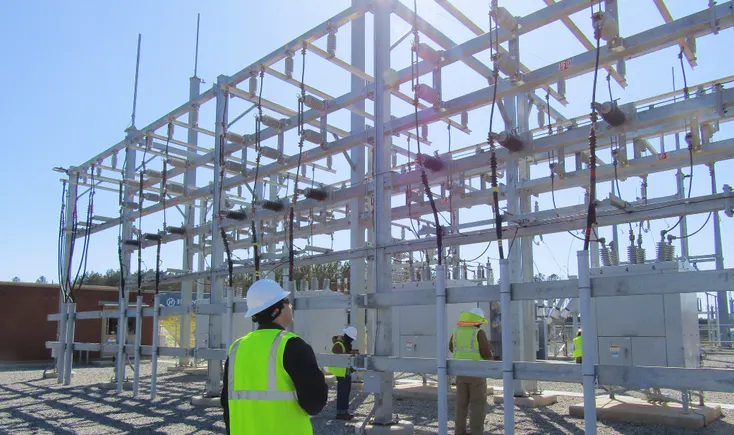
We’ve witnessed as much in our own on-site inspections of 300+ distribution- and transmission-connected IBRs. We continue to find inverters programmed with protection-related settings that deviate from known requirements and power plant controller (PPC) settings misaligned with the facility’s voltage schedule requirements specified by the transmission operator.
In fact, nearly every site we’ve visited since our work in this space began in 2017 has had deficiencies and discrepancies that have needed addressing.
Third-party verification is the solution the industry needs right now
Having a third party commission and verify IBRs — review site documentation and installed inverter settings, conduct PPC demonstrations, update and reconcile facility models — bridges the gap between transmission and generator operators.
Ultimately, it’s quality assurance that reveals whether facilities comply with the appropriate standards and agreements and whether grid operators can trust that their sites will perform as expected.
Asking project developers or transmission operators to provide their own oversight is problematic: conflicting motivations and incentives, a lack of resources and unspecialized expertise. A neutral third party can develop the proficiency necessary to confront the unique complexity of IBRs.
In our ideal world for highest grid reliability, every IBR site receives third-party verification
To put it bluntly, we can’t currently rely on our IBR facilities to the degree that we need. That may not be apparent in monthly performance reports; it may only show up during major events. But those are what we’re trying to avoid.
Unfortunately, the compliance issues that we and others are finding are unlikely to resolve themselves, and that will only elevate risk as IBR penetration — and load growth from data centers, manufacturing and electrification — increases.
That’s why we feel so strongly that independent verification is necessary for us all to truly be confident in the reliability, safety and performance of IBRs. Even starting small, initiating a pilot program or updating documentation requirements, can make a big difference.
Just like a home inspection puts buyers at ease, third-party verification can do the same for grid operators, providing assurance that the resources they’re integrating will perform as predicted. It’s a smart investment in the future of our power system.
To learn more about Advanced Energy’s IBR verification and other work in grid reliability, visit us at advancedenergy.org/ibr-verification.