Demand remains abundant across the data center and AI infrastructure market.
Alphabet has raised its capital spending forecast again. OpenAI has unveiled a 3.2-gigawatt project in Georgia. Hut 8 has signed another multibillion-dollar lease in Texas, while BlackRock and its partners have acquired Aligned Data Centers for approximately $40 billion.
Oracle, meanwhile, could face a $7 billion collateral requirement in Wisconsin, Meta is paying more to finance a $12 billion Texas project, and proposed developments are drawing resistance across North America and beyond.
Together, these developments describe a market moving into a more demanding phase.
Land, power and capital remain available, but not on the same terms everywhere. The projects most likely to move are those that combine a credible customer, a durable power path, institutional financing and a development strategy capable of surviving public scrutiny.
Hyperscaler Spending Keeps Rising
After Google Cloud revenue grew 82% year over year to $24.8 billion in the second quarter, Alphabet increased its expected 2026 capital expenditures to between $195 billion and $205 billion. That was $15 billion above its previous forecast and more than twice the $91.5 billion the company spent in 2025.
The cloud growth explains the spending without removing its financial pressure. The largest platforms are committing unprecedented cash to facilities, chips, networks and power systems whose economics will be measured over many years.
OpenAI’s Project Camellia in Effingham County, Georgia, extends the scale further. OpenAI says it is designing and developing the campus itself and has contracted with Georgia Power for 3.2 GW to be delivered in phases from 2028 through 2032. Local reporting places the initial investment at at least $20 billion across roughly 1,400 acres.
The 25-year power supply agreement may be as important as the campus size. OpenAI says it will cover the infrastructure costs, protect residential customers, use closed-loop cooling and reduce load during grid stress. It has also described an $80 million community-benefit commitment.
A power contract and an industrial site are no longer sufficient on their own. Developers increasingly need credible answers for ratepayer protection, water use, grid reliability and direct community value before the first data hall is built.
Contracts Are Becoming Infrastructure
The closing of the Aligned Data Centers acquisition shows how institutional capital is valuing development platforms that can repeatedly convert power and land into operating capacity.
The Artificial Intelligence Infrastructure Partnership, MGX and BlackRock’s Global Infrastructure Partners acquired Aligned at an enterprise value of approximately $40 billion and committed another $5 billion for expansion. Aligned says its portfolio spans 51 campuses and more than 6.4 GW of operating and planned capacity.
The deal is AIP’s first investment. The partnership aims to mobilize $30 billion in equity and as much as $100 billion including debt, making Aligned a platform for placing infrastructure capital across multiple markets.
Hut 8’s second Beacon Point lease illustrates the same institutionalization from the developer side.
The company signed another 15-year lease for 352 MW of IT capacity at its Nueces County, Texas, campus. The investment-grade tenant now has 704 MW across two phases, carrying a combined base-term contract value of $19.6 billion and 3% annual rent escalators.
The agreements fully commercialize the campus against 1,000 MW of utility capacity secured through AEP Texas. Beacon Point is described as a 1 GW campus, but the signed IT leases total 704 MW, reflecting the overhead required to support the compute environment.
A signed lease with an investment-grade customer has become one of the most valuable assets in AI infrastructure. Power defines the opportunity, but contracted cash flow determines how much of it can be financed.
The Financing Market Is Pricing Risk
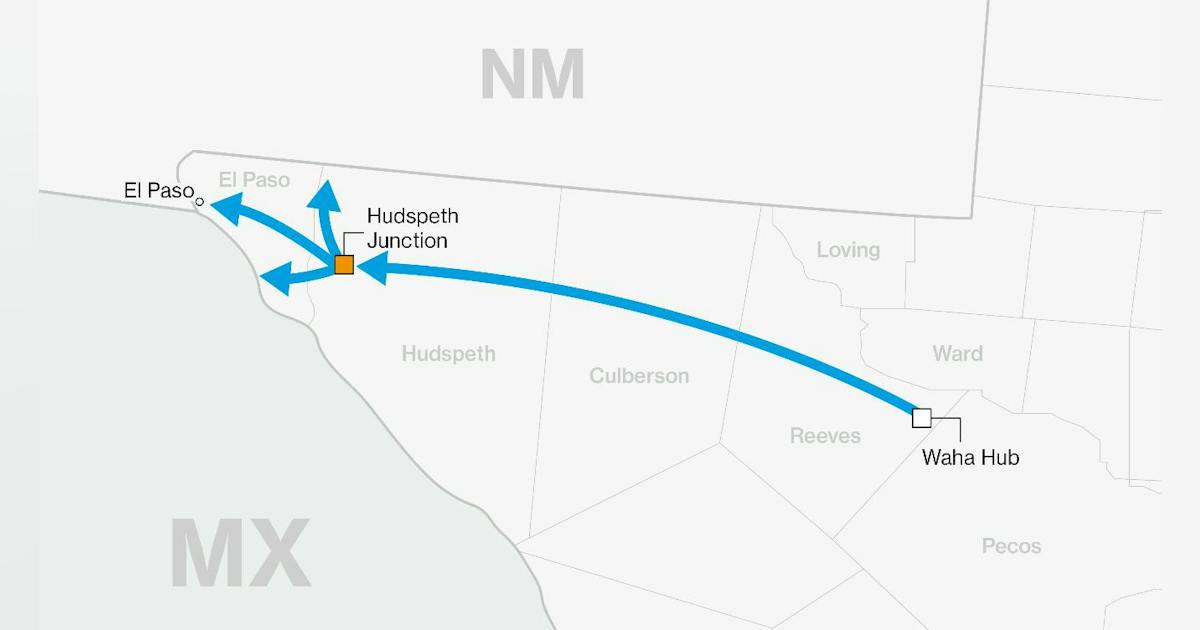
BlackRock is leading a debt raise of at least $12 billion for Meta’s planned El Paso campus. The ownership structure reportedly gives BlackRock-affiliated investors 80% of the project and Meta 20%, with Meta committing to a long-term lease. The campus is expected to reach approximately 1 GW.
The proposed bonds were reportedly being offered at yields above 7%, roughly 40 basis points more than the debt supporting Meta’s Hyperion campus in Louisiana. Meta remains responsible for cost overruns and is bound by a 20-year lease with substantial early-termination protections.
Capital remains available, but lenders are pricing duration, concentration and execution risk more explicitly.
The same discipline can be seen in Wisconsin, where Oracle could be required to provide more than $7 billion in collateral under a tariff designed to protect utility customers from the risk of serving very large loads.
The requirement is linked to Oracle’s credit rating and the infrastructure utilities would need to build for a proposed 1 GW AI campus. Oracle has challenged provisions that prevent utilities from waiving the collateral rules.
A globally recognized customer and a multibillion-dollar plan do not eliminate stranded-asset risk. Utilities still need to know who pays if a load arrives late, falls short of forecast or never materializes.
AI Compute Becomes a Tradable Product
Meta is reportedly in early discussions to rent as much as $10 billion of AI computing capacity to Anthropic, with monthly payments over approximately two years.
The reported talks concern a possible compute-rental agreement rather than a signed data center development deal. Even so, they point toward a more fluid market in which accelerators, power and data hall capacity can be used internally or leased to another AI lab.
Fluidstack disclosed an $830 million Series A at a $7.5 billion valuation. The July announcement covered financing that the company said closed in January. Fluidstack is positioning itself as a rapid deployment platform for custom AI data centers.
General Compute secured a debt facility of up to $400 million from Upper90 to expand an inference-focused cloud built around specialized accelerators. Reporting says the chips themselves will serve as collateral.
These businesses are being financed less like traditional software companies and more like a combination of equipment lessor, data center operator and infrastructure developer. Their success will depend on utilization. Accelerators only support debt when customers keep them busy.
Power Moves Inside the Campus
Texas remains the primary laboratory for integrating generation, land and data center development.
Crusoe and Lancium announced a 1 GW AI campus on 270 acres in Childress County. Lancium will own the land, secure the grid interconnection and manage the energy infrastructure, while Crusoe will design, build and operate the data center. Construction is expected to begin during the third quarter of 2026.
The arrangement repeats the model used in Abilene: one partner organizes land and power while the other delivers the compute facility. The campus will use energy storage and closed-loop, non-evaporative liquid cooling.
Liberty Energy and PowerBridge are advancing a similar model from the generation side. Their joint venture will support the planned 2 GW Alpha Digital Campus in West Texas. The initial phase is expected to include more than 300 MW of generation, with first power targeted for late 2027 and the first half of 2028.
Both projects treat generation as part of the campus architecture rather than an external service arranged after site selection.
SpaceX and xAI are also reportedly exploring additional large-scale Texas data center capacity, although no final site or capacity has been publicly confirmed.
In Kentucky, Rubix Data Centers, part of Submer Group, has proposed a project at a former steelmaking site near Ashland with the potential to consume as much as 2 GW. Local reporting noted that this would equal more than 10% of Kentucky’s current electricity production. The project remains a proposal; the 2 GW figure is not contracted or approved capacity.
Sabey Data Centers, meanwhile, has begun vertical construction at SDC Umatilla in Northeast Oregon. Reported capacity figures vary, but the milestone is clear. In a market filled with multigigawatt announcements, steel in the air remains one of the strongest measures of progress.
Local Approval Is Part of the Critical Path
Diode Ventures’ Goldfinch Technology Park would cover approximately 575 acres in Wheatland County, Alberta. County officials have advanced the required planning bylaws, but the project still needs additional approvals and Diode has not disclosed its proposed electrical capacity. Residents have raised concerns about noise, water, power demand and wildlife.
In Kane County, Illinois, a developer is seeking to build a roughly 200,000-square-foot data center near South Elgin and has requested 48 MW from Commonwealth Edison. The proposed closed-loop cooling system has not prevented organized opposition.
In Montgomery County, Maryland, Atmosphere Data Centers is challenging a six-month permitting moratorium that halted progress on its proposed 360 MW campus at the former Dickerson power plant. Atmosphere says the county changed its zoning interpretation and applied the pause too broadly. County leaders say existing rules were never written for projects of this size.
Petersburg, Virginia, presents a different governance issue. Records have revealed at least four projects proceeding under zoning changes adopted in 2024 that allow data centers by right in industrial districts.
By-right development can shorten entitlement. It can also produce political trouble when residents and elected officials do not understand the size of the pipeline until projects reach site-plan review.
The same questions are appearing internationally. Datagrid’s proposed AI facility near Invercargill in New Zealand’s Southland region is valued at NZ$3.5 billion and projected to create 1,200 construction jobs but only about 80 permanent positions. Residents have questioned its electricity needs, noise and consultation process.
Across markets, the questions are consistent: power, water, noise, transparency and whether long-term community benefits match the scale of the infrastructure.
From Design to Live Traffic
Meta’s Temple, Texas, data center provides a counterweight to the pipeline stories.
The facility began serving traffic after more than four years of development. Meta paused construction in late 2022 while redesigning its data center architecture for AI, then resumed work in 2023. The company says Temple is its first AI-optimized data center to enter operation.
Meta has invested more than $1.2 billion in the site, which supports approximately 100 permanent operating positions and employed about 1,200 workers at peak construction.
Temple demonstrates that the design transition is reaching production. It also shows how long that transition can take. The facility was announced in 2022, paused for redesign, restarted in 2023 and entered operation in 2026.
The 1 GW, 2 GW and 3.2 GW projects being announced now will face their own rounds of financing, equipment procurement, utility construction and political review.
The Execution Market
The data center market is sorting itself according to execution quality, even as demand continues to rise.
The strongest projects increasingly combine secured power, an investment-grade tenant, credible financing, a defined delivery organization and a community strategy. Hut 8’s Beacon Point leases, the Aligned acquisition and Meta’s completed Temple facility each contain several of those ingredients.
The projects carrying more uncertainty are missing one or more of those elements: a customer, final power, accepted financial protections or zoning rules that communities understand.
The scale of demand remains difficult to overstate. Alphabet may spend more than $200 billion in a single year. OpenAI is seeking 3.2 GW at one Georgia location. A consortium has placed a $40 billion value on Aligned and immediately committed another $5 billion to growth.
But the decisive metric will not be the number of gigawatts announced.
It will be the number that can be financed, permitted, energized and operated under terms that customers, utilities, investors and host communities are prepared to support.