2) “Units of compute”: OneCore and SmartRun
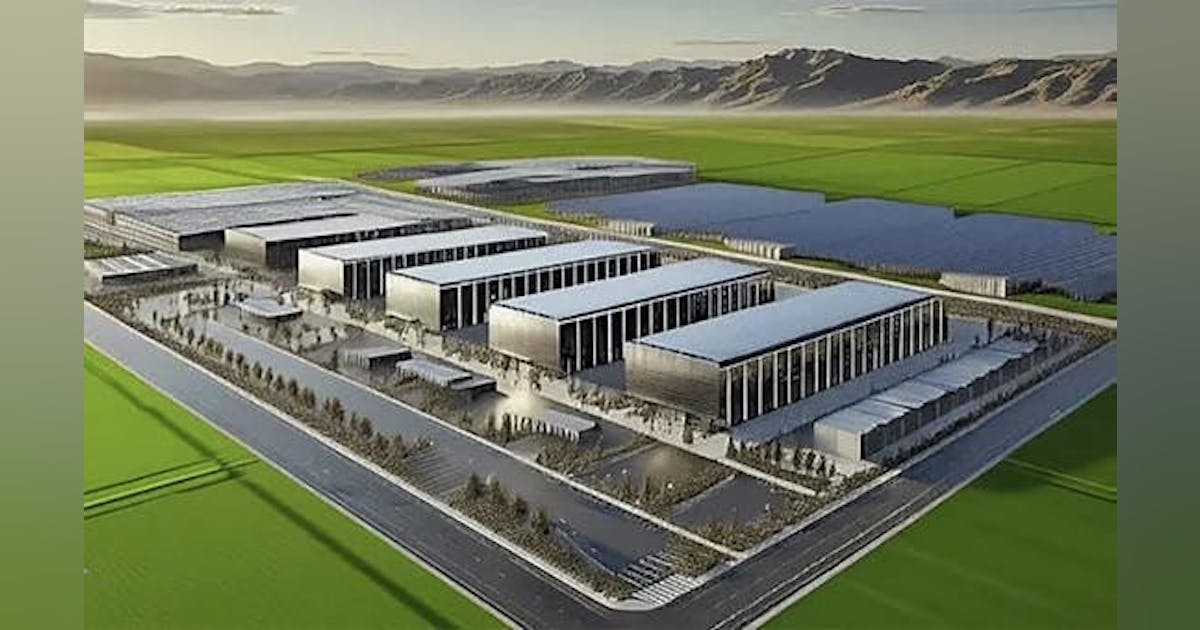
On the earnings call, Albertazzi highlighted Vertiv OneCore, an end-to-end data center solution designed to accelerate “time to token,” scaling in 12.5 MW building blocks; and Vertiv SmartRun, a prefabricated white space infrastructure solution aimed at rapidly accelerating fit-out and readiness.
He pointed to collaborations (including Hut 8 and Compass Data Centers) as proof points of adoption, emphasizing that SmartRun can stand alone or plug into OneCore.
3) Cooling evolution: hybrid thermal chains and the “trim cooler”
Asked how cooling architectures may change (amid industry chatter about warmer-temperature operations and shifting mixes of chillers, CDUs, and other components) Albertazzi leaned into complexity as a feature, not a bug.
He argued heat rejection doesn’t disappear, even if some GPU loads can run at higher temperatures. Instead, the future looks hybrid, with mixed loads and resiliency requirements forcing more nuanced thermal chains.
Vertiv’s strategic product anchor here is its “trim cooler” concept: a chiller optimized for higher-temperature operation while retaining flexibility for lower-temperature requirements in the same facility, maximizing free cooling where climate and design allow.
And importantly, Albertazzi dismissed the idea that CDUs are going away:
“We are pretty sure that CDUs in various shapes and forms are a long-term element of the thermal chain.”
4) Edge densification: CoolPhase Ceiling + CoolPhase Row (Feb. 3)
Vertiv also expanded its thermal portfolio for edge and small IT environments with the:
- Vertiv CoolPhase Ceiling (launching Q2 2026): ceiling-mounted, 3.5 kW to 28 kW, designed to preserve floor space.
- Vertiv CoolPhase Row (available now in North America) for row-based cooling up to 30 kW (300 mm width) or 40 kW (600 mm width).
Vertiv Director of Edge Thermal Michal Podmaka tied the products directly to AI-driven edge densification and management consistency, saying the new systems “integrate seamlessly into Vertiv’s broader thermal chain” and are built on standardized controls and monitoring platforms for consistent visibility across diverse edge environments.
The details matter: with AHRI certification, variable-speed components, R32 refrigerant, a wide operating range (-31°F to 118°F), and features like teamwork connectivity and BMS integration, this is Vertiv standardizing edge cooling as part of the same portfolio logic it’s pushing into hyperscale.
Services: The Differentiator Increasingly Hiding in Plain Sight
Perhaps the most consequential synergy across Vertiv’s recent announcements is in lifecycle services, an area increasingly critical as AI infrastructure grows denser, more complex, and more operationally sensitive.
In January, Vertiv introduced Vertiv Next Predict, an AI-driven predictive maintenance platform that continuously analyzes infrastructure performance to anticipate failures before they occur. Instead of relying on calendar-based service intervals, operators gain condition-based maintenance driven by anomaly detection, predictive risk scoring, and root-cause analysis, with corrective actions executed through Vertiv’s global services organization.
At the same time, Vertiv significantly expanded its liquid cooling lifecycle capabilities through acquisition.
PurgeRite Acquisition Strengthens Liquid Cooling Lifecycle Services
In December, Vertiv completed its approximately $1.0 billion acquisition of PurgeRite, a Houston-based specialist in mechanical flushing, purging, and filtration services for mission-critical facilities.
The acquisition strengthens Vertiv’s ability to support liquid cooling infrastructure across its entire lifecycle, from commissioning through decades of operation.
As AI and HPC environments increasingly depend on liquid cooling, maintaining ultra-clean, air-free, chemically stable coolant loops becomes mission critical. Improperly conditioned fluid systems can degrade heat transfer efficiency, increase corrosion or fouling risk, and ultimately threaten uptime in facilities where individual racks may support millions of dollars in compute.
Vertiv CEO Giordano Albertazzi said the acquisition expands the company’s ability to provide end-to-end support for high-density computing environments:
“PurgeRite’s specialized expertise in fluid management services complements our existing portfolio and enhances our ability to provide end-to-end product and service support for customers’ high-density computing and AI applications where efficient thermal management is critical to performance and reliability.”
PurgeRite brings proprietary technologies and engineering expertise supporting complex liquid cooling deployments across the thermal chain, from chillers and plant loops to coolant distribution units and rack-level systems. Its established relationships with hyperscalers and major colocation providers also reinforce Vertiv’s ability to scale services globally.
Integrated with Vertiv’s broader service network, the acquisition positions the company to deliver lifecycle thermal management services at global scale, reducing downtime risk while improving cooling performance and equipment efficiency.
EnergyCore Grid: Power Flexibility Becomes Infrastructure Strategy
Cooling and modular deployment may dominate infrastructure headlines, but power availability increasingly defines where and how quickly AI capacity can be deployed.
In early December, Vertiv introduced Vertiv EnergyCore Grid, a modular, utility-grade battery energy storage system (BESS) platform designed to help data centers accelerate interconnection while supporting grid resilience.
The system addresses a growing constraint across North America and Europe: AI data center demand is often arriving faster than utilities can deliver transmission and substation upgrades.
EnergyCore Grid integrates:
• Lithium iron phosphate (LFP) battery systems
• Power conversion systems (PCS)
• Factory-integrated energy management systems (EMS)
All within modular, skid-based deployments supporting projects from 1 MW to more than 200 MW.
This architecture allows operators to:
• Shift loads away from grid peak periods
• Support interconnection approvals
• Provide ancillary grid services
• Enable black-start capabilities
• Integrate renewable energy sources
• Smooth power demand while awaiting utility upgrades
Chris Thompson, Vertiv’s global vice president of microgrid solutions, framed the urgency directly:
“With datacenters needing more power to support AI growth, getting a grid interconnection has unfortunately never been more difficult. The Vertiv EnergyCore Grid enables datacenters to provide grid flexibility as well as critical grid ancillary services. This accelerates grid interconnection in an environment where time to first token is paramount.”
The platform uses UL 1973-listed and UL 9540A-tested battery systems housed in liquid-cooled, IP55-rated outdoor enclosures, while factory-integrated EMS software provides real-time control of distributed energy resources, enabling participation in energy markets and coordinated management of on-site generation.
EnergyCore Grid extends Vertiv’s “grid-to-chip” positioning, complementing UPS, power distribution, and energy management systems already embedded across hyperscale deployments.
For operators, the implication is increasingly clear: grid flexibility and on-site energy management are becoming as critical to AI deployment timelines as power density and cooling efficiency.
AI Infrastructure Is An Integrated System
Vertiv’s quarter ultimately highlights a broader industry shift: AI infrastructure is no longer assembled component by component; it is increasingly procured and operated as an integrated system.
Operators are buying prefabricated capacity, hybrid cooling architectures, lifecycle services, and grid-interactive energy solutions designed to function together at unprecedented density and scale. Deployment speed, operational reliability, and lifecycle performance now determine competitive advantage as much as hardware capability.
Albertazzi closed the earnings call with measured confidence:
“We continue to strengthen our position as an industry thought leader… I have never been more excited about Vertiv’s future.”
As AI infrastructure investment moves from experimentation to execution, the competitive battleground is shifting from equipment supply to full-system delivery and operational performance. Vertiv’s recent results suggest the company intends not merely to participate in that shift, but to help define how AI data centers are built and run in the gigawatt era.