Stay Ahead, Stay ONMINE

Your boss is watching

A full day’s work for Dora Manriquez, who drives for Uber and Lyft in the San Francisco Bay Area, includes waiting in her car for a two-digit number to appear. The apps keep sending her rides that are too cheap to pay for her time—$4 or $7 for a trip across San Francisco, $16 for a trip from the airport for which the customer is charged $100. But Manriquez can’t wait too long to accept a ride, because her acceptance rate contributes to her driving score for both companies, which can then affect the benefits and discounts she has access to.  The systems are black boxes, and Manriquez can’t know for sure which data points affect the offers she receives or how. But what she does know is that she’s driven for ride-share companies for the last nine years, and this year, having found herself unable to score enough better-­paying rides, she has to file for bankruptcy.  Every action Manriquez takes—or doesn’t take—is logged by the apps she must use to work for these companies. (An Uber spokesperson told MIT Technology Review that acceptance rates don’t affect drivers’ fares. Lyft did not return a request for comment on the record.) But app-based employers aren’t the only ones keeping a very close eye on workers today. A study conducted in 2021, when the covid-19 pandemic had greatly increased the number of people working from home, revealed that almost 80% of companies surveyed were monitoring their remote or hybrid workers. A New York Times investigation in 2022 found that eight of the 10 largest private companies in the US track individual worker productivity metrics, many in real time. Specialized software can now measure and log workers’ online activities, physical location, and even behaviors like which keys they tap and what tone they use in their written communications—and many workers aren’t even aware that this is happening. What’s more, required work apps on personal devices may have access to more than just work—and as we may know from our private lives, most technology can become surveillance technology if the wrong people have access to the data. While there are some laws in this area, those that protect privacy for workers are fewer and patchier than those applying to consumers. Meanwhile, it’s predicted that the global market for employee monitoring software will reach $4.5 billion by 2026, with North America claiming the dominant share. Working today—whether in an office, a warehouse, or your car—can mean constant electronic surveillance with little transparency, and potentially with livelihood-­ending consequences if your productivity flags. What matters even more than the effects of this ubiquitous monitoring on privacy may be how all that data is shifting the relationships between workers and managers, companies and their workforce. Managers and management consultants are using worker data, individually and in the aggregate, to create black-box algorithms that determine hiring and firing, promotion and “deactivation.” And this is laying the groundwork for the automation of tasks and even whole categories of labor on an endless escalator to optimized productivity. Some human workers are already struggling to keep up with robotic ideals. We are in the midst of a shift in work and workplace relationships as significant as the Second Industrial Revolution of the late 19th and early 20th centuries. And new policies and protections may be necessary to correct the balance of power. Data as power Data has been part of the story of paid work and power since the late 19th century, when manufacturing was booming in the US and a rise in immigration meant cheap and plentiful labor. The mechanical engineer Frederick Winslow Taylor, who would become one of the first management consultants, created a strategy called “scientific management” to optimize production by tracking and setting standards for worker performance. Soon after, Henry Ford broke down the auto manufacturing process into mechanized steps to minimize the role of individual skill and maximize the number of cars that could be produced each day. But the transformation of workers into numbers has a longer history. Some researchers see a direct line between Taylor’s and Ford’s unrelenting focus on efficiency and the dehumanizing labor optimization practices carried out on slave-owning plantations.  As manufacturers adopted Taylorism and its successors, time was replaced by productivity as the measure of work, and the power divide between owners and workers in the United States widened. But other developments soon helped rebalance the scales. In 1914, Section 6 of the Clayton Act established the federal legal right for workers to unionize and stated that “the labor of a human being is not a commodity.” In the years that followed, union membership grew, and the 40-hour work week and the minimum wage were written into US law. Though the nature of work had changed with revolutions in technology and management strategy, new frameworks and guardrails stood up to meet that change. More than a hundred years after Taylor published his seminal book, The Principles of Scientific Management, “efficiency” is still a business buzzword, and technological developments, including new uses of data, have brought work to another turning point. But the federal minimum wage and other worker protections haven’t kept up, leaving the power divide even starker. In 2023, CEO pay was 290 times average worker pay, a disparity that’s increased more than 1,000% since 1978. Data may play the same kind of intermediary role in the boss-worker relationship that it has since the turn of the 20th century, but the scale has exploded. And the stakes can be a matter of physical health. In 2024, a report from a Senate committee led by Bernie Sanders, based on an 18-month investigation of Amazon’s warehouse practices, found that the company had been setting the pace of work in those facilities with black-box algorithms, presumably calibrated with data collected by monitoring employees. (In California, because of a 2021 bill, Amazon is required to at least reveal the quotas and standards workers are expected to comply with; elsewhere the bar can remain a mystery to the very people struggling to meet it.) The report also found that in each of the previous seven years, Amazon workers had been almost twice as likely to be injured as other warehouse workers, with injuries ranging from concussions to torn rotator cuffs to long-term back pain. An internal team tasked with evaluating Amazon warehouse safety found that letting robots set the pace for human labor was correlated with subsequent injuries. The Sanders report found that between 2020 and 2022, two internal Amazon teams tasked with evaluating warehouse safety recommended reducing the required pace of work and giving workers more time off. Another found that letting robots set the pace for human labor was correlated with subsequent injuries. The company rejected all the recommendations for technical or productivity reasons. But the report goes on to reveal that in 2022, another team at Amazon, called Core AI, also evaluated warehouse safety and concluded that unrealistic pacing wasn’t the reason all those workers were getting hurt on the job. Core AI said that the cause, instead, was workers’ “frailty” and “intrinsic likelihood of injury.” The issue was the limitations of the human bodies the company was measuring, not the pressures it was subjecting those bodies to. Amazon stood by this reasoning during the congressional investigation. Amazon spokesperson Maureen Lynch Vogel told MIT Technology Review that the Sanders report is “wrong on the facts” and that the company continues to reduce incident rates for accidents. “The facts are,” she said, “our expectations for our employees are safe and ­reasonable—and that was validated both by a judge in Washington after a thorough hearing and by the state’s Board of Industrial Insurance Appeals.” A study conducted in 2021 revealed that almost 80% of companies surveyed were monitoring their remote or hybrid workers. Yet this line of thinking is hardly unique to Amazon, although the company could be seen as a pioneer in the datafication of work. (An investigation found that over one year between 2017 and 2018, the company fired hundreds of workers at a single facility—by means of automatically generated letters—for not meeting productivity quotas.) An AI startup recently placed a series of billboards and bus signs in the Bay Area touting the benefits of its automated sales agents, which it calls “Artisans,” over human workers. “Artisans won’t complain about work-life balance,” one said. “Artisans won’t come into work ­hungover,” claimed another. “Stop hiring humans,” one hammered home. The startup’s leadership took to the company blog to say that the marketing campaign was intentionally provocative and that Artisan believes in the potential of human labor. But the company also asserted that using one of its AI agents costs 96% less than hiring a human to do the same job. The campaign hit a nerve: When data is king, humans—whether warehouse laborers or knowledge workers—may not be able to outperform machines. AI management and managing AI Companies that use electronic employee monitoring report that they are most often looking to the technologies not only to increase productivity but also to manage risk. And software like Teramind offers tools and analysis to help with both priorities. While Teramind, a globally distributed company, keeps its list of over 10,000 client companies private, it provides resources for the financial, health-care, and customer service industries, among others—some of which have strict compliance requirements that can be tricky to keep on top of. The platform allows clients to set data-driven standards for productivity, establish thresholds for alerts about toxic communication tone or language, create tracking systems for sensitive file sharing, and more. 

A full day’s work for Dora Manriquez, who drives for Uber and Lyft in the San Francisco Bay Area, includes waiting in her car for a two-digit number to appear. The apps keep sending her rides that are too cheap to pay for her time—$4 or $7 for a trip across San Francisco, $16 for a trip from the airport for which the customer is charged $100. But Manriquez can’t wait too long to accept a ride, because her acceptance rate contributes to her driving score for both companies, which can then affect the benefits and discounts she has access to. 

The systems are black boxes, and Manriquez can’t know for sure which data points affect the offers she receives or how. But what she does know is that she’s driven for ride-share companies for the last nine years, and this year, having found herself unable to score enough better-­paying rides, she has to file for bankruptcy. 

Every action Manriquez takes—or doesn’t take—is logged by the apps she must use to work for these companies. (An Uber spokesperson told MIT Technology Review that acceptance rates don’t affect drivers’ fares. Lyft did not return a request for comment on the record.) But app-based employers aren’t the only ones keeping a very close eye on workers today.

A study conducted in 2021, when the covid-19 pandemic had greatly increased the number of people working from home, revealed that almost 80% of companies surveyed were monitoring their remote or hybrid workers. A New York Times investigation in 2022 found that eight of the 10 largest private companies in the US track individual worker productivity metrics, many in real time. Specialized software can now measure and log workers’ online activities, physical location, and even behaviors like which keys they tap and what tone they use in their written communications—and many workers aren’t even aware that this is happening.

What’s more, required work apps on personal devices may have access to more than just work—and as we may know from our private lives, most technology can become surveillance technology if the wrong people have access to the data. While there are some laws in this area, those that protect privacy for workers are fewer and patchier than those applying to consumers. Meanwhile, it’s predicted that the global market for employee monitoring software will reach $4.5 billion by 2026, with North America claiming the dominant share.

Working today—whether in an office, a warehouse, or your car—can mean constant electronic surveillance with little transparency, and potentially with livelihood-­ending consequences if your productivity flags. What matters even more than the effects of this ubiquitous monitoring on privacy may be how all that data is shifting the relationships between workers and managers, companies and their workforce. Managers and management consultants are using worker data, individually and in the aggregate, to create black-box algorithms that determine hiring and firing, promotion and “deactivation.” And this is laying the groundwork for the automation of tasks and even whole categories of labor on an endless escalator to optimized productivity. Some human workers are already struggling to keep up with robotic ideals.

We are in the midst of a shift in work and workplace relationships as significant as the Second Industrial Revolution of the late 19th and early 20th centuries. And new policies and protections may be necessary to correct the balance of power.

Data as power

Data has been part of the story of paid work and power since the late 19th century, when manufacturing was booming in the US and a rise in immigration meant cheap and plentiful labor. The mechanical engineer Frederick Winslow Taylor, who would become one of the first management consultants, created a strategy called “scientific management” to optimize production by tracking and setting standards for worker performance.

Soon after, Henry Ford broke down the auto manufacturing process into mechanized steps to minimize the role of individual skill and maximize the number of cars that could be produced each day. But the transformation of workers into numbers has a longer history. Some researchers see a direct line between Taylor’s and Ford’s unrelenting focus on efficiency and the dehumanizing labor optimization practices carried out on slave-owning plantations. 

As manufacturers adopted Taylorism and its successors, time was replaced by productivity as the measure of work, and the power divide between owners and workers in the United States widened. But other developments soon helped rebalance the scales. In 1914, Section 6 of the Clayton Act established the federal legal right for workers to unionize and stated that “the labor of a human being is not a commodity.” In the years that followed, union membership grew, and the 40-hour work week and the minimum wage were written into US law. Though the nature of work had changed with revolutions in technology and management strategy, new frameworks and guardrails stood up to meet that change.

More than a hundred years after Taylor published his seminal book, The Principles of Scientific Management, “efficiency” is still a business buzzword, and technological developments, including new uses of data, have brought work to another turning point. But the federal minimum wage and other worker protections haven’t kept up, leaving the power divide even starker. In 2023, CEO pay was 290 times average worker pay, a disparity that’s increased more than 1,000% since 1978. Data may play the same kind of intermediary role in the boss-worker relationship that it has since the turn of the 20th century, but the scale has exploded. And the stakes can be a matter of physical health.
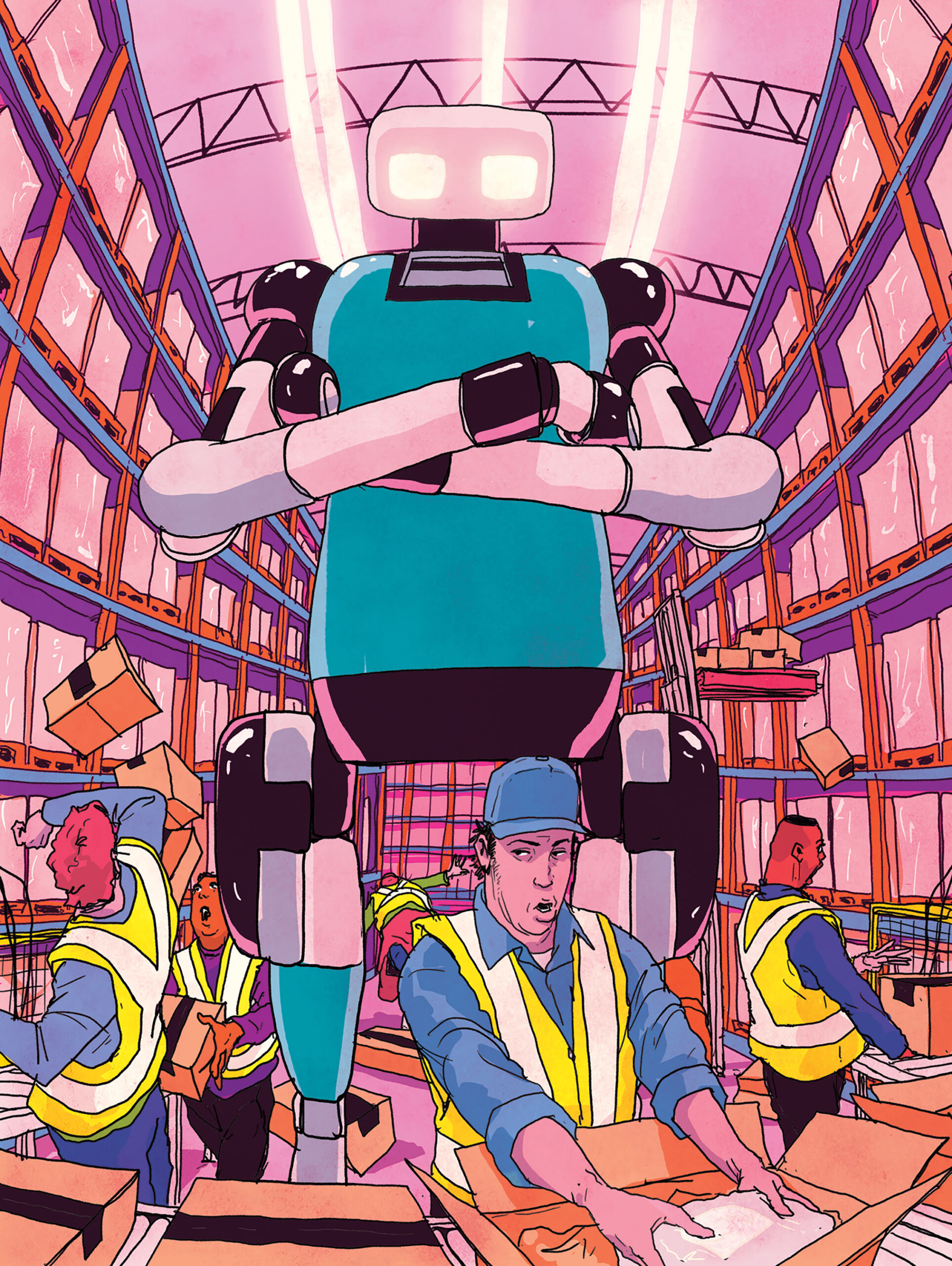
A humanoid robot with folded arms looms over human workers at an Amazon Warehouse

In 2024, a report from a Senate committee led by Bernie Sanders, based on an 18-month investigation of Amazon’s warehouse practices, found that the company had been setting the pace of work in those facilities with black-box algorithms, presumably calibrated with data collected by monitoring employees. (In California, because of a 2021 bill, Amazon is required to at least reveal the quotas and standards workers are expected to comply with; elsewhere the bar can remain a mystery to the very people struggling to meet it.) The report also found that in each of the previous seven years, Amazon workers had been almost twice as likely to be injured as other warehouse workers, with injuries ranging from concussions to torn rotator cuffs to long-term back pain.

An internal team tasked with evaluating Amazon warehouse safety found that letting robots set the pace for human labor was correlated with subsequent injuries.

The Sanders report found that between 2020 and 2022, two internal Amazon teams tasked with evaluating warehouse safety recommended reducing the required pace of work and giving workers more time off. Another found that letting robots set the pace for human labor was correlated with subsequent injuries. The company rejected all the recommendations for technical or productivity reasons. But the report goes on to reveal that in 2022, another team at Amazon, called Core AI, also evaluated warehouse safety and concluded that unrealistic pacing wasn’t the reason all those workers were getting hurt on the job. Core AI said that the cause, instead, was workers’ “frailty” and “intrinsic likelihood of injury.” The issue was the limitations of the human bodies the company was measuring, not the pressures it was subjecting those bodies to. Amazon stood by this reasoning during the congressional investigation.

Amazon spokesperson Maureen Lynch Vogel told MIT Technology Review that the Sanders report is “wrong on the facts” and that the company continues to reduce incident rates for accidents. “The facts are,” she said, “our expectations for our employees are safe and ­reasonable—and that was validated both by a judge in Washington after a thorough hearing and by the state’s Board of Industrial Insurance Appeals.”

A study conducted in 2021 revealed that almost 80% of companies surveyed were monitoring their remote or hybrid workers.

Yet this line of thinking is hardly unique to Amazon, although the company could be seen as a pioneer in the datafication of work. (An investigation found that over one year between 2017 and 2018, the company fired hundreds of workers at a single facility—by means of automatically generated letters—for not meeting productivity quotas.) An AI startup recently placed a series of billboards and bus signs in the Bay Area touting the benefits of its automated sales agents, which it calls “Artisans,” over human workers. “Artisans won’t complain about work-life balance,” one said. “Artisans won’t come into work ­hungover,” claimed another. “Stop hiring humans,” one hammered home.

The startup’s leadership took to the company blog to say that the marketing campaign was intentionally provocative and that Artisan believes in the potential of human labor. But the company also asserted that using one of its AI agents costs 96% less than hiring a human to do the same job. The campaign hit a nerve: When data is king, humans—whether warehouse laborers or knowledge workers—may not be able to outperform machines.

AI management and managing AI

Companies that use electronic employee monitoring report that they are most often looking to the technologies not only to increase productivity but also to manage risk. And software like Teramind offers tools and analysis to help with both priorities. While Teramind, a globally distributed company, keeps its list of over 10,000 client companies private, it provides resources for the financial, health-care, and customer service industries, among others—some of which have strict compliance requirements that can be tricky to keep on top of. The platform allows clients to set data-driven standards for productivity, establish thresholds for alerts about toxic communication tone or language, create tracking systems for sensitive file sharing, and more. 
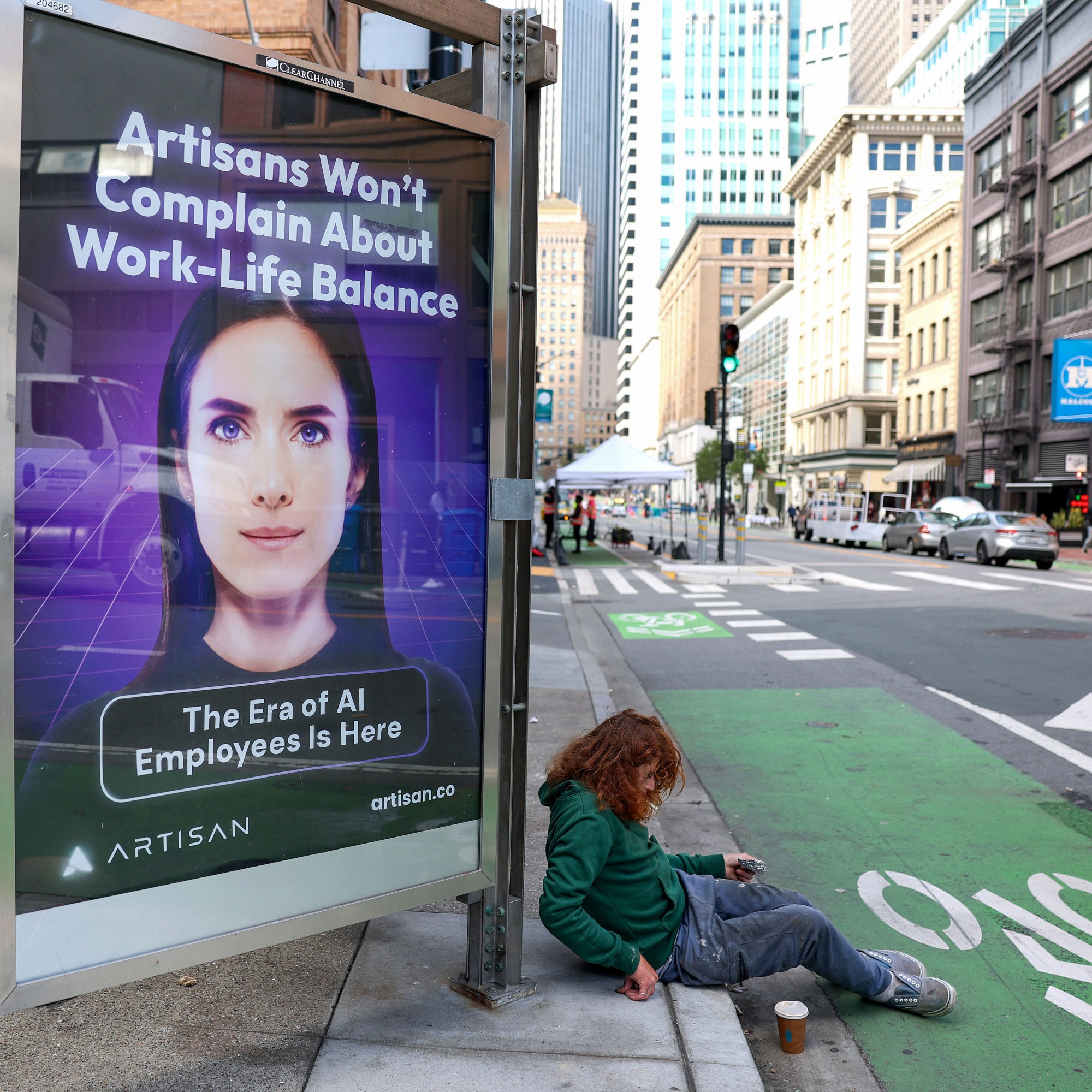
a person laying in the sidewalk next to a bus sign reading,

MICHAEL BYERS

Electronic monitoring and management are also changing existing job functions in real time. Teramind’s clients must figure out who at their company will handle and make decisions around employee data. Depending on the type of company and its needs, Osipova says, that could be HR, IT, the executive team, or another group entirely—and the definitions of those roles will change with these new responsibilities. 

Workers’ tasks, too, can shift with updated technology, sometimes without warning. In 2020, when a major hospital network piloted using robots to clean rooms and deliver food to patients, Criscitiello heard from SEIU-UHW members that they were confused about how to work alongside them. Workers certainly hadn’t received any training for that. “It’s not ‘We’re being replaced by robots,’” says Criscitiello. “It’s ‘Am I going to be responsible if somebody has a medical event because the wrong tray was delivered? I’m supervising the robot—it’s on my floor.’” 

A New York Times investigation in 2022 found that eight of the 10 largest US private companies track individual worker productivity metrics, often in real time.

Nurses are also seeing their jobs expand to include technology management. Carmen Comsti of National Nurses United, the largest nurses’ union in the country, says that while management isn’t explicitly saying nurses will be disciplined for errors that occur as algorithmic tools like AI transcription systems or patient triaging mechanisms are integrated into their workflows, that’s functionally how it works. “If a monitor goes off and the nurse follows the algorithm and it’s incorrect, the nurse is going to get blamed for it,” Comsti says. Nurses and their unions don’t have access to the inner workings of the algorithms, so it’s impossible to say what data these or other tools have been trained on, or whether the data on how nurses work today will be used to train future algorithmic tools. What it means to be a worker, manager, or even colleague is on shifting ground, and frontline workers don’t have insight into which way it’ll move next.

The state of the law and the path to protection

Today, there isn’t much regulation on how companies can gather and use workers’ data. While the General Data Protection Regulation (GDPR) offers some worker protections in Europe, no US federal laws consistently shield workers’ privacy from electronic monitoring or establish firm guardrails for the implementation of algorithm-driven management strategies that draw on the resulting data. (The Electronic Communications Privacy Act allows employers to monitor employees if there are legitimate business reasons and if the employee has already given consent through a contract; tracking productivity can qualify as a legitimate business reason.)

But in late 2024, the Consumer Financial Protection Bureau did issue guidance warning companies using algorithmic scores or surveillance-based reports that they must follow the Fair Credit Reporting Act—which previously applied only to consumers—by getting workers’ consent and offering transparency into what data was being collected and how it would be used. And the Biden administration’s Blueprint for an AI Bill of Rights had suggested that the enumerated rights should apply in employment contexts. But none of these are laws.

So far, binding regulation is being introduced state by state. In 2023, the California Consumer Privacy Act (CCPA) was officially extended to include workers and not just consumers in its protections, even though workers had been specifically excluded when the act was first passed. That means California workers now have the right to know what data is being collected about them and for what purpose, and they can ask to correct or delete that data. Other states are working on their own measures. But with any law or guidance, whether at the federal or state level, the reality comes down to enforcement. Criscitiello says SEIU is testing out the new CCPA protections. 

“It’s too early to tell, but my conclusion so far is that the onus is on the workers,” she says. “Unions are trying to fill this function, but there’s no organic way for a frontline worker to know how to opt out [of data collection], or how to request data about what’s being collected by their employer. There’s an education gap about that.” And while CCPA covers the privacy aspect of electronic monitoring, it says nothing about how employers can use any collected data for management purposes.

The push for new protections and guardrails is coming in large part from organized labor. Unions like National Nurses United and SEIU are working with legislators to create policies on workers’ rights in the face of algorithmic management. And app-based ­advocacy groups have been pushing for new minimum pay rates and against wage theft—and winning. There are other successes to be counted already, too. One has to do with electronic visit verification (EVV), a system that records information about in-home visits by health-care providers. The 21st Century Cures Act, signed into law in 2016, required all states to set up such systems for Medicaid-funded home health care. The intent was to create accountability and transparency to better serve patients, but some health-care workers in California were concerned that the monitoring would be invasive and disruptive for them and the people in their care.

Brandi Wolf, the statewide policy and research director for SEIU’s long-term-care workers, says that in collaboration with disability rights and patient advocacy groups, the union was able to get language into legislation passed in the 2017–2018 term that would take effect the next fiscal year. It indicated to the federal government that California would be complying with the requirement, but that EVV would serve mainly a timekeeping function, not a management or disciplinary one.

Today advocates say that individual efforts to push back against or evade electronic monitoring are not enough; the technology is too widespread and the stakes too high. The power imbalances and lack of transparency affect workers across industries and sectors—from contract drivers to unionized hospital staff to well-compensated knowledge workers. What’s at issue, says Minsu Longiaru, a senior staff attorney at PowerSwitch Action, a network of grassroots labor organizations, is our country’s “moral economy of work”—that is, an economy based on human values and not just capital. Longiaru believes there’s an urgent need for a wave of socially protective policies on the scale of those that emerged out of the labor movement in the early 20th century. “We’re at a crucial moment right now where as a society, we need to draw red lines in the sand where we can clearly say just because we can do something technological doesn’t mean that we should do it,” she says. 

Like so many technological advances that have come before, electronic monitoring and the algorithmic uses of the resulting data are not changing the way we work on their own. The people in power are flipping those switches. And shifting the balance back toward workers may be the key to protecting their dignity and agency as the technology speeds ahead. “When we talk about these data issues, we’re not just talking about technology,” says Longiaru. “We spend most of our lives in the workplace. This is about our human rights.” 

Rebecca Ackermann is a writer, designer, and artist based in San Francisco.

Shape
Shape
Stay Ahead

Explore More Insights

Stay ahead with more perspectives on cutting-edge power, infrastructure, energy,  bitcoin and AI solutions. Explore these articles to uncover strategies and insights shaping the future of industries.

Shape

AI shifts IT roles from operator to orchestrator

The report indicates that IT roles are becoming more strategic and automation-driven, with 52% of respondents citing increases in both areas. Roles are also becoming more cross-functional (47%) and complex (41%), reflecting the integration of AI into broader business processes. AI is also affecting how IT teams allocate time. Respondents

Read More »

Petrobras discovers hydrocarbons in Campos basin presalt offshore Brazil

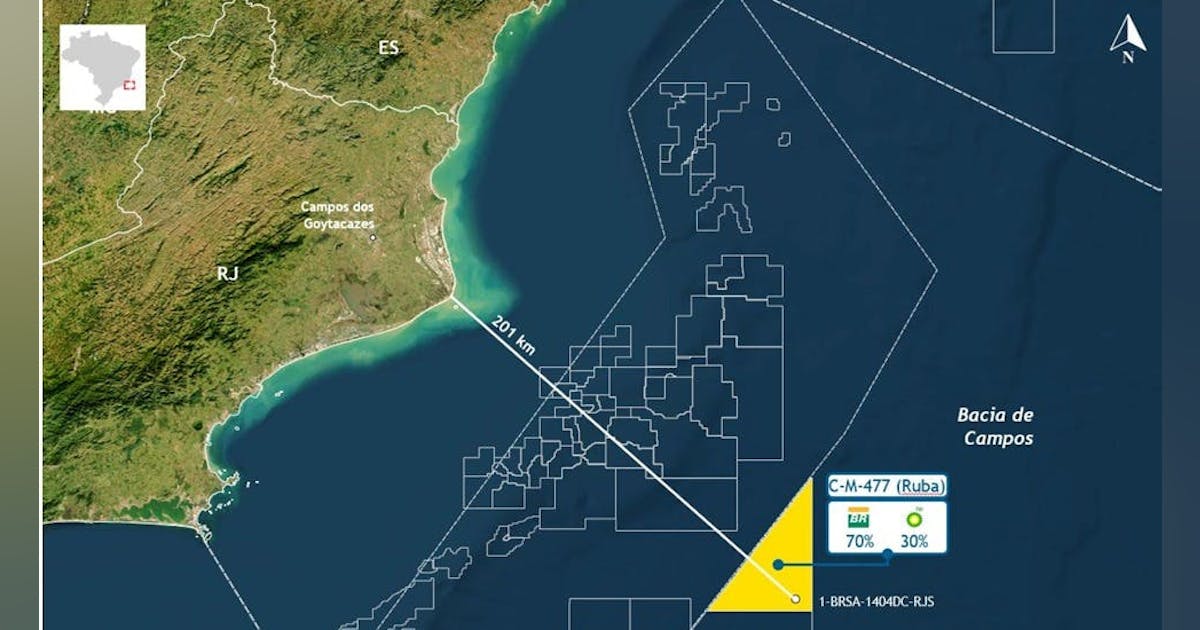
@import url(‘https://fonts.googleapis.com/css2?family=Inter:[email protected]&display=swap’); .ebm-page__main h1, .ebm-page__main h2, .ebm-page__main h3, .ebm-page__main h4, .ebm-page__main h5, .ebm-page__main h6 { font-family: Inter; } body { line-height: 150%; letter-spacing: 0.025em; } button, .ebm-button-wrapper { font-family: Inter; } .label-style { text-transform: uppercase; color: var(–color-grey); font-weight: 600; font-size: 0.75rem; } .caption-style { font-size: 0.75rem; opacity: .6; } #onetrust-pc-sdk [id*=btn-handler], #onetrust-pc-sdk [class*=btn-handler] { background-color: #c19a06 !important; border-color: #c19a06 !important; } #onetrust-policy a, #onetrust-pc-sdk a, #ot-pc-content a { color: #c19a06 !important; } #onetrust-consent-sdk #onetrust-pc-sdk .ot-active-menu { border-color: #c19a06 !important; } #onetrust-consent-sdk #onetrust-accept-btn-handler, #onetrust-banner-sdk #onetrust-reject-all-handler, #onetrust-consent-sdk #onetrust-pc-btn-handler.cookie-setting-link { background-color: #c19a06 !important; border-color: #c19a06 !important; } #onetrust-consent-sdk .onetrust-pc-btn-handler { color: #c19a06 !important; border-color: #c19a06 !important; } Petrobras has discovered presence in the Campos basin presalt offshore Brazil during exploration in sector SC-AP4, block CM-477. Samples taken from the well, 1-BRSA-1404DC-RJS, will be sent for laboratory analysis with the aim of characterizing the conditions of the reservoirs and fluids found to enable continued evaluation of the area’s potential, the company said in a release Apr. 13. The discovery well was drilled 201 km off the coast of the state of Rio de Janeiro in water depth of 2,984 m. The hydrocarbon-bearing interval was confirmed through electrical profiles, gas evidence, and fluid sampling. Petrobras is the operator of block CM-477 with 70% interest. bp plc holds the remaining 30%.

Read More »

bp to operate blocks offshore Namibia through acquisition

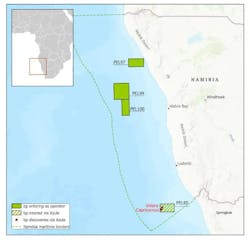
@import url(‘https://fonts.googleapis.com/css2?family=Inter:[email protected]&display=swap’); .ebm-page__main h1, .ebm-page__main h2, .ebm-page__main h3, .ebm-page__main h4, .ebm-page__main h5, .ebm-page__main h6 { font-family: Inter; } body { line-height: 150%; letter-spacing: 0.025em; } button, .ebm-button-wrapper { font-family: Inter; } .label-style { text-transform: uppercase; color: var(–color-grey); font-weight: 600; font-size: 0.75rem; } .caption-style { font-size: 0.75rem; opacity: .6; } #onetrust-pc-sdk [id*=btn-handler], #onetrust-pc-sdk [class*=btn-handler] { background-color: #c19a06 !important; border-color: #c19a06 !important; } #onetrust-policy a, #onetrust-pc-sdk a, #ot-pc-content a { color: #c19a06 !important; } #onetrust-consent-sdk #onetrust-pc-sdk .ot-active-menu { border-color: #c19a06 !important; } #onetrust-consent-sdk #onetrust-accept-btn-handler, #onetrust-banner-sdk #onetrust-reject-all-handler, #onetrust-consent-sdk #onetrust-pc-btn-handler.cookie-setting-link { background-color: #c19a06 !important; border-color: #c19a06 !important; } #onetrust-consent-sdk .onetrust-pc-btn-handler { color: #c19a06 !important; border-color: #c19a06 !important; } Map from bp plc <!–> –> bp plc aims to become operator of three exploration blocks offshore Namibia through acquisition of a 60% interest from Eco Atlantic Oil & Gas. Subject to Namibian government and joint venture partner approvals, bp will operate blocks PEL97, PEL99, and PEL100 in Walvis basin.   In a release Apr. 13, bp said entering the blocks builds on its recent exploration successes in Namibia through Azule Energy, a 50-50 joint venture between bp and Eni. Eco Atlantic will remain a partner, along with Namibia’s national oil company NAMCOR, following the deal’s closing, which is subject to closing conditions.

Read More »

ConocoPhillips sends team to Venezuela to evaluate oil, gas opportunities

ConocoPhillips sent a team to Venezuela to evaluate oil and gas opportunities, the company confirmed to Oil & Gas Journal Apr. 13. In an email to OGJ, a company spokesperson said “ConocoPhillips can confirm that we sent a small evaluation team to Venezuela during the week of Apr. 6 to better understand the potential for in-country oil and gas opportunities.” Asked what clarity the company seeks, the spokesperson said the team “will evaluate Venezuela against other international opportunities as part of our disciplined investment framework.” The operator left Venezuela in 2007 after then-President Hugo Chavez’s government reverted privately run oil fields to state control. ConocoPhillips, along with ExxonMobil, refused the government’s terms and took claims to the World Bank’s International Centre for the Settlement of Investment Disputes (ICSID). ConocoPhillips is owed about $12 billion following two judgements, an amount still sought by the company, which, prior to the expropriation of its interests, held a 50.1% interest in Petrozuata, a 40% interest in Hamaca, and a 32.5% interest in Corocoro heavy oil projects in Venezuela. In January, following the removal of Venezuela’s leader Nicolas Maduro, US President Donald Trump urged oil and gas companies to spend billions to rebuild Venezuela’s energy sector. ExxonMobil, which also exited the country in 2007, ​sent a technical team to Venezuela in March to ⁠evaluate the infrastructure and investment opportunities. In a discussion at CERAWeek by S&P Global in Houston in March, ConocoPhillips’ chief executive officer, Ryan Lance, said Venezuela needs to “completely rewire” ​its fiscal system to attract new ‌investment. The South American country holds a large cache of proven oil reserves, but has faced decades of production challenges due to mismanagement, underinvestment, and sanctions.

Read More »

TotalEnergies, TPAO sign MoU to assess exploration opportunities

@import url(‘https://fonts.googleapis.com/css2?family=Inter:[email protected]&display=swap’); .ebm-page__main h1, .ebm-page__main h2, .ebm-page__main h3, .ebm-page__main h4, .ebm-page__main h5, .ebm-page__main h6 { font-family: Inter; } body { line-height: 150%; letter-spacing: 0.025em; } button, .ebm-button-wrapper { font-family: Inter; } .label-style { text-transform: uppercase; color: var(–color-grey); font-weight: 600; font-size: 0.75rem; } .caption-style { font-size: 0.75rem; opacity: .6; } #onetrust-pc-sdk [id*=btn-handler], #onetrust-pc-sdk [class*=btn-handler] { background-color: #c19a06 !important; border-color: #c19a06 !important; } #onetrust-policy a, #onetrust-pc-sdk a, #ot-pc-content a { color: #c19a06 !important; } #onetrust-consent-sdk #onetrust-pc-sdk .ot-active-menu { border-color: #c19a06 !important; } #onetrust-consent-sdk #onetrust-accept-btn-handler, #onetrust-banner-sdk #onetrust-reject-all-handler, #onetrust-consent-sdk #onetrust-pc-btn-handler.cookie-setting-link { background-color: #c19a06 !important; border-color: #c19a06 !important; } #onetrust-consent-sdk .onetrust-pc-btn-handler { color: #c19a06 !important; border-color: #c19a06 !important; } TotalEnergies EP New Ventures SA has signed a memorandum of understanding (MoU) with Türkiye Petrolleri Anonim Ortaklığı (TPAO) for potential collaboration. The MoU provides a framework for technical collaboration, including a joint assessment of hydrocarbon exploration opportunities in the Black Sea region of Türkiye as well as internationally. In February of this year, TPAO signed an MoU with Chevron Business Development EMEA Ltd., a subsidiary of Chevron, providing an opportunity to “identify and evaluate cooperation opportunities that may arise in international projects and in oil exploration and production license areas in onshore and offshore fields in Türkiye.”

Read More »

Insights: Vaca Muerta’s scale, productivity—and why it has more to give

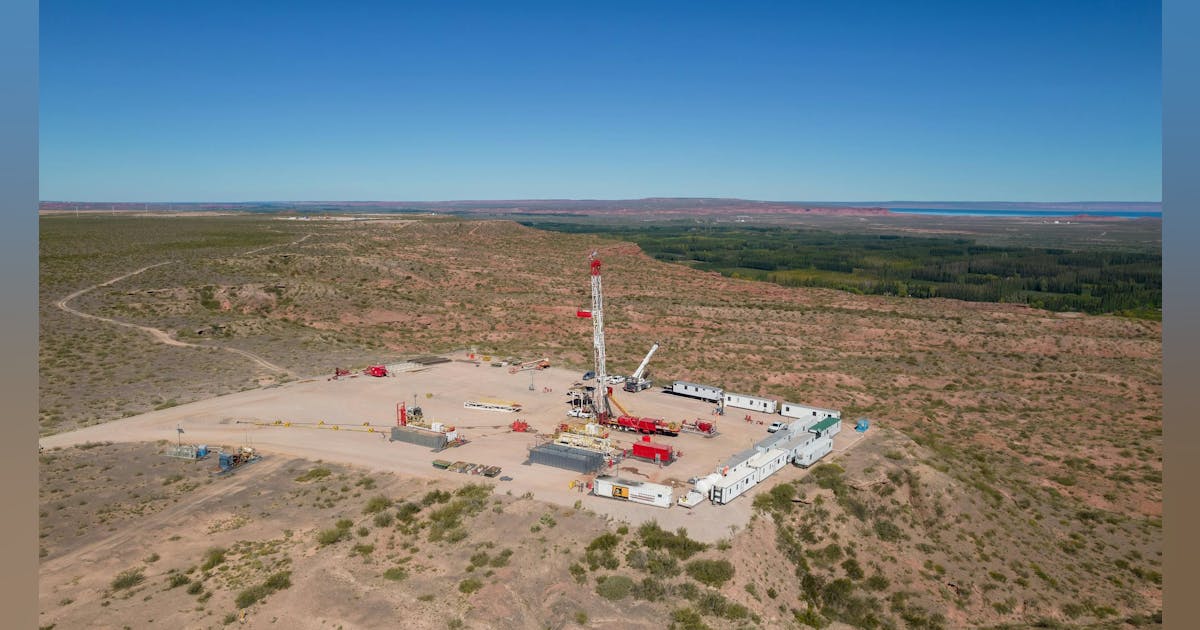
In this Insights episode of the Oil & Gas Journal ReEnterprised podcast, upstream editor Alex Procyk delivers an in-depth technical and commercial overview of Argentina’s Vaca Muerta shale play, one of the world’s largest unconventional oil and gas resources—and one that continues to punch below its weight in total production. Procyk argues this is less a reflection of rock quality and more a result of development pace, infrastructure, and operational complexity. He also outlines why Vaca Muerta’s location—far from geopolitically sensitive supply routes—could make it increasingly important in global energy markets. Why Vaca Muerta matters now Despite resource estimates rivaling or exceeding major US shale plays, Vaca Muerta produces only a fraction of their total output. Procyk argues this is less a reflection of rock quality and more a result of development pace, infrastructure, and operational complexity. With major pipeline projects under way and LNG export capacity taking shape, Vaca Muerta may be poised to play a much larger role in global oil and gas supply. From the episode “On a per‑well basis, Vaca Muerta is one of the most productive unconventional plays on the planet.” “It’s a massive resource, but it hasn’t really been pushed yet.” “The geology isn’t uniformly great—but where it’s good, it’s very good.” “Managing risk versus reward isn’t a flaw in the process—that’s engineering.” “Vaca Muerta is about as far away from the Strait of Hormuz as you can get, and that matters.”

Read More »

Chevron agrees to heavy-oil asset swap with Venezuela’s PDVSA

Chevron Corp., through its subsidiaries with interests in Venezuela, agreed to an asset swap with Petroleos de Venezuela SA (PDVSA) and subsidiaries of PDVSA that the operator said, “will consolidate all parties’ focus on strategic assets in the country.” Chevron will receive an additional 13.21% working interest in the Petroindependencia SA joint venture, increasing its total stake to 49%. Petropiar SA, in which Chevron’s subsidiary holds a 30% interest, has been assigned the rights to develop the adjacent Ayacucho 8 area in Venezuela’s Orinoco Oil Belt. Venezuela will receive from Chevron subsidiaries its 60% and 100% operated interests in the offshore Plataforma Deltana Block 2 and Block 3 gas licenses, respectively, and its 25.2% non-operated interest in the Petroindependiente SA joint venture in western Venezuela. The Plataforma Deltana Block 2 license contains the Loran gas discovery and the Plataforma Deltana Block 3 license contains the Macuira gas discovery. “This agreement expands Chevron’s heavy oil position in two key joint ventures in Venezuela and reflects our disciplined development of the country’s significant resources. Ayacucho 8 is a producing asset in close proximity to Petropiar, which enhances development efficiencies,” said Javier La Rosa, president of Chevron Base Assets and Emerging Countries. Petroindependencia and Petropiar operate extra-heavy oil from projects in the Orinoco Oil Belt.

Read More »

OpenAI pulls out of a second Stargate data center deal

“OpenAI is embattled on several fronts. Anthropic has been doing very well in the enterprise, and OpenAI’s cash burn might be a problem if it wants to go public at an astronomical $800 billion+ valuation. This is especially true with higher energy prices due to geopolitics, and the public and regulators increasingly skeptical of AI companies, especially outside of the United States,” Roberts said. “I see these moves as OpenAI tightening its belt a bit and being more deliberate about spending as it moves past the interesting tech demo stage of its existence and is expected to provide a real return for investors.” He added, “I expect it’s a symptom of a broader problem, which is that OpenAI has thrown some good money after bad in bets that didn’t work out, like the Sora platform it just shut down, and it’s under increasing pressure to translate its first-mover advantage into real upside for its investors. Spending operational money instead of capital money might give it some flexibility in the short term, and perhaps that’s what this is about.” All in all, he noted, “on a scale of business-ending event to nothingburger, I would put it somewhere in the middle, maybe a little closer to nothingburger.” Acceligence CIO Yuri Goryunov agreed with Roberts, and said, “OpenAI has a problem with commercialization and runaway operating costs, for sure. They are trying to rightsize their commitments and make sure that they deliver on their core products before they run out of money.” Goryunov described OpenAI’s arrangement with Microsoft in Norway as “prudent financial engineering” that allows it to access the data center resources without having to tie up too much capital. “It’s financial discipline. OpenAI [executives] are starting to behave like grownups.” Forrester senior analyst Alvin Nguyen echoed those thoughts. 

Read More »

DCF Tours: SDC Manhattan, 375 Pearl St.

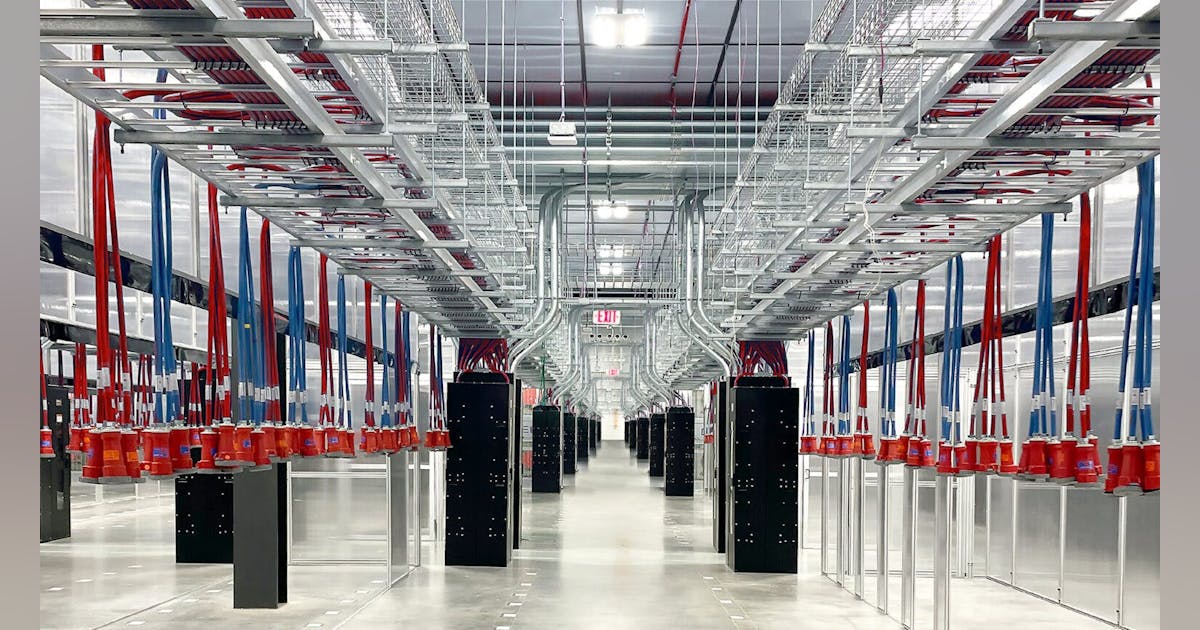
Power: Redundant utility design in a power-constrained market The tour made equally clear that in Manhattan, power is still the central gating factor. The brochure describes SDC Manhattan as offering 18MW of aggregate power delivered to the building, backed by redundant electrical and mechanical systems, backup generators, and Tier III-type concurrent maintainability. The December 2025 press release updated that picture in a more market-facing way, noting that Sabey is one of the only colocation providers in Manhattan with available power, including nearly a megawatt of turnkey power and 7MW of utility power across two powered shell spaces. Bajrushi’s explanation of the electrical topology helped show how Sabey has made that possible. Standing on the third floor, he described a ring bus tying together four Con Edison feeds. Bajrushi said the feeds all originate from the same substation but take different paths into the building, creating redundancy outside the building as well as within it. He added that if one feed fails, the ring bus remains unaffected, and that only one feed is needed to power everything currently in operation. He also noted that Sabey has the ability to add two more feeds in the future if expansion calls for it. That matters in a city where available utility capacity is hard to come by and where many data center conversations end not with square footage but with a megawatt number. Bajrushi also noted that physical space is not the core constraint at 375 Pearl. He said the building still has plenty of room for future buildouts, including open areas that could become additional white space, chiller capacity, or other infrastructure. The bigger question, he suggested, is how and when power and supporting systems get installed. That observation aligns neatly with Sabey’s press release. The company is effectively arguing that SDC

Read More »

Maine to put brakes on big data centers as AI expansion collides with power limits

Mills has pushed for an exemption protecting a proposed $550 million project at the former Androscoggin paper mill in Jay, arguing it would reuse existing infrastructure without straining the grid. Lawmakers rejected that exemption. Mills’ office did not immediately respond to a request for comment. A national wave, an unanswered federal question Maine is one of at least 12 states now weighing moratorium or restraint legislation, alongside more than 300 data center bills filed across 30-plus states in the current session, according to legislative tracking firm MultiState. The shared concern is energy cost. Data centers could consume up to 12% of total US electricity by 2028, according to the US Department of Energy. On March 25, Senator Bernie Sanders and Alexandria Ocasio-Cortez introduced the AI Data Center Moratorium Act in Congress, which would impose a nationwide freeze on all new data center construction until Congress passes AI safety legislation. The Trump administration has pursued a different path from the legislative approach being taken in states. On March 4, Amazon, Google, Meta, Microsoft, OpenAI, Oracle, and xAI signed the White House’s Ratepayer Protection Pledge, a voluntary commitment by hyperscalers to fund their own power generation rather than pass grid costs to ratepayers. The pledge, published in the Federal Register on March 9, carries no penalties for noncompliance or auditing requirements.

Read More »

Cisco just made two moves to own the AI infrastructure stack

In a world of autonomous agents, identity and access become the de facto safety rails. Astrix is designed to inventory these non-human identities, map their permissions, detect toxic combinations, and remediate overprivileged access before it becomes an exploit or a data leak. That capability integrates directly with Cisco’s broader zero-trust and identity-centric security strategy, in which the network enforces policy based on who or what the entity is, not on which subnet it resides in. How this strengthens Cisco’s secure networking story Cisco has positioned itself as the vendor that can deliver “AI-ready, secure networks” spanning campus, data center, cloud, and edge. Galileo and Astrix extend that narrative from infrastructure into AI behavior and identity governance: The network becomes the high‑performance, policy‑enforcing substrate for AI traffic and data. Splunk plus Galileo becomes the observability plane for AI agents, linking AI incidents to network and application signals. Security plus Astrix becomes the identity and permission-control layer that constrains what AI agents can actually do within the environment. This is the core of Cisco’s emerging “Secure AI” posture: not just using AI to improve security but securing AI itself as it is embedded across every workflow, API, and device. For customers, that means AI initiatives can be brought under the same operational and compliance disciplines already used for networks and apps, rather than existing as unmanaged risk islands. Why this matters to Cisco customers Most large Cisco accounts are exactly the enterprises now experimenting with AI agents in contact centers, IT operations, and business workflows. They face three practical problems: They cannot see what agents are doing end‑to‑end, or measure quality beyond offline benchmarks. They lack a coherent model for managing the identities, secrets, and permissions those agents depend on. Their security and networking teams are often disconnected from AI projects happening in lines of business.

Read More »

From Buildings to Token Factories: Compu Dynamics CEO Steve Altizer On Why AI Is Rewriting the Data Center Design Playbook

Not Falling Short—Just Not Optimized Altizer drew a clear distinction. Traditional data centers can run AI workloads, but they weren’t built for them. “We’re not falling short much, we’re just not optimizing.” The gap shows up most clearly in density. Legacy facilities were designed for roughly 300 to 400 watts per square foot. AI pushes that to 2,000 to 4,000 watts per square foot—changing not just rack design, but the logic of the entire facility. For Altizer, AI-ready infrastructure starts with fundamentals: access to water for heat rejection, significantly higher power density, and in some cases specific redundancy topologies favored by chip makers. It also requires liquid cooling loops extended to the rack and, critically, flexibility in the white space. That last point is the hardest to reconcile with traditional design. “The GPUs change… your power requirements change… your liquid cooling requirements change. The data center needs to change with it.” Buildings are static. AI is not. Rethinking Modular: From Containers to Systems “Modular” has been part of the data center vocabulary for years, but Altizer argues most of the industry is still thinking about it the wrong way. The old model centered on ISO containers. The emerging model focuses on modularizing the white space itself. “We’re not building buildings—we’re building assemblies of equipment.” Compu Dynamics is pushing toward factory-built IT modules that can be delivered and assembled on-site. A standard 5 MW block consists of 10 modules, stacked into a two-story configuration and designed for transport by trailer across the U.S. From there, scale becomes repeatable. Blocks can be placed adjacent or connected to create larger deployments, moving from 5 MW to 10 MW and beyond. The point is not just scalability; it’s repeatability and speed. Altizer ties this directly to a broader shift in how data centers are

Read More »

Data centers are moving inland, away from some traditional locations

The future is even less clear the further you go out. The vast majority of data centers planned for launch between 2028 and 2032 have yet to break ground and only a sliver are under construction. Those delays, it seems, appear to be twofold: first, the well-documented component shortage. Not just memory and storage, but batteries, electrical transformers, and circuit breakers. They all make up less than 10% of the cost to construct one data center, but as Andrew Likens, energy and infrastructure lead at AI data center provider Crusoe’s told Bloomberg, it’s impossible to build new data centers without them. “If one piece of your supply chain is delayed, then your whole project can’t deliver,” Likens said. “It is a pretty wild puzzle at the moment.” Second problem is the growing rebellion against data centers, both by citizens and governments alike. The latest pushback comes from the Seminole nation of Native Americans, who have banned data centers on their tribal lands. Of the data centers that are coming online in the next few months, the top states reflect what Synergy has been saying about data center migration to the interior of the country. Texas is leading the way, with 22.5 GW coming online, followed by New Mexico at 8.3 GW and Pennsylvania, which is making a major push for data centers to come to the state, at 7.1 GW.

Read More »

Microsoft will invest $80B in AI data centers in fiscal 2025

And Microsoft isn’t the only one that is ramping up its investments into AI-enabled data centers. Rival cloud service providers are all investing in either upgrading or opening new data centers to capture a larger chunk of business from developers and users of large language models (LLMs).  In a report published in October 2024, Bloomberg Intelligence estimated that demand for generative AI would push Microsoft, AWS, Google, Oracle, Meta, and Apple would between them devote $200 billion to capex in 2025, up from $110 billion in 2023. Microsoft is one of the biggest spenders, followed closely by Google and AWS, Bloomberg Intelligence said. Its estimate of Microsoft’s capital spending on AI, at $62.4 billion for calendar 2025, is lower than Smith’s claim that the company will invest $80 billion in the fiscal year to June 30, 2025. Both figures, though, are way higher than Microsoft’s 2020 capital expenditure of “just” $17.6 billion. The majority of the increased spending is tied to cloud services and the expansion of AI infrastructure needed to provide compute capacity for OpenAI workloads. Separately, last October Amazon CEO Andy Jassy said his company planned total capex spend of $75 billion in 2024 and even more in 2025, with much of it going to AWS, its cloud computing division.

Read More »

John Deere unveils more autonomous farm machines to address skill labor shortage

Join our daily and weekly newsletters for the latest updates and exclusive content on industry-leading AI coverage. Learn More Self-driving tractors might be the path to self-driving cars. John Deere has revealed a new line of autonomous machines and tech across agriculture, construction and commercial landscaping. The Moline, Illinois-based John Deere has been in business for 187 years, yet it’s been a regular as a non-tech company showing off technology at the big tech trade show in Las Vegas and is back at CES 2025 with more autonomous tractors and other vehicles. This is not something we usually cover, but John Deere has a lot of data that is interesting in the big picture of tech. The message from the company is that there aren’t enough skilled farm laborers to do the work that its customers need. It’s been a challenge for most of the last two decades, said Jahmy Hindman, CTO at John Deere, in a briefing. Much of the tech will come this fall and after that. He noted that the average farmer in the U.S. is over 58 and works 12 to 18 hours a day to grow food for us. And he said the American Farm Bureau Federation estimates there are roughly 2.4 million farm jobs that need to be filled annually; and the agricultural work force continues to shrink. (This is my hint to the anti-immigration crowd). John Deere’s autonomous 9RX Tractor. Farmers can oversee it using an app. While each of these industries experiences their own set of challenges, a commonality across all is skilled labor availability. In construction, about 80% percent of contractors struggle to find skilled labor. And in commercial landscaping, 86% of landscaping business owners can’t find labor to fill open positions, he said. “They have to figure out how to do

Read More »

2025 playbook for enterprise AI success, from agents to evals

Join our daily and weekly newsletters for the latest updates and exclusive content on industry-leading AI coverage. Learn More 2025 is poised to be a pivotal year for enterprise AI. The past year has seen rapid innovation, and this year will see the same. This has made it more critical than ever to revisit your AI strategy to stay competitive and create value for your customers. From scaling AI agents to optimizing costs, here are the five critical areas enterprises should prioritize for their AI strategy this year. 1. Agents: the next generation of automation AI agents are no longer theoretical. In 2025, they’re indispensable tools for enterprises looking to streamline operations and enhance customer interactions. Unlike traditional software, agents powered by large language models (LLMs) can make nuanced decisions, navigate complex multi-step tasks, and integrate seamlessly with tools and APIs. At the start of 2024, agents were not ready for prime time, making frustrating mistakes like hallucinating URLs. They started getting better as frontier large language models themselves improved. “Let me put it this way,” said Sam Witteveen, cofounder of Red Dragon, a company that develops agents for companies, and that recently reviewed the 48 agents it built last year. “Interestingly, the ones that we built at the start of the year, a lot of those worked way better at the end of the year just because the models got better.” Witteveen shared this in the video podcast we filmed to discuss these five big trends in detail. Models are getting better and hallucinating less, and they’re also being trained to do agentic tasks. Another feature that the model providers are researching is a way to use the LLM as a judge, and as models get cheaper (something we’ll cover below), companies can use three or more models to

Read More »

OpenAI’s red teaming innovations define new essentials for security leaders in the AI era

Join our daily and weekly newsletters for the latest updates and exclusive content on industry-leading AI coverage. Learn More OpenAI has taken a more aggressive approach to red teaming than its AI competitors, demonstrating its security teams’ advanced capabilities in two areas: multi-step reinforcement and external red teaming. OpenAI recently released two papers that set a new competitive standard for improving the quality, reliability and safety of AI models in these two techniques and more. The first paper, “OpenAI’s Approach to External Red Teaming for AI Models and Systems,” reports that specialized teams outside the company have proven effective in uncovering vulnerabilities that might otherwise have made it into a released model because in-house testing techniques may have missed them. In the second paper, “Diverse and Effective Red Teaming with Auto-Generated Rewards and Multi-Step Reinforcement Learning,” OpenAI introduces an automated framework that relies on iterative reinforcement learning to generate a broad spectrum of novel, wide-ranging attacks. Going all-in on red teaming pays practical, competitive dividends It’s encouraging to see competitive intensity in red teaming growing among AI companies. When Anthropic released its AI red team guidelines in June of last year, it joined AI providers including Google, Microsoft, Nvidia, OpenAI, and even the U.S.’s National Institute of Standards and Technology (NIST), which all had released red teaming frameworks. Investing heavily in red teaming yields tangible benefits for security leaders in any organization. OpenAI’s paper on external red teaming provides a detailed analysis of how the company strives to create specialized external teams that include cybersecurity and subject matter experts. The goal is to see if knowledgeable external teams can defeat models’ security perimeters and find gaps in their security, biases and controls that prompt-based testing couldn’t find. What makes OpenAI’s recent papers noteworthy is how well they define using human-in-the-middle

Read More »