Stay Ahead, Stay ONMINE

The “steroid olympics” were a circus—and a window into our culture

Testosterone. Methenolone. Nandrolone. Human growth hormone and EPO. Meldonium, modafinil, and mixed amphetamine salts. Clomiphene, anastrozole, levothyroxine, and liothyronine. Patches and capsules, creams and pills. A whole galaxy of steroids, metabolic modulators, and synthetic hormones coursing through the blood of a few dozen swimmers, sprinters, and weightlifters. And millions of dollars up for grabs for athletes who could break world records and usher in the age of superhumanity. On Sunday, May 24, at a $50 million arena built in a casino parking lot in Las Vegas, I witnessed a libertarian thought experiment come to life. The inaugural Enhanced Games were the first sporting competition where participants were encouraged to take performance-enhancing drugs. The founders say they’re challenging dated sporting norms and helping to build a world where we can all live better, longer lives. Critics say the event is an embarrassment, that it glamorizes the use of dangerous substances and puts lives at risk.  The open-air venue was compact and decked out in bright blue, with a six-lane, 100-meter track down one side, a four-lane Olympic-length swimming pool down the other, and a weightlifting platform and stage at the front. You could see the golden façade of the Trump Hotel looming in the background. The scene had all the trappings of an NFL game, with the too-loud music and crowd work on the big screen—a “flex cam”  gave the well-muscled an excuse to unveil their biceps. Between events, adverts flashed up for the line of performance products sold by Enhanced, the company behind the event: injectable peptides that supposedly support cellular energy and skin elasticity, daily supplement powders with names like “Stronger” and “Longer.” SAEED RAHBARAN SAEED RAHBARAN Australian swimmer James Magnussen was the first athlete to sign up with Enhanced but hasn’t broken any world records. He finished last in his two events in Las Vegas. The day started with the weightlifters, under the blazing sun. But by 4 p.m., only one of them had even attempted a world-record lift. Two had pulled out injured. Some athletes were competing without taking drugs because of the money on offer, and as the competition went on, they had the better of their enhanced peers: Hunter Amstrong, a 25-year-old American swimmer and triple Olympic medalist, won the backstroke by more than a second. In the men’s 100-meter sprint, the non-enhanced US athlete Fred Kerley romped to an easy victory. “Man, they gotta do better than that,” he said of his doped opponents in his post-race interview. “They need to train a little harder, get on that shit a little bit more.” At the bar, bodybuilders swapped before-and-after pictures and talked about their stacks, and VCs and finance bros traded LinkedIn details. Lukas Lakutsin, a 6-foot-10, 354-pound Russian bodybuilder who was milling around the entrance to the VIP suites, initially told me he didn’t use any performance-enhancing drugs. Except testosterone replacement therapy, of course. But he didn’t think that really counted. “I’m almost 34 years old,” he said. “I need to do this to stay strong.” The “protocol” for Enhanced athletes only includes FDA-approved drugs. While Enhanced’s team might make recommendations, individuals have the final say on what they want to take, if anything.SAEED RAHBARAN Jeremy Sigal, an influencer and author, wore a USA tank top that showed off hugely muscled arms adorned with prison tattoos. He told me he was proudly natural, in both his health and his personal life. “I’ve got an exceptional credit score,” he said. He has written 12 books on marketing and leadership. Later, I looked up his most recent book online. It’s called Simp to Pimp: 10 Steps to Fix Why She’s Not Banging You and lists AI as a coauthor. What I saw in Las Vegas probably wasn’t the future of sport. But it was a perfect encapsulation of our present moment, as Silicon Valley biohackers, alt-right looksmaxxers, Make America Healthy Again boosters, and longevity-obsessed scientists all vie to remake reality in their own image. For them, the Enhanced Games offered a glimpse of a future where medical advances push the human race to new heights, and where they never have to get old.  I’ve tracked Enhanced’s journey from a crazy idea scribbled on a napkin to a public company valued at $1.2 billion. Behind the scenes, there have been power struggles, life-changing victories, and moments of total farce. As I recently, finally, watched the games unfold, two questions bounced around my head: Were they right? And what does that mean for the rest of us? In December 2022, the Australian entrepreneur Aron D’Souza flew to Miami to spend New Year’s Eve with his friend and mentor Peter Thiel. A decade earlier, D’Souza had helped Thiel orchestrate the lawsuit that bankrupted Gawker—a stunning revenge against the gossipy New York media blog that had outed him as gay. Now he was armed with a disruptive idea that he thought Thiel, the billionaire cofounder of PayPal and Palantir, would love. It was inspired by the buff bodies he’d been seeing at the gym, highlighting a disconnect between a workout culture where the use of steroids was an open secret and a sporting establishment where it was, at least on paper, an inviolable taboo. His initial pitch was provocative and confrontational: a grand sporting event to rival the Olympic Games, where competitors could take any substance they wanted—their body, their choice. The first time I met D’Souza, in the spring of 2024, he had founded the company and attracted some initial investment but seemed obsessed with taking on the fat cats at the International Olympic Committee and reinventing sports (even though he didn’t seem to be a huge sports fan himself). On Enhanced’s Discord server, I found a folder full of memes with names like IOC Clowns.jpg. The whole thing felt very unserious. That would change.  D’Souza told me that Thiel had previously introduced him to Christian Angermayer, a German biotech billionaire, who would come onboard at Enhanced. He’s funded clinical trials of psychedelics through his company Atai Life Sciences and is helping bring them into the medical mainstream as a treatment for depression and anxiety. Angermayer says he spotted an opportunity to do the same thing for steroids. What he really wants is to redefine medicine, he told me. Its focus has already changed from treating disease to trying to prevent it; actively enhancing people’s health, he says, is just the next logical step. By early 2024, Angermayer had brought his own people into key roles. The team included Michael Sagner, an anti-aging expert and private doctor who works with many of Hollywood’s leading men, and Max Martin, who has the jawline and cheekbones of an Instagram looksmaxxing influencer and the boundless enthusiasm of a puppy. (He started his own enhancement program a few years ago, when he was just 27.) Sagner would head up Enhanced’s medical commission, making sure the games were safe for the athletes. It was Martin’s job to make sure they actually happened.  In early May, Enhanced began trading on the New York Stock Exchange with an initial value of $1.2 billion. Christian Angermayer stands far right with Max Martin to his left (front row), and Aron D’Souza next to him.LEV RADIN/ZUMA PRESS WIRE VIA ALAMY Tensions sparked as D’Souza’s freewheeling style clashed with the more sensible image that Sagner and others were now keen to present. “It was not just his personality and his abrasive way of talking,” Sagner told me recently. “Even when he was briefed on a scientific fact, he would just completely ignore it and say something outrageous.” But the more outrageous D’Souza got, the more attention his idea received. In February 2024, James Magnussen, a retired Australian swimmer, became the organization’s first official athlete, and Enhanced promised to pay a million dollars to him, or anyone else, who could break the world record in the 50-meter freestyle. The notion of a “steroid olympics,” as many have dubbed the Enhanced Games, had been kicking around for decades—for instance, in a Wired article from the early 2000s and an SNL sketch from the 1980s. Two things helped finally make the Enhanced Games a reality. First, in November 2024, Donald Trump was again elected president of the United States. The Biden administration had been actively hostile to the games, but the founders saw a more receptive political environment in Trump world. Not long after the election, Enhanced announced a new tranche of funding led by 1789 Capital, a venture capital firm whose partners include Donald Trump Jr. And second, in February 2025, an enhanced swimmer finished the 50-meter freestyle faster than anyone in human history. It wasn’t Magnussen, though. He had been injecting himself with testosterone to grow muscle, plus a cocktail of peptides that aimed to speed up recovery—but his journey hadn’t quite worked the way he’d planned. A combination of reputational issues (no pools wanted to host his training) and physical complications (the regimen did help him get stronger, but he packed on so much muscle that it slowed him down in the water) meant he watched from the sidelines as the Bulgarian-Greek swimmer Kristian Gkolomeev—who had finished fifth at the Paris Olympics in 2024—came in two-hundredths of a second under the record and won a million-dollar payout from Enhanced. The idea has always been that breaking records would effectively prove the legitimacy of this enhancement project: Look what we can do now.  Enhanced swimmers like Magnussen (right) wore supersuits to compete, though they’ve been banned by World Aquatics since 2010.SAEED RAHBARAN SAEED RAHBARAN Gkolomeev, though, had a different motivation for participating: “One successful year in the Enhanced Games and I could make as much as I would in almost 10 careers,” he told me not long after setting the new record (notably, wearing a kind of “supersuit” that’s been banned by World Aquatics since 2010). Enhanced was paying its athletes a regular salary, on top of any potential bonus. And he had a young family to support and feared that the four-year stretch to the next Olympics would be long and precarious.  In May 2025, with a world record in the bag and a friendly administration in the White House, Enhanced was ready to announce its first games: They’d take place in May 2026 at Resorts World in Las Vegas.  At the same time, D’Souza made another big reveal: Enhanced Performance Products, a line of supplements available for a monthly subscription. The Enhanced Games now seemed less like a sporting event and more like a loss leader for selling testosterone injections, GLP-1s, or a range of peptides that are claimed, with little scientific evidence, to improve sleep or skin elasticity. Perhaps it was all a brilliantly executed marketing stunt. “The games themselves now seem almost secondary to what appears to be an online marketplace for hormones, peptides, and other performance-enhancing compounds,” says Astrid Kristine Bjørnebekk, a steroids expert at Oslo University Hospital. “From my perspective, this significantly changes the nature of the project. It is one thing to organize a closed sporting event built around controversial principles, but openly marketing and commercializing substances such as testosterone, hGH, GLP-1 drugs, peptides, and other pharmacological compounds is something else entirely.” As the games approached, more athletes joined. Some were genuinely elite. The US sprinter Kerley—who is serving a two-year ban for missing three drug tests—had won silver in the 100 meters in the Tokyo Olympics and a bronze in Paris. Ben Proud, a British swimmer, had won silver at the Paris Olympics and dozens of medals at world and European championships and the Commonwealth Games. He had been mulling over joining the Enhanced Games ever since the idea first emerged, but the tipping point seemed to come when Gkolomeev’s record was announced.  Some participants, like Magnussen and another swimmer, Megan Romano, had been tempted out of retirement. Romano hadn’t swum competitively for almost a decade. Others were at the start of their careers but ready to cash in their chips and bid goodbye to Olympic dreams for a potential six-figure payday. The $1 million payouts were reserved for records in the two flagship events—the 50-meter freestyle and the 100-meter sprint—but winning any other event would mean a prize of $250,000, with an additional $250,000 bonus for setting a world record. Athletes would get paid even if they just showed up and finished last—as much as $50,000. This is all on top of the salaries that stretched into six figures in some cases, making the payout from the games more than many athletes make in a year. Sport’s governing bodies reacted to each new athlete announcement with fury. World Aquatics threatened to ban for life any athlete who participated in the games, even if they didn’t take any drugs. Enhanced responded with an $800 million antitrust lawsuit against the global swimming organization, the World Anti-Doping Agency, and USA Swimming, alleging misuse of monopoly power. American Fred Kerley (right) won the 100-meter sprint without performance enhancing drugs.SAEED RAHBARAN In November 2025, a court in New York dismissed the case. Three days later, D’Souza, the mind behind the entire project, was out. A notice on Enhanced’s website said he had “transitioned out of the company’s day-to-day operations.” Martin would take over as CEO. “The investors basically said we need someone a bit more serious,” Sagner told me. In conversations, execs at Enhanced played down any suggestion of a feud—D’Souza was simply the ideas man, with little interest in the day-to-day dreariness of actually running a company. (Enhanced spokesperson Chris Jones wrote in a statement that “there is no tension between Aron and Enhanced that I’m aware of.” D’Souza did not respond to a request for comment.) I got the sense that Enhanced, in its new iteration as a pharmaceutical subscription company, was almost embarrassed by the games. When I visited enhanced.com a couple of months before the event, they had been relegated to a sub-heading on the home page. D’Souza’s showmanship had helped get attention for what was becoming a run-of-the-mill telehealth business like Hims & Hers—albeit one well timed to take advantage of a shifting regulatory landscape around peptides, which Robert F. Kennedy Jr., the US secretary of health and human services, has been pushing the FDA to approve despite a lack of evidence that they’re actually effective.  Sagner is still loosely involved with Enhanced, but he says the medical commission was not consulted before it launched its line of performance products. (Jones did not respond to a question regarding this claim.) Sagner is scathing about what he sees as the “hype” around peptides. “I can tell you already, peptides do nothing,” he says—with the exception of human growth hormone and GLP-1. “The peptides that people use, black-market peptides that they buy online—they do nothing. We have tested them; 80% of them contain nothing. It’s saline solution, salt water, and some of them are contaminated.” At the end of January 2026, a group of around 40 swimmers, weightlifters, and sprinters arrived in Abu Dhabi to start their individualized enhancement “protocol,” as Enhanced calls it. Officially, they would be taking part in a clinical trial, pending approval by the Abu Dhabi government and overseen by Guido Pieles, a Qatar-based cardiologist who has taken over the reins of Enhanced’s medical commission from Sagner. The day started with the weightlifters, but by late afternoon, only one of them had even attempted a world-record lift.SAEED RAHBARAN They would be allowed to choose only from a menu  of specific FDA-approved drugs. Pieles broke them down into five categories: testosterone variants and growth hormones, which can both boost muscle mass; metabolic modulators that can tweak how the body burns fat; stimulants like Adderall to improve focus; and EPO, which can increase the amount of oxygen the blood is able to carry. While Enhanced’s team might recommend particular things, the athletes would have the final say on what they wanted to take, if anything. (As Oslo University’s Bjørnebekk points out, FDA approval “does not mean the substances are inherently safe, particularly not when used for enhancement purposes.”)  There would be regular blood tests, heart scans, and brain scans and access to the best training facilities money could buy. Pieles and others say the clinical trial will help inform the line of supplements Enhanced is offering consumers, but there’s actually very little overlap between the drugs the athletes were taking and the substances the company is currently selling.   Not long after they arrived in the Middle East, the athletes were awakened by the sound of explosions at a military base near their hotel. The US and Israel had struck Iran, and the Iranian regime was responding by peppering the region with missiles. “It wasn’t a pleasant situation,” says Andrii Govorov, the world record holder in the 50-meter butterfly, who a year earlier had become one of the first swimmers to join Enhanced. Govorov had some experience in these matters—back in Ukraine, he’d had a business selling cars that helped fund his swimming career, but he’d lost it after the Russian invasion. SAEED RAHBARAN SAEED RAHBARAN SAEED RAHBARAN Swimming, sprinting, and weightlifting were the focus of the first Enhanced Games but in many ways the sports were the sideshow. The conflict exacerbated delays in getting approval for the clinical trial and sourcing the drugs, and as a result, what was supposed to be a 12-week enhancement protocol got cut down to eight weeks. The athletes didn’t actually start taking the drugs until toward the end of March. For those who had always been clean, that represented the irreversible crossing of a line. “The first injection was very emotional, very tricky to navigate,” says Proud. “For me, that was the day I went from the Ben Proud that I always knew to a new person.” Proud was joined in the enhancement program by his girlfriend, Emily Barclay, who had swum at college level without ever appearing at a major international event; she was working as a swimming teacher at a school in England. After that first injection, they left Abu Dhabi and spent a few days in Dubai as they reckoned with what they had done. “I just couldn’t be around the team,” Proud says. “I wanted to be by myself and feel those feelings, because it is a big deal to make that step, and I felt it.” Those feelings were soon forgotten, though, as the drugs kicked in. Proud says he had incredible energy, and a drive to train that he hadn’t experienced before. Shania Collins, an American sprinter, says she had “increased strength, increased recovery, and increased mental clarity at practice.” Sagner and several athletes admitted there were some side effects: acne and some swelling around the joints; unwanted hair growth for the women, unwanted hair loss for the men. Like Kerley, sprinter Tristan Evelyn from Barbados competed without taking any drugs. She too won big in Vegas, besting her Enhanced peers in two events.SAEED RAHBARAN One thing the athletes wouldn’t talk about, though, is what drugs they were actually taking. They all had the same reason: not wanting to encourage copycats who might take enhancements without a doctor on hand to tailor programs to their needs.  The one exception was Thor Björnsson (testosterone, deca-durabolin, anastrozole, halotestin), a hulking Icelandic deadlifter and former World’s Strongest Man who played The Mountain on Game of Thrones. Björnsson first heard about the games on Joe Rogan’s podcast and was immediately interested. The rules for strongman competitions are somewhat less stringent than those for Olympic sports, though, and he actually had to reduce the number of substances he was taking to meet Enhanced’s FDA requirements. Icelandic strongman Thor Björnsson actually had to reduce the number of substances he was taking to meet Enhanced’s FDA requirements.SAEED RAHBARAN There is some debate over how much doping some of the athletes were actually doing. In a conversation last year, Gkolomeev told me he’d only really been “microdosing,” and he confirmed that his 2026 enhancement program was largely the same. Sagner says the doses the athletes were taking were a fraction of the amounts some Olympic athletes had been caught using in the past. I heard that a few athletes had decided not to take steroids or growth hormones and were only using modafinil, a narcolepsy medication that’s thought to improve focus. The day before the games, I asked Angermayer what it would mean if clean athletes like Kerley and Armstrong won their events—what impact it would have on Enhanced’s business model of using sports as a showcase for its line of performance products if the people using those products didn’t actually win anything. “I know what you mean, but mostly our business model is headlines to drive attention,” he said. “Any debate is good for us.”  In early May, Enhanced began trading on the New York Stock Exchange with an initial value of $1.2 billion. That same week, it was finally go time. The athletes and coaches left Abu Dhabi and flew to Las Vegas, where they were put up in five-star luxury at the Conrad hotel inside Resorts World while they made their final preparations.  When I got there a few weeks later, toward the end of May, I found it jarring to see these hulking presences walking around the casino in their Enhanced sportswear, weaving their way through packs of half-drunk tourists, with slot machines flashing in the background and cigarette smoke hanging in the air. I had expected the games to be a bigger deal within the city itself, but they were just one of a thousand things happening in Vegas that weekend—drowned out by a series of BTS shows at the football stadium, by the Golden Knights in the NHL playoffs, by No Doubt’s residency at the Sphere. If this was a sporting earthquake, it was one whose tremors were mainly being felt online, where bodybuilding influencers livestreamed to their followers on Kick and Twitch, and where thousands watched on YouTube and Rumble. (D’Souza once told me he’d had “every major sports broadcaster” vying for the rights; in the end, Enhanced struck an exclusive streaming deal with Roku in the US.)  No tickets were sold, so the crowd was a mix of invited guests, investors, and influencers, some of whom had reportedly been flown in on a chartered jet. SAEED RAHBARAN On the morning of the games, Enhanced held a medical symposium that was supposed to provide a taste of the company’s long-term objectives. The first speaker was Bryan Johnson, the longevity-obsessed entrepreneur famous for plowing his personal fortune into wild attempts to reverse his aging: receiving transfusions of his teenage son’s plasma, measuring his nighttime erections, taking more than 100 supplement pills a day. He spends $2 million per year on all this, but he looked pale and vampiric as he delivered the slightly off-brand message that, really, the most important thing was getting a good night’s sleep: “You don’t need to chase IV infusions; you don’t need to chase crystals. You don’t really need to do much of anything.” At 2 p.m., I took two escalators from the conference room down to the arena, where spectators were filtering in. Though it had cost $50 million, it had been constructed in just three and a half weeks, and it showed; on the media tour the previous day, there were still loose screws on the floor of the bleachers.  There were a few thousand seats in an open grandstand down one side, and two rows of VIP suites on the other. No tickets were sold, so it was a strange mix of invited guests, investors, and influencers, some of whom had reportedly been flown in from Los Angeles on a chartered jet. The rapper Tyga was the biggest name to grace the “blue carpet,” although I did also spot Fabio James, a Michael Jackson look-alike who has had surgery to make the resemblance even stronger. Rumors swirled that Peter Thiel might show up; they proved unfounded. In attendance was Fabio James, a Michael Jackson look-alike who has had surgery to make the resemblance even stronger.SAEED RAHBARAN A few hours before the doors opened, journalists got a stern message from the organizers trying to bar us from interviewing guests. Still, I talked to a Cambridge professor who wanted to use Enhanced as a case study in innovation for his MBA students, a retired Brazilian swimmer with the Olympic rings tattooed on his forearm, and a biotech investor wearing an Enron hat. Proud’s family and friends were sheltered from the blazing sun in the shadow of the big screen.  D’Souza was nowhere to be seen. Nor was he really mentioned at all—not during the introductory press conference, where Martin was introduced as the “founder of the Enhanced Games,” nor during the event itself, where the athletes showered praise on Angermayer and Martin. But the tens of millions D’Souza had banked from the stock listing likely softened any blow. Plus, he’s already moved on to his next provocative venture: an AI-powered arbitration platform designed to scrutinize the work of journalists on behalf of the rich and powerful. As the sun set behind the hills, casting the arena in soft gold light, there were still no world records. That and the wins for clean athletes seemed to put the whole Enhanced project in jeopardy—the knives were already being sharpened online. I asked the organizers whether this threatened the legitimacy of the project.  German swimmer Marius Kusch was among the dozen or so athletes who hit personal bests in Vegas. SAEED RAHBARAN “Our response is that enhancements help athletes improve and, in some cases, break records. And yes, some non-enhanced athletes also won—because talent and ability also matter,” Enhanced’s Jones emailed last week. “Breaking world records is incredibly hard as the margin is infinitesimal, as we witnessed. Ignoring that 13 athletes some of whom 10 years later broke personal bests is disingenuous and selective reporting.”  Megan Romano was one of them, swimming faster in the 50-meter freestyle at 35 than she had at 22. And Emily Barclay knocked two seconds off her fastest time in the 100-meter freestyle, coming in second in that event and winning the 50-meter freestyle; she went home with a check for $375,000. “No one’s ever heard of this girl,” said Enhanced swim coach Brett Hawke afterwards. “She’s retired; she’s a nobody. She comes out tonight and swims a time that would have got a bronze medal in Paris.” For all the talk of “superhumanity” and pushing the boundaries of performance, making a 35-year-old feel 22 again is probably the perfect marketing message for the products Enhanced wants to sell.  Angermayer cheers on swimmer Megan Romano, who swam faster in the 50-meter freestyle at 35 than she did at 22.SAEED RAHBARAN Enhanced’s executives say people should take enhancements only with medical supervision, but price could be a barrier to heeding that advice. The battery of health tests the company was giving its athletes in the run-up to the games cost $25,000 per athlete per month. The drugs themselves start at $75 a month and go up toward $200. While Jones says the products “are in line with industry price points,” there were almost certainly people watching who saw the drug-altered physiques of athletes like Gkolomeev or Magnussen and decided to find cheaper, less safe alternatives on unlicensed websites. “Many of these substances require medical supervision and prescriptions, and several are associated with potentially serious long-term health consequences,” says Bjørnebekk. “Presenting them in this lifestyle-oriented and commercial format risks normalizing use while downplaying the medical risks and uncertainties.” Although his world record-breaking time won’t stand as the official record, swimmer Kristian Gkolomeev will walk away from the Enhanced Games with a million dollar prize in the 50-meter freestyle.SAEED RAHBARAN Before the night was over,  Gkolomeev again had the chance to right the Enhanced ship. The final event of the night was the men’s 50-meter freestyle swim. His 2025 time had been surpassed by the Australian swimmer Cam McEvoy (without a supersuit) at the China Swimming Open a couple of months before, so he needed to lose another two-hundredths of a second to beat the new record of 20.88 seconds.  Gkolomeev was wearing the same supersuit he’d used the previous year, and he’d shaved off his mustache for a little extra streamlining. But he messed up his start—doing four kicks instead of five—and was trailing Proud at the halfway mark. His long arms levered him forward, though, and he reached the wall in 20.81. The spectators were on their feet as “WORLD RECORD” flashed red on the big screen. Martin vaulted over the glass partition from the VIP suites, beaming, to embrace Gkolomeev. They had their record. Or did they? Online, people shared screenshots from the video feed, purporting to show that the clock had stopped before Gkolomeev’s hand touched the pressure sensor at the end of the pool. An Enhanced spokesperson gave a statement to the Guardian dismissing this as “completely unfounded internet drivel.” But hey—live by the sword, die by the sword. It’s quite possible Gkolomeev didn’t care. He had another million in the bank.  It remains to be seen if it’ll work out so well for the other athletes. Enhanced organizers recently announced a prize of $10 million for anyone who can break Usain Bolt’s 100-meter world record in 2027. They are adamant that the games will happen again next year. If they don’t, dozens of sporting careers will be over, and the athletes will join the long list of victims of VC-backed disruption. My personal prediction is that Enhanced will pivot away from the risk and uncertainty of a flagship event—the company’s valuation plunged by almost $800 million when markets opened after what was perceived as an underwhelming set of results in Vegas. I expect you’ll see individual stunts and challenges, tightly controlled and filmed for virality and probably featuring your favorite YouTubers—think Björnsson bench-pressing Jake Paul. D’Souza’s initial idea has served its purpose by capturing the world’s attention. But that won’t necessarily translate into success either. Though the company has had plenty of hype over the last 12 months, SEC filings published as part of its stock exchange listing reveal that it generated only $2,755 in revenue from its enhancements business in the first three months of 2026. Would what happened in Vegas be enough to juice sales? Martin, Enhanced’s CEO, cheers on athletes from the stands. Company leadership insists the competition will take place again next year. SAEED RAHBARAN As the athletes gathered on the stage to receive their prizes, Martin took the microphone and addressed the crowd. “Enhanced is culture,” he said. “We are at the pulse of where the world is going.” On this, at least, he’s probably right. Testosterone replacement therapy is rapidly moving into the mainstream, and while the science may still not be there on peptides, they have certainly exploded in popularity in the two years since Enhanced launched. And there are undoubtedly more substances yet to be discovered that will promise to improve people’s lives, or at least hold their appearance in stasis. The enhanced age is upon us, whether we want it or not.  As the fireworks went off and the Killers closed out the event with “When You Were Young” (“Congratulations to … whoever deserves it,” said frontman Brandon Flowers), I wondered what that might mean for us mere mortals. Invoking Hunter S. Thompson’s Fear and Loathing in Las Vegas in a story about drugs and Las Vegas may be a cliché, but it struck me that fear played a big part in all of this. Fear of missing out. Fear of getting old. Fear of never making a dime on your life’s pursuit. Fear of waking up one morning and seeing your flabby, sunken face in the mirror while everyone around you shines and grins and thrives with white-toothed, alien smiles. Before joining Enhanced, Romano had not swum competitively in almost a decade. SAEED RAHBARAN But the big problem with Enhanced’s vision of superhumanity is the question of who gets to join in. “People will be able to enhance themselves if they have enough money,” Sagner had told me the night before the games. The rest of us, I fear, will just have to function as normal human beings. Amit Katwala is a journalist and author covering science, culture, and where they collide. His latest book is Tremors in the Blood: Murder, Obsession and the Birth of the Lie Detector. He is based in London.

Testosterone. Methenolone. Nandrolone. Human growth hormone and EPO. Meldonium, modafinil, and mixed amphetamine salts. Clomiphene, anastrozole, levothyroxine, and liothyronine. Patches and capsules, creams and pills. A whole galaxy of steroids, metabolic modulators, and synthetic hormones coursing through the blood of a few dozen swimmers, sprinters, and weightlifters. And millions of dollars up for grabs for athletes who could break world records and usher in the age of superhumanity.

On Sunday, May 24, at a $50 million arena built in a casino parking lot in Las Vegas, I witnessed a libertarian thought experiment come to life. The inaugural Enhanced Games were the first sporting competition where participants were encouraged to take performance-enhancing drugs. The founders say they’re challenging dated sporting norms and helping to build a world where we can all live better, longer lives. Critics say the event is an embarrassment, that it glamorizes the use of dangerous substances and puts lives at risk. 

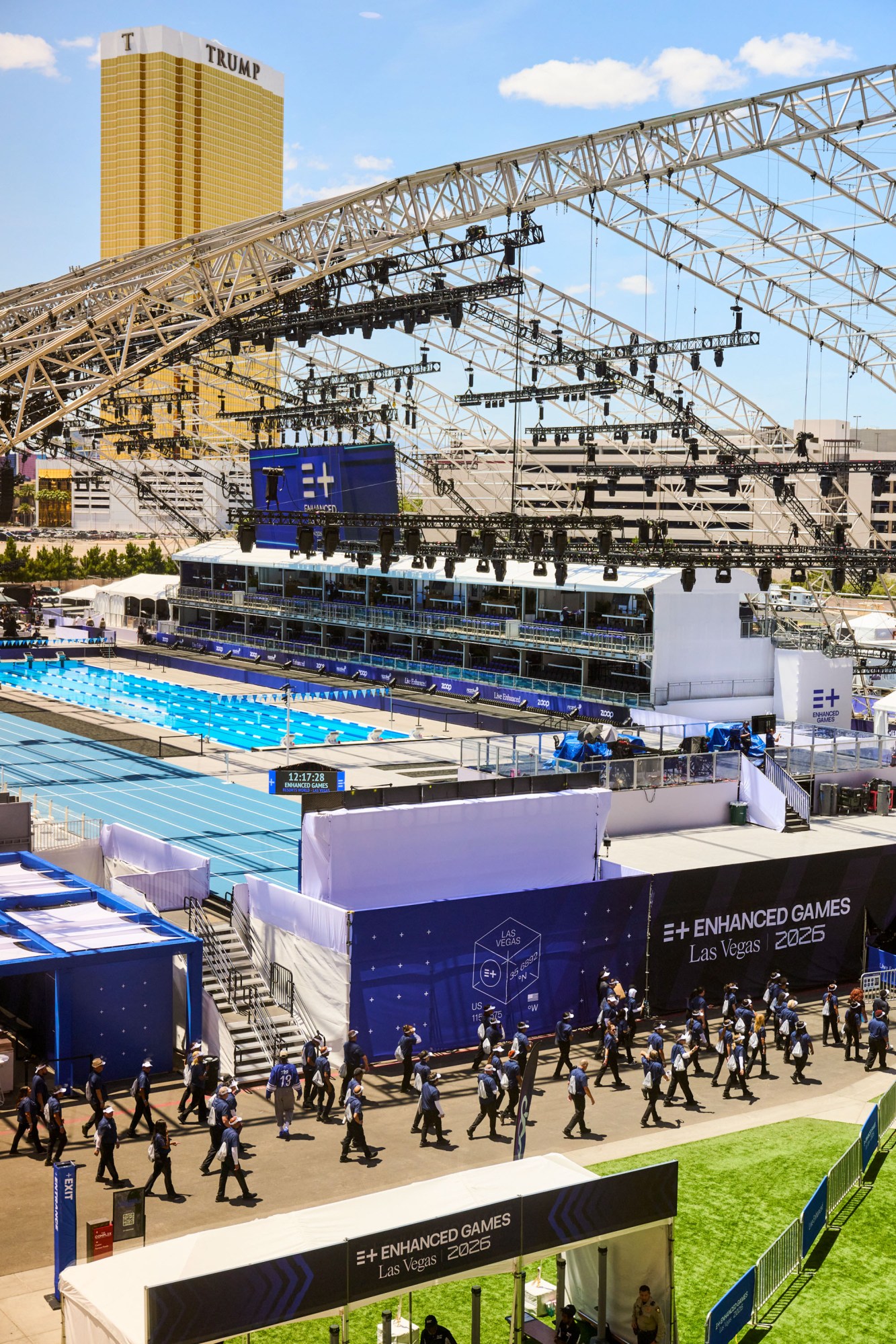
The open-air venue was compact and decked out in bright blue, with a six-lane, 100-meter track down one side, a four-lane Olympic-length swimming pool down the other, and a weightlifting platform and stage at the front. You could see the golden façade of the Trump Hotel looming in the background. The scene had all the trappings of an NFL game, with the too-loud music and crowd work on the big screen—a “flex cam”  gave the well-muscled an excuse to unveil their biceps. Between events, adverts flashed up for the line of performance products sold by Enhanced, the company behind the event: injectable peptides that supposedly support cellular energy and skin elasticity, daily supplement powders with names like “Stronger” and “Longer.”
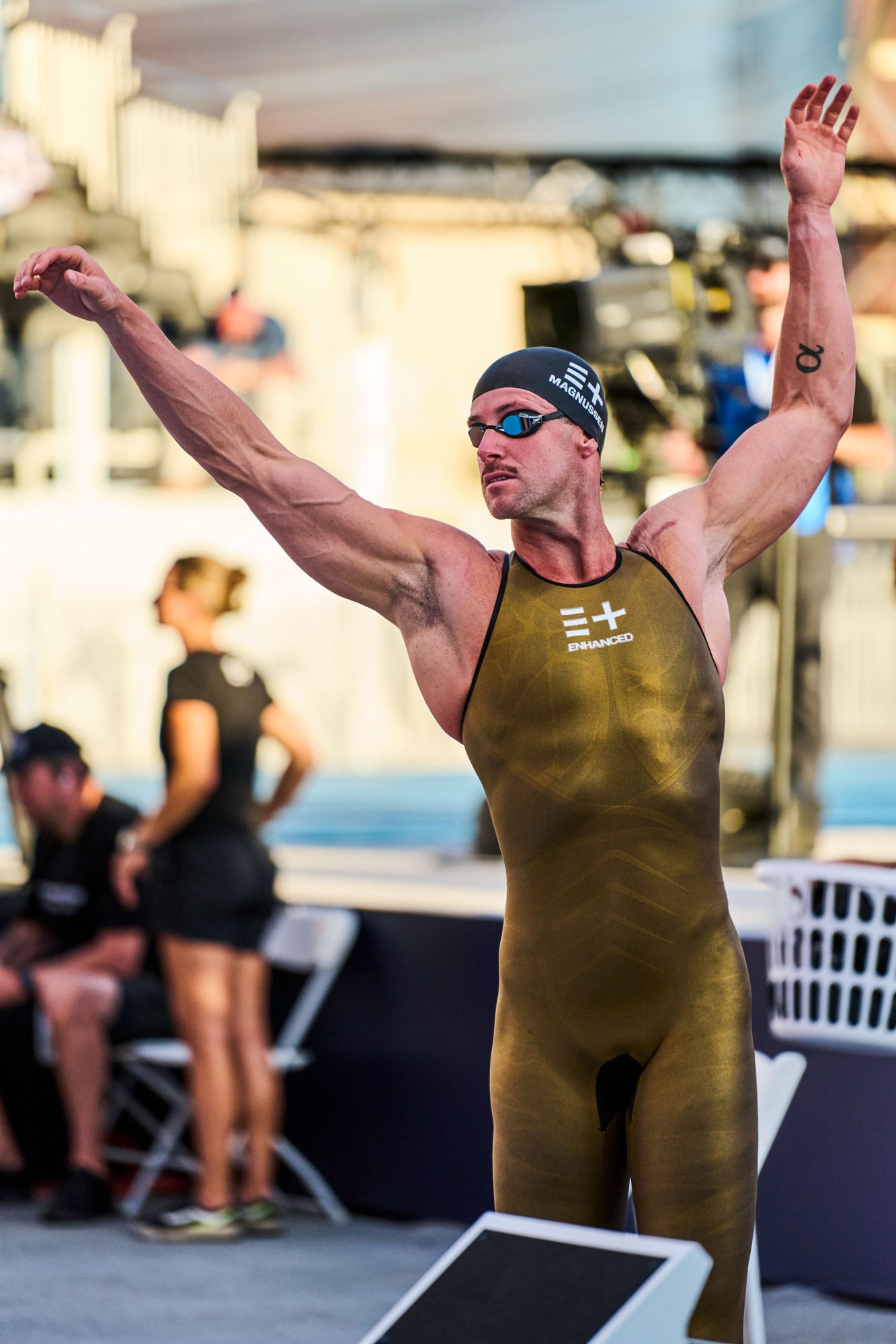
James Magnussen, wearing his race goggles and cap, stretches his arms above him

SAEED RAHBARAN
the Enhanced Games stadium from an elevated viewing angle

SAEED RAHBARAN

Australian swimmer James Magnussen was the first athlete to sign up with Enhanced but hasn’t broken any world records. He finished last in his two events in Las Vegas.

The day started with the weightlifters, under the blazing sun. But by 4 p.m., only one of them had even attempted a world-record lift. Two had pulled out injured. Some athletes were competing without taking drugs because of the money on offer, and as the competition went on, they had the better of their enhanced peers: Hunter Amstrong, a 25-year-old American swimmer and triple Olympic medalist, won the backstroke by more than a second. In the men’s 100-meter sprint, the non-enhanced US athlete Fred Kerley romped to an easy victory. “Man, they gotta do better than that,” he said of his doped opponents in his post-race interview. “They need to train a little harder, get on that shit a little bit more.”

At the bar, bodybuilders swapped before-and-after pictures and talked about their stacks, and VCs and finance bros traded LinkedIn details. Lukas Lakutsin, a 6-foot-10, 354-pound Russian bodybuilder who was milling around the entrance to the VIP suites, initially told me he didn’t use any performance-enhancing drugs. Except testosterone replacement therapy, of course. But he didn’t think that really counted. “I’m almost 34 years old,” he said. “I need to do this to stay strong.”
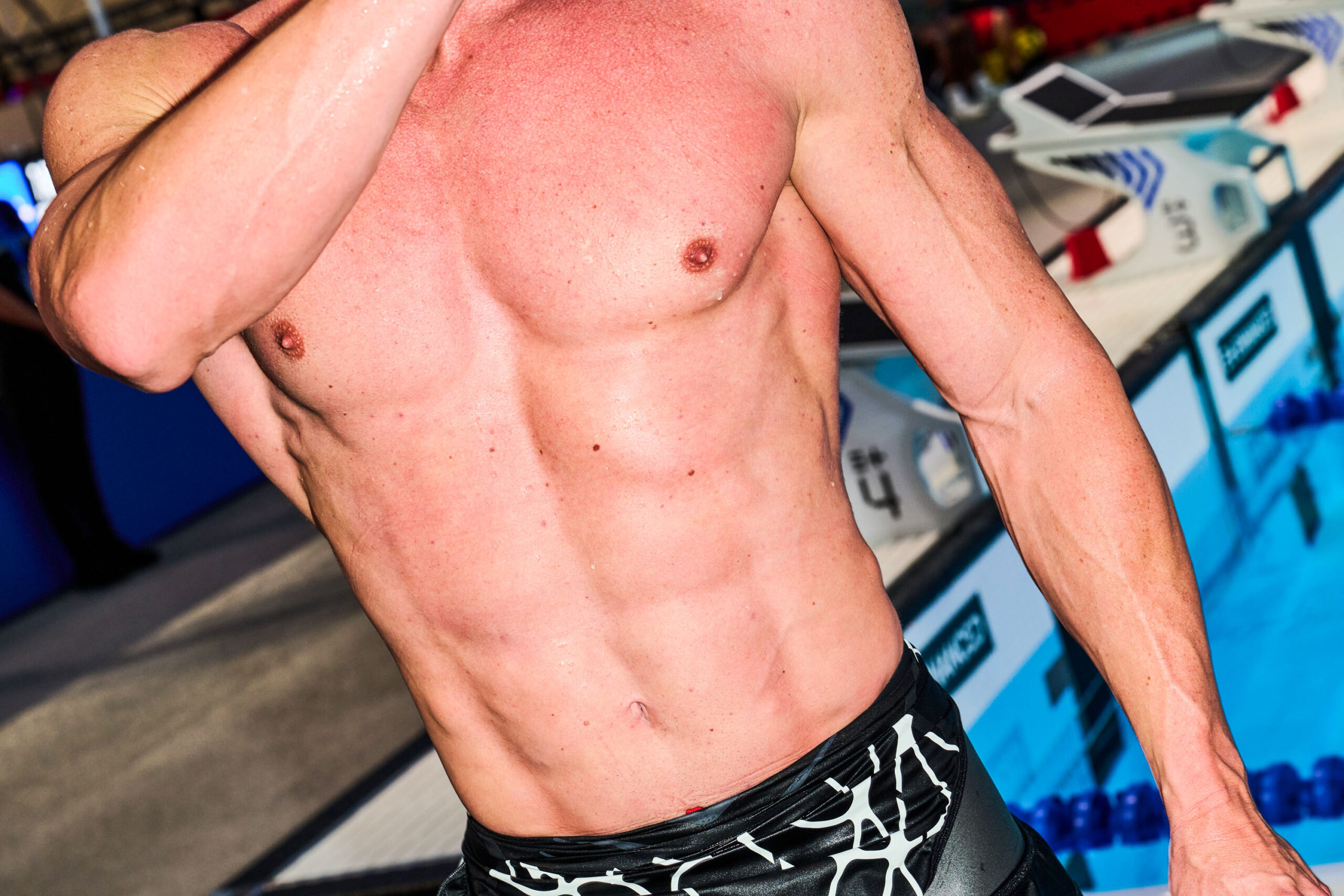
close up shot of a man's muscled chest
The “protocol” for Enhanced athletes only includes FDA-approved drugs. While Enhanced’s team might make recommendations, individuals have the final say on what they want to take, if anything.
SAEED RAHBARAN

Jeremy Sigal, an influencer and author, wore a USA tank top that showed off hugely muscled arms adorned with prison tattoos. He told me he was proudly natural, in both his health and his personal life. “I’ve got an exceptional credit score,” he said. He has written 12 books on marketing and leadership. Later, I looked up his most recent book online. It’s called Simp to Pimp: 10 Steps to Fix Why She’s Not Banging You and lists AI as a coauthor.

What I saw in Las Vegas probably wasn’t the future of sport. But it was a perfect encapsulation of our present moment, as Silicon Valley biohackers, alt-right looksmaxxers, Make America Healthy Again boosters, and longevity-obsessed scientists all vie to remake reality in their own image. For them, the Enhanced Games offered a glimpse of a future where medical advances push the human race to new heights, and where they never have to get old. 

I’ve tracked Enhanced’s journey from a crazy idea scribbled on a napkin to a public company valued at $1.2 billion. Behind the scenes, there have been power struggles, life-changing victories, and moments of total farce. As I recently, finally, watched the games unfold, two questions bounced around my head: Were they right? And what does that mean for the rest of us?


In December 2022, the Australian entrepreneur Aron D’Souza flew to Miami to spend New Year’s Eve with his friend and mentor Peter Thiel. A decade earlier, D’Souza had helped Thiel orchestrate the lawsuit that bankrupted Gawker—a stunning revenge against the gossipy New York media blog that had outed him as gay. Now he was armed with a disruptive idea that he thought Thiel, the billionaire cofounder of PayPal and Palantir, would love. It was inspired by the buff bodies he’d been seeing at the gym, highlighting a disconnect between a workout culture where the use of steroids was an open secret and a sporting establishment where it was, at least on paper, an inviolable taboo.

His initial pitch was provocative and confrontational: a grand sporting event to rival the Olympic Games, where competitors could take any substance they wanted—their body, their choice. The first time I met D’Souza, in the spring of 2024, he had founded the company and attracted some initial investment but seemed obsessed with taking on the fat cats at the International Olympic Committee and reinventing sports (even though he didn’t seem to be a huge sports fan himself). On Enhanced’s Discord server, I found a folder full of memes with names like IOC Clowns.jpg. The whole thing felt very unserious.

That would change. 

D’Souza told me that Thiel had previously introduced him to Christian Angermayer, a German biotech billionaire, who would come onboard at Enhanced. He’s funded clinical trials of psychedelics through his company Atai Life Sciences and is helping bring them into the medical mainstream as a treatment for depression and anxiety. Angermayer says he spotted an opportunity to do the same thing for steroids. What he really wants is to redefine medicine, he told me. Its focus has already changed from treating disease to trying to prevent it; actively enhancing people’s health, he says, is just the next logical step.

By early 2024, Angermayer had brought his own people into key roles. The team included Michael Sagner, an anti-aging expert and private doctor who works with many of Hollywood’s leading men, and Max Martin, who has the jawline and cheekbones of an Instagram looksmaxxing influencer and the boundless enthusiasm of a puppy. (He started his own enhancement program a few years ago, when he was just 27.) Sagner would head up Enhanced’s medical commission, making sure the games were safe for the athletes. It was Martin’s job to make sure they actually happened. 
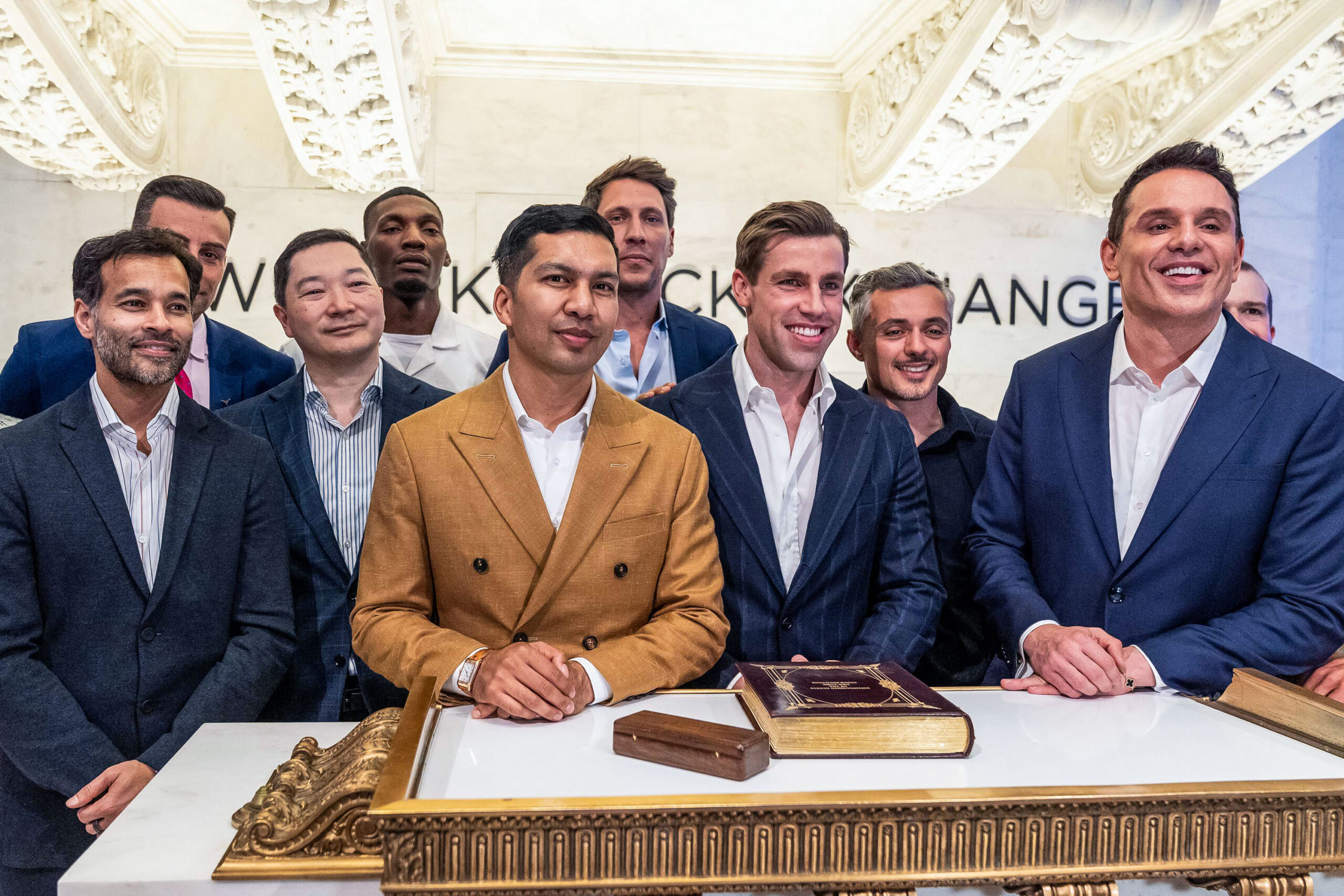
a group of men in business suits posing at the desk of the NYSE
In early May, Enhanced began trading on the New York Stock Exchange with an initial value of $1.2 billion. Christian Angermayer stands far right with Max Martin to his left (front row), and Aron D’Souza next to him.
LEV RADIN/ZUMA PRESS WIRE VIA ALAMY

Tensions sparked as D’Souza’s freewheeling style clashed with the more sensible image that Sagner and others were now keen to present. “It was not just his personality and his abrasive way of talking,” Sagner told me recently. “Even when he was briefed on a scientific fact, he would just completely ignore it and say something outrageous.”

But the more outrageous D’Souza got, the more attention his idea received. In February 2024, James Magnussen, a retired Australian swimmer, became the organization’s first official athlete, and Enhanced promised to pay a million dollars to him, or anyone else, who could break the world record in the 50-meter freestyle.

The notion of a “steroid olympics,” as many have dubbed the Enhanced Games, had been kicking around for decades—for instance, in a Wired article from the early 2000s and an SNL sketch from the 1980s. Two things helped finally make the Enhanced Games a reality. First, in November 2024, Donald Trump was again elected president of the United States. The Biden administration had been actively hostile to the games, but the founders saw a more receptive political environment in Trump world. Not long after the election, Enhanced announced a new tranche of funding led by 1789 Capital, a venture capital firm whose partners include Donald Trump Jr.

And second, in February 2025, an enhanced swimmer finished the 50-meter freestyle faster than anyone in human history. It wasn’t Magnussen, though. He had been injecting himself with testosterone to grow muscle, plus a cocktail of peptides that aimed to speed up recovery—but his journey hadn’t quite worked the way he’d planned.

A combination of reputational issues (no pools wanted to host his training) and physical complications (the regimen did help him get stronger, but he packed on so much muscle that it slowed him down in the water) meant he watched from the sidelines as the Bulgarian-Greek swimmer Kristian Gkolomeev—who had finished fifth at the Paris Olympics in 2024—came in two-hundredths of a second under the record and won a million-dollar payout from Enhanced. The idea has always been that breaking records would effectively prove the legitimacy of this enhancement project: Look what we can do now

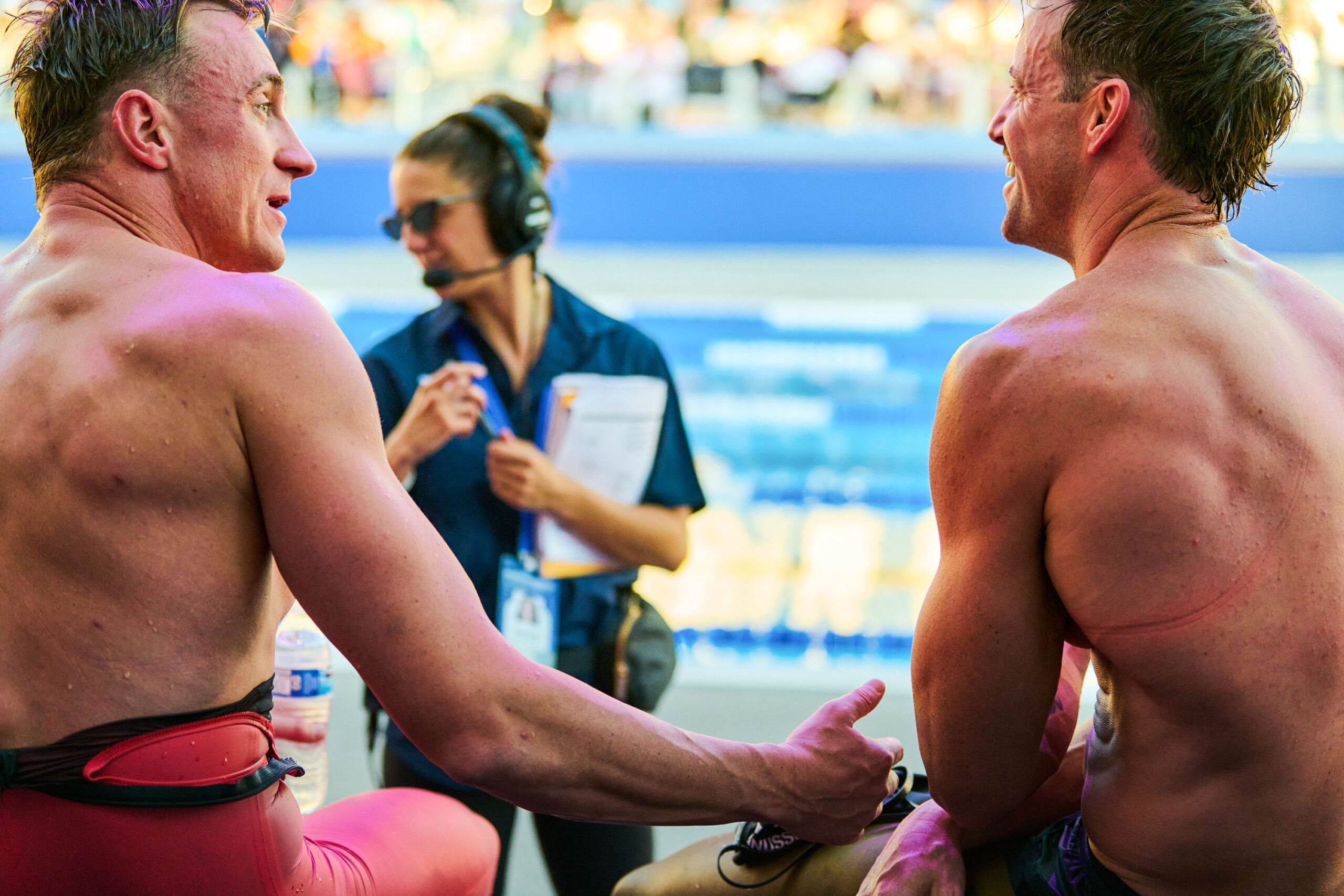
Over the shoulders of Shane Ryan (left) and James Magnussen (right) as they sit and talk poolside
Enhanced swimmers like Magnussen (right) wore supersuits to compete, though they’ve been banned by World Aquatics since 2010.
SAEED RAHBARAN

SAEED RAHBARAN

Gkolomeev, though, had a different motivation for participating: “One successful year in the Enhanced Games and I could make as much as I would in almost 10 careers,” he told me not long after setting the new record (notably, wearing a kind of “supersuit” that’s been banned by World Aquatics since 2010). Enhanced was paying its athletes a regular salary, on top of any potential bonus. And he had a young family to support and feared that the four-year stretch to the next Olympics would be long and precarious. 

In May 2025, with a world record in the bag and a friendly administration in the White House, Enhanced was ready to announce its first games: They’d take place in May 2026 at Resorts World in Las Vegas. 

At the same time, D’Souza made another big reveal: Enhanced Performance Products, a line of supplements available for a monthly subscription. The Enhanced Games now seemed less like a sporting event and more like a loss leader for selling testosterone injections, GLP-1s, or a range of peptides that are claimed, with little scientific evidence, to improve sleep or skin elasticity. Perhaps it was all a brilliantly executed marketing stunt.

“The games themselves now seem almost secondary to what appears to be an online marketplace for hormones, peptides, and other performance-enhancing compounds,” says Astrid Kristine Bjørnebekk, a steroids expert at Oslo University Hospital. “From my perspective, this significantly changes the nature of the project. It is one thing to organize a closed sporting event built around controversial principles, but openly marketing and commercializing substances such as testosterone, hGH, GLP-1 drugs, peptides, and other pharmacological compounds is something else entirely.”


As the games approached, more athletes joined. Some were genuinely elite. The US sprinter Kerley—who is serving a two-year ban for missing three drug tests—had won silver in the 100 meters in the Tokyo Olympics and a bronze in Paris. Ben Proud, a British swimmer, had won silver at the Paris Olympics and dozens of medals at world and European championships and the Commonwealth Games. He had been mulling over joining the Enhanced Games ever since the idea first emerged, but the tipping point seemed to come when Gkolomeev’s record was announced. 

Some participants, like Magnussen and another swimmer, Megan Romano, had been tempted out of retirement. Romano hadn’t swum competitively for almost a decade. Others were at the start of their careers but ready to cash in their chips and bid goodbye to Olympic dreams for a potential six-figure payday. The $1 million payouts were reserved for records in the two flagship events—the 50-meter freestyle and the 100-meter sprint—but winning any other event would mean a prize of $250,000, with an additional $250,000 bonus for setting a world record.

Athletes would get paid even if they just showed up and finished last—as much as $50,000. This is all on top of the salaries that stretched into six figures in some cases, making the payout from the games more than many athletes make in a year.

Sport’s governing bodies reacted to each new athlete announcement with fury. World Aquatics threatened to ban for life any athlete who participated in the games, even if they didn’t take any drugs. Enhanced responded with an $800 million antitrust lawsuit against the global swimming organization, the World Anti-Doping Agency, and USA Swimming, alleging misuse of monopoly power.

Emmanuel Matadi (left) and Fred Kerley (right) running on the track
American Fred Kerley (right) won the 100-meter sprint without performance enhancing drugs.
SAEED RAHBARAN

In November 2025, a court in New York dismissed the case. Three days later, D’Souza, the mind behind the entire project, was out. A notice on Enhanced’s website said he had “transitioned out of the company’s day-to-day operations.” Martin would take over as CEO. “The investors basically said we need someone a bit more serious,” Sagner told me. In conversations, execs at Enhanced played down any suggestion of a feud—D’Souza was simply the ideas man, with little interest in the day-to-day dreariness of actually running a company. (Enhanced spokesperson Chris Jones wrote in a statement that “there is no tension between Aron and Enhanced that I’m aware of.” D’Souza did not respond to a request for comment.)

I got the sense that Enhanced, in its new iteration as a pharmaceutical subscription company, was almost embarrassed by the games. When I visited enhanced.com a couple of months before the event, they had been relegated to a sub-heading on the home page. D’Souza’s showmanship had helped get attention for what was becoming a run-of-the-mill telehealth business like Hims & Hers—albeit one well timed to take advantage of a shifting regulatory landscape around peptides, which Robert F. Kennedy Jr., the US secretary of health and human services, has been pushing the FDA to approve despite a lack of evidence that they’re actually effective. 

Sagner is still loosely involved with Enhanced, but he says the medical commission was not consulted before it launched its line of performance products. (Jones did not respond to a question regarding this claim.) Sagner is scathing about what he sees as the “hype” around peptides. “I can tell you already, peptides do nothing,” he says—with the exception of human growth hormone and GLP-1. “The peptides that people use, black-market peptides that they buy online—they do nothing. We have tested them; 80% of them contain nothing. It’s saline solution, salt water, and some of them are contaminated.”


At the end of January 2026, a group of around 40 swimmers, weightlifters, and sprinters arrived in Abu Dhabi to start their individualized enhancement “protocol,” as Enhanced calls it. Officially, they would be taking part in a clinical trial, pending approval by the Abu Dhabi government and overseen by Guido Pieles, a Qatar-based cardiologist who has taken over the reins of Enhanced’s medical commission from Sagner.
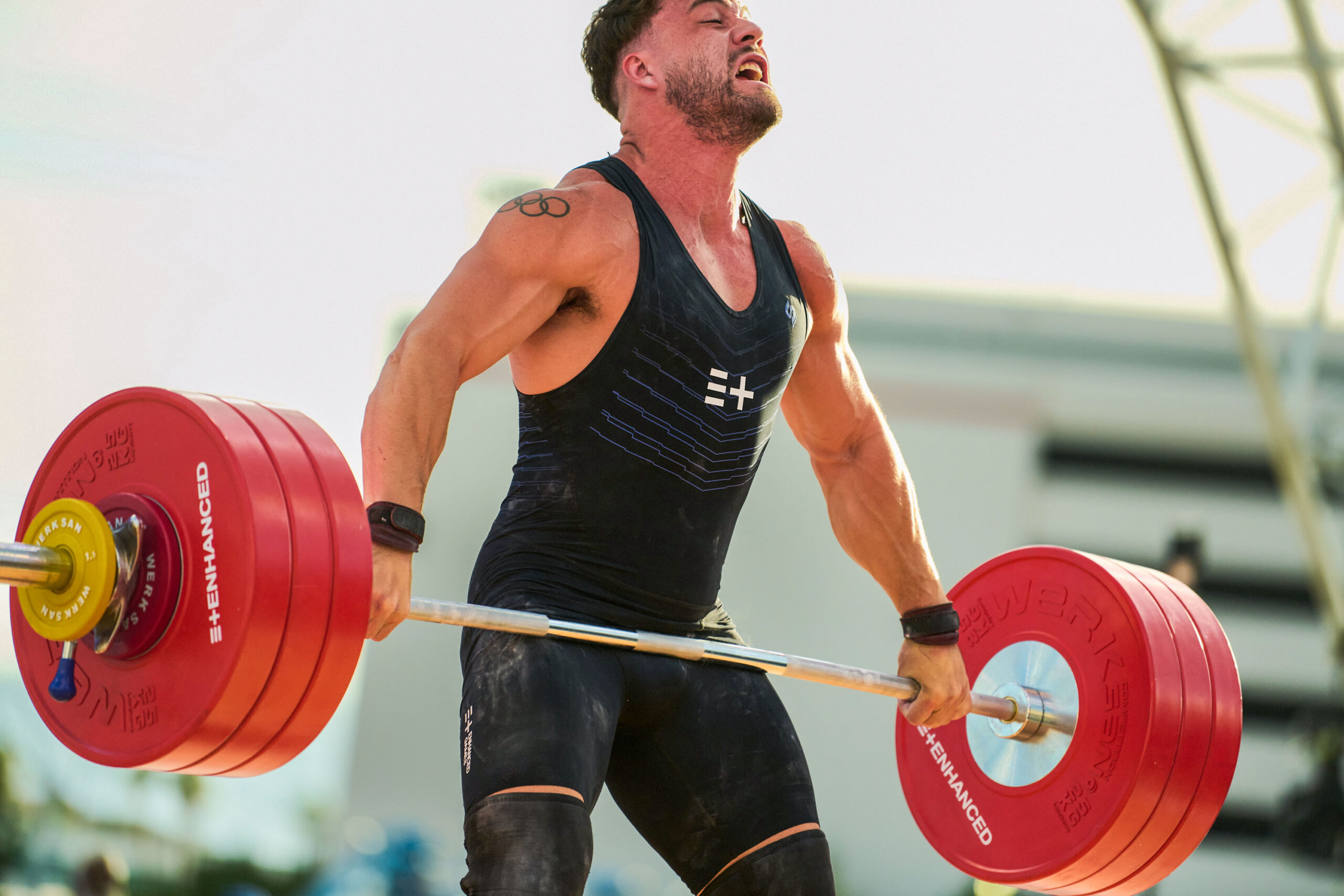
Canadian weightlifter Boady Santavy strains to lift a barbell which is currently level with his hips
The day started with the weightlifters, but by late afternoon, only one of them had even attempted a world-record lift.
SAEED RAHBARAN

They would be allowed to choose only from a menu  of specific FDA-approved drugs. Pieles broke them down into five categories: testosterone variants and growth hormones, which can both boost muscle mass; metabolic modulators that can tweak how the body burns fat; stimulants like Adderall to improve focus; and EPO, which can increase the amount of oxygen the blood is able to carry. While Enhanced’s team might recommend particular things, the athletes would have the final say on what they wanted to take, if anything. (As Oslo University’s Bjørnebekk points out, FDA approval “does not mean the substances are inherently safe, particularly not when used for enhancement purposes.”) 

There would be regular blood tests, heart scans, and brain scans and access to the best training facilities money could buy. Pieles and others say the clinical trial will help inform the line of supplements Enhanced is offering consumers, but there’s actually very little overlap between the drugs the athletes were taking and the substances the company is currently selling.  

Not long after they arrived in the Middle East, the athletes were awakened by the sound of explosions at a military base near their hotel. The US and Israel had struck Iran, and the Iranian regime was responding by peppering the region with missiles. “It wasn’t a pleasant situation,” says Andrii Govorov, the world record holder in the 50-meter butterfly, who a year earlier had become one of the first swimmers to join Enhanced. Govorov had some experience in these matters—back in Ukraine, he’d had a business selling cars that helped fund his swimming career, but he’d lost it after the Russian invasion.
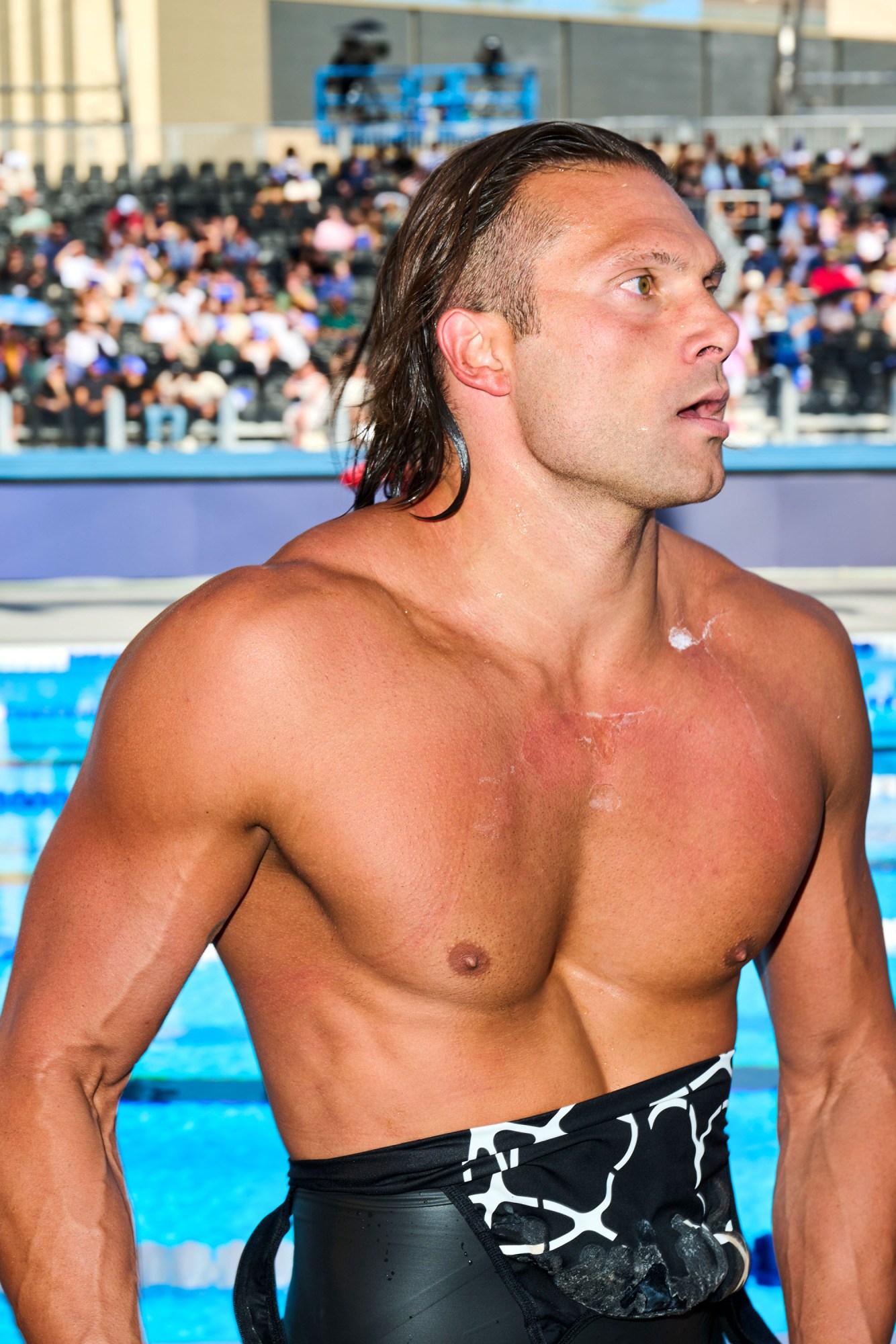
Cody Miller standing by the pool in profile

SAEED RAHBARAN
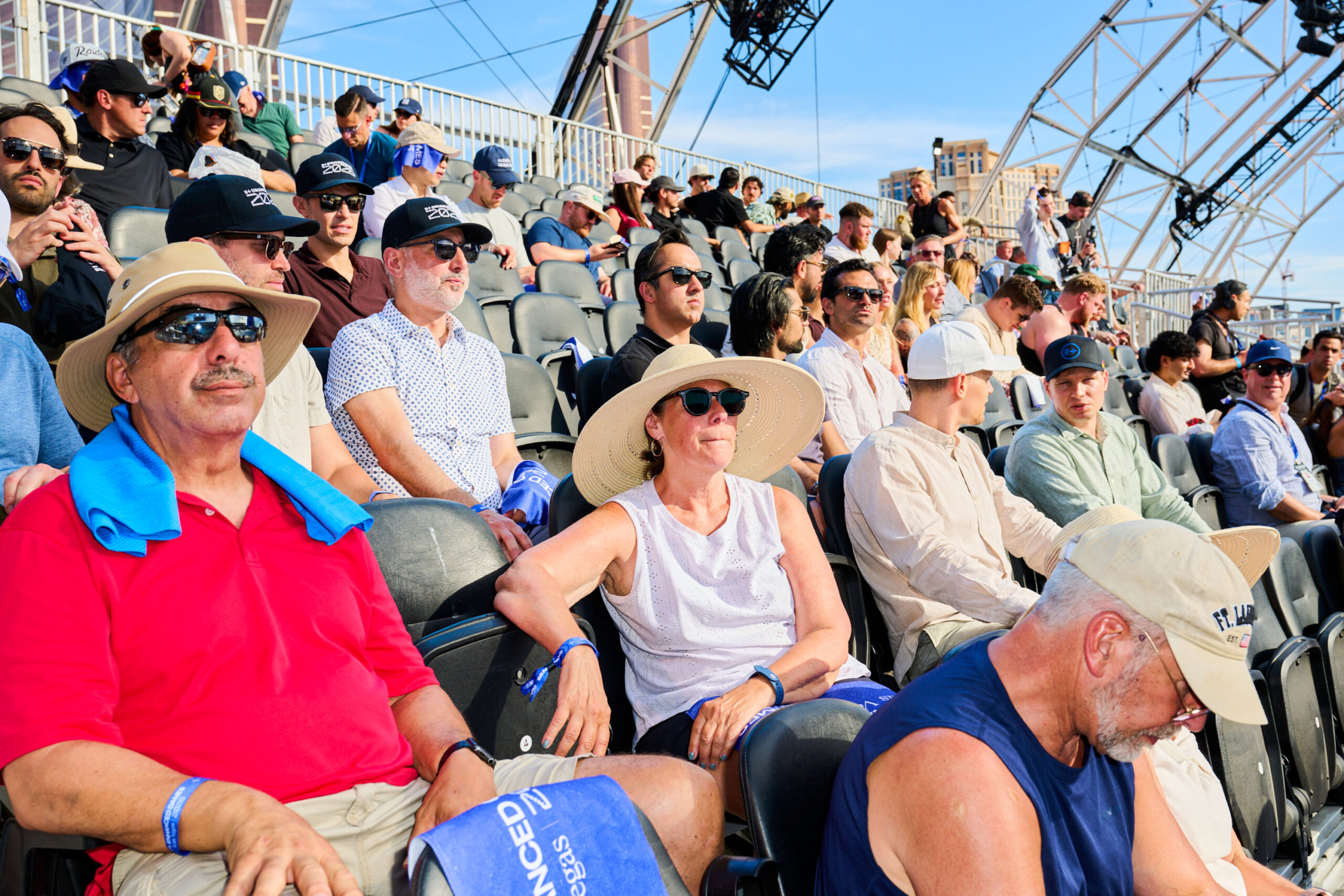
attendees sitting in the bleachers

SAEED RAHBARAN
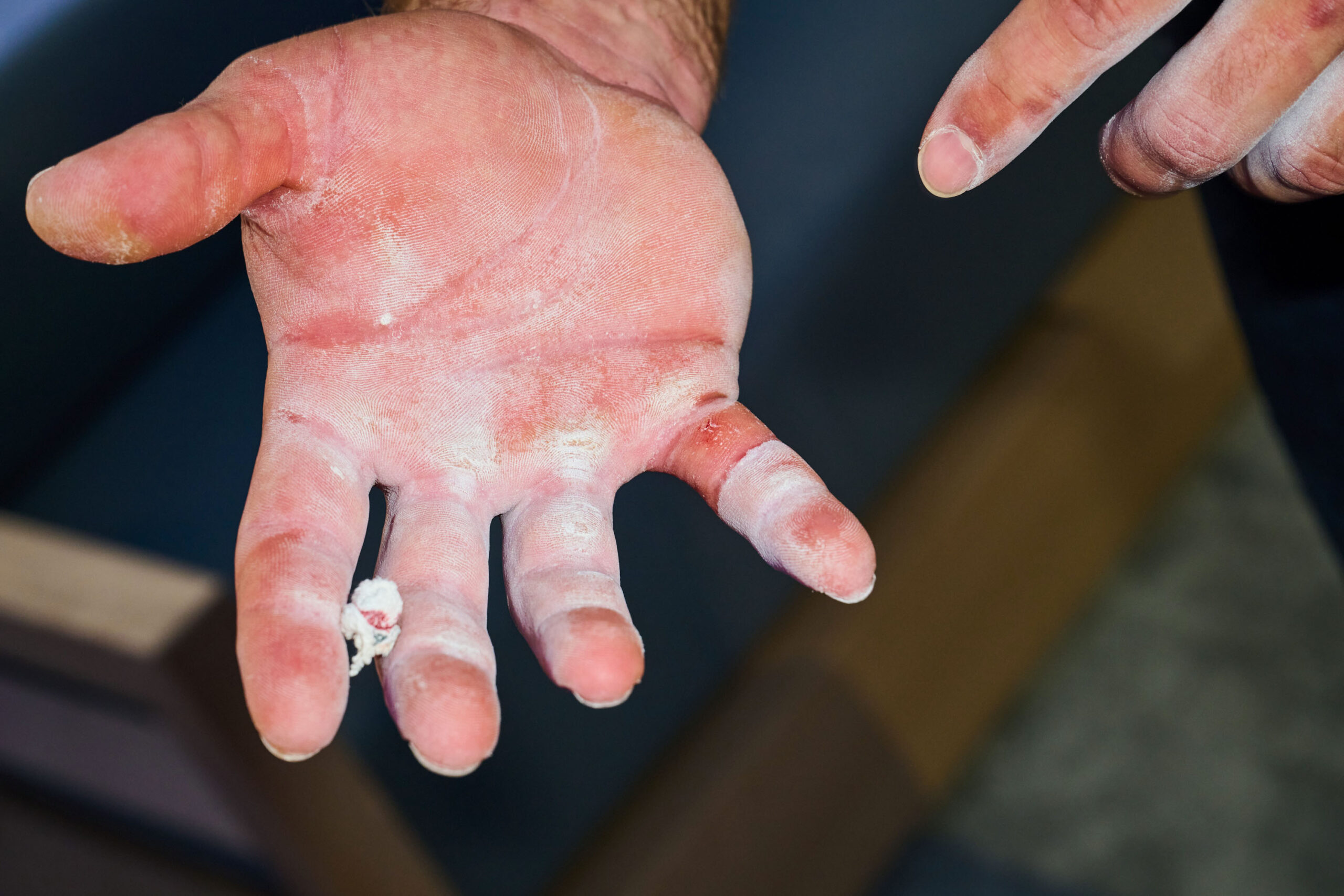
close-up of the calloused and powdered hands of a weightlifter with remnants and marks left by the tape.

SAEED RAHBARAN

Swimming, sprinting, and weightlifting were the focus of the first Enhanced Games but in many ways the sports were the sideshow.

The conflict exacerbated delays in getting approval for the clinical trial and sourcing the drugs, and as a result, what was supposed to be a 12-week enhancement protocol got cut down to eight weeks. The athletes didn’t actually start taking the drugs until toward the end of March. For those who had always been clean, that represented the irreversible crossing of a line. “The first injection was very emotional, very tricky to navigate,” says Proud. “For me, that was the day I went from the Ben Proud that I always knew to a new person.”

Proud was joined in the enhancement program by his girlfriend, Emily Barclay, who had swum at college level without ever appearing at a major international event; she was working as a swimming teacher at a school in England. After that first injection, they left Abu Dhabi and spent a few days in Dubai as they reckoned with what they had done. “I just couldn’t be around the team,” Proud says. “I wanted to be by myself and feel those feelings, because it is a big deal to make that step, and I felt it.”

Those feelings were soon forgotten, though, as the drugs kicked in. Proud says he had incredible energy, and a drive to train that he hadn’t experienced before. Shania Collins, an American sprinter, says she had “increased strength, increased recovery, and increased mental clarity at practice.” Sagner and several athletes admitted there were some side effects: acne and some swelling around the joints; unwanted hair growth for the women, unwanted hair loss for the men.
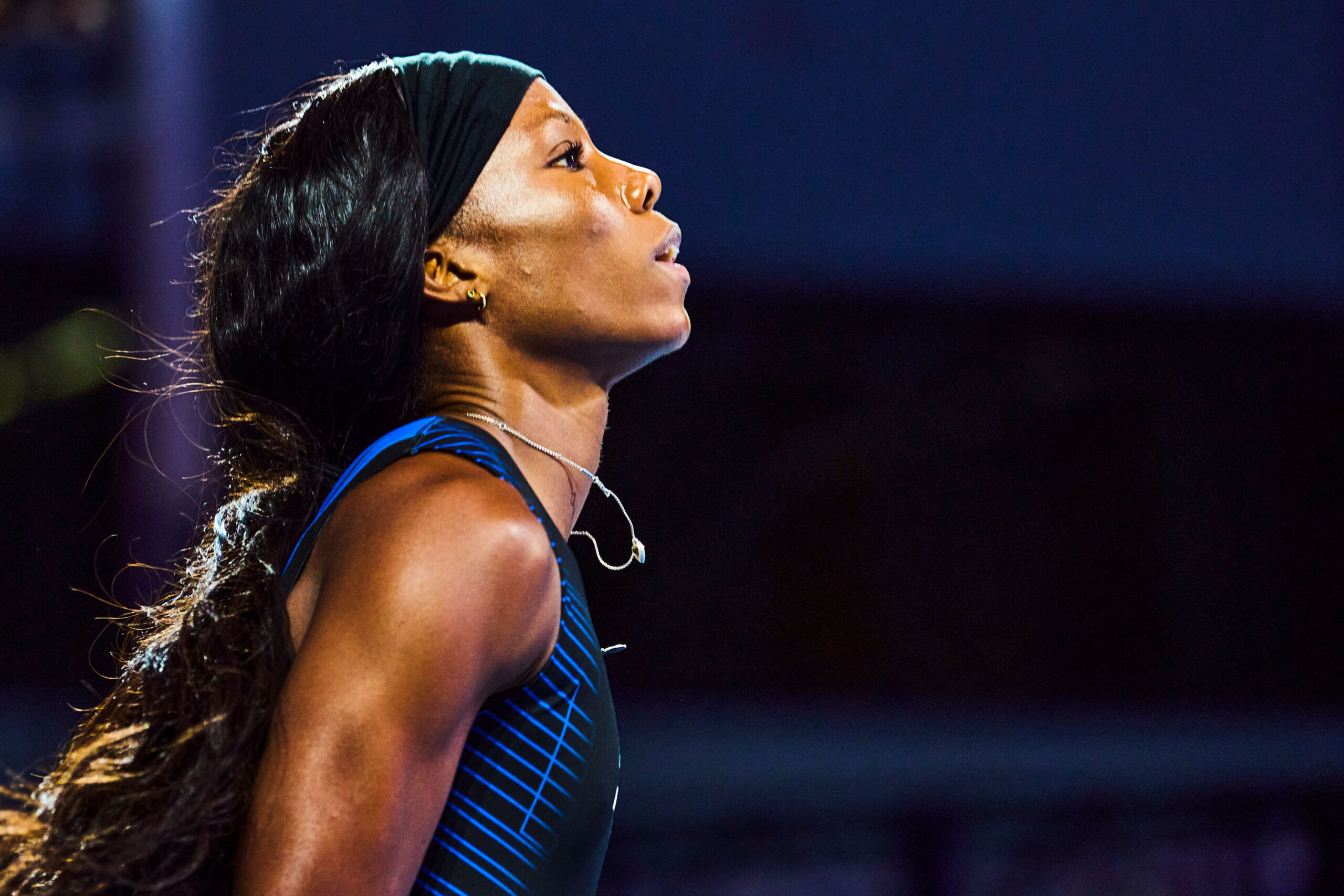
close-up of runner Tristan Evelyn in profile
Like Kerley, sprinter Tristan Evelyn from Barbados competed without taking any drugs. She too won big in Vegas, besting her Enhanced peers in two events.
SAEED RAHBARAN

One thing the athletes wouldn’t talk about, though, is what drugs they were actually taking. They all had the same reason: not wanting to encourage copycats who might take enhancements without a doctor on hand to tailor programs to their needs. 

The one exception was Thor Björnsson (testosterone, deca-durabolin, anastrozole, halotestin), a hulking Icelandic deadlifter and former World’s Strongest Man who played The Mountain on Game of Thrones. Björnsson first heard about the games on Joe Rogan’s podcast and was immediately interested. The rules for strongman competitions are somewhat less stringent than those for Olympic sports, though, and he actually had to reduce the number of substances he was taking to meet Enhanced’s FDA requirements.
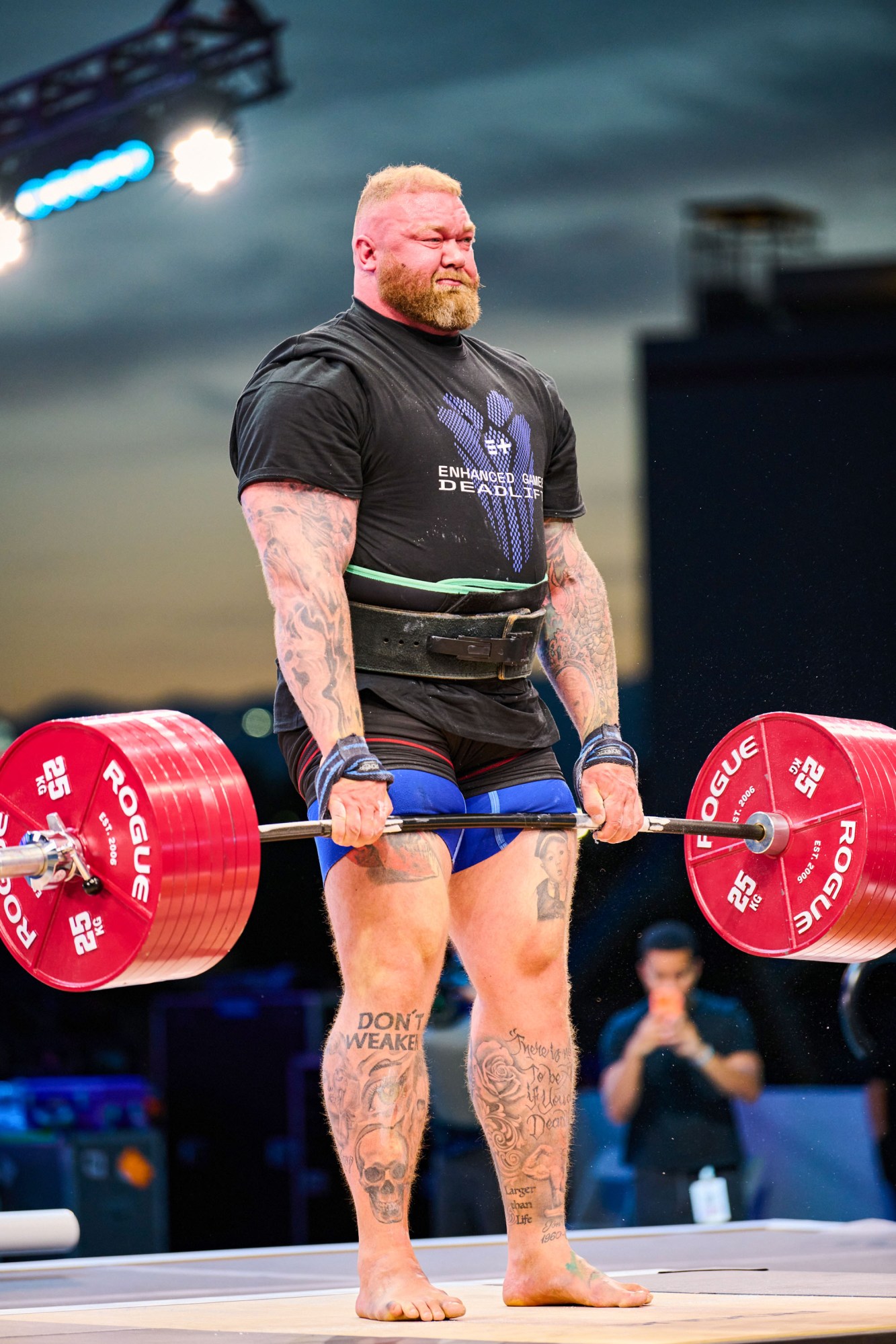
Hafþór Júlíus Björnsson holding a barbell at mid thigh
Icelandic strongman Thor Björnsson actually had to reduce the number of substances he was taking to meet Enhanced’s FDA requirements.
SAEED RAHBARAN

There is some debate over how much doping some of the athletes were actually doing. In a conversation last year, Gkolomeev told me he’d only really been “microdosing,” and he confirmed that his 2026 enhancement program was largely the same. Sagner says the doses the athletes were taking were a fraction of the amounts some Olympic athletes had been caught using in the past. I heard that a few athletes had decided not to take steroids or growth hormones and were only using modafinil, a narcolepsy medication that’s thought to improve focus.

The day before the games, I asked Angermayer what it would mean if clean athletes like Kerley and Armstrong won their events—what impact it would have on Enhanced’s business model of using sports as a showcase for its line of performance products if the people using those products didn’t actually win anything. “I know what you mean, but mostly our business model is headlines to drive attention,” he said. “Any debate is good for us.” 

In early May, Enhanced began trading on the New York Stock Exchange with an initial value of $1.2 billion.


That same week, it was finally go time. The athletes and coaches left Abu Dhabi and flew to Las Vegas, where they were put up in five-star luxury at the Conrad hotel inside Resorts World while they made their final preparations. 

When I got there a few weeks later, toward the end of May, I found it jarring to see these hulking presences walking around the casino in their Enhanced sportswear, weaving their way through packs of half-drunk tourists, with slot machines flashing in the background and cigarette smoke hanging in the air. I had expected the games to be a bigger deal within the city itself, but they were just one of a thousand things happening in Vegas that weekend—drowned out by a series of BTS shows at the football stadium, by the Golden Knights in the NHL playoffs, by No Doubt’s residency at the Sphere.

If this was a sporting earthquake, it was one whose tremors were mainly being felt online, where bodybuilding influencers livestreamed to their followers on Kick and Twitch, and where thousands watched on YouTube and Rumble. (D’Souza once told me he’d had “every major sports broadcaster” vying for the rights; in the end, Enhanced struck an exclusive streaming deal with Roku in the US.) 

A group of well-heeled guests in the VIP area face left to pose for a photographer
No tickets were sold, so the crowd was a mix of invited guests, investors, and influencers, some of whom had reportedly been flown in on a chartered jet.
SAEED RAHBARAN

On the morning of the games, Enhanced held a medical symposium that was supposed to provide a taste of the company’s long-term objectives. The first speaker was Bryan Johnson, the longevity-obsessed entrepreneur famous for plowing his personal fortune into wild attempts to reverse his aging: receiving transfusions of his teenage son’s plasma, measuring his nighttime erections, taking more than 100 supplement pills a day. He spends $2 million per year on all this, but he looked pale and vampiric as he delivered the slightly off-brand message that, really, the most important thing was getting a good night’s sleep: “You don’t need to chase IV infusions; you don’t need to chase crystals. You don’t really need to do much of anything.”

At 2 p.m., I took two escalators from the conference room down to the arena, where spectators were filtering in. Though it had cost $50 million, it had been constructed in just three and a half weeks, and it showed; on the media tour the previous day, there were still loose screws on the floor of the bleachers. 

There were a few thousand seats in an open grandstand down one side, and two rows of VIP suites on the other. No tickets were sold, so it was a strange mix of invited guests, investors, and influencers, some of whom had reportedly been flown in from Los Angeles on a chartered jet. The rapper Tyga was the biggest name to grace the “blue carpet,” although I did also spot Fabio James, a Michael Jackson look-alike who has had surgery to make the resemblance even stronger. Rumors swirled that Peter Thiel might show up; they proved unfounded.

looking up at a balcony of excited attendees including a person at center who is dressed to resemble Michael Jackson.
In attendance was Fabio James, a Michael Jackson look-alike who has had surgery to make the resemblance even stronger.
SAEED RAHBARAN

A few hours before the doors opened, journalists got a stern message from the organizers trying to bar us from interviewing guests. Still, I talked to a Cambridge professor who wanted to use Enhanced as a case study in innovation for his MBA students, a retired Brazilian swimmer with the Olympic rings tattooed on his forearm, and a biotech investor wearing an Enron hat. Proud’s family and friends were sheltered from the blazing sun in the shadow of the big screen. 

D’Souza was nowhere to be seen. Nor was he really mentioned at all—not during the introductory press conference, where Martin was introduced as the “founder of the Enhanced Games,” nor during the event itself, where the athletes showered praise on Angermayer and Martin. But the tens of millions D’Souza had banked from the stock listing likely softened any blow. Plus, he’s already moved on to his next provocative venture: an AI-powered arbitration platform designed to scrutinize the work of journalists on behalf of the rich and powerful.


As the sun set behind the hills, casting the arena in soft gold light, there were still no world records. That and the wins for clean athletes seemed to put the whole Enhanced project in jeopardy—the knives were already being sharpened online. I asked the organizers whether this threatened the legitimacy of the project. 

A wet Marius Kusch lays on the ground grimacing as though his eyes are stinging
German swimmer Marius Kusch was among the dozen or so athletes who hit personal bests in Vegas.
SAEED RAHBARAN

“Our response is that enhancements help athletes improve and, in some cases, break records. And yes, some non-enhanced athletes also won—because talent and ability also matter,” Enhanced’s Jones emailed last week. “Breaking world records is incredibly hard as the margin is infinitesimal, as we witnessed. Ignoring that 13 athletes some of whom 10 years later broke personal bests is disingenuous and selective reporting.” 

Megan Romano was one of them, swimming faster in the 50-meter freestyle at 35 than she had at 22. And Emily Barclay knocked two seconds off her fastest time in the 100-meter freestyle, coming in second in that event and winning the 50-meter freestyle; she went home with a check for $375,000. “No one’s ever heard of this girl,” said Enhanced swim coach Brett Hawke afterwards. “She’s retired; she’s a nobody. She comes out tonight and swims a time that would have got a bronze medal in Paris.” For all the talk of “superhumanity” and pushing the boundaries of performance, making a 35-year-old feel 22 again is probably the perfect marketing message for the products Enhanced wants to sell. 
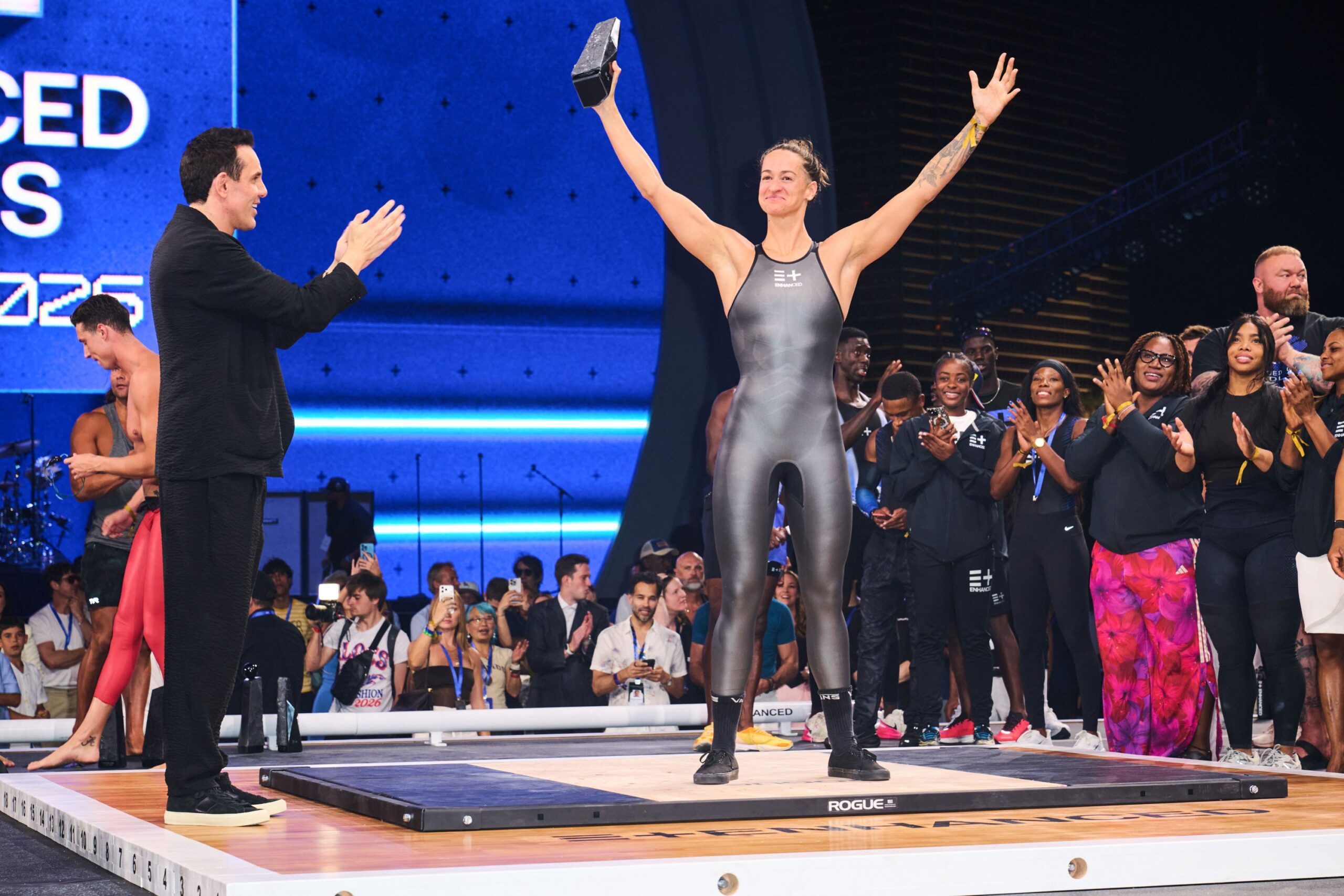
Megan Romano stands on the winners area, holding aloft her trophy while Christian Angermeyer and other Enhanced Game participants clap for her.
Angermayer cheers on swimmer Megan Romano, who swam faster in the 50-meter freestyle at 35 than she did at 22.
SAEED RAHBARAN

Enhanced’s executives say people should take enhancements only with medical supervision, but price could be a barrier to heeding that advice. The battery of health tests the company was giving its athletes in the run-up to the games cost $25,000 per athlete per month. The drugs themselves start at $75 a month and go up toward $200. While Jones says the products “are in line with industry price points,” there were almost certainly people watching who saw the drug-altered physiques of athletes like Gkolomeev or Magnussen and decided to find cheaper, less safe alternatives on unlicensed websites.

“Many of these substances require medical supervision and prescriptions, and several are associated with potentially serious long-term health consequences,” says Bjørnebekk. “Presenting them in this lifestyle-oriented and commercial format risks normalizing use while downplaying the medical risks and uncertainties.”
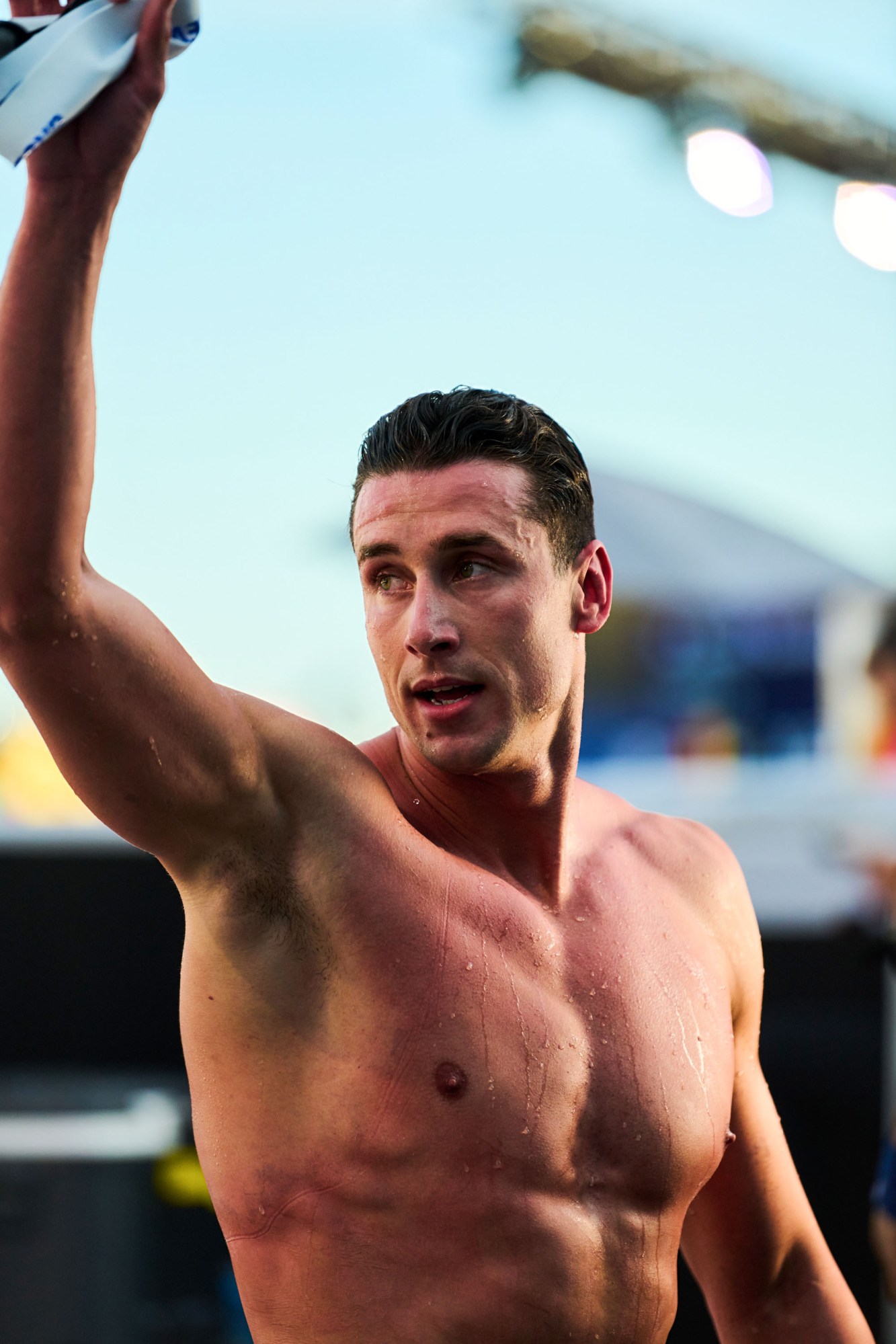
Kristian Gkolomeev with his arm raised
Although his world record-breaking time won’t stand as the official record, swimmer Kristian Gkolomeev will walk away from the Enhanced Games with a million dollar prize in the 50-meter freestyle.
SAEED RAHBARAN

Before the night was over,  Gkolomeev again had the chance to right the Enhanced ship. The final event of the night was the men’s 50-meter freestyle swim. His 2025 time had been surpassed by the Australian swimmer Cam McEvoy (without a supersuit) at the China Swimming Open a couple of months before, so he needed to lose another two-hundredths of a second to beat the new record of 20.88 seconds. 

Gkolomeev was wearing the same supersuit he’d used the previous year, and he’d shaved off his mustache for a little extra streamlining. But he messed up his start—doing four kicks instead of five—and was trailing Proud at the halfway mark. His long arms levered him forward, though, and he reached the wall in 20.81. The spectators were on their feet as “WORLD RECORD” flashed red on the big screen. Martin vaulted over the glass partition from the VIP suites, beaming, to embrace Gkolomeev. They had their record.

Or did they? Online, people shared screenshots from the video feed, purporting to show that the clock had stopped before Gkolomeev’s hand touched the pressure sensor at the end of the pool. An Enhanced spokesperson gave a statement to the Guardian dismissing this as “completely unfounded internet drivel.” But hey—live by the sword, die by the sword. It’s quite possible Gkolomeev didn’t care. He had another million in the bank. 

It remains to be seen if it’ll work out so well for the other athletes. Enhanced organizers recently announced a prize of $10 million for anyone who can break Usain Bolt’s 100-meter world record in 2027. They are adamant that the games will happen again next year. If they don’t, dozens of sporting careers will be over, and the athletes will join the long list of victims of VC-backed disruption.

My personal prediction is that Enhanced will pivot away from the risk and uncertainty of a flagship event—the company’s valuation plunged by almost $800 million when markets opened after what was perceived as an underwhelming set of results in Vegas. I expect you’ll see individual stunts and challenges, tightly controlled and filmed for virality and probably featuring your favorite YouTubers—think Björnsson bench-pressing Jake Paul.

D’Souza’s initial idea has served its purpose by capturing the world’s attention. But that won’t necessarily translate into success either. Though the company has had plenty of hype over the last 12 months, SEC filings published as part of its stock exchange listing reveal that it generated only $2,755 in revenue from its enhancements business in the first three months of 2026. Would what happened in Vegas be enough to juice sales?
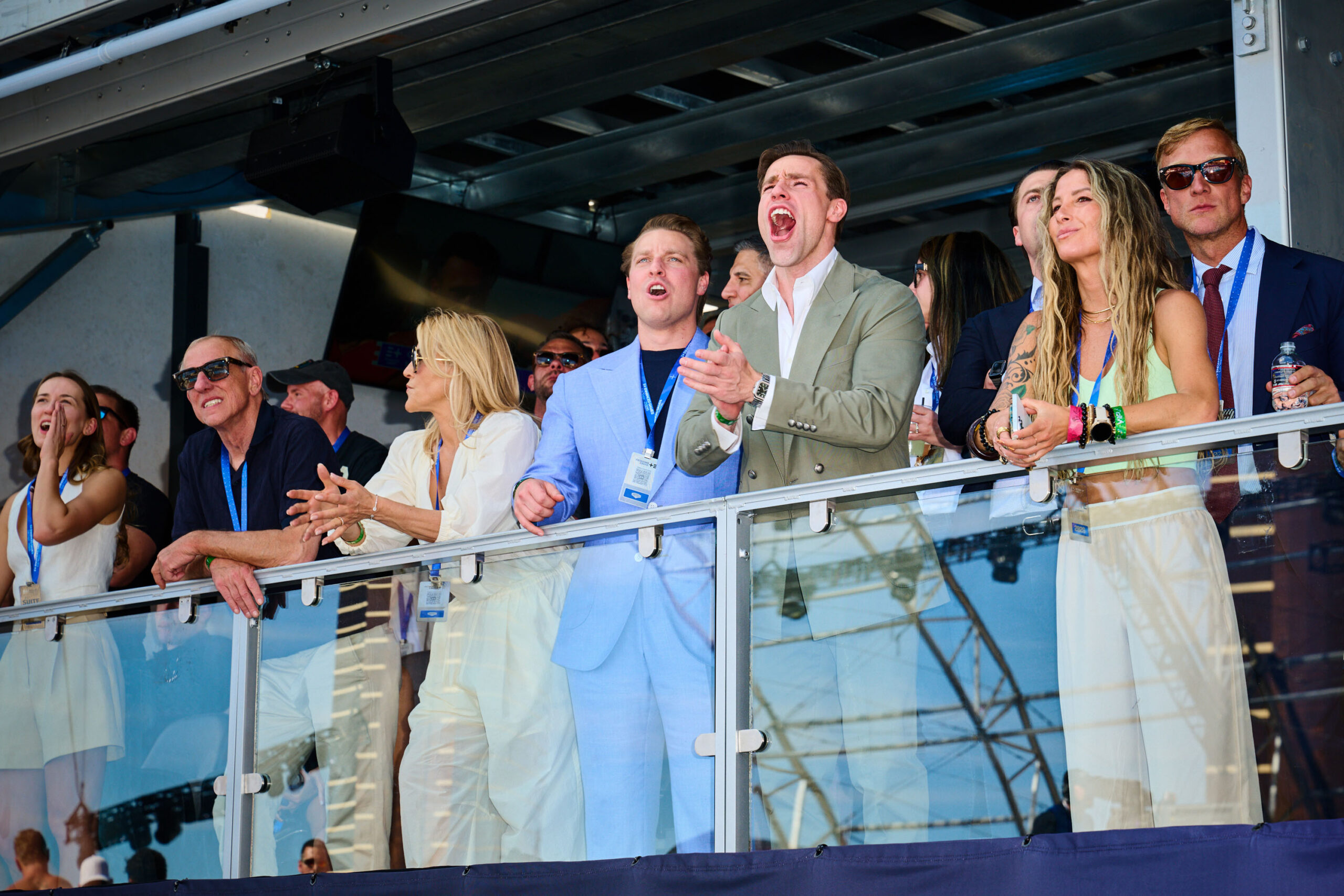
Max Martin with his mouth open wide to cheer from the VIP stands
Martin, Enhanced’s CEO, cheers on athletes from the stands. Company leadership insists the competition will take place again next year.
SAEED RAHBARAN

As the athletes gathered on the stage to receive their prizes, Martin took the microphone and addressed the crowd. “Enhanced is culture,” he said. “We are at the pulse of where the world is going.” On this, at least, he’s probably right. Testosterone replacement therapy is rapidly moving into the mainstream, and while the science may still not be there on peptides, they have certainly exploded in popularity in the two years since Enhanced launched. And there are undoubtedly more substances yet to be discovered that will promise to improve people’s lives, or at least hold their appearance in stasis. The enhanced age is upon us, whether we want it or not. 

As the fireworks went off and the Killers closed out the event with “When You Were Young” (“Congratulations to … whoever deserves it,” said frontman Brandon Flowers), I wondered what that might mean for us mere mortals. Invoking Hunter S. Thompson’s Fear and Loathing in Las Vegas in a story about drugs and Las Vegas may be a cliché, but it struck me that fear played a big part in all of this. Fear of missing out. Fear of getting old. Fear of never making a dime on your life’s pursuit. Fear of waking up one morning and seeing your flabby, sunken face in the mirror while everyone around you shines and grins and thrives with white-toothed, alien smiles.
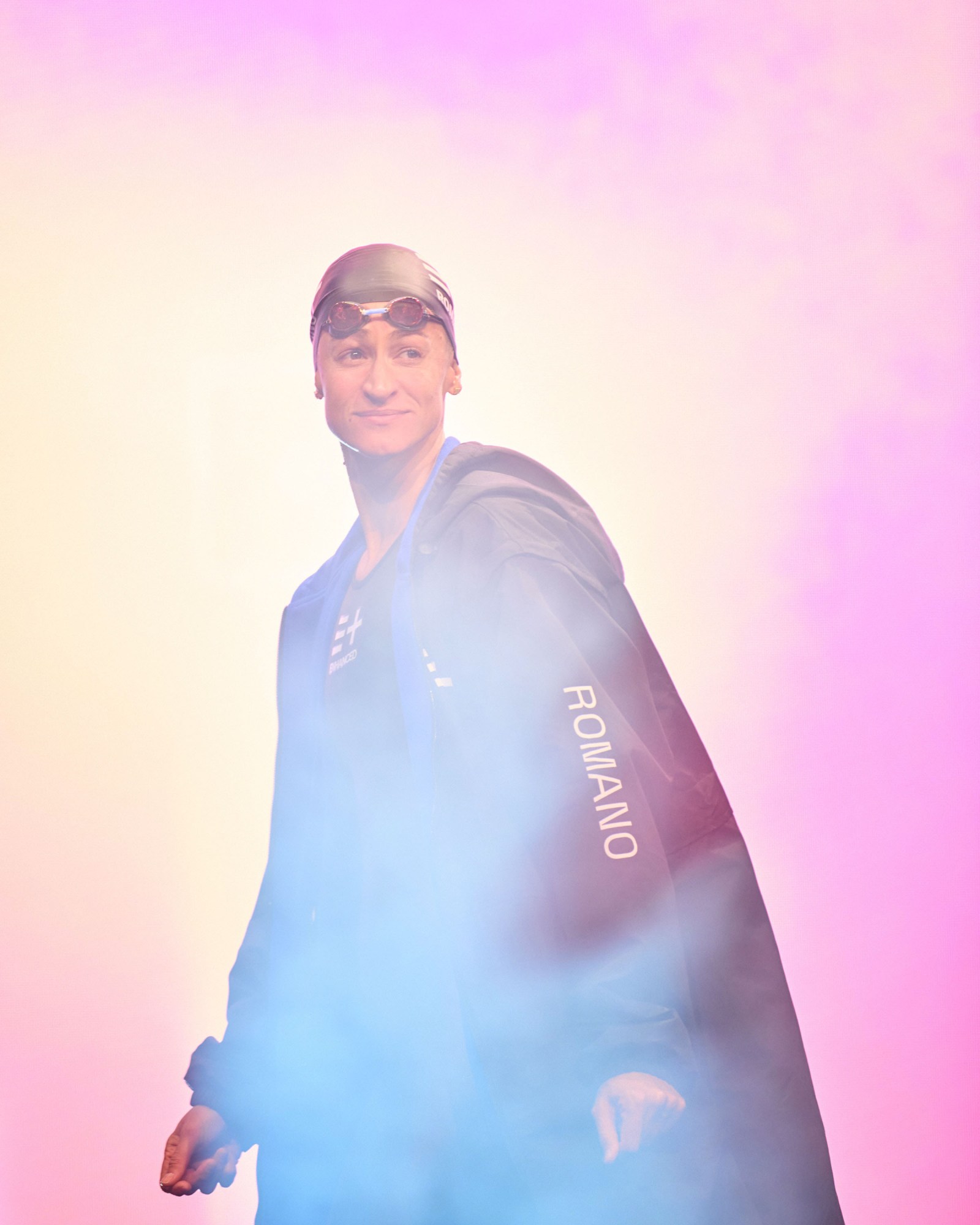
Megan Romano in cap and goggles with her dry robe stands backlit by pink event lighting and stage fog
Before joining Enhanced, Romano had not swum competitively in almost a decade.
SAEED RAHBARAN

But the big problem with Enhanced’s vision of superhumanity is the question of who gets to join in. “People will be able to enhance themselves if they have enough money,” Sagner had told me the night before the games. The rest of us, I fear, will just have to function as normal human beings.

Amit Katwala is a journalist and author covering science, culture, and where they collide. His latest book is Tremors in the Blood: Murder, Obsession and the Birth of the Lie Detector. He is based in London.

Shape
Shape
Stay Ahead

Explore More Insights

Stay ahead with more perspectives on cutting-edge power, infrastructure, energy,  bitcoin and AI solutions. Explore these articles to uncover strategies and insights shaping the future of industries.

Shape

AI power efficiency the target of Lotus Microsystems energy advances

By shortening current paths and integrating thermal management directly into the power-delivery structure, vStrata aims to reduce conversion losses while improving cooling efficiency. According to Lotus Microsystems, the module can achieve point-of-load efficiencies of up to 96% while reducing power-conversion losses by more than 50% compared with conventional approaches. “We

Read More »

Zscaler launches zero trust platform for agentic AI

The company will be extending its Zscaler Zero Trust Exchange platform to cover AI agents, including how they connect, how they access data, and how they run on devices. According to Christina Powers, partner and cybersecurity consulting leader at management consulting firm West Monroe Partners, zero trust for agentic systems

Read More »

Energy Department Releases Finalized Fusion Science and Technology Roadmap to Accelerate Commercial Fusion Power

WASHINGTON—The U.S. Department of Energy (DOE) today released the finalized Fusion Science and Technology (FS&T) Roadmap, a national strategy to accelerate the development and commercialization of fusion energy on the most rapid, responsible timeline in history. Building on earlier roadmap efforts, the finalized roadmap brings together fusion science, technology, infrastructure, workforce development, and commercialization priorities into a single national strategy to support fusion pilot plants and commercial fusion power in the mid-2030s. Fusion is the process that powers the sun and stars. For decades, scientists and engineers have worked to bring that same process to Earth as a source of abundant, reliable energy. The finalized roadmap outlines how DOE, industry, universities, and national laboratories will work together to accelerate the path toward commercial fusion energy in the United States. This effort advances President Trump’s energy dominance agenda and reinforces the Administration’s commitment to expanding reliable American energy production, strengthening domestic supply chains, and maintaining U.S. leadership in critical technologies. By accelerating progress toward commercial fusion power, DOE is helping secure a future of abundant and reliable energy. “Fusion energy has entered a new era defined by extraordinary scientific progress and public-private momentum,” said DOE Under Secretary for Science Dr. Darío Gil. “With this roadmap, we now have the clarity, coordination, and sustained commitment needed to turn the promise of fusion into a reality for the American people.” Developed with input from more than 800 scientists and engineers across the public and private sectors, the finalized FS&T Roadmap reflects contributions from more than 15 private companies, over 10 National Laboratories, and more than 70 universities. The roadmap identifies the critical science and technology gaps that must be closed to realize fusion pilot plants and strengthen U.S. leadership in the global fusion industry. The FS&T Roadmap establishes a unified strategy for the U.S.

Read More »

Aramco to divest Malaysian refining assets

Petroliam Nasional Bhd. (PETRONAS) subsidiary PETRONAS Refinery & Petrochemical Corp. Sdn. Bhd. (PRPC) has agreed to buyout Saudi Arabian Oil Co.’s (Aramco) equity interests in the partners’ dual 50-50 joint ventures responsible for operating the 300,000-b/d integrated refining and petrochemical refinery of the Pengerang Integrated Complex (PIC) in southeastern Johor, Malaysia. Subject to fulfillment of customary closing conditions, Petronas will take 100% ownership and become full operator of Pengerang Refining Co. Sdn. Bhd. and Pengerang Petrochemical Co. Sdn. Bhd., collectively known as PRefChem, Aramco and Petronas said in separate releases. Aramco said divestment of the Malaysian assets will support the strategic optimization of the company’s own downstream portfolio by providing additional flexibility to pursue investments aligned with its broader downstream strategy. While Aramco will no longer hold ownership in the Malaysian ventures, the company said it will continue actively explore commercial arrangements with Petronas following the sale, including continuing its existing agreement to supply Saudi Arabian crude oil to the site, as well as opportunities related to technology exchange and integrated product distribution. Petronas said its move to take full control of the downstream assets will allow the company to further enhance operational alignment and flexibility across PRefChem’s value chain, while harnessing its international oil supply network and integrated operating model to support continued reliability and resilience across varying market conditions. Full ownership of PRefChem’s in-country operations also will strengthen Petronas’ ability to support Malaysia’s long-term energy security and industry resilience, the operator said. A definitive timeframe for when the parties expect to finalize the proposed transaction was not revealed. PRefChem operations In addition to the Johor refinery, PRefChem’s operations at PIC include a steam cracker complex equipped to produce 3.4 million tonnes/year (tpy) combined of ethylene, propylene, butadiene, benzene and raffinate-2. PRefChem also operates an associated petrochemical complex at the

Read More »

Delfin Midstream takes $5-billion FID for first FLNG vessel

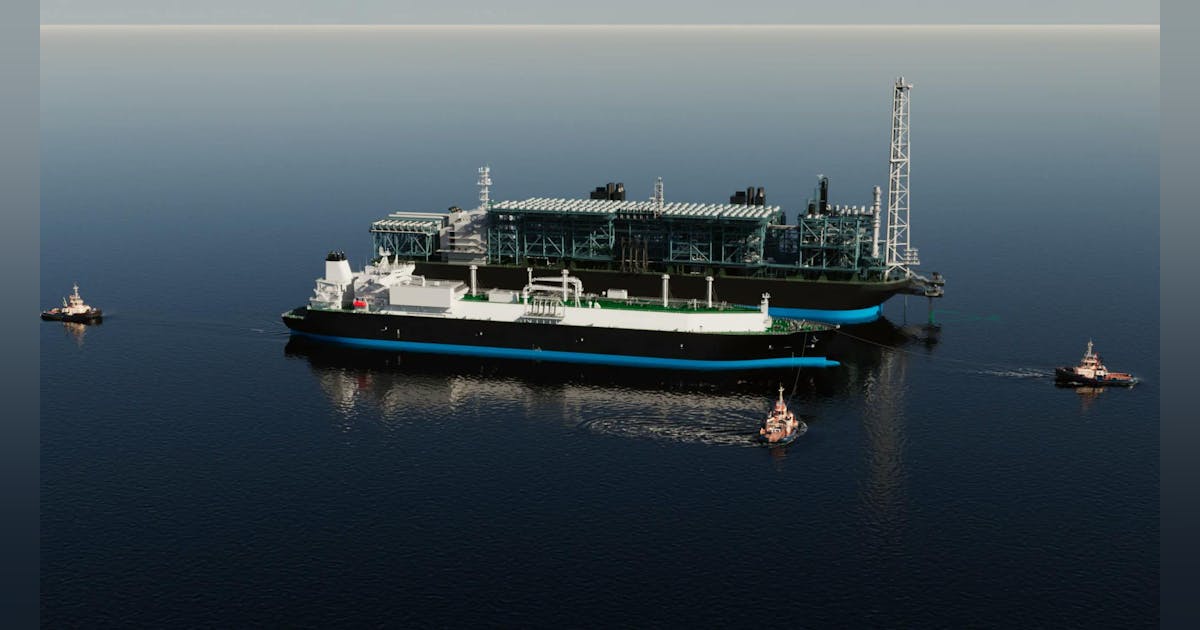
@import url(‘https://fonts.googleapis.com/css2?family=Inter:[email protected]&display=swap’); .ebm-page__main h1, .ebm-page__main h2, .ebm-page__main h3, .ebm-page__main h4, .ebm-page__main h5, .ebm-page__main h6 { font-family: Inter; } body { line-height: 150%; letter-spacing: 0.025em; } button, .ebm-button-wrapper { font-family: Inter; } .label-style { text-transform: uppercase; color: var(–color-grey); font-weight: 600; font-size: 0.75rem; } .caption-style { font-size: 0.75rem; opacity: .6; } #onetrust-pc-sdk [id*=btn-handler], #onetrust-pc-sdk [class*=btn-handler] { background-color: #c19a06 !important; border-color: #c19a06 !important; } #onetrust-policy a, #onetrust-pc-sdk a, #ot-pc-content a { color: #c19a06 !important; } #onetrust-consent-sdk #onetrust-pc-sdk .ot-active-menu { border-color: #c19a06 !important; } #onetrust-consent-sdk #onetrust-accept-btn-handler, #onetrust-banner-sdk #onetrust-reject-all-handler, #onetrust-consent-sdk #onetrust-pc-btn-handler.cookie-setting-link { background-color: #c19a06 !important; border-color: #c19a06 !important; } #onetrust-consent-sdk .onetrust-pc-btn-handler { color: #c19a06 !important; border-color: #c19a06 !important; } <!–> Delfin Midstream Inc., Houston, has taken a final investment decision (FID) for the first floating liquefied natural gas (FLNG) vessel of the Delfin LNG project under development in Louisiana and offshore in the Gulf of Mexico. Delfin FLNG 1 will be the first FLNG vessel in the US and the largest FLNG project globally, with an expected export capacity of 4.4 million tonnes/year (tpy) of LNG, the company said in its June 3 release. Concurrent with the FID, a group of investors led by Global Infrastructure Partners (GIP), a part of BlackRock—including existing Delfin investors Mitsui OSK Lines Ltd. (MOL), Vitol, and Diameter Capital Partners—has agreed to invest in the first phase of the project. ]–> <!–> –><!–> –> Oct. 9, 2023 <!–> –><!–> –> July 11, 2023 <!–> –><!–> –> June 9, 2023 <!–> –><!–> –> July 2, 2021 <!–> –> <!–> The vessel is backed by long-term LNG sales agreements with Vitol, Expand Energy, Centrica, and Gunvor, Delfin said, and all necessary permits and licenses required to begin construction have been secured. Construction contracts have been executed with Samsung Heavy Industries Co. Ltd. and Black & Veatch. LNG production is scheduled to begin

Read More »

Chevron files $13.8-billion Argentina oil development proposal

Chevron Corp. applied June 2 to join Argentina’s Large Investment Incentive Regime (RIGI) for a $13.8-billion unconventional oil development at its 100% operated El Trapial-Este block in northern Neuquén province. Until recently, RIGI had attracted about $93 billion across 36 projects. Chevron’s application, which remains subject to government approval, is equivalent to almost one seventh of that total. The filing, which does not consitute a final investment decision, is Chevron’s largest individual investment proposal in Argentina since it entered the country in 1999 and the second-largest project submitted under RIGI, behind YPF SA’s $25-billion LLL Oil development.  Chevron said it is targeting production of about 30,000 b/d from El Trapial-Este, subject to the availability of takeaway infrastructure. The block currently produces about 7,000 b/d. Chevron tested the block with a 7-well pilot in 2021 and has been carrying out development since late 2022, using laterals of more than 3,000 m and techniques transferred from the US Permian basin. In 2023, Chevron committed $500 million to that phase. During the company’s first-quarter earnings call on May 1, chief executive officer Mike Wirth anchored Chevron’s 2030 targets in “assets that are operating today.” El Trapial-Este was not explicitly identified among assets described as the main base for those targets. Wirth also said Chevron would not accelerate Permian production even with Brent above $100/bbl, preferring to manage that asset for free cash flow rather than volume. In the same presentation, Wirth named Argentina among the sources of equity crude that feed Chevron’s global refining system, along with Tengiz, Guyana, the Permian, and Venezuela. The earnings call came weeks before the El proposal filing.  Vaca Muerta costs, takeaway capacity  Breakeven costs in Vaca Muerta’s best blocks are about $40/bbl at the wellhead, according to Rystad Energy, while normalized well productivity—adjusted for lateral length and fracture

Read More »

Santos lets rig contract for Bedout subbasin exploration campaign

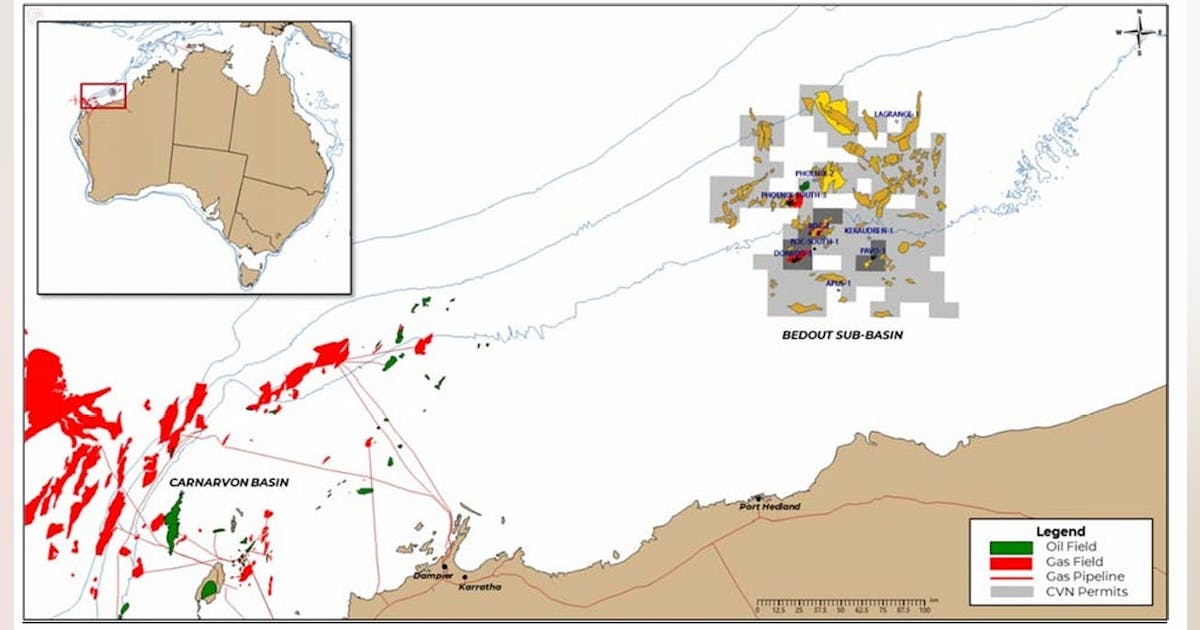
Santos Ltd. has let a contract for the Transocean Equinox semisubmersible mobile offshore drilling unit for a multi-well campaign at Bedout subbasin exploration permits offshore North West Shelf Australia, said partner Carnarvon Energy Ltd. in a June 1 release. The objective of the 2027 Bedout exploration campaign is to define the scale of the subbasin’s resource potential and target some of the largest prospects in the exploration portfolio. Shortlisted prospects include Ara, Yuma, Goats Eye, and Hutton, which are all defined on the Bedout MegaMerge 3D seismic survey. The Bedout exploration campaign is on track to start begin in April 2027, with one firm well and one contingent well. The Transocean Equinox is currently engaged in a multi-well exploration drilling campaign off the coast of Victoria, which is expected to be completed by early 2027.  Bedout basin is proposed to be an integrated gas and liquids project. To date, five fields have been discovered. Net 2C contingent resource of 230 MMboe is booked as of Dec. 31, 2024. Santos is operator at Bedout. Carnarvon holds 20% interest in Yuma, Goats Eye, and Hutton, and 10% interest in Ara.

Read More »

US underground natural gas storage capacity edges higher in 2025

Underground working natural gas storage capacity in the Lower 48 states increased modestly in 2025, with most additions concentrated in the South Central and Mountain regions, according to the US Energy Information Administration (EIA). Natural gas storage plays a key role in balancing seasonal demand fluctuations, allowing supplies to be injected during periods of lower consumption and withdrawn during periods of peak demand. EIA calculates natural gas storage capacity in two ways: demonstrated peak capacity and working gas design capacity. Both increased in 2025. EIA data show demonstrated peak storage capacity rose by 6 bcf, or 0.1%, from the previous year, marking the third consecutive annual increase. Demonstrated peak capacity is the sum of the largest volume of working gas stored in each storage field during the previous five-year period, regardless of when the peaks occurred. The South Central and Mountain regions posted the largest gains, with demonstrated peak capacity increasing by 16 bcf and 18 bcf, respectively. Capacity declined in other regions, falling 15 bcf in the East, 8 bcf in the Pacific, and 5 bcf in the Midwest. Working gas design capacity, sometimes referred to as nameplate capacity, is based on the physical characteristics of the reservoir, installed equipment, and operating procedures on the site, which federal or state regulators usually must certify.  As of November, Lower 48 design capacity totaled 4,683 bcf, up 26 bcf from a year earlier. The South Central region accounted for most of the increase, adding 21 bcf of design capacity, while the Mountain region added 6 bcf. Design capacity in the East declined by 2 bcf, primarily because of base gas adjustments. Capacity in the Midwest and Pacific regions was unchanged from the previous year.

Read More »

OpenAI weighs Nvidia-backed lease for 10 GW Ohio data center campus

OpenAI would control the computing equipment under a 20-year lease and begin payments once the site starts operating, with the first phase expected in 2028. Nvidia is expected to supply the hardware and guarantee both OpenAI’s lease obligations and the developer’s financing, the report added. The reported structure highlights a broader shift in AI infrastructure strategy, where model developers, chip suppliers, and energy providers are forging increasingly long-term partnerships to secure compute capacity amid surging demand. “These types of symbiotic deals are becoming the norm as AI infrastructure rolls out,” said Neil Shah, vice president for research and partner at Counterpoint Research. “If a CIO picks OpenAI to be the base layer, they shouldn’t just accept whatever infrastructure comes with it. CIOs need to negotiate and demand that OpenAI uses a mix of capacity so all your eggs are not in one premium basket like Nvidia.” OpenAI and Nvidia did not immediately respond to requests for comment.

Read More »

Arista unveils 1.6T rack-scale switch family for AI infrastructure

The new Arista family joins a growing ecosystem of vendors looking to tap into the 1.6T Ethernet world, which includes Cisco, Nvidia, Celestica and others. “Arista Network’s new 7060XE7 Series is a strong signal of where large-scale AI fabrics are heading: higher bandwidth, better power efficiency, and tighter integration between compute, optics, silicon, cooling, and network operating software,” wrote Sameh Boujelbene, vice president, data center switch and AI networks market research for Dell Oro, in a LinkedIn post. Among the features that stand out to her are “strong customer and ecosystem validation from Microsoft Azure, Oracle Cloud Infrastructure, Meta, AMD, and Broadcom.”

Read More »

Water Emerges as a Critical Constraint for AI Data Centers

“There really has been a major shift within the last couple of years,” Bajpayee said. “I would even say within the last 12 months is where we have seen suddenly a rapid increase in the data center operators’ desire to control their water destiny.” For Gradiant, the MIT-born water technology company that built its reputation serving semiconductor manufacturers, pharmaceutical companies, and industrial customers worldwide, that shift has translated into a rapidly expanding pipeline of data center opportunities. More importantly, Bajpayee believes it signals a fundamental change in how the industry thinks about water itself. The conversation is no longer centered primarily on sustainability metrics or corporate environmental goals. Instead, operators increasingly view water as a business continuity issue. “We’re seeing operators themselves come to us and tell us that these are issues they are facing,” Bajpayee said. “They want to make sure they don’t get stalled, their permits don’t get pulled, their business doesn’t get stopped, and communities don’t push them out because they didn’t figure out a way to control their water.” From Water Treatment to Water Strategy That shift is occurring as Gradiant expands deployments of its recently announced HyperSolved platform, an end-to-end cooling water management system purpose-built for AI data centers. The company says HyperSolved is now being deployed with several of the world’s largest hyperscale operators across North America, Europe, and Asia, reflecting growing industry demand for integrated approaches to water infrastructure. While compute, networking, and power systems have evolved rapidly during the AI era, water management often remains fragmented, requiring operators to coordinate multiple vendors responsible for sourcing, treatment, cooling, wastewater management, reuse, discharge, and regulatory compliance. Gradiant’s approach seeks to consolidate those functions into a single integrated platform and operating model. The timing reflects the growing scale of the challenge. New AI data center

Read More »

Data Center Jobs: Engineering, Construction, Commissioning, Sales, Field Service and Facility Tech Jobs Available in Major Data Center Hotspots

Each month Data Center Frontier, in partnership with Pkaza, posts some of the hottest data center career opportunities in the market. Here’s a look at some of the latest data center jobs posted on the Data Center Frontier jobs board, powered by Pkaza Critical Facilities Recruiting. Looking for Data Center Candidates? Check out Pkaza’s Active Candidate / Featured Candidate Hotlist  Mechanical Applications Engineer Pittsburgh, PA This position is also available in: Denver, CO; Richmond, VA and Georgetown, SC (live by the beach!). Relo available. Our client is a leading provider and manufacturer of industrial HVAC mechanical equipment used in industrial cooling applications for mission critical operations. They help their customers save money by reducing energy and operating costs and provide solutions for modernizing their customer’s existing mechanical infrastructure. This company provides cooling solutions to many of the world’s largest organizations and government facilities and enterprise clients, colocation providers and hyperscale companies. This career-growth minded opportunity offers exciting projects with leading-edge technology and innovation as well as competitive salaries and benefits. Electrical Commissioning Engineer New Albany, OH This traveling position is also available in: New York, NY; White Plains, NY; Dallas, TX; Richmond, VA; Ashburn, VA; Montvale, NJ; Charlotte, NC; Atlanta, GA; Hampton, GA; Cedar Rapids, IA; Phoenix, AZ; Salt Lake City, UT; Kansas City, MO; Omaha, NE; Chesterton, IN; Indianapolis, IN or Chicago, IL. *** ALSO looking for a LEAD EE and ME CxA Agents and CxA PMs ***  Our client is an engineering design and commissioning company that has a national footprint and specializes in MEP critical facilities design. They provide design, commissioning, consulting and management expertise in the critical facilities space. They have a mindset to provide reliability, energy efficiency, sustainable design and LEED expertise when providing these consulting services for Enterprise, Colocation and Hyperscale Companies. This career-growth minded opportunity offers exciting projects

Read More »

Fiber’s Next Act: How AI Is Driving Connectivity Closer to the Edge

ORLANDO, Fla. — Much of the conversation surrounding AI infrastructure has focused on GPUs, power generation, cooling systems, and the unprecedented scale of next-generation data center development. But at Fiber Connect 2026, another reality became increasingly clear: none of those investments matter without the network infrastructure required to connect them. That theme emerged repeatedly during a conversation between Data Center Frontier Editor-in-Chief Matt Vincent and Clearfield Chief Commercial Officer Anis Khemakhem, whose perspective sits at the intersection of broadband infrastructure, fiber deployment, and emerging AI connectivity requirements. While Clearfield is best known throughout the broadband industry for its fiber management and connectivity solutions, Khemakhem argued that AI’s rapid expansion is creating new opportunities, and new challenges, that extend well beyond traditional fiber-to-the-home deployments. “AI is driving that connectivity closer and closer to the edge,” Khemakhem said, noting that growing compute requirements and increasingly latency-sensitive workloads are fundamentally changing assumptions about where infrastructure must reside and how it must be connected. For Data Center Frontier readers, the significance lies in a growing realization that AI infrastructure is becoming as much a networking challenge as a compute challenge. Beyond the Traditional Data Center One of the more notable themes of the discussion was Khemakhem’s view that the term “data center” has become too broad to be useful. The industry often speaks of data centers as a single category, but Clearfield increasingly differentiates between hyperscale campuses, colocation facilities, central office environments, and a rapidly emerging class of edge deployments. “There is no one-size-fits-all data center,” Khemakhem said, describing a continuum that extends from hyperscale facilities all the way to edge locations positioned near users and applications. That distinction matters because many AI applications are introducing latency requirements that cannot always be addressed by centralized facilities alone. As AI inference moves closer to users,

Read More »

Liquid Cooling Market Matures: Innovations, Acquisitions, and Modular Solutions for AI Infrastructure

Thermal Validation Becomes a Strategic Capability Cooling is no longer simply a matter of installing enough CRAC units, chillers, CDUs, or rear-door heat exchangers. As rack densities climb and chip-level heat flux intensifies, the performance of the entire thermal chain increasingly depends on how coldplates, manifolds, pumps, controls, facility water loops, power systems, commissioning practices, and service workflows interact. Vertiv said Strategic Thermal Labs will help it simulate and emulate real-world high-density compute conditions, optimize interactions between the thermal chain and power train, and support customers across design, integration, commissioning, and lifecycle operations. That reflects a broader evolution underway in AI infrastructure. Data centers are becoming tightly coupled systems where thermal behavior influences power design, reliability, serviceability, operational efficiency, and ultimately the utilization of increasingly expensive accelerator platforms. Vertiv also emphasized that the acquisition does not alter its commitment to interoperable, server- and silicon-agnostic infrastructure solutions. That distinction matters because hyperscale and colocation operators remain wary of vendor lock-in at a time when chip architectures, server designs, and cooling strategies continue to evolve rapidly. Viewed through that lens, Vertiv’s acquisition reflects a larger industry shift. Infrastructure providers are no longer waiting for server OEMs or chipmakers to define the cooling roadmap. Instead, they are investing deeper in modeling, validation, and chip-level thermal expertise because the next generation of AI infrastructure performance will increasingly be determined by how effectively those systems work together. Accelsius Moves from Technology Validation to Market Scaling Accelsius offers a different view of where the liquid-cooling market is headed. While some vendors are extending existing architectures, Accelsius is focused on making two-phase direct-to-chip cooling easier to deploy, validate, and scale. The company’s recently introduced NeuCool IR150 is designed around that objective. Described by Accelsius as the industry’s first fully integrated rack-level cooling solution for two-phase liquid cooling,

Read More »

Microsoft will invest $80B in AI data centers in fiscal 2025

And Microsoft isn’t the only one that is ramping up its investments into AI-enabled data centers. Rival cloud service providers are all investing in either upgrading or opening new data centers to capture a larger chunk of business from developers and users of large language models (LLMs).  In a report published in October 2024, Bloomberg Intelligence estimated that demand for generative AI would push Microsoft, AWS, Google, Oracle, Meta, and Apple would between them devote $200 billion to capex in 2025, up from $110 billion in 2023. Microsoft is one of the biggest spenders, followed closely by Google and AWS, Bloomberg Intelligence said. Its estimate of Microsoft’s capital spending on AI, at $62.4 billion for calendar 2025, is lower than Smith’s claim that the company will invest $80 billion in the fiscal year to June 30, 2025. Both figures, though, are way higher than Microsoft’s 2020 capital expenditure of “just” $17.6 billion. The majority of the increased spending is tied to cloud services and the expansion of AI infrastructure needed to provide compute capacity for OpenAI workloads. Separately, last October Amazon CEO Andy Jassy said his company planned total capex spend of $75 billion in 2024 and even more in 2025, with much of it going to AWS, its cloud computing division.

Read More »

John Deere unveils more autonomous farm machines to address skill labor shortage

Join our daily and weekly newsletters for the latest updates and exclusive content on industry-leading AI coverage. Learn More Self-driving tractors might be the path to self-driving cars. John Deere has revealed a new line of autonomous machines and tech across agriculture, construction and commercial landscaping. The Moline, Illinois-based John Deere has been in business for 187 years, yet it’s been a regular as a non-tech company showing off technology at the big tech trade show in Las Vegas and is back at CES 2025 with more autonomous tractors and other vehicles. This is not something we usually cover, but John Deere has a lot of data that is interesting in the big picture of tech. The message from the company is that there aren’t enough skilled farm laborers to do the work that its customers need. It’s been a challenge for most of the last two decades, said Jahmy Hindman, CTO at John Deere, in a briefing. Much of the tech will come this fall and after that. He noted that the average farmer in the U.S. is over 58 and works 12 to 18 hours a day to grow food for us. And he said the American Farm Bureau Federation estimates there are roughly 2.4 million farm jobs that need to be filled annually; and the agricultural work force continues to shrink. (This is my hint to the anti-immigration crowd). John Deere’s autonomous 9RX Tractor. Farmers can oversee it using an app. While each of these industries experiences their own set of challenges, a commonality across all is skilled labor availability. In construction, about 80% percent of contractors struggle to find skilled labor. And in commercial landscaping, 86% of landscaping business owners can’t find labor to fill open positions, he said. “They have to figure out how to do

Read More »

2025 playbook for enterprise AI success, from agents to evals

Join our daily and weekly newsletters for the latest updates and exclusive content on industry-leading AI coverage. Learn More 2025 is poised to be a pivotal year for enterprise AI. The past year has seen rapid innovation, and this year will see the same. This has made it more critical than ever to revisit your AI strategy to stay competitive and create value for your customers. From scaling AI agents to optimizing costs, here are the five critical areas enterprises should prioritize for their AI strategy this year. 1. Agents: the next generation of automation AI agents are no longer theoretical. In 2025, they’re indispensable tools for enterprises looking to streamline operations and enhance customer interactions. Unlike traditional software, agents powered by large language models (LLMs) can make nuanced decisions, navigate complex multi-step tasks, and integrate seamlessly with tools and APIs. At the start of 2024, agents were not ready for prime time, making frustrating mistakes like hallucinating URLs. They started getting better as frontier large language models themselves improved. “Let me put it this way,” said Sam Witteveen, cofounder of Red Dragon, a company that develops agents for companies, and that recently reviewed the 48 agents it built last year. “Interestingly, the ones that we built at the start of the year, a lot of those worked way better at the end of the year just because the models got better.” Witteveen shared this in the video podcast we filmed to discuss these five big trends in detail. Models are getting better and hallucinating less, and they’re also being trained to do agentic tasks. Another feature that the model providers are researching is a way to use the LLM as a judge, and as models get cheaper (something we’ll cover below), companies can use three or more models to

Read More »

OpenAI’s red teaming innovations define new essentials for security leaders in the AI era

Join our daily and weekly newsletters for the latest updates and exclusive content on industry-leading AI coverage. Learn More OpenAI has taken a more aggressive approach to red teaming than its AI competitors, demonstrating its security teams’ advanced capabilities in two areas: multi-step reinforcement and external red teaming. OpenAI recently released two papers that set a new competitive standard for improving the quality, reliability and safety of AI models in these two techniques and more. The first paper, “OpenAI’s Approach to External Red Teaming for AI Models and Systems,” reports that specialized teams outside the company have proven effective in uncovering vulnerabilities that might otherwise have made it into a released model because in-house testing techniques may have missed them. In the second paper, “Diverse and Effective Red Teaming with Auto-Generated Rewards and Multi-Step Reinforcement Learning,” OpenAI introduces an automated framework that relies on iterative reinforcement learning to generate a broad spectrum of novel, wide-ranging attacks. Going all-in on red teaming pays practical, competitive dividends It’s encouraging to see competitive intensity in red teaming growing among AI companies. When Anthropic released its AI red team guidelines in June of last year, it joined AI providers including Google, Microsoft, Nvidia, OpenAI, and even the U.S.’s National Institute of Standards and Technology (NIST), which all had released red teaming frameworks. Investing heavily in red teaming yields tangible benefits for security leaders in any organization. OpenAI’s paper on external red teaming provides a detailed analysis of how the company strives to create specialized external teams that include cybersecurity and subject matter experts. The goal is to see if knowledgeable external teams can defeat models’ security perimeters and find gaps in their security, biases and controls that prompt-based testing couldn’t find. What makes OpenAI’s recent papers noteworthy is how well they define using human-in-the-middle

Read More »