Data Center Cooling Glossary
The following definitions reflect common terminology used in Department of Energy guidance, ASHRAE TC 9.9 materials, Berkeley Lab resources and Green Grid efficiency metrics.
Adiabatic Cooling — A cooling process that uses water evaporation to lower the temperature of air before it reaches a heat exchanger or cooling coil. It can reduce compressor demand but consumes water when evaporative assistance is active.
Air-Cooled Data Center — A facility in which heat is removed from IT equipment primarily by moving conditioned air through servers, even if that heat is later transferred to water or refrigerant elsewhere in the cooling system.
Air Handler — Equipment that moves, filters and conditions air before delivering it to a data hall or other controlled space.
Air-Side Economizer — A system that uses suitable outdoor air, either directly or mixed with return air, to reduce or avoid compressor-based refrigeration.
Airflow Management — The practice of delivering conditioned air where it is needed while preventing hot exhaust air from recirculating into server inlets.
Approach Temperature — The temperature difference between the two fluids leaving a heat exchanger at their closest thermal point. In a cooling tower, it commonly refers to the difference between leaving-water temperature and entering-air wet-bulb temperature. A smaller approach generally indicates more effective heat transfer.
ASHRAE TC 9.9 — The ASHRAE technical committee focused on mission-critical facilities, data centers, technology spaces and electronic equipment. It is a major source of environmental and thermal guidance for data center operators and equipment manufacturers.
Blanking Panel — A panel installed in unused rack spaces to prevent hot exhaust air from recirculating to server intakes.
British Thermal Unit, or BTU — A unit of heat energy commonly used to express the heating or cooling capacity of equipment.
Cabinet — An enclosure, also commonly called a rack, that houses servers, networking equipment, power-distribution hardware and, in some cases, cooling components.
Chilled-Water System — A cooling system that circulates mechanically or naturally cooled water through coils or heat exchangers to remove heat from a data center.
Chiller — Mechanical equipment that uses a refrigeration cycle to lower the temperature of water or another fluid.
Closed-Loop Cooling — A system in which water or another coolant is recirculated through a sealed or substantially sealed circuit rather than continuously consumed.
Cold Aisle — The aisle at the intake side of server racks where conditioned supply air is delivered.
Cold-Aisle Containment — A physical enclosure that isolates the cold aisle and prevents conditioned supply air from mixing with hot server exhaust.
Cold Plate — A metal heat exchanger mounted directly on a processor, accelerator or other high-heat component. Liquid flows through internal channels and carries heat away from the device.
Computer Room Air Conditioner, or CRAC — A data center cooling unit that uses a direct-expansion refrigerant cycle to cool and circulate air.
Computer Room Air Handler, or CRAH — A data center cooling unit that uses chilled-water coils and fans to cool and circulate air.
Condenser — A component that rejects heat from a refrigeration system and converts refrigerant vapor back into liquid.
Containment — The physical separation of hot and cold air streams to reduce mixing, stabilize inlet temperatures and improve cooling efficiency.
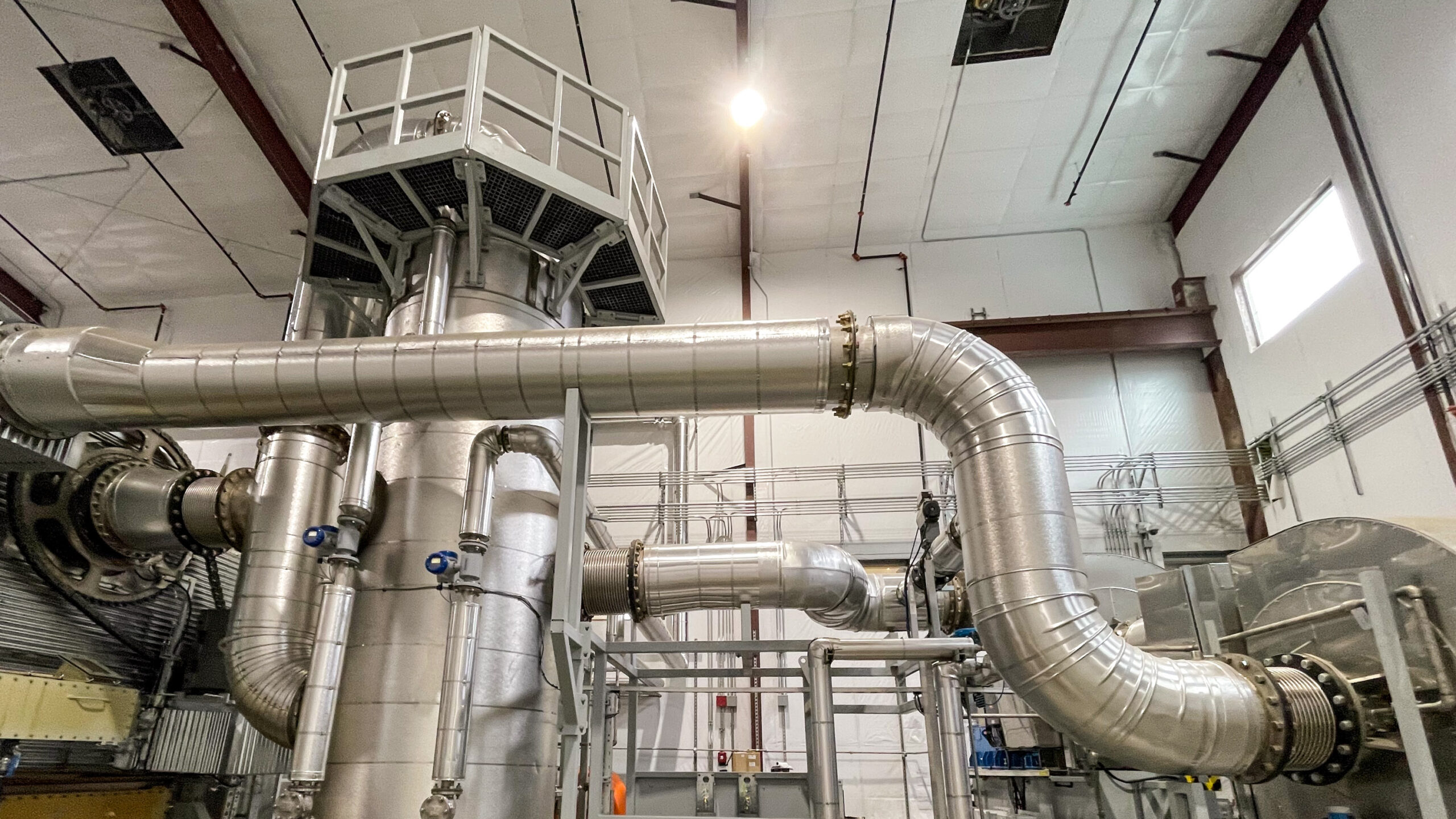
Coolant Distribution Unit, or CDU — Equipment that controls, pumps and monitors coolant for liquid-cooled IT systems. A CDU commonly separates the facility water system from the technology cooling system.
Cooling Capacity — The amount of heat a cooling system can remove, typically expressed in kilowatts, tons of cooling or BTUs per hour.
Cooling Coil — A heat exchanger inside an air handler, CRAC or CRAH that transfers heat from passing air into chilled water or refrigerant.
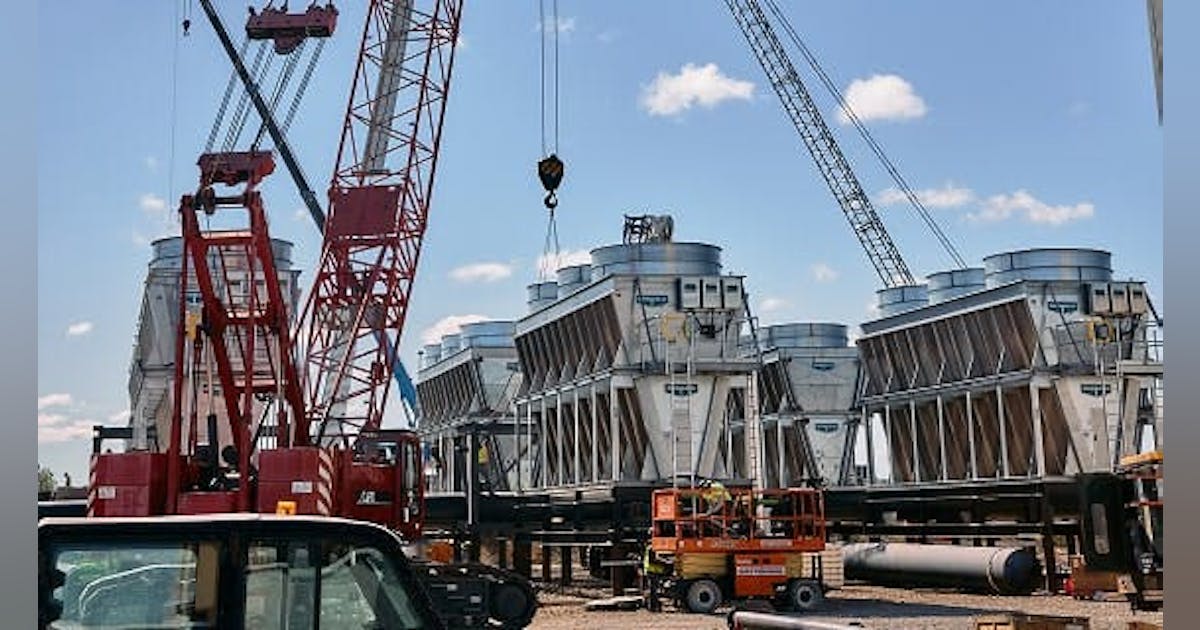
Cooling Tower — Outdoor heat-rejection equipment that removes heat from circulating water primarily through evaporation.
Delta T, or ΔT — The temperature difference between two points in a cooling system, such as supply and return air or supply and return water. A larger useful ΔT allows more heat to be transported at a given airflow or fluid-flow rate.
Dew Point — The temperature at which moisture in the air begins to condense. Dew point must be controlled to prevent condensation on electronics or cooling equipment.
Dielectric Fluid — An electrically nonconductive fluid used in certain direct liquid-cooling and immersion-cooling systems.
Direct Evaporative Cooling — A process that cools supply air by evaporating water directly into the air stream.
Direct Liquid Cooling, or DLC — A broad category of systems that bring liquid close to or directly into contact with heat-generating IT components.
Direct-to-Chip Cooling — A liquid-cooling method in which cold plates mounted on processors or accelerators remove heat close to its source.
Dry Cooler — Outdoor equipment that transfers heat from a fluid loop to ambient air without evaporating water.
Economizer — A system that uses favorable outdoor conditions to reduce or avoid compressor-based mechanical cooling. Economizers may be air-side or water-side.
Evaporative Cooling — Cooling that uses water evaporation to absorb heat. It can reduce energy demand but increases direct water consumption.
Facility Water System, or FWS — The building-side water loop that serves data center cooling equipment. In liquid-cooled facilities, it is commonly separated from the IT-side technology cooling system by a CDU or heat exchanger.
Fan Power — The electricity consumed by fans that move air through servers, racks, air handlers, cooling towers, dry coolers or other cooling equipment.
Fan Wall — A bank of modular fans used to move large volumes of air through a data hall or cooling system.
Free Cooling — An industry term for using favorable outdoor air or water conditions to reduce or avoid compressor-based refrigeration. Fans, pumps and controls still consume energy, so the cooling is not literally free.
Glycol — A fluid commonly mixed with water to provide freeze protection in outdoor or exposed cooling loops.
Heat Exchanger — A device that transfers heat between two air, water, refrigerant or coolant streams without mixing them.
Heat Load — The amount of heat that must be removed from a room, rack, component or cooling system. Nearly all electrical power consumed by IT equipment ultimately becomes heat.
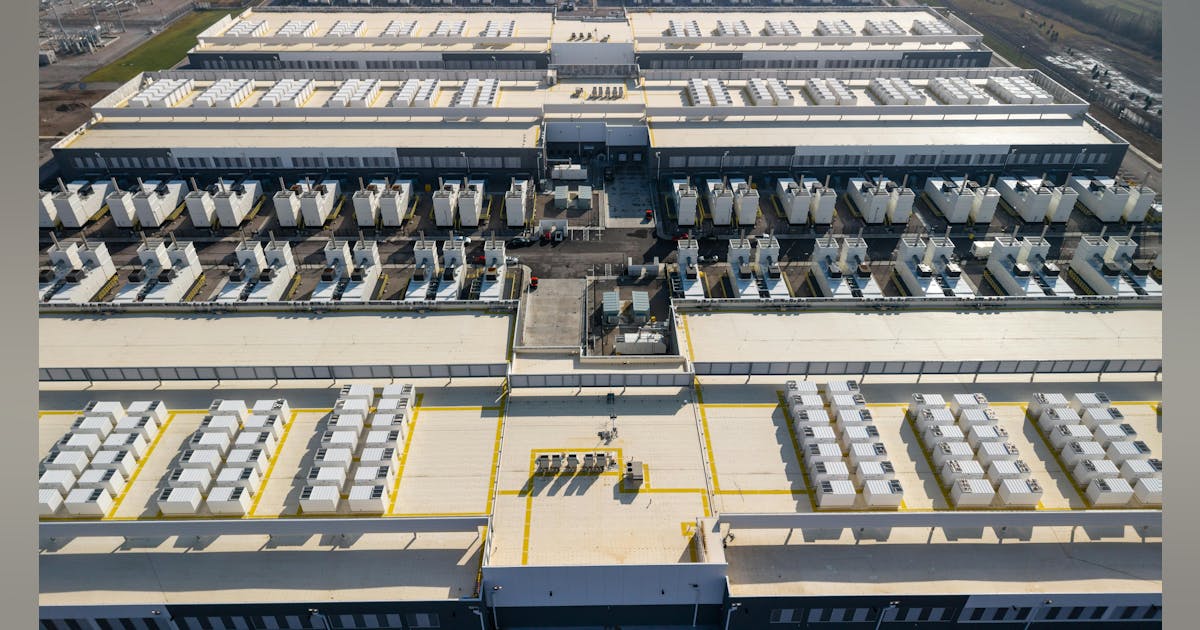
Heat Rejection — The process of releasing captured data center heat to outdoor air, water or another useful destination.
Heat Reuse — The recovery of data center waste heat for another purpose, such as district heating, industrial processes, greenhouses or nearby buildings.
High-Density Rack — A rack that concentrates substantial IT power and heat in a limited footprint. AI servers and GPU systems commonly create high-density cooling requirements.
Hot Aisle — The aisle at the exhaust side of server racks where heated air leaves the equipment.
Hot-Aisle Containment — A design that encloses the hot aisle and directs server exhaust back to cooling equipment without allowing it to mix with conditioned supply air.
Hot Spot — A localized area where temperatures exceed the desired operating range because of high load, inadequate airflow or recirculated exhaust.
Humidity Control — The management of moisture and dew point within the environmental limits specified for IT equipment. Excessive moisture can contribute to condensation or corrosion, while unsuitable low-moisture conditions may increase electrostatic risk in some environments.
Hybrid Cooling — A cooling architecture that combines two or more methods, such as room-level air cooling and direct-to-chip liquid cooling or dry heat rejection with evaporative assistance.
Immersion Cooling — A liquid-cooling method in which servers or electronic components are submerged in an electrically nonconductive dielectric fluid.
Indirect Evaporative Cooling — A process that uses evaporation in a separate air stream or fluid circuit to cool data center air through a heat exchanger without adding moisture directly to the data hall.
Inlet Temperature — The temperature of air or liquid entering IT equipment. Server inlet temperature is a critical measure of whether equipment is operating within its approved thermal envelope.
In-Row Cooling — Cooling equipment installed between or alongside server racks to shorten the distance between the cooling source and the heat load.
Load Density — The concentration of IT power and heat within a rack, row, room or facility, commonly expressed in kilowatts per rack or watts per square foot.
Makeup Water — Water added to replace losses from evaporation, blowdown, drift, leaks or maintenance activities.
Mechanical Cooling — Compressor-based refrigeration provided by equipment such as chillers or direct-expansion air-conditioning units.
Negative Pressure — A condition in which air pressure within a space is lower than in an adjacent area, causing air to flow into that space. Uncontrolled pressure differences can disrupt intended data center airflow patterns.
N+1 Redundancy — A reliability configuration that provides one additional component beyond the number required to support the design load. If four cooling units are required, an N+1 system provides five.
PDU Airflow Obstruction — A condition in which rack power-distribution units, cables or related hardware interfere with airflow through or behind IT equipment.
Plenum — An enclosed or open space used to distribute supply or return air, such as the area beneath a raised floor or above a suspended ceiling.
Power Usage Effectiveness, or PUE — The ratio of total data center energy consumption to the energy consumed by IT equipment. A value closer to 1.0 indicates that a larger share of facility energy is reaching the IT load.
Pump Power — The electricity used to circulate water or coolant through piping, CDUs, heat exchangers, cold plates, chillers or heat-rejection equipment.
Rack-Level Cooling — Cooling equipment or heat exchangers applied directly at the rack rather than solely at the room level.
Raised Floor — An elevated floor system with an underfloor space historically used to distribute conditioned air, power and cabling.
Recirculation — The unintended movement of hot server exhaust back into equipment intakes, reducing cooling efficiency and potentially creating hot spots.
Refrigerant — A working fluid used in vapor-compression or pumped-refrigerant systems to absorb, transport and reject heat.
Return Air — Heated air leaving IT equipment or a conditioned space and returning to cooling units.
Room-Based Cooling — A conventional architecture in which cooling equipment conditions the overall data hall rather than an individual rack or component.
Sensible Cooling — Cooling that lowers air temperature without removing moisture from the air.
Setpoint — The target temperature, humidity, pressure, flow or other operating condition programmed into a cooling control system.
Single-Phase Liquid Cooling — A liquid-cooling method in which the coolant remains liquid as it absorbs and transports heat.
Supply Air — Conditioned air delivered to the intake side of IT equipment.
Thermal Envelope — The allowable range of temperature, humidity, dew point and related environmental conditions specified for IT equipment.
Thermal Management — The overall discipline of controlling heat across IT components, racks, data halls and facility cooling systems.
Thermal Ride-Through — The length of time a cooling system can maintain acceptable equipment temperatures during a power interruption, pump failure or transition between operating modes. Ride-through depends on system design, fluid volume, airflow, thermal mass, controls and the location of the failure.
Ton of Cooling — A traditional unit of cooling capacity equal to 12,000 BTUs per hour, or approximately 3.52 kilowatts.
Two-Phase Liquid Cooling — A liquid-cooling method in which the working fluid changes phase, typically from liquid to vapor, as it absorbs heat and then condenses back into liquid.
Variable-Speed Fan — A fan that adjusts its rotational speed according to cooling demand, reducing energy use when full airflow is unnecessary.
Variable-Speed Pump — A pump that adjusts fluid flow according to cooling demand, reducing energy use when full flow is unnecessary.
Water-Side Economizer — A system that uses favorable outdoor conditions and heat exchangers to cool a facility water loop with reduced or no compressor operation.
Water Usage Effectiveness, or WUE — A metric that compares annual data center site water use with the energy consumed by IT equipment, generally expressed in liters per kilowatt-hour.
Wet-Bulb Temperature — A temperature measurement that reflects both heat and atmospheric moisture. It is an important indicator of evaporative-cooling and cooling-tower performance.
White Space — The portion of a data center in which IT racks and equipment are installed, as distinct from electrical rooms, mechanical spaces, offices and other support areas.