Stay Ahead, Stay ONMINE

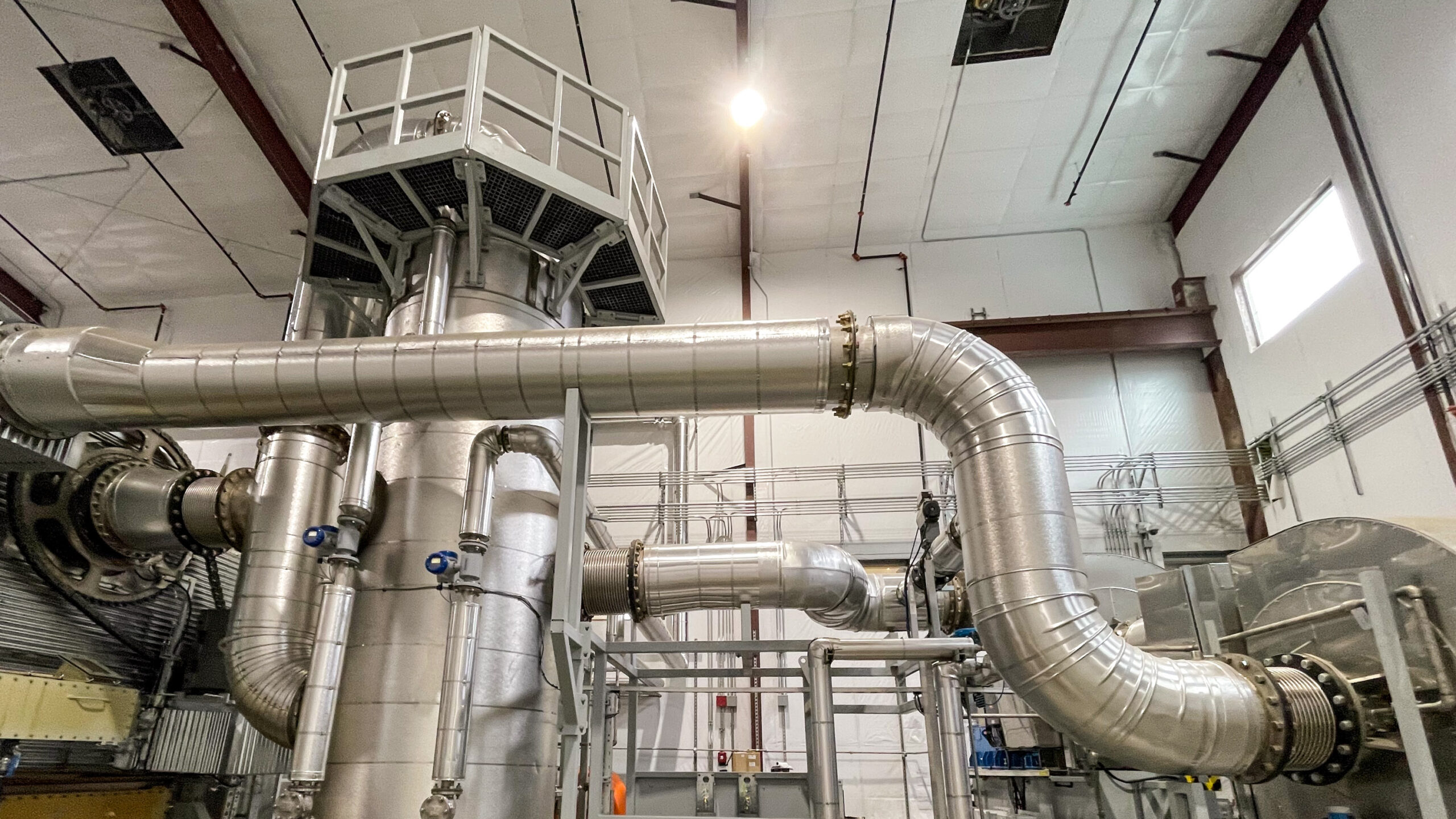
Tech Explainer: Data Center Cooling – Air, Evaporative, Liquid, and Hybrid Approaches

Data Center Cooling Glossary The following definitions reflect common terminology used in Department of Energy guidance, ASHRAE TC 9.9 materials, Berkeley Lab resources and Green Grid efficiency metrics. Adiabatic Cooling — A cooling process that uses water evaporation to lower the temperature of air before it reaches a heat exchanger or cooling coil. It can […]

Data Center Cooling Glossary

The following definitions reflect common terminology used in Department of Energy guidance, ASHRAE TC 9.9 materials, Berkeley Lab resources and Green Grid efficiency metrics.

Adiabatic Cooling — A cooling process that uses water evaporation to lower the temperature of air before it reaches a heat exchanger or cooling coil. It can reduce compressor demand but consumes water when evaporative assistance is active.

Air-Cooled Data Center — A facility in which heat is removed from IT equipment primarily by moving conditioned air through servers, even if that heat is later transferred to water or refrigerant elsewhere in the cooling system.

Air Handler — Equipment that moves, filters and conditions air before delivering it to a data hall or other controlled space.

Air-Side Economizer — A system that uses suitable outdoor air, either directly or mixed with return air, to reduce or avoid compressor-based refrigeration.

Airflow Management — The practice of delivering conditioned air where it is needed while preventing hot exhaust air from recirculating into server inlets.

Approach Temperature — The temperature difference between the two fluids leaving a heat exchanger at their closest thermal point. In a cooling tower, it commonly refers to the difference between leaving-water temperature and entering-air wet-bulb temperature. A smaller approach generally indicates more effective heat transfer.

ASHRAE TC 9.9 — The ASHRAE technical committee focused on mission-critical facilities, data centers, technology spaces and electronic equipment. It is a major source of environmental and thermal guidance for data center operators and equipment manufacturers.

Blanking Panel — A panel installed in unused rack spaces to prevent hot exhaust air from recirculating to server intakes.

British Thermal Unit, or BTU — A unit of heat energy commonly used to express the heating or cooling capacity of equipment.

Cabinet — An enclosure, also commonly called a rack, that houses servers, networking equipment, power-distribution hardware and, in some cases, cooling components.

Chilled-Water System — A cooling system that circulates mechanically or naturally cooled water through coils or heat exchangers to remove heat from a data center.

Chiller — Mechanical equipment that uses a refrigeration cycle to lower the temperature of water or another fluid.

Closed-Loop Cooling — A system in which water or another coolant is recirculated through a sealed or substantially sealed circuit rather than continuously consumed.

Cold Aisle — The aisle at the intake side of server racks where conditioned supply air is delivered.

Cold-Aisle Containment — A physical enclosure that isolates the cold aisle and prevents conditioned supply air from mixing with hot server exhaust.

Cold Plate — A metal heat exchanger mounted directly on a processor, accelerator or other high-heat component. Liquid flows through internal channels and carries heat away from the device.

Computer Room Air Conditioner, or CRAC — A data center cooling unit that uses a direct-expansion refrigerant cycle to cool and circulate air.

Computer Room Air Handler, or CRAH — A data center cooling unit that uses chilled-water coils and fans to cool and circulate air.

Condenser — A component that rejects heat from a refrigeration system and converts refrigerant vapor back into liquid.

Containment — The physical separation of hot and cold air streams to reduce mixing, stabilize inlet temperatures and improve cooling efficiency.

Coolant Distribution Unit, or CDU — Equipment that controls, pumps and monitors coolant for liquid-cooled IT systems. A CDU commonly separates the facility water system from the technology cooling system.

Cooling Capacity — The amount of heat a cooling system can remove, typically expressed in kilowatts, tons of cooling or BTUs per hour.

Cooling Coil — A heat exchanger inside an air handler, CRAC or CRAH that transfers heat from passing air into chilled water or refrigerant.

Cooling Tower — Outdoor heat-rejection equipment that removes heat from circulating water primarily through evaporation.

Delta T, or ΔT — The temperature difference between two points in a cooling system, such as supply and return air or supply and return water. A larger useful ΔT allows more heat to be transported at a given airflow or fluid-flow rate.

Dew Point — The temperature at which moisture in the air begins to condense. Dew point must be controlled to prevent condensation on electronics or cooling equipment.

Dielectric Fluid — An electrically nonconductive fluid used in certain direct liquid-cooling and immersion-cooling systems.

Direct Evaporative Cooling — A process that cools supply air by evaporating water directly into the air stream.

Direct Liquid Cooling, or DLC — A broad category of systems that bring liquid close to or directly into contact with heat-generating IT components.

Direct-to-Chip Cooling — A liquid-cooling method in which cold plates mounted on processors or accelerators remove heat close to its source.

Dry Cooler — Outdoor equipment that transfers heat from a fluid loop to ambient air without evaporating water.

Economizer — A system that uses favorable outdoor conditions to reduce or avoid compressor-based mechanical cooling. Economizers may be air-side or water-side.

Evaporative Cooling — Cooling that uses water evaporation to absorb heat. It can reduce energy demand but increases direct water consumption.

Facility Water System, or FWS — The building-side water loop that serves data center cooling equipment. In liquid-cooled facilities, it is commonly separated from the IT-side technology cooling system by a CDU or heat exchanger.

Fan Power — The electricity consumed by fans that move air through servers, racks, air handlers, cooling towers, dry coolers or other cooling equipment.

Fan Wall — A bank of modular fans used to move large volumes of air through a data hall or cooling system.

Free Cooling — An industry term for using favorable outdoor air or water conditions to reduce or avoid compressor-based refrigeration. Fans, pumps and controls still consume energy, so the cooling is not literally free.

Glycol — A fluid commonly mixed with water to provide freeze protection in outdoor or exposed cooling loops.

Heat Exchanger — A device that transfers heat between two air, water, refrigerant or coolant streams without mixing them.

Heat Load — The amount of heat that must be removed from a room, rack, component or cooling system. Nearly all electrical power consumed by IT equipment ultimately becomes heat.

Heat Rejection — The process of releasing captured data center heat to outdoor air, water or another useful destination.

Heat Reuse — The recovery of data center waste heat for another purpose, such as district heating, industrial processes, greenhouses or nearby buildings.

High-Density Rack — A rack that concentrates substantial IT power and heat in a limited footprint. AI servers and GPU systems commonly create high-density cooling requirements.

Hot Aisle — The aisle at the exhaust side of server racks where heated air leaves the equipment.

Hot-Aisle Containment — A design that encloses the hot aisle and directs server exhaust back to cooling equipment without allowing it to mix with conditioned supply air.

Hot Spot — A localized area where temperatures exceed the desired operating range because of high load, inadequate airflow or recirculated exhaust.

Humidity Control — The management of moisture and dew point within the environmental limits specified for IT equipment. Excessive moisture can contribute to condensation or corrosion, while unsuitable low-moisture conditions may increase electrostatic risk in some environments.

Hybrid Cooling — A cooling architecture that combines two or more methods, such as room-level air cooling and direct-to-chip liquid cooling or dry heat rejection with evaporative assistance.

Immersion Cooling — A liquid-cooling method in which servers or electronic components are submerged in an electrically nonconductive dielectric fluid.

Indirect Evaporative Cooling — A process that uses evaporation in a separate air stream or fluid circuit to cool data center air through a heat exchanger without adding moisture directly to the data hall.

Inlet Temperature — The temperature of air or liquid entering IT equipment. Server inlet temperature is a critical measure of whether equipment is operating within its approved thermal envelope.

In-Row Cooling — Cooling equipment installed between or alongside server racks to shorten the distance between the cooling source and the heat load.

Load Density — The concentration of IT power and heat within a rack, row, room or facility, commonly expressed in kilowatts per rack or watts per square foot.

Makeup Water — Water added to replace losses from evaporation, blowdown, drift, leaks or maintenance activities.

Mechanical Cooling — Compressor-based refrigeration provided by equipment such as chillers or direct-expansion air-conditioning units.

Negative Pressure — A condition in which air pressure within a space is lower than in an adjacent area, causing air to flow into that space. Uncontrolled pressure differences can disrupt intended data center airflow patterns.

N+1 Redundancy — A reliability configuration that provides one additional component beyond the number required to support the design load. If four cooling units are required, an N+1 system provides five.

PDU Airflow Obstruction — A condition in which rack power-distribution units, cables or related hardware interfere with airflow through or behind IT equipment.

Plenum — An enclosed or open space used to distribute supply or return air, such as the area beneath a raised floor or above a suspended ceiling.

Power Usage Effectiveness, or PUE — The ratio of total data center energy consumption to the energy consumed by IT equipment. A value closer to 1.0 indicates that a larger share of facility energy is reaching the IT load.

Pump Power — The electricity used to circulate water or coolant through piping, CDUs, heat exchangers, cold plates, chillers or heat-rejection equipment.

Rack-Level Cooling — Cooling equipment or heat exchangers applied directly at the rack rather than solely at the room level.

Raised Floor — An elevated floor system with an underfloor space historically used to distribute conditioned air, power and cabling.

Recirculation — The unintended movement of hot server exhaust back into equipment intakes, reducing cooling efficiency and potentially creating hot spots.

Refrigerant — A working fluid used in vapor-compression or pumped-refrigerant systems to absorb, transport and reject heat.

Return Air — Heated air leaving IT equipment or a conditioned space and returning to cooling units.

Room-Based Cooling — A conventional architecture in which cooling equipment conditions the overall data hall rather than an individual rack or component.

Sensible Cooling — Cooling that lowers air temperature without removing moisture from the air.

Setpoint — The target temperature, humidity, pressure, flow or other operating condition programmed into a cooling control system.

Single-Phase Liquid Cooling — A liquid-cooling method in which the coolant remains liquid as it absorbs and transports heat.

Supply Air — Conditioned air delivered to the intake side of IT equipment.

Thermal Envelope — The allowable range of temperature, humidity, dew point and related environmental conditions specified for IT equipment.

Thermal Management — The overall discipline of controlling heat across IT components, racks, data halls and facility cooling systems.

Thermal Ride-Through — The length of time a cooling system can maintain acceptable equipment temperatures during a power interruption, pump failure or transition between operating modes. Ride-through depends on system design, fluid volume, airflow, thermal mass, controls and the location of the failure.

Ton of Cooling — A traditional unit of cooling capacity equal to 12,000 BTUs per hour, or approximately 3.52 kilowatts.

Two-Phase Liquid Cooling — A liquid-cooling method in which the working fluid changes phase, typically from liquid to vapor, as it absorbs heat and then condenses back into liquid.

Variable-Speed Fan — A fan that adjusts its rotational speed according to cooling demand, reducing energy use when full airflow is unnecessary.

Variable-Speed Pump — A pump that adjusts fluid flow according to cooling demand, reducing energy use when full flow is unnecessary.

Water-Side Economizer — A system that uses favorable outdoor conditions and heat exchangers to cool a facility water loop with reduced or no compressor operation.

Water Usage Effectiveness, or WUE — A metric that compares annual data center site water use with the energy consumed by IT equipment, generally expressed in liters per kilowatt-hour.

Wet-Bulb Temperature — A temperature measurement that reflects both heat and atmospheric moisture. It is an important indicator of evaporative-cooling and cooling-tower performance.

White Space — The portion of a data center in which IT racks and equipment are installed, as distinct from electrical rooms, mechanical spaces, offices and other support areas.

Shape
Shape
Stay Ahead

Explore More Insights

Stay ahead with more perspectives on cutting-edge power, infrastructure, energy,  bitcoin and AI solutions. Explore these articles to uncover strategies and insights shaping the future of industries.

Shape

Sheetz replaces VMware at more than 830 stores

The two companies have a relationship dating back to 2020, when Sheetz first deployed StorMagic’s SvSAN software as the hyperconverged storage layer with VMware across hundreds of store locations to virtualize critical in-store application. The setup supported mission-critical applications such as payment processing, loyalty programs, kitchen management and store operations.

Read More »

AI workloads shake up observability market

There are 19 vendors that made the cut for Gartner’s new report. Its Leaders quadrant includes (alphabetically) Chronosphere, Coralogix, Datadog, Dynatrace, Elastic, Grafana Labs, IBM, and New Relic. The Challengers are Alibaba Cloud, Amazon Web Services, LogicMonitor, Microsoft, and Splunk. The two Visionaries are BMC Helix and Honeycomb. Those dubbed

Read More »

Huawei eying possible DRAM market entry

Chinese tech giant Huawei is reportedly entering the DRAM manufacturing business in a bid to cash in on the insane profitability of memory sales. Three firms – Micron Technology, SK hynix, and Samsung Electronics — account for 95% of the DRAM on the market worldwide. The rest is small players,

Read More »

S&P Global: Hormuz vessel transits fall amid heightened security risks

Vessel traffic through the Strait of Hormuz remained subdued July 10-12 as heightened regional security risks continued to weigh on movements through the strategic waterway, according to S&P Global MINT and S&P Global Commodities at Sea data. A total of 73 vessels transited the strait during the 3-day period, averaging fewer than 25 crossings/day. Transits fell to 11 on July 12, the lowest since June 14, after Iran declared the strait closed amid what the Persian Gulf Strait Authority described as “illegal movements” of US military forces in the region. No inbound crossings were recorded July 12, the first such occurrence since June 12. Six of the day’s 11 transits were assessed as compliant vessels. Total crossings were 32 on July 10 and 30 on July 11. The Joint Maritime Information Center (JMIC) said July 12 that the regional threat level remained severe. Despite Iran’s closure declaration, JMIC said the southern route remained available and had been expanded for two-way vessel traffic. Energy carriers—including oil, chemical, LPG, and LNG tankers—accounted for about 48% of transits July 10-12. About two-thirds of energy-carrier crossings involved compliant vessels, although only 10 compliant energy carriers entered the Persian Gulf, mostly without visible automatic identification system (AIS) signals. Inbound tanker capacity also softened. An average 6.5 million b/d of new oil and LPG tanker capacity entered the Gulf through Hormuz July 1-12, with VLCCs and Suezmaxes accounting for nearly 80%. Average inbound capacity fell to 6 million b/d July 10-12 from 8.5 million b/d in the first week of July. All compliant outbound energy carriers transiting Hormuz during the 3-day period did so without visible AIS signals, including ADNOC-operated LNG carrier AL HAMRA and several VLCC and product tankers. Iran-linked and US-sanctioned vessels accounted for nearly 60% of all crossings during the period.

Read More »

Beyond AI Pilots: Scaling AI-Enabled Decision Making in Energy

Date: Thursday, August 6, 2026Time: 11:00 AM (GMT-04:00) Eastern Time – New YorkDuration: 60 minutes Already registered? Click here to log in now. Artificial Intelligence is rapidly becoming a strategic priority across industrial organizations, yet many companies continue to struggle with fragmented data, disconnected workflows, and AI initiatives that never move beyond pilot projects. The challenge is not access to AI—it is creating the business context, governance, and lifecycle intelligence needed to transform AI insights into measurable operational outcomes. Join Siemens Digital Industries Software to learn how Intelligence Center X, part of the Siemens Xcelerator portfolio, helps organizations connect enterprise data, workflows, and AI capabilities into a single governed environment where people and AI work together to drive faster, more informed decisions. In this session, we’ll explore how organizations can: • Move beyond isolated AI experiments to enterprise-scale deployment • Connect engineering, manufacturing, operations, supply chain, and service data into a unified intelligence framework • Enable AI agents to operate within governed, human-in-the-loop business processes • Improve operational performance through AI-assisted decision-making • Accelerate issue resolution, reduce manual effort, and increase organizational agility Attendees will also learn how Intelligence Center X combines lifecycle intelligence, industrial data models, AI orchestration, and low-code application development to create production-ready AI solutions that deliver measurable business value. Real-world examples will demonstrate how organizations have achieved significant improvements, including reductions in manual effort, faster issue resolution, improved data quality, and enhanced decision-making capabilities. Whether you are responsible for digital transformation, operations, manufacturing, engineering, or executive strategy, this webinar will provide practical insight into building a scalable foundation for industrial AI and creating a future where people and AI work together to drive business outcomes.

Read More »

TotalEnergies lets drilling, completions contract for Suriname deepwater oil project

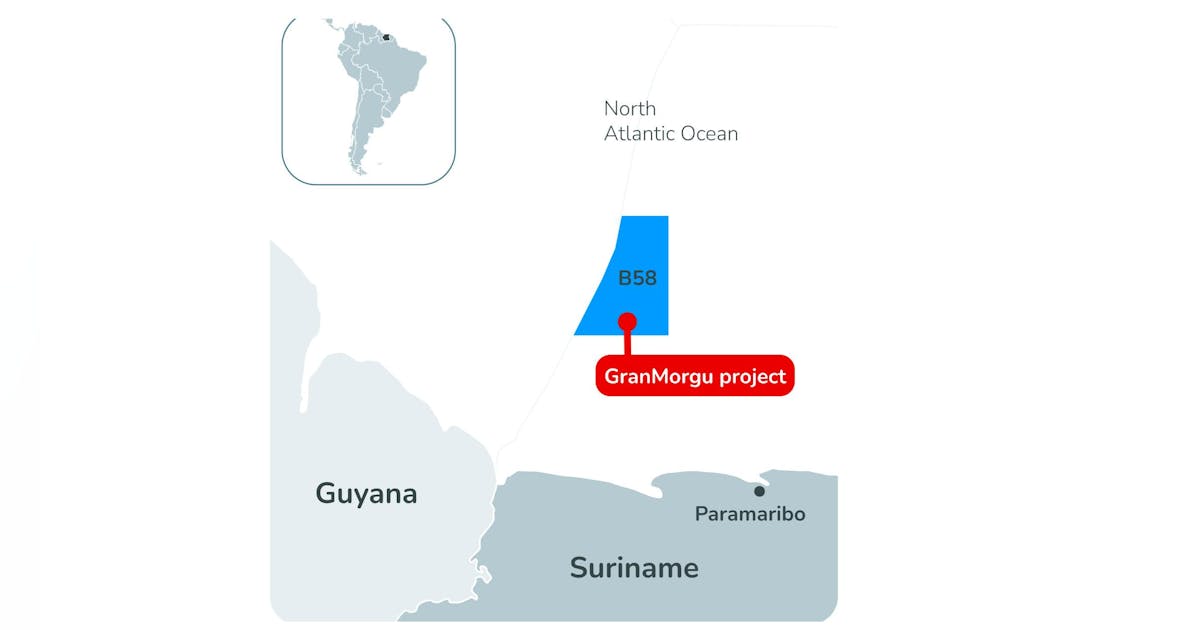
TotalEnergies has let contracts to Halliburton for work on the GranMorgu deepwater oil development project offshore Suriname. The workscope includes drilling and completions services for a long-term program that includes applying integrated digital workflows, real time data, and remote operations control for drilling and completions. As part of the project scope, Halliburton worked with local suppliers to upgrade its liquid mud and cement plant and supported construction of Suriname’s first completions and drilling workshop, featuring advanced maintenance and repair capabilities, the service provider said in a release July 13. The aim of the GranMorgu project is to develop resources on Block 58, which lies about 150 km off the Surinamese coast. Specifically, Sapakara and Krabdagu fields, which contain estimated recoverable reserves of nearly 760 million bbl, TotalEnergies noted on its website. The project’s floating production, storage, and offloading unit (FPSO), with a capacity of 220,000 b/d, is based on tested design principles of units in nearby Guyana and designed for potential future tie-in of satellite fields. Production start-up is expected in 2028. TotalEnergies is operator of the project with 40% interest. Partners are APA Corp. (40%) and state-owned Staatsolie Maatschappij Suriname NV (20%).

Read More »

Aramco lets stimulation, completion services contract for unconventional gas development

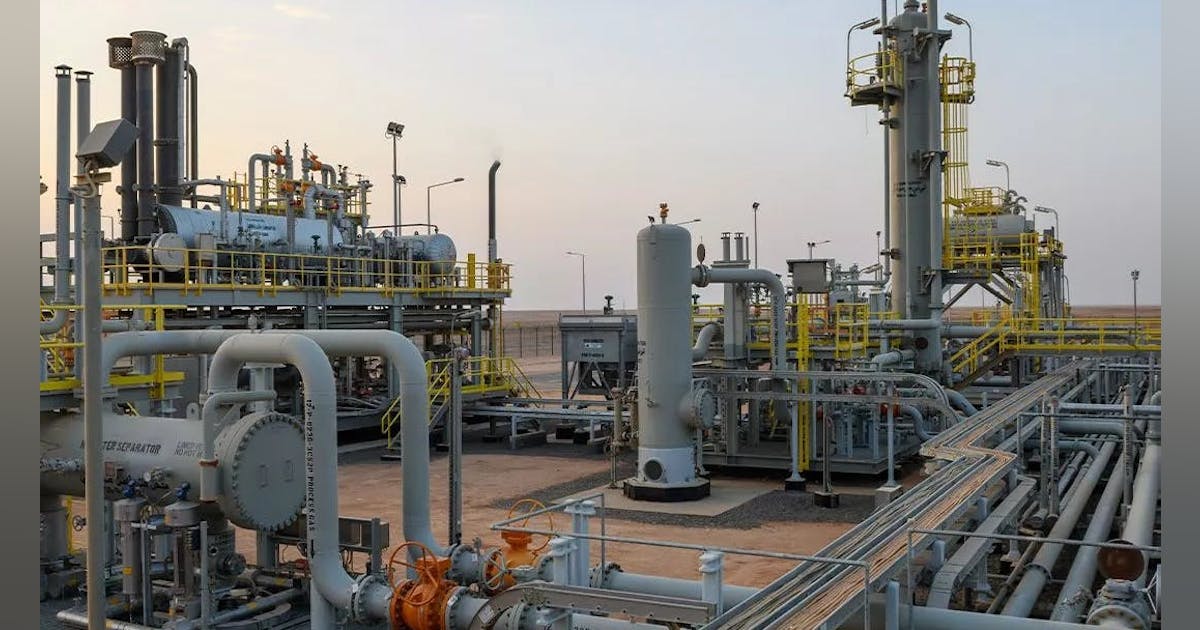
Saudi Aramco has awarded Halliburton a multi-year contract to provide stimulation and completion services for the company’s unconventional gas development program in Saudi Arabia. Halliburton said July 15 that the award is part of a broader multibillion-dollar contract framework supporting the Kingdom’s unconventional resource expansion. Under the agreement, Halliburton will deploy intelligent fracturing automation technologies designed to optimize treatment performance in real time and support execution across multiwell development campaigns. The company said the technologies will enable greater digital integration across field operations. Development of the Jafurah unconventional gas field, the Middle East’s largest liquids-rich shale gas play, is under way. In support of the program, Halliburton plans to expand local manufacturing capacity, strengthen its supply chain network, and increase workforce development initiatives within the Kingdom as activity levels continue to grow. “Beginning in the third quarter of 2026, Halliburton will deploy the Kingdom’s first fully integrated intelligent fracturing platform through OCTIV® Auto Frac and Sensori™ fracturing monitoring services to contribute to asset value for one of the world’s largest unconventional fields,” said Rami Yassine, senior vice-president, Eastern Hemisphere, Halliburton. Jafurah background Jafurah is a key component of Aramco’s gas expansion strategy intended to help meet rising demand for natural gas in power generation and industry. In February 2026, the operator said it seeks to expand sales gas production capacity by about 80% by 2030 compared with 2021 production levels. At the time, Aramco said unconventional shale gas output from Jafurah began in December 2025. The field covers about 17,000 sq km and is estimated to contain 229 tcf of raw gas and 75 billion stb of condensate. Aramco expects the development to produce 2 bcfd of sales gas, 420 MMscfd of ethane, and about 630,000 b/d of high-value liquids by 2030.

Read More »

Digitalization paying off for Rompetrol’s Petromidia refinery

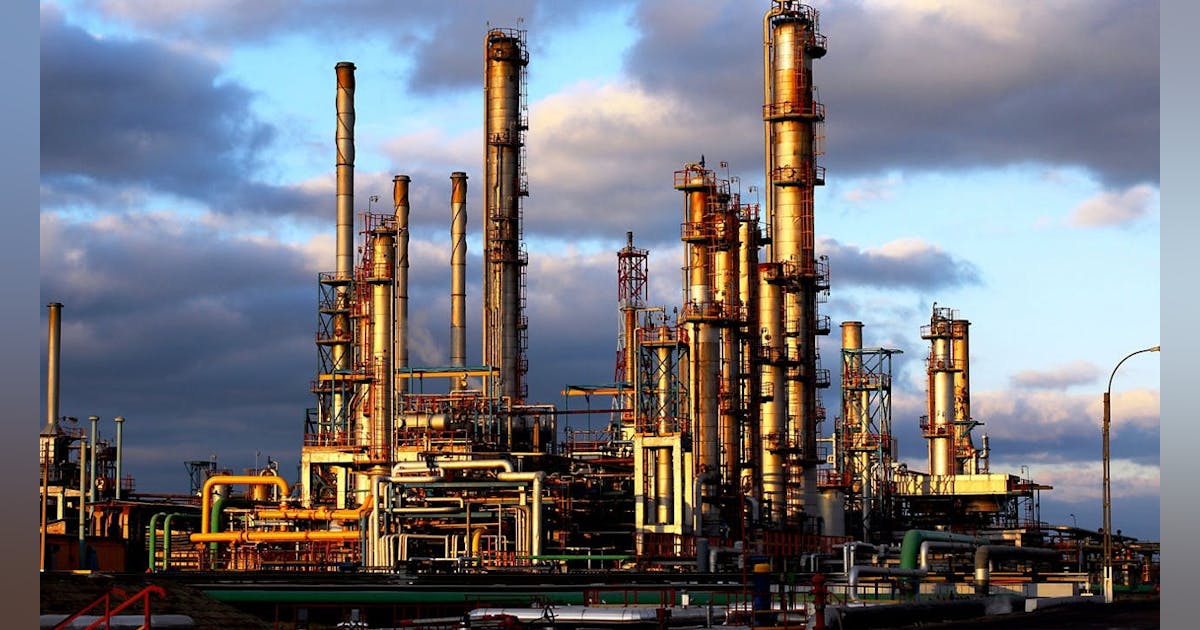
Rompetrol Rafinare SA—jointly owned by Kazakhstan’s state-owned JSC NC KazMunayGas (KMG) subsidiary KMG International NV (54.63%) and Romania’s Ministry of Economy, Energy & Business Environment (44.7%)—is using proprietary operations management software from Emerson Electric Co. to improve alarm performance its more than 5-million tonne/year Petromidia refinery in Năvodari, Romania, on the Black Sea. To date, implementation of Emerson’s DeltaV AgileOps operations management software has helped reduce distributed control system (DCS) alarm volumes at the Petromidia refinery by more than 95%, the service provider said on July 14. Emerson said the project improved alarm performance, increased operator effectiveness, and brought alarm rates within the Engineering Equipment and Materials Users Association (EEMUA) 191 guideline recommendations. Before implementation of DeltaV AgileOps, alarm behavior at the refinery—Romania’s largest—expanded beyond recommended best practices, including high alarm volumes during plant disturbances, nuisance-chattering alarms, and alarms that remained active during normal operation. To address those issues, Rompetrol Rafinare worked with KMG International’s engineering and maintenance services provider SC Rominserv SRL to improve alarm quality and reduce nuisance alarms across the refinery. Use of DeltaV AgileOps—which pulls alarm and event data directly from the DeltaV DCS running the plant—provided continuous visibility into alarm performance, including average and peak alarm rates, recurring alarm sequences, and time spent outside recommended operating thresholds, Emerson said. Following implementation, engineering teams at the refinery used performance dashboards and historical trending to identify high-frequency alarms, stale alarms, and nuisance “bad actor” alarms responsible for disproportionate alarm activity. The teams evaluated alarm behavior during steady-state operation, startup conditions, and process disturbances, then assessed proposed changes to alarm limits, priorities, and suppression strategies against plant data. Emerson said the project reduced alarm generation to fewer than 50,000 alarms/month from more than 2 million alarms/month during normal operation. Emerson—which linked the outcome to EEMUA 191 guidance that

Read More »

EIA: US crude inventories down 1.7 million bbl

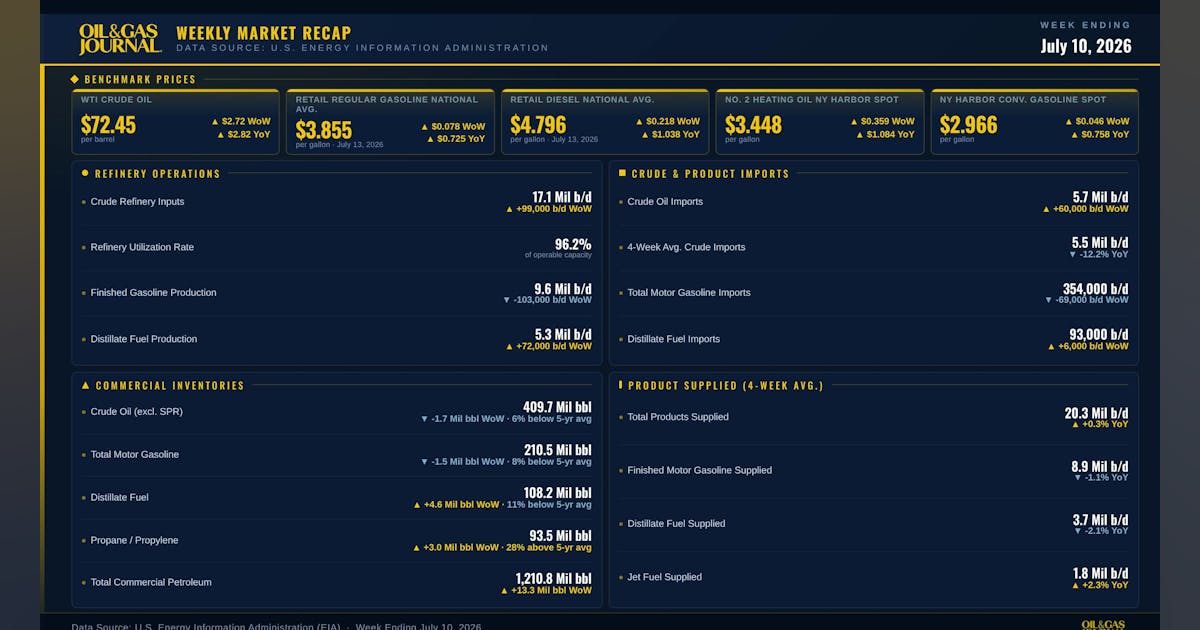
US crude oil inventories for the week ended July 10, excluding the Strategic Petroleum Reserve, decreased by 1.7 million bbl from the previous week, according to data from the US Energy Information Administration (EIA). At 409.7 million bbl, US crude oil inventories are about 6% below the 5-year average for this time of year, the EIA report indicated. EIA said total motor gasoline inventories decreased by 1.5 million bbl from last week and are 8% below the 5-year average for this time of year. Finished gasoline inventories and blending components inventories both decreased last week. Distillate fuel inventories increased by 4.6 million bbl last week and are about 11% below the 5-year average for this time of year. Propane-propylene inventories increased by 3 million bbl from last week and are 28% above the 5-year average for this time of year, EIA said. US crude oil refinery inputs averaged 17.1 million b/d for the week ended July 10, which was 99,000 b/d more than the previous week’s average. Refineries operated at 96.2% of capacity. Gasoline production decreased, averaging 9.6 million b/d. Distillate fuel production increased, averaging 5.3 million b/d. US crude oil imports averaged 5.7 million b/d, up 60,000 b/d from the previous week. Over the last 4 weeks, crude oil imports averaged about 5.5 million b/d, 12.2% less than the same 4-week period last year. Total motor gasoline imports averaged 354,000 b/d. Distillate fuel imports averaged 93,000 b/d.

Read More »

Tech Explainer: Data Center Cooling – Air, Evaporative, Liquid, and Hybrid Approaches

Data Center Cooling Glossary The following definitions reflect common terminology used in Department of Energy guidance, ASHRAE TC 9.9 materials, Berkeley Lab resources and Green Grid efficiency metrics. Adiabatic Cooling — A cooling process that uses water evaporation to lower the temperature of air before it reaches a heat exchanger or cooling coil. It can reduce compressor demand but consumes water when evaporative assistance is active. Air-Cooled Data Center — A facility in which heat is removed from IT equipment primarily by moving conditioned air through servers, even if that heat is later transferred to water or refrigerant elsewhere in the cooling system. Air Handler — Equipment that moves, filters and conditions air before delivering it to a data hall or other controlled space. Air-Side Economizer — A system that uses suitable outdoor air, either directly or mixed with return air, to reduce or avoid compressor-based refrigeration. Airflow Management — The practice of delivering conditioned air where it is needed while preventing hot exhaust air from recirculating into server inlets. Approach Temperature — The temperature difference between the two fluids leaving a heat exchanger at their closest thermal point. In a cooling tower, it commonly refers to the difference between leaving-water temperature and entering-air wet-bulb temperature. A smaller approach generally indicates more effective heat transfer. ASHRAE TC 9.9 — The ASHRAE technical committee focused on mission-critical facilities, data centers, technology spaces and electronic equipment. It is a major source of environmental and thermal guidance for data center operators and equipment manufacturers. Blanking Panel — A panel installed in unused rack spaces to prevent hot exhaust air from recirculating to server intakes. British Thermal Unit, or BTU — A unit of heat energy commonly used to express the heating or cooling capacity of equipment. Cabinet — An enclosure, also commonly called

Read More »

The AI Infrastructure Split Screen: Capital Rush Meets Community Resistance

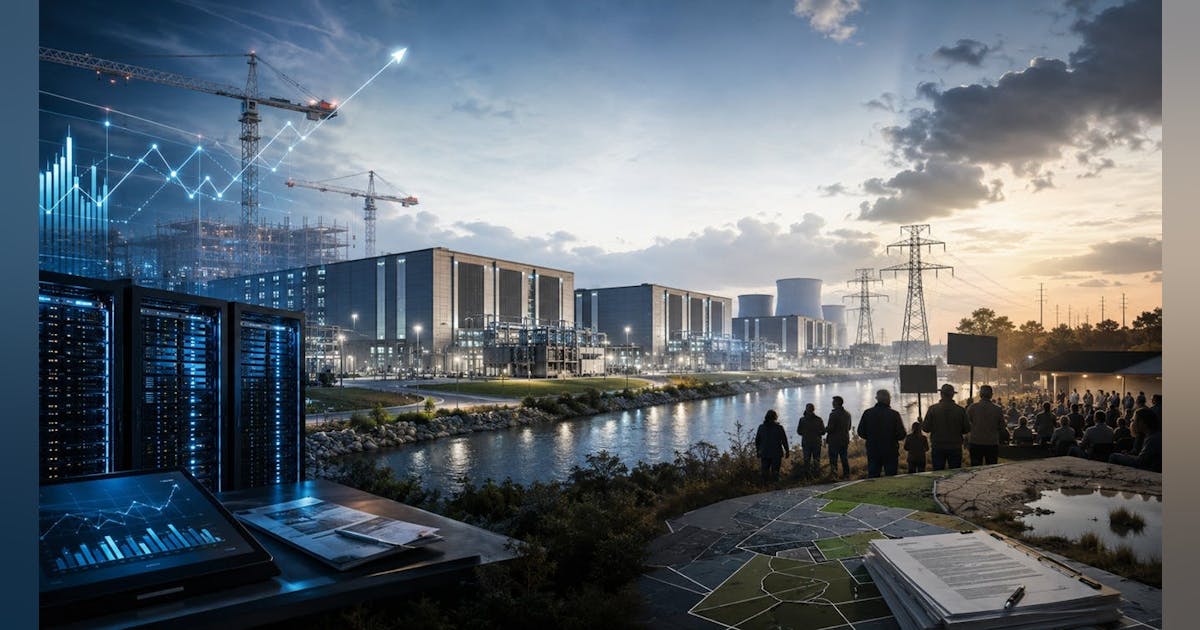
It would be difficult to construct a more revealing snapshot of the AI infrastructure market than the one delivered in mid-July. In the same news cycle, Csquare completed a billion-dollar initial public offering, Switch was linked to a potential $10 billion IPO, and Databricks reached a reported valuation of $188 billion. At the project level, developers advanced or disclosed campuses measured not in tens or hundreds of megawatts, but in gigawatts—from Meta’s expanding Louisiana complex and Google’s reported Wyoming plans to new Crusoe, QTS, MARA and Tract developments. Yet the same week brought a state-level permitting pause in New York, a decisive project rejection in Palm Beach County, planned protests across more than 20 states, and fresh disputes over parkland, water availability and local control. This is the data center and AI landscape in 2026: capital is abundant but increasingly discriminating; power is more valuable than the underlying real estate; and community consent has become nearly as important as interconnection capacity. Public Markets Put Different Prices on the AI Stack The capital-market headlines illustrated how differently investors are valuing the various layers of AI infrastructure. Csquare priced 50 million shares at $21, raising approximately $1.05 billion and establishing an equity valuation of roughly $3.2 billion. The offering was substantial, but it priced below the proposed $23-to-$27 range, and the shares finished their first trading day slightly below the offer price. Brookfield retained approximately 67% of the company’s voting power following the transaction. That reception contrasts sharply with the valuation being discussed for Switch. The DigitalBridge-backed operator has reportedly engaged Goldman Sachs and JPMorgan for a potential IPO that could raise as much as $10 billion and value Switch near $80 billion, including debt. The transaction remains prospective, but the figure is striking when compared with the $11 billion take-private agreement

Read More »

New York State just hit pause on the AI data center boom

The moratorium could result in some “border-hopping,” with enterprises hosting local servers in adjacent states like Pennsylvania, Connecticut, or New Jersey, but that’s not likely to be widespread, Kimball noted. The realistic regional impact will be “more of a slow squeeze rather than a shock,” he said. This could result in tighter colocation availability and firmer pricing in the New York Metropolitan area over the next few years. Cloud providers may also steer new AI capacity to regions like Georgia, Ohio, Texas, and Utah, where power and permitting are more predictable. An inflection point, but more trickle-down than direct impact Indeed, noted Jeremy Roberts, senior director for research and content at Info-Tech Research Group, the moratorium is an “inflection point” and a “way to placate an increasingly angry public,”.

Read More »

TeraWulf’s $19B Anthropic Lease Puts Its Brownfield AI Strategy to the Test

He added that the company’s strategy is centered on owning and operating critical infrastructure, maintaining direct relationships with customers and controlling the long-term evolution of its campuses. This Model Differs Significantly from the Previous Abernathy JV TeraWulf and Fluidstack created the Abernathy venture in 2025 to develop a 168-MW critical IT load campus on approximately 120 acres near Abernathy, Texas. The project’s total utility requirement has been described as approximately 240 MW. Fluidstack committed to a 25-year lease at the campus, with Google providing approximately $1.3 billion of credit support for Fluidstack’s obligations. TeraWulf acquired a 50.1% interest in the joint venture through an investment of approximately $450 million. The project subsequently issued $1.3 billion in senior secured notes to support construction and related expenses. The Abernathy agreements were expected to produce approximately $9.5 billion in contracted revenue for the joint venture over the initial 25-year term. Construction has been advancing toward delivery during the second half of 2026. Following the sale, Fluidstack and the other purchasers will control the project. TeraWulf agreed to sell its Abernathy interest for approximately $530 million, compared with its $450 million investment in the joint venture. The consideration is scheduled to be paid in three installments through April 2027, with the proceeds expected to support investment in infrastructure opportunities that TeraWulf intends to own and operate directly. The decision does not necessarily indicate that TeraWulf has become less interested in partnerships with Fluidstack. Fluidstack remains an important tenant at TeraWulf’s Lake Mariner campus in New York, and the companies have built a substantial pipeline of AI infrastructure together. In infrastructure terms, TeraWulf is acting as both developer and capital allocator. It originated the Abernathy project, helped secure the customer and financing structure, advanced construction and is now monetizing its interest before the campus begins

Read More »

Comparing Space-Driven Data Center Strategies: Modular Satellites vs. Integrated Rocket Nodes

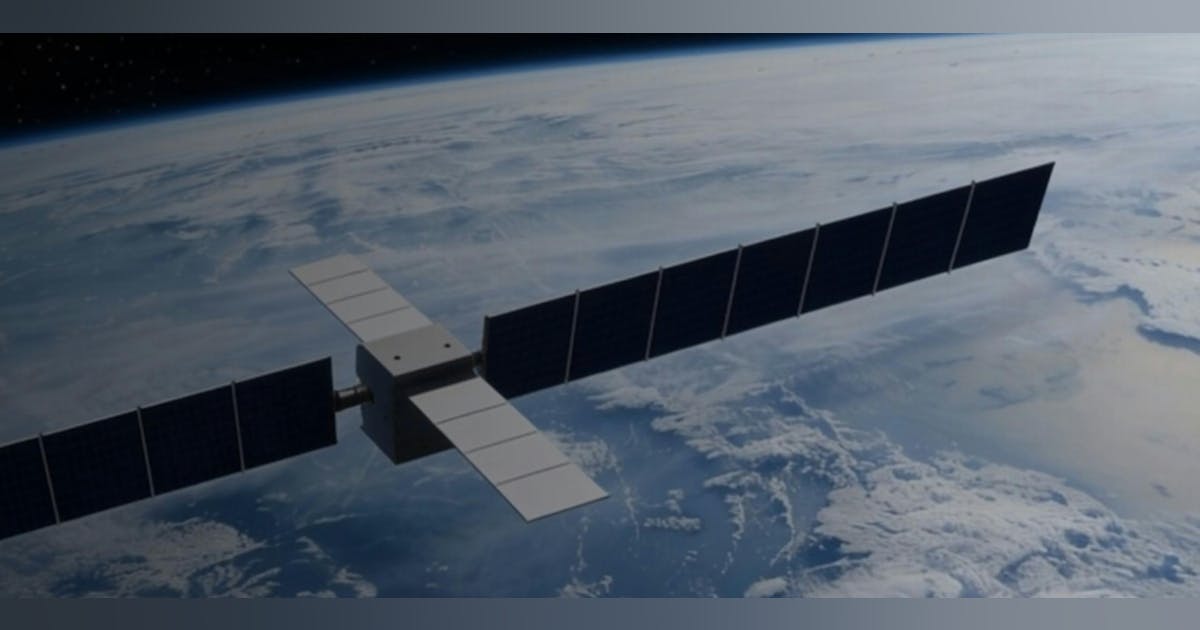
In addition to developing radiation-tolerant computing, optical communications, deployable solar arrays and orbital thermal-management systems, Cowboy must successfully design, manufacture, test and license a new rocket. Its launch vehicle would require authorization from the Federal Aviation Administration in addition to the approvals needed for the satellite constellation. Cowboy nevertheless enters the race with considerably more capital than Orbital. The company announced a $275 million Series B round in May at a reported $2 billion valuation. Founded in 2024 by Robinhood co-founder Baiju Bhatt, with a focus on space-based solar power before expanding into orbital computing and launch systems. One Hundred Kilowatts Versus One Megawatt The clearest distinction between the two proposals is the capacity assigned to each node. Orbital’s production design calls for approximately 100 kilowatts of computing power per satellite. Cowboy is targeting megawatt-class spacecraft, potentially giving each Stampede node approximately 10 times the power capacity of an Orbital satellite. At their stated maximum scales, Orbital’s 100,000 satellites would provide approximately 10 gigawatts. If Cowboy ultimately achieved one megawatt across all 20,000 Stampede spacecraft, its theoretical aggregate capacity would approach 20 gigawatts. Those figures should be treated as design objectives, not capacity forecasts. Neither company has demonstrated even one operational node at its proposed production power level. Orbital’s smaller satellites may be easier to test and deploy incrementally. The company can begin with a single hosted GPU, progress to a purpose-built prototype and expand as launch economics and customer demand permit. Cowboy’s larger nodes could provide more useful computing capacity with fewer satellites and potentially fewer launches. Combining the rocket stage and data center would also reduce the amount of structural mass that does not directly support power generation or computing. The tradeoff is concentration risk. The failure of a megawatt Cowboy spacecraft would remove considerably more capacity than

Read More »

Google Cloud configuration update disrupts VMware Engine stretched clusters

“Google made a network setting change that accidentally broke the connection between the two data center zones in VMware Engine. The virtual machines themselves kept running fine, but nobody could reach them, and there was a risk that some machines might lose the ability to save data properly. This indicates that even managed cloud infrastructure can experience failures in critical shared network components,” said Pareekh Jain, CEO at  EIIRTrend & Pareekh Consulting. Neil Shah, vice president at Counterpoint Research, said the real culprit here is the SDN orchestration control plane, where a routine internal network update or configuration tweak introduced routing failure across multiple zones. “While most of the physical nodes are distributed for exactly this redundancy purpose, they are still tightly coupled to a singular shared orchestration fabric, so if that control plane crashes, then everything comes crashing down, and the physical distributed nodes become irrelevant.” Stretched clusters fall short Although the outage did not bring down virtual machines, the incident undermined the primary reason enterprises deploy stretched clusters.

Read More »

Microsoft will invest $80B in AI data centers in fiscal 2025

And Microsoft isn’t the only one that is ramping up its investments into AI-enabled data centers. Rival cloud service providers are all investing in either upgrading or opening new data centers to capture a larger chunk of business from developers and users of large language models (LLMs).  In a report published in October 2024, Bloomberg Intelligence estimated that demand for generative AI would push Microsoft, AWS, Google, Oracle, Meta, and Apple would between them devote $200 billion to capex in 2025, up from $110 billion in 2023. Microsoft is one of the biggest spenders, followed closely by Google and AWS, Bloomberg Intelligence said. Its estimate of Microsoft’s capital spending on AI, at $62.4 billion for calendar 2025, is lower than Smith’s claim that the company will invest $80 billion in the fiscal year to June 30, 2025. Both figures, though, are way higher than Microsoft’s 2020 capital expenditure of “just” $17.6 billion. The majority of the increased spending is tied to cloud services and the expansion of AI infrastructure needed to provide compute capacity for OpenAI workloads. Separately, last October Amazon CEO Andy Jassy said his company planned total capex spend of $75 billion in 2024 and even more in 2025, with much of it going to AWS, its cloud computing division.

Read More »

John Deere unveils more autonomous farm machines to address skill labor shortage

Join our daily and weekly newsletters for the latest updates and exclusive content on industry-leading AI coverage. Learn More Self-driving tractors might be the path to self-driving cars. John Deere has revealed a new line of autonomous machines and tech across agriculture, construction and commercial landscaping. The Moline, Illinois-based John Deere has been in business for 187 years, yet it’s been a regular as a non-tech company showing off technology at the big tech trade show in Las Vegas and is back at CES 2025 with more autonomous tractors and other vehicles. This is not something we usually cover, but John Deere has a lot of data that is interesting in the big picture of tech. The message from the company is that there aren’t enough skilled farm laborers to do the work that its customers need. It’s been a challenge for most of the last two decades, said Jahmy Hindman, CTO at John Deere, in a briefing. Much of the tech will come this fall and after that. He noted that the average farmer in the U.S. is over 58 and works 12 to 18 hours a day to grow food for us. And he said the American Farm Bureau Federation estimates there are roughly 2.4 million farm jobs that need to be filled annually; and the agricultural work force continues to shrink. (This is my hint to the anti-immigration crowd). John Deere’s autonomous 9RX Tractor. Farmers can oversee it using an app. While each of these industries experiences their own set of challenges, a commonality across all is skilled labor availability. In construction, about 80% percent of contractors struggle to find skilled labor. And in commercial landscaping, 86% of landscaping business owners can’t find labor to fill open positions, he said. “They have to figure out how to do

Read More »

2025 playbook for enterprise AI success, from agents to evals

Join our daily and weekly newsletters for the latest updates and exclusive content on industry-leading AI coverage. Learn More 2025 is poised to be a pivotal year for enterprise AI. The past year has seen rapid innovation, and this year will see the same. This has made it more critical than ever to revisit your AI strategy to stay competitive and create value for your customers. From scaling AI agents to optimizing costs, here are the five critical areas enterprises should prioritize for their AI strategy this year. 1. Agents: the next generation of automation AI agents are no longer theoretical. In 2025, they’re indispensable tools for enterprises looking to streamline operations and enhance customer interactions. Unlike traditional software, agents powered by large language models (LLMs) can make nuanced decisions, navigate complex multi-step tasks, and integrate seamlessly with tools and APIs. At the start of 2024, agents were not ready for prime time, making frustrating mistakes like hallucinating URLs. They started getting better as frontier large language models themselves improved. “Let me put it this way,” said Sam Witteveen, cofounder of Red Dragon, a company that develops agents for companies, and that recently reviewed the 48 agents it built last year. “Interestingly, the ones that we built at the start of the year, a lot of those worked way better at the end of the year just because the models got better.” Witteveen shared this in the video podcast we filmed to discuss these five big trends in detail. Models are getting better and hallucinating less, and they’re also being trained to do agentic tasks. Another feature that the model providers are researching is a way to use the LLM as a judge, and as models get cheaper (something we’ll cover below), companies can use three or more models to

Read More »

OpenAI’s red teaming innovations define new essentials for security leaders in the AI era

Join our daily and weekly newsletters for the latest updates and exclusive content on industry-leading AI coverage. Learn More OpenAI has taken a more aggressive approach to red teaming than its AI competitors, demonstrating its security teams’ advanced capabilities in two areas: multi-step reinforcement and external red teaming. OpenAI recently released two papers that set a new competitive standard for improving the quality, reliability and safety of AI models in these two techniques and more. The first paper, “OpenAI’s Approach to External Red Teaming for AI Models and Systems,” reports that specialized teams outside the company have proven effective in uncovering vulnerabilities that might otherwise have made it into a released model because in-house testing techniques may have missed them. In the second paper, “Diverse and Effective Red Teaming with Auto-Generated Rewards and Multi-Step Reinforcement Learning,” OpenAI introduces an automated framework that relies on iterative reinforcement learning to generate a broad spectrum of novel, wide-ranging attacks. Going all-in on red teaming pays practical, competitive dividends It’s encouraging to see competitive intensity in red teaming growing among AI companies. When Anthropic released its AI red team guidelines in June of last year, it joined AI providers including Google, Microsoft, Nvidia, OpenAI, and even the U.S.’s National Institute of Standards and Technology (NIST), which all had released red teaming frameworks. Investing heavily in red teaming yields tangible benefits for security leaders in any organization. OpenAI’s paper on external red teaming provides a detailed analysis of how the company strives to create specialized external teams that include cybersecurity and subject matter experts. The goal is to see if knowledgeable external teams can defeat models’ security perimeters and find gaps in their security, biases and controls that prompt-based testing couldn’t find. What makes OpenAI’s recent papers noteworthy is how well they define using human-in-the-middle

Read More »