Three years ago, the data center industry’s energy conversation was largely framed around emissions.
Hyperscale operators were setting carbon-free energy targets, signing renewable power agreements, and aligning their expanding infrastructure portfolios with corporate sustainability commitments.
The arrival of generative AI has not eliminated those priorities. But it has reordered them.
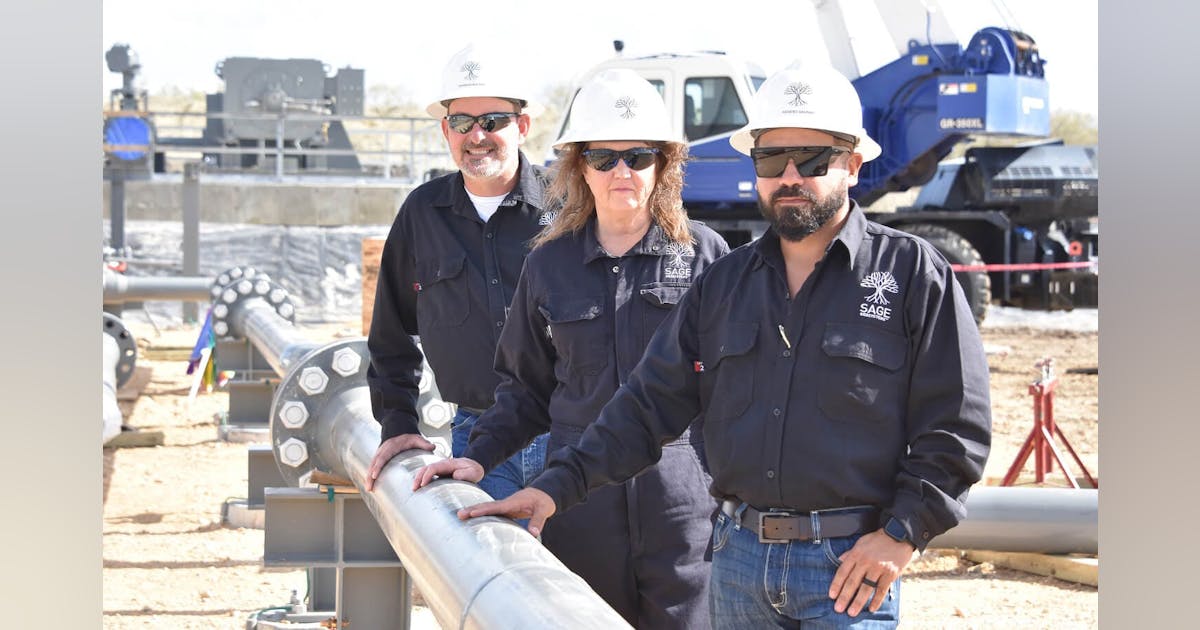
“Three years ago, data center energy, they were really focused on low emissions, no emissions,” said Cindy Taff, CEO of Sage Geosystems. “Now the primary challenge is just enough energy.”
Speaking on the Data Center Frontier Show podcast, Taff described an energy market being reshaped by the speed and physical scale of AI infrastructure development. After decades of relatively flat U.S. electricity demand, AI has introduced a new class of concentrated, rapidly arriving industrial load.
The result is a shift away from thinking only about how much generating capacity exists in aggregate and toward a harder question: Can usable power be delivered at a specific site, on a predictable schedule, in the quantities an AI campus requires?
For hyperscalers, neocloud providers, data center developers, utilities, and energy companies, that distinction is becoming central to project execution.
“I think time to power is the most precious metric right now versus cost or total capacity,” Taff said.
Capacity on Paper Is Not Power at the Site
Announcements of new generation can create the appearance of an energy system capable of meeting rising data center demand. But a megawatt located far from a planned campus, trapped behind a transmission constraint, or unavailable until the next decade has limited value to a developer trying to energize an AI facility within several years.
“Aggregate capacity is not going to solve the problem if the power really isn’t where and when you need it,” Taff said.
Data centers are large physical facilities tied to specific parcels, construction schedules, equipment deliveries, customer commitments, and increasingly expensive capital.
A region may possess significant generating capacity while still being unable to serve a new campus because of transmission congestion, substation limitations, interconnection backlogs, or delayed utility upgrades.
Those constraints are driving interest in power sources that are firm, dispatchable, and potentially capable of being located closer to the load.
That is the opening Sage Geosystems sees for next-generation geothermal.
Sage is developing geothermal generation and energy storage systems based on engineered subsurface reservoirs and pressure management. Its approach is designed to access heat contained in hot rock formations without requiring the naturally occurring underground water resources associated with conventional geothermal.
The locational flexibility of that model could make geothermal relevant to a much larger portion of the data center market.
“Hot dry rock geothermal is dispatchable, and you can really build it where it’s needed,” Taff said.
Moving Geothermal Beyond the Ring of Fire
Conventional geothermal power has been commercially available for roughly a century. Its best-known deployments include geothermal resources in Iceland and The Geysers complex in Northern California.
These projects depend on favorable geology in which heat and naturally occurring underground water are found relatively close to the surface. Such resources are often associated with volcanic and tectonically active regions.
The limitation is geographic.
According to Taff, the geology required for conventional geothermal represents only about 2% of the world’s broader geothermal potential.
Next-generation geothermal companies are attempting to expand that resource by targeting hot rock that does not contain the natural water reservoirs required by traditional projects.
Instead of locating a naturally formed geothermal system, developers create an engineered subsurface reservoir. Water is injected from the surface, circulated through hot rock, and returned carrying thermal energy that can be converted into electricity.
“You engineer an artificial reservoir to replicate what Mother Nature is doing in conventional,” Taff explained.
Opening geothermal development to hot dry rock could expand the usable resource from approximately 2% to between 50% and 60% of total geothermal potential, she said.
Sage’s approach uses enhanced geothermal systems, commonly known as EGS, but seeks to address two longstanding economic challenges: water losses and the energy required to operate the circulation system.
Those parasitic loads matter because project economics depend not simply on gross generation, but on the net electricity remaining after the system powers its own pumps and equipment.
Sage combines geothermal generation with pressure-based energy storage and subsurface reservoir management. That intersection allows the company to approach the underground formation not only as a heat resource, but as an energy system whose output can be managed in response to demand.
For data centers, that controllability may be as important as the renewable nature of the resource.
From Green Energy to Strategic Infrastructure
Geothermal has historically occupied a relatively small place in the renewable energy conversation. Wind and solar received most new investment and policy attention, while geothermal remained concentrated in regions with established resources.
AI infrastructure is encouraging the market to reconsider the technology through a different lens.
Geothermal is renewable, but unlike variable wind and solar generation, it can produce firm power around the clock. A properly developed geothermal resource does not depend on sunlight, wind conditions, or large amounts of short-duration battery storage to maintain continuous output.
That profile aligns with the operating requirements of data centers, which require electricity 24 hours a day and cannot pause workloads when renewable generation declines.
“While it is a clean renewable energy, it is really a baseload energy,” Taff said. “It’s available 24/7. It’s firm, and you can really locate it just about anywhere.”
This is moving geothermal beyond a discussion centered solely on carbon reduction. For AI infrastructure developers, it could represent a domestic, dispatchable, and potentially locatable resource capable of improving resilience and certainty of supply.
Taff believes next-generation geothermal is at a point comparable to where wind and solar stood before manufacturing scale, deployment volume, and technology improvements drove down costs.
“We are where wind and solar were 15 years ago,” she said.
The challenge is to move down a similar cost curve.
One sign that the technology may be entering a new phase is the participation of companies and workers from the oil and gas sector. Next-generation geothermal requires many of the same capabilities the hydrocarbon industry has spent decades refining: subsurface imaging, well design, horizontal drilling, reservoir management, field operations, and large-scale execution.
The energy transition, in this case, may rely less on replacing an industrial workforce than on redirecting its expertise.
When Data Centers Become Energy Developers
Power constraints are also changing the role of the data center operator.
Historically, most developers selected a site, worked with the local utility, secured an interconnection agreement, and purchased electricity through established grid structures. Generation and transmission behind the delivery point were primarily the responsibility of utilities and independent power producers.
That division of labor is becoming less reliable as data center requirements move into the hundreds of megawatts and project schedules compress.
Hyperscalers and developers are now exploring direct investments in generation, long-term agreements tied to new power plants, utility partnerships, behind-the-meter systems, and campuses designed around dedicated energy infrastructure.
Taff believes the shift is being driven less by strategic preference than necessity.
“The energy needs are huge, and they need it now,” she said. “They can’t depend on the grid anymore.”
Public concern about the impact of large data center loads is adding pressure. Taff pointed to actions in several states intended to prevent data center development from increasing electricity costs for existing residential and commercial customers.
That concern strengthens the argument that major new loads may increasingly need to arrive with corresponding generation.
The emerging model is not simply a data center connected to a public utility. It is a more complex ecosystem in which the campus may include or contract directly with dedicated generation, storage, fuel infrastructure, controls, substations, and grid-interactive systems.
Co-locating generation behind the meter could reduce some transmission and interconnection dependencies. But it also transfers new responsibilities and risks to the developer.
“A behind-the-meter solution is a pretty complex ecosystem that you’ve got to build,” Taff said.
Developers pursuing this model must consider permitting, land, water, fuel supply, maintenance, protection systems, environmental compliance, backup generation, and the operating relationship between private generation and the public grid.
The attraction is speed and control. The difficulty is that the data center industry is effectively learning how to develop private energy systems alongside compute infrastructure.
The Grid and the AI Deployment Curve
The urgency behind this shift comes from a basic mismatch in development timelines.
AI technology can evolve in months. Server platforms, model architectures, networks, and cooling designs are moving through rapid product cycles. Data center developers are likewise searching for ways to standardize designs, accelerate permitting, order equipment earlier, and bring capacity online faster.
Traditional power infrastructure moves on a different clock.
New transmission lines, grid upgrades, substations, and large power plants can take years to plan, permit, finance, and construct. In some markets, a project may spend years in an interconnection queue before required infrastructure work begins.
“Data centers and AI, we’re seeing, can build fast,” Taff said. “They can scale in months. Whereas if you’re trying to build traditional power infrastructure—whether you’re upgrading a grid, adding power lines—it takes years.”
The industry has tried to address the problem by entering interconnection queues earlier, identifying secondary markets, improving load forecasts, and working more closely with utilities.
Those measures remain important. But Taff believes the size of the gap will ultimately require a more fundamental change.
“Rather than trying to optimize the grid, I think you really need to figure out what is the step change,” she said.
Distributed generation, including geothermal, natural gas, nuclear, renewables, and energy storage, is increasingly part of that discussion.
The future power system serving AI is unlikely to be defined by a single technology. It will more likely consist of multiple resources deployed in phases and assembled around the needs and location of each campus.
Gigawatts Are Built 50 Megawatts at a Time
The AI infrastructure market routinely discusses campuses measured in gigawatts. But even the largest campuses cannot be delivered as a single block of capacity.
They must be developed incrementally.
“It’s great to talk about gigawatts because it’s huge scale, and that scale allows you to drive costs down,” Taff said. “But you still have to build it 50 megawatts or 100 megawatts at a time.”
That reality places a premium on repeatable development models.
An energy technology intended to support gigawatt-scale AI campuses must be capable of delivering an initial phase quickly, adding subsequent phases predictably, and drawing upon a mature supply chain of equipment, workers, and contractors.
For geothermal, Taff sees the existing oil and gas industry as a potential scaling engine.
In discussions about delivering 5 gigawatts over five years, Sage estimated that such a buildout would require drilling approximately 500 wells annually.
By comparison, Taff said, the U.S. oil and gas industry drills roughly 30,000 wells per year.
On that basis, a 5-gigawatt geothermal program would require less than 5% of the industry’s existing drilling capacity.
The comparison does not eliminate the practical challenges of identifying sites, securing permits, engineering reservoirs, connecting generation, and financing projects. But it illustrates that the necessary industrial capabilities already exist at meaningful scale.
The data center industry would not need to create an entirely new drilling ecosystem. It would need to redirect a portion of an established one.
“That’s what’s exciting,” Taff said. “We have the oil and gas infrastructure already.”
This may ultimately be one of next-generation geothermal’s strongest arguments. The technology is emerging just as AI infrastructure requires both a new energy resource and a way to scale that resource faster than conventional grid expansion.
AI’s Physical Infrastructure Reality
The race for power also highlights an aspect of AI sometimes obscured by the technology’s software interface.
AI may be experienced through applications, models, and digital services, but it depends on an enormous physical supply chain.
It requires land, concrete, steel, transformers, generators, switchgear, cooling plants, fiber networks, servers, substations, and power generation. Building those systems requires engineers, construction workers, equipment manufacturers, operators, and skilled trades.
“You need a data center to run AI, and a data center is just a huge physical buildout,” Taff said.
That buildout can create jobs, construction activity, tax revenue, and long-term industrial investment. It can also create strain on power systems, water resources, land availability, and surrounding communities.
The next phase of AI infrastructure development will depend on whether developers can balance those opportunities and impacts while assembling energy systems at unprecedented speed.
For Sage Geosystems, geothermal’s role in that future is not based only on its sustainability credentials. It rests on the possibility that hot dry rock can become a firm, scalable, distributed resource developed close to the campuses that need it.
The central question is how quickly next-generation geothermal can move from promising projects to repeatable commercial deployment—and whether permitting, financing, and regulation can evolve quickly enough to support that scale.
But the metric driving the market is already clear.
For the AI data center sector, the most valuable megawatt is no longer simply the least expensive or the cleanest on paper. It is the megawatt that can be permitted, financed, built, and delivered where the compute infrastructure is ready to use it.
“Time to power,” Taff said, “is the most precious metric right now.”