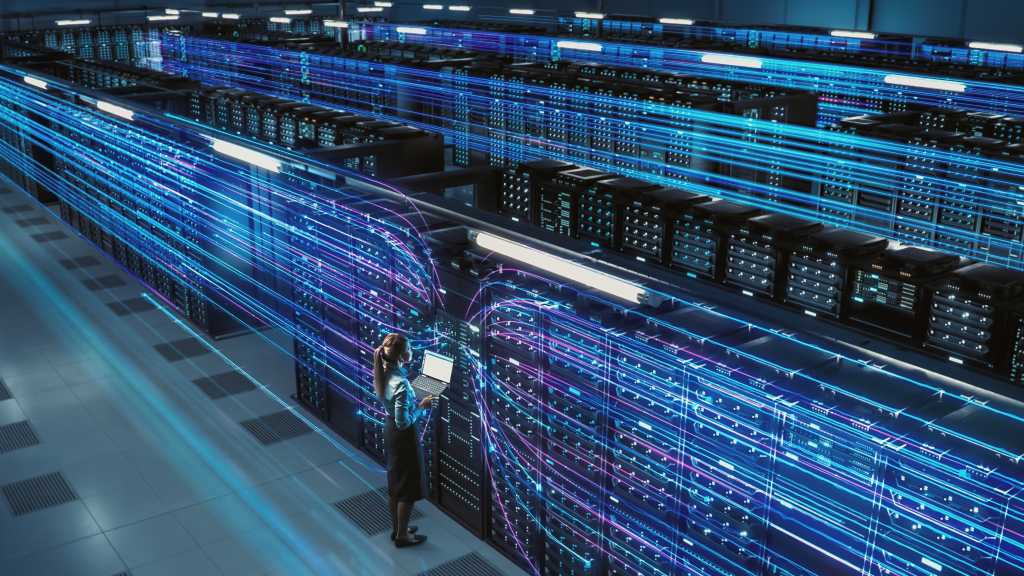
The biggest driver in today’s global economy is the data center, and in the process, data centers are generating and taking more heat than ever before. Heat — the generation of it and public concerns about it — is the most pressing issue facing the data center industry. In response, data center managers and engineers are viewing the problem in new ways, devising innovative, next-generation thermal control strategies that manage the problem more effectively.
In the minds of IT managers and the public, data centers and AI are joined at the hip, along with increasing power demands and associated issues of environmental impact, water usage, and higher utility costs. As community activists, political leaders, and now even some prominent AI industry CEOs call for limits on AI development and data center construction, it’s imperative that the data center industry better manage the heat they’re producing — and taking.
Sponsored Resources:
Texas Instruments’ portfolio of data center thermal management systems spans the full coolant path. It’s been under active development at TI for decades and has evolved in response to the rising power, computing demands, and complexity of advanced data centers.
Traditional thermal management techniques can’t keep up with AI’s intense computing requirements. For decades, air cooling was sufficient. Fans blew cool air across hot components and carried heat away, keeping data centers and AI servers operating reliably. But with AI training and inference pushing rack power beyond 20kW to 40kW, air alone can no longer remove heat quickly enough. In addition, air cooling is noisy and consumes too much energy. AI server racks are coming online now that draw 100kW of power, and they’re on their way to more than a megawatt in a few years. Each generation of servers grows denser, more powerful, and hotter as they move and compute massive volumes of data from memory to large language models to processors.
So what’s to be done? Data center engineers increasingly are taking on a holistic view of the problem, attacking it across multiple fronts simultaneously, from the facility level through to the server tray. What’s needed is a portfolio-based solution that spans the full coolant path, from the heating, ventilation and air-conditioning (HVAC) systems that cool an entire data center facility, to the cooling distribution unit (CDU) that feeds the racks, to the individual server tray. It’s a comprehensive approach that’s proving to be highly effective.
It starts with liquid cooling, which is more energy-efficient and quieter than air cooling. Rather than cooling the air in and around a server, liquid cooling removes the heat at its source. A cold plate sits directly against the chip in a server tray, allowing liquid to remove heat.
Liquid cooling, in earlier, less-developed forms, has been around for decades. The technique picked up steam about 15 years ago in the HPC industry, cooling clusters of high-performance servers conducting supercomputing-class scientific workloads. Today, liquid cooling in the supercomputing and AI data center sectors has been proven safe and cost-effective; it’s become the norm.
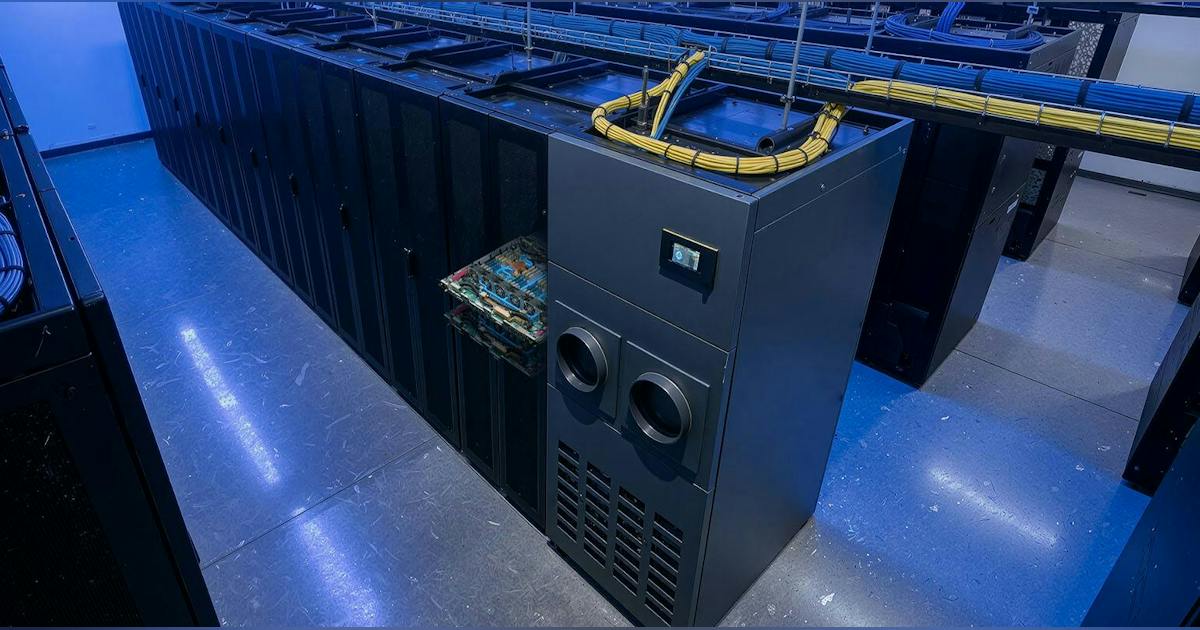
Newer liquid cooling techniques from TI are applied across entire data center facilities, from the coolant distribution units (CDUs), which circulate coolant between server racks and the external facility infrastructure, to the individual trays. The CDU houses pumps and fans that form the mechanical heart of the loop, circulating coolant through the system. Motor drivers control these pumps and fans, with built-in protection against failure. Valves regulate how much coolant reaches each tray, opening or closing based on real-time demand.
There’s an irony here: in the face of public concerns about data center water consumption, advanced liquid cooling techniques can cut data center water consumption by 90 percent or more, whereas traditional air cooling combined with evaporative chillers can consume millions of gallons per megawatt-year.
And while air cooling has lower initial CapEx costs, liquid cooling generates lower long-term operating expenses (OpEx), with up to 40 percent energy savings and a breakeven timeline of two years or less.
Liquid cooling offers another advantage: it reduces thermal stress on servers and other computing hardware, resulting in a longer mean time between failures (MTBF) of up to 65,000 hours versus 40,000 hours for air cooling.
As an example, a new, super-sized data center in Wisconsin with a closed-loop coolant system reports that its annual water use is roughly that of a typical restaurant or what an 18-hole golf course consumes per week in peak summer.
But bringing liquid this close to electronics can be expensive, and this calls for TI’s ecosystem of components that can move, monitor, and control coolant. Monitoring liquid coolant is a critical aspect for the reliable operation of the entire thermal management system. A big part of data center engineers’ jobs is maintaining a vigilant watch, tracking temperature and humidity, along with any signs of a leak or failed components, for any sign that something isn’t right.
Microcontrollers tie everything together, processing sensor data in real time and adjusting the system accordingly.
Downtime is anathema to data center operators and customers, and that means reliability is paramount even as challenges rise with rack power increasing to the megawatt level. With this in mind, TI believes that the next frontier of reliability in data center cooling combines multiple sensors through edge AI and sensor fusion. Today’s systems often rely on a single sensor to catch a leak. Tomorrow’s systems will analyze a web of real-time signals — motor current, compressor speed, humidity, pressure, and temperature — to recognize subtle patterns beyond the detection of a single sensor. This is where edge AI comes in, delivering fast response time and low latency. Correlating those signals is too complex for traditional rule-based software.
“We’re not starting from scratch,” said Patrick Zeng, general manager of data center thermal management at TI. “We’re building on technologies in commercial heating, ventilation, and air-conditioning (HVAC) systems that we’ve used for years in building automation and appliances. That means faster time to market because the foundation is already there. And it means reliability, because this is proven technology.”
Sponsored Resources: