Stay Ahead, Stay ONMINE

AWS seeks to automate cloud optimization with new AI agent

There are limits to the agent’s ability to offer timely recommendations, though: “The Agent refreshes resource-and application-level recommendations weekly, while architecture-level recommendations are generated through on-demand reviews,” Bui said. That distinction could be particularly important for fast-changing workloads, including agentic applications, where infrastructure and resource usage can change between recommendation refreshes, he added. That said, […]

There are limits to the agent’s ability to offer timely recommendations, though: “The Agent refreshes resource-and application-level recommendations weekly, while architecture-level recommendations are generated through on-demand reviews,” Bui said. That distinction could be particularly important for fast-changing workloads, including agentic applications, where infrastructure and resource usage can change between recommendation refreshes, he added.

That said, the new agent could help accelerate the pace of cloud-related decision-making, said Pareekh Jain, principal analyst at Pareekh Consulting. “Instead of giving CIOs hundreds of technical recommendations, the agent can help identify which improvements matter most to the business. That means CIOs can decide where to prioritize cloud investments and engineering resources, and where to accept trade-offs,” he said.

Limitations of the new Agent

However, the Well-Architected Agent has its own set of limitations, said Mehta. “The Agent only understands the context available to it. It may not know about regulatory obligations, third-party dependencies, business-process dependencies, contractual SLAs, internal risk appetite, multi-cloud dependencies, and organizational policies not represented in AWS,” he said. “Therefore, business-goal alignment improves prioritization but does not replace enterprise architecture or risk governance.”

Shape
Shape
Stay Ahead

Explore More Insights

Stay ahead with more perspectives on cutting-edge power, infrastructure, energy,  bitcoin and AI solutions. Explore these articles to uncover strategies and insights shaping the future of industries.

Shape

AWS seeks to automate cloud optimization with new AI agent

There are limits to the agent’s ability to offer timely recommendations, though: “The Agent refreshes resource-and application-level recommendations weekly, while architecture-level recommendations are generated through on-demand reviews,” Bui said. That distinction could be particularly important for fast-changing workloads, including agentic applications, where infrastructure and resource usage can change between recommendation

Read More »

New memory player CXMT begins mass production of DRAM platform

CXMT also developed a digital-twin system during the G5 program, designed to shorten research and development cycles. The system uses process models to create a virtual development and manufacturing environment spanning product design, development, production and maintenance. According to the company, the G5 platform substantially increases memory density, allowing the

Read More »

Petrobras makes additional discovery offshore Amapá

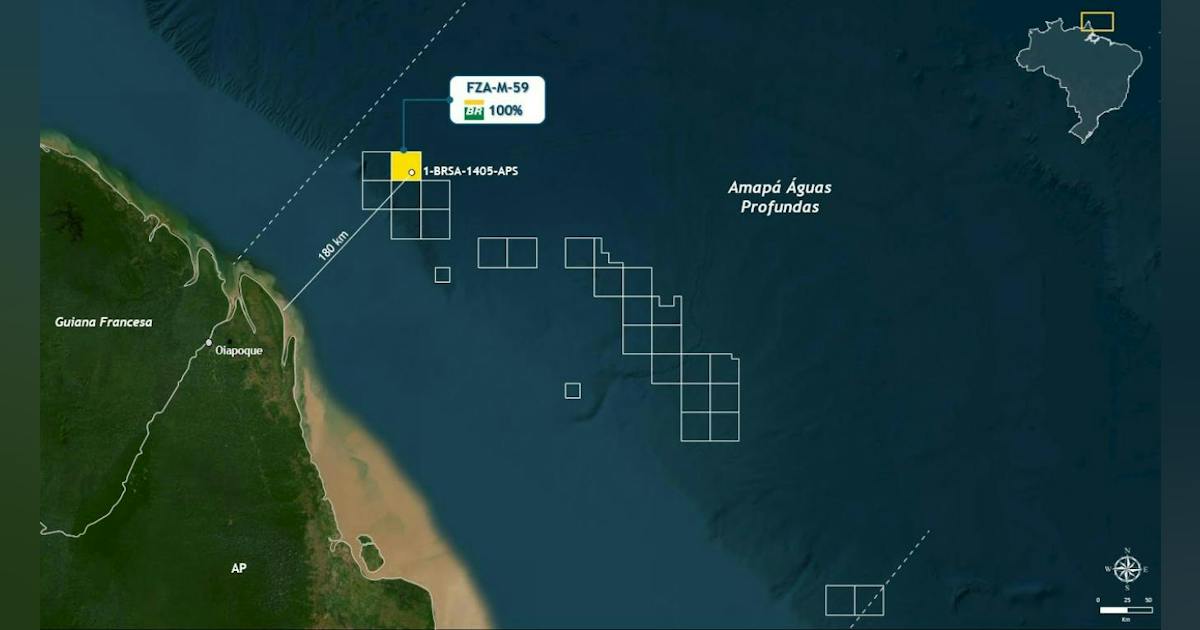
Petroleo Brasileiro SA (Petrobras) made a new discovery in block FZA-M-59 on the Brazilian Equatorial Margin, about 175 km off the coast of Amapá, in the Foz do Amazonas basin. The Morpho well (1-BRSA-1405-APS), drilled in 2,886 m of water off the coast of the state of Amapá, has reached another oil-bearing interval, the operator said on Oct. 2. Following announcement of the deepwater discovery in August, ongoing drilling of the well aimed to evaluate deeper exploratory intervals of the discovery, which was identified through electrical profiles, rock indications, and fluid samples obtained during the operations. Petrobras said the new discovery expands knowledge about the exploratory potential of the area and will provide additional information for the evaluation of the petroleum systems and resource potential of the Foz do Amazonas Sedimentary basin. With analyses still ongoing, information collected will later be characterized through laboratory analysis and integrated into the set of data acquired during drilling. Analysis already carried out, however, confirms good oil quality, according to the operator. Petrobras said it will conclude drilling activities of the well and continue the evaluation of the identified formations. Block FZA-M-59 is part of the company’s strategy to replenish oil and gas reserves through exploration in frontier areas. Petrobras is operator of the block and holds a 100% stake in the area.

Read More »

US BLM sets December California oil, gas lease sale

The US Bureau of Land Management’s (BLM) California field office Oct. 1 announced a Dec. 1 oil and gas lease sale covering 43 parcels and about 35,000 acres in California, advancing President Trump’s plan to restart federal leasing in the state after years of litigation and environmental review. While about 97% of the acreage offered lies in Kern County, BLM also plans to auction smaller, isolated parcels in Kings, Fresno, and San Luis Obispo counties. More than 95% of federal drilling operations in California currently take place in established fields in the Kern County area of the San Joaquin Valley, according to BLM. More than half of the proposed lease acreage involves a split estate, in which the federal government owns the underlying oil and gas minerals while a private party owns the surface land. The announcement opens a 30-day public protest period that will close Nov. 2. BLM completed initial scoping for the parcels in July and concluded a public comment period on the lease plan and environmental assessment in September. California Atty. Gen. Rob Bonta criticized BLM’s environmental analysis, released in August, saying the review relies on earlier planning documents and fails to adequately account for California’s restrictions on drilling near homes and schools and its phaseout of hydraulic fracturing.

Read More »

AFFO in Action: Powering Possibilities This October

H2 Walk AFFO staff are marking National Hydrogen and Fuel Cell Day with DOE’s annual 1.008-mile walk, a nod to hydrogen’s atomic weight of 1.008. Join the celebration from wherever you are by walking or running 1.008 miles on October 8.   FCHEA Circuits Webinar: Powering the Path Forward Tune in at 2 p.m. ET on October 8 for the Fuel Cell & Hydrogen Energy Association’s (FCHEA’s) National Hydrogen and Fuel Cell Day webinar. AFFO Director Valerie Sarisky-Reed will join industry speakers to discuss emerging areas across the hydrogen sector and share insights into AFFO’s strategic priorities. Register here to learn more.   Hydrogen on the Move Webinar Join the Center for Hydrogen Safety noon–1 p.m. ET on October 8 for Hydrogen on the Move: Lessons Learned for Safer High-Pressure Trailer Design and Operation. Explore lessons from real-world compressed hydrogen trailer incidents and best practices for safer, more reliable hydrogen transport. AFFO is a funder of the Hydrogen Safety Panel, a key partner in the Center for Hydrogen Safety. Register for the webinar.  Think You Know Bioenergy? Put Your Knowledge to the Test  From biomass resources to the technologies that transform them into useful products, there’s a lot to discover. Test your knowledge with AFFO’s Bioenergy Basics Game, and share it with colleagues, students, or others interested in learning more about bioenergy.   Events are only part of the celebration. Throughout October, we’ll also share stories and information highlighting AFFO’s research, priorities, partnerships, and impact. Follow along on the DOE Office of Energy Technologies (E-Tech) LinkedIn as we celebrate AFFO in Action: Powering Possibilities throughout the month. 

Read More »

Canada lists Pacific Link as Project of National Interest

The Government of Canada on Oct. 1 listed the Pacific Link project as a Project of National Interest under the Building Canada Act, advancing work to secure permissions needed to begin pipeline design and construction as early as Sept. 1, 2027. Pacific Link, formerly known as the West Coast oil pipeline, is a proposed 1 million-b/d crude oil pipeline that would transport Alberta oil to Canada’s west coast for export to Asia-Pacific and other global markets. With the Project of National Interest designation, Pembina Pipeline Corp., Calgary, along with the Governments of Alberta and Canada, and Trans Mountain Corp., will advance the project under a streamlined regulatory review process. Pembina said the listing “provides greater certainty through a clearer, more efficient and predictable federal review process that will maintain environmental standards and Indigenous consultation, which will be led by the Major Projects Office and supported by the Canada Energy Regulator.” Trans Mountain Corp. is responsible for the regulatory process, stakeholder and Indigenous engagement, construction of the project, and subsequent operation of the asset. Pembina’s economic interest through construction will be 10%, with the opportunity to acquire up to an additional 10% once the project enters commercial operation.

Read More »

Chevron ups interest in Namibia license with drill-ready prospect

Harmattan Energy Ltd., an affiliate of Chevron Corp., has agreed to a deal with Custos Energy (Pty) Ltd. subsidiary Trago Energy (Pty) Ltd. for interest in Petroleum Exploration License 90 (PEL 90) offshore Namibia.   Under the agreement, Trago will transfer all of its participating interest (10%) in PEL 90 in Namibia’s Orange Basin to license-operator Chevron, in exchange for $11 million in cash at completion. Further contingent consideration is payable on achievement of appraisal and production milestones, including revenues associated with commercial production currently estimated at 1.5-2.5 million bbl of oil (dependent upon commodity price assumptions), Custos said. With the deal, Chevron adds interests that help offset a famout deal entered into with Equinor.  In August, the operator agreed to divest to Equinor a 17.4% portion of its interest in the license, which contains a drill-ready prospect—Nabba-1X—slated for drilling before yearend. The well is part of a broader multi-well exploration program planned by Chevron across Sub-Saharan Africa. Nabba-1X will be Chevron’s second well offshore Namibia following Kapana-1X, where the company gathered geological data but did not encounter commercial hydrocarbons. Completion of Trago Energy’s farm-out to Chevron is conditional upon various governmental, regulatory, and third-party approvals.

Read More »

Trump cites $54 billion South Korean plan for Alaska LNG

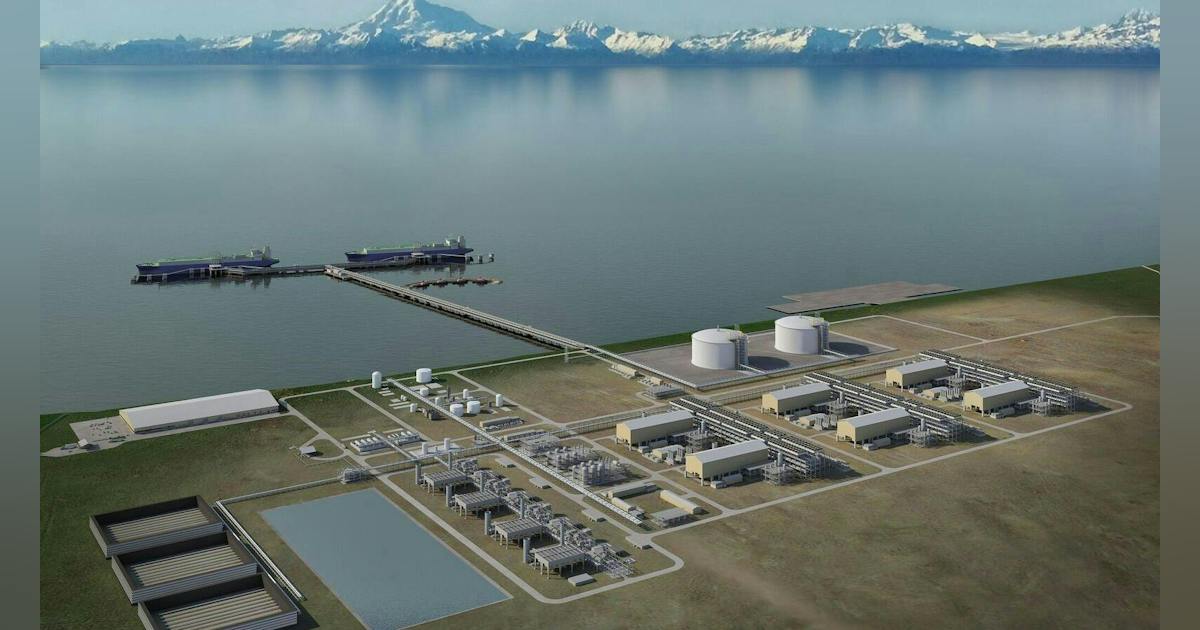
US President Donald Trump on Sept. 30 said South Korea plans to invest $54 billion in the long-delayed Alaska LNG project as part of a broader package of up to $200 billion in South Korean investment in US energy projects. The announcement does not represent a final investment commitment. South Korean officials said the two countries agreed only to review the project’s commercial viability. South Korea separately finalized a $22.3-billion investment in a 6.47-Gw gas-fired power plant in Encinal, Tex., that would supply electricity to an adjacent AI data center campus. Proposed participation in Alaska LNG and a separate framework involving eight US nuclear reactors remain subject to feasibility reviews. The Alaska LNG project would transport North Slope gas through an 807-mile pipeline to a liquefaction and LNG export terminal at Nikiski on the Kenai Peninsula. Designed capacity is up to 20 million tpy of LNG, primarily for Asian markets. Glenfarne Group is lead developer and majority owner, holding a 75% stake acquired in 2025 from Alaska Gasline Development Corp. (AGDC), which retained 25%. The project originated in 2014 as a joint effort between AGDC, ExxonMobil, ConocoPhillips, bp, and TransCanada. After the producers withdrew, AGDC became sole owner in 2017 until Glenfarne assumed control. FERC approved the project in 2020, and federal permitting was completed in 2025. A final investment decision (FID), however, has been delayed by high capital costs and the need to secure sufficient LNG offtake commitments. Glenfarne has preliminary agreements covering about 13 million tpy and has said roughly 16 million tpy is needed to support financing. The company plans to develop Alaska LNG in two financially independent phases. The first would build a pipeline supplying North Slope gas to Alaska consumers, while the second would add LNG export infrastructure. Glenfarne is targeting a pipeline investment decision

Read More »

Data Center Jobs: Engineering, Construction, Commissioning, Sales, Field Service and Facility Tech Jobs Available in Major Data Center Hotspots

Each month Data Center Frontier, in partnership with Pkaza, posts some of the hottest data center career opportunities in the market. Here’s a look at some of the latest data center jobs posted on the Data Center Frontier jobs board, powered by Pkaza Critical Facilities Recruiting. Looking for Data Center Candidates? Check out Pkaza’s Active Candidate / Featured Candidate Hotlist  Lead Mechanical Engineer – Data Center DesignNew York, NY/Remote This position is also available in: Denver, CO; Indianapolis, IN; Cedar Rapids, IA; Austin, TX; White Plains, NY; Dallas, TX; Richmond, VA; Ashburn, VA; Charlotte, NC; Atlanta, GA; Phoenix, AZ; Salt Lake City, UT; Kansas City, MO; Chicago, IL; Los Angeles, CA or San Jose, CA. Our client is a leading engineering design and commissioning company that is a subject matter expert in the data center space. They will provide design coordination and construction administration, consulting and management support for the data center / mission critical facilities space with the mindset to provide reliability, energy efficiency, and sustainable design expertise when providing these consulting services for enterprise, colocation and hyperscale companies. This career-growth minded opportunity offers exciting projects with leading-edge technology and innovation as well as competitive salaries and benefits. Electrical Commissioning Agent – Data Centers Austin, TX (limited travel) Non-Traveling CxA positions available in: Indianapolis, IN; Cedar Rapids, IA; Phoenix, AZ and Columbus, OH. Traveling CxA based near any major airport, otherwise traveling to: New York, NY; White Plains, NY; Dallas, TX; Richmond, VA; Montvale, NJ; Charlotte, NC; Salt Lake City, UT; Kansas City, MO; Chesterton, IN or Chicago, IL. ***Also looking for a Lead EE and ME CxA Agents and CxA PMs. *** This opportunity is with a leading EPC company of data center design / build / commissioning solutions. This company provides a complete life cycle of solutions that are custom-fit

Read More »

Startup doxx.net hands the network controls to AI

“The whole thing is run completely by AI, so behind the scenes, I mean, it’s a network with 31 locations around the world, and internally there’s a mesh network, and I can’t, as a human being, manage all of this by myself,” Lyon said. Lyon said the team modeled every site, down to the wire and the optic, in a virtual model before building. An infrastructure management system running the company’s own AI on its own hardware then ordered the installation. It orchestrated shipping and delivery through data center APIs. Human technicians performed the remote smart hands installations. The company also built tools for agents to work with users and with the network. An agent gateway gives an AI agent an identity in the doxx.net chat app. The user pastes a credential into the agent. The agent obtains its certificate and appears in the user’s chat. Users can create group chats with several agents. In one example, Lyon said one agent runs BGP while others handle other tasks.

Read More »

DCF Poll: What Must Data Centers Prove to Keep Building at AI Scale?

For years, the data center industry’s biggest constraints were largely physical, centered on power, transmission, land, water, equipment and labor. As the AI infrastructure buildout accelerates, however, another constraint is moving rapidly to the foreground. The constraint, and the concern, is whether host communities, regulators and policymakers believe the next generation of data centers is being built on terms that work for them, too. That question received a fresh exclamation point on Oct. 2, when Amazon Web Services announced it will invest more than $1 billion over five years in U.S. communities where it operates data centers, with funding aimed at areas including energy affordability, water and natural-resource protection, workforce development and education. The initiative arrives as electricity and water consumption associated with hyperscale infrastructure faces increasing scrutiny in communities across the country. And AWS is responding to a policy environment that is changing quickly. In Virginia, Loudoun County supervisors have begun a process that could pause action on certain new data center and substation applications for as long as 12 months while the county reviews its development policies. The board is scheduled to consider the proposed pause Oct. 20. Just next door, Prince William County voted Sept. 22 to dramatically shrink the area where data centers can be developed by right, largely shifting future projects outside the revised overlay into a case-by-case special-use permitting process. The issue is spreading well beyond Northern Virginia. On Sept. 23, Maryland Gov. Wes Moore signed an executive order creating a statewide framework for data center development centered on ratepayer protection, environmental impacts, community participation, transparency and accountability. Meanwhile, the U.S. House on Sept. 16 passed the Ratepayer Protection Act by a 417–3 vote, seeking to prevent data centers and other large loads from shifting the incremental costs of new generation and grid infrastructure onto

Read More »

$6T in annual AI revenue needed to pay off data center investments

Making the assumption that hyperscalers’ capital expenditure amounts to about 25% of revenue, they would need the AI market to be worth $6 trillion annually. But, said Bain, the current consumer and enterprise AI markets together could be worth up to $1.8 trillion by 2031, leaving a whopping $4.2 trillion still to find from new markets. Bain highlighted four potential areas: the use of AI in search; the development of more autonomous vehicles, including drones; physical AI, including digital twins and robotics; and new product development, for example, breakthroughs in pharmaceuticals.

Read More »

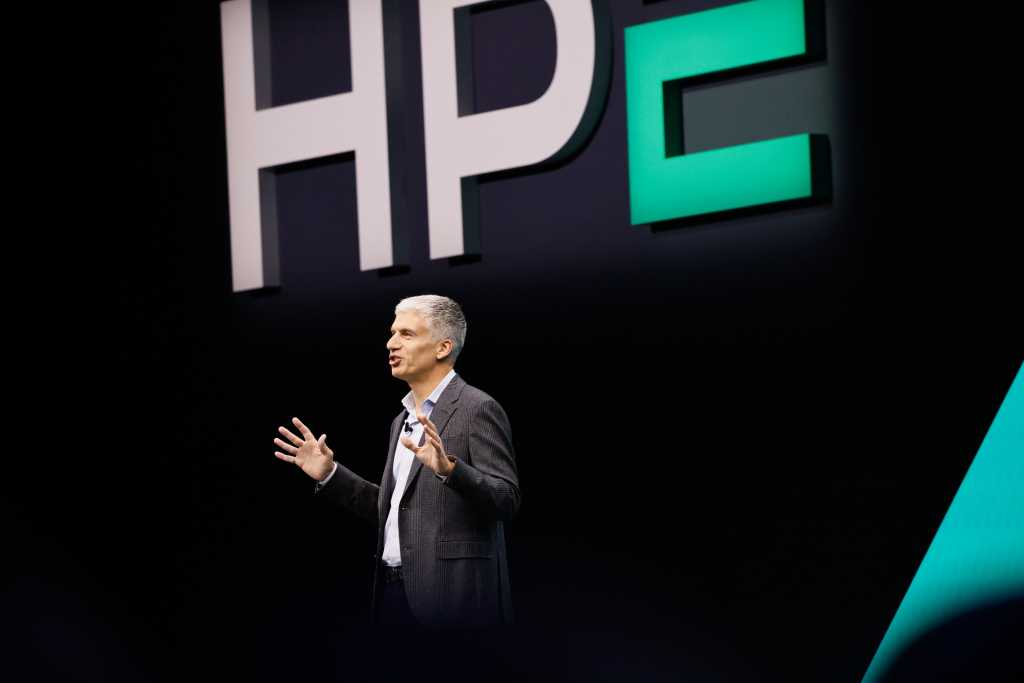
HPE’s Rahim: Pace of change in the data center is ‘extraordinary’

Network protection: As networking and security converge, Rahim said HPE continues to embed security throughout the network by combining SASE, network access control, firewalls, identity-based policy enforcement, and AI-powered operations. HPE’s security revenue is expected to grow at a high-single-digit percent CAGR through fiscal 2029. Partners: On Nov. 1, HPE will converge the Juniper and Aruba programs under one unified partner program, HPE Partner Ready Vantage. “Partners drive most of our networking business, and this milestone will enable all 60,000 HPE partners to sell the full networking portfolio through one unified partner program. Before the acquisition, only around 10% of HPE Aruba Networking and Juniper partners overlapped, and so this creates a significant cross-selling opportunity as we bring the combined HPE Networking portfolio to a much broader set of sellers and customers.” Service growth: “Today, services represent about one-third of our HPE Networking business. Services deepen customer relationships, add higher margin recurring revenue, and improve the quality of our products driving durable earnings,” Rahim said. HPE sees an opportunity to bring that business model and the culture to Aruba across a much larger installed base. “So, by fiscal 2028, we expect to increase services attach rates by five percentage points, supporting both recurring revenue growth and margin expansion,” Rahim said.

Read More »

Data Center Private Power: Who Regulates Behind-the-Meter Generation?

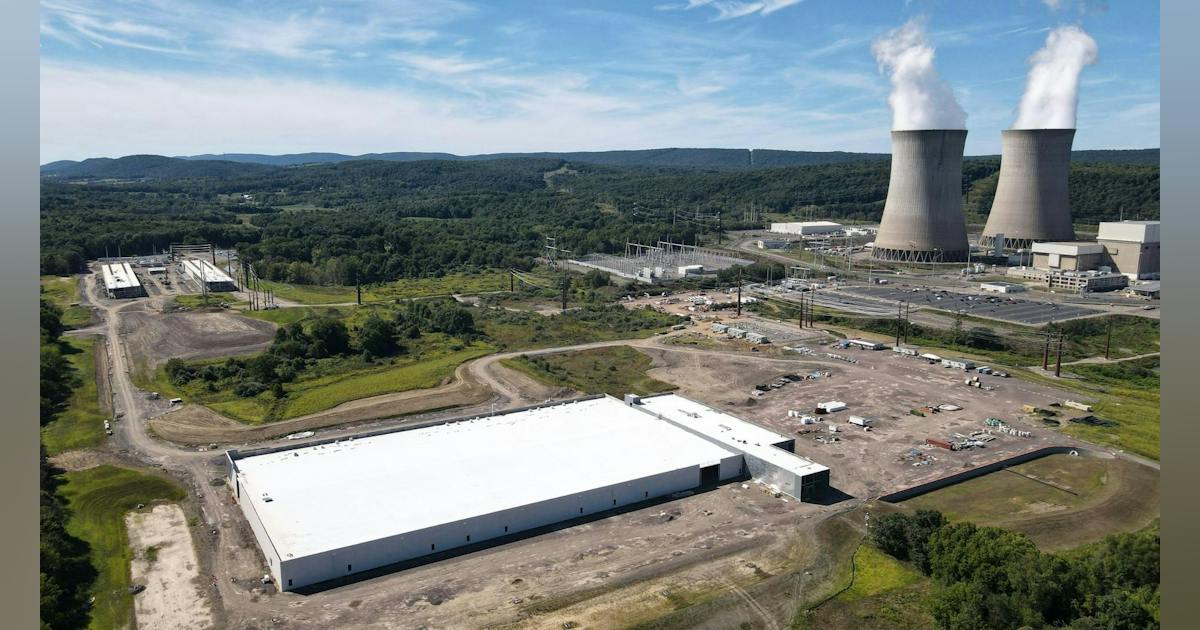
The Cases Writing the Rules The regulatory questions surrounding private power are no longer theoretical. Federal regulators, regional grid operators and state utility commissions are already confronting disputes over co-located generation, transmission obligations, large-load tariffs and the financial commitments required from data center customers. Amazon–Talen Puts Co-Location Before FERC The Amazon–Talen–Susquehanna dispute became the most prominent federal test of how far a co-located data center can separate its power supply from the regional grid while remaining connected to the grid’s reliability framework. Amazon Web Services operates a data center campus adjacent to Talen Energy’s Susquehanna nuclear plant in Pennsylvania. In 2024, the parties sought to expand the co-located load from 300 MW to 480 MW through an amended interconnection agreement with PJM. The proposed structure would have allowed the campus to receive more power directly from the nuclear plant while reducing the plant’s capacity interconnection rights on the PJM system. FERC rejected the amendment in November 2024, concluding that PJM had not justified the nonstandard provisions in the agreement. Importantly, the Commission did not prohibit co-location or dedicated generation. The dispute instead exposed a larger gap in existing transmission rules: how should a large load located beside a generator be measured, what transmission service does it require, what happens when the generator is unavailable, and how should the project pay for continued access to regional reliability? Those questions soon moved beyond the Amazon–Talen project itself. In December 2025, FERC found that PJM’s existing framework did not provide sufficiently clear and consistent rules for generators serving co-located loads or for transmission customers taking service on their behalf. The Commission directed PJM to develop defined interconnection and operating requirements along with transmission options ranging from conventional network service to firm and non-firm contract-demand structures. The central issue is deceptively simple: physical proximity

Read More »

Microsoft will invest $80B in AI data centers in fiscal 2025

And Microsoft isn’t the only one that is ramping up its investments into AI-enabled data centers. Rival cloud service providers are all investing in either upgrading or opening new data centers to capture a larger chunk of business from developers and users of large language models (LLMs).  In a report published in October 2024, Bloomberg Intelligence estimated that demand for generative AI would push Microsoft, AWS, Google, Oracle, Meta, and Apple would between them devote $200 billion to capex in 2025, up from $110 billion in 2023. Microsoft is one of the biggest spenders, followed closely by Google and AWS, Bloomberg Intelligence said. Its estimate of Microsoft’s capital spending on AI, at $62.4 billion for calendar 2025, is lower than Smith’s claim that the company will invest $80 billion in the fiscal year to June 30, 2025. Both figures, though, are way higher than Microsoft’s 2020 capital expenditure of “just” $17.6 billion. The majority of the increased spending is tied to cloud services and the expansion of AI infrastructure needed to provide compute capacity for OpenAI workloads. Separately, last October Amazon CEO Andy Jassy said his company planned total capex spend of $75 billion in 2024 and even more in 2025, with much of it going to AWS, its cloud computing division.

Read More »

John Deere unveils more autonomous farm machines to address skill labor shortage

Join our daily and weekly newsletters for the latest updates and exclusive content on industry-leading AI coverage. Learn More Self-driving tractors might be the path to self-driving cars. John Deere has revealed a new line of autonomous machines and tech across agriculture, construction and commercial landscaping. The Moline, Illinois-based John Deere has been in business for 187 years, yet it’s been a regular as a non-tech company showing off technology at the big tech trade show in Las Vegas and is back at CES 2025 with more autonomous tractors and other vehicles. This is not something we usually cover, but John Deere has a lot of data that is interesting in the big picture of tech. The message from the company is that there aren’t enough skilled farm laborers to do the work that its customers need. It’s been a challenge for most of the last two decades, said Jahmy Hindman, CTO at John Deere, in a briefing. Much of the tech will come this fall and after that. He noted that the average farmer in the U.S. is over 58 and works 12 to 18 hours a day to grow food for us. And he said the American Farm Bureau Federation estimates there are roughly 2.4 million farm jobs that need to be filled annually; and the agricultural work force continues to shrink. (This is my hint to the anti-immigration crowd). John Deere’s autonomous 9RX Tractor. Farmers can oversee it using an app. While each of these industries experiences their own set of challenges, a commonality across all is skilled labor availability. In construction, about 80% percent of contractors struggle to find skilled labor. And in commercial landscaping, 86% of landscaping business owners can’t find labor to fill open positions, he said. “They have to figure out how to do

Read More »

2025 playbook for enterprise AI success, from agents to evals

Join our daily and weekly newsletters for the latest updates and exclusive content on industry-leading AI coverage. Learn More 2025 is poised to be a pivotal year for enterprise AI. The past year has seen rapid innovation, and this year will see the same. This has made it more critical than ever to revisit your AI strategy to stay competitive and create value for your customers. From scaling AI agents to optimizing costs, here are the five critical areas enterprises should prioritize for their AI strategy this year. 1. Agents: the next generation of automation AI agents are no longer theoretical. In 2025, they’re indispensable tools for enterprises looking to streamline operations and enhance customer interactions. Unlike traditional software, agents powered by large language models (LLMs) can make nuanced decisions, navigate complex multi-step tasks, and integrate seamlessly with tools and APIs. At the start of 2024, agents were not ready for prime time, making frustrating mistakes like hallucinating URLs. They started getting better as frontier large language models themselves improved. “Let me put it this way,” said Sam Witteveen, cofounder of Red Dragon, a company that develops agents for companies, and that recently reviewed the 48 agents it built last year. “Interestingly, the ones that we built at the start of the year, a lot of those worked way better at the end of the year just because the models got better.” Witteveen shared this in the video podcast we filmed to discuss these five big trends in detail. Models are getting better and hallucinating less, and they’re also being trained to do agentic tasks. Another feature that the model providers are researching is a way to use the LLM as a judge, and as models get cheaper (something we’ll cover below), companies can use three or more models to

Read More »

OpenAI’s red teaming innovations define new essentials for security leaders in the AI era

Join our daily and weekly newsletters for the latest updates and exclusive content on industry-leading AI coverage. Learn More OpenAI has taken a more aggressive approach to red teaming than its AI competitors, demonstrating its security teams’ advanced capabilities in two areas: multi-step reinforcement and external red teaming. OpenAI recently released two papers that set a new competitive standard for improving the quality, reliability and safety of AI models in these two techniques and more. The first paper, “OpenAI’s Approach to External Red Teaming for AI Models and Systems,” reports that specialized teams outside the company have proven effective in uncovering vulnerabilities that might otherwise have made it into a released model because in-house testing techniques may have missed them. In the second paper, “Diverse and Effective Red Teaming with Auto-Generated Rewards and Multi-Step Reinforcement Learning,” OpenAI introduces an automated framework that relies on iterative reinforcement learning to generate a broad spectrum of novel, wide-ranging attacks. Going all-in on red teaming pays practical, competitive dividends It’s encouraging to see competitive intensity in red teaming growing among AI companies. When Anthropic released its AI red team guidelines in June of last year, it joined AI providers including Google, Microsoft, Nvidia, OpenAI, and even the U.S.’s National Institute of Standards and Technology (NIST), which all had released red teaming frameworks. Investing heavily in red teaming yields tangible benefits for security leaders in any organization. OpenAI’s paper on external red teaming provides a detailed analysis of how the company strives to create specialized external teams that include cybersecurity and subject matter experts. The goal is to see if knowledgeable external teams can defeat models’ security perimeters and find gaps in their security, biases and controls that prompt-based testing couldn’t find. What makes OpenAI’s recent papers noteworthy is how well they define using human-in-the-middle

Read More »