The transaction goes beyond Brookfield investing in another portfolio of buildings. It is investing in a developer whose principal product increasingly begins before the building, with land, entitlements, substations, transmission access and utility capacity.
PowerHouse Has Become a Gigawatt-Scale Development Platform
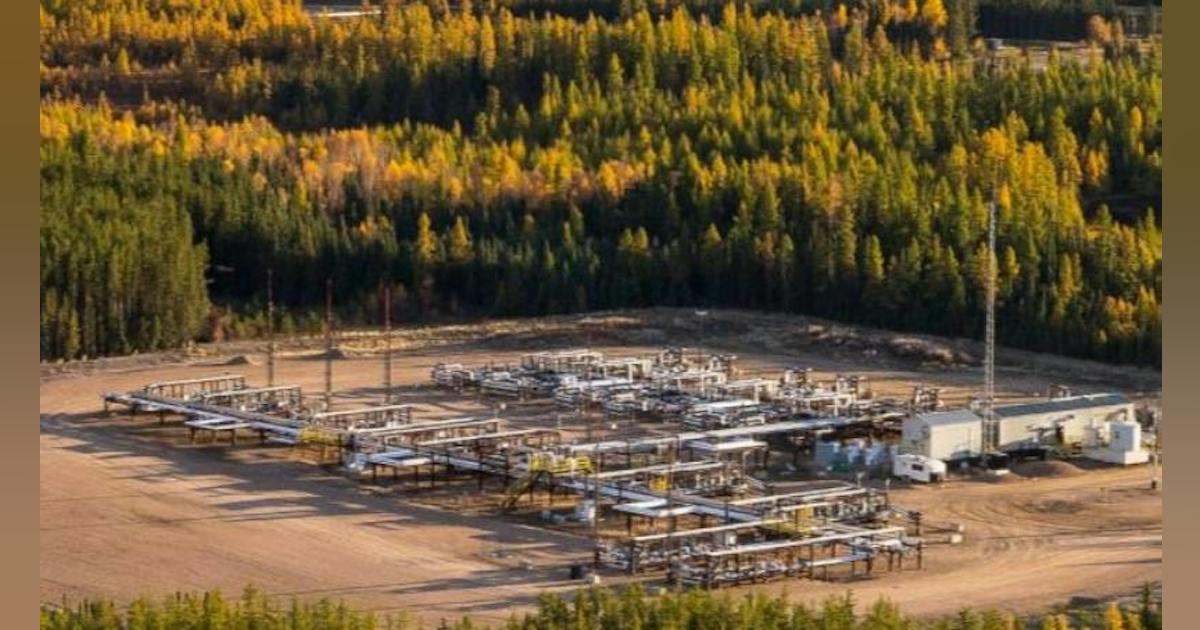
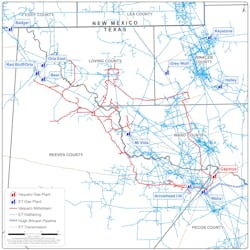
PowerHouse was founded with a strong Northern Virginia orientation, but its development map now stretches well beyond Data Center Alley as its current portfolio includes projects in Virginia, Texas, Pennsylvania, North Carolina, Nevada, Indiana, Illinois and Kentucky. The company lists 515 MW across its Northern VA Ashburn properties, another 900 MW at its PH 95 development in Spotsylvania, 1.35 GW in Carlisle, Pennsylvania, 1.8 GW at Joliet, Illinois, and substantial campuses across multiple Texas and Indiana locations. The various projects do a good job of illustrating how the definition of a hyperscale development site is changing.
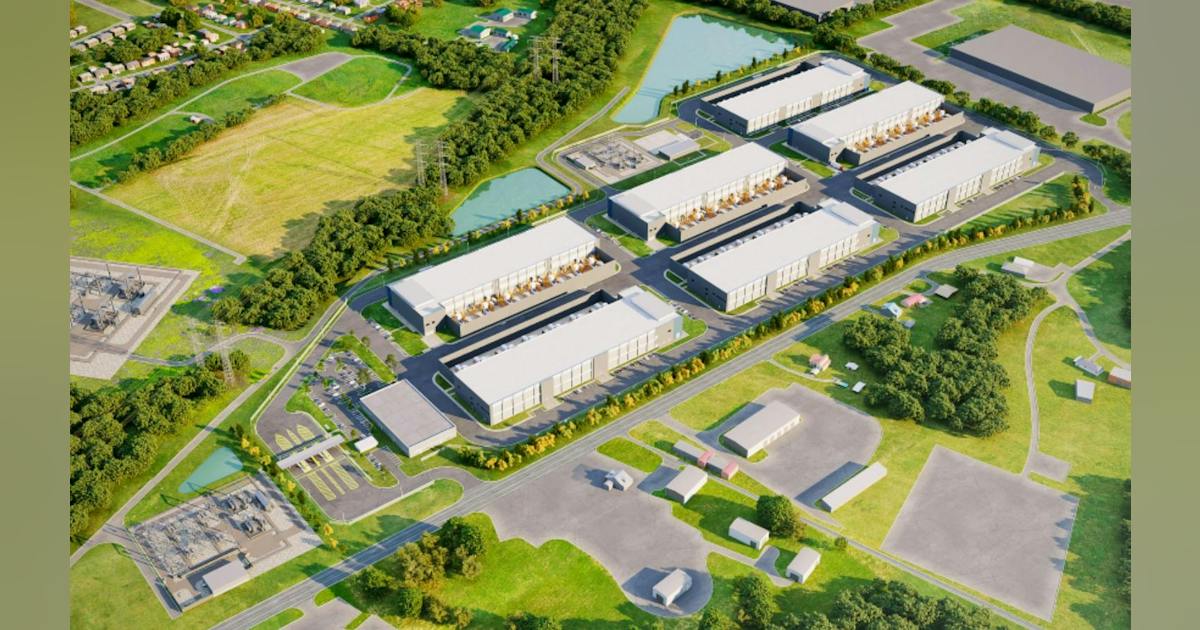
At PowerHouse Arcola in Loudoun County, Virginia, PowerHouse announced a long-term hyperscale lease earlier this year. The 37-acre campus includes two planned data center buildings totaling approximately 615,000 square feet and is designed for up to 120 MW of utility capacity. PowerHouse emphasizes not only the buildings but the campus’s on-site substation, fiber access, power security and support for high-density GPU and liquid-cooled deployments.
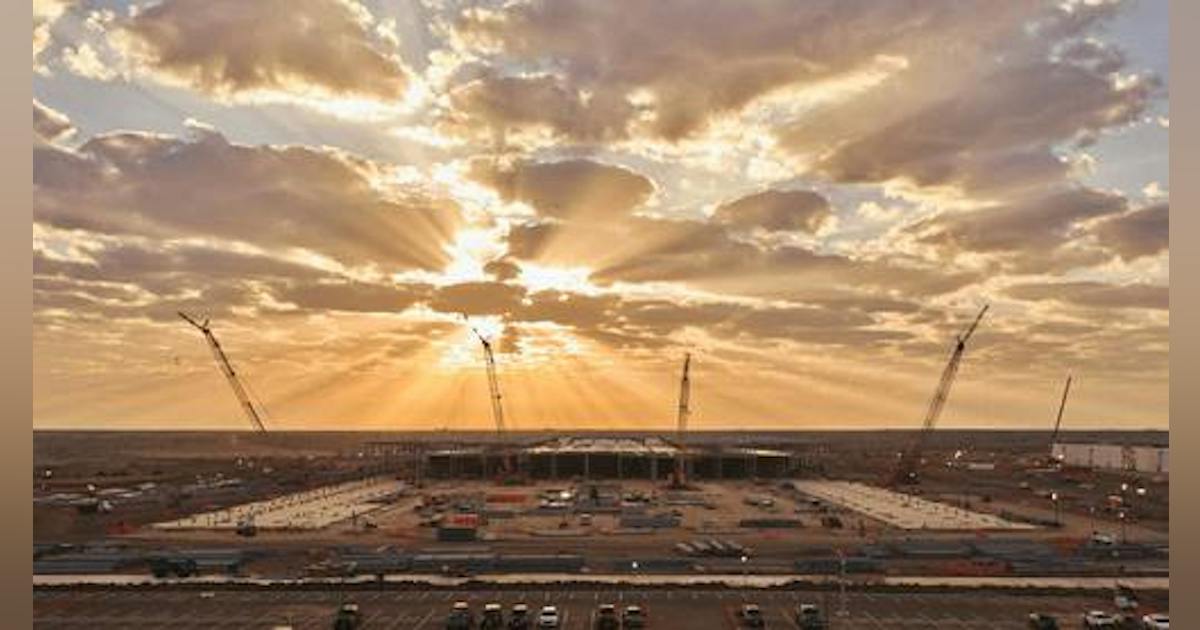
In Texas, it might be that everything really is bigger, and PowerHouse’s Grand Prairie development covers approximately 810 acres and 8.5 million developable square feet. Its project page cites maximum utility power of 1.8 GW and a development schedule extending through 2029 and beyond.
The Texas development plans also include a proposed Circle T campus in Westlake outside Fort Worth, which calls for as many as four roughly 300,000-square-foot facilities totaling approximately 300 MW. According to reporting on local filings, PowerHouse has funded a 350-MW Oncor substation intended to serve the campus and the town’s pump station.
The company’s development in Kentucky is following the same recipe. PowerHouse Louisville occupies 154 acres, with as much as 1.8 million square feet of development and maximum utility power listed at 525 MW. The Louisville development was announced as Kentucky’s first hyperscale data center campus. Separately, PowerHouse and Poe Companies have proposed another 550-acre campus in Carroll County, where the companies have outlined a potential $9.6 billion development.
Brookfield’s Investments Meet the Growing Industry Need
Brookfield’s 2026 investment outlook describes AI infrastructure as a value chain encompassing data centers or “AI factories,” dedicated power generation, GPUs and other compute infrastructure, semiconductor manufacturing and fiber. Brookfield has estimated that over the next 10 years over $7 trillion dollars will ultimately be required across these layers.
This isn’t just an investment idea; Brookfield has launched a $100 billion AI Infrastructure Program, anchored by a dedicated AI infrastructure fund targeting $10 billion. Brookfield launched its $100 billion AI Infrastructure Program in November 2025, anchored by an AI infrastructure fund targeting $10 billion in equity commitments. At launch, Brookfield said the fund had secured $5 billion of commitments, including participation from NVIDIA and the Kuwait Investment Authority.
Brookfield said its advantage lies in integrating the AI value chain using its positions in real estate, infrastructure and energy. The company specifically identified the ability to source and entitle powered land, develop large AI factories, provide behind-the-meter and baseload generation, finance contracted compute and partner with semiconductor companies and hyperscalers.
Is It Working in the Real World?
Brookfield’s planned Paducah, Kentucky, development with NextEra Energy may provide one of the clearest demonstrations of where that model can lead. The companies are planning an AI data center and energy development on the Department of Energy’s former Paducah uranium enrichment property.
The project is expected to support more than 1.2 GW of compute capacity, with Brookfield owning and operating a 1.8-GW data center campus. NextEra is expected to develop as much as 2 GW of natural-gas-fired generation and 2.6 GW of battery storage. The development could ultimately represent roughly $100 billion of investment with initial operations are targeted for 2028. The project remains subject to definitive agreements and regulatory approvals, with full buildout envisioned by 2032.
This addresses one of the largest political and regulatory pressures confronting data center development: whether massive new loads will require costly grid upgrades or increase electricity costs for existing customers. The Kentucky development has been structured around dedicated generation and a commitment that developers shoulder infrastructure costs rather than shifting them to local ratepayers.
Storage Becomes Part of the Data Center Infrastructure Stack
Brookfield has been expanding its position on other aspects of the power equation as well. In July, it agreed to acquire battery storage developer Aypa Power from Blackstone for approximately $7 billion in enterprise value.
Aypa brings roughly 6.5 GW of operating and contracted capacity and a development pipeline exceeding 20 GW, giving Brookfield a large North American storage platform. Brookfield explicitly described the acquisition as enhancing its ability to provide integrated energy solutions. The deal would deepen Brookfield’s ability to combine generation, storage, interconnection and complex energy contracting in infrastructure packages aimed at AI-scale customers.
Where Do They Go Next?
Brookfield’s AI strategy suggests that its investment horizon no longer stops at the electrical room or data hall. In August, NVIDIA announced partnerships with Brookfield, Apollo, BlackRock, Blackstone, Goldman Sachs and KKR to establish independent financing platforms designed to mobilize more than $500 billion in third-party capital for AI infrastructure over time. The initiative points toward a model in which NVIDIA compute itself can increasingly be financed as infrastructure, supported by long-duration, usage-linked revenue rather than treated simply as equipment purchased inside the data center.
Brookfield is pursuing a variation of that model internationally through its partnership with NAVER and NVIDIA that is targeting an expansion of NAVER’s National AI factory Infrastructure South Korea from an initial 55 MW to 200 MW by 2028, using NVIDIA’s DSX platform, with longer-term plans aimed at gigawatt-scale infrastructure. Brookfield is providing infrastructure investment capabilities while NAVER supplies data center and AI operating expertise and NVIDIA provides accelerated computing technology. Brookfield has entered into a nonbinding term sheet to fund up to $9 billion of the expansion.
From Powered Land to a Complete Infrastructure Product
PowerHouse brings something enormously valuable to the AI infrastructure equation: a large and rapidly expanding inventory of sites where the difficult early work of assembling land, utility capacity, entitlements and development pathways is already underway. Brookfield brings enormous pools of institutional capital and increasingly deep positions in the other infrastructure layers required to turn those sites into operating AI capacity.
But as we have been seeing, the technical and financial issues aren’t the only ones that need be addressed.
That challenge is not theoretical for PowerHouse. Its Louisville development has encountered organized resident opposition over power, water and environmental concerns, while Louisville Metro Council in August approved a six-month moratorium on new data center approvals as it develops comprehensive zoning rules.
Two weeks after the Brookfield investment was announced, AREP and PowerHouse joined the newly formed American Infrastructure Alliance (AIA), a newly formed industry-and-labor coalition calling for nationwide standards around responsible data center development.
The group says developers should make binding commitments concerning water use, pay for the energy and infrastructure their projects require, create skilled-trade employment, provide visible community benefits and operate under enforceable accountability standards. That development is relevant to the Brookfield-AREP combination because the barriers to hyperscale development are no longer primarily technical.
Brookfield’s minority investment in AREP therefore arrives at an important moment. PowerHouse has assembled a potentially enormous development pipeline; Brookfield brings capital and increasingly deep positions across energy, storage, data centers and compute financing. Whether those planned gigawatts become operating capacity will increasingly depend not only on engineering and capital, but on power delivery, regulatory approvals and community consent. The AREP deal offers a glimpse of the integrated infrastructure model emerging to address all of those constraints at once.