Stay Ahead, Stay ONMINE

Mars may be a hellhole, but the moon is not far behind

Welcome to the second space race. You can be forgiven for experiencing déjà vu. Last time, it was the Soviet Union and the United States vying to be the first to plant some flags. Now it’s a sprint to the lunar surface between America and China—alongside a host of varyingly friendly and rival nations—plus a cornucopia of private spaceflight companies. And this time it looks like they’re getting ready to set up camp. There will be, the contenders say, bases on the moon, permanently inhabited castles under the stars. The notion of a moon base, fanciful as it might sound, isn’t new. But this year, under the leadership of Administrator Jared Isaacman, NASA has been flooding the zone with bold announcements. If all goes according to plan—a plan that will likely cost tens of billions of dollars to start—there will be drones, robotic landers, communication satellites, and a nuclear power plant; there will be plant terrariums and moonquake sensors; there will be mechanized scouts exploring craters for water. Initial astronaut missions to the lunar surface, which the US is currently planning to start in 2028, will be focused on exploration and technological experimentation. But the idea is that we will—some time in the 2030s—get to a point where there will be habitation quarters for long-term stays, surrounded by a network of scientific research stations, resource mining and processing plants, and landing pads for spaceships. “It’s going to be an expanse,” says Carlos García-Galán, NASA’s moon base program manager—one that will add up to “hundreds of square miles.” The effort is undoubtedly being fueled by nationalistic competition. China has near-identical plans to build its own base on the moon. And being first matters, because the “victor” gets to define the terms. What is the moon, exactly? Is it a militarized outpost? Is it a manufacturing hub? Is it a wilderness to be studied and preserved? But there are also other reasons to go. Earth’s companion contains primeval rocks that hold clues to the formation of the entire solar system. The lunar surface, with virtually no atmosphere in the way, is an ideal place to put telescopes that could examine the most ancient epochs of the cosmos. The far side of the moon would be “a fantastic place to explore the further universe,” says Josef Aschbacher, the European Space Agency’s director general. And it’s way more energy efficient to launch rockets from the low-gravity lunar surface than it is from Earth, meaning sending astronauts—or robotic spacecraft—farther into the solar system will become much less difficult. “The moon is critical. It will be a stepping stone for going further—that means to Mars and beyond,” says Aschbacher. SELMAN DESIGN But if these bold visions are to become reality, there’s a daunting amount of work to be done. A sprawling moon base must be safe for its astronaut inhabitants—protected from falling asteroids, endless cosmic radiation, razor-sharp lunar dust, and torturous temperature swings. It also must be somewhat self-sustaining, so that it can weather changing political fortunes and not cost ruinous amounts of money to maintain. For that, we’ll need to find a way to use the moon’s resources to keep the base operating—and ideally generating revenue. And we’ll need autonomous robots that can build, maintain, and expand the base even when their human masters aren’t present. “It’s almost like starting civilization from scratch,” says Simon Middleburgh, co-director of the Nuclear Futures Institute at Bangor University in Wales. Assuming we can overcome these starting challenges, decades from now—let’s say, by the year 2100—our initial moon bases could grow from barely visible structures into luminous cities, perhaps not too dissimilar from those dreamed up by authors and screenwriters the world over. “It’s like science fiction today that we really want to turn into a reality,” says García-Galán. Will anyone succeed? The moon is a tremendously hostile place to set up camp. In general, daytime temperatures can reach more than 250 °F; at night, they can plummet to less than –200 °F. Exposed to the vacuum of space, the surface is constantly showered in carcinogenic radiation and frequently hit by meteoroids. And its volcanic dust is sticky and corrosive, a destroyer of equipment and choker of lungs.  Sadly, the lunar south pole—the area NASA is targeting—is even harsher. NASA wants to build a base there because its permanently shadowed craters are thought to harbor caches of water ice, which would be more precious than gold. Purify it, and you can water crops and hydrate astronauts; split it into oxygen and hydrogen, and you have breathable air and rocket propellant. But the temperature in those craters can be lower than –410 °F, making them some of the coldest places in the known universe. On the surface outside those pits, astronauts would be bathed in the scorching sun for 14 days before experiencing an equally long frigid night. But there is only so much money we can spend on safety. “What it comes down to is acceptable risk of death,” Philip Metzger, a spaceflight engineering researcher at the Florida Space Institute, said while pondering some of the dangers. “What can we reasonably survive without breaking the bank?” Temperature is one of the easiest problems to handle. Materials science has come a long way, and there are myriad metals, ceramics, plastics, compounds, and alloys that can resist wild temperature swings. Radiators keep things cool; heaters keep batteries from dying prematurely. Astronauts survive just fine too, with their fancy spacesuits—but that technology has proved itself only during brief excursions. It’s not yet clear how long this equipment could operate under such tempestuous conditions. The temperature in the moon’s south pole craters can be lower than –410 °F, making them some of the coldest places in the known universe. Outside those pits, astronauts would be bathed in the scorching sun for 14 days before experiencing an equally long frigid night. Space radiation, which can wreak havoc on electronics and trigger a cancerous division of cells, is far more pernicious. And as Stuart George, a physicist at NASA’s Johnson Space Center in Houston, explains, it comes in two unpleasant forms.  The first is galactic cosmic rays, which rain down on the moon almost constantly. “They’re made by supernovas and neutron star mergers—all these kinds of things,” says George. And because the atomic nuclei, protons, and electrons that make them up are moving at significant fractions of the speed of light, these cosmic rays have oodles of kinetic energy, meaning they can punch through thin shielding (say, a metal wall) with ease. “They also have this habit where the heavier ions are fragmenting in that shielding and making secondary particles,” says George. That means if your shield is too thin, the astronauts behind it will be blasted with a surprisingly large dose of radiation.  Then you have the sun. It may sustain life on Earth, but without our planet’s thick atmosphere and magnetic bubble to get in its way, moonwalkers will occasionally be blasted by one of its paroxysms: a solar flare (a burst of diverse types of radiation) or a coronal mass ejection (volleys of magnetized plasma). “During Apollo, they knew that if a large solar flare occurred while the crew was on the moon, there would be no way to keep them alive,” says Metzger. The crew could have developed acute radiation sickness and perished in a matter of days. The way to survive a powerful solar flare or coronal mass ejection is straightforward: “Get back inside a habitat where there’s more shielding,” says George—preferably a dedicated, highly shielded “storm shelter,” essentially a thick-walled bunker. The issue is that astronauts might be outside the base, driving a rover many miles away. Coronal mass ejections take hours to days to reach the vicinity of the Earth-moon system, but solar flares can do so in under an hour. And scientists can’t yet model the sun well enough to give much advance notice. “All of the capability to forecast solar storms is kind of like where weather forecasting [was] … in the ’50s and ’60s,” says George. As for those punchy galactic cosmic rays, the only way to avoid them would be to put a lot of stuff—lunar rocks, possibly—between the astronauts and the sky. “Build habitat modules underground,” says Chris Dreyer, director of engineering at the Center for Space Resources at the Colorado School of Mines. One option: Burrow living quarters into lava tubes, the naturally hollowed-­out volcanic tunnels created by molten rock eons ago. At this point, NASA hasn’t mentioned any plans to make its moon base subterranean, but it may need to if it wants to end up with a small lunar city. Radiation limits the time astronauts can spend on the lunar surface over their entire life—it can total around two years max, experts estimate, before the health risk becomes too high. Unfortunately, that’s not all space will throw at them. When the Artemis II astronauts swung around the far side of the moon earlier this year, they saw curious flashes light up the silvery land below. These were the explosive deaths of small meteoroids punching into the lunar surface. Earth is naturally protected from smaller space rocks, up to around 50 feet in diameter: They burn up inconsequentially in the atmosphere. “You don’t have that option on the moon,” says Philip Lubin, a physicist and planetary defense researcher at the University of California, Santa Barbara. Since smaller rocks plunge toward planets and moons far more frequently than larger ones do, this means the moon is often peppered by what are effectively tiny space bullets. They could easily puncture a spacesuit or the engine of a moon rover. How do you protect astronauts from the onslaught? “The simplest answer is burial,” says Nicholas Schmerr, a planetary seismologist at the University of Maryland—conveniently, the same way you’d deal with radiation exposure. Pile up moon rocks onto your base walls or put habitable structures in lava tubes.  Inconveniently, there’s always a chance that a bigger asteroid will come along. Even buried habitation modules would have trouble surviving an assault from a 50-footer—about the length of a semi-trailer.  That doesn’t mean a moon base would be helpless against bigger asteroids. Planetary defense has come a long way in just a few decades. NASA’s DART mission demonstrated that it could deflect an asteroid by ramming into the rock with an uncrewed spacecraft, and cutting-­edge experiments at clandestine labs around the US suggest that a nuclear bomb could swat away or entirely vaporize errant space rocks. An array of both ground-based and space-based telescopes specifically designed to spy killers—such as the ATLAS quartet of largely automated telescopes, and the soon-to-be-launched NEO Surveyor infrared telescope—are also aiming to find 90% of the near-Earth asteroids potentially capable of wiping out entire cities (those 460 feet across) in the coming years. All these protections apply to the moon. But asteroids 50 feet across are so stealthy that even NASA’s best telescopes would struggle to see them years or even months in advance. Odds are that they would first be seen not long before they were due to hit the lunar surface. Then what? It’s not unreasonable to imagine several turret-like launch sites on the moon that, owing to the lower gravity and airless environment, could rapidly fire projectiles toward an incoming asteroid. Hit it hard enough and it would break into fragments. Just make sure you shoot when it is as far away as possible: “If you were to break something up into a thousand pieces, then you have a thousand impacts on the moon,” says Lubin. “That might be worse than letting it hit one place.”  Having your base destroyed by an asteroid would be awful. But a moon base is far more likely to be imperiled by dust—which, unlike asteroids, is everywhere, all the time. Volcanic lunar rocks, when broken down, turn into sharp, electrostatically charged, adhesive, acrid, abrasive particles. While on the moon, Apollo astronauts who inhaled some of this dust occasionally suffered from a strange “lunar hay fever,” which irritated their eyes and agitated their lungs. That same dust ate through all kinds of gear with disturbing ease. “It rips up seals, gears, motors, spacesuits, habitats—everything else it comes into contact with,” says Justin Cyrus, the CEO of Lunar Outpost, a spaceflight technology company that is providing NASA with one of the Artemis program’s moon rovers. NASA has already developed a defense against these dark shards: the electrodynamic dust shield, or EDS. The lightweight electrodes that make up this shield—which can be layered on machinery, walls, and perhaps even spacesuits—use opposing currents to blast away the electrically charged dust. The EDS worked wonders when tested in labs on Earth, and it also demonstrated its anti-dust magic when sent to the lunar surface in 2025 as part of a NASA-sponsored robotic mission.  Amy Fritz, a dust-mitigation researcher at Johnson Space Center, says that the EDS will likely be widely featured all over a lunar habitat. But other dust-fighting instruments are being developed too—including a lint-roller-type object inspired by gecko skin and a sci-fi-esque blaster that uses ionized nitrogen gas. Its first spray will neutralize the charge of the dust to remove its stickiness; then a second burst will clear it off the surface. Irritatingly, the busier a base gets, the dustier things will become. As it expands to the size of a small city, rocket ships will need to deliver cargo and crew to the lunar surface on a frequent cadence. Each takeoff and landing will launch a salvo of dust in every direction, inundating the base’s infrastructure. “You have to worry about essentially being sandblasted every time,” says Fritz.  Metzger calculates that even with landing pads more than 3,000 feet away from a base, just 10 to 20 liftoffs or landings would be sufficient to severely damage things like protective coatings on exterior walls and communications equipment. After a while, he says, “everything breaks.”  Even if the moon base of the future is buried partly below ground, barricaded against micrometeorites and space radiation, and well equipped with dust-repelling technologies, it’s still a risky gig for any astronaut. Skipping around in a preternaturally agile way at one-sixth of Earth’s gravity will be entertaining. But “microgravity is not good for the human body,” says Dreyer. Muscle wastage, cardiovascular troubles, respiratory problems, and immune deficiencies can arise.  Radiation, too, may always afflict lunar residents. And there’s also evidence that disease-causing microbes could stealthily sneak aboard spacecraft, even after stringent sterilization procedures. Those microbes may behave differently than they do on Earth; microgravity experiments (both real and simulated) have suggested that some become more aggressive and more likely to cause disease. “We call them the invisible crew,” says Lisa Carnell, the director of NASA’s Biological and Physical Sciences Division. The lunar south pole, which is thought to contain a sizable amount of water, is an attractive target for lunar exploration and, eventually, settlement. This map shows the topography of the region. The South Pole–Aitken basin (blue) is an immense crater studded with smaller craters. The vertical distance from the lowest-lying regions to the surrounding peaks can exceed 15 kilometers, almost twice the height of Mount Everest.NASA/GSFC/MIT Hoping to find a better way to protect astronauts, Carnell spearheaded an experiment called AVATAR (A Virtual Astronaut Tissue Analog Response), which launched aboard the Artemis II mission. It used thumb-drive-size chips, containing cells taken from the heart, lungs, or other parts of the body, that could be switched on to act like miniature organs. Scientists have previously used this organ-on-a-chip technology for purposes like testing out new pharmaceuticals in a highly controlled setting. For Artemis II, Carnell’s crew sent up chips containing bone marrow samples taken from the mission’s four astronauts. Bone marrow makes red and white blood cells, as well as platelets—the sort of stuff that affects almost the entire human body. So seeing how space radiation and microgravity affect it would give Carnell and her team vital insight into how astronauts’ biology might change on the moon. The advantage of organ chips is that you can make them for any astronaut and then send them into space ahead of time to see how that person’s organs will react to spaceflight. Researchers envision that data from such chips will be able to clue medics in to the specific preventive treatments or pharmaceuticals that will help moonbound astronauts on their journey. What is NASA likely to send up sooner rather than later? “Brain organoids,” says Carnell. Yes, she adds—that sounds super weird. But it would be good to know how a real brain might respond to being on the moon for several months before people start living there. Okay. Your vast moon base and its inhabitants are protected—as much as is possible—from the treacherous lunar environment. But astronauts’ time is extremely valuable, and humans are fragile creatures. You can’t make them do all the heavy lifting, which means that whether you’re trying to make a tiny lunar outpost or a small city, you’re going to need a lot of robots. “The buildup of the moon base, in the first years, will pretty much 99% be robotic,” says NASA’s García-Galán. Autonomy will be there right from the start. NASA’s new version of the moon buggy, its Lunar Terrain Vehicle, can be driven by the astronauts riding in it but can also be piloted remotely from Earth (or from elsewhere on the moon). There are visions, too, of adding modular robotic arms, towing vehicles, and cargo movers—all still in the preliminary stages of planning. Over the next few decades, though, we’ll likely want an army of robots to do our bidding: excavators to dig up lunar rocks that could be turned into concrete and bricks, plus other robots to flatten surfaces, dig trenches, create building foundations, pave landing pads, and build up dust-deflecting berms to keep the base from being sandblasted by launches and landings. Even solar panels and wiring can potentially be made from moon rocks—something that the spaceflight company Blue Origin demonstrated in labs on Earth in 2023 using a geologic simulant designed to match the composition of lunar regolith.  Powering this robot army will require considerable energy. Two-week-long nights make solar power an impractical solution. Aside from a cornucopia of high-­capacity, extreme-temperature-resistant batteries, nuclear power is probably the only viable option. A small, car-size nuclear reactor, filled with an almost literal handful of uranium, could power a small village for a decade without needing to be refueled. And although nobody’s yet tested a nuclear reactor on the moon, few doubt that NASA and the US Department of Energy can conjure up a working design—one that perhaps wouldn’t be too different from those aboard nuclear submarines. A moon base in 2100 would probably feature multiple small, autonomously or remotely operated nuclear reactors, which—conveniently—the base-expanding robots could simply plug themselves into to recharge.  But the biggest lunar question mark might be water, which planners want to support the astronauts—and to make fuel to launch things from the lunar surface. A process known as electrolysis, which uses electricity to snap apart molecular bonds, can be used to split water into oxygen and hydrogen, both of which could be used to make rocket fuel. Getting them this way could be far less expensive than sending either all the way from Earth. And as an added bonus, it would provide a source of breathable oxygen.  Orbital data has revealed that there is some amount of water preserved in patches on the lunar south pole, but little is known about how much there actually is, what form it takes, or how easy it will be to extract. Will there be solid sheets of ice here and there, ready for us to excavate? Or will there be scattered ice crystals intermingled among the rocky grains, requiring some more inventive form of extraction? A lot of the moon’s water is thought to be hiding in deep, dark craters on the south pole, where the environment is so extreme that robots may freeze up, tumble over, or lose contact with the base. “To me, that is the biggest hurdle,” says Paul van Susante, principal investigator of the Planetary Surface Technology Development Lab at Michigan Technological University. Van Susante’s lab has been putting various construction robots through their paces in moon-like vacuum chambers filled with moon-like rocks. His team was part of NASA’s recent Break the Ice challenge, which invited engineers to build robots to test different ways to excavate such rocks. Some teams used an electric jackhammer and a scoop, while others used scrapers to peel off layers of the ground. The teams simulated the moon’s weak gravity using a crane to lift and offset the weight of the robots. Progress in this regard is speeding along. “I won’t say that’s solved, but we’ve got a lot of the puzzle pieces,” says van Susante. Mining the water will be just one part of an extensive operation. “When you extract it, it’s not going to be clean. It needs to be purified,” says Jessica Atkin, a space botanist at Texas A&M. The technology to do this already exists and works fine on terra firma. But things in space never go the way you expect. “There’s a water purification system on the International Space Station (ISS), and it is known for getting contaminated with microbes,” she says. SELMAN DESIGN But if you purify the water sufficiently—something that can handily be achieved on Earth but may falter in microgravity, where fluids flow in stranger ways—then your moon base can hit its stride. With an effective water recycling system, an increasingly populous base will never go thirsty—and, just maybe, you’ll have a lunar greenhouse. Several edible plants have been successfully grown aboard the ISS, including lettuce, mustard greens, tomatoes, and peppers. Lunar dust unfortunately makes for a terrible garden: It’s filled with far too much aluminum—and it forms a resistant layer when watered. But Atkin has shown that with the help of fertilizing fungi, chickpeas can grow in soil much like the volcanic stuff found on the moon. Moon base inhabitants of 2100 would be supported largely by prepacked meals sent from Earth. But in time, they would start growing some of their own produce—probably with a good deal of automation for lighting, watering, and maintenance of humidity and other environmental conditions. Aside from chickpeas, there might also be plenty of lunar tomatoes. They’d be desirable not least because they’ve been bioengineered to produce higher levels of compounds called anthocyanins that, according to some studies, might help humans mitigate the cellular damage caused by space radiation. A garden on the moon would do more than just provide food, as recent experiences on the ISS suggest. Carnell says that NASA recently caught the astronauts aboard the space station doing something sneaky. All plants up there are supposed to be confined to their growth chambers. But “we learned that the crew were pirating our leftover soil and bringing their seeds and planting their own little gardens, if you will, and hiding them in their own cabins,” she says.  Conversations were had in the summer of 2026, after which NASA decided to let astronauts grow their own mini-gardens anywhere they wanted. “Some of the astronauts said they thrived better,” says Carnell. Nature, and gardening, has a hugely beneficial psychological effect on those kept in confined quarters hanging above Earth. That will be even truer for those living in lava tunnels under the lunar surface. “That human element is so important,” she says. Nobody is deluded into thinking there isn’t a mountain of technological challenges in the way. Mars may be a hellhole, as the writer Shannon Stirone put it in 2021 in The Atlantic, but the moon isn’t too far behind. It’s an almost comically menacing place to be. Much about it stands in the way of building a safe, self-sustaining, robotically managed base.  NASA wants to put the first nuclear reactor on the moon by 2030. China, partnering with Russia, wants to place its own nuclear power plant up there around 2035. Beyond the first basic habitation module, it will take decades of experimentation and iteration on the lunar surface to get to a working moon base spanning hundreds of square miles. But few doubt that with enough time and tinkering, humanity can prevail. “It’s not an unsolvable problem,” says the University of Maryland’s Schmerr. The chief obstacle, especially in the initial stages of building, may be one of political will. NASA is currently bringing every resource to bear on the project—something that the agency hopes could culminate in a small lunar city by the century’s end. But will that commitment continue over multiple US administrations? Will the international community also throw its weight behind the NASA-led effort? NASA has “a very ambitious plan,” says Yuqi Qian, a lunar geologist at the University of Hong Kong. “We need to keep an eye on it.” In fact, he says, “the current plan looks over-ambitious.” The agency, for example, wants to put the first nuclear reactor on the moon by 2030. (China, partnering with Russia, wants to place its own nuclear power plant up there around 2035.)  “These sorts of projects—although very exciting, and potentially transformative for humankind—are the first ones to be delayed or scrapped,” says Middleburgh of the Nuclear Futures Institute. NASA’s direction tends to change when a new administration comes into power—sometimes dramatically so. But several experts outside of NASA agree that, at least for now, there is definite momentum and political will behind the moon base. “NASA has very clearly expressed where they want to go, what their priorities [are], what their ambition is, and how they want to do it,” says ESA’s Aschbacher. “It was quite impressive to see.” Even if the political will behind the US-led endeavor is maintained over the coming decades, expanding anywhere beyond an initial, compact moon base will require more than government funding. “There has to be a lunar economy for this to be self-sustaining,” says Dreyer, the space resources expert. Perhaps that will come from the production of rocket fuel, or from the mining of valuable materials on the moon that can replace similar, polluting activities on Earth. But it’s not at all clear how valuable, or not, a lunar economy will be.  Even Isaacman, NASA’s chief, doesn’t think the moon will be a major moneymaker. “I don’t know of anything on the moon right now that’s going to be easier and more affordable to mine, manufacture, and then bring back to Earth than what we could make here on Earth,” he remarked back in February. (Instead, he suspects, mining metals from asteroids will be the path to prosperity.)  What if, instead, a moon base earns the right to exist because it’s a place for novel scientific research? Aschbacher imagines it will be like humanity’s outposts in Antarctica. Down there, in what truly feels like another world, scientist-explorers work in a land of gleaming and endless ice to learn more about our planet’s climate, its deep past, and its resilient life-forms. “We understand planet Earth by looking into those remote places,” he says. The moon offers a similar opportunity. What discoveries await astronauts in those primordial lava tubes? What will lunar astronomers see in the night sky—with effectively no atmosphere or light pollution in the way—that those on Earth can’t? As in all spaceflight programs, technologies developed up there will no doubt be tweaked to be used back on Earth. And a base on the moon will make exploring the rest of the solar system easier. Technologically, physiologically, and psychologically, the moon “is a proving ground for the technologies we need for Mars,” says NASA’s García-Galán. If we play the US-China race forward, perhaps the lunar south pole of 2100 will feature several sprawling bases operated by multiple geopolitical rivals. Perhaps it’ll be an off-world powder keg of militarized territorial ambitions and jingoism. But maybe it could instead become an international cathedral to science—and the ultimate adventure destination. “Even if countries on planet Earth have difficulty talking to each other,” says Aschbacher, they might behave differently when it comes to the moon. “I’m pretty sure they will get together and see what we can do together, and see what problems we can solve.” After all, he says, up there, far from home, “you’re so dependent on each other.”  Robin George Andrews is an award-winning science journalist and doctor of volcanoes based in London. He regularly writes about the Earth, space, and planetary sciences and is the author of two critically acclaimed books: Super Volcanoes (2021) and How to Kill an Asteroid (2024).

Welcome to the second space race. You can be forgiven for experiencing déjà vu. Last time, it was the Soviet Union and the United States vying to be the first to plant some flags. Now it’s a sprint to the lunar surface between America and China—alongside a host of varyingly friendly and rival nations—plus a cornucopia of private spaceflight companies. And this time it looks like they’re getting ready to set up camp. There will be, the contenders say, bases on the moon, permanently inhabited castles under the stars.

The notion of a moon base, fanciful as it might sound, isn’t new. But this year, under the leadership of Administrator Jared Isaacman, NASA has been flooding the zone with bold announcements. If all goes according to plan—a plan that will likely cost tens of billions of dollars to start—there will be drones, robotic landers, communication satellites, and a nuclear power plant; there will be plant terrariums and moonquake sensors; there will be mechanized scouts exploring craters for water.

Initial astronaut missions to the lunar surface, which the US is currently planning to start in 2028, will be focused on exploration and technological experimentation. But the idea is that we will—some time in the 2030s—get to a point where there will be habitation quarters for long-term stays, surrounded by a network of scientific research stations, resource mining and processing plants, and landing pads for spaceships. “It’s going to be an expanse,” says Carlos García-Galán, NASA’s moon base program manager—one that will add up to “hundreds of square miles.”

The effort is undoubtedly being fueled by nationalistic competition. China has near-identical plans to build its own base on the moon. And being first matters, because the “victor” gets to define the terms. What is the moon, exactly? Is it a militarized outpost? Is it a manufacturing hub? Is it a wilderness to be studied and preserved?

But there are also other reasons to go. Earth’s companion contains primeval rocks that hold clues to the formation of the entire solar system. The lunar surface, with virtually no atmosphere in the way, is an ideal place to put telescopes that could examine the most ancient epochs of the cosmos. The far side of the moon would be “a fantastic place to explore the further universe,” says Josef Aschbacher, the European Space Agency’s director general. And it’s way more energy efficient to launch rockets from the low-gravity lunar surface than it is from Earth, meaning sending astronauts—or robotic spacecraft—farther into the solar system will become much less difficult. “The moon is critical. It will be a stepping stone for going further—that means to Mars and beyond,” says Aschbacher.
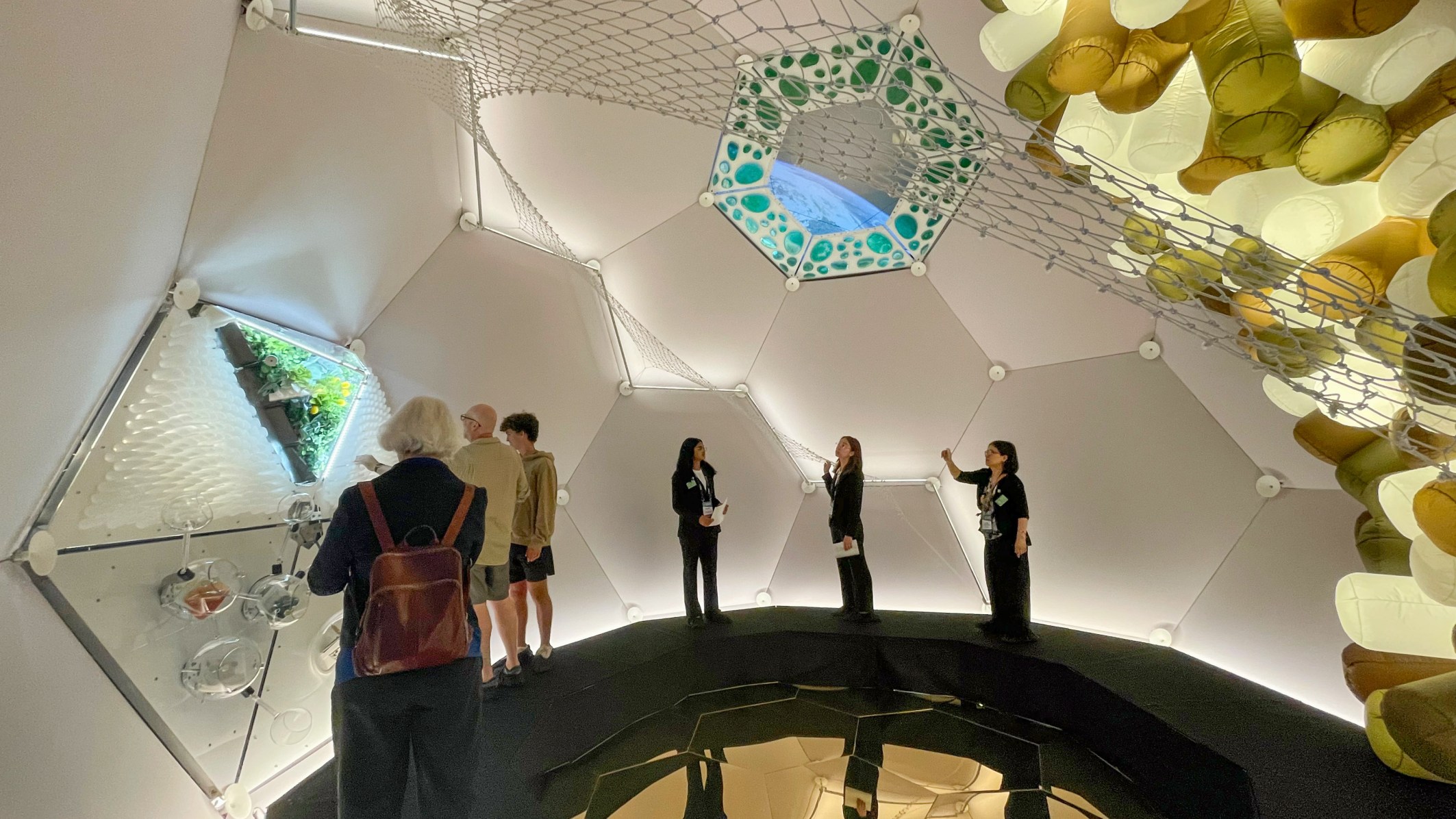
SELMAN DESIGN

But if these bold visions are to become reality, there’s a daunting amount of work to be done. A sprawling moon base must be safe for its astronaut inhabitants—protected from falling asteroids, endless cosmic radiation, razor-sharp lunar dust, and torturous temperature swings. It also must be somewhat self-sustaining, so that it can weather changing political fortunes and not cost ruinous amounts of money to maintain. For that, we’ll need to find a way to use the moon’s resources to keep the base operating—and ideally generating revenue. And we’ll need autonomous robots that can build, maintain, and expand the base even when their human masters aren’t present. “It’s almost like starting civilization from scratch,” says Simon Middleburgh, co-director of the Nuclear Futures Institute at Bangor University in Wales.

Assuming we can overcome these starting challenges, decades from now—let’s say, by the year 2100—our initial moon bases could grow from barely visible structures into luminous cities, perhaps not too dissimilar from those dreamed up by authors and screenwriters the world over. “It’s like science fiction today that we really want to turn into a reality,” says García-Galán. Will anyone succeed?


The moon is a tremendously hostile place to set up camp. In general, daytime temperatures can reach more than 250 °F; at night, they can plummet to less than –200 °F. Exposed to the vacuum of space, the surface is constantly showered in carcinogenic radiation and frequently hit by meteoroids. And its volcanic dust is sticky and corrosive, a destroyer of equipment and choker of lungs. 

Sadly, the lunar south pole—the area NASA is targeting—is even harsher. NASA wants to build a base there because its permanently shadowed craters are thought to harbor caches of water ice, which would be more precious than gold. Purify it, and you can water crops and hydrate astronauts; split it into oxygen and hydrogen, and you have breathable air and rocket propellant. But the temperature in those craters can be lower than –410 °F, making them some of the coldest places in the known universe. On the surface outside those pits, astronauts would be bathed in the scorching sun for 14 days before experiencing an equally long frigid night.

But there is only so much money we can spend on safety. “What it comes down to is acceptable risk of death,” Philip Metzger, a spaceflight engineering researcher at the Florida Space Institute, said while pondering some of the dangers. “What can we reasonably survive without breaking the bank?”

Temperature is one of the easiest problems to handle. Materials science has come a long way, and there are myriad metals, ceramics, plastics, compounds, and alloys that can resist wild temperature swings. Radiators keep things cool; heaters keep batteries from dying prematurely. Astronauts survive just fine too, with their fancy spacesuits—but that technology has proved itself only during brief excursions. It’s not yet clear how long this equipment could operate under such tempestuous conditions.

The temperature in the moon’s south pole craters can be lower than –410 °F, making them some of the coldest places in the known universe.

Outside those pits, astronauts would be bathed in the scorching sun for 14 days before experiencing an equally long frigid night.

Space radiation, which can wreak havoc on electronics and trigger a cancerous division of cells, is far more pernicious. And as Stuart George, a physicist at NASA’s Johnson Space Center in Houston, explains, it comes in two unpleasant forms. 

The first is galactic cosmic rays, which rain down on the moon almost constantly. “They’re made by supernovas and neutron star mergers—all these kinds of things,” says George. And because the atomic nuclei, protons, and electrons that make them up are moving at significant fractions of the speed of light, these cosmic rays have oodles of kinetic energy, meaning they can punch through thin shielding (say, a metal wall) with ease. “They also have this habit where the heavier ions are fragmenting in that shielding and making secondary particles,” says George. That means if your shield is too thin, the astronauts behind it will be blasted with a surprisingly large dose of radiation. 

Then you have the sun. It may sustain life on Earth, but without our planet’s thick atmosphere and magnetic bubble to get in its way, moonwalkers will occasionally be blasted by one of its paroxysms: a solar flare (a burst of diverse types of radiation) or a coronal mass ejection (volleys of magnetized plasma). “During Apollo, they knew that if a large solar flare occurred while the crew was on the moon, there would be no way to keep them alive,” says Metzger. The crew could have developed acute radiation sickness and perished in a matter of days.

The way to survive a powerful solar flare or coronal mass ejection is straightforward: “Get back inside a habitat where there’s more shielding,” says George—preferably a dedicated, highly shielded “storm shelter,” essentially a thick-walled bunker. The issue is that astronauts might be outside the base, driving a rover many miles away. Coronal mass ejections take hours to days to reach the vicinity of the Earth-moon system, but solar flares can do so in under an hour. And scientists can’t yet model the sun well enough to give much advance notice. “All of the capability to forecast solar storms is kind of like where weather forecasting [was] … in the ’50s and ’60s,” says George.

As for those punchy galactic cosmic rays, the only way to avoid them would be to put a lot of stuff—lunar rocks, possibly—between the astronauts and the sky. “Build habitat modules underground,” says Chris Dreyer, director of engineering at the Center for Space Resources at the Colorado School of Mines. One option: Burrow living quarters into lava tubes, the naturally hollowed-­out volcanic tunnels created by molten rock eons ago. At this point, NASA hasn’t mentioned any plans to make its moon base subterranean, but it may need to if it wants to end up with a small lunar city.


Radiation limits the time astronauts can spend on the lunar surface over their entire life—it can total around two years max, experts estimate, before the health risk becomes too high. Unfortunately, that’s not all space will throw at them. When the Artemis II astronauts swung around the far side of the moon earlier this year, they saw curious flashes light up the silvery land below. These were the explosive deaths of small meteoroids punching into the lunar surface.

Earth is naturally protected from smaller space rocks, up to around 50 feet in diameter: They burn up inconsequentially in the atmosphere. “You don’t have that option on the moon,” says Philip Lubin, a physicist and planetary defense researcher at the University of California, Santa Barbara. Since smaller rocks plunge toward planets and moons far more frequently than larger ones do, this means the moon is often peppered by what are effectively tiny space bullets. They could easily puncture a spacesuit or the engine of a moon rover.

How do you protect astronauts from the onslaught? “The simplest answer is burial,” says Nicholas Schmerr, a planetary seismologist at the University of Maryland—conveniently, the same way you’d deal with radiation exposure. Pile up moon rocks onto your base walls or put habitable structures in lava tubes. 

Inconveniently, there’s always a chance that a bigger asteroid will come along. Even buried habitation modules would have trouble surviving an assault from a 50-footer—about the length of a semi-trailer. 

That doesn’t mean a moon base would be helpless against bigger asteroids. Planetary defense has come a long way in just a few decades. NASA’s DART mission demonstrated that it could deflect an asteroid by ramming into the rock with an uncrewed spacecraft, and cutting-­edge experiments at clandestine labs around the US suggest that a nuclear bomb could swat away or entirely vaporize errant space rocks. An array of both ground-based and space-based telescopes specifically designed to spy killers—such as the ATLAS quartet of largely automated telescopes, and the soon-to-be-launched NEO Surveyor infrared telescope—are also aiming to find 90% of the near-Earth asteroids potentially capable of wiping out entire cities (those 460 feet across) in the coming years.

All these protections apply to the moon. But asteroids 50 feet across are so stealthy that even NASA’s best telescopes would struggle to see them years or even months in advance. Odds are that they would first be seen not long before they were due to hit the lunar surface. Then what?

It’s not unreasonable to imagine several turret-like launch sites on the moon that, owing to the lower gravity and airless environment, could rapidly fire projectiles toward an incoming asteroid. Hit it hard enough and it would break into fragments. Just make sure you shoot when it is as far away as possible: “If you were to break something up into a thousand pieces, then you have a thousand impacts on the moon,” says Lubin. “That might be worse than letting it hit one place.” 


Having your base destroyed by an asteroid would be awful. But a moon base is far more likely to be imperiled by dust—which, unlike asteroids, is everywhere, all the time.

Volcanic lunar rocks, when broken down, turn into sharp, electrostatically charged, adhesive, acrid, abrasive particles. While on the moon, Apollo astronauts who inhaled some of this dust occasionally suffered from a strange “lunar hay fever,” which irritated their eyes and agitated their lungs. That same dust ate through all kinds of gear with disturbing ease. “It rips up seals, gears, motors, spacesuits, habitats—everything else it comes into contact with,” says Justin Cyrus, the CEO of Lunar Outpost, a spaceflight technology company that is providing NASA with one of the Artemis program’s moon rovers.

NASA has already developed a defense against these dark shards: the electrodynamic dust shield, or EDS. The lightweight electrodes that make up this shield—which can be layered on machinery, walls, and perhaps even spacesuits—use opposing currents to blast away the electrically charged dust. The EDS worked wonders when tested in labs on Earth, and it also demonstrated its anti-dust magic when sent to the lunar surface in 2025 as part of a NASA-sponsored robotic mission. 

Amy Fritz, a dust-mitigation researcher at Johnson Space Center, says that the EDS will likely be widely featured all over a lunar habitat. But other dust-fighting instruments are being developed too—including a lint-roller-type object inspired by gecko skin and a sci-fi-esque blaster that uses ionized nitrogen gas. Its first spray will neutralize the charge of the dust to remove its stickiness; then a second burst will clear it off the surface.

Irritatingly, the busier a base gets, the dustier things will become. As it expands to the size of a small city, rocket ships will need to deliver cargo and crew to the lunar surface on a frequent cadence. Each takeoff and landing will launch a salvo of dust in every direction, inundating the base’s infrastructure. “You have to worry about essentially being sandblasted every time,” says Fritz. 

Metzger calculates that even with landing pads more than 3,000 feet away from a base, just 10 to 20 liftoffs or landings would be sufficient to severely damage things like protective coatings on exterior walls and communications equipment. After a while, he says, “everything breaks.” 


Even if the moon base of the future is buried partly below ground, barricaded against micrometeorites and space radiation, and well equipped with dust-repelling technologies, it’s still a risky gig for any astronaut. Skipping around in a preternaturally agile way at one-sixth of Earth’s gravity will be entertaining. But “microgravity is not good for the human body,” says Dreyer. Muscle wastage, cardiovascular troubles, respiratory problems, and immune deficiencies can arise. 

Radiation, too, may always afflict lunar residents. And there’s also evidence that disease-causing microbes could stealthily sneak aboard spacecraft, even after stringent sterilization procedures. Those microbes may behave differently than they do on Earth; microgravity experiments (both real and simulated) have suggested that some become more aggressive and more likely to cause disease. “We call them the invisible crew,” says Lisa Carnell, the director of NASA’s Biological and Physical Sciences Division.
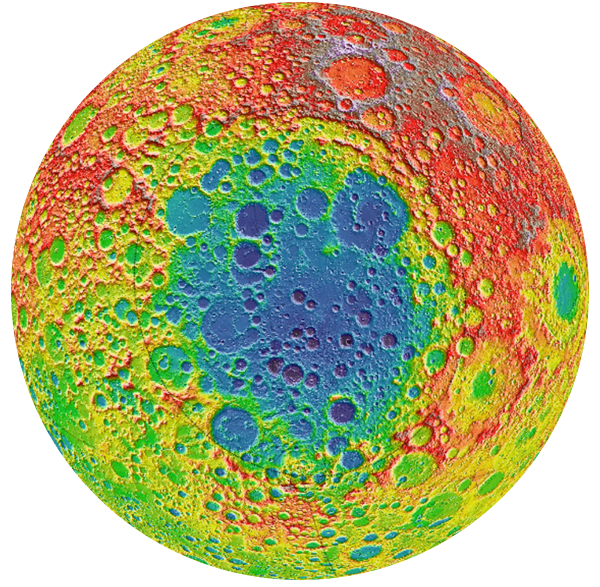
The lunar south pole, which is thought to contain a sizable amount of water, is an attractive target for lunar exploration and, eventually, settlement. This map shows the topography of the region. The South Pole–Aitken basin (blue) is an immense crater studded with smaller craters. The vertical distance from the lowest-lying regions to the surrounding peaks can exceed 15 kilometers, almost twice the height of Mount Everest.
NASA/GSFC/MIT

Hoping to find a better way to protect astronauts, Carnell spearheaded an experiment called AVATAR (A Virtual Astronaut Tissue Analog Response), which launched aboard the Artemis II mission. It used thumb-drive-size chips, containing cells taken from the heart, lungs, or other parts of the body, that could be switched on to act like miniature organs. Scientists have previously used this organ-on-a-chip technology for purposes like testing out new pharmaceuticals in a highly controlled setting. For Artemis II, Carnell’s crew sent up chips containing bone marrow samples taken from the mission’s four astronauts. Bone marrow makes red and white blood cells, as well as platelets—the sort of stuff that affects almost the entire human body. So seeing how space radiation and microgravity affect it would give Carnell and her team vital insight into how astronauts’ biology might change on the moon.

The advantage of organ chips is that you can make them for any astronaut and then send them into space ahead of time to see how that person’s organs will react to spaceflight. Researchers envision that data from such chips will be able to clue medics in to the specific preventive treatments or pharmaceuticals that will help moonbound astronauts on their journey.

What is NASA likely to send up sooner rather than later? “Brain organoids,” says Carnell. Yes, she adds—that sounds super weird. But it would be good to know how a real brain might respond to being on the moon for several months before people start living there.


Okay. Your vast moon base and its inhabitants are protected—as much as is possible—from the treacherous lunar environment. But astronauts’ time is extremely valuable, and humans are fragile creatures. You can’t make them do all the heavy lifting, which means that whether you’re trying to make a tiny lunar outpost or a small city, you’re going to need a lot of robots. “The buildup of the moon base, in the first years, will pretty much 99% be robotic,” says NASA’s García-Galán.

Autonomy will be there right from the start. NASA’s new version of the moon buggy, its Lunar Terrain Vehicle, can be driven by the astronauts riding in it but can also be piloted remotely from Earth (or from elsewhere on the moon). There are visions, too, of adding modular robotic arms, towing vehicles, and cargo movers—all still in the preliminary stages of planning.

Over the next few decades, though, we’ll likely want an army of robots to do our bidding: excavators to dig up lunar rocks that could be turned into concrete and bricks, plus other robots to flatten surfaces, dig trenches, create building foundations, pave landing pads, and build up dust-deflecting berms to keep the base from being sandblasted by launches and landings. Even solar panels and wiring can potentially be made from moon rocks—something that the spaceflight company Blue Origin demonstrated in labs on Earth in 2023 using a geologic simulant designed to match the composition of lunar regolith. 

Powering this robot army will require considerable energy. Two-week-long nights make solar power an impractical solution. Aside from a cornucopia of high-­capacity, extreme-temperature-resistant batteries, nuclear power is probably the only viable option. A small, car-size nuclear reactor, filled with an almost literal handful of uranium, could power a small village for a decade without needing to be refueled. And although nobody’s yet tested a nuclear reactor on the moon, few doubt that NASA and the US Department of Energy can conjure up a working design—one that perhaps wouldn’t be too different from those aboard nuclear submarines. A moon base in 2100 would probably feature multiple small, autonomously or remotely operated nuclear reactors, which—conveniently—the base-expanding robots could simply plug themselves into to recharge. 


But the biggest lunar question mark might be water, which planners want to support the astronauts—and to make fuel to launch things from the lunar surface. A process known as electrolysis, which uses electricity to snap apart molecular bonds, can be used to split water into oxygen and hydrogen, both of which could be used to make rocket fuel. Getting them this way could be far less expensive than sending either all the way from Earth. And as an added bonus, it would provide a source of breathable oxygen. 

Orbital data has revealed that there is some amount of water preserved in patches on the lunar south pole, but little is known about how much there actually is, what form it takes, or how easy it will be to extract. Will there be solid sheets of ice here and there, ready for us to excavate? Or will there be scattered ice crystals intermingled among the rocky grains, requiring some more inventive form of extraction?

A lot of the moon’s water is thought to be hiding in deep, dark craters on the south pole, where the environment is so extreme that robots may freeze up, tumble over, or lose contact with the base. “To me, that is the biggest hurdle,” says Paul van Susante, principal investigator of the Planetary Surface Technology Development Lab at Michigan Technological University.

Van Susante’s lab has been putting various construction robots through their paces in moon-like vacuum chambers filled with moon-like rocks. His team was part of NASA’s recent Break the Ice challenge, which invited engineers to build robots to test different ways to excavate such rocks. Some teams used an electric jackhammer and a scoop, while others used scrapers to peel off layers of the ground. The teams simulated the moon’s weak gravity using a crane to lift and offset the weight of the robots. Progress in this regard is speeding along. “I won’t say that’s solved, but we’ve got a lot of the puzzle pieces,” says van Susante.

Mining the water will be just one part of an extensive operation. “When you extract it, it’s not going to be clean. It needs to be purified,” says Jessica Atkin, a space botanist at Texas A&M. The technology to do this already exists and works fine on terra firma. But things in space never go the way you expect. “There’s a water purification system on the International Space Station (ISS), and it is known for getting contaminated with microbes,” she says.

SELMAN DESIGN

But if you purify the water sufficiently—something that can handily be achieved on Earth but may falter in microgravity, where fluids flow in stranger ways—then your moon base can hit its stride. With an effective water recycling system, an increasingly populous base will never go thirsty—and, just maybe, you’ll have a lunar greenhouse. Several edible plants have been successfully grown aboard the ISS, including lettuce, mustard greens, tomatoes, and peppers. Lunar dust unfortunately makes for a terrible garden: It’s filled with far too much aluminum—and it forms a resistant layer when watered. But Atkin has shown that with the help of fertilizing fungi, chickpeas can grow in soil much like the volcanic stuff found on the moon.

Moon base inhabitants of 2100 would be supported largely by prepacked meals sent from Earth. But in time, they would start growing some of their own produce—probably with a good deal of automation for lighting, watering, and maintenance of humidity and other environmental conditions. Aside from chickpeas, there might also be plenty of lunar tomatoes. They’d be desirable not least because they’ve been bioengineered to produce higher levels of compounds called anthocyanins that, according to some studies, might help humans mitigate the cellular damage caused by space radiation.

A garden on the moon would do more than just provide food, as recent experiences on the ISS suggest. Carnell says that NASA recently caught the astronauts aboard the space station doing something sneaky. All plants up there are supposed to be confined to their growth chambers. But “we learned that the crew were pirating our leftover soil and bringing their seeds and planting their own little gardens, if you will, and hiding them in their own cabins,” she says. 

Conversations were had in the summer of 2026, after which NASA decided to let astronauts grow their own mini-gardens anywhere they wanted. “Some of the astronauts said they thrived better,” says Carnell. Nature, and gardening, has a hugely beneficial psychological effect on those kept in confined quarters hanging above Earth. That will be even truer for those living in lava tunnels under the lunar surface. “That human element is so important,” she says.


Nobody is deluded into thinking there isn’t a mountain of technological challenges in the way. Mars may be a hellhole, as the writer Shannon Stirone put it in 2021 in The Atlantic, but the moon isn’t too far behind. It’s an almost comically menacing place to be. Much about it stands in the way of building a safe, self-sustaining, robotically managed base. 

NASA wants to put the first nuclear reactor on the moon by 2030. China, partnering with Russia, wants to place its own nuclear power plant up there around 2035.

Beyond the first basic habitation module, it will take decades of experimentation and iteration on the lunar surface to get to a working moon base spanning hundreds of square miles. But few doubt that with enough time and tinkering, humanity can prevail. “It’s not an unsolvable problem,” says the University of Maryland’s Schmerr.

The chief obstacle, especially in the initial stages of building, may be one of political will. NASA is currently bringing every resource to bear on the project—something that the agency hopes could culminate in a small lunar city by the century’s end. But will that commitment continue over multiple US administrations? Will the international community also throw its weight behind the NASA-led effort? NASA has “a very ambitious plan,” says Yuqi Qian, a lunar geologist at the University of Hong Kong. “We need to keep an eye on it.” In fact, he says, “the current plan looks over-ambitious.” The agency, for example, wants to put the first nuclear reactor on the moon by 2030. (China, partnering with Russia, wants to place its own nuclear power plant up there around 2035.) 

“These sorts of projects—although very exciting, and potentially transformative for humankind—are the first ones to be delayed or scrapped,” says Middleburgh of the Nuclear Futures Institute. NASA’s direction tends to change when a new administration comes into power—sometimes dramatically so.

But several experts outside of NASA agree that, at least for now, there is definite momentum and political will behind the moon base. “NASA has very clearly expressed where they want to go, what their priorities [are], what their ambition is, and how they want to do it,” says ESA’s Aschbacher. “It was quite impressive to see.”

Even if the political will behind the US-led endeavor is maintained over the coming decades, expanding anywhere beyond an initial, compact moon base will require more than government funding. “There has to be a lunar economy for this to be self-sustaining,” says Dreyer, the space resources expert. Perhaps that will come from the production of rocket fuel, or from the mining of valuable materials on the moon that can replace similar, polluting activities on Earth. But it’s not at all clear how valuable, or not, a lunar economy will be. 

Even Isaacman, NASA’s chief, doesn’t think the moon will be a major moneymaker. “I don’t know of anything on the moon right now that’s going to be easier and more affordable to mine, manufacture, and then bring back to Earth than what we could make here on Earth,” he remarked back in February. (Instead, he suspects, mining metals from asteroids will be the path to prosperity.) 

What if, instead, a moon base earns the right to exist because it’s a place for novel scientific research? Aschbacher imagines it will be like humanity’s outposts in Antarctica. Down there, in what truly feels like another world, scientist-explorers work in a land of gleaming and endless ice to learn more about our planet’s climate, its deep past, and its resilient life-forms. “We understand planet Earth by looking into those remote places,” he says. The moon offers a similar opportunity. What discoveries await astronauts in those primordial lava tubes? What will lunar astronomers see in the night sky—with effectively no atmosphere or light pollution in the way—that those on Earth can’t?

As in all spaceflight programs, technologies developed up there will no doubt be tweaked to be used back on Earth. And a base on the moon will make exploring the rest of the solar system easier. Technologically, physiologically, and psychologically, the moon “is a proving ground for the technologies we need for Mars,” says NASA’s García-Galán.

If we play the US-China race forward, perhaps the lunar south pole of 2100 will feature several sprawling bases operated by multiple geopolitical rivals. Perhaps it’ll be an off-world powder keg of militarized territorial ambitions and jingoism. But maybe it could instead become an international cathedral to science—and the ultimate adventure destination. “Even if countries on planet Earth have difficulty talking to each other,” says Aschbacher, they might behave differently when it comes to the moon. “I’m pretty sure they will get together and see what we can do together, and see what problems we can solve.” After all, he says, up there, far from home, “you’re so dependent on each other.” 

Robin George Andrews is an award-winning science journalist and doctor of volcanoes based in London. He regularly writes about the Earth, space, and planetary sciences and is the author of two critically acclaimed books: Super Volcanoes (2021) and How to Kill an Asteroid (2024).
Shape
Shape
Stay Ahead

Explore More Insights

Stay ahead with more perspectives on cutting-edge power, infrastructure, energy,  bitcoin and AI solutions. Explore these articles to uncover strategies and insights shaping the future of industries.

Shape

It’s not your model — AI has a data movement problem

But that can be the wrong lever. When you examine the full end-to-end transaction, the model usually isn’t the problem. Take the extraordinary scale of AI traffic as it moves from a branch office to a centralized security stack, then to a cloud region, then to a data-hosted backend somewhere

Read More »

Ørsted builds compliance into automation, speeds firewall changes

Taking on a firewall process One process Ørsted initially targeted for automation was firewall rule management. In the past, an internal customer submitted a firewall request through ServiceNow, and a network security engineer reviewed the request, checking IP addresses, fully qualified domain names, and directory groups. Depending on the type,

Read More »

Energy Department Authorizes Strategic Petroleum Reserve Exchange to Address Supply Disruptions Due to Hurricane

WASHINGTON—The U.S. Department of Energy (DOE) today announced the authorization of an emergency exchange of up to 4 million barrels of crude oil from the Strategic Petroleum Reserve (SPR) to address supply disruptions due to inclement weather in the Gulf of America. Under the terms of the exchanges, participating companies will return the borrowed crude oil with additional premium barrels in 2027, helping replenish and strengthen the SPR at no additional cost to taxpayers.  “With this emergency exchange, the Energy Department is acting swiftly to help maintain refinery operations, limit disruptions to fuel supplies, and ensure American families and businesses continue to have access to affordable, reliable, and secure energy” said U.S. Secretary of Energy Chris Wright. “In addition to helping minimize supply disruptions, these emergency exchanges will also require Exxon and BP to return more barrels to the Reserve than are currently being withdrawn, saving taxpayers millions of dollars. Rest assured, the Trump Administration is committed to strengthening America’s energy security at every opportunity.” The Department has authorized exchanges of up to 2 million barrels each for ExxonMobil and BP America. ExxonMobil’s exchange will accelerate deliveries of previously awarded SPR crude oil to address immediate supply needs.  DOE will continue working with industry partners to support reliable fuel supplies and respond to hurricane-related disruptions.  For more information about the Strategic Petroleum Reserve, visit energy.gov.

Read More »

Energy Department Supports FERC’s Call for PJM to Protect Ratepayers and Build More Reliable Power

WASHINGTON—The U.S. Department of Energy (DOE) announced its support for the Federal Energy Regulatory Commission’s (FERC) guidance that would help ensure lower electricity costs for American families and businesses across the PJM Interconnection LLC’s (PJM) region spanning across the mid-Atlantic. DOE filed a Notice of Intervention and Statement of Position with FERC supporting its recommendation for PJM’s proposed Reliability Backstop Procurement. FERC recommends PJM submit revised tariff provisions to implement appropriate cost allocation and other reforms. FERC’s recommendations are consistent with President Trump’s Ratepayer Protection Pledge, ensuring large electricity users pay for the generation and infrastructure needed to serve them.  This action follows the Trump Administration’s call in January 2026 for PJM to adopt market rules to strengthen grid reliability and reduce electricity costs. Specifically, the Administration asked PJM to hold an emergency power auction and to accelerate the development of reliable power generation. The Trump administration was joined by governors from all 13 states who participate in the PJM grid. “The Trump Administration remains committed to doing everything it can to lower electricity costs, grow the supply of American energy and strengthen grid reliability,” said U.S. Secretary of Energy Chris Wright. “That’s why President Trump created the Ratepayer Protection Pledge, and the Energy Department supports having large electricity users pay for reliable new power generation.” “In January, the Trump Administration recognized early warning signs of capacity shortfalls in PJM and joined the Governors of all 13 PJM states in issuing a Statement of Principles to PJM, calling for PJM to adopt market rules to strengthen grid reliability and reduce electricity costs for American families and businesses,” said U.S. Deputy Secretary of Energy James P. Danly. “By increasing transparency and preventing unjust cost shifts onto existing customers, the proposed reforms advance President Trump’s Ratepayer Protection Pledge while ensuring Americans continue

Read More »

Shell agrees to acquire interest in Bay du Nord project

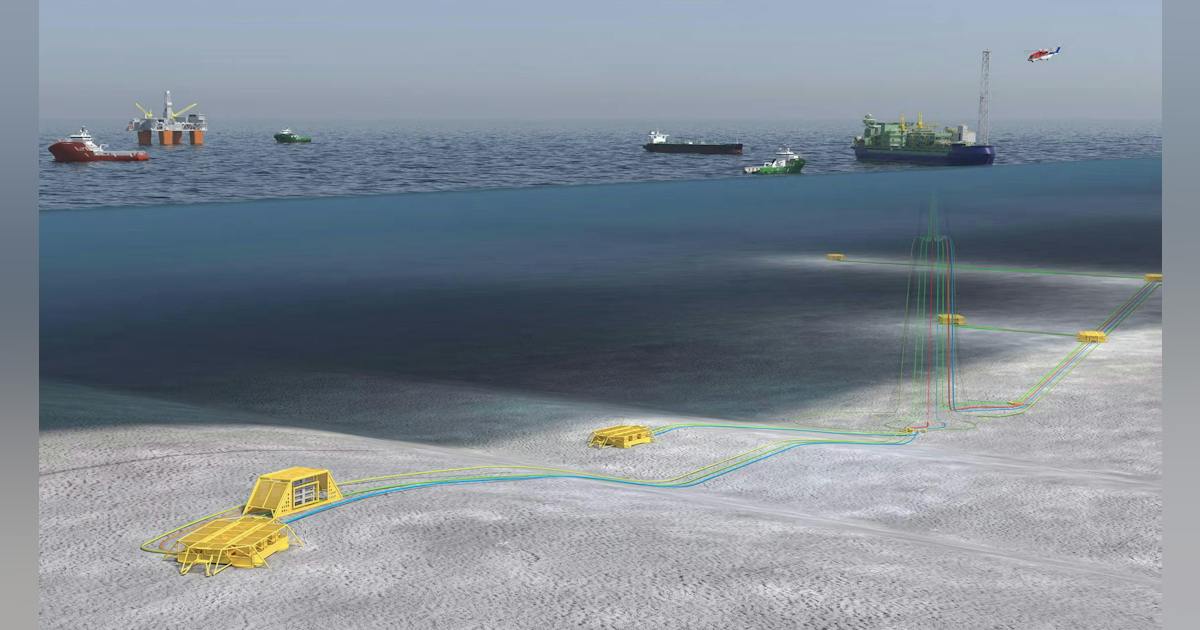
Shell plc and Equinor ASA have signed an agreement under which Shell will acquire a 30% interest in the Bay du Nord project offshore Newfoundland and Labrador in Canada. Equinor will retain a 70% interest and remain as the operator of the project. The transaction supports the continued maturation of Bay du Nord towards an investment decision currently targeted for early 2027, Equinor said. Bay du Nord is in Flemish Pass basin, about 500 km offshore Newfoundland and Labrador in 600–1,170 m of water. The development concept is based on a floating production, storage, and offloading vessel (FPSO). Bay du Nord and Cambriol discoveries are included in the initial phase, with potential future subsea tiebacks to Cappahayden, Harpoon, and Baccalieu. Estimated recoverable resources in the initial phase are more than 400 MMbbl of oil. First oil is anticipated in 2031, Equinor said. The project is currently finalizing front-end engineering and design (FEED), with continued work focused on strengthening capital efficiency, execution planning, and overall project robustness. Engagement with provincial and federal governments has supported progress through key milestones, according to the company. Equinor and Shell said they will continue to mature the project towards an investment decision subject to market conditions, regulatory approvals, and the companies’ internal decision processes. The project will require a toal investment of about $14 billion (Can.; US$12.6 billion), Equinor said.

Read More »

Dangote taps EIL for Kenya grassroots refinery project

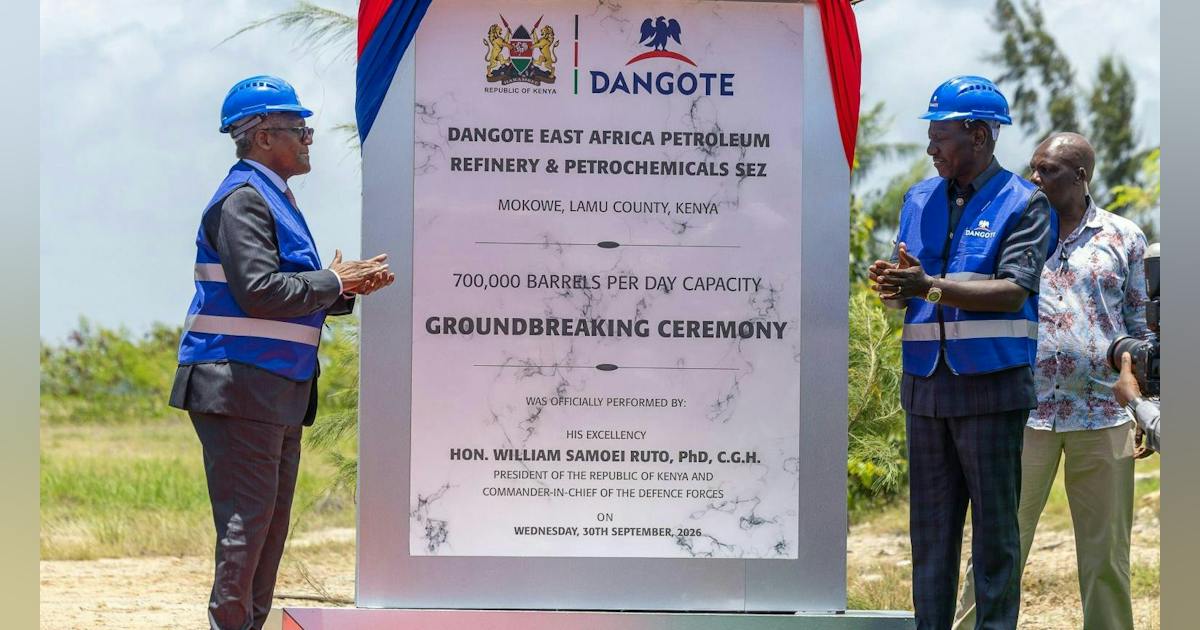
Dangote Group has enlisted Engineers India Ltd. (EIL) to deliver project management and engineering, procurement, and construction management (EPCM) services for subsidiary Dangote East Africa Petroleum Refinery & Petrochemicals SEZ’s proposed 700,000-b/d grassroots integrated refinery and petrochemical complex to be built in Mokowe, Lamu County, Kenya. As part of the more than $450-million contract, EIL will serve as project management consultant (PMC) and EPCM consultant for the project, the service provider said in separate regulatory filings to BSE Ltd. and The National Stock Exchange of India Ltd. The proposed complex is planned near Lamu Port and the Lamu Port-South Sudan-Ethiopia Transport (LAPSSET) corridor, which will connect the site with inland and regional markets by providing a coastal location for importing construction materials and crude as well as exporting refined products. EIL said award of the PMC-EPCM consultancy contract for the Lamu refinery follows its previous role as PMC-EPCM consultant for Dangote Petroleum Refinery and Petrochemicals FZE (DPRP) 650,000-b/d refinery and petrochemical complex in the Lekki Free Zone near Lagos, Nigeria, which is currently being expanded to 1.4 million b/d. At a Sept. 30 groundbreaking ceremony for the Lamu refinery, Dangote described the $16-billion investment as a project aimed at expanding refined-product supply in East Africa that will serve markets both within and beyond Kenya. While the refinery will presumably process Kenya’s production of domestic crude such as volumes from South Lokichar basin—which could which could begin production before December 2026 at a rate of about 20,000 b/d—the integrated complex also will process crude sourced from other African producers, including Uganda, the African Export-Import Bank (Afreximbank) said in a release Oct. 1. Honeywell to license technologies The EIL contract joins a separate $300-million contract awarded to Honeywell Technologies for delivery process technology and related services at Lamu, including technology licensing, engineering

Read More »

Energy Department Announces New Genesis Mission Awards to Advance Super Intelligence for Science

WASHINGTON—The U.S. Department of Energy (DOE) today announced 12 Phase II Genesis Mission project awards totaling $159 million. Building on the Genesis Mission’s growing portfolio of projects, first announced in July, these Phase II project awards will unleash scientific discoveries with Super Intelligence (SI). President Trump launched the Genesis Mission in November 2025 to accelerate discovery and strengthen U.S. leadership in science, medicine, and technology. “These projects represent a critical step in turning the promise of Super Intelligence for science into transformative scientific capability,” said DOE Under Secretary for Science Dr. Darío Gil. “The Phase II teams have already demonstrated what is possible when SI is integrated with scientific expertise, data, and computing. These awards give them the opportunity to take that work to the next level. By bringing together our National Labs, universities, and industry partners, we are building on extraordinary work already underway and accelerating the pace of discovery.” The Phase II awards are developing new, powerful capabilities to tackle the Nation’s most complex National Science and Technology Challenges. By connecting America’s leading scientists with advanced SI, supercomputing, scientific data, and DOE’s world-class research infrastructure, the Genesis Mission is strengthening U.S. leadership at the frontiers of science and technology. Awarded Projects Through DOE’s Office of Science, the 12 newly awarded projects are: Accelerating the path to commercial fusion energy via an AI-enabled digital twin platform for SPARC: Led by Commonwealth Fusion Systems, this project will build a digital twin to simulate and optimize operations of a fusion demonstration device.  Decoding the RNA Structurome to Secure AI Advantage for the Bioeconomy: Led by the University of California San Diego, the project will expand the RNA structure database five-fold for training SI models to unlock the ability to engineer resilient crops and sustainable microbes.  Lattice Quantum Chromodynamics (LQCD) at the

Read More »

Energy Department Launches Genesis Mission Graduate Fellowship to Advance American Scientific Leadership

WASHINGTON—The U.S. Department of Energy (DOE) today announced the Genesis Mission Graduate Fellowship Pilot, a new funding opportunity designed to develop the next generation of American scientists and engineers and strengthen U.S. scientific leadership. Through accelerated, four-year doctoral pathways, the program will equip domestic graduate students with critical expertise in both Super Intelligence (SI) and core scientific and engineering disciplines. The inaugural fellowship advances President Trump’s historic Genesis Mission by investing in the education, development, and retention of domestic talent needed to accelerate U.S. scientific discovery and innovation. “To secure America’s position at the forefront of global scientific innovation, we must cultivate a workforce that is fluent in both foundational sciences and advanced Super Intelligence,” said DOE Under Secretary for Science Dr. Darío Gil. “The Genesis Mission Graduate Fellowship will bridge this critical gap by combining rigorous academic training with hands-on, high-impact experiences across our National Laboratories and industry partners.” DOE will fund an inaugural group of pilot projects led by domestic doctoral-granting institutions, supporting an initial cohort of approximately 100 Ph.D. fellows. As part of their four-year doctoral pathways, fellows will complete two high-impact, hands-on research experiences—one at a DOE National Laboratory or DOE User Facility and one with an industry partner—preparing them to lead the next generation of scientific discovery and innovation. Total planned funding is up to $100 million, with $20 million in Fiscal Year 2027, and outyear funding contingent on congressional appropriations. A webinar will be held on November 4, 2026, 4:00 PM ET. Register on Zoom. For more information, please visit the DOE Office of Science Funding Opportunities page.

Read More »

DCF Global: Five Markets Redrawing the AI Infrastructure Map

The Global Constraint Is Execution These five markets demonstrate that the worldwide AI infrastructure buildout is no longer organized around a single development model. Spain is using permitting reform to attract investment. China is concentrating construction around energy resources. India is translating enormous capital commitments into an expanding development pipeline. Latin America is combining hyperscale growth with national industrial objectives. And Southeast Asia is creating interconnected infrastructure markets whose boundaries increasingly extend beyond individual cities and countries. Not every market is competing for the same business. Sovereign cloud services, enterprise applications, AI training clusters, and large-scale inference platforms carry different requirements involving power, connectivity, latency, data residency, and operating economics. But the infrastructure questions remain remarkably consistent. Can a project obtain enough electricity? Can transmission and supporting networks be delivered on schedule? Will the supply chain provide the required equipment? Can the facility be constructed and commissioned efficiently? And will the development retain the regulatory certainty and community acceptance required to operate for decades? The gap between announced development and actual capacity is becoming a defining measurement of the industry. Cushman & Wakefield estimates that Asia-Pacific alone had approximately 26.5 GW of data center capacity in its development pipeline during H1 2026. Of that total, roughly 4.8 GW was under construction, with another 21.7 GW in planning. Those figures reveal both the extraordinary scale of the opportunity and the considerable infrastructure work still required to realize it. What the Global Buildout Means for North America For U.S. data center operators, developers, engineering firms, equipment suppliers, and investors, international expansion is not a separate story. It is increasingly part of the same global competition for capital, equipment, power infrastructure, and specialized expertise. The transformers, switchgear, generators, advanced cooling systems, fiber networks, and electrical distribution equipment required by a major AI campus

Read More »

Bidding war over key component could eliminate third hard disk maker

What if the three remaining hard disk manufacturers became two? Seagate Technology and Western Digital control 90% of the market, according to market researcher TrendForce, with Toshiba picking up the crumbs. Seagate and WD both make their own magnetic drive heads, but Toshiba relies on a third party, TDK, which also sells to Seagate and WD when they need extra capacity. Seeking to guarantee supplies of this critical component, Toshiba made a bid for TDK’s drive head business earlier this year, according to Bloomberg. Concerned that this could affect its ability to meet the growing demand for hard disks from AI data centers, Seagate made a counteroffer, Bloomberg reported. TDK is staying mum.

Read More »

Oracle reportedly lands $7B GPU deal for Tencent

Oracle has reportedly signed a five-year, $7 billion agreement to provide Chinese technology conglomerate Tencent with access to roughly 100,000 advanced AI accelerators deployed in Oracle data centers across Southeast Asia, helping Tencent to sidestep restrictions on advanced AI equipment.  The deal, first reported by the Financial Times, would represent Tencent’s largest overseas cloud commitment with a U.S. provider. Neither Oracle nor Tencent has publicly confirmed the agreement or disclosed the specific AI processors involved. Under the reported terms, Tencent would pay about 30% of the contract value upfront—roughly $2.1 billion—with the remainder paid over the five-year term. That would give Oracle a substantial source of upfront funding for the expensive data center infrastructure required to build out the infrastructure.

Read More »

NVIDIA’s DSX Ready Brings Power and Cooling Into the AI Factory Blueprint

NVIDIA is extending its influence over AI infrastructure beyond the GPU, server rack and network, introducing qualification requirements for the power and cooling systems that increasingly determine the scale and performance of AI data centers. The company’s new NVIDIA DSX Ready program, announced September 21, establishes requirements for specific infrastructure products intended for use with NVIDIA’s DSX AI factory reference designs. Its first two categories—battery energy storage systems (BESS) and coolant distribution units (CDUs)—address two of the most pressing engineering challenges in AI infrastructure: managing rapidly changing electrical demand and removing heat from increasingly dense computing systems. The initial qualified suppliers are Hitachi Energy, LG Energy Solution and Tesla for battery storage, and LG Electronics, LiquidStack and Vertiv for liquid cooling. While the announcement might initially resemble another NVIDIA partner program, its technical details suggest something more consequential. The company is establishing performance criteria for the electrical and mechanical equipment supporting its computing platforms, connecting those requirements to an expanding ecosystem of qualified suppliers. Subsequent partner announcements offer a clearer view of what that means in practice. They describe battery systems designed to respond to AI load fluctuations, coolant distribution equipment operating at multi-megawatt capacities, and integrated cooling architectures intended to make more of a data center’s available power usable for computing. The initiative also coincides with the arrival of Chris Malone, formerly a data center infrastructure executive at OpenAI, Meta and Google, as NVIDIA’s vice president of the DSX Platform. Together, the developments point toward a closer relationship between computing architecture and facility engineering, with NVIDIA seeking to influence not only the processors deployed in AI factories but the infrastructure requirements that support their operation. From Reference Design to Infrastructure Qualification DSX Ready is an extension of the broader NVIDIA DSX AI Factory Platform, introduced in May 2026. As

Read More »

Brookfield’s AREP Deal Extends the AI Infrastructure Stack to Powered Land

The transaction goes beyond Brookfield investing in another portfolio of buildings. It is investing in a developer whose principal product increasingly begins before the building, with land, entitlements, substations, transmission access and utility capacity. PowerHouse Has Become a Gigawatt-Scale Development Platform PowerHouse was founded with a strong Northern Virginia orientation, but its development map now stretches well beyond Data Center Alley as its current portfolio includes projects in Virginia, Texas, Pennsylvania, North Carolina, Nevada, Indiana, Illinois and Kentucky. The company lists 515 MW across its Northern VA Ashburn properties, another 900 MW at its PH 95 development in Spotsylvania, 1.35 GW in Carlisle, Pennsylvania, 1.8 GW at Joliet, Illinois, and substantial campuses across multiple Texas and Indiana locations. The various projects do a good job of illustrating how the definition of a hyperscale development site is changing. At PowerHouse Arcola in Loudoun County, Virginia, PowerHouse announced a long-term hyperscale lease earlier this year. The 37-acre campus includes two planned data center buildings totaling approximately 615,000 square feet and is designed for up to 120 MW of utility capacity. PowerHouse emphasizes not only the buildings but the campus’s on-site substation, fiber access, power security and support for high-density GPU and liquid-cooled deployments. In Texas, it might be that everything really is bigger, and PowerHouse’s Grand Prairie development covers approximately 810 acres and 8.5 million developable square feet. Its project page cites maximum utility power of 1.8 GW and a development schedule extending through 2029 and beyond. The Texas development plans also include a proposed Circle T campus in Westlake outside Fort Worth, which calls for as many as four roughly 300,000-square-foot facilities totaling approximately 300 MW. According to reporting on local filings, PowerHouse has funded a 350-MW Oncor substation intended to serve the campus and the town’s pump station. The company’s development in

Read More »

AI Is Turning Energy Storage Into Active Power Infrastructure

AI Turns the Power Problem Into a Transient Problem At the heart of the issue is the changing behavior of the IT load. In a conventional data center, DeLattre said, large numbers of independent loads create a relatively predictable electrical profile. AI clusters introduce much greater synchronization. As GPUs begin processing a common workload, large numbers of accelerators can increase their power consumption simultaneously. Instead of asking the electrical infrastructure to serve a relatively smooth load, the facility can experience fast power pulses moving through the system. Hybrid supercapacitors are intended to act as a buffer between that dynamic compute load and the infrastructure supplying it. During an upward transient, storage provides some of the incremental power demanded by the IT load. When demand falls, the storage system recharges. The objective is not to create additional energy. It is to keep every upstream component — from the UPS to generators and ultimately the utility connection — from having to respond directly to every rapid change taking place inside the AI cluster. From the perspective of the upstream power source, DeLattre said, the goal is to make a highly dynamic AI load appear significantly smoother. That distinction between energy and power is central to Musashi’s argument for hybrid supercapacitors. A conventional supercapacitor, also known as an electric double-layer capacitor, can deliver very high power almost instantly but stores relatively little energy. A lithium-ion battery can store considerably more energy, but DeLattre argues that it is less suited to being aggressively charged and discharged tens or hundreds of thousands of times. Musashi’s hybrid technology uses a capacitor architecture with a lithium-doped graphite electrode intended to increase energy density while preserving the fast response and high cycling capability associated with capacitors. DeLattre reduces the distinction to a simple formulation. “Batteries are very good

Read More »

Microsoft will invest $80B in AI data centers in fiscal 2025

And Microsoft isn’t the only one that is ramping up its investments into AI-enabled data centers. Rival cloud service providers are all investing in either upgrading or opening new data centers to capture a larger chunk of business from developers and users of large language models (LLMs).  In a report published in October 2024, Bloomberg Intelligence estimated that demand for generative AI would push Microsoft, AWS, Google, Oracle, Meta, and Apple would between them devote $200 billion to capex in 2025, up from $110 billion in 2023. Microsoft is one of the biggest spenders, followed closely by Google and AWS, Bloomberg Intelligence said. Its estimate of Microsoft’s capital spending on AI, at $62.4 billion for calendar 2025, is lower than Smith’s claim that the company will invest $80 billion in the fiscal year to June 30, 2025. Both figures, though, are way higher than Microsoft’s 2020 capital expenditure of “just” $17.6 billion. The majority of the increased spending is tied to cloud services and the expansion of AI infrastructure needed to provide compute capacity for OpenAI workloads. Separately, last October Amazon CEO Andy Jassy said his company planned total capex spend of $75 billion in 2024 and even more in 2025, with much of it going to AWS, its cloud computing division.

Read More »

John Deere unveils more autonomous farm machines to address skill labor shortage

Join our daily and weekly newsletters for the latest updates and exclusive content on industry-leading AI coverage. Learn More Self-driving tractors might be the path to self-driving cars. John Deere has revealed a new line of autonomous machines and tech across agriculture, construction and commercial landscaping. The Moline, Illinois-based John Deere has been in business for 187 years, yet it’s been a regular as a non-tech company showing off technology at the big tech trade show in Las Vegas and is back at CES 2025 with more autonomous tractors and other vehicles. This is not something we usually cover, but John Deere has a lot of data that is interesting in the big picture of tech. The message from the company is that there aren’t enough skilled farm laborers to do the work that its customers need. It’s been a challenge for most of the last two decades, said Jahmy Hindman, CTO at John Deere, in a briefing. Much of the tech will come this fall and after that. He noted that the average farmer in the U.S. is over 58 and works 12 to 18 hours a day to grow food for us. And he said the American Farm Bureau Federation estimates there are roughly 2.4 million farm jobs that need to be filled annually; and the agricultural work force continues to shrink. (This is my hint to the anti-immigration crowd). John Deere’s autonomous 9RX Tractor. Farmers can oversee it using an app. While each of these industries experiences their own set of challenges, a commonality across all is skilled labor availability. In construction, about 80% percent of contractors struggle to find skilled labor. And in commercial landscaping, 86% of landscaping business owners can’t find labor to fill open positions, he said. “They have to figure out how to do

Read More »

2025 playbook for enterprise AI success, from agents to evals

Join our daily and weekly newsletters for the latest updates and exclusive content on industry-leading AI coverage. Learn More 2025 is poised to be a pivotal year for enterprise AI. The past year has seen rapid innovation, and this year will see the same. This has made it more critical than ever to revisit your AI strategy to stay competitive and create value for your customers. From scaling AI agents to optimizing costs, here are the five critical areas enterprises should prioritize for their AI strategy this year. 1. Agents: the next generation of automation AI agents are no longer theoretical. In 2025, they’re indispensable tools for enterprises looking to streamline operations and enhance customer interactions. Unlike traditional software, agents powered by large language models (LLMs) can make nuanced decisions, navigate complex multi-step tasks, and integrate seamlessly with tools and APIs. At the start of 2024, agents were not ready for prime time, making frustrating mistakes like hallucinating URLs. They started getting better as frontier large language models themselves improved. “Let me put it this way,” said Sam Witteveen, cofounder of Red Dragon, a company that develops agents for companies, and that recently reviewed the 48 agents it built last year. “Interestingly, the ones that we built at the start of the year, a lot of those worked way better at the end of the year just because the models got better.” Witteveen shared this in the video podcast we filmed to discuss these five big trends in detail. Models are getting better and hallucinating less, and they’re also being trained to do agentic tasks. Another feature that the model providers are researching is a way to use the LLM as a judge, and as models get cheaper (something we’ll cover below), companies can use three or more models to

Read More »

OpenAI’s red teaming innovations define new essentials for security leaders in the AI era

Join our daily and weekly newsletters for the latest updates and exclusive content on industry-leading AI coverage. Learn More OpenAI has taken a more aggressive approach to red teaming than its AI competitors, demonstrating its security teams’ advanced capabilities in two areas: multi-step reinforcement and external red teaming. OpenAI recently released two papers that set a new competitive standard for improving the quality, reliability and safety of AI models in these two techniques and more. The first paper, “OpenAI’s Approach to External Red Teaming for AI Models and Systems,” reports that specialized teams outside the company have proven effective in uncovering vulnerabilities that might otherwise have made it into a released model because in-house testing techniques may have missed them. In the second paper, “Diverse and Effective Red Teaming with Auto-Generated Rewards and Multi-Step Reinforcement Learning,” OpenAI introduces an automated framework that relies on iterative reinforcement learning to generate a broad spectrum of novel, wide-ranging attacks. Going all-in on red teaming pays practical, competitive dividends It’s encouraging to see competitive intensity in red teaming growing among AI companies. When Anthropic released its AI red team guidelines in June of last year, it joined AI providers including Google, Microsoft, Nvidia, OpenAI, and even the U.S.’s National Institute of Standards and Technology (NIST), which all had released red teaming frameworks. Investing heavily in red teaming yields tangible benefits for security leaders in any organization. OpenAI’s paper on external red teaming provides a detailed analysis of how the company strives to create specialized external teams that include cybersecurity and subject matter experts. The goal is to see if knowledgeable external teams can defeat models’ security perimeters and find gaps in their security, biases and controls that prompt-based testing couldn’t find. What makes OpenAI’s recent papers noteworthy is how well they define using human-in-the-middle

Read More »