
Patel was matter of fact about Cisco’s limits. “We cannot be arrogant enough to think that all innovation is going to start and end at Cisco,” he said. That openness benefits customers, but it also means partners will use your operational data to train models. Before signing up, ask who owns the fine-tuned model, where the training data resides, and what happens to it if you change partners.
Expect a call before the breach, not after
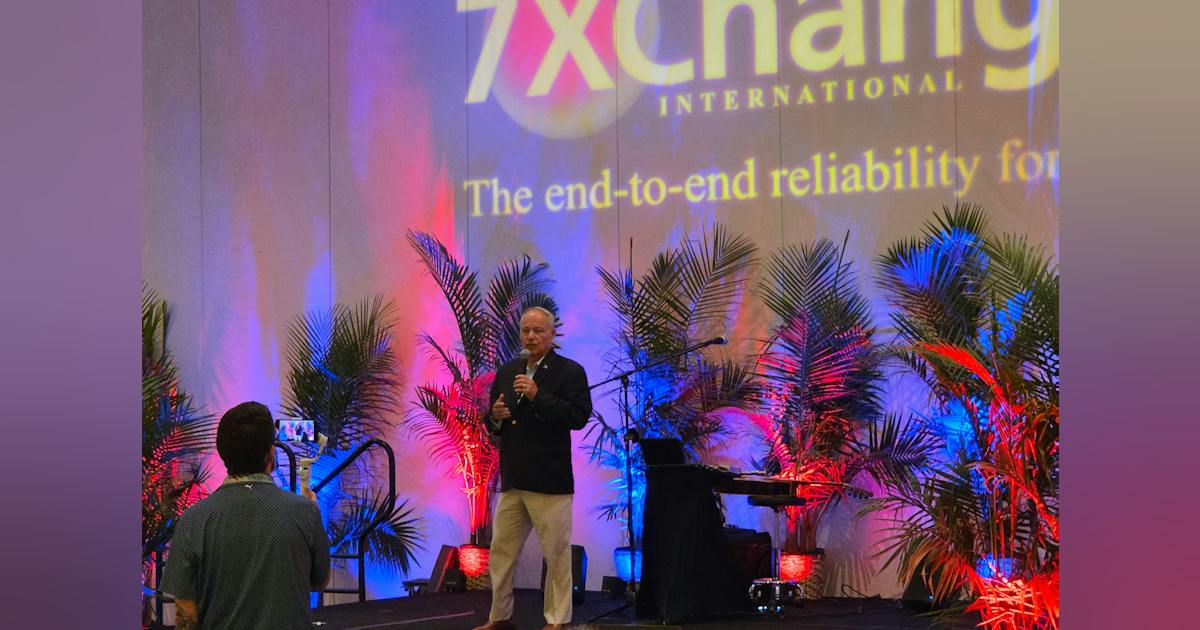
During his keynote, Patel (pictured below) offered an analogy that most in the audience could relate to. “Agents are like teenagers,” he said. “They are supremely intelligent. They have no fear of consequence, and they exercise poor judgment far more often than you and I would like.” He said this tongue-in-cheek, but his point was accurate. It’s increasingly hard to distinguish an outside attack on an agent from an agent simply making a bad call, so security and observability telemetry can no longer be siloed. “As these adversaries attack at machine speed and scale, defense can no longer be at human scale,” he added.
The window to respond is narrowing. Patel said it can take 45 days to apply a patch but only minutes to exploit a vulnerability. Cisco’s answer is Live Protect, built on eBPF technology from the Isovalent acquisition, which applies a compensating “shield” until the patch is installed. It now covers switches, SD-WAN, and wireless LAN controllers, with more routers and firewalls by year-end. For agents, Cisco is pushing AI Defense, which Patel said is why Cisco felt comfortable rolling out 85,000 agents to its own employees.