In partnership withPersistent
In 1913, Henry Ford cut the time it took to build a Model T from 12 hours to just over 90 minutes. He accomplished this feat through a revolutionary breakthrough in process design: Instead of skilled craftsmen building a car from scratch by hand, Ford created an assembly line where standardized tasks happened in sequence, at scale.
The IT industry is having a similar moment of reinvention. Across operations from software development to cloud migration, organizations are adopting an AI-infused factory model that replaces manual, one-off projects with templated, scalable systems designed for speed and cost-efficiency.
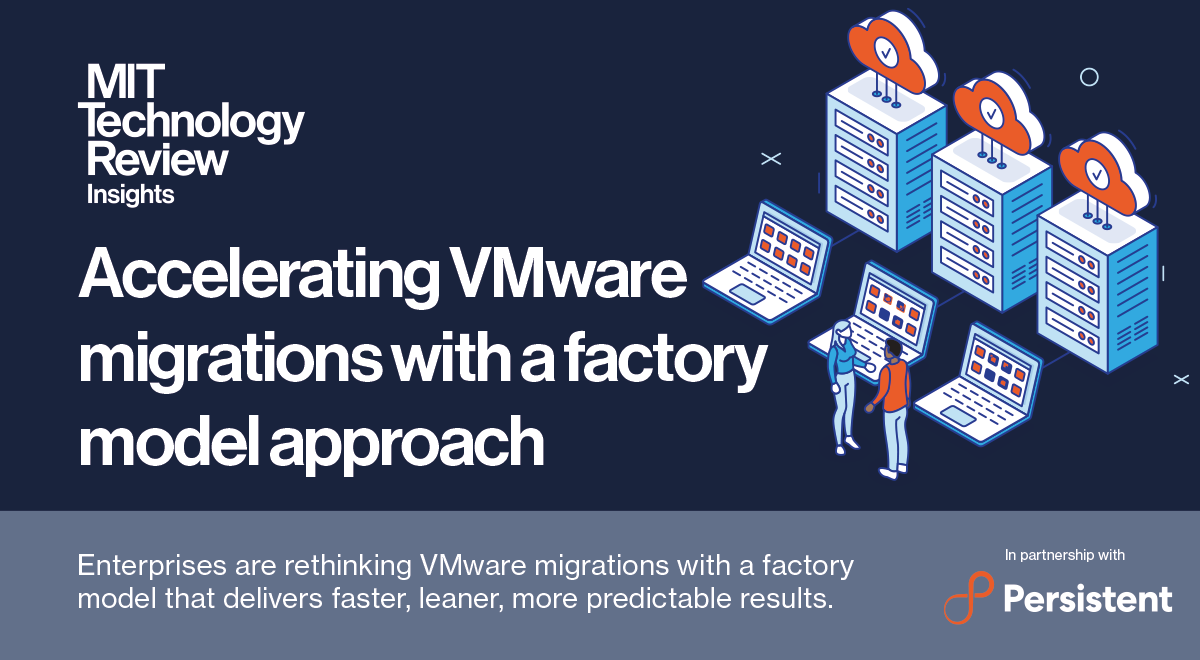
Take VMware migrations as an example. For years, these projects resembled custom production jobs—bespoke efforts that often took many months or even years to complete. Fluctuating licensing costs added a layer of complexity, just as business leaders began pushing for faster modernization to make their organizations AI-ready. That urgency has become nearly universal: According to a recent IDC report, six in 10 organizations evaluating or using cloud services say their IT infrastructure requires major transformation, while 82% report their cloud environments need modernization.
This content was produced by Insights, the custom content arm of MIT Technology Review. It was not written by MIT Technology Review’s editorial staff.
This content was researched, designed, and written by human writers, editors, analysts, and illustrators. This includes the writing of surveys and collection of data for surveys. AI tools that may have been used were limited to secondary production processes that passed thorough human review.