Stay Ahead, Stay ONMINE

Bringing AI to the next generation of fusion energy

Science Published 16 October 2025 Authors The Fusion team We’re partnering with Commonwealth Fusion Systems (CFS) to bring clean, safe, limitless fusion energy closer to reality.Fusion, the process that powers the sun, promises clean, abundant energy without long-lived radioactive waste. Making it work here on Earth means keeping an ionized gas, known as plasma, stable at temperatures over 100 million degrees Celsius — all within a fusion energy machine’s limits. This is a highly complex physics problem that we’re working to solve with artificial intelligence (AI).Today, we’re announcing our research partnership with Commonwealth Fusion Systems (CFS), a global leader in fusion energy. CFS is pioneering a faster path to clean, safe and effectively limitless fusion energy with its compact, powerful tokamak machine called SPARC.SPARC leverages powerful high-temperature superconducting magnets and aims to be the first magnetic fusion machine in history to generate net fusion energy — more power from fusion than it takes to sustain it. That landmark achievement is known as crossing “breakeven,” and a critical milestone on the path to viable fusion energy.This partnership builds on our groundbreaking work using AI to successfully control a plasma. With academic partners at the Swiss Plasma Center at EPFL (École Polytechnique Fédérale de Lausanne), we showed that deep reinforcement learning can control the magnets of a tokamak to stabilize complex plasma shapes. To cover a wider range of physics, we developed TORAX, a fast and differentiable plasma simulator written in JAX.Now, we’re bringing that work to CFS to accelerate the timeline to deliver fusion energy to the grid. We’ve been collaborating on three key areas so far:Producing a fast, accurate, differentiable simulation of a fusion plasma.Finding the most efficient and robust path to maximizing fusion energy.Using reinforcement learning to discover novel real-time control strategies.The combination of our AI expertise with CFS’s cutting-edge hardware makes this the ideal partnership to advance foundational discoveries in fusion energy for the benefit of the worldwide research community, and ultimately, the whole world.Simulating fusion plasmaTo optimize the performance of a tokamak, we need to simulate how heat, electric current and matter flow through the core of a plasma and interact with the systems around it. Last year, we released TORAX, an open-source plasma simulator built for optimization and control, expanding the scope of physics questions we could address beyond magnetic simulation. TORAX is built in JAX, so it can run easily on both CPUs and GPUs and can smoothly integrate AI-powered models, including our own, to achieve even better performance.TORAX will help CFS teams test and refine their operating plans by running millions of virtual experiments before SPARC is even turned on. It also gives them flexibility to quickly adapt their plans once the first data arrives.This software has become a linchpin in CFS’s daily workflows, helping them understand how the plasma will behave under different conditions, saving precious time and resources. “ TORAX is a professional, open-source plasma simulator that saved us countless hours in setting up and running our simulation environments for SPARC. Devon Battaglia, Senior Manager of Physics Operations at CFS Finding the fastest path to maximum energyOperating a tokamak involves countless choices in how to tune the various “knobs” available, like magnetic coil currents, fuel injection and heating power. Manually finding a tokamak’s optimal settings to produce the most energy, while staying within operating limits, could be very inefficient.Using TORAX in combination with reinforcement learning or evolutionary search approaches like AlphaEvolve, our AI agents can explore vast numbers of potential operating scenarios in simulation, rapidly identifying the most efficient and robust paths to generating net energy. This can help CFS focus on the most promising strategies, increasing the probability of success from day one, even before SPARC is fully commissioned and operating at full power.We’ve been building the infrastructure to investigate various SPARC scenarios. We can look at maximizing fusion power produced under different constraints, or optimizing for robustness as we learn more about the machine.Here we illustrate examples of a standard SPARC pulse simulated in TORAX. Our AI system can assess many possible pulses to find the settings we expect to perform the best. Visualizations of a cross section through SPARC. On the left, we see the plasma in fuchsia. On the right, we see an example plasma pulse simulated in TORAX, showing changes in the plasma pressure. On the right side, we show that adjusting control commands changes the plasma performance, resulting in different plasma pulses. Through our growing network of collaborations within the fusion research community, we’ll be able to validate and calibrate TORAX against past tokamak data and high-fidelity simulations. This information will provide confidence in simulation accuracy and help us nimbly adapt as soon as SPARC begins operations.Developing an AI pilot for real-time controlIn our previous work, we showed reinforcement learning can control the magnetic configuration of a tokamak. We’re now increasing complexity by adding simultaneous optimization of more aspects of tokamak performance, such as maximizing fusion power or managing SPARC’s heat load, so it can run at high performance with a greater margin to machine limits.When running at full power, SPARC will release immense heat concentrated onto a small area that must be carefully managed to protect the solid materials closest to the plasma. One strategy SPARC could use is to magnetically sweep this exhaust energy along the wall, as illustrated below. Left: The location of the plasma-facing materials depicted on the right side of SPARC’s interior. Right: Three-dimensional animation of the rate at which energy is deposited on the plasma-facing materials, as the plasma configuration changes (not representative of an actual pulse on SPARC). Image rendered with HEAT (https://github.com/plasmapotential/HEAT), courtesy of Tom Looby at CFS. In the initial phase of our collaboration, we’re investigating how reinforcement learning agents can learn to dynamically control plasma to distribute this heat effectively. In the future, AI could learn adaptive strategies more complex than anything an engineer would craft, especially when balancing multiple constraints and objectives. We could also use reinforcement learning to quickly tune traditional control algorithms for a specific pulse. The combination of pulse optimization and optimal control could push SPARC further and faster to achieve its historic goals.Uniting AI and fusion to build a cleaner futureAlongside our research, Google has invested in CFS, supporting their work on promising scientific and engineering breakthroughs, and moving their technology toward commercialization.Looking ahead, our vision extends beyond optimizing SPARC operations. We’re building the foundations for AI to become an intelligent, adaptive system at the very heart of future fusion power plants. This is just the beginning of our journey together, and we hope to share more details about our collaboration as we reach new milestones.By uniting the revolutionary potential of AI and fusion, we’re building a cleaner and more sustainable energy future. Learn more about our work AcknowledgementsThis work is a collaboration between Google DeepMind and Commonwealth Fusion Systems.Google Deepmind contributors: David Pfau, Sarah Bechtle, Sebastian Bodenstein, Jonathan Citrin, Ian Davies, Bart De Vylder, Craig Donner, Tom Eccles, Federico Felici, Anushan Fernando, Ian Goodfellow, Philippe Hamel, Andrea Huber, Tyler Jackson, Amy Nommeots-Nomm, Tamara Norman, Uchechi Okereke, Francesca Pietra, Akhil Raju and Brendan Tracey.Commonwealth Fusion Systems contributors: Devon Battaglia, Tom Body, Dan Boyer, Alex Creely, Jaydeep Deshpande, Christoph Hasse, Peter Kaloyannis, Wil Koch, Tom Looby, Matthew Reinke, Josh Sulkin, Anna Teplukhina, Misha Veldhoen, Josiah Wai and Chris Woodall.We’d also like to thank Pushmeet Kohli and Bob Mumgaard for their support.Credits: The image of the SPARC Facility, the SPARC renderings and CAD rendering of the divertor tiles are copyright from 2025 Commonwealth Fusion Systems.

Science

Published
16 October 2025
Authors

The Fusion team

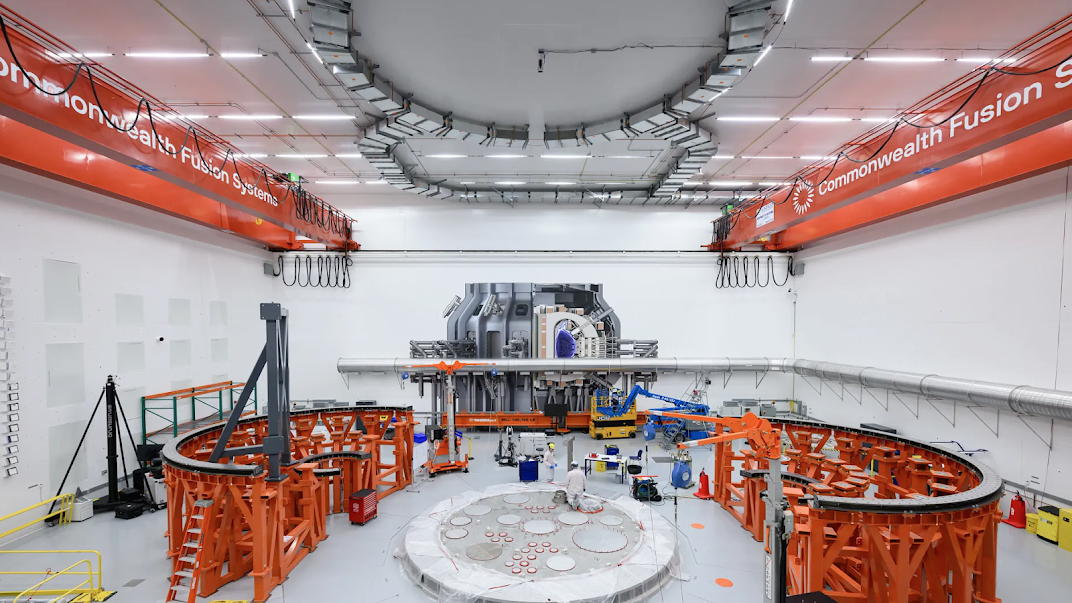
Photograph taken at the Commonwealth Fusion Systems headquarters in Devens, Massachusetts. The image shows construction in progress for SPARC, a compact, powerful tokamak machine called SPARC. A rendering of SPARC when completed is shown on the rear wall. Copyright 2025 Commonwealth Fusion Systems (CFS).

We’re partnering with Commonwealth Fusion Systems (CFS) to bring clean, safe, limitless fusion energy closer to reality.

Fusion, the process that powers the sun, promises clean, abundant energy without long-lived radioactive waste. Making it work here on Earth means keeping an ionized gas, known as plasma, stable at temperatures over 100 million degrees Celsius — all within a fusion energy machine’s limits. This is a highly complex physics problem that we’re working to solve with artificial intelligence (AI).

Today, we’re announcing our research partnership with Commonwealth Fusion Systems (CFS), a global leader in fusion energy. CFS is pioneering a faster path to clean, safe and effectively limitless fusion energy with its compact, powerful tokamak machine called SPARC.

SPARC leverages powerful high-temperature superconducting magnets and aims to be the first magnetic fusion machine in history to generate net fusion energy — more power from fusion than it takes to sustain it. That landmark achievement is known as crossing “breakeven,” and a critical milestone on the path to viable fusion energy.

This partnership builds on our groundbreaking work using AI to successfully control a plasma. With academic partners at the Swiss Plasma Center at EPFL (École Polytechnique Fédérale de Lausanne), we showed that deep reinforcement learning can control the magnets of a tokamak to stabilize complex plasma shapes. To cover a wider range of physics, we developed TORAX, a fast and differentiable plasma simulator written in JAX.

Now, we’re bringing that work to CFS to accelerate the timeline to deliver fusion energy to the grid. We’ve been collaborating on three key areas so far:

  • Producing a fast, accurate, differentiable simulation of a fusion plasma.
  • Finding the most efficient and robust path to maximizing fusion energy.
  • Using reinforcement learning to discover novel real-time control strategies.

The combination of our AI expertise with CFS’s cutting-edge hardware makes this the ideal partnership to advance foundational discoveries in fusion energy for the benefit of the worldwide research community, and ultimately, the whole world.

Simulating fusion plasma

To optimize the performance of a tokamak, we need to simulate how heat, electric current and matter flow through the core of a plasma and interact with the systems around it. Last year, we released TORAX, an open-source plasma simulator built for optimization and control, expanding the scope of physics questions we could address beyond magnetic simulation. TORAX is built in JAX, so it can run easily on both CPUs and GPUs and can smoothly integrate AI-powered models, including our own, to achieve even better performance.

TORAX will help CFS teams test and refine their operating plans by running millions of virtual experiments before SPARC is even turned on. It also gives them flexibility to quickly adapt their plans once the first data arrives.

This software has become a linchpin in CFS’s daily workflows, helping them understand how the plasma will behave under different conditions, saving precious time and resources.

“

TORAX is a professional, open-source plasma simulator that saved us countless hours in setting up and running our simulation environments for SPARC.

Devon Battaglia, Senior Manager of Physics Operations at CFS

Finding the fastest path to maximum energy

Operating a tokamak involves countless choices in how to tune the various “knobs” available, like magnetic coil currents, fuel injection and heating power. Manually finding a tokamak’s optimal settings to produce the most energy, while staying within operating limits, could be very inefficient.

Using TORAX in combination with reinforcement learning or evolutionary search approaches like AlphaEvolve, our AI agents can explore vast numbers of potential operating scenarios in simulation, rapidly identifying the most efficient and robust paths to generating net energy. This can help CFS focus on the most promising strategies, increasing the probability of success from day one, even before SPARC is fully commissioned and operating at full power.

We’ve been building the infrastructure to investigate various SPARC scenarios. We can look at maximizing fusion power produced under different constraints, or optimizing for robustness as we learn more about the machine.

Here we illustrate examples of a standard SPARC pulse simulated in TORAX. Our AI system can assess many possible pulses to find the settings we expect to perform the best.

Visualizations of a cross section through SPARC. On the left, we see the plasma in fuchsia. On the right, we see an example plasma pulse simulated in TORAX, showing changes in the plasma pressure. On the right side, we show that adjusting control commands changes the plasma performance, resulting in different plasma pulses.

Through our growing network of collaborations within the fusion research community, we’ll be able to validate and calibrate TORAX against past tokamak data and high-fidelity simulations. This information will provide confidence in simulation accuracy and help us nimbly adapt as soon as SPARC begins operations.

Developing an AI pilot for real-time control

In our previous work, we showed reinforcement learning can control the magnetic configuration of a tokamak. We’re now increasing complexity by adding simultaneous optimization of more aspects of tokamak performance, such as maximizing fusion power or managing SPARC’s heat load, so it can run at high performance with a greater margin to machine limits.

When running at full power, SPARC will release immense heat concentrated onto a small area that must be carefully managed to protect the solid materials closest to the plasma. One strategy SPARC could use is to magnetically sweep this exhaust energy along the wall, as illustrated below.

Left: The location of the plasma-facing materials depicted on the right side of SPARC’s interior. Right: Three-dimensional animation of the rate at which energy is deposited on the plasma-facing materials, as the plasma configuration changes (not representative of an actual pulse on SPARC). Image rendered with HEAT (https://github.com/plasmapotential/HEAT), courtesy of Tom Looby at CFS.

In the initial phase of our collaboration, we’re investigating how reinforcement learning agents can learn to dynamically control plasma to distribute this heat effectively. In the future, AI could learn adaptive strategies more complex than anything an engineer would craft, especially when balancing multiple constraints and objectives. We could also use reinforcement learning to quickly tune traditional control algorithms for a specific pulse. The combination of pulse optimization and optimal control could push SPARC further and faster to achieve its historic goals.

Uniting AI and fusion to build a cleaner future

Alongside our research, Google has invested in CFS, supporting their work on promising scientific and engineering breakthroughs, and moving their technology toward commercialization.

Looking ahead, our vision extends beyond optimizing SPARC operations. We’re building the foundations for AI to become an intelligent, adaptive system at the very heart of future fusion power plants. This is just the beginning of our journey together, and we hope to share more details about our collaboration as we reach new milestones.

By uniting the revolutionary potential of AI and fusion, we’re building a cleaner and more sustainable energy future.

Learn more about our work

Acknowledgements

This work is a collaboration between Google DeepMind and Commonwealth Fusion Systems.

Google Deepmind contributors: David Pfau, Sarah Bechtle, Sebastian Bodenstein, Jonathan Citrin, Ian Davies, Bart De Vylder, Craig Donner, Tom Eccles, Federico Felici, Anushan Fernando, Ian Goodfellow, Philippe Hamel, Andrea Huber, Tyler Jackson, Amy Nommeots-Nomm, Tamara Norman, Uchechi Okereke, Francesca Pietra, Akhil Raju and Brendan Tracey.

Commonwealth Fusion Systems contributors: Devon Battaglia, Tom Body, Dan Boyer, Alex Creely, Jaydeep Deshpande, Christoph Hasse, Peter Kaloyannis, Wil Koch, Tom Looby, Matthew Reinke, Josh Sulkin, Anna Teplukhina, Misha Veldhoen, Josiah Wai and Chris Woodall.

We’d also like to thank Pushmeet Kohli and Bob Mumgaard for their support.

Credits: The image of the SPARC Facility, the SPARC renderings and CAD rendering of the divertor tiles are copyright from 2025 Commonwealth Fusion Systems.
Shape
Shape
Stay Ahead

Explore More Insights

Stay ahead with more perspectives on cutting-edge power, infrastructure, energy,  bitcoin and AI solutions. Explore these articles to uncover strategies and insights shaping the future of industries.

Shape

Aker BP, Höegh Evi secure EU funding for Atlas CCS project

Aker BP and Höegh Evi have been awarded €223 million (about US$250 million) from the European Union Innovation Fund to support development of the Atlas carbon capture and storage (CCS) project in Norway. The Atlas project is designed as a large-scale CCS network linking industrial CO2 emitters in Europe with

Read More »

Extreme wants to use idle network compute capacity for local AI

“We’ve spent decades building networks that reach every corner of the enterprise, and those networks hold a lot of idle compute. Exchange zones will put that compute to work, letting AI run locally on infrastructure customers already own. That delivers sovereignty, local inferencing, and better economics than sending everything to

Read More »

Ghana’s PHDC advancing Phase 2 of multibillion downstream petroleum hub

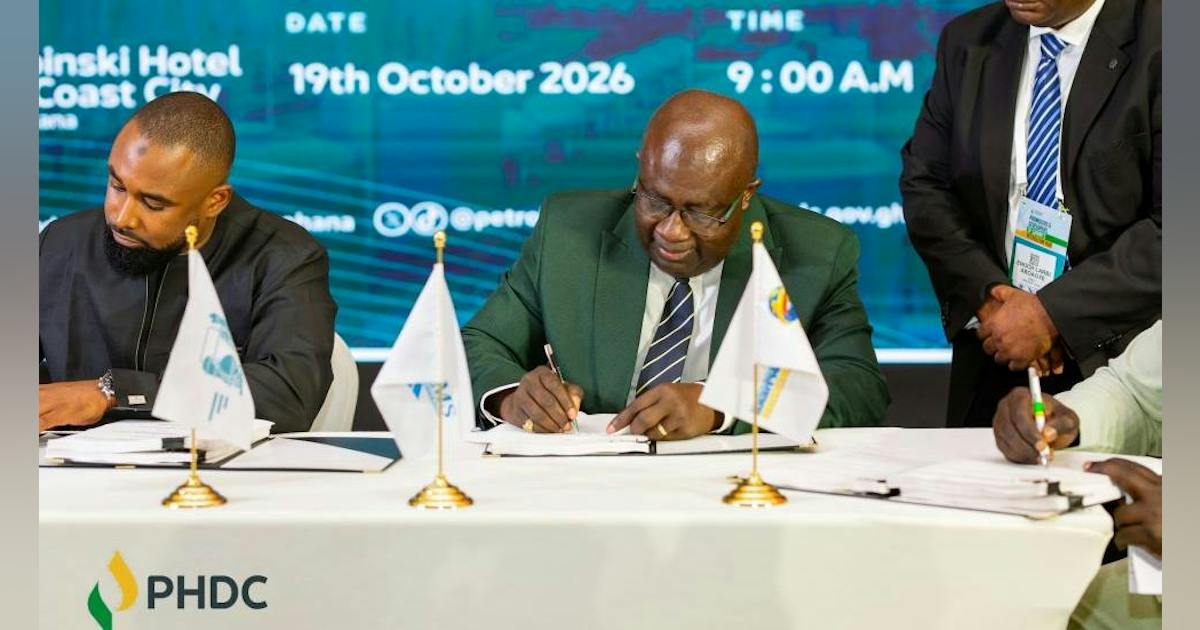
Ghana’s Petroleum Hub Development Corp. (PHDC) has entered a memorandum of understanding (MOU) with an international consortium for a proposed $28-billion second phase of the country’s multiphased petroleum hub to be built in the Jomoro municipal district of the country’s Western Region. Signed with a consortium led by UAE-based Global Sphere FZE on behalf of investors from South Korea, Mali, and the UAE, the MOU covers development of Phase 2’s planned 300,000-b/sd refinery, two petrochemical plants, 4 million cu m of storage, and a multi-berth jetty under a build-own-operate model that—if approved—would lead to start of construction within 6 months of the agreement’s Oct. 19 signing, PHDC said in a release. Phase 2 will be the second tranche of the three-phased project that collectively aims to add three grassroots refineries totaling 900,000 b/sd, five new petrochemical plants, fresh storage capacity of 10 million cu m, and at least two jetties supporting imports and exports. Dr. Toni Aubynn, PHDC’s chief executive officer, described the MOU as an opportunity to develop Ghana’s industrial capacity and create jobs. Investor representative Boubacar Belco Bah said the consortium would work with PHDC, AMS Technologies, the project development consortium, and technical and financial institutions on project preparation and risk allocation, including plans for participation by Ghanaian contractors, professionals, and service providers. While its confirmation of this latest agreement sets out Phase 2’s proposed installations and construction window, PHDC did not specify financing commitments, detailed partner responsibilities, or a commissioning schedule. The precise identity of AMS Technologies was neither revealed nor could be confirmed, but PHDC previously announced an investment consortium dubbed “AMS/Double Tree Capital Bank” visited PHDC offices in early December 2025 with an expression of interest in exploring investment opportunities for Phase 2 of the project. Advancing the project Previously estimated at a combined cost

Read More »

Oil eases on diplomacy hopes; European gas rises on winter supply concerns

Oil prices declined Oct. 26 as renewed diplomatic efforts raised hopes of easing US-Iran tensions, while European natural gas prices climbed as colder weather and disrupted LNG supplies heightened concerns ahead of winter. Brent crude futures traded around $115/bbl, down about 1.6%, while US West Texas Intermediate (WTI) declined about 2% to $101/bbl in early trading. Both remained near 6-month highs following last week’s rally. On Oct. 26, senior officials from Saudi Arabia, Pakistan, and Turkey were expected to hold security talks with Iranian leaders in Tehran. This comes amid concerns that the US and Israel might launch fresh strikes against Iran, while attacks by the Houthi movement against Saudi Arabia continue to escalate. Iranian officials have indicated that the discussions will cover regional conflicts—including the situation in Lebanon—as well as efforts to establish a security framework led by Middle Eastern nations. Nevertheless, the persistent Houthi attacks on Saudi targets, combined with Iranian actions against oil tankers in the Strait of Hormuz, continue to fuel deep concerns regarding the security of oil infrastructure and maritime shipping. Meantime, low European gas inventories and colder weather heightened concerns over supplies for the winter heating season. EU storage stood at 74.6% of capacity as of Oct. 25, well below historical averages for late October, while disruptions to LNG shipments from Qatar and the UAE constrained supplies available to replenish inventories. Competition with Asian buyers for available LNG cargoes added to the pressure. Front-month Dutch TTF futures touched €97.50/MWh on Oct. 26, their highest level since December 2022.

Read More »

When does a BI value stop being the right number?

For energy companies, the assumptions behind a BI value can change materially during the policy period. Margins and throughput can shift, while repair timelines can extend. External events can also change the economics of an operation quickly. Yet the declared BI value and the policy provisions governing recovery may remain unchanged. This raises a practical question: what should trigger a reassessment, and how will the policy respond if the exposure has changed materially? A BI value has a shelf life A BI calculation draws on assumptions about revenue, margins, production, throughput, fixed costs and recovery time. Those inputs can change at different rates and for different reasons. For a downstream operator, a significant movement in crack spreads can change the earnings exposure associated with an interruption. For a midstream operation, a change in throughput or a prolonged constraint on a critical pipeline can alter the financial impact. Across the energy value chain, an extended repair or recovery period can materially increase the duration of a loss. Organizations should establish materiality thresholds for reassessment, supported by a consistent methodology for revisiting the valuation when conditions change. Where a material change increases exposure, organizations may also need to consider whether to redeclare their values. Aon’s approach to business interruption valuation provides a methodology for reassessing the valuation when material changes occur. The percentage on a volatility clause tells only part of the story A stated volatility allowance can overstate the protection available if the exposure has increased materially or operations resume during the recovery period. The Lloyd’s Market Association introduced an updated Onshore Energy BI Volatility Clause in 2024 after carriers identified the previous version as unsuitable for partial losses. The revised clause was intended to address the policy’s indemnity exposure in those circumstances. Organizations should model the provision against realistic loss

Read More »

More capability, less equipment: the future of capacitor bank control

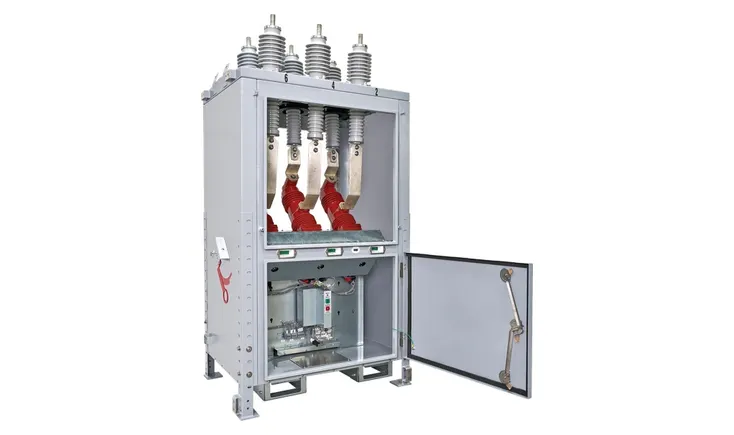
As utilities work to expand system capacity and improve power quality, one challenge continues to surface: how to add capability without adding more equipment, more maintenance and more space. Traditionally, capacitor bank applications require multiple devices to perform separate functions. One device energizes and de-energizes the bank. Another provides protection. Additional equipment may be required to manage switching transients and inrush currents. Today’s advanced medium-voltage breaker technology changes that equation. By combining point-on-wave switching and protection in a single breaker, utilities can eliminate separate switching devices while maintaining precise capacitor bank control. The result is a simpler installation with fewer components, a smaller footprint and lower overall system complexity. More functionality in less footprint In many substations, available space has become a valuable asset. Adding new equipment often means expanding infrastructure, increasing costs or limiting future growth. Advanced breaker technology can serve as both the energizing device and the protection device for capacitor banks, eliminating the need for separate switching equipment between the breaker and the bank. With fewer devices installed in the yard, utilities can: Reduce substation footprint Simplify installation and commissioning Lower equipment and maintenance costs Create room for future expansion Improve overall system reliability Rather than adding more components to solve power quality challenges, utilities can accomplish more with less equipment. Consistent performance in real-world conditions Modern utility equipment is increasingly being asked to operate in environments that are far different from traditional indoor substations. Installations may be exposed to extreme temperatures, dust, humidity and rapidly changing operating conditions. Conventional switching technologies often depend on highly controlled operating conditions and precise timing. Variations in voltage supply, temperature or environmental conditions can impact performance. New actuator and control technologies provide highly repeatable operating performance regardless of environmental conditions. Whether deployed in a hot industrial facility, an outdoor substation

Read More »

The push to DC: Why data centers are rethinking power architecture

As rack densities climb toward 1 MW and beyond, traditional low-voltage alternating current (AC) architecture is being pushed into territory it wasn’t originally designed to handle. A primary reason the industry is increasingly looking toward 800 VDC to support the next generation of high-density compute.  But the bigger question isn’t whether direct current (DC) can power these new racks. It’s where the conversion to DC should happen and how much of the traditional power architecture is still necessary.  Sidecars offer a bridge to 800 VDC  One near-term answer is the sidecar, a power-conversion unit positioned next to the compute rack.  Sidecars give operators a practical way to introduce 800 VDC racks into facilities built around existing low-voltage AC distribution. Rather than redesigning the facility, operators can convert AC power to DC beside the rack.  That makes sidecars an important bridge between today’s infrastructure and emerging DC compute. But much of the existing electrical architecture remains in place. Power still moves through transformers and low-voltage UPS infrastructure before another conversion takes place near the rack.  Each stage introduces losses and nearly all of that lost energy ultimately turns into heat, putting more pressure on the cooling system to remove it.    SMA’s white paper models the difference. In the architecture studied, delivering 1 MW through a traditional AC system with rack-level conversion results in approximately 80 kW of power loss per megawatt delivered to the rack. Converting medium-voltage AC to 800 VDC outside the building and distributing DC directly reduces that loss to approximately 20 kW.  At data center scale, the difference becomes more than significant.  Moving power infrastructure outside  Efficiency is only part of the equation. Data center operators are also under pressure to maximize one of their most valuable resources: white space.  A native DC architecture takes a different approach.

Read More »

Inside the resilience gap

Utilities do not need research to tell them the operating environment has become more demanding. They see it in the systems they manage, the investment decisions they make and the expectations customers and regulators place on them. New research helps quantify that experience. Three in four utility and energy industry professionals surveyed for the 2026 State of Grid Resilience say operational risk is higher than it was five years ago. More than half expect load growth on their distribution systems to be very or extremely significant over the next decade. Nearly four in five expect resilience-related investment to increase over the next five years. At the same time, 61% identify affordability and customer rate pressure as the biggest barrier to accelerating that investment. Taken together, the findings show a challenge utilities have navigated for years. They are committed to resilience, but how resilience is measured, funded and deployed can affect how quickly they can act. Measuring performance under stress Utilities already recognize a distinction between reliability and resilience. Nearly half of respondents define reliability as day-to-day operational performance and resilience as performance under disruption. The measures guiding investment do not always reflect that distinction. Traditional reliability metrics such as SAIDI, SAIFI and CAIDI provide an important and consistent view of everyday grid performance. But only 48% of respondents agree that current reliability metrics adequately capture performance during major disruptive events. The difference becomes clearer when utilities are asked what matters during those events. More than half say restoring service as quickly as possible is the most important outcome during a major storm or disruption. When asked what best demonstrates a resilient grid, respondents first point to limiting the number of customers affected and quickly restoring normal operations. Yet investment decisions remain weighted toward traditional reliability. SAIDI and customer outage frequency

Read More »

NVIDIA’s DSX POD Pushes AI Factory Construction Toward the Assembly Line

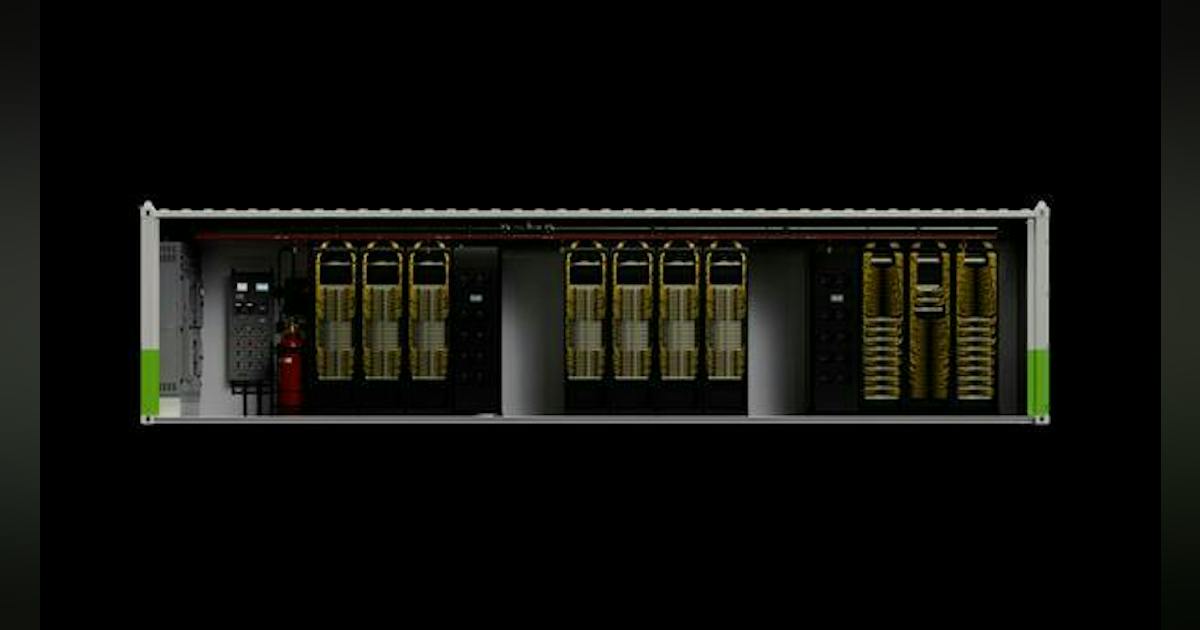
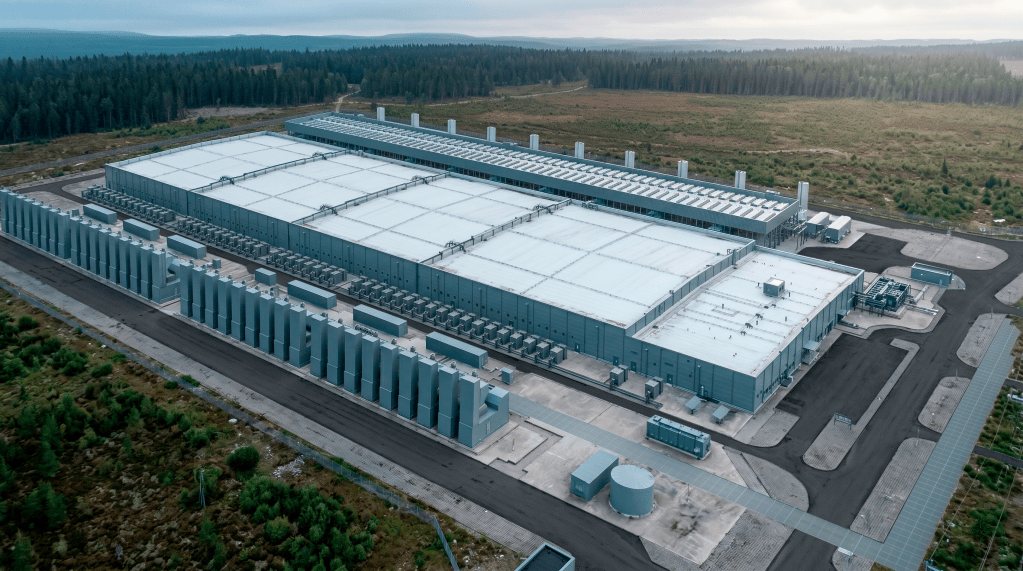
Crusoe Brings an Established Modular Model to DSX POD For Crusoe, NVIDIA’s announcement builds on a modular computing strategy already in operation. In its October 21 announcement, Crusoe confirmed that its Spark modular AI data center platform will support DSX POD, extending a manufacturing and deployment approach the company says it has pursued since 2020. Crusoe has expanded its manufacturing capabilities through the acquisition of electrical equipment specialist Easter-Owens Electric and the development of its 352,000-square-foot Crusoe Spark Factory in Brighton, Colorado. The company also introduced Crusoe Spark Liquid, a sixth-generation modular system engineered for ultra-high-density infrastructure, including NVIDIA Vera Rubin NVL72. Next-generation liquid-cooled units are planned for 2027. Crusoe’s vertically integrated model connects infrastructure design and manufacturing with deployment and cloud operations through Crusoe Cloud. The company says it can deliver productive AI capacity in as little as three months, although that timeline is distinct from NVIDIA’s narrower 14-day prepared-site deployment claim. “Modular isn’t a new strategy or pivot for us. It’s been in our DNA since our founding,” said Bryan Schramm, Crusoe’s head of Spark. Crusoe’s involvement demonstrates that the manufacturing model predates DSX POD. NVIDIA is not inventing modular data center infrastructure; it is attempting to establish a common architecture around capabilities that suppliers such as Crusoe have already spent years developing. That distinction matters as the industry evaluates whether standardized AI factory designs can deliver manufacturing efficiencies at a scale beyond individual suppliers’ existing operations. Vertiv and Polar Put the Deployment Model to Work in Norway The European dimension of NVIDIA’s announcement is reflected in a deployment involving Vertiv and Polar Data Centers at Herøya, Norway. According to Vertiv’s October 21 announcement, Polar is applying a factory-built infrastructure approach to the initial 41 MW phase of a multiphase AI data center campus designed to scale to

Read More »

Hyperscalers allow more scrutiny of controversial data center plans

Hyperscalers are getting decidedly twitchy about citizens’ reactions to their secretive data center construction plans, and are looking for ways to de-escalate some of the conflicts. Earlier this month, Amazon announced its Data Center Commitment which, among other things, would disclose more information about energy and water use and consider a moratorium asking government officials to sign non-disclosure agreements covering their planning applications. Amazon is not alone in this. Earlier this week, Meta said that it was reviewing its use of NDAs after the company was widely criticized for its secrecy in proposing Hyperion, a Louisiana data center in July.

Read More »

Google will pay people to use less electricity so its data centers can use more

Google has an answer to some of the electricity supply problems that data center construction is causing: It has signed an agreement with energy supplier Voltus to build what it’s calling a 1-gigawatt virtual power plant, expanding on an earlier 100 megawatt deal the two signed earlier this year. This power plant is virtual in the sense that it doesn’t generate any electricity itself, but aggregates so-called flexible grid capacity into one central resource that can be deployed at times of peak demand. This flexible capacity can be in the form of batteries or of load-shedding: asking others to temporarily stop consuming electricity by shutting down industrial processes or adjusting tens of thousands of smart thermostats at once, effectively moving their electricity usage to a time when there is less demand. Voltus operates by offering incentives to companies to reduce their power consumption temporarily, and also offers inducements to electricity resellers that they can pass on to their customers.

Read More »

Big Tech’s Next Nuclear Bet: More Power From Reactors Already Running

The next wave of nuclear power for AI data centers may come not from new reactors, but from generating stations that have been operating for decades. In a pair of agreements announced just a week apart, Google and Amazon committed to long-term electricity purchases supporting approximately 1,080 MW of additional nuclear generating capacity from Constellation Energy’s existing fleet. The transactions follow earlier commitments by Meta to support reactor upgrades at operating nuclear facilities in Ohio, Pennsylvania and Illinois, establishing a broader commercial model in which hyperscale technology companies help finance increases in nuclear output. Under its October 6 agreement with Google, Constellation plans to invest more than $4.3 billion in equipment and technology upgrades at 11 operating reactor units across Illinois, Pennsylvania and New Jersey. The 20-year power purchase agreement supports 890 MW of new generating capacity, with the first upgrades expected to begin delivering additional electricity in 2028. A separate 15-year agreement covers 2,700 MW of existing nuclear generation, underscoring the distinction between securing today’s electricity supply and financing additional capacity. Amazon’s September 30 agreement similarly supports 190 MW of new generation at Maryland’s Calvert Cliffs nuclear station, alongside purchases of existing output. Together, the two arrangements underpin more than $7 billion in planned infrastructure investment. Unlike proposed advanced reactors, these facilities already have operating licenses, grid connections, established workforces and decades of operating experience. Increasing their output avoids some of the cost, permitting and construction challenges associated with building entirely new nuclear plants, although significant upgrades still require extensive engineering, equipment modifications and regulatory approval. The potential scale is substantial. According to the Nuclear Regulatory Commission’s current application schedule, the agency anticipates 31 applications for reactor power uprates through 2032, representing approximately 2,421 MW of potential additional electrical generating capacity. That is roughly equivalent to the output of

Read More »

AMD Helion Puts CPU Density at the Center of Agentic AI Infrastructure

AMD expects the growth of agentic applications to substantially increase demand for server CPUs alongside GPU infrastructure. During her October 12 OCP keynote, CEO Lisa Su said the company now projects the server CPU market will exceed $200 billion by 2030, a significant upward revision from its earlier $120 billion estimate. While that remains AMD’s market forecast rather than an independent measure of future demand, it underscores the company’s conviction that general-purpose computing will play a much larger role in AI infrastructure. Two Rack Designs for Different Markets Helion’s two principal configurations reflect different approaches to deploying and managing agentic workloads. For hyperscale operators, the architecture emphasizes high-density CPU infrastructure dedicated to agent execution, with model inference handled by separate GPU-accelerated systems. This separation allows operators to expand CPU and GPU capacity independently, potentially improving resource utilization as the balance between agent activity and inference demand changes. The approach also introduces infrastructure considerations. Agents may communicate repeatedly with models hosted elsewhere in a data center or across distributed environments, making network performance, latency and workload orchestration important factors in overall system efficiency. The ability to scale computing resources independently is an architectural advantage, but realizing that benefit will depend on how effectively those resources are connected and managed. For enterprise deployments, Helion takes a more integrated approach, combining EPYC CPU blades, Instinct MI350P GPU blades and general-purpose computing resources within the same rack. The reference design accommodates up to 16 MI350P accelerators in two independent eight-GPU servers, each occupying five rack units. These GPU nodes operate separately rather than through a common rack-level scale-up fabric, reflecting the architecture’s emphasis on enterprise inference rather than the tightly coupled accelerator environments used for frontier-model training. The enterprise configuration also accommodates dedicated resources for databases, storage and technical computing, supporting the broader range

Read More »

AI’s Fragmented Regulatory Landscape Becomes a Data Center Design Challenge

Designing for Verifiable Operations For an operator serving tenants across jurisdictions, a claim about where a workload runs must be one that the responsible service provider can substantiate. That means identifying who can administer the workload, how data moves between regions, where backups are maintained, and which records document those arrangements. A tenant promising to run a workload within a particular jurisdiction needs assurance that its data, backups, and access arrangements satisfy the applicable requirements. Workload placement alone cannot establish where a backup resides or from where an administrator can access a system. Those questions must be addressed across compute, storage, network paths, security controls, and third-party access, with responsibilities established during procurement and verified before service begins. Not all of those controls necessarily reside with the data center operator. A colocation provider may be responsible for physical access, facility security, and designated infrastructure services, while a tenant or cloud provider controls the applications, storage configuration, backup locations, and logical access to workloads. The operating agreement must distinguish between what the facility provider can verify directly and what remains within the tenant’s systems. The EU AI Act makes that division of responsibility particularly important. Its requirements for covered high-risk AI systems include logging, documentation, human oversight, robustness, and cybersecurity, subject to the law’s applicable implementation dates. These obligations attach to the relevant providers and deployers of AI systems, rather than automatically to every company hosting them. A data center operator may nevertheless be required by contract to provide physical-access records, security evidence, or information about infrastructure location so that a tenant can substantiate its own compliance. A further distinction concerns data residency. The AI Act is not itself a general requirement to keep all AI workloads or associated data within the European Union. Geographic restrictions may instead arise from data-protection

Read More »

Microsoft will invest $80B in AI data centers in fiscal 2025

And Microsoft isn’t the only one that is ramping up its investments into AI-enabled data centers. Rival cloud service providers are all investing in either upgrading or opening new data centers to capture a larger chunk of business from developers and users of large language models (LLMs).  In a report published in October 2024, Bloomberg Intelligence estimated that demand for generative AI would push Microsoft, AWS, Google, Oracle, Meta, and Apple would between them devote $200 billion to capex in 2025, up from $110 billion in 2023. Microsoft is one of the biggest spenders, followed closely by Google and AWS, Bloomberg Intelligence said. Its estimate of Microsoft’s capital spending on AI, at $62.4 billion for calendar 2025, is lower than Smith’s claim that the company will invest $80 billion in the fiscal year to June 30, 2025. Both figures, though, are way higher than Microsoft’s 2020 capital expenditure of “just” $17.6 billion. The majority of the increased spending is tied to cloud services and the expansion of AI infrastructure needed to provide compute capacity for OpenAI workloads. Separately, last October Amazon CEO Andy Jassy said his company planned total capex spend of $75 billion in 2024 and even more in 2025, with much of it going to AWS, its cloud computing division.

Read More »

John Deere unveils more autonomous farm machines to address skill labor shortage

Join our daily and weekly newsletters for the latest updates and exclusive content on industry-leading AI coverage. Learn More Self-driving tractors might be the path to self-driving cars. John Deere has revealed a new line of autonomous machines and tech across agriculture, construction and commercial landscaping. The Moline, Illinois-based John Deere has been in business for 187 years, yet it’s been a regular as a non-tech company showing off technology at the big tech trade show in Las Vegas and is back at CES 2025 with more autonomous tractors and other vehicles. This is not something we usually cover, but John Deere has a lot of data that is interesting in the big picture of tech. The message from the company is that there aren’t enough skilled farm laborers to do the work that its customers need. It’s been a challenge for most of the last two decades, said Jahmy Hindman, CTO at John Deere, in a briefing. Much of the tech will come this fall and after that. He noted that the average farmer in the U.S. is over 58 and works 12 to 18 hours a day to grow food for us. And he said the American Farm Bureau Federation estimates there are roughly 2.4 million farm jobs that need to be filled annually; and the agricultural work force continues to shrink. (This is my hint to the anti-immigration crowd). John Deere’s autonomous 9RX Tractor. Farmers can oversee it using an app. While each of these industries experiences their own set of challenges, a commonality across all is skilled labor availability. In construction, about 80% percent of contractors struggle to find skilled labor. And in commercial landscaping, 86% of landscaping business owners can’t find labor to fill open positions, he said. “They have to figure out how to do

Read More »

2025 playbook for enterprise AI success, from agents to evals

Join our daily and weekly newsletters for the latest updates and exclusive content on industry-leading AI coverage. Learn More 2025 is poised to be a pivotal year for enterprise AI. The past year has seen rapid innovation, and this year will see the same. This has made it more critical than ever to revisit your AI strategy to stay competitive and create value for your customers. From scaling AI agents to optimizing costs, here are the five critical areas enterprises should prioritize for their AI strategy this year. 1. Agents: the next generation of automation AI agents are no longer theoretical. In 2025, they’re indispensable tools for enterprises looking to streamline operations and enhance customer interactions. Unlike traditional software, agents powered by large language models (LLMs) can make nuanced decisions, navigate complex multi-step tasks, and integrate seamlessly with tools and APIs. At the start of 2024, agents were not ready for prime time, making frustrating mistakes like hallucinating URLs. They started getting better as frontier large language models themselves improved. “Let me put it this way,” said Sam Witteveen, cofounder of Red Dragon, a company that develops agents for companies, and that recently reviewed the 48 agents it built last year. “Interestingly, the ones that we built at the start of the year, a lot of those worked way better at the end of the year just because the models got better.” Witteveen shared this in the video podcast we filmed to discuss these five big trends in detail. Models are getting better and hallucinating less, and they’re also being trained to do agentic tasks. Another feature that the model providers are researching is a way to use the LLM as a judge, and as models get cheaper (something we’ll cover below), companies can use three or more models to

Read More »

OpenAI’s red teaming innovations define new essentials for security leaders in the AI era

Join our daily and weekly newsletters for the latest updates and exclusive content on industry-leading AI coverage. Learn More OpenAI has taken a more aggressive approach to red teaming than its AI competitors, demonstrating its security teams’ advanced capabilities in two areas: multi-step reinforcement and external red teaming. OpenAI recently released two papers that set a new competitive standard for improving the quality, reliability and safety of AI models in these two techniques and more. The first paper, “OpenAI’s Approach to External Red Teaming for AI Models and Systems,” reports that specialized teams outside the company have proven effective in uncovering vulnerabilities that might otherwise have made it into a released model because in-house testing techniques may have missed them. In the second paper, “Diverse and Effective Red Teaming with Auto-Generated Rewards and Multi-Step Reinforcement Learning,” OpenAI introduces an automated framework that relies on iterative reinforcement learning to generate a broad spectrum of novel, wide-ranging attacks. Going all-in on red teaming pays practical, competitive dividends It’s encouraging to see competitive intensity in red teaming growing among AI companies. When Anthropic released its AI red team guidelines in June of last year, it joined AI providers including Google, Microsoft, Nvidia, OpenAI, and even the U.S.’s National Institute of Standards and Technology (NIST), which all had released red teaming frameworks. Investing heavily in red teaming yields tangible benefits for security leaders in any organization. OpenAI’s paper on external red teaming provides a detailed analysis of how the company strives to create specialized external teams that include cybersecurity and subject matter experts. The goal is to see if knowledgeable external teams can defeat models’ security perimeters and find gaps in their security, biases and controls that prompt-based testing couldn’t find. What makes OpenAI’s recent papers noteworthy is how well they define using human-in-the-middle

Read More »