Dive Brief:
- The bulk power system’s winter reliability outlook has improved since last season, but the El Niño weather pattern and potential for extreme cold can present challenges that grid operators must remain aware of, the North American Electric Reliability Corp. said Wednesday in its annual seasonal outlook.
- On-peak capacity resources grew 26.2 GW over the 2025-26 winter, a 2.4% increase led by batteries and gas-fired generation, according to the 2026–2027 Winter Reliability Assessment. A slowdown in generator retirements is also contributing to the improved resource outlook, NERC said.
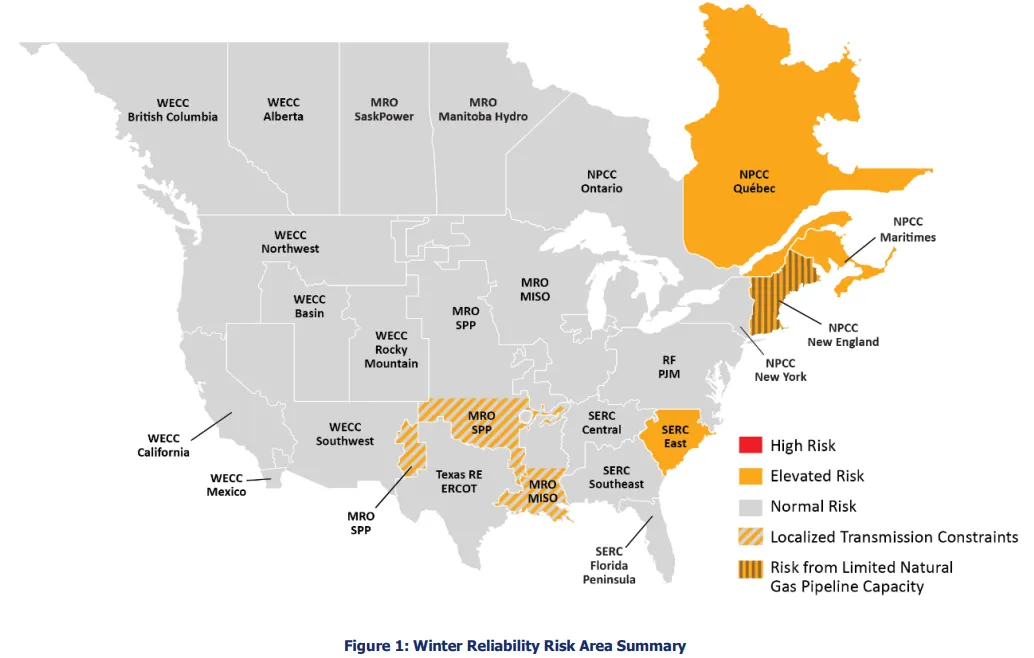
- The reliability watchdog’s outlook identified no areas facing a high risk of resource shortfalls this winter, but it found some areas in the Midwest, Southeast and New England where transmission system constraints, pipeline constraints and fuel risk scenarios may present problems during periods of extreme weather.
Dive Insight:
Electric demand is growing, but “there has also been strong growth in resources,” Mark Olson, manager of reliability assessments, said Wednesday in a call discussing the outlook. “In many ways, the industry is on better footing going into winter this year,” he said.
However, Olson added that “historically, winter is the toughest operating period for the North American electric grid.”
While some models show the El Niño weather pattern can bring milder-than-average conditions that are a help to a constrained power system, “the reality is that extreme storms with ice and abnormal cold temperatures can lie within those averages,” Olson said.
“We’re talking to our industry stakeholders about the need for extra vigilance. El Niño is a variable that adds to uncertainty for the winter,” he said.
Peak winter electric heating demand often coincides with higher residential gas usage, potentially leaving single-fuel generators that don’t have long-term gas contracts unable to show up when their generation is most needed, NERC officials said.
In the Northeast Power Coordinating Council’s Québec and Maritimes regions, “the supply can become strained during extreme winter peak demand,” NERC Senior Engineer Bob Tallman said on the call. “New England, as we’ve identified in the past several years, is assessed as elevated [risk] due to the constrained or limited gas pipeline infrastructure in that region.”
In the SERC Reliability Corp. East area, resources can fall short of extreme peak demand “during morning and low solar output periods of the day,” Tallman added. And in the Southwest Power Pool and Midcontinent Independent System Operator territories, NERC identified subregions “where there are localized transmission constraints and it could be difficult to import into those areas if there was a wide-area winter event limiting local generation and increasing their reliance on imports.”