As AI infrastructure moves toward higher rack densities and increasingly liquid-cooled architectures, the next challenge is not simply removing more heat. It’s ensuring that the cooling systems themselves remain reliable, efficient, and capable of protecting increasingly valuable computing hardware.
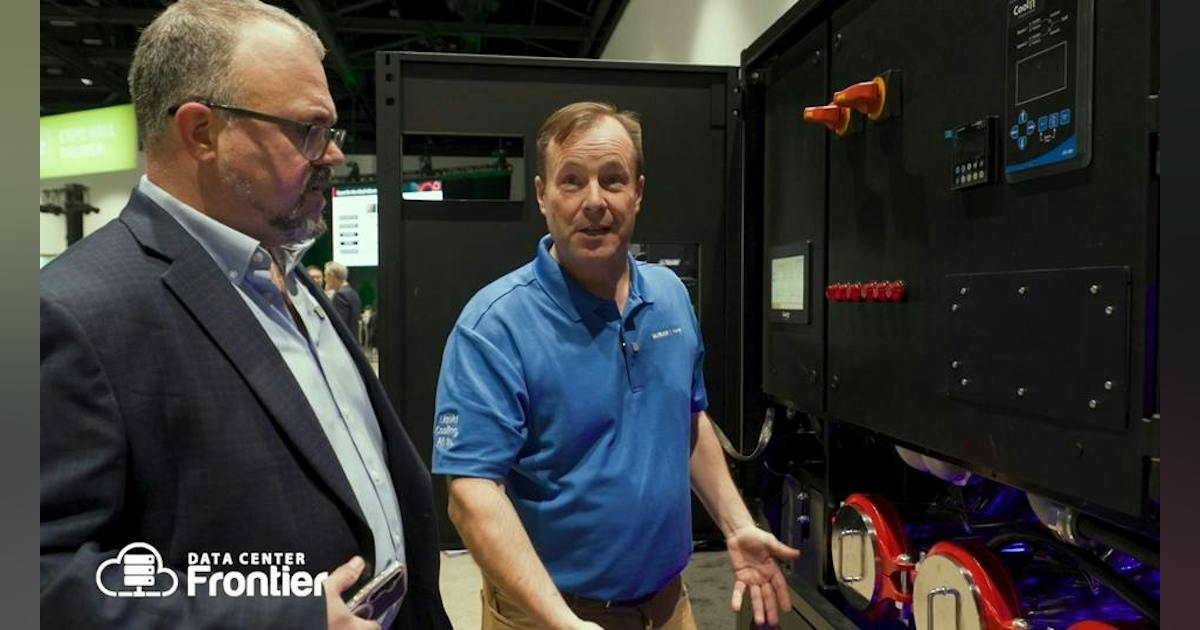
At the 2026 OCP Global Summit in San Jose, CoolIT Systems Director of Marketing Charles Robison gave Data Center Frontier a close-up look at several technologies addressing that challenge, including the company’s new 3-megawatt CHx 3000 coolant distribution unit (CDU), integrated coolant health monitoring, and a fifth-generation cold plate loop designed for fanless servers.
The demonstration comes at a significant moment for CoolIT, which was acquired by Ecolab for approximately $4.75 billion in July 2026. On November 16, Ecolab formally introduced its new integrated AI cooling platform at SC26 in Chicago, placing the CHx 3000 and its embedded 3D TRASAR technology at the center of a broader strategy combining liquid cooling hardware, fluid management, and digital monitoring.
Looking Inside the CHx 3000
The CoolIT CHx 3000 is a liquid-to-liquid CDU rated for 3 MW of cooling capacity at a 3°C approach temperature difference, with a specified flow rate of 4,500 liters per minute. Designed for high-density AI deployments, the unit incorporates Ecolab’s 3D TRASAR technology to continuously monitor the condition of the circulating coolant.
In the video, Robison points directly to the sensor array that makes the integration possible.
“3D TRASAR, and you can see the array of sensors here, allows coolant health monitoring,” Robison explains. “It allows people to see real-time what’s going on with the coolant. So before it goes out of spec, they know what’s happening and they can address it.”
The distinction is important. Traditional cooling monitoring typically emphasizes temperature, pressure, and flow. Ecolab’s technology adds visibility into fluid chemistry and contamination, allowing operators to identify deteriorating conditions before they compromise the system.
According to a November 10 technical report from CoolIT, the integrated monitoring system tracks parameters including glycol concentration, pH, turbidity, conductivity, and differential pressure. These measurements can help identify conditions that contribute to corrosion, biological growth, and restricted flow through cold plate microchannels.
Robison describes the monitoring capability as another layer of reliability for high-density liquid cooling infrastructure.
Opening the CHx 3000 enclosure, he also walks through the unit’s mechanical architecture, identifying its pumps, large 25-micron filters, heat exchanger, and control system, all accessible from the front of the CDU.
Cold Plates Push Toward Fanless Servers
The second part of the demonstration moves from the CDU to the server itself.
Robison highlights a fifth-generation cold plate loop developed for a server OEM, describing it as a high-performance design intended to remove the need for conventional server fans.
“What’s unique about this cold plate design is there’s—it’s a fanless design,” he says. “So we’re doing 100% heat capture through this cold plate loop.”
That claim reflects a larger transition underway in AI server thermal design. As processor power demands climb, liquid cooling must increasingly address not only CPUs and GPUs but also memory, networking, storage, and power components that traditionally relied on airflow.
In a September 2026 technical discussion of fanless AI servers, CoolIT described near-total liquid heat capture as an increasingly practical requirement for very high-density systems. The company identifies less than 1% of server heat remaining for air cooling as an achievable engineering target, while acknowledging that literal 100% capture is difficult to establish.
The underlying direction is clear: as liquid cooling takes on virtually the entire server heat load, eliminating server fans becomes increasingly feasible.
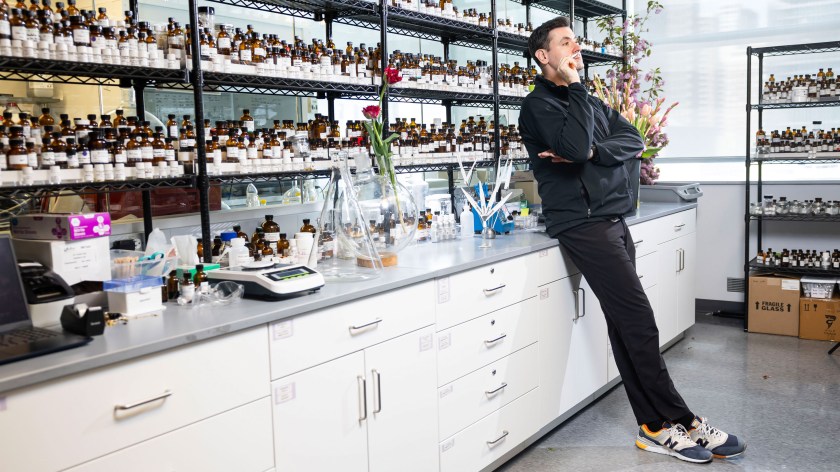
Robison concludes the walkthrough with CoolIT’s range of cooling fluids, spanning pure water and multiple propylene glycol-based formulations. The display underscores another aspect of the company’s expanding portfolio: matching coolant selection and fluid management to the requirements of increasingly sophisticated direct liquid cooling systems.
From Cooling Capacity to Cooling Intelligence
For DCF, the OCP demonstration also provides a useful continuation of our recent tour of CoolIT’s manufacturing and R&D operations in Calgary, where Robison showed how the company is scaling production and testing for megawatt-class cooling infrastructure.
The latest demonstration moves that story forward, illustrating how greater cooling capacity, continuous fluid monitoring, and increasingly comprehensive server-level heat capture are beginning to converge.
With Ecolab’s newly announced platform bringing these technologies together, the industry is moving toward an approach in which coolant quality, thermal performance, and operational reliability are managed as parts of the same system.
For AI data centers increasingly defined by the density and value of the compute they house, that integration may prove as consequential as the next increase in CDU capacity.
Watch the Data Center Frontier video demonstration with CoolIT Systems’ Charles Robison.