Stay Ahead, Stay ONMINE

Building the materials foundation for AI

In partnership withSyensqo The AI boom is becoming a materials challenge. As AI pushes computing into new territory, the materials behind that infrastructure are becoming just as crucial as the algorithms running on it. Semiconductors and data centers are approaching physical limits around performance, thermal management, electrical efficiency, and reliability, creating new demands for materials that can do more at once. At the same time, AI is giving materials scientists new ways to search the enormous universe of possible molecules and accelerate the development of solutions. For Mike Finelli, chief technology and innovation officer and chief North America officer at Syensqo, that convergence is transforming what advanced materials can enable. “AI is now, from a material standpoint, really pushing semiconductors and the data centers to their physical limits,” he says. As requirements accumulate, including high temperature, purity, electrical performance, chemical resistance, plasma resistance, and long-term stability, materials move toward what Finelli calls the “top of the pyramid.” Beyond supporting AI innovation, he contends that advanced materials are “actually increasingly defining what’s going to be possible.” That challenge is playing out across the infrastructure powering the AI surge. Syensqo is developing materials for high-voltage data center architectures, advanced sealing materials for semiconductor manufacturing, and thermal-management solutions including fluids for direct immersion cooling. Some of those innovations can also cross industry boundaries. Materials developed for electric vehicles, for example, can help address the higher voltage and energy-density demands that are emerging in data centers. The definition of performance is also changing. More customers are expecting materials to meet technical requirements while reducing environmental impact. “Our goal is to remove the trade-off between performance and sustainability,” Finelli says. That means considering sustainability at the beginning of the research process instead of treating it as an additional requirement once a material has been developed. AI is changing how those materials are discovered, too. Syensqo is using AI agents to digitally synthesize millions of potential molecular combinations, predict their performance and sustainability characteristics, and narrow them to a much smaller group for laboratory testing. The result, Finelli says, is the ability to go “broader, deeper, and faster” while giving scientists more time to solve complex engineering problems. Looking to the future, Finelli sees the possibility of a reinforcing cycle: AI helps develop materials that improve AI infrastructure, which in turn enables better AI to accelerate materials discovery. That feedback loop could create a cycle of innovation and expand what future technologies can achieve. “You end up in this accelerated materials, innovative cycle of materials innovation,” says Finelli. “That really excites me, and it gives us the opportunity to continue enabling technologies that will shape the future.” This episode of Business Lab is produced in partnership with Syensqo. Full Transcript: Megan Tatum: From MIT Technology Review, I’m Megan Tatum, and this is Business Lab, the show that helps business leaders make sense of new technologies coming out of the lab and into the marketplace. This episode is produced in partnership with Syensqo. Now asked to name the key enablers to AI advancement, many of us might list algorithms, data centers, or even computing power, but just as critical to the performance are the advanced materials that underpin each layer of that innovation. As AI continues to evolve, it’s pushing the likes of semiconductors and data centers to new physical limits, putting new pressure on the advanced material sector to keep pace. But the relationship goes both ways. As the sector rises to this challenge, AI is also emerging as a powerful tool for accelerating materials discovery and development, significantly shortening development timelines for new solutions. Two words for you: materials innovation. My guest today is Mike Finelli, chief technology and innovation officer and chief North America officer at Syensqo. Welcome, Mike. Mike Finelli: Thank you, Megan. Nice to be here. Megan: Thank you so much for joining us. Mike, can I start by asking you to tell us a little bit more about Syensqo and the role it plays in developing advanced materials? Mike: Yeah, absolutely. Syensqo is a global leader in specialty materials. Our job is to help customers solve their toughest technology challenges. We serve a lot of different markets, but the way I like to say it simply is if it flies, we’re on it. If it drives, we’re in it. In healthcare, our products literally are saving lives every day. And if you like your mobile devices, if you like AI, it’s our products that are actually enabling the advanced semiconductor chips that are required to produce all of this. Our role is to enable innovation through advanced chemistry. We develop materials that deliver higher performances, greater reliability, and increasingly more sustainable solutions. The way I would say this, it’s at the heart of our business. Actually, it’s in our name, Syensqo. And to put some numbers around it, 20% of our annual revenues come from new products and applications that we’ve launched in the last five years, which is really evidence of a really strong innovation engine. Megan: Yeah, absolutely. And as you sort of described there, you’re in all sorts of different industries with an emphasis perhaps on electronics and semiconductors. Can you talk a bit more about that work and where those industries are headed perhaps? Mike: Sure. So look, electronics and semiconductors have been strategic markets for Syensqo for literally decades. I don’t want to date myself, but 33 years ago when I started in the company, semiconductors were one of the first industries that I worked in. And we’ve supported successive waves of innovation from enabling smaller, more powerful mobile devices, helping the industry get to the smaller and smaller profiles and the chips. We’ve helped to advance hyperconnectivity, supporting increasingly sophisticated semiconductor manufacturing. And today we’re helping to advance the AI era. We have one of the industry’s broadest portfolios of high performance polymers and advanced materials. We support applications across the entire electronics value chain from semiconductor fabrication, electronic components, to smart devices and telecommunications, even hyperconnectivity. And our materials are helping customers solve increasingly demanding challenges around miniaturization, thermal management, electrical performance, chemical resistance, higher and higher purities, and long-term reliability and sustainability. And today we work with leading semiconductor manufacturers and electronics companies all around the world. Megan: Fantastic. And as you alluded to there in the last 30 years, we’ve seen huge evolutions in those sectors. Mike: Oh my God, yes. Megan: And now AI is putting these new demands on semiconductors and data centers. What does that mean for the materials they’re built from and to what extent will AI innovation be constrained or enabled by materials science finding a solution? Mike: Yeah, so I mean, you’re absolutely right. But AI is now, from a material standpoint, really pushing semiconductors and the data centers to their physical limits, and materials are becoming a key enabler of that continued progress. The way I try to describe it, think of a pyramid, I call it the performance pyramid. You have commodity materials at the bottom of the pyramid and you have high performing specialty materials at the top of the pyramid. At Syensqo, all we do is we operate at the top of the pyramid and we’re continually trying to raise the top of that pyramid by bringing newer and newer and more higher performing materials out. Now you might say, okay, but why doesn’t a data center or a semiconductor manufacturing fab need a specialty versus something in the commodity space? Well, I call it the and, and, and principle. If you just need a polymer or a material that can sit at the table at room temperature and stay there for 10 years and not change, well, there’s a lot of commodity materials that will do that and you don’t have a problem. The minute you start adding requirements, and I call it the and, and, and so if you need a polymer that can handle high temperature and have to have high purity and electrical performance and chemical resistance and plasma resistance and it’s got to have long-term stability, all of these ands, you start moving to the top of the pyramid. Now what AI is doing with semiconductors, because of the speed at which it’s advancing, it’s requiring semiconductor chips and data centers, the number of requirements are increasing the number of ands which is pushing the limits of the materials. That’s where we come in. And I really believe that advanced materials, they’re no longer just supporting AI innovation, we’re actually increasingly defining what’s going to be possible. Megan: Right. That’s fascinating. And in terms of rising to that challenge of focusing on that top of the pyramid and that and, and, and principle you’re talking about, could you talk us through perhaps an example or two of those top of the pyramid solutions you’ve created or that you’re working on at the moment? Mike: Like I said, our focus is enabling higher performance, but it’s also without compromising on reliability or safety. We develop advanced polymers, elastomers, specialty fluids, fluids meaning lubricants and heat transfer fluids, and they’re used throughout the semiconductor manufacturing process and also increasingly in AI data center infrastructure. One example of our work on specialty materials for next generation AI data centers is the work we’re doing around high voltage architectures. Data centers are moving towards high voltage architectures because they can enable greater computing power while also improving energy efficiency. We know that’s a big issue for that segment of the industry, and these high voltage architectures will help them reduce and improve energy efficiency because it reduces energy losses and they can ultimately help lower the environmental footprint of the data centers. And we’re developing new materials that can help them get there. Another example is our high performing sealing materials found inside semiconductor fabs and wafer tools. If you can picture, many people have seen what a semiconductor looks like during processing. It’s a big, big silicon disc that’s then later diced into the tiny little chips that go into the computer. But that wafer is put inside a giant chamber where it has a very extreme environment, aggressive plasmas, reactive chemicals, and they need higher and higher performing materials. And all of the seals that are around that chamber to keep those gases in the environment inside have to be able to withstand that environment. And that’s what we’re developing and we’re pushing the limits. They’re asking for higher temperatures, more aggressive environment with lower out gassing and purity. And that’s what we’re developing for this industry to allow that next chip to be developed and produced industrial. Megan: It’s so fascinating that people wouldn’t give much though necessarily to the seal in something like that. As you’re outlining, it’s just absolutely critical in terms of performance. And in developing those solutions, I understand you also looked across different markets to see what may be applicable perhaps in more than one space, and that includes an overlap between the automotive sector and data centers, I understand. Can you tell us a little bit more about that? Mike: As I mentioned just previously, the data centers are shifting to higher voltage architectures. This is the next generation data center, which can be more energy efficient, but it’s got a higher energy density. The power density increases, which increases temperatures. And many of the material challenges that we will be facing there, we’ve already developed for the automotive industry in electric vehicles. I’ll give you an example of an application. I mean, think about an electric vehicle. The powerhouse in electric vehicle is no longer the motor, it’s the battery. That’s where all the energy sits. And when you’re putting a hundred kilowatts of energy, driving that to the electric motor through wires and through what they call bus bars, you got to get that car up to 60 miles an hour pretty quick. You’re driving massive amounts of energy that’s increasing temperatures dramatically. And all the electrical connections are in these bus bars that there’s a polymer that’s an insulating polymer with copper in between for all the connections. That’s got to withstand that temperature increase, which could come pretty rapidly. We’ve developed new materials there and those materials will be translatable over to these data centers where they’re going to have the higher voltages with a higher energy density. Another thing we’ve been doing in automotive, we have a lot of knowledge in both automotive and semiconductor around fluid circulation and how to use dielectric materials to do direct immersion cooling. That’s something that will be very valuable for data centers and server farms. Using air to cool semiconductors is really inefficient and energy intensive. If you could submerse them in a liquid, you have direct immersion cooling, that’s extremely efficient, so that’s another thing we’re working on. Another thing we developed in automotive that will be translated over is battery energy storage systems. Inside the battery, we’ve developed a binder. It’s the highest performing binder on the market, which is using the cathode of a lithium ion battery, and it keeps all the ingredients doing its job working together so that battery can actually last for 10 years and perform. Now that’s moving over to the data centers because they’re moving more towards renewables and they need to have these energy storage systems to smooth the peak loads and provide resilient backup power. That’s one of the things that we’re doing. By transferring our knowledge across the markets, we can accelerate new power and new thermal management solutions while supporting reliability required by next generation AI infrastructure. Megan: Fantastic. So many transferable applications there that necessarily wouldn’t have sprung to mind. And it isn’t only technical advancements that you need to contend with, of course. Companies today are also demanding the materials are developed and manufactured more responsibly too. So how is sustainability shaping your innovation process? Mike: Yeah, you’re absolutely right. I will say performance is still the entry ticket. Our customers want performance. Now what’s changing is that definition of performance is now broader and it is including sustainability targets and requirements. Our customers expect materials that deliver outstanding technical performance while also being developed and manufactured more responsibly. At Syensqo, we believe that operating as a responsible company means we’re providing true sustainable business solutions to our customers. And this is why we developed what we call the Sustainable Portfolio Management tool, SPM. It’s a matrix, and it defines what a sustainable solution is. For us, it’s a product that in a given application improves our product’s social and environmental performance while also demonstrating a lower environmental impact in its production, creating values for our customers. In short, we want to develop products, and this is where it starts. Every one of our research projects before we even start them is assessed on whether it’s going to be a sustainable product or not. And 88% of our portfolio now is a sustainable product. We’re developing materials that are better for the environment, lower environmental footprint when we produce it, but also they contribute to improvements for our customers as well so they could operate with a lower carbon footprint or they can operate in a safer way or less water consumption. There’s a lot of different lists in there. Another example is our longer-term development of next generation heat transfer fluids. Semiconductor manufacturing and data centers have become more powerful. I mentioned before the heat that they’re generating, especially when they move to the higher voltage architectures. Managing that heat is increasingly important. And again, I talked about direct immersion cooling. We’re developing those solutions because today there are fluids out there that will work, but they got high global warming. That’s not good for the environment. We’re developing the next generation heat transferred fluids that will reduce the potential environmental impact compared to the fluids today. In the end, our goal is to remove the trade-off between performance and sustainability. You notice that’s another and, we can be performing and sustainable. Megan: That’s so important, isn’t it though, to think about sustainability in terms of performance? As you say, when we’re thinking about commercially scaling up these solutions, it’s such an important part of it. And as I talked about in the introduction, AI isn’t only a challenge, but it’s also an opportunity within the advanced material space. I’d love to explore how you’re using AI tools at Syensqo to inform and accelerate the development of solutions as well. Mike: Absolutely. We embarked on this journey about two years ago, where we’re using AI in our research and development, and we’ve partnered with Microsoft and their Microsoft discovery tool, and it’s helping us to rapidly identify and evaluate promising molecular candidates. Now, in the normal research approach, historically, you would design your experiment and you’d look at all the potential combinations of materials and chemicals that you could make all these different molecules. And the combinations of potential and molecules that you could develop to solve a problem could be in the millions, but it’s impossible to develop a million molecules or tens of millions of molecules in your laboratory and actually physically do that. But you have to select a small area based on your expertise and knowledge, based on the literature searches, based on the state of the art that’s out there and looking at patents, et cetera. And you pick a small area and you go through the process, you develop the materials, you test them, you learn something, you go back to the drawing board, you start again. Eventually you find something that works, but it doesn’t mean you found the best possible combination that’s out there. But what we’re doing with AI is we have developed AI agents with Microsoft that are literally digitally synthesizing the entire millions and millions of combinations of potential molecules. And we have another AI agents that are using physics-based simulation to look at all those molecules and predict the performance of them, and not just performance on physical chemical properties, but also on toxicity, on sustainability, et cetera. Then we have another agent that takes all that information and ranks them all. In the end, we have explored all of the potential molecules out there. We understand roughly what the performance should be, and we end up with a priority list of maybe a hundred, instead of millions and millions, a hundred that we actually synthesize in the lab. And at the end, you end up getting the solution faster, much, much faster. You’ve explored the entire space. I basically say it allows us to go broader, deeper, and faster. And the important thing is it’s not replacing our scientists, it’s not replacing our scientific expertise. In a way, it’s giving them superpowers. It’s allowing them to spend less time searching and more time solving the industry’s toughest engineering challenges. Megan: Amazing. It sounds like it’s genuinely a really transformative tool by what you’re explaining. Mike: Completely, completely. Megan: I mean, just to finish, Mike, it’d be great to take a look ahead if we could, because there’s so much activity in both AI and the advanced material space. I wonder what is coming down the pipeline that you are most excited about next? Mike: I’ve talked a lot about AI and how we’re using AI to develop new materials. I think to me, what’s really exciting, and I’m starting to see it actually happen, I’m just curious how fast this is going to go, is that we’re using AI to develop new materials that will enable AI to get better, and then that AI will use the new AI to develop new materials to get AI to go better. I see this loop of developing for AI, for AI to improve, and then we use that AI to improve ourselves. You end up in this accelerated materials, innovative cycle of materials innovation. That really excites me, and it gives us the opportunity to continue enabling technologies that will shape the future. That’s what we do at Syensqo. Megan: Fantastic. Yeah, real sort of virtuous circle of innovation, it sounds like that. Amazing. Thank you so much, Mike. Mike: Thank you. Megan: Thank you so much. That was Mike Finelli, chief technology and innovation officer and chief North America officer at Syensqo, whom I spoke with from Brighton in England. That’s it for this episode of Business Lab. I’m your host, Megan Tatum. I’m a contributing editor and host for Insights, the custom publishing division of MIT Technology Review. We were founded in 1899 at the Massachusetts Institute of Technology, and you can find us in print on the web and at events each year around the world. For more information about us and the show, please check out our website at technologyreview.com. This show is available wherever you get your podcasts, and if you enjoyed it, we hope you’ll take a moment to rate and review us. Business Lab is a production of MIT Technology Review, and this episode was produced by Giro Studios. Thanks so much for listening. Goodbye. This content was produced by Insights, MIT Technology Review’s custom content arm, not its editorial staff. It was researched and written by humans, with any AI tools that may have been used limited to production processes under human oversight.


In partnership withSyensqo

The AI boom is becoming a materials challenge. As AI pushes computing into new territory, the materials behind that infrastructure are becoming just as crucial as the algorithms running on it. Semiconductors and data centers are approaching physical limits around performance, thermal management, electrical efficiency, and reliability, creating new demands for materials that can do more at once. At the same time, AI is giving materials scientists new ways to search the enormous universe of possible molecules and accelerate the development of solutions.

For Mike Finelli, chief technology and innovation officer and chief North America officer at Syensqo, that convergence is transforming what advanced materials can enable. “AI is now, from a material standpoint, really pushing semiconductors and the data centers to their physical limits,” he says.

As requirements accumulate, including high temperature, purity, electrical performance, chemical resistance, plasma resistance, and long-term stability, materials move toward what Finelli calls the “top of the pyramid.” Beyond supporting AI innovation, he contends that advanced materials are “actually increasingly defining what’s going to be possible.”

That challenge is playing out across the infrastructure powering the AI surge. Syensqo is developing materials for high-voltage data center architectures, advanced sealing materials for semiconductor manufacturing, and thermal-management solutions including fluids for direct immersion cooling. Some of those innovations can also cross industry boundaries. Materials developed for electric vehicles, for example, can help address the higher voltage and energy-density demands that are emerging in data centers.

The definition of performance is also changing. More customers are expecting materials to meet technical requirements while reducing environmental impact. “Our goal is to remove the trade-off between performance and sustainability,” Finelli says. That means considering sustainability at the beginning of the research process instead of treating it as an additional requirement once a material has been developed.

AI is changing how those materials are discovered, too. Syensqo is using AI agents to digitally synthesize millions of potential molecular combinations, predict their performance and sustainability characteristics, and narrow them to a much smaller group for laboratory testing. The result, Finelli says, is the ability to go “broader, deeper, and faster” while giving scientists more time to solve complex engineering problems.

Looking to the future, Finelli sees the possibility of a reinforcing cycle: AI helps develop materials that improve AI infrastructure, which in turn enables better AI to accelerate materials discovery. That feedback loop could create a cycle of innovation and expand what future technologies can achieve.

“You end up in this accelerated materials, innovative cycle of materials innovation,” says Finelli. “That really excites me, and it gives us the opportunity to continue enabling technologies that will shape the future.”

This episode of Business Lab is produced in partnership with Syensqo.

Full Transcript:

Megan Tatum: From MIT Technology Review, I’m Megan Tatum, and this is Business Lab, the show that helps business leaders make sense of new technologies coming out of the lab and into the marketplace.

This episode is produced in partnership with Syensqo.

Now asked to name the key enablers to AI advancement, many of us might list algorithms, data centers, or even computing power, but just as critical to the performance are the advanced materials that underpin each layer of that innovation. As AI continues to evolve, it’s pushing the likes of semiconductors and data centers to new physical limits, putting new pressure on the advanced material sector to keep pace. But the relationship goes both ways. As the sector rises to this challenge, AI is also emerging as a powerful tool for accelerating materials discovery and development, significantly shortening development timelines for new solutions.

Two words for you: materials innovation.

My guest today is Mike Finelli, chief technology and innovation officer and chief North America officer at Syensqo.

Welcome, Mike.

Mike Finelli: Thank you, Megan. Nice to be here.

Megan: Thank you so much for joining us. Mike, can I start by asking you to tell us a little bit more about Syensqo and the role it plays in developing advanced materials?

Mike: Yeah, absolutely. Syensqo is a global leader in specialty materials. Our job is to help customers solve their toughest technology challenges. We serve a lot of different markets, but the way I like to say it simply is if it flies, we’re on it. If it drives, we’re in it. In healthcare, our products literally are saving lives every day. And if you like your mobile devices, if you like AI, it’s our products that are actually enabling the advanced semiconductor chips that are required to produce all of this. Our role is to enable innovation through advanced chemistry. We develop materials that deliver higher performances, greater reliability, and increasingly more sustainable solutions. The way I would say this, it’s at the heart of our business. Actually, it’s in our name, Syensqo. And to put some numbers around it, 20% of our annual revenues come from new products and applications that we’ve launched in the last five years, which is really evidence of a really strong innovation engine.

Megan: Yeah, absolutely. And as you sort of described there, you’re in all sorts of different industries with an emphasis perhaps on electronics and semiconductors. Can you talk a bit more about that work and where those industries are headed perhaps?

Mike: Sure. So look, electronics and semiconductors have been strategic markets for Syensqo for literally decades. I don’t want to date myself, but 33 years ago when I started in the company, semiconductors were one of the first industries that I worked in. And we’ve supported successive waves of innovation from enabling smaller, more powerful mobile devices, helping the industry get to the smaller and smaller profiles and the chips. We’ve helped to advance hyperconnectivity, supporting increasingly sophisticated semiconductor manufacturing. And today we’re helping to advance the AI era.

We have one of the industry’s broadest portfolios of high performance polymers and advanced materials. We support applications across the entire electronics value chain from semiconductor fabrication, electronic components, to smart devices and telecommunications, even hyperconnectivity. And our materials are helping customers solve increasingly demanding challenges around miniaturization, thermal management, electrical performance, chemical resistance, higher and higher purities, and long-term reliability and sustainability. And today we work with leading semiconductor manufacturers and electronics companies all around the world.

Megan: Fantastic. And as you alluded to there in the last 30 years, we’ve seen huge evolutions in those sectors.

Mike: Oh my God, yes.

Megan: And now AI is putting these new demands on semiconductors and data centers. What does that mean for the materials they’re built from and to what extent will AI innovation be constrained or enabled by materials science finding a solution?

Mike: Yeah, so I mean, you’re absolutely right. But AI is now, from a material standpoint, really pushing semiconductors and the data centers to their physical limits, and materials are becoming a key enabler of that continued progress.

The way I try to describe it, think of a pyramid, I call it the performance pyramid. You have commodity materials at the bottom of the pyramid and you have high performing specialty materials at the top of the pyramid. At Syensqo, all we do is we operate at the top of the pyramid and we’re continually trying to raise the top of that pyramid by bringing newer and newer and more higher performing materials out.

Now you might say, okay, but why doesn’t a data center or a semiconductor manufacturing fab need a specialty versus something in the commodity space? Well, I call it the and, and, and principle. If you just need a polymer or a material that can sit at the table at room temperature and stay there for 10 years and not change, well, there’s a lot of commodity materials that will do that and you don’t have a problem. The minute you start adding requirements, and I call it the and, and, and so if you need a polymer that can handle high temperature and have to have high purity and electrical performance and chemical resistance and plasma resistance and it’s got to have long-term stability, all of these ands, you start moving to the top of the pyramid.

Now what AI is doing with semiconductors, because of the speed at which it’s advancing, it’s requiring semiconductor chips and data centers, the number of requirements are increasing the number of ands which is pushing the limits of the materials. That’s where we come in. And I really believe that advanced materials, they’re no longer just supporting AI innovation, we’re actually increasingly defining what’s going to be possible.

Megan: Right. That’s fascinating. And in terms of rising to that challenge of focusing on that top of the pyramid and that and, and, and principle you’re talking about, could you talk us through perhaps an example or two of those top of the pyramid solutions you’ve created or that you’re working on at the moment?

Mike: Like I said, our focus is enabling higher performance, but it’s also without compromising on reliability or safety. We develop advanced polymers, elastomers, specialty fluids, fluids meaning lubricants and heat transfer fluids, and they’re used throughout the semiconductor manufacturing process and also increasingly in AI data center infrastructure. One example of our work on specialty materials for next generation AI data centers is the work we’re doing around high voltage architectures. Data centers are moving towards high voltage architectures because they can enable greater computing power while also improving energy efficiency. We know that’s a big issue for that segment of the industry, and these high voltage architectures will help them reduce and improve energy efficiency because it reduces energy losses and they can ultimately help lower the environmental footprint of the data centers. And we’re developing new materials that can help them get there.

Another example is our high performing sealing materials found inside semiconductor fabs and wafer tools. If you can picture, many people have seen what a semiconductor looks like during processing. It’s a big, big silicon disc that’s then later diced into the tiny little chips that go into the computer. But that wafer is put inside a giant chamber where it has a very extreme environment, aggressive plasmas, reactive chemicals, and they need higher and higher performing materials. And all of the seals that are around that chamber to keep those gases in the environment inside have to be able to withstand that environment. And that’s what we’re developing and we’re pushing the limits. They’re asking for higher temperatures, more aggressive environment with lower out gassing and purity. And that’s what we’re developing for this industry to allow that next chip to be developed and produced industrial.

Megan: It’s so fascinating that people wouldn’t give much though necessarily to the seal in something like that. As you’re outlining, it’s just absolutely critical in terms of performance. And in developing those solutions, I understand you also looked across different markets to see what may be applicable perhaps in more than one space, and that includes an overlap between the automotive sector and data centers, I understand. Can you tell us a little bit more about that?

Mike: As I mentioned just previously, the data centers are shifting to higher voltage architectures. This is the next generation data center, which can be more energy efficient, but it’s got a higher energy density. The power density increases, which increases temperatures. And many of the material challenges that we will be facing there, we’ve already developed for the automotive industry in electric vehicles. I’ll give you an example of an application. I mean, think about an electric vehicle. The powerhouse in electric vehicle is no longer the motor, it’s the battery. That’s where all the energy sits. And when you’re putting a hundred kilowatts of energy, driving that to the electric motor through wires and through what they call bus bars, you got to get that car up to 60 miles an hour pretty quick. You’re driving massive amounts of energy that’s increasing temperatures dramatically.

And all the electrical connections are in these bus bars that there’s a polymer that’s an insulating polymer with copper in between for all the connections. That’s got to withstand that temperature increase, which could come pretty rapidly. We’ve developed new materials there and those materials will be translatable over to these data centers where they’re going to have the higher voltages with a higher energy density.

Another thing we’ve been doing in automotive, we have a lot of knowledge in both automotive and semiconductor around fluid circulation and how to use dielectric materials to do direct immersion cooling. That’s something that will be very valuable for data centers and server farms. Using air to cool semiconductors is really inefficient and energy intensive. If you could submerse them in a liquid, you have direct immersion cooling, that’s extremely efficient, so that’s another thing we’re working on.

Another thing we developed in automotive that will be translated over is battery energy storage systems. Inside the battery, we’ve developed a binder. It’s the highest performing binder on the market, which is using the cathode of a lithium ion battery, and it keeps all the ingredients doing its job working together so that battery can actually last for 10 years and perform. Now that’s moving over to the data centers because they’re moving more towards renewables and they need to have these energy storage systems to smooth the peak loads and provide resilient backup power. That’s one of the things that we’re doing. By transferring our knowledge across the markets, we can accelerate new power and new thermal management solutions while supporting reliability required by next generation AI infrastructure.

Megan: Fantastic. So many transferable applications there that necessarily wouldn’t have sprung to mind. And it isn’t only technical advancements that you need to contend with, of course. Companies today are also demanding the materials are developed and manufactured more responsibly too. So how is sustainability shaping your innovation process?

Mike: Yeah, you’re absolutely right. I will say performance is still the entry ticket. Our customers want performance. Now what’s changing is that definition of performance is now broader and it is including sustainability targets and requirements. Our customers expect materials that deliver outstanding technical performance while also being developed and manufactured more responsibly.

At Syensqo, we believe that operating as a responsible company means we’re providing true sustainable business solutions to our customers. And this is why we developed what we call the Sustainable Portfolio Management tool, SPM. It’s a matrix, and it defines what a sustainable solution is. For us, it’s a product that in a given application improves our product’s social and environmental performance while also demonstrating a lower environmental impact in its production, creating values for our customers. In short, we want to develop products, and this is where it starts. Every one of our research projects before we even start them is assessed on whether it’s going to be a sustainable product or not.

And 88% of our portfolio now is a sustainable product. We’re developing materials that are better for the environment, lower environmental footprint when we produce it, but also they contribute to improvements for our customers as well so they could operate with a lower carbon footprint or they can operate in a safer way or less water consumption. There’s a lot of different lists in there.

Another example is our longer-term development of next generation heat transfer fluids. Semiconductor manufacturing and data centers have become more powerful. I mentioned before the heat that they’re generating, especially when they move to the higher voltage architectures. Managing that heat is increasingly important. And again, I talked about direct immersion cooling. We’re developing those solutions because today there are fluids out there that will work, but they got high global warming. That’s not good for the environment. We’re developing the next generation heat transferred fluids that will reduce the potential environmental impact compared to the fluids today. In the end, our goal is to remove the trade-off between performance and sustainability. You notice that’s another and, we can be performing and sustainable.

Megan: That’s so important, isn’t it though, to think about sustainability in terms of performance? As you say, when we’re thinking about commercially scaling up these solutions, it’s such an important part of it. And as I talked about in the introduction, AI isn’t only a challenge, but it’s also an opportunity within the advanced material space. I’d love to explore how you’re using AI tools at Syensqo to inform and accelerate the development of solutions as well.

Mike: Absolutely. We embarked on this journey about two years ago, where we’re using AI in our research and development, and we’ve partnered with Microsoft and their Microsoft discovery tool, and it’s helping us to rapidly identify and evaluate promising molecular candidates.

Now, in the normal research approach, historically, you would design your experiment and you’d look at all the potential combinations of materials and chemicals that you could make all these different molecules. And the combinations of potential and molecules that you could develop to solve a problem could be in the millions, but it’s impossible to develop a million molecules or tens of millions of molecules in your laboratory and actually physically do that. But you have to select a small area based on your expertise and knowledge, based on the literature searches, based on the state of the art that’s out there and looking at patents, et cetera. And you pick a small area and you go through the process, you develop the materials, you test them, you learn something, you go back to the drawing board, you start again. Eventually you find something that works, but it doesn’t mean you found the best possible combination that’s out there.

But what we’re doing with AI is we have developed AI agents with Microsoft that are literally digitally synthesizing the entire millions and millions of combinations of potential molecules. And we have another AI agents that are using physics-based simulation to look at all those molecules and predict the performance of them, and not just performance on physical chemical properties, but also on toxicity, on sustainability, et cetera. Then we have another agent that takes all that information and ranks them all. In the end, we have explored all of the potential molecules out there. We understand roughly what the performance should be, and we end up with a priority list of maybe a hundred, instead of millions and millions, a hundred that we actually synthesize in the lab.

And at the end, you end up getting the solution faster, much, much faster. You’ve explored the entire space. I basically say it allows us to go broader, deeper, and faster. And the important thing is it’s not replacing our scientists, it’s not replacing our scientific expertise. In a way, it’s giving them superpowers. It’s allowing them to spend less time searching and more time solving the industry’s toughest engineering challenges.

Megan: Amazing. It sounds like it’s genuinely a really transformative tool by what you’re explaining.

Mike: Completely, completely.

Megan: I mean, just to finish, Mike, it’d be great to take a look ahead if we could, because there’s so much activity in both AI and the advanced material space. I wonder what is coming down the pipeline that you are most excited about next?

Mike: I’ve talked a lot about AI and how we’re using AI to develop new materials. I think to me, what’s really exciting, and I’m starting to see it actually happen, I’m just curious how fast this is going to go, is that we’re using AI to develop new materials that will enable AI to get better, and then that AI will use the new AI to develop new materials to get AI to go better. I see this loop of developing for AI, for AI to improve, and then we use that AI to improve ourselves. You end up in this accelerated materials, innovative cycle of materials innovation. That really excites me, and it gives us the opportunity to continue enabling technologies that will shape the future. That’s what we do at Syensqo.

Megan: Fantastic. Yeah, real sort of virtuous circle of innovation, it sounds like that. Amazing. Thank you so much, Mike.

Mike: Thank you.

Megan: Thank you so much. That was Mike Finelli, chief technology and innovation officer and chief North America officer at Syensqo, whom I spoke with from Brighton in England.

That’s it for this episode of Business Lab. I’m your host, Megan Tatum. I’m a contributing editor and host for Insights, the custom publishing division of MIT Technology Review. We were founded in 1899 at the Massachusetts Institute of Technology, and you can find us in print on the web and at events each year around the world. For more information about us and the show, please check out our website at technologyreview.com.

This show is available wherever you get your podcasts, and if you enjoyed it, we hope you’ll take a moment to rate and review us. Business Lab is a production of MIT Technology Review, and this episode was produced by Giro Studios. Thanks so much for listening. Goodbye.

This content was produced by Insights, MIT Technology Review’s custom content arm, not its editorial staff. It was researched and written by humans, with any AI tools that may have been used limited to production processes under human oversight.

Shape
Shape
Stay Ahead

Explore More Insights

Stay ahead with more perspectives on cutting-edge power, infrastructure, energy,  bitcoin and AI solutions. Explore these articles to uncover strategies and insights shaping the future of industries.

Shape

Cornelis lands $205M to make AI networks compute, not just connect

In Ethernet mode, the CN6000 can pair with switches from other vendors, including Broadcom’s Tomahawk line. Traffic sent over Ethernet still passes through an internal encapsulation layer built around Omni-Path. Spelman said that internal architecture preserves congestion management, credit-based flow control, and packet spraying, aimed at low latency and high

Read More »

EPA repeals power plant GHG rules, clearing path for new gas-fired generation

The announcement, made at the G20 Energy Ministers’ Meeting in Houston, also included a proposal to eliminate remaining federal greenhouse-gas requirements for fossil-fueled power plants. The proposal could make it more difficult for future administrations to impose similar climate regulations on the power sector under the Clean Air Act. The Edison Electric Institute has previously said that “critically needed new natural gas-fired generation” is crucial to providing baseload and peaking power, supporting grid reliability and balancing renewable resources, and that a stable greenhouse-gas regulatory framework is important to new generation investment. EPA Administrator Lee Zeldin said the rollback would enable development of new generating infrastructure. Gas-fired development expands The change comes as developers are planning a significant expansion of US gas-fired generation to serve growing electricity demand. Global Energy Monitor reported in August that US gas-fired power capacity in development had risen 50% in first-half 2026 to 378 Gw. Of that, 189 Gw was associated with projects intended to serve data-center demand. While not all projects in development will be built, the scope points to significant potential additional demand for natural gas. The repeal could improve the prospects for projects that otherwise faced higher costs or operating restrictions under the Biden-era rules. US electric power-sector natural gas consumption increased 31% to an average 35.8 bcfd in 2025 from 27.3 bcfd in 2016, according to the Energy Information Administration (EIA). EIA now forecasts US electricity use will reach record levels in both 2026 and 2027, driven in part by data-center development and increased manufacturing activity. Overall US gas consumption also is forecast to reach record levels in both years, rising to 92.2 bcfd in 2026 and 94.3 bcfd in 2027 from 91.9 bcfd in 2025. More gas-fired generation would also create additional demand for gas pipelines and storage, particularly in regions

Read More »

Caturus plans to nearly double capacity of under-construction Commonwealth LNG plant

Caturus LLC plans to nearly double the expected capacity of its Commonwealth LNG plant currently under construction in Cameron Parish, La. The company is planning a five-train, 7.75 million tonnes/year (tpy) expansion, which would bring the site’s planned capacity to about 17.25 million tpy, the company noted in a release Sept. 15.  Caturus LLC in May reached final investment decision (FID) on the current design of a six-train, $13.5-billion Commonwealth LNG plant. That sanction included closing of $9.75 billion in project financing and marked the start of full construction of the 9.5 million tpy plant. Phase 1 operations are expected in 2030. Base project construction is progressing on schedule with operations targeted for 2030, with about 8.5 million tpy capacity subscribed under long-term sale and purchase agreements, the company said. The expansion project is targeted to enter service in the early 2030s. Caturus said the expansion reflects strong market demand for additional US LNG volumes and long-term supply security, while capitalizing on infrastructure and commercial momentum already established at Commonwealth LNG. The expansion would leverage land already controlled by Caturus and draw on the engineering, procurement, and construction program established for the initial phase of Commonwealth LNG. The company also said its integrated upstream-to-export model, including gas production from its South Texas acreage, would support the additional liquefaction capacity.

Read More »

US freezes Citgo board to protect pending $5.9-billion acquisition

The US Treasury Department Sept. 14 amended Venezuela’s sanctions license to prevent unauthorized changes to the governance of Citgo Petroleum Corp. and its two US corporate parent structures, PDV Holding Inc. and Citgo Holding Inc. The license now explicitly blocks any unauthorized “appointment, removal, or replacement of any director, officer, or other corporate governance official” at the three companies. The move comes as Venezuelan interim President Delcy Rodríguez works to regain control of the country’s overseas assets. Her administration has replaced law firms representing Venezuela and state-owned PDVSA in foreign litigation and arbitration, while opposition-appointed entities that have overseen Citgo are preparing to wind down. The license amendment freezes the current corporate boards until finalization of Amber Energy’s acquisition of PDV Holdings. The acquisition gives Amber Energy, owned by Elliott Investment Management, assets that include about 800,000 b/d of refining capacity on the US Gulf Coast and in the Midwest. It also obligates Amber to disperse $5.89 billion in a structured payout to 15 international creditors, including ConocoPhillips, whose assets were seized by the previous government. While a US federal court approved the deal, Amber still requires a US Treasury license to take title to the shares. The deal would also need to survive an appeal in the US Third Circuit Court of Appeals in Philadelphia, where the Venezuelan government is arguing the price is too low. Venezuela and state-owned PDVSA would still be on the hook for about $15 billion in remaining payouts to companies for seized assets.

Read More »

S&P Global: Refined product tightness deepens

Russian refinery runs remain near July 2026 lows and are likely to recover only gradually from September onward. Russia’s ban on diesel exports has already removed 10% of waterborne supply from the global market. Further decline in Russian refinery runs could amplify the risk to global diesel markets by leading Russia to import fuel to backfill domestic needs, compounding the outright loss of the near 1 million b/d of diesel exports. Limited spare capacity raises winter risks Meanwhile, the world’s remaining unconstrained refining capacity is already running at close to maximum levels. Refinery utilization in the US has approached 97% this summer, while Europe and North America continue to operate at or near multi-decade highs in response to record margins. The industry is now approaching fall turnaround season with a significant incentive to keep pushing and little spare capacity left to offset unexpected disruptions. “The market has survived the first phase of the crisis because inventories, trade flows, and refinery flexibility absorbed much of the shock. Those shock absorbers are not disappearing, but they are becoming progressively weaker. Markets are entering winter with less room for error than they had in the spring,” said Daniel Evans, global head of fuels and refining research, S&P Global Energy. For governments and policymakers, the challenge is increasingly likely to center on balancing energy price affordability, inflation, and security of supply. High diesel prices directly impact costs for freight transport, agriculture, construction, manufacturing, and residential heating. Although the market has so far avoided an outright supply crisis, persistently low inventories, high prices, and limited spare capacity have heightened the risk of government interventions. Diesel remains the fuel most vulnerable to shortages. With a surge in demand during the harvest season, the approach of winter heating needs, depleted inventories, and no immediate prospect of supply

Read More »

Saudi pipeline shutdown threatens further global oil supply losses

Saudi Arabia has shut its 1,200-km (745-mile) East-West pipeline following Sept. 11, 2026, drone attacks. Saudi officials said the drones were launched from Iraq but have not disclosed the extent of any injuries or damage or provided a timetable for repairs. Satellite imagery released Sept. 13 appeared to show substantial damage to a pumping station along the pipeline. East-West, which has a maximum design capacity of 7 million b/d, had been operating at 2 million b/d in August according to Kpler, as increased Houthi attacks in and around Bab El-Mandeb reduced Red Sea traffic. Earlier in the Iran war, flows had been 4-5 million b/d, with the pipeline serving as an alternative to the Strait of Hormuz for Saudi exports. Stay updated on oil price volatility, shipping disruptions, LNG market analysis, and production output at OGJ’s Iran war content hub. Saudi oil buyers and traders told Reuters that stocks at Red Sea terminals could support exports for 5-7 days if the pipeline remains out of service. A prolonged shutdown could remove as much as 4% of global oil supply, according to market estimates. Repair estimates have ranged from several days to as long as 6 weeks. Saudi Arabia reported to the Organization of Petroleum Exporting Countries (OPEC) that its crude production declined to 6.2 million b/d in August, down from 10.9 million b/d in February. Overall OPEC+ crude production fell 1.5 million b/d in August to 33.1 million b/d. Production from the 17 quota-bound OPEC+ members declined 980,000 b/d to 27 million b/d, 7.3 million b/d below their August target. On Sept. 6, OPEC+ agreed to maintain October production targets at September levels. Global oil prices climbed sharply Sept. 14 in the wake of the shutdown. Brent crude futures rose above $108/bbl, reaching levels not seen since May, before retreating.

Read More »

Insights: Prioritizing process safety management over profits across the refining industry (Pt. 1)

In this Insights episode of the Oil & Gas Journal ReEnterprised podcast, downstream editor and lead reporter Robert Brelsford talks with Joe Barnes, principal of Barnes’ Engineering Consultants and a veteran oil and gas operations, maintenance, reliability, and major-projects leader with more than 30 years of industry experience. Barnes, who spent roughly half of his career in refining and half in exploration and production, discusses why process safety management must remain a central concern for everyone working in oil and gas—not only safety professionals. Drawing on his experience with a major refinery accident and the aftermath of a separate major offshore incident, Barnes explains why good intentions are not enough to prevent major incidents, particularly in times when the potential for high margins could tempt operator’s into promoting maximized production over execution of maintenance on processing and production installations to ensure safe and reliable operations. During the conversation, Robert and Joe examine recurring root causes identified through Barnes’ review of process-safety incidents dating back to the mid-1980s, including absence of  leadership, poor communication, inadequate risk identification and mitigation, aging equipment, deferred maintenance, workforce turnover, and the loss of experienced personnel. They also discuss why the industry has sometimes failed to consistently share and apply lessons from previous incidents, particularly when investigation findings are not widely accessible. The two consider the difference between personal safety and process safety metrics, the warning signs that preceded the 2005 BP Texas City refinery explosion, and the role of management of change (MOC) in evaluating staffing, maintenance, turnaround, efficiency, and capital-reduction decisions. Barnes also outlines the questions boards and executive leaders should be asking to ensure that process safety remains a business priority across economic cycles. Robert and Joe further explore how refineries can use past incident scenarios as practical training tools, strengthen external oversight

Read More »

Scott Bergs, CEO of Kirkwood IG: Fiber and the AI Data Center Buildout

For years, fiber was one of the more forgiving elements of data center site selection. Developers could secure land, line up power, begin planning the facility and then work with carriers to establish the connectivity required by tenants. In a traditional multi-tenant data center, that model generally worked. At AI scale, Scott Bergs says it increasingly does not. “The architecture of those original communications service provider networks just don’t meet the latency and/or capacity needs” of today’s high-density compute environments, said Bergs, CEO of Kirkwood Infrastructure Group, during a recent episode of the Data Center Frontier Show. The result is a significant change in the data center development stack: network infrastructure can no longer be treated as something that gets solved after the site is chosen. For hyperscalers and neo-cloud providers, fiber route diversity, latency, physical security and future capacity increasingly need to enter the conversation alongside power and land. And as data center campuses follow available power farther from established digital infrastructure hubs, the scale of the network challenge is expanding with them. A connection between data center campuses that might once have extended two or 30 miles can now stretch 250 miles or more, Bergs said. What would traditionally have been considered a long-haul fiber route is increasingly becoming another piece of inter-campus infrastructure. That change is helping drive Kirkwood’s own expansion. From DF&I to Kirkwood Bergs previously led DF&I, a dark-fiber infrastructure platform concentrated in Northern Virginia and Maryland. Kirkwood Infrastructure Group is not simply DF&I under a new name, he said. Rather, it represents what Bergs described as a second phase in a broader infrastructure investment strategy developed originally through IPI Partners. IPI, an investment platform focused on digital infrastructure, backed DF&I after identifying communications infrastructure serving dense compute environments as an area requiring greater direct

Read More »

Cisco brings Splunk AI on premises, expands agent observability, monitors token costs

Cisco executives said during a press briefing that AI agents are operating across data centers, campuses, and branches, and interacting with enterprise resources and other agents. For example, if an agent deletes thousands of files, IT teams need to determine whether it malfunctioned or was compromised. On-premises option: Cisco AI POD for Splunk Aimed at enterprises that need to keep sensitive machine data within their own environments, Cisco AI POD for Splunk “brings Splunk AI to on-premises customers with new AI runtime software, Cisco infrastructure, Nvidia accelerated computing, and Kubernetes-based architecture, pre-validated and optimized for Splunk AI workloads,” according to Cisco. “One of the biggest roadblocks to enterprise AI today is that it’s too hard to deploy,” said Jeetu Patel, Cisco’s president and chief product officer, in a statement. “Customers want to know: Can I trust it to do the job? Can I afford it? And, most importantly, can I secure it? By running Splunk AI on the infrastructure customers already trust, they can move faster to put AI to work in their business with confidence and control.”

Read More »

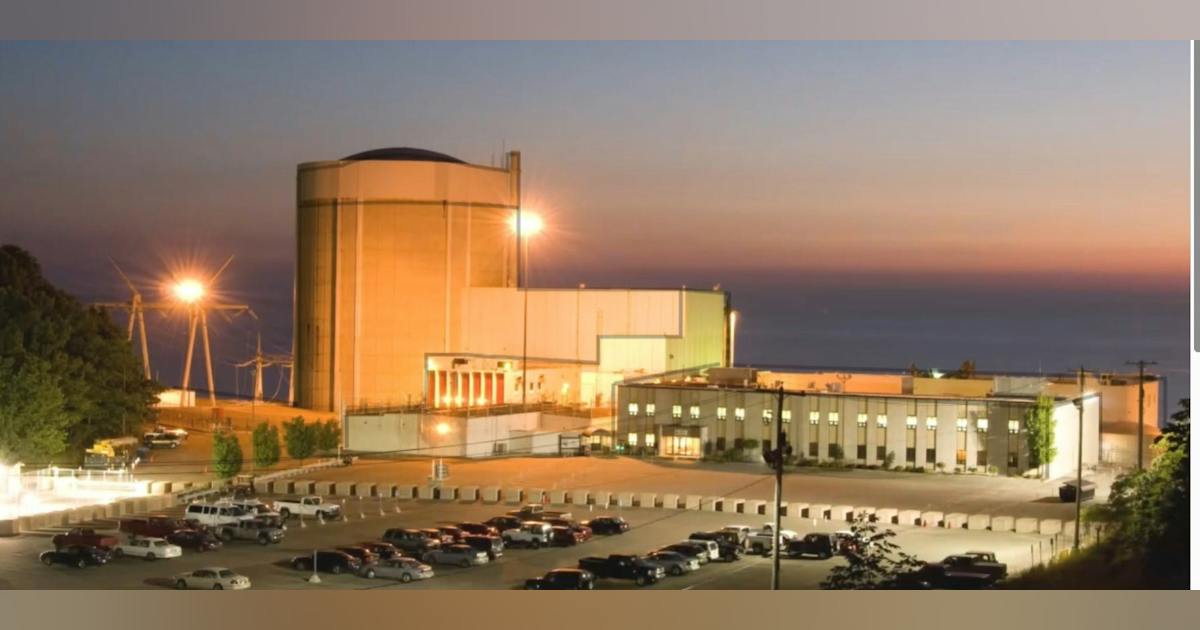
Nuclear’s Next AI Test: Building at Scale

For data center developers facing multiyear utility interconnection queues and tightening power markets, nuclear energy is entering a different phase of its AI infrastructure story. The near-term opportunity still rests largely with the existing reactor fleet. Holtec International has moved the Palisades Nuclear Plant in Michigan into fuel loading, one of the final major stages before reactor startup activities. Constellation Energy, meanwhile, continues to work toward a 2027 restart of the former Three Mile Island Unit 1, now the Christopher M. Crane Clean Energy Center, under its long-term power agreement with Microsoft. Together, Palisades and Crane represent roughly 1.64 GW of existing nuclear capacity that could return to service without waiting for entirely new plants to be licensed, financed and constructed. That makes reactor restarts one of the few ways nuclear generation can materially intersect with data center power demand before the end of the decade. But the more consequential change may be taking place further upstream. A burst of activity from advanced nuclear developers at the end of August pointed increasingly toward the industrial systems required to move new reactor designs from demonstrations to repeatable infrastructure. X-energy, TerraPower, GE Vernova Hitachi, Oklo, Westinghouse, Kairos Power and others reported progress involving fuel supply, reactor testing, manufacturing, licensing and commercial deployment. None of these advanced reactor projects will solve the industry’s 2027 or 2028 power shortage. That is no longer the most useful test. The more important question is whether advanced nuclear can begin acquiring the characteristics of an industrial supply chain: dependable fuel, standardized manufacturing, repeatable construction, tested reactor systems and enough commercial certainty for large power customers to plan around deployment schedules measured in years rather than speculation. For data center infrastructure, that is the transition worth watching. Palisades Moves From Restoration to Startup The clearest near-term proof point

Read More »

The waste heat paradox: How data centers can cool AI with the heat AI creates

A 40-year-old technology built for this exact moment Absorption chillers produce chilled water the way a conventional chiller does, but they use heat instead of electricity to drive the refrigeration cycle. A generator uses hot water, steam, or exhaust gas to separate refrigerant vapor from a lithium bromide solution; the vapor condenses, evaporates under low pressure to produce the cooling effect, and is reabsorbed to close the loop. Because there’s no large electrically driven compressor, the electrical footprint is small: industry analysis puts absorption chillers at roughly 2 MW of cooling output for just 20–25 kW of electrical input, compared to 500 kW or more of electrical draw for a conventional chiller doing the same job. The technology has existed commercially for decades and never displaced electric chillers at scale, for one simple reason: it needs a steady, moderate-to-high-temperature heat source to run, and building a boiler specifically to feed one erased most of the savings. That missing piece is exactly what two current infrastructure trends are now supplying as a byproduct. Two trends CIOs are already funding that solve the “missing heat” problem 1. On-site power generation is becoming standard, not exceptional Grid interconnection delays in major data center markets now stretch into years, pushing hyperscale operators toward gas turbines, engines, and fuel cells built directly on campus — all of which reject substantial heat as a byproduct of making electricity. Bloom Energy already pairs its fuel-cell systems directly with absorption chillers at data center sites, using exhaust heat to generate chilled water and reduce reliance on the electric chiller plant. Some industry forecasts expect roughly a third of data centers to run fully on-site-powered campuses by 2030 — meaning this heat stream is a permanent feature of the infrastructure roadmap, not a one-off opportunity.

Read More »

DCF Poll: How Should Utilities Vet Real vs. ‘Ghost’ Data Center Demand?

Matt Vincent is Editor in Chief of Data Center Frontier, where he leads editorial strategy and coverage focused on the infrastructure powering cloud computing, artificial intelligence, and the digital economy. A veteran B2B technology journalist with more than two decades of experience, Vincent specializes in the intersection of data centers, power, cooling, and emerging AI-era infrastructure. Since assuming the EIC role in 2023, he has helped guide Data Center Frontier’s coverage of the industry’s transition into the gigawatt-scale AI era, with a focus on hyperscale development, behind-the-meter power strategies, liquid cooling architectures, and the evolving energy demands of high-density compute, while working closely with the Digital Infrastructure Group at Endeavor Business Media to expand the brand’s analytical and multimedia footprint. Vincent also hosts The Data Center Frontier Show podcast, where he interviews industry leaders across hyperscale, colocation, utilities, and the data center supply chain to examine the technologies and business models reshaping digital infrastructure. Since its inception he serves as Head of Content for the Data Center Frontier Trends Summit. Before becoming Editor in Chief, he served in multiple senior editorial roles across Endeavor Business Media’s digital infrastructure portfolio, with coverage spanning data centers and hyperscale infrastructure, structured cabling and networking, telecom and datacom, IP physical security, and wireless and Pro AV markets. He began his career in 2005 within PennWell’s Advanced Technology Division and later held senior editorial positions supporting brands such as Cabling Installation & Maintenance, Lightwave Online, Broadband Technology Report, and Smart Buildings Technology. Vincent is a frequent moderator, interviewer, and keynote speaker at industry events including the HPC Forum, where he delivers forward-looking analysis on how AI and high-performance computing are reshaping digital infrastructure. He graduated with honors from Indiana University Bloomington with a B.A. in English Literature and Creative Writing and lives in southern New Hampshire with

Read More »

Nvidia invests $3.5B in MediaTek to extend its grip on AI

AI infrastructure: MediaTek will work with Nvidia’s NVLink Fusion ecosystem to enable customers to develop custom AI infrastructure designed to integrate with Nvidia rack-scale systems and AI factories. Local AI computing: The companies will continue to collaborate on multiple generations of Nvidia RTX Spark and DGX Spark PC chips, powering consumer PCs, AI developer supercomputers, and enterprise-class workstations, that integrate Nvidia GPUs with MediaTek SoCs. Automotive: MediaTek and Nvidia will continue developing platforms for AI-powered, software-defined vehicles in the era of physical AI.  “MediaTek is one of the world’s great semiconductor companies, with exceptional expertise in system-on-chip design, connectivity, leading performance and power efficiency,” said Jensen Huang, founder and CEO of Nvidia, in a statement. “Together, we’re building platforms that bring Nvidia accelerated computing to new markets and give customers the freedom to create differentiated AI systems at enormous scale.” NVLink is a high-performance interface, but this move also helps lock in customers to the Nvidia platform, since NVLink Fusion is not about to hook up to AMD processors. For MediaTek, the Nvidia investment provides a big pile of cash and access to Nvidia’s infrastructure as it attempts to establish itself as a major supplier of custom data center silicon.

Read More »

Microsoft will invest $80B in AI data centers in fiscal 2025

And Microsoft isn’t the only one that is ramping up its investments into AI-enabled data centers. Rival cloud service providers are all investing in either upgrading or opening new data centers to capture a larger chunk of business from developers and users of large language models (LLMs).  In a report published in October 2024, Bloomberg Intelligence estimated that demand for generative AI would push Microsoft, AWS, Google, Oracle, Meta, and Apple would between them devote $200 billion to capex in 2025, up from $110 billion in 2023. Microsoft is one of the biggest spenders, followed closely by Google and AWS, Bloomberg Intelligence said. Its estimate of Microsoft’s capital spending on AI, at $62.4 billion for calendar 2025, is lower than Smith’s claim that the company will invest $80 billion in the fiscal year to June 30, 2025. Both figures, though, are way higher than Microsoft’s 2020 capital expenditure of “just” $17.6 billion. The majority of the increased spending is tied to cloud services and the expansion of AI infrastructure needed to provide compute capacity for OpenAI workloads. Separately, last October Amazon CEO Andy Jassy said his company planned total capex spend of $75 billion in 2024 and even more in 2025, with much of it going to AWS, its cloud computing division.

Read More »

John Deere unveils more autonomous farm machines to address skill labor shortage

Join our daily and weekly newsletters for the latest updates and exclusive content on industry-leading AI coverage. Learn More Self-driving tractors might be the path to self-driving cars. John Deere has revealed a new line of autonomous machines and tech across agriculture, construction and commercial landscaping. The Moline, Illinois-based John Deere has been in business for 187 years, yet it’s been a regular as a non-tech company showing off technology at the big tech trade show in Las Vegas and is back at CES 2025 with more autonomous tractors and other vehicles. This is not something we usually cover, but John Deere has a lot of data that is interesting in the big picture of tech. The message from the company is that there aren’t enough skilled farm laborers to do the work that its customers need. It’s been a challenge for most of the last two decades, said Jahmy Hindman, CTO at John Deere, in a briefing. Much of the tech will come this fall and after that. He noted that the average farmer in the U.S. is over 58 and works 12 to 18 hours a day to grow food for us. And he said the American Farm Bureau Federation estimates there are roughly 2.4 million farm jobs that need to be filled annually; and the agricultural work force continues to shrink. (This is my hint to the anti-immigration crowd). John Deere’s autonomous 9RX Tractor. Farmers can oversee it using an app. While each of these industries experiences their own set of challenges, a commonality across all is skilled labor availability. In construction, about 80% percent of contractors struggle to find skilled labor. And in commercial landscaping, 86% of landscaping business owners can’t find labor to fill open positions, he said. “They have to figure out how to do

Read More »

2025 playbook for enterprise AI success, from agents to evals

Join our daily and weekly newsletters for the latest updates and exclusive content on industry-leading AI coverage. Learn More 2025 is poised to be a pivotal year for enterprise AI. The past year has seen rapid innovation, and this year will see the same. This has made it more critical than ever to revisit your AI strategy to stay competitive and create value for your customers. From scaling AI agents to optimizing costs, here are the five critical areas enterprises should prioritize for their AI strategy this year. 1. Agents: the next generation of automation AI agents are no longer theoretical. In 2025, they’re indispensable tools for enterprises looking to streamline operations and enhance customer interactions. Unlike traditional software, agents powered by large language models (LLMs) can make nuanced decisions, navigate complex multi-step tasks, and integrate seamlessly with tools and APIs. At the start of 2024, agents were not ready for prime time, making frustrating mistakes like hallucinating URLs. They started getting better as frontier large language models themselves improved. “Let me put it this way,” said Sam Witteveen, cofounder of Red Dragon, a company that develops agents for companies, and that recently reviewed the 48 agents it built last year. “Interestingly, the ones that we built at the start of the year, a lot of those worked way better at the end of the year just because the models got better.” Witteveen shared this in the video podcast we filmed to discuss these five big trends in detail. Models are getting better and hallucinating less, and they’re also being trained to do agentic tasks. Another feature that the model providers are researching is a way to use the LLM as a judge, and as models get cheaper (something we’ll cover below), companies can use three or more models to

Read More »

OpenAI’s red teaming innovations define new essentials for security leaders in the AI era

Join our daily and weekly newsletters for the latest updates and exclusive content on industry-leading AI coverage. Learn More OpenAI has taken a more aggressive approach to red teaming than its AI competitors, demonstrating its security teams’ advanced capabilities in two areas: multi-step reinforcement and external red teaming. OpenAI recently released two papers that set a new competitive standard for improving the quality, reliability and safety of AI models in these two techniques and more. The first paper, “OpenAI’s Approach to External Red Teaming for AI Models and Systems,” reports that specialized teams outside the company have proven effective in uncovering vulnerabilities that might otherwise have made it into a released model because in-house testing techniques may have missed them. In the second paper, “Diverse and Effective Red Teaming with Auto-Generated Rewards and Multi-Step Reinforcement Learning,” OpenAI introduces an automated framework that relies on iterative reinforcement learning to generate a broad spectrum of novel, wide-ranging attacks. Going all-in on red teaming pays practical, competitive dividends It’s encouraging to see competitive intensity in red teaming growing among AI companies. When Anthropic released its AI red team guidelines in June of last year, it joined AI providers including Google, Microsoft, Nvidia, OpenAI, and even the U.S.’s National Institute of Standards and Technology (NIST), which all had released red teaming frameworks. Investing heavily in red teaming yields tangible benefits for security leaders in any organization. OpenAI’s paper on external red teaming provides a detailed analysis of how the company strives to create specialized external teams that include cybersecurity and subject matter experts. The goal is to see if knowledgeable external teams can defeat models’ security perimeters and find gaps in their security, biases and controls that prompt-based testing couldn’t find. What makes OpenAI’s recent papers noteworthy is how well they define using human-in-the-middle

Read More »