Stay Ahead, Stay ONMINE

Child-monitoring apps might need a reboot

Pam Wisniewski’s digital adolescence showed her the best and the worst of the internet. At 14, she left an abusive home, where she’d been isolated in a fifth-wheel trailer at the end of a seven-­mile dirt road. She moved in with her older sister and taught herself to type on AOL Instant Messenger. Online, she sought out the support and the community she’d lacked at home. She also discovered how thin the ice can be. “I sent my address to some guy in New Mexico to send me a mug with my name on it,” she recalls. “And then I found a news story like five, 10 years later that he killed somebody.” Those experiences set the course of her career. Wisniewski—now a principal research scientist at the International Computer Science Institute, a nonprofit affiliated with the University of California, Berkeley—has spent well over a decade asking what safety should look like for families navigating an evolving tech landscape, and how to achieve it without sacrificing trust. “I really see the internet as this double-edged sword,” she says.  Digital harms have become the defining fear of American parenthood. In the University of Michigan’s 2025 National Poll on Children’s Health, parents’ top three worries had to do with social media, screen time, and internet safety. Nearly half of American teenagers say they have been bullied or harassed online, according to the Pew Research Center. From there, the dangers escalate. Online drug dealers sell counterfeit pills laced with fentanyl. In the first half of 2025, the National Center for Missing & Exploited Children fielded more than 23,000 reports of financial sextortion, in which a predator posing as a peer extracts a sexual image from a child and threatens to publish it unless paid. Chatbots are the newest danger, with companies like OpenAI facing lawsuits for allegedly coaching children toward suicide.  Most parents’ first defense is conversation. In Pew surveys, more than nine in 10 say they’ve talked with their teens about what’s appropriate to share online and how to treat peers. They get an assist in limiting exposure from tools that come preinstalled on phones: Apple’s Screen Time and Google’s Family Link let parents cap screen time, block or approve apps, filter web content, and track devices. There are also apps that let family members share locations; Life360, the largest, has nearly 98 million monthly users.  But a growing number of adults are opting for tools that go further. Rather than simply restrict or locate, content-monitoring apps scan a child’s texts, photos, emails, and chats and alert parents whenever an algorithm flags something it deems dangerous. Business is booming, and the next wave of growth is already being marketed around AI, with companies positioning themselves as foils to chatbot companions and other risks. The broader market for parental control software, encompassing dozens of apps, was worth an estimated $1.57 billion in 2025 and is expected to nearly triple in value by 2034. Bark Technologies, the current leader among content-monitoring apps, says it scanned 11 billion messages to or from 7.5 million children in the US in 2025. Its free school program is in more than 3,700 districts, covering about one in 10 kids in the US. While Bark aims to flag only content that trips its filters, some competitors, like FlashGet Kids, include features like screen mirroring and camera access.  These apps have had genuine successes: They’ve prevented suicide attempts, intercepted predators, averted school shootings. But they can also cause harm themselves. To get a read on how digital surveillance affects young people, I scraped more than 600,000 reviews of the leading apps and talked to kids, parents, and people who were monitored as children and are now grown. Some kids were grateful for their parents’ protection. Others described false alarms that got them punished, secrets revealed before they were ready, breakdowns of trust, and anxiety they carried into adulthood. (To protect their privacy, we’re not using their full names.) FRANZISKA BARCZYK None of this is easily fixed. But child-safety researchers and advocates say better approaches exist. One is to make the platforms themselves safer, forcing social media companies to build guardrails instead of leaving families to find their own. This “duty of care” approach is now advancing in the UK, Australia, and a number of US states. Another is to spend less effort watching kids and more effort helping them recognize risk, cope with it, and turn to a trusted adult when something goes wrong. This approach is called resilience. Wisniewski and others are developing tools that don’t aggressively monitor kids but train them in resilience and build trust with parents. “If we define safety as the absence of risk, the way you keep them safe is by keeping them off the platforms entirely,” she says. “But if we define safety as the ability to protect oneself and engage without engaging a risk, the solutions look very different.” It is the difference between abstinence lectures and sex ed. Content-monitoring apps typically involve two pieces of software—one on the child’s device, one on the parent’s. A parent installs the kid-side app, connects the kid’s accounts, and chooses what to surveil: messages, social apps, browsing, location, screen time. The kid-side software forwards activity to the company’s algorithmic classifiers, which scan for content related to sex, drugs, bullying, and self-harm, among other categories, and push alerts to a parent-facing dashboard. The same type of software can be loaded into school-issued accounts and devices.  Sometimes the safety net works. Titania Jordan, Bark’s chief marketing officer, told me the FBI has thanked the company on multiple occasions for bringing credible school-shooting threats to its attention. “I hate that we have to exist,” she says. “But I’m so thankful that we do.” According to Bark’s annual report, its classifiers alerted hundreds of thousands of families to severe self-harm risks in 2025. Gaggle, a school-monitoring competitor, makes a similar claim in its own annual report, crediting its software with saving over 1,000 lives in the 2024–’25 school year.  Nearly one in five kids noted feeling watched or stripped of privacy. About one in 10 said monitoring broke their trust in their parents; one in 12 described anxiety or distress. Real-world efficacy across the market is harder to measure, though there are hundreds of anecdotes in the reviews—predominantly about how location-sharing apps like Life360 have helped parents find lost kids. Dozens of reviewers also praise content-monitoring apps for averting major crises like potential suicide or self-harm. Of the reviews I scraped (reviews, it’s worth noting, represent a self-­selected sample that’s skewed toward strong feelings), over 200,000 had some indication of whether they were written by a parent or a kid. Parents liked whatever worked. On average, screen-time limiters and location trackers drew four- or five-star reviews 74% to 78% of the time. OS-level controls and content-scanning apps fared worse (44% and 48% positive reviews, respectively), with parents’ top grievance being that the apps were unreliable: They disconnected, missed genuinely troubling content, and raised alarms over nothing. The kids being watched had different concerns. Of the reviews I could attribute to either a parent or a kid, about 14,000 came from kids being monitored now or from adults looking back at being monitored in their youth. Roughly one in seven were, on balance, grateful. (Gavin, a teen I messaged with, said that monitoring “taught me self-accountability and integrity.”) But nearly one in five noted feeling watched or stripped of privacy. About one in 10 said it broke their trust in their parents; one in 12 described anxiety or distress. That’s not surprising, given that child-development experts have long said testing boundaries and building autonomy are what adolescence is for. A 2019 meta-analysis in the European Journal of Developmental Psychology, which pooled 31 long-term studies on how parent-child communication changes, found that children naturally disclose less to their parents as they age—the work of building an independent self. Making matters harder for kids, a lot gets caught in the dragnet unnecessarily. S., an 11-year-old on the autism spectrum, recalls messaging her best friend at school about whether a service dog might help with her meltdowns or keep her from harming herself. The school used Bark, which alerted the principal, S.’s parents, and her friend’s parents, citing content involving “self-harm.” Perhaps frightened by the alert, the friend’s parents cut off contact between the girls. “My first thought was, why?” S. told me. “It’s not like I’m hiding anything. But I’d rather people who weren’t in the situation not see it.” Over a year later, the girls still don’t speak. .cst-large, .cst-default { width: 100%; } @media (max-width: 767px) { .cst-block { overflow-x: hidden; } } @media (min-width: 630px) { .cst-large { margin-left: -25%; width: 150%; } @media (min-width: 960px) { .cst-large { margin-left: -16.666666666666664%; width: 140.26%; } } @media (min-width: 1312px) { .cst-large { width: 145.13%; } } } Need help? If you or someone you know is struggling with mental health or may be at risk of suicide or self-harm, call or text 988 to connect to a counselor at the suicide and crisis lifeline.Adults seeking guides and advice for managing kids’ use of tech and social media and navigating parental control features can check out commonsensemedia.org. .inline-square-list { list-style: none; padding: 0; margin: 0; } .inline-square-list li { display: inline; margin-right: 20px; font: 16px/1.6 ‘NeueHaas’, Helvetica, Arial, sans-serif; } .inline-square-list li::before { content: “25A0”; /* Unicode small black square */ margin-right: 8px; color: #333; /* Optional: Change bullet color */ } While apps aren’t in charge of parents’ reactions, false flags do seem to be more the rule than the exception. “Ninety-nine percent of the alerts are garbage,” says Grant Callaghan, an Australian dad who tried several monitoring apps with his 13-year-old son before deciding to build his own. “It flagged two kids calling a third one annoying as bullying. It flagged a kid complaining of a headache as ‘medically concerning content.’” When I ran Bark on a test phone set up as a 10-year-old’s, it manufactured a grooming scenario out of a random password I saved in the Notes app.  Bark’s Jordan doesn’t dispute that false alarms happen, volunteering an example of a soccer player whose photo of a net-scraped wrist was marked as potential self-harm. She says that over-flagging is safer than under-flagging, though: “You’d rather know that than not know that.” In a 2021 study with Bark, CDC researchers found that students who tripped multiple risk flags were far likelier to trigger an alert for severe self-harm later—indicating that flags aren’t necessarily noise. Another problem is that Bark and similar monitoring apps surface things kids may not be ready to share. In a national survey by the Center for Democracy and Technology, nearly a third of LGBTQ+ students said they or someone they knew had been outed by school monitoring software. Jordan said Bark does not flag sexual orientation, but discussions about it could be captured when it screens chats for sexual content. Again, what adults do with such alerts, she added, is beyond any app’s control. “If a parent responds to a child’s identity with rejection,” she told me, “that is a parenting failure, not a child safety feature working as intended.” Damage caused by monitoring tools can follow kids into adulthood. One in eight reviews left by adults looking back on their years of being monitored describes lasting harm. Only one of the people I contacted agreed to go on the record at all, the others citing privacy worries and anxiety that continues to haunt them.  “There’s so many ways for teens to get around [controls]. And at the end of the day, the biggest thing that most of these apps are telling kids is that we don’t trust you.” Pam Wisniewski That woman, M., is now 19. She got her first smartphone at 13 and says her mother installed a monitoring app before handing it over. Though she’d been abused from a young age, the first serious beating, M. tells me, came shortly after she texted a friend about her depression. “She didn’t want me to be able to talk to people about the things that she was doing to me,” M. speculates. She eventually got a secret second phone and ultimately ended contact with her mother. Today, M. won’t let even her fiancé touch her phone. “I have been watched my whole life,” she says. “I deserve this sense of privacy.”  M.’s case represents the extreme end of a spectrum: an app enabling abusive behavior. But it could reflect a broader issue, particularly with tools downloaded outside official app stores—aka, ones that are sideloaded. A 2025 audit led by researchers at St. Pölten University of Applied Sciences and University College London found that nearly half the sideloaded monitoring apps they looked at are functionally indistinguishable from stalkerware.  Above all else, it’s not clear how well these apps fulfill their core promise of keeping kids safer. No commercial monitoring app has produced a controlled trial that I was able to find showing that it reduces harm.  Kids swap tips online on how to bypass the surveillance. About 7% of the app reviews left by children describe a concrete workaround. “If you red-team them at all,” Wisniewski says, “there’s so many ways for teens to get around them. And at the end of the day, the biggest thing that most of these apps are telling kids is that we don’t trust you.” In a 2018 survey, her team found that use of parental controls was associated with an increase in the online risk kids encountered, including exposure to harassment. Causality, though, is hard to pin down, because monitoring may follow trouble rather than cause it.  Risks may also migrate out of view, as potential predators actively seek out unmonitored spaces. According to Bark’s 2025 annual report, alerts about predators and grooming behavior have fallen in recent years as conversations move into blind spots. Thorn, a child-safety nonprofit, has found that offenders routinely direct targets onto encrypted apps like WhatsApp and Telegram. After Meta encrypted Messenger by default, the number of reports reaching the National Center for Missing & Exploited Children dropped nearly 20% in a year—a trend the center attributed to lost visibility. Parents can block access to such spaces, but tech-­fluent kids can slip around that through browser versions, borrowed phones, or secret accounts.  .cst-large, .cst-default { width: 100%; } @media (max-width: 767px) { .cst-block { overflow-x: hidden; } } @media (min-width: 630px) { .cst-large { margin-left: -25%; width: 150%; } @media (min-width: 960px) { .cst-large { margin-left: -16.666666666666664%; width: 140.26%; } } @media (min-width: 1312px) { .cst-large { width: 145.13%; } } } Ban or Bust Blocking kids’ access to social media isn’t a guaranteed fix. By Corinne Iozzio Social media bans are booming. As of this past summer, seven countries restricted kids’ access to platforms like Snapchat and TikTok; three were implementing bans soon; and 16 had proposals winding their way into law. Researchers, though, are urging policymakers to slow down until there’s good data on whether bans work and what they mean for kids’ well-being, safety, and privacy. Early signs in Australia, which rolled out the world’s first ban for anyone under 16 in December, aren’t great: Initial surveys indicate that only about one-third of kids are off their accounts. More data is incoming, but even the idea behind bans—that skipping social media helps mental health—is not well substantiated, according to a 2025 meta-analysis. “The evidence rates around how a social media ban would work in practice and what results that might lead to is weak,” says Amy Orben, a University of Cambridge psychologist who’s co-leading a UK study on how teens fare under such restrictions. One thing that seems certain? If you ban it, the workarounds will come. Beyond obvious cheats like using an older person’s account or ID, kids are finding plenty of ways to stay logged in. In particular, they’ve found that age-estimating facial scans like those used by Meta and Snapchat are easy to outwit. Straight-up lying Kids in Australia have entered birthdays indicating that they’re older and made it past facial scans designed to double-check. Makeup This low-power digital display, invented by Professor Joseph Jacobson, PhD ’93, in 1997, has made it possible for readers to access thousands of books on a single device. Borrowed images Teaching code has long been part of the Media Lab ethos. A worldwide community of millions builds games and stories with Scratch, and 1998’s Mindstorms helped bring digital creations into the real world. VPNs Though its ambition was stymied by logistical challenges, this 2005 effort to deliver sturdy and affordable computers to the developing world stands as an example of the lab’s founding principles. Despite their flaws, content-­monitoring apps thrive because parents feel overwhelmed. There is no federal law in the US requiring platforms to design their products to be safe for users, and any safeguards that do exist have proved insufficient time and time again. In 2024 the Molly Rose Foundation (MRF), a suicide prevention nonprofit, analyzed 12 million moderation decisions related to suicide and self-harm that had been logged by six major social platforms. More than 95% came from just two of them: Pinterest and TikTok. Instagram and Facebook each accounted for 1% and X.com for even less—evidence, the researchers argue, not that they host less worrisome content but that they’re less inclined to moderate it.  Meta’s Instagram Teen Accounts fared little better in MRF audits. Of the safety tools tested in a 2025 review coauthored by Arturo Béjar, a former Meta engineering director who designed many of the company’s antibullying tools in the mid-2010s, only 17% worked as advertised. Josh Golin, who runs the children’s advocacy group Fairplay, offers the simplest explanation for such failures: “Almost any change that’s going to make kids safer is going to mean less money.” Documents unsealed in lawsuits against Meta allege that the company weighed safety fixes against the engagement they would cost—and chose growth.  Some groups are working to create more accountability. ParentsSOS is a coalition of families who have lost children to online harms. The group has been a driving force behind several state laws. In 2017, David’s Law made cyberbullying a crime in Texas, and Mississippi criminalized sextortion after 16-year-old Walker Montgomery died by suicide within hours of being targeted by a scammer posing as a teenage girl.  The courts are moving too. Nearly 2,900 federal lawsuits by families and school districts are pending against social media platforms. And in March 2026, New Mexico became the first state to win its own child-safety case against Meta, netting a $375 million verdict. A newer wave of suits targets AI: The parents of 16-year-old Adam Raine are suing OpenAI, alleging that ChatGPT coached him toward suicide. And in January, Character.AI settled a wrongful-death suit brought by the mother of a 14-year-old who had formed an intense attachment to one of its chatbots before taking his life.  FRANZISKA BARCZYK ParentsSOS members have also been instrumental in advancing the Kids Online Safety Act in Congress. In its original form, the law would have imposed a duty of care on social media companies, meaning they’d have to design their features to mitigate harms to minors rather than to maximize engagement. They would also have to give kids tools to limit who can contact them. It overwhelmingly passed the Senate in 2024, but its chances of becoming law remain in flux. The House’s new rewrite—blessed by the tech industry—strips the duty-of-care provision.  But even as they push to fill the regulatory void, parents who have faced tragedy don’t see monitoring tools as an answer. “You don’t pay extra for seat belts in the car, or airbags,” says ParentsSOS cofounder Maurine Molak, whose son David (of David’s Law) died by suicide in 2016 after months of cyberbullying.  Other critics of monitoring tools say the real issue is with how they’re built. The systems, says Wisniewski, need to be reworked so they keep kids safe without violating the privacy and autonomy that adolescents require. The goal isn’t no monitoring or social apps, but better ones—and a principled way of preparing young people to handle risk while also promoting trust between them and their parents.  Wisniewski’s resilience-based approach focuses on developing three pillars: self-regulation to help kids decide what healthy use looks like, risk coping to teach them what to do when something bad happens, and a support system of trusted adults and peers to turn to. She didn’t invent the idea of resilience; the finding that children grow stronger through manageable exposure to adversity has anchored developmental psychology since the 1970s. Sonia Livingstone, who has studied children’s online lives at the London School of Economics for over two decades, has amassed evidence from 33 countries that online risk and opportunity are inseparable, and that children shielded from every risk never get the practice to handle any.  A growing body of research indicates that inculcating resilience works in practice. In 2024, development economists at Hiroshima and Hitotsubashi Universities published a randomized trial of a digital-safety curriculum that was taught to junior high students in Vietnam. Across four modules, students learned how scammers and groomers operate, how to protect themselves, and how to find help. When tested a month later, only about 15% of those who’d taken the training engaged in risky online activity, compared with 50% to 60% of the control group. Similarly, Wisniewski’s own research suggests that teens high in resilience, exposed to the same risks as everyone else, show less negative impact from that exposure. The systems need to be reworked so they keep kids safe without violating the privacy and autonomy adolescents require. The goal isn’t no apps, but better ones. Her contribution is pushing resilience into technology itself. Her research group, the Socio-Technical Interaction Research Lab, has developed alternatives to the current crop of apps, though it’s never commercialized them. An app called Circle of Trust monitors teens’ messages but shows them the same dashboard a parent sees, and it lets each pair work out a set of trusted contacts whose chats the teen can keep private. When 17 parent-kid pairs tested it in 2020, most rated it as more useful and less corrosive of trust than a stricter app.  Her focus now is less a product than a method. Through a program called Teenovate, she trains teenagers as research apprentices and co-creators of their own safety tools. Since 2019, more than 85 teens have worked on prototypes and safety features dealing with cyberbullying, sexting, and privacy. They developed the prototype app MOSafely, which reports potential harms to kids directly, so they can review alerts and decide when to involve their parents. The end goal of Teenovate is to fashion evidence-­based design patterns that tech platforms can leverage—though none have adopted them yet.  To be fair, some existing apps do factor in kids’ privacy and agency. Aura, a Bark competitor, shows parents a weekly well-being score built from sleep, usage, and engagement patterns. The app holds back most of the content but sends parents the self-harm alerts along with guidance on how to navigate a conversation. Jordan told me that Bark continues to consider whether it should show alerts to kids alongside the flags it sends parents, but at this point, she says, the best use of the app involves open dialogue within the family from installation through alert.  Some parents are even building their own solutions. Frustrated by available offerings, Callaghan, the Australian dad, created a web-based tool called Joey Family. The idea is not to catch his son doing something wrong but to answer a simple question: “Is he happy?” He wanted to know if his kid was lonely, whether he sent more messages than he got back. The data opened conversations. “The people I’m trying to help are people like me who want to have that relationship with their kids,” Callaghan told me. “They want to be guides and learners.” If anything is fundamental, it’s the relationship: Online safety efforts work best when anchored by a young person’s trust in someone else. For kids whose homes aren’t safe—like M., or Wisniewski when she was young—that someone can even be an online community. “There are so many ways where we can find real community online,” says Caitlyn Vergara, a child-safety researcher at Harvard who studies youth mental health. “Especially for youth of color coming from majority-white spaces, it is a legitimate way to find community when community is not tangible around you.” Walling off kids in the name of safety can isolate them, she says; the point is to make sure every kid has somewhere safe to belong. The core tension is that families are being asked to solve at the kitchen table a problem engineered in boardrooms. Monitoring is one answer to that assignment, but while it might mitigate risks from outside the home, it can also damage the trust inside it. The best parents can do is refuse to become one more thing their kids have to hide from—and stop believing they should have to fix a dangerous situation alone.  Kelly Clancy is a neuroscientist and writer based in New Hampshire. She’s also the author of Playing with Reality: How Games Have Shaped Our World. 

Pam Wisniewski’s digital adolescence showed her the best and the worst of the internet. At 14, she left an abusive home, where she’d been isolated in a fifth-wheel trailer at the end of a seven-­mile dirt road. She moved in with her older sister and taught herself to type on AOL Instant Messenger. Online, she sought out the support and the community she’d lacked at home. She also discovered how thin the ice can be. “I sent my address to some guy in New Mexico to send me a mug with my name on it,” she recalls. “And then I found a news story like five, 10 years later that he killed somebody.”

Those experiences set the course of her career. Wisniewski—now a principal research scientist at the International Computer Science Institute, a nonprofit affiliated with the University of California, Berkeley—has spent well over a decade asking what safety should look like for families navigating an evolving tech landscape, and how to achieve it without sacrificing trust. “I really see the internet as this double-edged sword,” she says. 

Digital harms have become the defining fear of American parenthood. In the University of Michigan’s 2025 National Poll on Children’s Health, parents’ top three worries had to do with social media, screen time, and internet safety. Nearly half of American teenagers say they have been bullied or harassed online, according to the Pew Research Center. From there, the dangers escalate. Online drug dealers sell counterfeit pills laced with fentanyl. In the first half of 2025, the National Center for Missing & Exploited Children fielded more than 23,000 reports of financial sextortion, in which a predator posing as a peer extracts a sexual image from a child and threatens to publish it unless paid. Chatbots are the newest danger, with companies like OpenAI facing lawsuits for allegedly coaching children toward suicide. 

Most parents’ first defense is conversation. In Pew surveys, more than nine in 10 say they’ve talked with their teens about what’s appropriate to share online and how to treat peers. They get an assist in limiting exposure from tools that come preinstalled on phones: Apple’s Screen Time and Google’s Family Link let parents cap screen time, block or approve apps, filter web content, and track devices. There are also apps that let family members share locations; Life360, the largest, has nearly 98 million monthly users. 

But a growing number of adults are opting for tools that go further. Rather than simply restrict or locate, content-monitoring apps scan a child’s texts, photos, emails, and chats and alert parents whenever an algorithm flags something it deems dangerous. Business is booming, and the next wave of growth is already being marketed around AI, with companies positioning themselves as foils to chatbot companions and other risks. The broader market for parental control software, encompassing dozens of apps, was worth an estimated $1.57 billion in 2025 and is expected to nearly triple in value by 2034. Bark Technologies, the current leader among content-monitoring apps, says it scanned 11 billion messages to or from 7.5 million children in the US in 2025. Its free school program is in more than 3,700 districts, covering about one in 10 kids in the US. While Bark aims to flag only content that trips its filters, some competitors, like FlashGet Kids, include features like screen mirroring and camera access. 

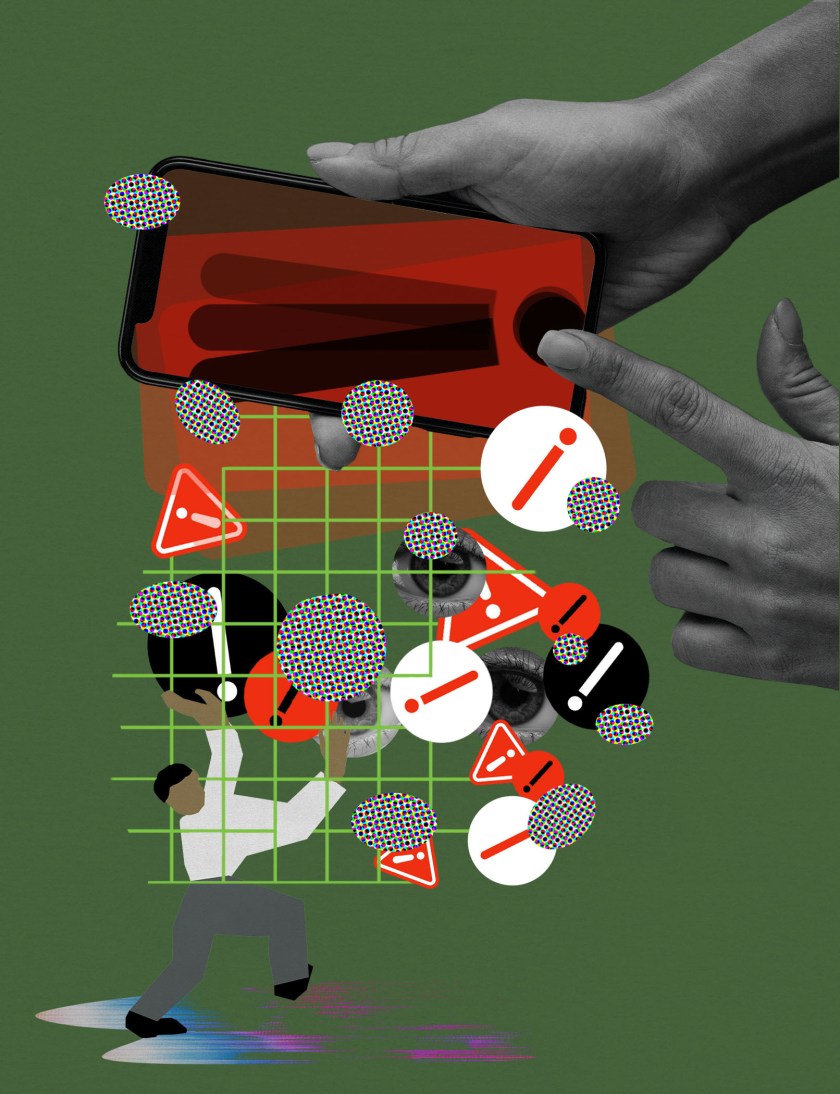
These apps have had genuine successes: They’ve prevented suicide attempts, intercepted predators, averted school shootings. But they can also cause harm themselves. To get a read on how digital surveillance affects young people, I scraped more than 600,000 reviews of the leading apps and talked to kids, parents, and people who were monitored as children and are now grown. Some kids were grateful for their parents’ protection. Others described false alarms that got them punished, secrets revealed before they were ready, breakdowns of trust, and anxiety they carried into adulthood. (To protect their privacy, we’re not using their full names.)
FRANZISKA BARCZYK

None of this is easily fixed. But child-safety researchers and advocates say better approaches exist. One is to make the platforms themselves safer, forcing social media companies to build guardrails instead of leaving families to find their own. This “duty of care” approach is now advancing in the UK, Australia, and a number of US states. Another is to spend less effort watching kids and more effort helping them recognize risk, cope with it, and turn to a trusted adult when something goes wrong. This approach is called resilience.

Wisniewski and others are developing tools that don’t aggressively monitor kids but train them in resilience and build trust with parents. “If we define safety as the absence of risk, the way you keep them safe is by keeping them off the platforms entirely,” she says. “But if we define safety as the ability to protect oneself and engage without engaging a risk, the solutions look very different.” It is the difference between abstinence lectures and sex ed.


Content-monitoring apps typically involve two pieces of software—one on the child’s device, one on the parent’s. A parent installs the kid-side app, connects the kid’s accounts, and chooses what to surveil: messages, social apps, browsing, location, screen time. The kid-side software forwards activity to the company’s algorithmic classifiers, which scan for content related to sex, drugs, bullying, and self-harm, among other categories, and push alerts to a parent-facing dashboard. The same type of software can be loaded into school-issued accounts and devices. 

Sometimes the safety net works. Titania Jordan, Bark’s chief marketing officer, told me the FBI has thanked the company on multiple occasions for bringing credible school-shooting threats to its attention. “I hate that we have to exist,” she says. “But I’m so thankful that we do.” According to Bark’s annual report, its classifiers alerted hundreds of thousands of families to severe self-harm risks in 2025. Gaggle, a school-monitoring competitor, makes a similar claim in its own annual report, crediting its software with saving over 1,000 lives in the 2024–’25 school year. 

Nearly one in five kids noted feeling watched or stripped of privacy. About one in 10 said monitoring broke their trust in their parents; one in 12 described anxiety or distress.

Real-world efficacy across the market is harder to measure, though there are hundreds of anecdotes in the reviews—predominantly about how location-sharing apps like Life360 have helped parents find lost kids. Dozens of reviewers also praise content-monitoring apps for averting major crises like potential suicide or self-harm. Of the reviews I scraped (reviews, it’s worth noting, represent a self-­selected sample that’s skewed toward strong feelings), over 200,000 had some indication of whether they were written by a parent or a kid. Parents liked whatever worked. On average, screen-time limiters and location trackers drew four- or five-star reviews 74% to 78% of the time. OS-level controls and content-scanning apps fared worse (44% and 48% positive reviews, respectively), with parents’ top grievance being that the apps were unreliable: They disconnected, missed genuinely troubling content, and raised alarms over nothing.

The kids being watched had different concerns. Of the reviews I could attribute to either a parent or a kid, about 14,000 came from kids being monitored now or from adults looking back at being monitored in their youth. Roughly one in seven were, on balance, grateful. (Gavin, a teen I messaged with, said that monitoring “taught me self-accountability and integrity.”) But nearly one in five noted feeling watched or stripped of privacy. About one in 10 said it broke their trust in their parents; one in 12 described anxiety or distress. That’s not surprising, given that child-development experts have long said testing boundaries and building autonomy are what adolescence is for. A 2019 meta-analysis in the European Journal of Developmental Psychology, which pooled 31 long-term studies on how parent-child communication changes, found that children naturally disclose less to their parents as they age—the work of building an independent self.

Making matters harder for kids, a lot gets caught in the dragnet unnecessarily. S., an 11-year-old on the autism spectrum, recalls messaging her best friend at school about whether a service dog might help with her meltdowns or keep her from harming herself. The school used Bark, which alerted the principal, S.’s parents, and her friend’s parents, citing content involving “self-harm.” Perhaps frightened by the alert, the friend’s parents cut off contact between the girls. “My first thought was, why?” S. told me. “It’s not like I’m hiding anything. But I’d rather people who weren’t in the situation not see it.” Over a year later, the girls still don’t speak.

.cst-large,
.cst-default {
width: 100%;
}

@media (max-width: 767px) {
.cst-block {
overflow-x: hidden;
}
}

@media (min-width: 630px) {
.cst-large {
margin-left: -25%;
width: 150%;
}

@media (min-width: 960px) {
.cst-large {
margin-left: -16.666666666666664%;
width: 140.26%;
}
}

@media (min-width: 1312px) {
.cst-large {
width: 145.13%;
}
}
}

Need help?
  • If you or someone you know is struggling with mental health or may be at risk of suicide or self-harm, call or text 988 to connect to a counselor at the suicide and crisis lifeline.
  • Adults seeking guides and advice for managing kids’ use of tech and social media and navigating parental control features can check out commonsensemedia.org.

.inline-square-list {
list-style: none;
padding: 0;
margin: 0;
}
.inline-square-list li {
display: inline;
margin-right: 20px;
font: 16px/1.6 ‘NeueHaas’, Helvetica, Arial, sans-serif;
}
.inline-square-list li::before {
content: “25A0”; /* Unicode small black square */
margin-right: 8px;
color: #333; /* Optional: Change bullet color */
}

While apps aren’t in charge of parents’ reactions, false flags do seem to be more the rule than the exception. “Ninety-nine percent of the alerts are garbage,” says Grant Callaghan, an Australian dad who tried several monitoring apps with his 13-year-old son before deciding to build his own. “It flagged two kids calling a third one annoying as bullying. It flagged a kid complaining of a headache as ‘medically concerning content.’” When I ran Bark on a test phone set up as a 10-year-old’s, it manufactured a grooming scenario out of a random password I saved in the Notes app. 

Bark’s Jordan doesn’t dispute that false alarms happen, volunteering an example of a soccer player whose photo of a net-scraped wrist was marked as potential self-harm. She says that over-flagging is safer than under-flagging, though: “You’d rather know that than not know that.” In a 2021 study with Bark, CDC researchers found that students who tripped multiple risk flags were far likelier to trigger an alert for severe self-harm later—indicating that flags aren’t necessarily noise.

Another problem is that Bark and similar monitoring apps surface things kids may not be ready to share. In a national survey by the Center for Democracy and Technology, nearly a third of LGBTQ+ students said they or someone they knew had been outed by school monitoring software. Jordan said Bark does not flag sexual orientation, but discussions about it could be captured when it screens chats for sexual content. Again, what adults do with such alerts, she added, is beyond any app’s control. “If a parent responds to a child’s identity with rejection,” she told me, “that is a parenting failure, not a child safety feature working as intended.”

Damage caused by monitoring tools can follow kids into adulthood. One in eight reviews left by adults looking back on their years of being monitored describes lasting harm. Only one of the people I contacted agreed to go on the record at all, the others citing privacy worries and anxiety that continues to haunt them. 

“There’s so many ways for teens to get around [controls]. And at the end of the day, the biggest thing that most of these apps are telling kids is that we don’t trust you.”

Pam Wisniewski

That woman, M., is now 19. She got her first smartphone at 13 and says her mother installed a monitoring app before handing it over. Though she’d been abused from a young age, the first serious beating, M. tells me, came shortly after she texted a friend about her depression. “She didn’t want me to be able to talk to people about the things that she was doing to me,” M. speculates. She eventually got a secret second phone and ultimately ended contact with her mother. Today, M. won’t let even her fiancé touch her phone. “I have been watched my whole life,” she says. “I deserve this sense of privacy.” 

M.’s case represents the extreme end of a spectrum: an app enabling abusive behavior. But it could reflect a broader issue, particularly with tools downloaded outside official app stores—aka, ones that are sideloaded. A 2025 audit led by researchers at St. Pölten University of Applied Sciences and University College London found that nearly half the sideloaded monitoring apps they looked at are functionally indistinguishable from stalkerware. 

Above all else, it’s not clear how well these apps fulfill their core promise of keeping kids safer. No commercial monitoring app has produced a controlled trial that I was able to find showing that it reduces harm. 

Kids swap tips online on how to bypass the surveillance. About 7% of the app reviews left by children describe a concrete workaround. “If you red-team them at all,” Wisniewski says, “there’s so many ways for teens to get around them. And at the end of the day, the biggest thing that most of these apps are telling kids is that we don’t trust you.” In a 2018 survey, her team found that use of parental controls was associated with an increase in the online risk kids encountered, including exposure to harassment. Causality, though, is hard to pin down, because monitoring may follow trouble rather than cause it. 

Risks may also migrate out of view, as potential predators actively seek out unmonitored spaces. According to Bark’s 2025 annual report, alerts about predators and grooming behavior have fallen in recent years as conversations move into blind spots. Thorn, a child-safety nonprofit, has found that offenders routinely direct targets onto encrypted apps like WhatsApp and Telegram. After Meta encrypted Messenger by default, the number of reports reaching the National Center for Missing & Exploited Children dropped nearly 20% in a year—a trend the center attributed to lost visibility. Parents can block access to such spaces, but tech-­fluent kids can slip around that through browser versions, borrowed phones, or secret accounts. 

.cst-large,
.cst-default {
width: 100%;
}

@media (max-width: 767px) {
.cst-block {
overflow-x: hidden;
}
}

@media (min-width: 630px) {
.cst-large {
margin-left: -25%;
width: 150%;
}

@media (min-width: 960px) {
.cst-large {
margin-left: -16.666666666666664%;
width: 140.26%;
}
}

@media (min-width: 1312px) {
.cst-large {
width: 145.13%;
}
}
}


Ban or Bust
Blocking kids’ access to social media isn’t a guaranteed fix. By Corinne Iozzio

Social media bans are booming. As of this past summer, seven countries restricted kids’ access to platforms like Snapchat and TikTok; three were implementing bans soon; and 16 had proposals winding their way into law.

Researchers, though, are urging policymakers to slow down until there’s good data on whether bans work and what they mean for kids’ well-being, safety, and privacy.

Early signs in Australia, which rolled out the world’s first ban for anyone under 16 in December, aren’t great: Initial surveys indicate that only about one-third of kids are off their accounts. More data is incoming, but even the idea behind bans—that skipping social media helps mental health—is not well substantiated, according to a 2025 meta-analysis. “The evidence rates around how a social media ban would work in practice and what results that might lead to is weak,” says Amy Orben, a University of Cambridge psychologist who’s co-leading a UK study on how teens fare under such restrictions.

One thing that seems certain? If you ban it, the workarounds will come. Beyond obvious cheats like using an older person’s account or ID, kids are finding plenty of ways to stay logged in. In particular, they’ve found that age-estimating facial scans like those used by Meta and Snapchat are easy to outwit.


Straight-up lying

Kids in Australia have entered birthdays indicating that they’re older and made it past facial scans designed to double-check.


Makeup

This low-power digital display, invented by Professor Joseph Jacobson, PhD ’93, in 1997, has made it possible for readers to access thousands of books on a single device.


Borrowed images

Teaching code has long been part of the Media Lab ethos. A worldwide community of millions builds games and stories with Scratch, and 1998’s Mindstorms helped bring digital creations into the real world.


VPNs

Though its ambition was stymied by logistical challenges, this 2005 effort to deliver sturdy and affordable computers to the developing world stands as an example of the lab’s founding principles.


Despite their flaws, content-­monitoring apps thrive because parents feel overwhelmed. There is no federal law in the US requiring platforms to design their products to be safe for users, and any safeguards that do exist have proved insufficient time and time again. In 2024 the Molly Rose Foundation (MRF), a suicide prevention nonprofit, analyzed 12 million moderation decisions related to suicide and self-harm that had been logged by six major social platforms. More than 95% came from just two of them: Pinterest and TikTok. Instagram and Facebook each accounted for 1% and X.com for even less—evidence, the researchers argue, not that they host less worrisome content but that they’re less inclined to moderate it. 

Meta’s Instagram Teen Accounts fared little better in MRF audits. Of the safety tools tested in a 2025 review coauthored by Arturo Béjar, a former Meta engineering director who designed many of the company’s antibullying tools in the mid-2010s, only 17% worked as advertised. Josh Golin, who runs the children’s advocacy group Fairplay, offers the simplest explanation for such failures: “Almost any change that’s going to make kids safer is going to mean less money.” Documents unsealed in lawsuits against Meta allege that the company weighed safety fixes against the engagement they would cost—and chose growth. 

Some groups are working to create more accountability. ParentsSOS is a coalition of families who have lost children to online harms. The group has been a driving force behind several state laws. In 2017, David’s Law made cyberbullying a crime in Texas, and Mississippi criminalized sextortion after 16-year-old Walker Montgomery died by suicide within hours of being targeted by a scammer posing as a teenage girl. 

The courts are moving too. Nearly 2,900 federal lawsuits by families and school districts are pending against social media platforms. And in March 2026, New Mexico became the first state to win its own child-safety case against Meta, netting a $375 million verdict. A newer wave of suits targets AI: The parents of 16-year-old Adam Raine are suing OpenAI, alleging that ChatGPT coached him toward suicide. And in January, Character.AI settled a wrongful-death suit brought by the mother of a 14-year-old who had formed an intense attachment to one of its chatbots before taking his life. 

FRANZISKA BARCZYK

ParentsSOS members have also been instrumental in advancing the Kids Online Safety Act in Congress. In its original form, the law would have imposed a duty of care on social media companies, meaning they’d have to design their features to mitigate harms to minors rather than to maximize engagement. They would also have to give kids tools to limit who can contact them. It overwhelmingly passed the Senate in 2024, but its chances of becoming law remain in flux. The House’s new rewrite—blessed by the tech industry—strips the duty-of-care provision. 

But even as they push to fill the regulatory void, parents who have faced tragedy don’t see monitoring tools as an answer. “You don’t pay extra for seat belts in the car, or airbags,” says ParentsSOS cofounder Maurine Molak, whose son David (of David’s Law) died by suicide in 2016 after months of cyberbullying. 


Other critics of monitoring tools say the real issue is with how they’re built. The systems, says Wisniewski, need to be reworked so they keep kids safe without violating the privacy and autonomy that adolescents require. The goal isn’t no monitoring or social apps, but better ones—and a principled way of preparing young people to handle risk while also promoting trust between them and their parents. 

Wisniewski’s resilience-based approach focuses on developing three pillars: self-regulation to help kids decide what healthy use looks like, risk coping to teach them what to do when something bad happens, and a support system of trusted adults and peers to turn to. She didn’t invent the idea of resilience; the finding that children grow stronger through manageable exposure to adversity has anchored developmental psychology since the 1970s. Sonia Livingstone, who has studied children’s online lives at the London School of Economics for over two decades, has amassed evidence from 33 countries that online risk and opportunity are inseparable, and that children shielded from every risk never get the practice to handle any. 

A growing body of research indicates that inculcating resilience works in practice. In 2024, development economists at Hiroshima and Hitotsubashi Universities published a randomized trial of a digital-safety curriculum that was taught to junior high students in Vietnam. Across four modules, students learned how scammers and groomers operate, how to protect themselves, and how to find help. When tested a month later, only about 15% of those who’d taken the training engaged in risky online activity, compared with 50% to 60% of the control group. Similarly, Wisniewski’s own research suggests that teens high in resilience, exposed to the same risks as everyone else, show less negative impact from that exposure.

The systems need to be reworked so they keep kids safe without violating the privacy and autonomy adolescents require. The goal isn’t no apps, but better ones.

Her contribution is pushing resilience into technology itself. Her research group, the Socio-Technical Interaction Research Lab, has developed alternatives to the current crop of apps, though it’s never commercialized them. An app called Circle of Trust monitors teens’ messages but shows them the same dashboard a parent sees, and it lets each pair work out a set of trusted contacts whose chats the teen can keep private. When 17 parent-kid pairs tested it in 2020, most rated it as more useful and less corrosive of trust than a stricter app. 

Her focus now is less a product than a method. Through a program called Teenovate, she trains teenagers as research apprentices and co-creators of their own safety tools. Since 2019, more than 85 teens have worked on prototypes and safety features dealing with cyberbullying, sexting, and privacy. They developed the prototype app MOSafely, which reports potential harms to kids directly, so they can review alerts and decide when to involve their parents. The end goal of Teenovate is to fashion evidence-­based design patterns that tech platforms can leverage—though none have adopted them yet. 

To be fair, some existing apps do factor in kids’ privacy and agency. Aura, a Bark competitor, shows parents a weekly well-being score built from sleep, usage, and engagement patterns. The app holds back most of the content but sends parents the self-harm alerts along with guidance on how to navigate a conversation. Jordan told me that Bark continues to consider whether it should show alerts to kids alongside the flags it sends parents, but at this point, she says, the best use of the app involves open dialogue within the family from installation through alert. 

Some parents are even building their own solutions. Frustrated by available offerings, Callaghan, the Australian dad, created a web-based tool called Joey Family. The idea is not to catch his son doing something wrong but to answer a simple question: “Is he happy?” He wanted to know if his kid was lonely, whether he sent more messages than he got back. The data opened conversations. “The people I’m trying to help are people like me who want to have that relationship with their kids,” Callaghan told me. “They want to be guides and learners.”

If anything is fundamental, it’s the relationship: Online safety efforts work best when anchored by a young person’s trust in someone else. For kids whose homes aren’t safe—like M., or Wisniewski when she was young—that someone can even be an online community. “There are so many ways where we can find real community online,” says Caitlyn Vergara, a child-safety researcher at Harvard who studies youth mental health. “Especially for youth of color coming from majority-white spaces, it is a legitimate way to find community when community is not tangible around you.” Walling off kids in the name of safety can isolate them, she says; the point is to make sure every kid has somewhere safe to belong.

The core tension is that families are being asked to solve at the kitchen table a problem engineered in boardrooms. Monitoring is one answer to that assignment, but while it might mitigate risks from outside the home, it can also damage the trust inside it. The best parents can do is refuse to become one more thing their kids have to hide from—and stop believing they should have to fix a dangerous situation alone. 

Kelly Clancy is a neuroscientist and writer based in New Hampshire. She’s also the author of Playing with Reality: How Games Have Shaped Our World

Shape
Shape
Stay Ahead

Explore More Insights

Stay ahead with more perspectives on cutting-edge power, infrastructure, energy,  bitcoin and AI solutions. Explore these articles to uncover strategies and insights shaping the future of industries.

Shape

Cerebras reimagines AI cluster design with switchless CS-4 architecture

Inside the Cerebras fabric, the trade-off is different. Direct Wafer Links are proprietary, so third-party accelerators cannot be added to the fabric. Scaling it requires additional Cerebras systems, Shah said. Faruqui said the operational divide may be more significant than the physical networking challenge. Existing orchestration environments are generally designed

Read More »

IBM moves closer to fault-tolerant quantum computing at scale

“This is our first shared ultra cold environment that allows multiple chips within to be connected together, and it really provides enough space for all the high-density wiring that’s needed,” explained IBM Fellow Jerry Chow, CTO, quantum-centric supercomputing, during a media briefing. “So we’re really starting to architect the entire

Read More »

Reports: Google partnering with AMD for next-gen hybrid TPU

For AMD, meanwhile, a role in Google’s next-generation TPU program would provide another indication that its CPU and chip-design technologies are becoming relevant to the rapidly expanding custom AI accelerator market. One analyst approved of the proposed alliance. “I think it makes good sense. AMD has more than proven that they’re

Read More »

Why 6 GHz Wi-Fi will make or break the modern enterprise

To date, 6 GHz Wi‑Fi deployments across enterprises remain in their early stages, with only a subset of organizations moving aggressively beyond Wi‑Fi 6 and legacy bands. Most corporate campuses, manufacturing plants, healthcare facilities, and retail environments continue to run primarily on 2.4 GHz and 5 GHz, even as their

Read More »

Energy Secretary Keeps Coal-Fired Generation Operational in the Midwest

WASHINGTON—U.S. Secretary of Energy Chris Wright issued an emergency order to address critical grid reliability issues in the Midwest. The emergency order directs the Midwest Independent System Operator (MISO), in coordination with Consumers Energy, to ensure that the 1,420-megawatt (MW) J.H. Campbell coal-fired power plant (Campbell Plant) in West Olive, Michigan is available to operate and to employ economic dispatch to minimize costs for American families and businesses. The Campbell Plant was originally scheduled to shut down on May 31, 2025, 15 years before the end of its scheduled design life. Since the U.S. Department of Energy’s (DOE) original order issued on May 23, 2205, the Campbell Plant has proven critical to MISO’s operations, operating regularly during periods of high energy demand and low levels of intermittent energy production. Subsequent orders were issued throughout 2025 and 2026. This order is in effect beginning on August 17, 2026, through November 14, 2026. “President Trump and the Energy Department remain committed to doing everything in our power to mitigate the possibility of power outages for American families and businesses,” Secretary Wright said. “Ensuring coal plants such as the Campbell Plant are available to operate during periods of high electricity demand saves lives. Americans deserve access to affordable, reliable, and secure electricity regardless of whether the wind is blowing or the sun is shining.” In January 2026, North American Electric Reliability Corporation (NERC) released its 2025 Long-Term Reliability Assessment. NERC assessed that the MISO region is at high risk of energy shortfalls over the next five years, stating that it faces significant reliability challenges as “projected resource additions do not keep pace with escalating demand forecasts and announced generator retirements.” NERC released its 2026 State of Reliability (SOR) on June 4, 2026. In its technical discussion of major system events, NERC states “shoulder reasons

Read More »

Hydrocarbons and Geothermal Energy Office Announces Up to $10.75 Million to Support University Training and Research for Subsurface Energy Development

WASHINGTON—The U.S. Department of Energy’s (DOE) Hydrocarbons and Geothermal Energy Office (HGEO) today announced up to $10.75 million in federal funding to support novel, early-stage research and development (R&D) projects at eligible U.S. colleges and universities. The funding opportunity is offered through HGEO’s University Training and Research (UTR) Program, which aims to train the next generation of engineers and scientists for careers in energy-related research to help ensure affordable, reliable, and secure energy for all Americans. “Continuing to increase domestic energy production from our vast coal, oil, gas, and geothermal resources requires a workforce of trained, qualified professionals to advance innovative subsurface energy technologies,” said DOE Acting Assistant Secretary of the Hydrocarbons and Geothermal Energy Office Curt Coccodrilli. “By investing in skills-based training that emphasizes industry-driven strategies, we will help meet the needs of our evolving energy economy while strengthening America’s energy leadership and independence.”  Funding awarded under this notice of funding opportunity (NOFO) is intended to increase R&D opportunities for students in science, technology, engineering and mathematics. Relevant academic disciplines include, but are not limited to engineering, chemistry, physics, mining, geosciences, computer science and education.  Selected projects will support one topic area—Innovative Research and Training for Subsurface Energy Production. This topic area seeks university-led R&D proposals focused on accelerating innovative energy technologies toward commercial viability while simultaneously developing a skilled workforce for the evolving energy sector. The topic area is split into three subtopics  focused on coal, oil and gas, and geothermal energy, respectively, ensuring that projects awarded through the UTR Program complement the R&D investments from HGEO’s Office of Subsurface Energy. Projects will address critical workforce skill gaps by integrating student participation directly into the R&D process and developing training modules that will have a lasting impact on student training beyond the awarded project. In addition, projects must include a non-academic partner to ensure research relevance

Read More »

Energy Department Modernizes National Laboratory Operations to Strengthen America’s Scientific, Energy, and National Security Missions

WASHINGTON—The U.S. Department of Energy (DOE) today announced updated operating directives for its National Laboratories, plants, and sites as part of a broader effort to modernize operations across DOE’s laboratory complex.  To advance President Trump’s commitment to Restoring Gold Standard Science, DOE is updating outdated and duplicative operating requirements to give its world-class scientific workforce more time to focus on critical science, energy, and national security missions. These reforms will improve efficiency, strengthen stewardship of taxpayer resources, and help DOE’s National Laboratories, plants, and sites operate with the speed, discipline, and agility their missions demand, while maintaining rigorous safety and security standards.  “America’s National Laboratories are among our nation’s greatest scientific assets and have powered generations of American discovery and innovation,” said U.S. Secretary of Energy Chris Wright. “President Trump has called on DOE to build on that legacy by restoring Gold Standard Science and unleashing the full potential of American ingenuity. By removing unnecessary barriers, we are giving our scientists, engineers, and technicians, more freedom to focus on the critical missions that matter most.” Working with laboratory leaders and subject matter experts, DOE reviewed a targeted set of directives governing day-to-day field operations. Its reforms build on more than three decades of recommendations from Congress, the Government Accountability Office, the National Academies, and other independent reviews that have identified unnecessary complexity in DOE’s directives framework.  DOE is acting on these longstanding recommendations while preserving strong oversight, accountability, and operational excellence—including strong protections for DOE workers, the public, the environment, and the Nation’s nuclear security enterprise.   DOE’s National Laboratories, plants, and sites carry out some of the nation’s most consequential scientific, engineering, and national security missions. Today’s action better aligns their operations with the pace and complexity of today’s missions, giving its scientific workforce more time to develop technologies, strengthen American

Read More »

Energy Secretary Announces Cancellation of Three Proposed National Interest Electric Transmission Corridors

WASHINGTON—U.S. Secretary of Energy Chris Wright today announced that the U.S. Department of Energy (DOE) will not move forward with designating the three proposed National Interest Electric Transmission Corridors (NIETCs) previously selected in December 2024 to advance in the review process. “Extensive review, including public feedback and stakeholder input, made clear that the current designation process for these three proposed transmission corridors should not continue,” said Secretary Wright. “Transmission policy must serve the American people—not special interests or a climate-alarmist agenda that drives up costs, worsens reliability, and disregards the concerns of local communities. The Trump Administration is committed to strengthening America’s electric grid with common-sense policies that prioritize delivering affordable, reliable, and secure electricity to American families and businesses.” The previous administration touted the Lake Erie–Canada Corridor, the Southwestern Grid Connector Corridor, and the Tribal Energy Access Corridor, as a means to advance their Green New Scam agenda and “accelerate decarbonization.” As the process unfolded, the current designation framework proved ineffective in strengthening grid reliability and reducing electricity costs. In some communities, it also contributed to confusion and concern about the scope and intent of NIETC authority. Thanks to President Trump and Secretary Wright, DOE has already taken numerous steps to build new transmission infrastructure and modernize existing infrastructure, including: In October 2025, DOE’s Office of Energy Dominance Financing (EDF) closed a $1.6 billion loan guarantee to AEP Transmission to reconductor and rebuild nearly 5,000 miles of transmission lines across five states.  In February 2026, DOE’s Office of Energy Dominance Financing (EDF) closed $26.5 billion in loans to Southern Company subsidiaries Georgia power and Alabama Power to support generation and grid investments, including more than 1,300 miles of transmission and grid enhancement projects.  In March 2026, DOE’s Office of Electricity (OE) announced the $1.9 billion SPARK funding opportunity to

Read More »

Permian Resources lifts forecast on working interest gains, acquisitions

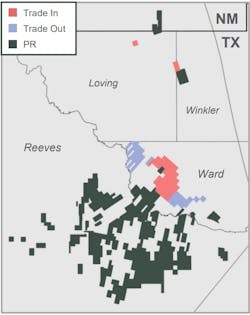
@import url(‘https://fonts.googleapis.com/css2?family=Inter:wght@100..900&display=swap’); .ebm-page__main h1, .ebm-page__main h2, .ebm-page__main h3, .ebm-page__main h4, .ebm-page__main h5, .ebm-page__main h6 { font-family: Inter; } body { line-height: 150%; letter-spacing: 0.025em; } button, .ebm-button-wrapper { font-family: Inter; } .label-style { text-transform: uppercase; color: var(–color-grey); font-weight: 600; font-size: 0.75rem; } .caption-style { font-size: 0.75rem; opacity: .6; } #onetrust-pc-sdk [id*=btn-handler], #onetrust-pc-sdk [class*=btn-handler] { background-color: #c19a06 !important; border-color: #c19a06 !important; } #onetrust-policy a, #onetrust-pc-sdk a, #ot-pc-content a { color: #c19a06 !important; } #onetrust-consent-sdk #onetrust-pc-sdk .ot-active-menu { border-color: #c19a06 !important; } #onetrust-consent-sdk #onetrust-accept-btn-handler, #onetrust-banner-sdk #onetrust-reject-all-handler, #onetrust-consent-sdk #onetrust-pc-btn-handler.cookie-setting-link { background-color: #c19a06 !important; border-color: #c19a06 !important; } #onetrust-consent-sdk .onetrust-pc-btn-handler { color: #c19a06 !important; border-color: #c19a06 !important; } The leaders of Permian Resources Corp., Midland, have lifted their production and capital spending forecasts for 2026 after recently closing on a $520 million acquisition, exercising an option for a 5,600-acre bolt-on buy and growing its working interest in completed wells more than expected. Permian Resources on July 31 closed on the purchase of about 20,500 acres in the Delaware basin’s Ward County that are largely non-operated and produce about 5,000 boe/d. The land sits adjacent to Permian property but James Walter, co-chief executive officer, told analysts on Aug. 6 that his team have since struck a deal with another operator that will trade some of the acquired bolt-on parcels as well as other acreage with goals of densifying Permian Resources’ holdings and lowering the share of acres that are non-operated or have low working interest. Permian Resources Corp. Permian Resources’ trade in Ward County with another operator is expected to close later this quarter. <!–> ]–> “The trade also increases the number of operating net locations from 50 to 120 while increasing the average lateral length by 20%,” Hickey said. “We view this trade as a true win-win for [Permian Resources] and our counterparty, who

Read More »

Canada rig count down 3 units

The rig count in Canada fell by 3 units to 216 rigs working for the week ended Aug. 7, according to data from Baker Hughes. A 4-rig drop in oil-directed rigs in Canada was partially offset by a 2-unit gain in gas-directed rigs. There were 146 oil-directed rigs working in Canada this week, while those drilling for gas ended the week at 65 units working. The overall US drilling rig count was unchanged this week at 588 rigs working. That number is up 49 units from this time last year. In the US, 3 additional rigs were drilling for oil, bringing the total count to 454. That number is up 43 units from this time last year. The number of gas-directed rigs fell by 3 to 124 working for the week. This time last year, 123 rigs were drilling for gas in the US. There were 572 rigs drilling on US land this week, unchanged from last week and up 48 from the year-ago period. A 1-rig increase in offshore rigs offset a 1-unit decrease in rigs drilling in inland waters. There were 14 rigs drilling offshore and 2 in inland waters this week. Leading the major oil-and gas-producing states was Texas with a 2-unit gain to end the week with 275 rigs working. The count is up 32 units from this time in 2025. Pennsylvania and Wyoming each dropped a rig to bring the respective rig counts to 16 and 15 for the week.

Read More »

Texas Tightens Oversight of Data Center Development

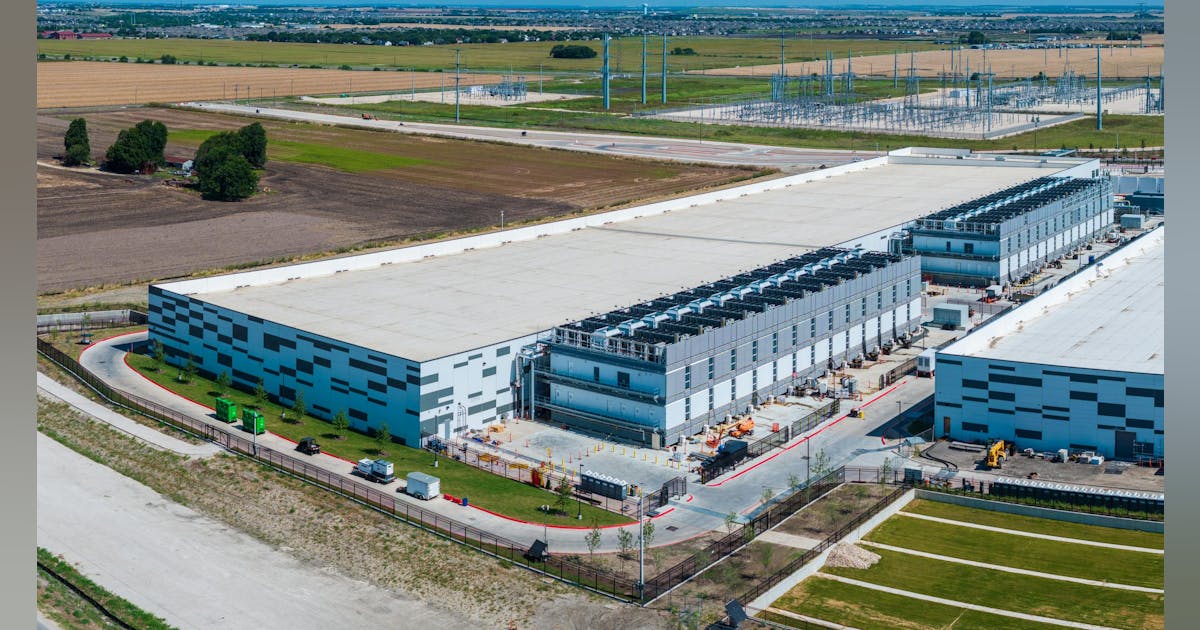
Texas has spent the past decade building one of the most data center-friendly policy environments in the United States. But the state’s political posture is tightening. The emerging message from Austin is that continued data center growth will face greater scrutiny over grid costs, water use, tax incentives and community impacts. What is interesting about this policy conversation is that the Texas Legislature is not in regular session. The 89th regular session ended June 2, 2025, and the 90th Legislature does not convene until January 12, 2027. What has occurred instead is a concentrated period of interim committee work, gubernatorial recommendations, implementation of Senate Bill 6, calls for a special session, and regulatory action by the Public Utility Commission of Texas and the Electric Reliability Council of Texas. Together, those efforts are creating the framework for a broader legislative debate in 2027 while already affecting projects seeking ERCOT interconnection, infrastructure costs and site-selection decisions. Abbott Sets Out a New Policy Framework The policy shift accelerated June 10, when Gov. Greg Abbott directed the PUCT to require data centers to fully fund the electric infrastructure needed to serve their operations and directed PUCT and ERCOT to identify additional actions available under existing authority. Separately, Abbott pledged to work with lawmakers in 2027 on legislation requiring data centers to add electric capacity, use water-efficient cooling systems, report electricity and water use, phase out outdated tax incentives and adopt additional protections for neighboring communities. The most consequential shift began June 10, when Gov. Greg Abbott sent state electricity regulators a sweeping list of data center policy priorities. Abbott called for future legislation requiring new facilities to add generation to the Texas grid, pay the full cost of their interconnection and related infrastructure, use closed-loop or similarly water-efficient cooling systems, and file annual reports

Read More »

NVIDIA Pushes the AI Factory From Rack to Asset Class

Making Compute Underwritable Huang expanded the argument a day later in an NVIDIA blog describing AI factory compute as an emerging investable asset class. NVIDIA’s case begins with a definition. The company does not describe its compute platform simply as a GPU. It includes accelerated computing, networking, systems software, AI frameworks and the CUDA software ecosystem surrounding the hardware. That wider platform matters to the financing thesis because NVIDIA argues it increases the number of potential users for an installed AI system. An NVIDIA DSX AI factory could support language models, vision, speech, biological computing, robotics, physical AI and other workloads. The same infrastructure could potentially move among customers, clouds or operators as demand changes. In financial terms, NVIDIA is arguing for fungibility. That could become particularly important to lenders and infrastructure investors trying to determine what happens if an original customer disappears, a contract expires or the economics of a particular workload change. A GPU cluster tied economically to one speculative tenant is one thing. Compute that can be redeployed across a large global market of clouds, enterprises, AI developers and model providers is a different risk proposition. NVIDIA contends that this breadth of potential offtakers helps protect residual value. Whether institutional markets ultimately price that risk the way NVIDIA hopes remains to be seen. But the company is now explicitly trying to establish a financial framework around that premise. Challenging the Traditional Depreciation Curve NVIDIA’s second argument is that software can extend the economic life of installed hardware. CUDA is central to that case. The company maintains that successive software improvements can increase the performance and efficiency of systems that have already been deployed, allowing the same hardware to produce more useful work at lower cost over time. That does not eliminate hardware obsolescence. New GPU generations continue

Read More »

The Next Data Center Constraint: Trust

When Facts Aren’t Enough Few places offer a more revealing test case than Loudoun County, Virginia. Data Center Alley has spent decades living with data center development at a scale most emerging markets will never approach. Rizer said Loudoun’s experience gives the county an unusually deep record with which to answer questions about environmental impacts, infrastructure and economic benefits. But those facts increasingly struggle to penetrate the broader public debate. Rizer said Loudoun today has more than 250 data centers, while the entire sector uses less than 10% of the county water system. He also pointed to improved air quality over the past decade and approximately $1.2 billion in tax revenue from the industry. Yet he acknowledged that simply producing another data point does little good when residents no longer trust the people presenting it. “I call it community concern whack-a-mole, because every time you address one thing, there are three others that pop up,” Rizer said. The problem, in his view, has become partly emotional rather than informational. “You can’t change how people think until you change how they feel,” he said. “And right now they feel angry, they feel confused, they are fearful, they are mistrustful, both of government and the big tech industry.” That distinction matters. The industry’s instinct has often been to counter criticism with facts: tax receipts, job numbers, water-use calculations, emissions data or explanations of how a particular cooling system works. Those facts remain important. But Rizer’s argument is that the industry must first rebuild enough credibility for communities to hear them. The Industry’s Unforced Errors Not all of the distrust has arrived from outside the industry. Rizer and Waitkunas were equally pointed about mistakes by developers and operators that have given opponents powerful examples to use against data center projects elsewhere. “The industry

Read More »

Reports: Data Center Expansion Finds Its Contours

AI Density Is Arriving Unevenly Inside the data center, the AI transition remains equally uneven. Uptime’s 2026 survey found the average modal, or most common, rack density across respondents exceeding 11 kW for the first time, up from 9 kW in 2025. But that number requires context. A relatively small group of very high-density facilities pulls the average upward. Without those facilities, Uptime puts average modal rack density at 7.8 kW, only modestly higher than 7.5 kW in 2025. The industry therefore continues to operate two realities at once: a vast installed base running conventional rack densities and a rapidly emerging class of AI facilities pushing far beyond them. The latter is becoming more visible. Some 24% of Uptime respondents now report racks at 30 kW or higher, up from 19% last year. Much of the increase occurred above 50 kW, and some operators reported deployments exceeding 100 kW. Still, most surveyed facilities have no racks at 30 kW or above. AI inference is also moving up the density curve. For the first time in Uptime’s survey, generative AI inference matched AI training as a driver of respondents’ highest-density deployments, with 21% citing each workload. That matters because inference potentially pushes AI infrastructure requirements beyond a relatively concentrated population of model-training campuses and into a broader set of facilities and markets. Power Is Both Constraint and Risk No issue connects the three reports more consistently than power. It limits new site availability. It redirects development toward emerging markets. It shapes community debates. It affects density and cooling architecture. And once a facility is operating, it remains the largest source of outage risk. Uptime says 56% of operators who experienced an impactful outage identified power as the primary cause of their most recent incident. The institute cautions against treating the increase

Read More »

DCF Poll: What Will Constrain Data Center Growth Next?

Matt Vincent is Editor in Chief of Data Center Frontier, where he leads editorial strategy and coverage focused on the infrastructure powering cloud computing, artificial intelligence, and the digital economy. A veteran B2B technology journalist with more than two decades of experience, Vincent specializes in the intersection of data centers, power, cooling, and emerging AI-era infrastructure. Since assuming the EIC role in 2023, he has helped guide Data Center Frontier’s coverage of the industry’s transition into the gigawatt-scale AI era, with a focus on hyperscale development, behind-the-meter power strategies, liquid cooling architectures, and the evolving energy demands of high-density compute, while working closely with the Digital Infrastructure Group at Endeavor Business Media to expand the brand’s analytical and multimedia footprint. Vincent also hosts The Data Center Frontier Show podcast, where he interviews industry leaders across hyperscale, colocation, utilities, and the data center supply chain to examine the technologies and business models reshaping digital infrastructure. Since its inception he serves as Head of Content for the Data Center Frontier Trends Summit. Before becoming Editor in Chief, he served in multiple senior editorial roles across Endeavor Business Media’s digital infrastructure portfolio, with coverage spanning data centers and hyperscale infrastructure, structured cabling and networking, telecom and datacom, IP physical security, and wireless and Pro AV markets. He began his career in 2005 within PennWell’s Advanced Technology Division and later held senior editorial positions supporting brands such as Cabling Installation & Maintenance, Lightwave Online, Broadband Technology Report, and Smart Buildings Technology. Vincent is a frequent moderator, interviewer, and keynote speaker at industry events including the HPC Forum, where he delivers forward-looking analysis on how AI and high-performance computing are reshaping digital infrastructure. He graduated with honors from Indiana University Bloomington with a B.A. in English Literature and Creative Writing and lives in southern New Hampshire with

Read More »

Is your networking built for AI’s traffic patterns and data volumes?

As data centers evolve into AI factories, compute has shifted from a cost center to a revenue driver. “Compute is revenue,” said Jensen Huang, co-founder and CEO of NVIDIA. “Without compute, there is no way to generate tokens. Without tokens, there’s no way to generate revenue. So, in this new world of AI, compute equals revenue.” This reframe changes an organizations’ calculus. If compute is revenue, what do you optimize for? Here are 5 questions to consider: Are you measuring what actually drives AI factory revenue? Most AI factories are power-constrained, so tokens per watt dictate how much revenue you can generate and the cost per token impacts the AI factory profit margin. But neither of these metrics should be evaluated at a single operating point. Batch jobs, real-time chat, and agentic workloads demand different points on the throughput-latency curve. AI chips that perform well at only a few points will underserve the full range of workloads. Additional key operational metrics like time to first token (TTFT), mean time between interruptions (MTBI), and platform useful life are the bedrock of AI factory efficiency. They dictate how quickly an AI factory comes online to generate tokens, the reliability of its revenue streams, and its long-term ability to remain productive as AI workloads evolve. How does agentic AI change what your CPU needs to deliver? Data center CPUs have historically been optimized for parallel throughput, where more cores improve aggregate capacity.  Agentic workloads run in loops and make different demands. The model reasons on the GPU, the CPU executes tool calls such as code compilation and data retrieval, and the result returns to the GPU so the model can reason again. Every step runs in sequence, gated by the one before it. Per-core performance and memory latency determine how fast each step

Read More »

Microsoft will invest $80B in AI data centers in fiscal 2025

And Microsoft isn’t the only one that is ramping up its investments into AI-enabled data centers. Rival cloud service providers are all investing in either upgrading or opening new data centers to capture a larger chunk of business from developers and users of large language models (LLMs).  In a report published in October 2024, Bloomberg Intelligence estimated that demand for generative AI would push Microsoft, AWS, Google, Oracle, Meta, and Apple would between them devote $200 billion to capex in 2025, up from $110 billion in 2023. Microsoft is one of the biggest spenders, followed closely by Google and AWS, Bloomberg Intelligence said. Its estimate of Microsoft’s capital spending on AI, at $62.4 billion for calendar 2025, is lower than Smith’s claim that the company will invest $80 billion in the fiscal year to June 30, 2025. Both figures, though, are way higher than Microsoft’s 2020 capital expenditure of “just” $17.6 billion. The majority of the increased spending is tied to cloud services and the expansion of AI infrastructure needed to provide compute capacity for OpenAI workloads. Separately, last October Amazon CEO Andy Jassy said his company planned total capex spend of $75 billion in 2024 and even more in 2025, with much of it going to AWS, its cloud computing division.

Read More »

John Deere unveils more autonomous farm machines to address skill labor shortage

Join our daily and weekly newsletters for the latest updates and exclusive content on industry-leading AI coverage. Learn More Self-driving tractors might be the path to self-driving cars. John Deere has revealed a new line of autonomous machines and tech across agriculture, construction and commercial landscaping. The Moline, Illinois-based John Deere has been in business for 187 years, yet it’s been a regular as a non-tech company showing off technology at the big tech trade show in Las Vegas and is back at CES 2025 with more autonomous tractors and other vehicles. This is not something we usually cover, but John Deere has a lot of data that is interesting in the big picture of tech. The message from the company is that there aren’t enough skilled farm laborers to do the work that its customers need. It’s been a challenge for most of the last two decades, said Jahmy Hindman, CTO at John Deere, in a briefing. Much of the tech will come this fall and after that. He noted that the average farmer in the U.S. is over 58 and works 12 to 18 hours a day to grow food for us. And he said the American Farm Bureau Federation estimates there are roughly 2.4 million farm jobs that need to be filled annually; and the agricultural work force continues to shrink. (This is my hint to the anti-immigration crowd). John Deere’s autonomous 9RX Tractor. Farmers can oversee it using an app. While each of these industries experiences their own set of challenges, a commonality across all is skilled labor availability. In construction, about 80% percent of contractors struggle to find skilled labor. And in commercial landscaping, 86% of landscaping business owners can’t find labor to fill open positions, he said. “They have to figure out how to do

Read More »

2025 playbook for enterprise AI success, from agents to evals

Join our daily and weekly newsletters for the latest updates and exclusive content on industry-leading AI coverage. Learn More 2025 is poised to be a pivotal year for enterprise AI. The past year has seen rapid innovation, and this year will see the same. This has made it more critical than ever to revisit your AI strategy to stay competitive and create value for your customers. From scaling AI agents to optimizing costs, here are the five critical areas enterprises should prioritize for their AI strategy this year. 1. Agents: the next generation of automation AI agents are no longer theoretical. In 2025, they’re indispensable tools for enterprises looking to streamline operations and enhance customer interactions. Unlike traditional software, agents powered by large language models (LLMs) can make nuanced decisions, navigate complex multi-step tasks, and integrate seamlessly with tools and APIs. At the start of 2024, agents were not ready for prime time, making frustrating mistakes like hallucinating URLs. They started getting better as frontier large language models themselves improved. “Let me put it this way,” said Sam Witteveen, cofounder of Red Dragon, a company that develops agents for companies, and that recently reviewed the 48 agents it built last year. “Interestingly, the ones that we built at the start of the year, a lot of those worked way better at the end of the year just because the models got better.” Witteveen shared this in the video podcast we filmed to discuss these five big trends in detail. Models are getting better and hallucinating less, and they’re also being trained to do agentic tasks. Another feature that the model providers are researching is a way to use the LLM as a judge, and as models get cheaper (something we’ll cover below), companies can use three or more models to

Read More »

OpenAI’s red teaming innovations define new essentials for security leaders in the AI era

Join our daily and weekly newsletters for the latest updates and exclusive content on industry-leading AI coverage. Learn More OpenAI has taken a more aggressive approach to red teaming than its AI competitors, demonstrating its security teams’ advanced capabilities in two areas: multi-step reinforcement and external red teaming. OpenAI recently released two papers that set a new competitive standard for improving the quality, reliability and safety of AI models in these two techniques and more. The first paper, “OpenAI’s Approach to External Red Teaming for AI Models and Systems,” reports that specialized teams outside the company have proven effective in uncovering vulnerabilities that might otherwise have made it into a released model because in-house testing techniques may have missed them. In the second paper, “Diverse and Effective Red Teaming with Auto-Generated Rewards and Multi-Step Reinforcement Learning,” OpenAI introduces an automated framework that relies on iterative reinforcement learning to generate a broad spectrum of novel, wide-ranging attacks. Going all-in on red teaming pays practical, competitive dividends It’s encouraging to see competitive intensity in red teaming growing among AI companies. When Anthropic released its AI red team guidelines in June of last year, it joined AI providers including Google, Microsoft, Nvidia, OpenAI, and even the U.S.’s National Institute of Standards and Technology (NIST), which all had released red teaming frameworks. Investing heavily in red teaming yields tangible benefits for security leaders in any organization. OpenAI’s paper on external red teaming provides a detailed analysis of how the company strives to create specialized external teams that include cybersecurity and subject matter experts. The goal is to see if knowledgeable external teams can defeat models’ security perimeters and find gaps in their security, biases and controls that prompt-based testing couldn’t find. What makes OpenAI’s recent papers noteworthy is how well they define using human-in-the-middle

Read More »