Stay Ahead, Stay ONMINE

Floating Data Centers Move Toward Infrastructure Scale

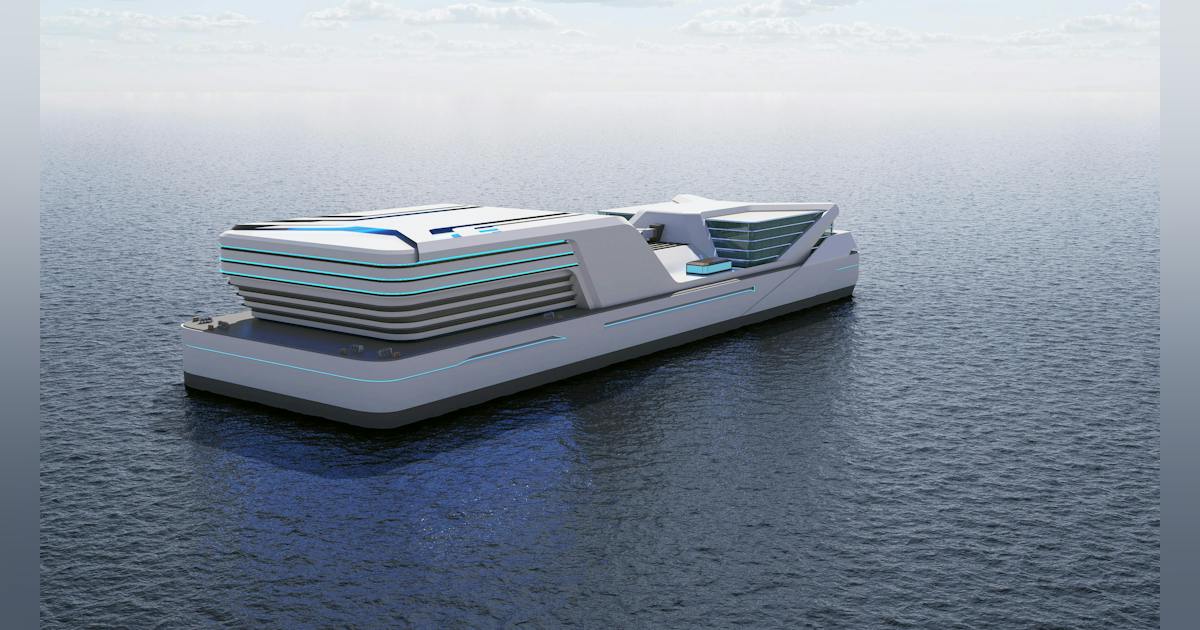
Rather than constructing the building sequentially on a conventional site, Samsung can fabricate the floating structure and integrate much of the electrical, mechanical and cooling infrastructure in a shipyard. Site work at the eventual mooring location can proceed simultaneously. This has the potential to compress one of the longest parts of the data center development […]

Rather than constructing the building sequentially on a conventional site, Samsung can fabricate the floating structure and integrate much of the electrical, mechanical and cooling infrastructure in a shipyard. Site work at the eventual mooring location can proceed simultaneously. This has the potential to compress one of the longest parts of the data center development schedule.

Modern shipyards already operate as enormous industrialized manufacturing environments capable of constructing highly complex LNG carriers, offshore production platforms and other structures containing power generation, electrical distribution, piping, controls and mechanical systems. Adding a floating data center effectively applies those capabilities to digital infrastructure.

Samsung and Mousterian describe the facility as being fabricated off-site to shipyard standards. Instead of pouring foundations and constructing a data center building around the infrastructure, the facility becomes a manufactured asset that can be transported to its operating location.

Samsung has also been building a broader development ecosystem around floating data centers. In June, the shipbuilder signed agreements with Greece-based Capital and Lloyd’s Register covering project development, investment sourcing and regulatory requirements, while LR Advisory is working with Samsung on North American market analysis, infrastructure assessments and commercial feasibility.

Samsung also entered a joint development project with Supermicro to validate AI server infrastructure for offshore conditions, where vibration, vessel inclination, salt-laden air and rapid humidity changes can affect equipment reliability and lifespan. Samsung says it will develop positioning-control and salt- and humidity-protection technologies while Supermicro conducts operational verification of AI server infrastructure in river and marine environments.

Unlocking Power That Data Centers Can’t Reach

Mousterian’s model also addresses perhaps the biggest constraint facing today’s data center industry: power. The facilities are intended to be positioned near existing generation and maritime infrastructure, allowing them to reach electrical capacity that may be difficult to serve through a conventional land-based development.

The companies specifically describe the opportunity as accessing stranded baseload generation. Developers normally search for land that can obtain sufficient utility service. Under the floating model, the data center can potentially be positioned directly beside the generation asset.

This can reduce dependence on transmission infrastructure and lengthy interconnection processes, although the actual electrical architecture will depend on the location and generation source.

The Ocean Becomes the Heat Sink

The other major proposed advantage is cooling. According to Samsung and Mousterian, the design uses bulk non-evaporative cooling, consumes no potable water and is designed to produce no process-water discharge into the surrounding waterway. It is also designed around high-density liquid-cooled AI infrastructure.

The distinction between using seawater as a heat sink and pumping seawater through servers is important. A practical floating facility can retain a closed internal cooling loop. Coolant absorbs heat from processors and other equipment and carries that thermal load to heat exchangers. A separate seawater-side system can then transfer that heat to the surrounding water.

That means developers can exploit the thermal capacity of the ocean without exposing sensitive IT equipment to corrosive saltwater. Removing evaporative cooling also eliminates one of the most controversial aspects of large data center development: freshwater consumption.

The companies also say the architecture is designed to reduce noise. Because the design eliminates much of the large air-cooled chiller and fan infrastructure associated with conventional heat rejection, Samsung and Mousterian expect the floating facility to have a substantially lower noise profile. 

That is not a trivial consideration as community resistance to data center noise becomes an increasingly prominent development issue.

Samsung Is Already Looking at 200 MW

Samsung’s ambitions extend considerably beyond the initial 50 MW platform. In August, the American Bureau of Shipping announced two milestones with Samsung Heavy Industries. ABS had already granted Approval in Principle to Samsung’s 50 MW design in May; the August agreement moves that design into formal review against applicable classification rules and International Maritime Organization (IMO) requirements while extending the concept to 200 MW. 

The 200 MW number changes the scale of the discussion. At that capacity, floating infrastructure is no longer an alternative primarily for edge computing or specialized workloads. It moves the discussion into hyperscale territory.

Classification is particularly important because floating data centers must satisfy engineering requirements that conventional facilities never encounter. Designers have to consider stability, hull integrity, corrosion, flooding, marine fire protection, wave loading, wind, structural fatigue, mooring loads and potentially vessel impact in addition to familiar data center concerns including electrical redundancy, fire suppression and cooling availability.

ABS’s involvement therefore represents a necessary bridge between maritime engineering and mission-critical data center design. An Approval in Principle does not mean a commercial 200 MW facility has been built or even that one is imminent. It means the classification society has reviewed the basic design concept and found no fundamental barrier preventing it from progressing toward detailed engineering. 

Seatrium Takes the Modular Route

Singapore-based Seatrium is pursuing a somewhat different architecture. On July 27, Bureau Veritas Marine & Offshore granted Approval in Principle to Seatrium Technology & Innovation’s 30 MW floating data center concept.

The design places six independent 5 MW Data-in-a-Box modules aboard a jetty-moored, non-propelled barge. Each module integrates IT hardware, cooling, electrical distribution and supporting infrastructure. This is fundamental modular data center construction transferred onto a marine platform.

Rather than designing the entire barge as one giant 30 MW data hall, Seatrium divides capacity into repeatable 5 MW building blocks, which in principle could provide several advantages:

·         Modules can be manufactured and commissioned separately.

·         Capacity can be added in increments.

·         IT generations can be refreshed without rebuilding the marine platform.

·         Problems affecting one module need not necessarily remove the entire 30 MW facility from service.

The architecture could prove particularly useful for AI infrastructure, where the useful life of GPU systems is substantially shorter than the useful life of the structures containing them.

Seatrium says the concept combines modular construction with natural seawater cooling and flexible offshore siting. Bureau Veritas’ review extended beyond the general concept. Its assessment covered the general arrangement of the facility, cooling process flow, preliminary stability calculations, marine systems and key safety considerations against BV rules, international standards and relevant regulatory requirements.

Seatrium is already looking beyond the initial platform. The company says it is developing a 100 MW floating data center concept based on the 30 MW reference architecture, preserving modular construction, seawater cooling and flexible siting while moving toward hyperscale capacity.

A Data Center That Generates Its Own Electricity

The Samsung and Seatrium concepts remain relatively recognizable as data centers. Mocean Energy’s Blue Core does not. The Scottish offshore renewable-energy developer is attempting to integrate the power plant and data center into a single autonomous marine system.

Mocean Energy’s Blue Core platform combines wave energy, offshore solar generation, battery storage, power electronics and AI server racks. There is no utility connection and no fossil-fuel backup in the proposed architecture, solving the grid-interconnection problem in the most direct way possible: eliminate the grid connection.

The technology builds on Mocean’s existing Blue Star offshore power platform. Several critical subsystems, including power conversion, mooring and controls, derive from technology the company has already tested at sea.

A central component is the wave-energy system. Mocean has developed patented hull geometry intended to amplify the mechanical movement produced by waves. The company says the geometry converts two to four times more wave energy into mechanical motion. That movement drives a direct-drive VHM (Vernier Hybrid Machine) generator, the platform’s wave-energy power-take-off system. The direct-drive architecture is intended to improve reliability and reduce maintenance by simplifying the conversion of mechanical movement into electricity.

Solar panels supplement the wave system, while batteries and internal power electronics balance production and compute demand. The resources are intended to complement one another: solar output disappears at night, wave energy can persist after dark, and batteries can smooth shorter variations between generation and compute demand.

Closed-Loop Cooling Without Drinking Water

Blue Core also incorporates closed-loop liquid cooling. Fluid removes heat from the chips and transfers it through heat exchangers to the ocean. Mocean emphasizes that the system consumes zero potable water. Like the Samsung project,  the surrounding ocean becomes the ultimate heat sink without requiring seawater to circulate through the IT equipment itself.

Mocean is also designing Blue Core around replaceability.  Units can be connected into farms, and farms can be aggregated into larger deployments. An individual unit can be removed for maintenance or a GPU refresh without taking the remaining farm offline. That looks like a server architecture at infrastructure scale: individual physical data center modules become replaceable components within a larger distributed computing system.

Communications are expected to use Starlink satellite connectivity, while catenary moorings use conventional offshore components. Mocean is also developing multi-device mooring and self-transit capabilities for later versions of the system.

The company currently lists a small-scale onboard AI compute demonstration for 2027, a reminder that Blue Core remains a development program rather than deployed commercial data center capacity.

The category has also begun attracting strategic capital from established technology companies. In August, South Korean internet and cloud company Naver disclosed an investment in Panthalassa, which is developing autonomous wave-powered AI compute platforms. The investment amount was not disclosed; Panthalassa is targeting demonstration deployments ahead of a planned 2027 commercialization push.

Atomarine Adds Nuclear Power to the Equation

Y Combinator-backed startup Atomarine is developing one of the most ambitious floating data center architectures yet proposed. Its design separates the compute platform from the power plant.

Each standardized compute barge is designed for approximately 75 MW to 100 MW. Multiple platforms can be moored together to create a campus, with Atomarine illustrating an architecture scaling toward approximately 450 MW. The compute barges would be constructed in centralized shipyards, towed to their deployment location and added incrementally as demand grows.

Atomarine argues that standardized shipyard production could sharply shorten deployment schedules and ultimately support roughly 1.5 GW of annual output per shipyard. Those remain company targets rather than demonstrated operating results.

Atomarine proposes seawater-based cooling and advertises a PUE below 1.1. Instead of integrating generation permanently into the compute platform, Atomarine proposes a separate power vessel moored beside the data center.

Initially, those vessels would use natural gas turbines. Eventually, Atomarine proposes replacing the gas power vessel with one containing compact marine nuclear reactors.

The data center infrastructure might have a 20- to 40-year service life while server generations and potentially power technologies change repeatedly. Separating compute from generation allows either side of the system to evolve without replacing the other.

A gas-fired power ship could theoretically be disconnected and replaced by a nuclear-powered vessel while the compute barges remain in place, building a model similar to plans for interim natural gas-powered solutions for traditional data center campuses.

Floating Nuclear Meets the AI Factory

Atomarine’s nuclear proposal also points toward a potentially important intersection between two emerging data center trends. Hyperscalers and developers are already investigating small modular reactors, advanced reactors and microreactors as potential sources of dedicated data center power.

The challenge is that terrestrial nuclear plants bring their own site-development, licensing and community issues. Marine nuclear power raises a different, and hardly trivial, set of regulatory, safety and security questions. But conceptually it could turn the power plant into another factory-manufactured modular component.

Atomarine’s first generation avoids waiting for that technology. Existing gas-turbine equipment would provide power while marine reactor technology matures. Atomarine’s Y Combinator materials target a first gas-powered pilot for 2028; the nuclear configuration sits further out.

The regulatory path is also beginning to take shape. In 2026, the Nuclear Regulatory Commission said existing Parts 50, 52 and 53 could be used to license maritime nuclear reactors and established new coordination frameworks with the U.S. Coast Guard and federal offshore regulators for civilian maritime nuclear projects. Those steps do not make commercial floating reactors imminent, but they move the concept from a regulatory blank slate toward an identifiable licensing framework.

The Floating Data Center Is Multiple Ideas

The recent announcements also demonstrate why ‘floating data center’ may already be too broad a description. At least three distinct architectures are emerging.

·         Near-shore floating hyperscale facilities are represented by Samsung/Mousterian and Seatrium. These resemble conventional data centers placed on marine platforms. Their principal advantages are industrialized shipyard construction, reduced land requirements, proximity to generation and seawater heat rejection.

·         Autonomous renewable compute nodes are represented by Mocean and our previously covered Panthalassa. These integrate renewable generation with IT and potentially rely on satellite communications rather than terrestrial utility and fiber infrastructure.

·         Offshore AI campuses with dedicated power vessels are represented by Atomarine, where large compute barges operate alongside separate generation vessels.

The Engineering Challenges Shouldn’t Be Underestimated

There are good reasons most data centers are still built on land. Saltwater is extraordinarily corrosive. Humidity must be tightly controlled. Marine structures experience continuous movement, wind loading and mechanical stress. Moorings must survive extreme weather. Heat exchangers exposed to seawater face fouling and corrosion.

Maintenance is another issue. Replacing a failed GPU in a terrestrial data center is relatively straightforward. Doing so miles offshore could involve specialized vessels, crews and weather windows.

The economics of subsea fiber, or the bandwidth and latency limitations of satellite connectivity, also vary dramatically depending on the workload and location.

Then there are environmental questions. The environmental impact of these projects would still need to be evaluated. Using receiving waters as a heat sink can reduce freshwater consumption, but developers would still have to evaluate site-specific thermal loading, intake systems and potential effects on aquatic ecosystems. Offshore facilities also face maritime permitting, navigation, coastal-use and potentially fisheries issues that don’t exist for inland campuses. And, of course, nuclear power would add an entirely different regulatory regime.

A floating AI factory still needs to deliver data center-class availability while operating in one of the harshest industrial environments on Earth.

A New Front in the Search for the Next Gigawatt

No one should interpret the recent announcements as evidence that hundreds of megawatts of floating AI capacity are about to appear off U.S. coastlines. But these are notable milestones.

·         Samsung/Mousterian is in engineering.

·         Seatrium has an Approval in Principle.

·         Mocean is targeting a small-scale Blue Core compute demonstration for 2027.

·         Atomarine’s large-scale and nuclear-powered architecture remains a proposed development model.

In a matter of weeks, the industry has seen a 30 MW modular design receive classification approval, a 50 MW U.S. project enter engineering, a 200 MW design receive Approval in Principle, a wave-powered AI data center move toward demonstration, an investment by a major cloud company in an autonomous offshore compute developer, and a startup propose 75 MW to 100 MW barges eventually powered by marine nuclear reactors.

The emerging floating data center industry has an answer: stop assuming the data center has to be a building. Make it a manufactured piece of infrastructure. Build it in a shipyard. Take it to the power. Cool it with the world’s largest heat sink. The wager is that shipyard manufacturing, marine siting and ocean-based heat rejection can convert some of the hardest constraints of land-based development into marine-engineering problems.

Whether that trade works at hyperscale will depend on permitting, connectivity, reliability, environmental performance and economics that none of these projects has yet demonstrated in commercial operation.

Shape
Shape
Stay Ahead

Explore More Insights

Stay ahead with more perspectives on cutting-edge power, infrastructure, energy,  bitcoin and AI solutions. Explore these articles to uncover strategies and insights shaping the future of industries.

Shape

F5 fixes actively exploited zero-day flaw in BIG-IP APM

F5 advises customers to check installations for several indicators of compromise that require correlation as the presence of just one is not necessarily a sign of exploitation. “At a high level, multiple OAuth authentication failures, followed by suspicious commands, shortly followed by a TMM SIGABRT is the combination that should

Read More »

US LNG exports on track to top 120 million tonnes in 2026, Energy Secretary says

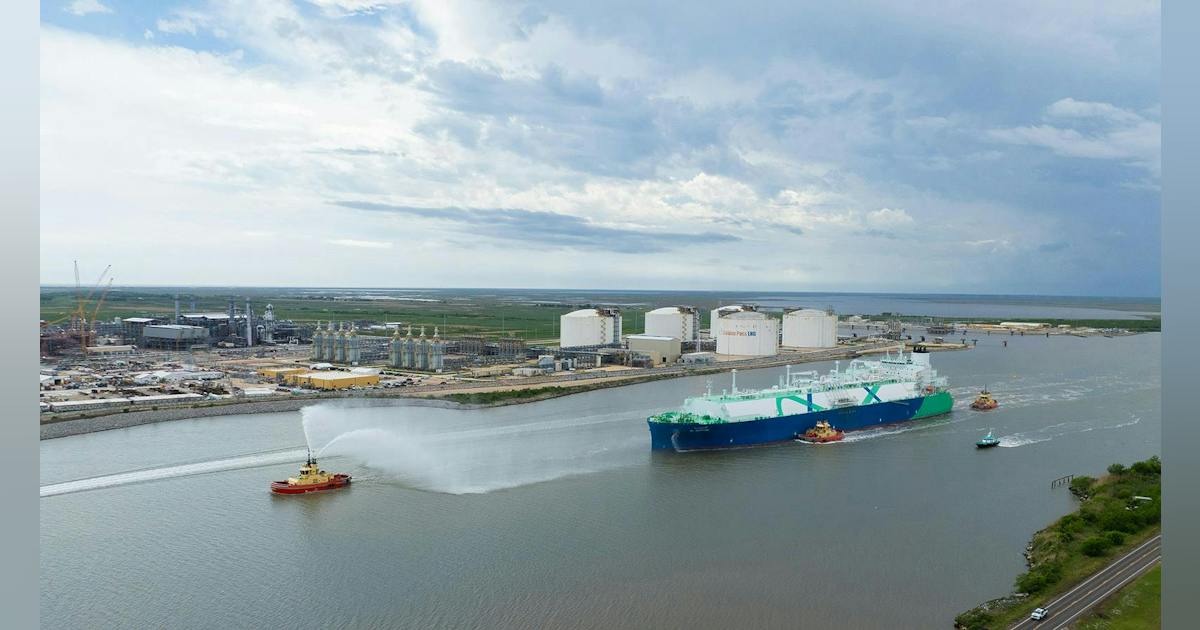
US LNG exports are on track to exceed 120 million tonnes in 2026, setting another record as new Gulf Coast capacity ramps up and the US strengthens its position as the world’s largest LNG supplier, Energy Secretary Chris Wright said on Sept. 22. “Last year, for the first time in history, a country exported more than 100 million tonnes of LNG—and that country was the United States. And this year, we are on track to surpass 120 million tonnes,” Wright said in a post on X, crediting companies such as Caturus, which recently announced a major expansion of its Gulf Coast export plant.  The growth in US LNG exports this year is primarily driven by the commissioning of new projects along the Gulf Coast and the expansion of existing plants. Venture Global’s Plaquemines LNG in Louisiana has continued to ramp up since starting operations, and in March the Department of Energy (DOE) authorized an immediate 13% increase in its exports, bringing its total authorized capacity to 3.85 bcfd. In February, DOE approved a further expansion at Cheniere Energy’s Corpus Christi LNG project in Texas; the additional authorization of up to 0.47 bcfd brought the project’s total authorized export capacity to 4.45 bcfd. Outside the Gulf Coast, DOE in April approved a 22% increase in export capacity for the Elba Island LNG terminal in Georgia. Meanwhile, additional US LNG projects remain in the development or construction phase. Largest LNG exporter Over the past few years, the US has emerged as the world’s largest LNG exporter and a key supplier to the European gas market following the decline in Russian pipeline gas supplies. A distinctive feature of US LNG is that the majority of its production capacity is located along the Gulf Coast. With access to European and Asian markets via the

Read More »

EIA: US crude oil inventories up 3 million bbl

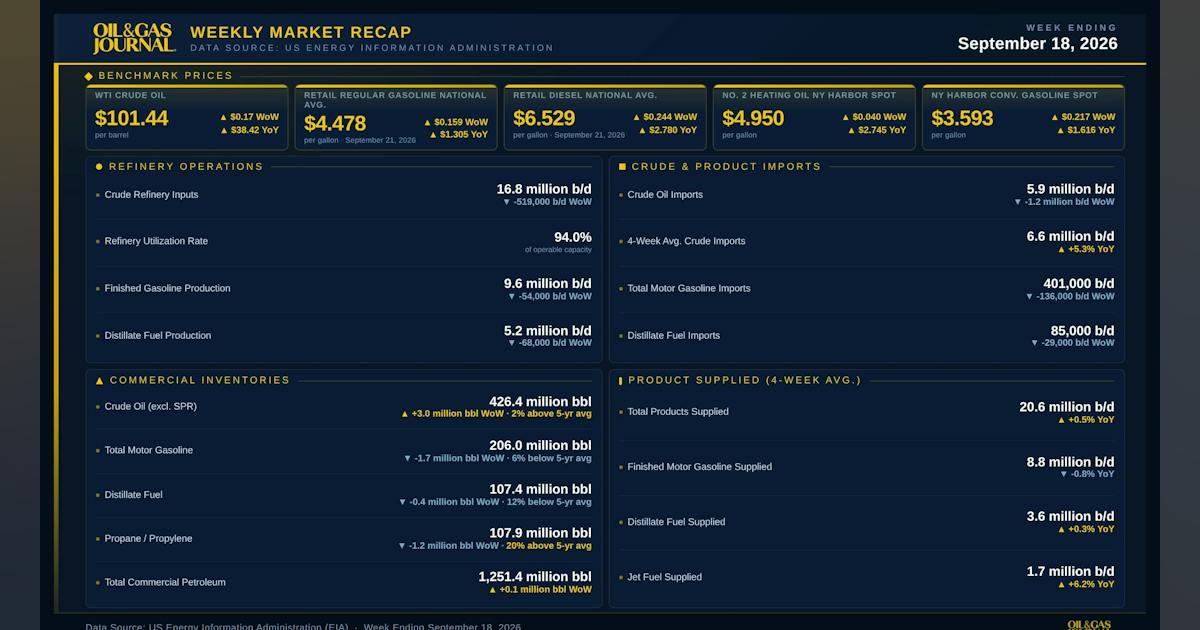
US crude oil inventories for the week ended Sept. 18, excluding the Strategic Petroleum Reserve, increased by 3.0 million bbl from the previous week, according to data from the US Energy Information Administration (EIA). At 426.4 million bbl, US crude oil inventories are about 2% above the 5-year average for this time of year, the EIA report indicated. Gasoline inventories decreased 1.7 million bbl, 6% below the 5-year average. Distillate inventories decreased 400,000 million bbl, 12% below the 5-year average. Propane-propylene inventories decreased 1.2 million bbl, 20% above the 5-year average. Total commercial petroleum inventories increased by 0.1 million bbl for the week. US crude oil refinery inputs averaged 16.8 million b/d for the week ended Sept. 18, which was 519,000 b/d less than the previous week’s average. Refineries operated at 94% of capacity. Gasoline output averaged 9.6 million b/d, and distillate production decreased to 5.2 million b/d. Crude oil imports decreased 1.2 million b/d to 5.9 million b/d. The 4-week average of 6.6 million b/d is 5.3% above the year-ago level. Gasoline imports averaged 401,000 b/d; distillate imports averaged 85,000 b/d. Over the past four weeks, total product supplied averaged 20.6 million b/d, up 0.5% year over year. The 4-week average for gasoline product supplied decreased 0.8% year over year to 8.8 million b/d, while the 4-week average for distillate product supplied increased 0.3% to 3.6 million b/d. The 4-week average for jet fuel product supplied increased 6.2% year over year.

Read More »

TotalEnergies, Amni take FID on $1.108-billion Ima gas project

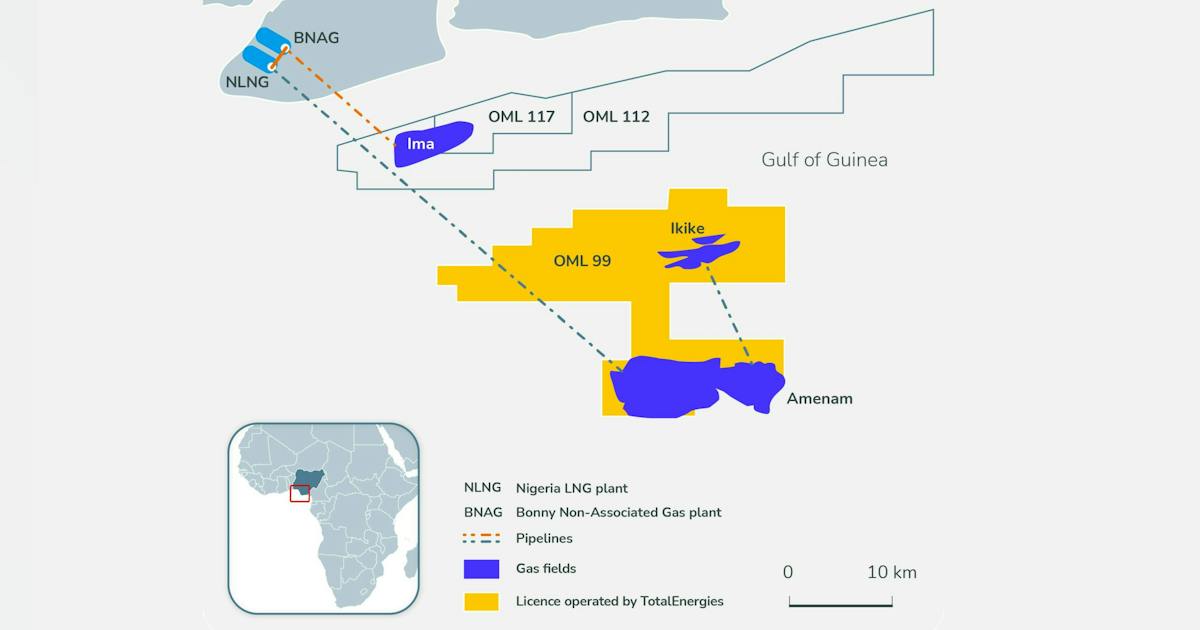
TotalEnergies EP Nigeria Ltd. has taken final investment decision (FID) to develop Ima gas field, which straddles the OML 112 and OML 117 offshore licenses in Nigeria, with partner Amni International Petroleum Development Co. Ltd. (Amni), targeting gas resources discovered alongside the original Ima oil accumulation. The project has an estimated development cost of US$1.108 billion and independently confirmed gross reserves of about 1.28 tcf of non-associated gas. At plateau, it is designed to produce about 350 MMscfd (more than 60,000 boe/d) for at least 8 years, Amni said Sept. 23. The shallow-water Ima gas field near Bonny Island will be developed through a single platform tied to Nigeria LNG (TotalEnergies, 15%) by a 22-km pipeline, with power supplied from shore, no flaring, and permanent methane detection and monitoring. First gas is targeted for October 2028. Once on stream, the field is expected to supply about one-third of the gas required for the Nigeria LNG Train 7 expansion, which is expected to increase liquefaction capacity to 30 million tonnes/year (tpy) from 22 million tpy, TotalEnergies said in a separate release. The FID follows a 2024 heads of terms agreement and completion of technical, commercial, and contractual work, including front-end engineering design (FEED) and execution of project agreements, AMNI said. The project will now move into engineering, procurement, and construction. The decision marks another step in TotalEnergies’ gas strategy in Nigeria. “After the Ubeta project sanctioned in 2024 and expected to start-up next year, Ima demonstrates again our ability to unlock new low-cost and low-emissions gas resources, following the incentives introduced by the Nigerian Government for non-associated gas developments,” said Nicolas Terraz, president of exploration and production at TotalEnergies. TotalEnergies operates the project with a 40% interest. Amni holds 60%. Amni’s Nigerian portfolio contains more than 60 million bbl of oil

Read More »

QatarEnergy NFE LNG Train 1 to start 1H 2027; Ras Laffan repairs to take 3 years

QatarEnergy expects the 8-million tonne/year (tpy) first train of its 32-million tpy North Field East (NFE) LNG expansion project to begin operations in first-half 2027, Reuters reported, noting that the timing of additional trains would depend on ​the Strait of Hormuz crisis. Speaking at the Qatar Economic Forum Special Edition in New York, QatarEnergy chief executive officer (CEO) and Qatari minister of energy affairs, Saad al-Kaabi, attributed the uncertainty to delays in delivering equipment needed for the expansion caused by the Strait of Hormuz disruption. Regarding damage to Qatar’s natural gas infrastructure sustained during the Iran war and its possible return, al-Kaabi said that repairs to the two LNG trains damaged at Ras Laffan (17% of its production capacity) would take 3 years. A damaged gas-to-liquids (GTL) train is expected to return to service first-quarter 2027. Al-Kaabi expects “a few” NFE trains to start production as 2027 progresses, and output from the 16-million tpy North Field South (NFS) expansion to begin in 2028, according to Reuters. The NFE and NFS projects are part of the overall North Field expansion program that also includes the North Field West project, which together will raise Qatar’s LNG production capacity to 142 million tpy from the current 77 million tpy. Al-Kaabi also thanked Qatar’s neighbors for being willing to allow construction of a gas pipeline across their territories to bypass Hormuz, while noting that doing so would be “redundant” and made “no economic sense” in light of the already underway North Field expansion project. “As for resuming operations,” he added, “Qatar is ready to resume normal operations within a few weeks of the reopening of the Strait of Hormuz.” More generally, al-Kaabi rejected the notion that the Strait of Hormuz was obsolete, saying that it “carries trade in all products, not only oil and

Read More »

ESENTIA to acquire Guadalajara-Manzanillo natural gas pipeline system

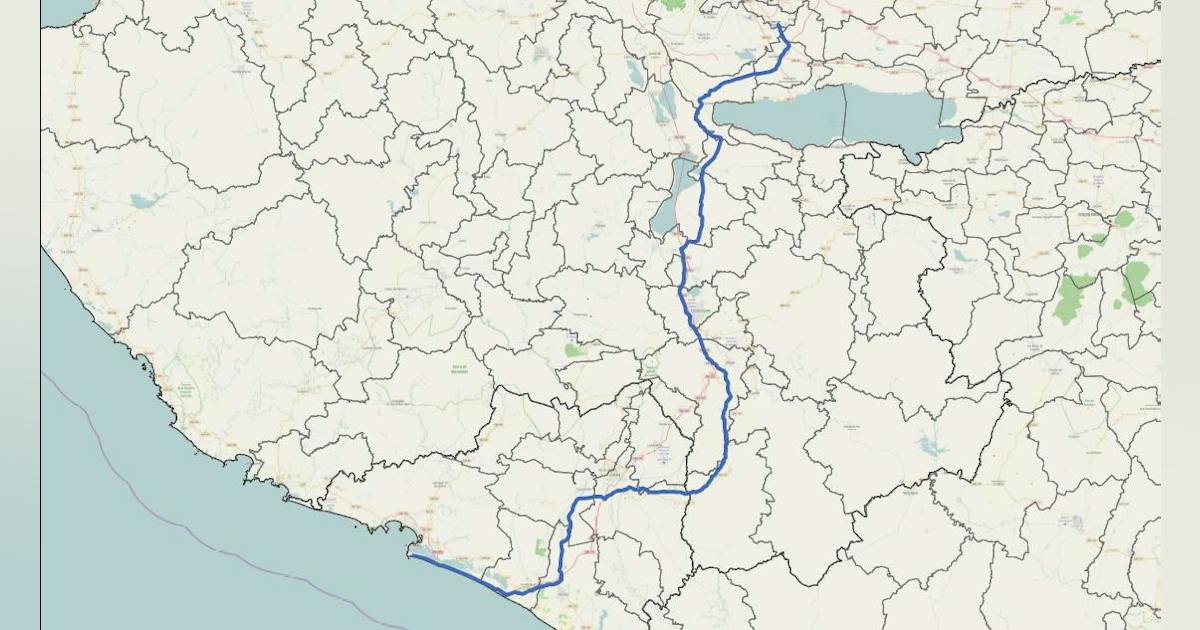
ESENTIA Energy Development SAB de CV, Mexico City, has agreed to acquire 100% of the equity interests of Energía Occidente de México S de RL de CV (EOM) from TC Energy Corp., Calgary, for a gross purchase price of $400 million. EOM owns and operates the 313-km Guadalajara-Manzanillo natural gas pipeline system, which runs from the Guadalajara area in Jalisco to Manzanillo, Colima, and is directly interconnected with ESENTIA’s Villa de Reyes-Aguascalientes-Guadalajara (VAG) pipeline system operated by Esentia Pipeline de Occidente S de RL de CV, an indirect subsidiary of ESENTIA. The pipeline transports up to 500 MMcfd of natural gas, connecting imported LNG supply near Manzanillo and continental gas supply near Guadalajara to power plants and industrial customers in Colima and Jalisco. Upon closing, the acquisition will extend ESENTIA’s pipeline network to the Port of Manzanillo on Mexico’s Pacific coast, making the company the only private operator with an integrated natural gas pipeline system connecting the Permian basin in Texas to Mexico’s Pacific coast, the company said in a release Sept. 21. The deal is part of ESENTIA’s strategy to build a cross-border transportation system and would “expand ESENTIA’s ability to serve existing and prospective customers within the combined system’s area of influence, including demand from power generation, industrial customers and potential LNG-related projects,” said Daniel Bustos, chief executive officer. ESENTIA also highlighted construction of its Aguascalientes Compression Station, which is expected to increase capacity on the VAG pipeline system beginning in early 2027. The project is part of the company’s three-phase expansion plan, which includes a total estimated investment of $680 million and an increase of 660 MMcfd in natural gas transportation capacity. For TC Energy, the transaction creates “optionality to redeploy proceeds from a mature asset towards high-value growth opportunities across our North American footprint,” said François

Read More »

Energy Department Announces $99 Million for 21 Projects to Advance U.S. Geothermal Energy Development

WASHINGTON—The U.S. Department of Energy (DOE) today announced more than $99 million for 21 projects selected to advance geothermal energy development across the United States. The projects will conduct field-scale tests of next-generation geothermal technologies and exploration drilling to characterize and potentially confirm promising geothermal resources.  Thanks to President Trump’s leadership, the Energy Department is advancing American geothermal innovation to unlock the nation’s abundant domestic energy resources. Geothermal can provide reliable, around-the-clock power to help meet growing demand while strengthening U.S. energy security. “These projects will empower American innovators to unlock the tremendous geothermal resources beneath our feet,” said DOE Under Secretary of Energy Kyle Haustveit. “Under President Trump’s leadership, we’re advancing next-generation geothermal technologies that can lower costs, strengthen American energy dominance, and turn more of our vast domestic geothermal resources into reliable and affordable power.” The 21 projects will advance geothermal development in two key areas. Five projects will conduct field-scale enhanced geothermal systems (EGS) tests to validate technologies under real-world conditions, while 16 additional projects will conduct exploration drilling to identify and characterize promising next-generation geothermal resources. Together, these efforts will help reduce technical and development risk and provide the information needed to support future commercial projects and investment.   Data generated by these projects will be publicly available through DOE’s Geothermal Data Repository (GDR), giving industry, researchers, and other stakeholders access to information from the field tests and geothermal exploration activities. Making these data available can extend the value of the projects beyond individual sites by helping inform future technology development and geothermal exploration across the industry.  Learn more about the selected projects here.  Selection for award negotiations is not a commitment by DOE to issue an award or provide funding. Before funding is issued, DOE and the applicants will undergo a negotiation process, and DOE may cancel negotiations and rescind the

Read More »

Floating Data Centers Move Toward Infrastructure Scale

Rather than constructing the building sequentially on a conventional site, Samsung can fabricate the floating structure and integrate much of the electrical, mechanical and cooling infrastructure in a shipyard. Site work at the eventual mooring location can proceed simultaneously. This has the potential to compress one of the longest parts of the data center development schedule. Modern shipyards already operate as enormous industrialized manufacturing environments capable of constructing highly complex LNG carriers, offshore production platforms and other structures containing power generation, electrical distribution, piping, controls and mechanical systems. Adding a floating data center effectively applies those capabilities to digital infrastructure. Samsung and Mousterian describe the facility as being fabricated off-site to shipyard standards. Instead of pouring foundations and constructing a data center building around the infrastructure, the facility becomes a manufactured asset that can be transported to its operating location. Samsung has also been building a broader development ecosystem around floating data centers. In June, the shipbuilder signed agreements with Greece-based Capital and Lloyd’s Register covering project development, investment sourcing and regulatory requirements, while LR Advisory is working with Samsung on North American market analysis, infrastructure assessments and commercial feasibility. Samsung also entered a joint development project with Supermicro to validate AI server infrastructure for offshore conditions, where vibration, vessel inclination, salt-laden air and rapid humidity changes can affect equipment reliability and lifespan. Samsung says it will develop positioning-control and salt- and humidity-protection technologies while Supermicro conducts operational verification of AI server infrastructure in river and marine environments. Unlocking Power That Data Centers Can’t Reach Mousterian’s model also addresses perhaps the biggest constraint facing today’s data center industry: power. The facilities are intended to be positioned near existing generation and maritime infrastructure, allowing them to reach electrical capacity that may be difficult to serve through a conventional land-based development. The

Read More »

Roundtable: Redefining Critical Infrastructure

Matt Vincent is Editor in Chief of Data Center Frontier, where he leads editorial strategy and coverage focused on the infrastructure powering cloud computing, artificial intelligence, and the digital economy. A veteran B2B technology journalist with more than two decades of experience, Vincent specializes in the intersection of data centers, power, cooling, and emerging AI-era infrastructure. Since assuming the EIC role in 2023, he has helped guide Data Center Frontier’s coverage of the industry’s transition into the gigawatt-scale AI era, with a focus on hyperscale development, behind-the-meter power strategies, liquid cooling architectures, and the evolving energy demands of high-density compute, while working closely with the Digital Infrastructure Group at Endeavor Business Media to expand the brand’s analytical and multimedia footprint. Vincent also hosts The Data Center Frontier Show podcast, where he interviews industry leaders across hyperscale, colocation, utilities, and the data center supply chain to examine the technologies and business models reshaping digital infrastructure. Since its inception he serves as Head of Content for the Data Center Frontier Trends Summit. Before becoming Editor in Chief, he served in multiple senior editorial roles across Endeavor Business Media’s digital infrastructure portfolio, with coverage spanning data centers and hyperscale infrastructure, structured cabling and networking, telecom and datacom, IP physical security, and wireless and Pro AV markets. He began his career in 2005 within PennWell’s Advanced Technology Division and later held senior editorial positions supporting brands such as Cabling Installation & Maintenance, Lightwave Online, Broadband Technology Report, and Smart Buildings Technology. Vincent is a frequent moderator, interviewer, and keynote speaker at industry events including the HPC Forum, where he delivers forward-looking analysis on how AI and high-performance computing are reshaping digital infrastructure. He graduated with honors from Indiana University Bloomington with a B.A. in English Literature and Creative Writing and lives in southern New Hampshire with

Read More »

How Communities Can Plan for AI Data Centers Before the Projects Arrive

The collision between AI infrastructure development and community opposition has become one of the defining data center stories of 2026. Developers are pursuing larger campuses, more power and compressed delivery schedules as AI accelerates demand for computing capacity. Meanwhile, local planning boards, elected officials and residents are increasingly being asked to make decisions about facilities whose scale, energy requirements and technological purpose may be unlike anything previously contemplated in their comprehensive plans. That gap is where Ilissa Miller believes much of the conflict begins. Miller, founder and CEO of iMiller Public Relations and a board member of the Open Infrastructure Exchange (OIX), joined the Data Center Frontier Show to discuss the OIX Digital Infrastructure Framework, an effort designed to give municipalities a more systematic way to think about data centers and other digital infrastructure before an individual development application lands in front of them. The idea is straightforward: communities routinely create long-range plans defining where homes, commercial development, industry and other land uses should go. Digital infrastructure should be part of that process as well. “Our vision for the framework was to help solve the problem by empowering communities to think about digital infrastructure,” Miller said, so municipalities can incorporate it into their comprehensive master plans and maintain control over how land is ultimately used. That distinction is key. The framework is not intended to convince communities to approve data centers. Nor does it prescribe what a town or county should decide. Instead, Miller said, it is meant to help public officials ask the right questions early enough to make those decisions deliberately. The Data Center May Not Be in the Plan One of the industry’s recurring problems is deceptively basic: many municipalities never anticipated data centers when writing their zoning codes and comprehensive plans. A parcel might already be

Read More »

Executive Roundtable: AI Infrastructure Under Pressure

Matt Vincent is Editor in Chief of Data Center Frontier, where he leads editorial strategy and coverage focused on the infrastructure powering cloud computing, artificial intelligence, and the digital economy. A veteran B2B technology journalist with more than two decades of experience, Vincent specializes in the intersection of data centers, power, cooling, and emerging AI-era infrastructure. Since assuming the EIC role in 2023, he has helped guide Data Center Frontier’s coverage of the industry’s transition into the gigawatt-scale AI era, with a focus on hyperscale development, behind-the-meter power strategies, liquid cooling architectures, and the evolving energy demands of high-density compute, while working closely with the Digital Infrastructure Group at Endeavor Business Media to expand the brand’s analytical and multimedia footprint. Vincent also hosts The Data Center Frontier Show podcast, where he interviews industry leaders across hyperscale, colocation, utilities, and the data center supply chain to examine the technologies and business models reshaping digital infrastructure. Since its inception he serves as Head of Content for the Data Center Frontier Trends Summit. Before becoming Editor in Chief, he served in multiple senior editorial roles across Endeavor Business Media’s digital infrastructure portfolio, with coverage spanning data centers and hyperscale infrastructure, structured cabling and networking, telecom and datacom, IP physical security, and wireless and Pro AV markets. He began his career in 2005 within PennWell’s Advanced Technology Division and later held senior editorial positions supporting brands such as Cabling Installation & Maintenance, Lightwave Online, Broadband Technology Report, and Smart Buildings Technology. Vincent is a frequent moderator, interviewer, and keynote speaker at industry events including the HPC Forum, where he delivers forward-looking analysis on how AI and high-performance computing are reshaping digital infrastructure. He graduated with honors from Indiana University Bloomington with a B.A. in English Literature and Creative Writing and lives in southern New Hampshire with

Read More »

California joins US states clamping down on data center gold rush

“Dismissing fears around water consumption, for example, by showing a spreadsheet at a local planning committee meeting, doesn’t resolve concerns for a community that is already suspicious,” he said. Community opposition “is real, and it’s everywhere,” and the new strategic pillar for data center builders and operators is social outreach, Kimball noted. Those proposing data centers must be able to provide credible answers about usage and community impacts, listen to concerns, and commit to transparency. Most enterprises aren’t building gigawatt campuses, he pointed out, but they are paying the price downstream in colocation availability, lead times, pricing, and other factors. Predictability is the big question, supply is already tight, and every delayed project removes capacity factored into forecasts.

Read More »

Communities are blocking data centers before they’re even proposed

“Dismissing fears around water consumption, for example, by showing a spreadsheet at a local planning committee meeting, doesn’t resolve concerns for a community that is already suspicious,” he said. Community opposition “is real, and it’s everywhere,” and the new strategic pillar for data center builders and operators is social outreach, Kimball noted. Those proposing data centers must be able to provide credible answers about usage and community impacts, listen to concerns, and commit to transparency. Most enterprises aren’t building gigawatt campuses, he pointed out, but they are paying the price downstream in colocation availability, lead times, pricing, and other factors. Predictability is the big question, supply is already tight, and every delayed project removes capacity factored into forecasts.

Read More »

Microsoft will invest $80B in AI data centers in fiscal 2025

And Microsoft isn’t the only one that is ramping up its investments into AI-enabled data centers. Rival cloud service providers are all investing in either upgrading or opening new data centers to capture a larger chunk of business from developers and users of large language models (LLMs).  In a report published in October 2024, Bloomberg Intelligence estimated that demand for generative AI would push Microsoft, AWS, Google, Oracle, Meta, and Apple would between them devote $200 billion to capex in 2025, up from $110 billion in 2023. Microsoft is one of the biggest spenders, followed closely by Google and AWS, Bloomberg Intelligence said. Its estimate of Microsoft’s capital spending on AI, at $62.4 billion for calendar 2025, is lower than Smith’s claim that the company will invest $80 billion in the fiscal year to June 30, 2025. Both figures, though, are way higher than Microsoft’s 2020 capital expenditure of “just” $17.6 billion. The majority of the increased spending is tied to cloud services and the expansion of AI infrastructure needed to provide compute capacity for OpenAI workloads. Separately, last October Amazon CEO Andy Jassy said his company planned total capex spend of $75 billion in 2024 and even more in 2025, with much of it going to AWS, its cloud computing division.

Read More »

John Deere unveils more autonomous farm machines to address skill labor shortage

Join our daily and weekly newsletters for the latest updates and exclusive content on industry-leading AI coverage. Learn More Self-driving tractors might be the path to self-driving cars. John Deere has revealed a new line of autonomous machines and tech across agriculture, construction and commercial landscaping. The Moline, Illinois-based John Deere has been in business for 187 years, yet it’s been a regular as a non-tech company showing off technology at the big tech trade show in Las Vegas and is back at CES 2025 with more autonomous tractors and other vehicles. This is not something we usually cover, but John Deere has a lot of data that is interesting in the big picture of tech. The message from the company is that there aren’t enough skilled farm laborers to do the work that its customers need. It’s been a challenge for most of the last two decades, said Jahmy Hindman, CTO at John Deere, in a briefing. Much of the tech will come this fall and after that. He noted that the average farmer in the U.S. is over 58 and works 12 to 18 hours a day to grow food for us. And he said the American Farm Bureau Federation estimates there are roughly 2.4 million farm jobs that need to be filled annually; and the agricultural work force continues to shrink. (This is my hint to the anti-immigration crowd). John Deere’s autonomous 9RX Tractor. Farmers can oversee it using an app. While each of these industries experiences their own set of challenges, a commonality across all is skilled labor availability. In construction, about 80% percent of contractors struggle to find skilled labor. And in commercial landscaping, 86% of landscaping business owners can’t find labor to fill open positions, he said. “They have to figure out how to do

Read More »

2025 playbook for enterprise AI success, from agents to evals

Join our daily and weekly newsletters for the latest updates and exclusive content on industry-leading AI coverage. Learn More 2025 is poised to be a pivotal year for enterprise AI. The past year has seen rapid innovation, and this year will see the same. This has made it more critical than ever to revisit your AI strategy to stay competitive and create value for your customers. From scaling AI agents to optimizing costs, here are the five critical areas enterprises should prioritize for their AI strategy this year. 1. Agents: the next generation of automation AI agents are no longer theoretical. In 2025, they’re indispensable tools for enterprises looking to streamline operations and enhance customer interactions. Unlike traditional software, agents powered by large language models (LLMs) can make nuanced decisions, navigate complex multi-step tasks, and integrate seamlessly with tools and APIs. At the start of 2024, agents were not ready for prime time, making frustrating mistakes like hallucinating URLs. They started getting better as frontier large language models themselves improved. “Let me put it this way,” said Sam Witteveen, cofounder of Red Dragon, a company that develops agents for companies, and that recently reviewed the 48 agents it built last year. “Interestingly, the ones that we built at the start of the year, a lot of those worked way better at the end of the year just because the models got better.” Witteveen shared this in the video podcast we filmed to discuss these five big trends in detail. Models are getting better and hallucinating less, and they’re also being trained to do agentic tasks. Another feature that the model providers are researching is a way to use the LLM as a judge, and as models get cheaper (something we’ll cover below), companies can use three or more models to

Read More »

OpenAI’s red teaming innovations define new essentials for security leaders in the AI era

Join our daily and weekly newsletters for the latest updates and exclusive content on industry-leading AI coverage. Learn More OpenAI has taken a more aggressive approach to red teaming than its AI competitors, demonstrating its security teams’ advanced capabilities in two areas: multi-step reinforcement and external red teaming. OpenAI recently released two papers that set a new competitive standard for improving the quality, reliability and safety of AI models in these two techniques and more. The first paper, “OpenAI’s Approach to External Red Teaming for AI Models and Systems,” reports that specialized teams outside the company have proven effective in uncovering vulnerabilities that might otherwise have made it into a released model because in-house testing techniques may have missed them. In the second paper, “Diverse and Effective Red Teaming with Auto-Generated Rewards and Multi-Step Reinforcement Learning,” OpenAI introduces an automated framework that relies on iterative reinforcement learning to generate a broad spectrum of novel, wide-ranging attacks. Going all-in on red teaming pays practical, competitive dividends It’s encouraging to see competitive intensity in red teaming growing among AI companies. When Anthropic released its AI red team guidelines in June of last year, it joined AI providers including Google, Microsoft, Nvidia, OpenAI, and even the U.S.’s National Institute of Standards and Technology (NIST), which all had released red teaming frameworks. Investing heavily in red teaming yields tangible benefits for security leaders in any organization. OpenAI’s paper on external red teaming provides a detailed analysis of how the company strives to create specialized external teams that include cybersecurity and subject matter experts. The goal is to see if knowledgeable external teams can defeat models’ security perimeters and find gaps in their security, biases and controls that prompt-based testing couldn’t find. What makes OpenAI’s recent papers noteworthy is how well they define using human-in-the-middle

Read More »