On the hardware front, HPE is targeting the AI data center edge with a new MX router and the scale-out networking delivery with a new QFX switch. Juniper’s MX series is its flagship routing family aimed at carriers, large-scale enterprise data center and WAN customers, while the QFX line services data center customers anchoring spine/leaf networks as well as top-of-rack systems.
The new 1U, 1.6Tbps MX301 multiservice edge router, available now, is aimed at bringing AI inferencing closer to the source of data generation and can be positioned in metro, mobile backhaul, and enterprise routing applications, Rahim said. It includes high-density support for 16 x 1/1025/50GbE, 10 x 100Gb and 4 x 400Gb interfaces.
“The MX301 is essentially the on-ramp to provide high speed, secure connections from distributed inference cluster users, devices and agents from the edge all the way to the AI data center,” Rami said. “The requirements here are typically around high performance, but also very high logical skills and integrated security.”
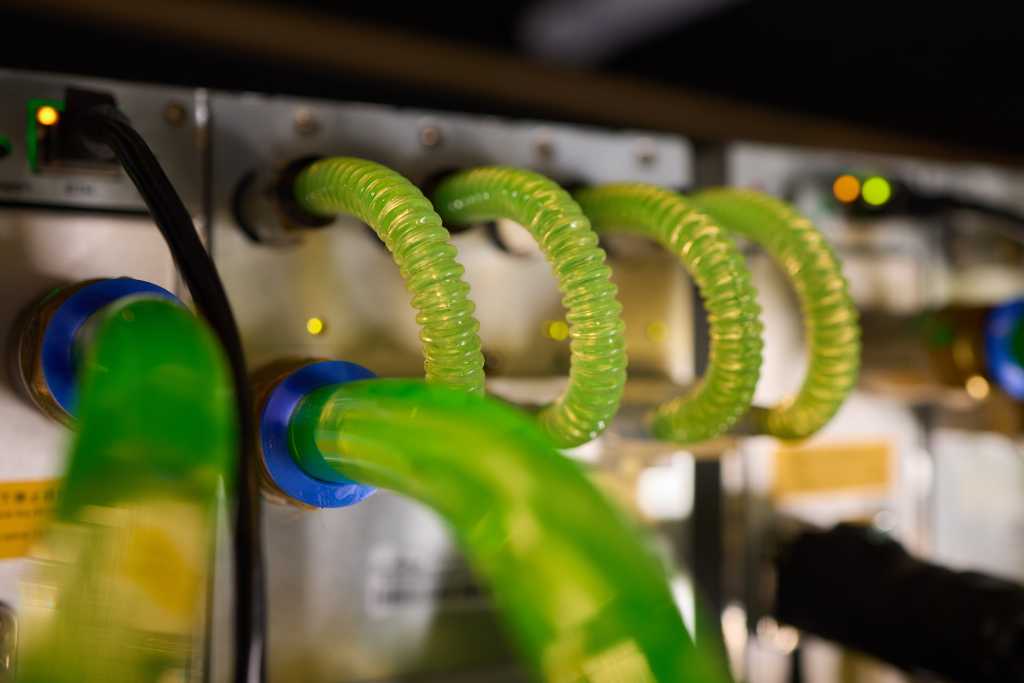
In the QFX arena, the new QFX5250 switch, available in 1Q 2026, is a fully liquid-cooled box aimed at tying together Nvidia Rubin and/or AMD MI400 GPUs for AI consumption across the data center. It is built on Broadcom Tomahawk 6 silicon and supports up to 102.4Tbps Ethernet bandwidth, Rahim said.
“The QFX5250 combines HPE liquid cooling technology with Juniper networking software (Junos) and integrated AIops intelligence to deliver a high-performance, power-efficient and simplified operations for next-generation AI inference,” Rami said.
Partnership expansions
Also key to HPE/Juniper’s AI networking plans are its partnerships with Nvidia and AMD. The company announced its relationship with Nvidia now includes HPE Juniper edge onramp and long-haul data center interconnect (DCI) support in its Nvidia AI Computing by HPE portfolio. This extension uses the MX and Junipers PTX hyperscaler routers to support high-scale, secure and low-latency connections from users, devices, and agents to AI factories and connections between clusters deployed across longer distances or across multiple clouds, Rahim said.