
Utilities do not need research to tell them the operating environment has become more demanding. They see it in the systems they manage, the investment decisions they make and the expectations customers and regulators place on them.
New research helps quantify that experience.
Three in four utility and energy industry professionals surveyed for the 2026 State of Grid Resilience say operational risk is higher than it was five years ago. More than half expect load growth on their distribution systems to be very or extremely significant over the next decade. Nearly four in five expect resilience-related investment to increase over the next five years.
At the same time, 61% identify affordability and customer rate pressure as the biggest barrier to accelerating that investment.
Taken together, the findings show a challenge utilities have navigated for years. They are committed to resilience, but how resilience is measured, funded and deployed can affect how quickly they can act.
Measuring performance under stress
Utilities already recognize a distinction between reliability and resilience. Nearly half of respondents define reliability as day-to-day operational performance and resilience as performance under disruption.
The measures guiding investment do not always reflect that distinction.
Traditional reliability metrics such as SAIDI, SAIFI and CAIDI provide an important and consistent view of everyday grid performance. But only 48% of respondents agree that current reliability metrics adequately capture performance during major disruptive events.
The difference becomes clearer when utilities are asked what matters during those events. More than half say restoring service as quickly as possible is the most important outcome during a major storm or disruption. When asked what best demonstrates a resilient grid, respondents first point to limiting the number of customers affected and quickly restoring normal operations.
Yet investment decisions remain weighted toward traditional reliability. SAIDI and customer outage frequency are the most-cited metrics influencing investment decisions. Only 17% cite resilience-specific measures such as extreme-event recovery and adaptive capacity.
Reliability measures remain essential. Adding measures of what customers experience during major disruptions, including how many are affected and how quickly service is restored, can provide a more complete picture of performance under stress.
Making the affordability case
Utilities also confirmed a familiar tension between investing and keeping electricity affordable.
Nearly four in five respondents expect resilience investment to increase over the next five years. Yet 61% identify affordability and customer rate pressure as the biggest barrier to moving faster, more than three times the percentage citing competing capital priorities.
Utilities are already making the case for resilience in terms of customer value. Nearly nine in ten respondents justify resilience investments through service quality and reliability, either alone or combined with cost avoidance. Forty-seven percent use both cost avoidance and reliability improvement.
Better measures of performance during major events could help strengthen that case. If an investment can limit the number of customers affected or restore service faster, utilities have another way to show its value to customers and regulators.
Affordability makes prioritization especially important. Utilities must determine not only how much to invest, but where that investment can make the greatest difference.
Focusing investment on customer outcomes
The research reinforces the attention utilities are placing on the distribution grid.
Fifty-eight percent of respondents say most customer-impacting outages originate on distribution. This aligns with U.S. Department of Energy research finding that more than 90% of electric power interruptions originate on the distribution system. Fifty-three percent of respondents also identify distribution as part of the grid offering the greatest opportunity to improve customer outage outcomes over the next decade.
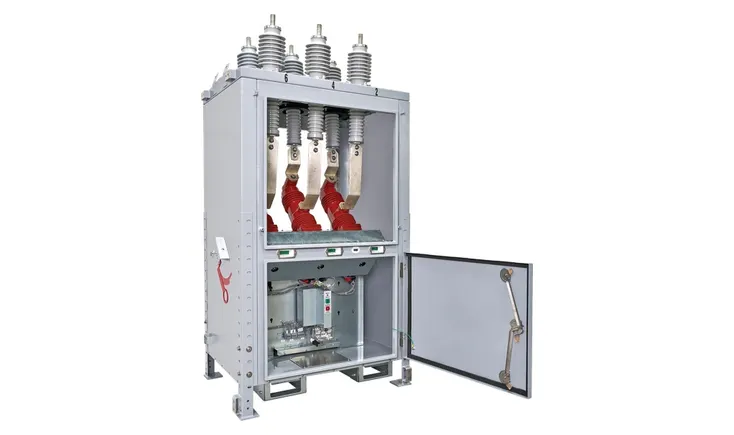
Their investment priorities tell a similar story. Fault location, isolation and service restoration (FLISR), protective devices and sectionalizing and distribution automation rank highest for resilience return.
Full deployment remains limited. Automated switches and reclosers are fully deployed at 33% of respondents’ utilities, compared with 18% for FLISR and 12% for self-healing distribution automation.
Respondents identify faster restoration and fewer customers affected as automation’s greatest operational benefits. Those are also among the outcomes they value most during major disruptions.
Investment is beginning to follow. Over the next five years, respondents expect the greatest increases in distribution investment in distribution automation, FLISR, undergrounding and pole and wire hardening.
“The research shows that utilities are being asked to strengthen grid resilience in an increasingly challenging operating environment,” said Anders Sjoelin, president and CEO of S&C Electric Company. “Operational risk is rising, with electricity dependence and demand growing and affordability remains a significant constraint. These findings reinforce the importance of prioritizing investments that deliver the greatest impact for customers and communities, particularly on the distribution grid.”
Building on what utilities already know
The research does not suggest utilities are waiting to act. Most expect resilience investment to grow and 79% are confident their current investment trajectory will meaningfully improve resilience within five years.
Instead, the findings support what many utilities are already experiencing. Better measures of performance during major events can help demonstrate the customer value of resilience. A clearer value case can support investment in the distribution technologies that limit customer impact and speed restoration.
The 2026 State of Grid Resilience provides a benchmark for that work and for an industry conversation already underway. As measurement evolves and investment continues, future research can show whether the gaps between resilience goals, affordability and deployment begin to narrow.
Explore the 2026 State of Grid Resilience. Then learn how S&C helps utilities limit outage impact and restore power faster on the distribution grid.
About research
The 2026 State of Grid Resilience is based on a survey of 141 utility and energy industry professionals across North America, conducted by Zpryme on behalf of S&C Electric Company from June to August 2026.