Stay Ahead, Stay ONMINE

Introducing WeatherNext 3, our most advanced and accurate global weather AI model

Real-world data at continuous global scaleWeatherNext 3’s biggest leap forward is what it learns from. Most AI weather models, including WeatherNext 2, are trained on data from numerical weather prediction (NWP) models. Although useful, NWP models are complex, supercomputer-driven physics simulations that carry a six-hour data lag. This lag can lead to biases for fast-changing variables like rain or surface temperature.By ingesting a mosaic of live, global geostationary satellite data, our new model gains a rich, continuously updating view of the atmosphere. This allows the model to generate a new forecast every hour, each one grounded in the most recent satellite observations available, at up to 5-kilometer resolution.This is important because critical weather develops fast. When storms, fronts, or precipitation systems materialize suddenly, our rapid update cycle and higher resolution provides earlier, more detailed insights needed to help drive an effective response.Some variables, like temperature and humidity, can fluctuate dramatically over just a few kilometers, which is particularly relevant for communities near coastlines, valleys, or mountain ranges. Traditional models struggle here because they train on representations of the atmosphere that lack detail and miss extreme local variations.To address this, WeatherNext 3 instead trains directly on sparse weather station observation data. This allows us to make global forecasts on a 5-kilometer grid that account for regional details like topography.This breakthrough is particularly vital for regions across Latin America, Africa, and Asia-Pacific that have historically been underserved by high-resolution forecasting due to the immense supercomputing costs of traditional regional models. It brings localized, high-fidelity forecasting to billions of people and local businesses in these areas.Beyond improved resolution and forecast frequency, our model introduces predictions specifically engineered for renewable energy production. The model forecasts 100-meter wind speeds (roughly at turbine-height) for precise wind-energy output, alongside high-resolution cloud cover and sun radiation levels to help solar farms estimate how much light they will receive on the ground.This data is crucial for global clean energy planning, allowing grid operators and renewables developers to accurately predict how much power their clean energy assets will generate and match it with consumer demand.Precipitation forecasting at breakthrough accuracyGlobal weather models notoriously struggle to accurately predict precipitation. Rain and snow systems are driven by fast-moving cloud processes on tiny scales that are hard to model accurately using traditional physics-based simulations. Consequently, AI forecasts often produce blurry estimates or miss the boundaries of severe storms entirely.To solve this, we train our model on two exceptionally high-quality sources of precipitation data: NASA’s satellite-based Integrated Multi-satellite Retrievals for GPM (IMERG) and our own global precipitation reanalysis based on satellite radar.The result is a significant leap in precipitation forecasting accuracy. In medium-range global forecasts, evaluations against baselines show a Continuous Ranked Probability Score (CRPS) improvement of up to 60% against IMERG, 30% for MRMS, and 10% against rain gauge measurements for early lead times.


Real-world data at continuous global scale

WeatherNext 3’s biggest leap forward is what it learns from. Most AI weather models, including WeatherNext 2, are trained on data from numerical weather prediction (NWP) models. Although useful, NWP models are complex, supercomputer-driven physics simulations that carry a six-hour data lag. This lag can lead to biases for fast-changing variables like rain or surface temperature.

By ingesting a mosaic of live, global geostationary satellite data, our new model gains a rich, continuously updating view of the atmosphere. This allows the model to generate a new forecast every hour, each one grounded in the most recent satellite observations available, at up to 5-kilometer resolution.

This is important because critical weather develops fast. When storms, fronts, or precipitation systems materialize suddenly, our rapid update cycle and higher resolution provides earlier, more detailed insights needed to help drive an effective response.

Some variables, like temperature and humidity, can fluctuate dramatically over just a few kilometers, which is particularly relevant for communities near coastlines, valleys, or mountain ranges. Traditional models struggle here because they train on representations of the atmosphere that lack detail and miss extreme local variations.

To address this, WeatherNext 3 instead trains directly on sparse weather station observation data. This allows us to make global forecasts on a 5-kilometer grid that account for regional details like topography.

This breakthrough is particularly vital for regions across Latin America, Africa, and Asia-Pacific that have historically been underserved by high-resolution forecasting due to the immense supercomputing costs of traditional regional models. It brings localized, high-fidelity forecasting to billions of people and local businesses in these areas.

Beyond improved resolution and forecast frequency, our model introduces predictions specifically engineered for renewable energy production. The model forecasts 100-meter wind speeds (roughly at turbine-height) for precise wind-energy output, alongside high-resolution cloud cover and sun radiation levels to help solar farms estimate how much light they will receive on the ground.

This data is crucial for global clean energy planning, allowing grid operators and renewables developers to accurately predict how much power their clean energy assets will generate and match it with consumer demand.

Precipitation forecasting at breakthrough accuracy

Global weather models notoriously struggle to accurately predict precipitation. Rain and snow systems are driven by fast-moving cloud processes on tiny scales that are hard to model accurately using traditional physics-based simulations. Consequently, AI forecasts often produce blurry estimates or miss the boundaries of severe storms entirely.

To solve this, we train our model on two exceptionally high-quality sources of precipitation data: NASA’s satellite-based Integrated Multi-satellite Retrievals for GPM (IMERG) and our own global precipitation reanalysis based on satellite radar.

The result is a significant leap in precipitation forecasting accuracy. In medium-range global forecasts, evaluations against baselines show a Continuous Ranked Probability Score (CRPS) improvement of up to 60% against IMERG, 30% for MRMS, and 10% against rain gauge measurements for early lead times.

Shape
Shape
Stay Ahead

Explore More Insights

Stay ahead with more perspectives on cutting-edge power, infrastructure, energy,  bitcoin and AI solutions. Explore these articles to uncover strategies and insights shaping the future of industries.

Shape

SonicWall reports two major security holes under active exploit

Repeats a June attack chain What makes this issue especially significant is the timing and the pattern, he pointed out. “This is essentially a rerun of what happened with the same appliance line just weeks ago,” he said, citing the July disclosure of a “nearly identical” SSRF-plus-command-injection chain in SMA1000

Read More »

Arista warns customers ahead of next week’s security disclosures

Arista Networks has taken the unusual step of warning customers that next week, it will release multiple security advisories affecting Arista EOS and VeloCloud. AI-driven changes to its vulnerability detection processes have resulted in a higher-than-usual volume of security updates, the company says, and the advance notification is aimed at

Read More »

Palo Alto Networks buys Console to boost agentic security

“We built Console around a simple idea: people should be able to express an operational goal, and intelligent software should handle the complexity required to achieve it,” said Console CEO and co-founder Andrei Serban in a statement. “Our customers have already proven that agents can dramatically slash overhead and transform

Read More »

Mainframe shops tap AI for system insights and recommendations

After much discussion, planning and investment, the mainframe community is moving from “AI enthusiasm to pragmatic adoption,” according to the report: “AI has moved from experimentation to strategic planning, with mainframe organizations seeming to take a more pragmatic approach,” the report states. “That pragmatism is visible in the kinds of

Read More »

San Matías Pipeline secures $900 million for Vaca Muerta-to-LNG gas pipeline

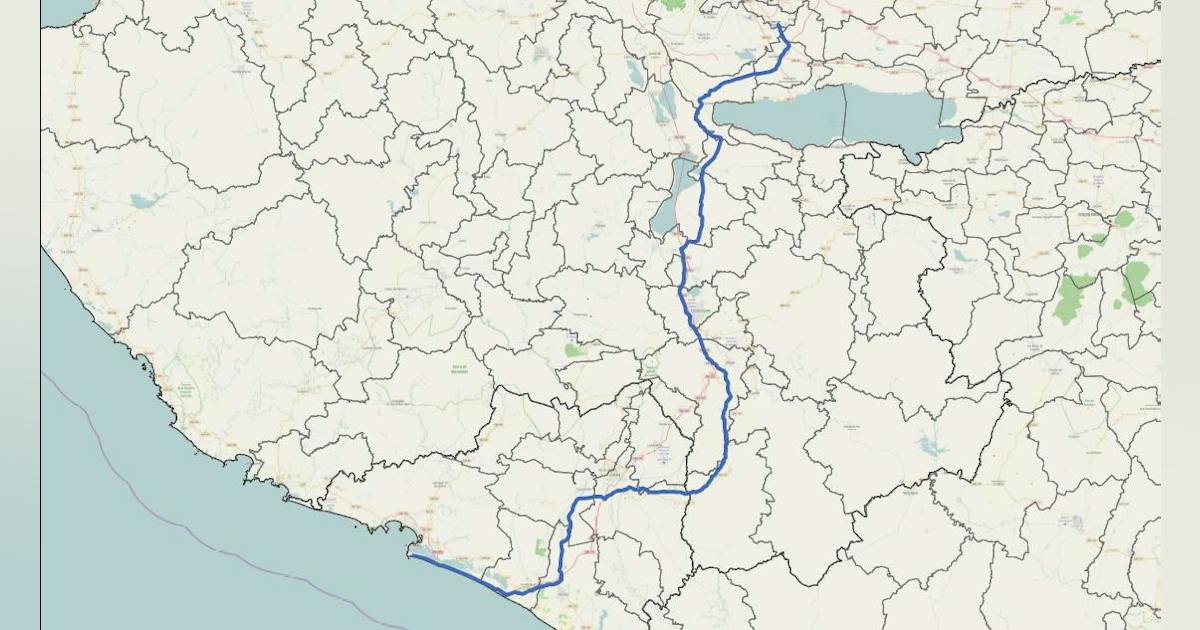
The remaining $400 million will be contributed by the consortium’s shareholders: Pan American Energy, YPF, Pampa Energía, Harbour Energy, and Golar LNG. The 472-km, 36-in. OD San Matías Pipeline, which will originate at Tratayén, one of Vaca Muerta’s main gas hubs, is designed to transport 27 million cu m/d (MMcmd) of natural gas, aligned with the gas requirements of the two FLNG units. Hilli Episeyo will have LNG production capacity of 2.45 million tonnes/year (tpy) and will require about 11.5 MMcmd of feed gas. Esperanza, previously known as MKII, will add another 3.5 million tpy and require close to 16 MMcmd of feed gas. Hilli Episeyo is expected to begin operations in 2027, followed by Esperanza in 2028. The project also will include a compressor station with about 46,000 hp of installed capacity to maintain required pressure and flow across the system. Pipeline construction has been awarded to the SICIM-Víctor Contreras consortium, while OPS will be responsible for the Allen compressor station. IEB Construcciones was selected to manage and coordinate the project’s different construction fronts. In August, the first 36-in. line pipe manufactured in India began arriving at the Port of San Antonio Este. Construction is scheduled to begin in August 2026, with completion targeted for mid-2028. The project was admitted to Argentina’s Large Investment Incentive Regime (RIGI) in June and has environmental impact approvals from Neuquén and Río Negro provinces.

Read More »

Petrobras readies for two more FPSOs to sail away to Búzios field

Petróleo Brasileiro SA (Petrobras) is closer to adding production from Búzios oil field offshore Brazil, with the P-80 and P-82 floating production, storage, and offloading (FPSO) units entering the final phase of module integration ahead of their departure from a Singapore shipyard and planned startup in 2027. The units are expected to sail to Brazil in the coming weeks to operate in Santos basin pre-salt. P-80 (Búzios 9) will be the first to leave the Seatrium’s Tuas Boulevard Yard. The P-80 process modules were manufactured in Brazil at the Seatrium BrasFELS shipyard in Angra dos Reis. The P-82 modules were manufactured at the Seatrium Aracruz shipyard in Espírito Santo. Construction work for the FPSOs also took place in China, Singapore, and Indonesia. Subsequently, the modules were transported to Singapore for final integration. Each platform has capacity to produce 225,000 bo/d and process 12 million cu m/d. Together, P-80 and P-82 are expected to add 450,000 b/d, an approximate 34% increase to the installed production capacity at the field when operational. Each vessel also has water injection capacity of about 250,000 b/d. P-80 and P-82 each have oil storage capacity of about 2.5 million bbl. Petrobras President Magda Chambriard said the units “make up a new cycle of six units with high production capacity, started with the FPSO Almirante Tamandaré, which operates in Búzios above the project capacity, with record production of 270,000 bo/d.” Subsequent to the P-80 and P-82, the operator expects to complete P-83, P-84, and P-85, which will operate in fields Búzios, Atapu, and Sépia, respectively.  Búzios, which lies in 1,900-2,200 m of water, will produce from eight FPSOs with the addition of P-80 and P-82. The field has already surpassed 1.2 million b/d of oil produciton. 

Read More »

Matador CFO: Hormuz resolution won’t change ‘grower’ mindset

@import url(‘https://fonts.googleapis.com/css2?family=Inter:wght@100..900&display=swap’); .ebm-page__main h1, .ebm-page__main h2, .ebm-page__main h3, .ebm-page__main h4, .ebm-page__main h5, .ebm-page__main h6 { font-family: Inter; } body { line-height: 150%; letter-spacing: 0.025em; } button, .ebm-button-wrapper { font-family: Inter; } .label-style { text-transform: uppercase; color: var(–color-grey); font-weight: 600; font-size: 0.75rem; } .caption-style { font-size: 0.75rem; opacity: .6; } #onetrust-pc-sdk [id*=btn-handler], #onetrust-pc-sdk [class*=btn-handler] { background-color: #c19a06 !important; border-color: #c19a06 !important; } #onetrust-policy a, #onetrust-pc-sdk a, #ot-pc-content a { color: #c19a06 !important; } #onetrust-consent-sdk #onetrust-pc-sdk .ot-active-menu { border-color: #c19a06 !important; } #onetrust-consent-sdk #onetrust-accept-btn-handler, #onetrust-banner-sdk #onetrust-reject-all-handler, #onetrust-consent-sdk #onetrust-pc-btn-handler.cookie-setting-link { background-color: #c19a06 !important; border-color: #c19a06 !important; } #onetrust-consent-sdk .onetrust-pc-btn-handler { color: #c19a06 !important; border-color: #c19a06 !important; } Matador Resources Co. isn’t planning for a substantive strategic change should the Iran war be concluded and commodity flows through the Strait of Hormuz climb back to their historical volume, the company’s chief financial officer told investors this week. Chris Calvert said the Dallas-based company’s leaders had been planning for 2026 production growth of 3% before the United States and Israel attacked Iran in late February. At the prevailing oil prices then, Matador would’ve generated about $500 million in free cash flow, Calvert added Aug. 27 at the Midwest Ideas investor conference in Chicago. That approach didn’t change much when the war drove oil prices up about 50% this spring, Calvert said. Matador teams didn’t rush out to add rigs but instead focused on “more ancillary work” that helped maximize production from existing assets and new wells that had been in the company’s plans. The same mentality is driving work today as the price of a barrel of West Texas Intermediate appears to have stabilized between $80 and $85. “Even when the Strait of Hormuz is settled and pricing falls – […] maybe it’s in the 70s, maybe it’s in the 60s–we still see ourselves as

Read More »

US, Venezuela reach deal covering 65 billion bbl of oil reserves

The US and Venezuela have reached an agreement giving the US majority control over development of more than 65 billion bbl of Venezuelan proven oil reserves, President Donald Trump said Aug. 28. Trump said the deal was negotiated by Secretary of State Marco Rubio, Defense Secretary Pete Hegseth, and Venezuelan acting President Delcy Rodríguez. The agreement covers 17 fields, which Venezuela’s government said hold proven oil reserves of 65 billion bbl—roughly a fifth of the country’s total proved reserves—and would involve a partnership with private industry to develop them. The fields are concentrated in Venezuela’s Orinoco Belt and Lake Maracaibo producing regions. Under the arrangement, the US government and an unnamed private Venezuelan operator would form a new private company with rights to develop the fields. An administration official, speaking on condition of anonymity, said the US would control 55% of the company’s effective output through a combination of an ownership interest and rights to purchase crude at cost. Crude purchased by the US through the venture would be used in part to replenish the Strategic Petroleum Reserve (SPR) and supply the US military, according to the official. Venezuela said the projects could attract about $100 billion in investment and generate more than $209 billion in taxes for Caracas. Rodríguez described the agreement as a step toward economic recovery that would modernize the country’s oil industry. Trump said the agreement would increase US access to crude supplies and help lower domestic fuel prices. He did not disclose the structure of the transaction, the fields or companies involved, or how the US would exercise control. The agreement comes as the US seeks additional crude supplies. The war with Iran reached its 6-month mark Aug. 28, and the SPR fell below 300 million bbl in early August, down more than 100 million

Read More »

Oil prices fall on Strait of Hormuz bypass tactics

Oil, fundamental analysis Crude prices fell this week as various sources report increased oil flows out of the Persian Gulf as producing countries use varying methods to bypass the Strait of Hormuz and use “ship-to-ship” transfers. Earlier in the week there were, once again, signs of optimism regarding peace talks between the US and Iran but those appear to have stalled by week’s end. A very small inventory build did not dampen the bearish sentiment while new US economic sanctions on Iran and its counterparties had no apparent impact on prices. WTI’s High was Monday’s $84.70/bbl for October while the Low was Wednesday’s $78.55 (inventory gain). October Brent crude also hit its High on Monday at $93.80/bbl with the low on Wednesday at $85.40. Both grades settled lower on the week. The WTI/Brent spread has now tightened to $5.95. Some observers of oil flows out of the Middle East believe that as much as 7-8 million b/d may be flowing out of the Persian Gulf, roughly 50% of pre-war levels. Forced to deal with the open again/closed again status of the Strait of Hormuz, Persian Gulf petrostates are using any possible means to export their oil and refined products. Shortly after the Strait was closed by Iran, Saudi Arabia switched to using its East-West pipeline to deliver crude to its Red Sea port where vessels can pass through the Bab el-Mandeb Strait and out through the Gulf of Aden. Now, the Saudis are also loading cargoes in the Persian Gulf using their own smaller tankers and moving those via the route through the Strait that is closer to Oman while turning off vessel transponders. Once into the Gulf of Oman, ship-to-ship transfers take place to larger merchant vessels which then deliver the crude to its designated markets. Qatar and the

Read More »

Insights: State actors, ransomware, and the offshore security gap

  Offshore energy infrastructure faces an increasingly complex mix of cyber and physical security threats as digitalization, remote operations, and geopolitical tensions reshape the risk landscape. In this Insights episode of the Oil & Gas Journal ReEnterprised podcast, OGJ Upstream Editor Alex Procyk discusses how offshore installations are becoming targets for ransomware attacks, navigation-system interference, supply-chain compromise, and physical sabotage. There is a growing shift from opportunistic cybercrime toward state-linked and organized criminal actors seeking long-term access to critical infrastructure. As operational technology (OT) and information technology (IT) systems become more interconnected, attackers are increasingly exploiting remote access pathways to move from corporate networks into critical operational systems. Traditional perimeter-based security models are proving inadequate for modern offshore operations and outlines emerging approaches such as cyber-informed engineering, OT-focused monitoring, micro-segmentation, defense-in-depth strategies, and integrated cyber-physical security frameworks designed to improve resilience across offshore platforms, vessels, ports, and subsea infrastructure. Cyber-informed engineering and OT-native security controls are emerging as key defensive strategies.

Read More »

Dell’s $95B AI backlog shows the infrastructure crunch is far from over

“AI requires modern, disaggregated architectures that keep data accessible and in motion across compute, storage, and networking,” Clarke noted. It is much more than assembling and delivering components; AI deployments require significant engineering, design, and deployment expertise. Some customer engagements, in fact, require upwards of 50 unique designs as enterprises optimize for workload performance, power, cooling and the data center environment, he claimed. Enterprises want new servers with more cores, more dynamic random-access memory (DRAM), and more storage. However, the constraints remain the same: “DRAM, DRAM, DRAM, followed by NAND, NAND, NAND [flash memory],” Clarke said. There are “spotty” CPU and disk drive shortages, and constraints all the way down the supply chain, from microcontrollers to drives to transistors. Large enterprises and multinational corporations across the globe “would prefer to have products now if we had the supply,” he said. “We are supply constrained in the sense of what we can build in any given quarter.”

Read More »

VMware by Broadcom: Product, service and support news

Customer concerns loom as VMware Explore event approaches Aug. 19, 2024: This year’s VMware Explore marks the first time for the flagship customer event since Broadcom finalized its acquisition of VMware last November. Enterprise customers have questions about VMware’s future direction, licensing changes, and product roadmap following Broadcom’s takeover. Customers want to continue to see innovation across the VMware portfolio, says one analyst. They also want to see Broadcom focus on integration, interface design, and an easier adoption path.  Broadcom distrust drives sales for VMware competition Aug. 14, 2024: Concerns about the new direction VMware is taking are driving some enterprise customers to consider alternative platforms from vendors such as Scale Computing, Nutanix and Oxide Computer. Scale Computing said in its most recent quarterly earnings announcement that sales have taken off and its new customers have doubled over the past year, thanks in part to Broadcom’s changes to VMware sales operations. Nutanix hunts disgruntled VMware customers July 01, 2024: Nutanix began aggressively courting VMware customers who might be open to jumping ship in the wake of VMware’s purchase by Broadcom and some of the unpopular moves that followed. In addition, Nutanix recently signed key partnerships with some unlikely on-and-off competitors: Dell, Cisco and HPE.  Broadcom tosses VMware users a bone, extends vSphere 7 support six months July 25, 2024: Broadcom has announced that VMware vSphere 7.x users will get six additional months of support for the product. VMware vSphere 7, which was launched in 2020, was scheduled to go out of support in April 2025 but will now be maintained until October 2025. Broadcom bolsters VMware Edge Compute Stack June 26, 2024: A slew of updates in VMware ECS 3.5 are aimed at helping customers more easily manage edge devices, applications, and infrastructure across multiple locations. Updates include zero-touch orchestration capabilities, pull-based architecture, and edge

Read More »

AMD Helios Takes AI Infrastructure Fight to Rack Scale

AMD is escalating its challenge to Nvidia with Helios, a rack-scale AI system that puts the company squarely into the race to define how the next generation of AI factories are built. Unveiled in production form at AMD’s Advancing AI 2026 event in San Francisco, Helios combines 72 Instinct MI455X GPUs with sixth-generation EPYC “Venice” CPUs, Pensando networking and AMD’s ROCm software stack. The significance goes beyond another generation of faster accelerators. Like Nvidia’s Vera Rubin platform, Helios treats the rack as an integrated compute system in which GPUs, CPUs, memory, networking, power delivery and cooling increasingly have to be engineered together. For data center operators, that means the competitive battle between the two chip companies is moving directly into infrastructure design. AMD said Helios is now in production, with deployments beginning during the second half of 2026. The Rack Becomes the System Helios is built around AMD’s Instinct MI455X, a liquid-cooled accelerator based on the company’s CDNA 5 architecture and equipped with HBM4 memory. A complete Helios rack delivers 72 GPUs along with EPYC host CPUs and Pensando networking for front-end, scale-up and scale-out traffic. AMD is positioning the platform for both large-scale training and increasingly important inference workloads. AMD says Helios can deliver up to 30% more inference tokens per dollar than a competing system. The company also claims the MI455X provides more peak AI compute and substantially greater memory capacity than Nvidia’s Rubin GPU. Those numbers are AMD benchmarks rather than independent comparisons. But the larger architecture may matter more than the percentages. AI infrastructure is rapidly moving beyond the model of servers being installed as largely independent pieces of IT equipment. Accelerators have to exchange enormous volumes of data with each other while CPUs orchestrate workloads and networking connects increasingly large clusters across rows, halls and

Read More »

Moses Lake Moves From Bitcoin to AI and HPC

Moses Lake and the Quincy Effect Moses Lake should not be understood as an isolated rural data center project. It sits within the larger Grant County infrastructure ecosystem that helped make nearby Quincy one of the defining hyperscale markets of the cloud era. Keel has called Moses Lake “adjacent to one of the most proven data center markets in the United States,” noting that hyperscale infrastructure has operated around Quincy for nearly two decades. In its Q1 remarks, management argued that increasingly constrained regional power leaves operators seeking incremental Pacific Northwest capacity with fewer options. The Grant County Economic Development Council’s data center inventory includes Microsoft, NTT Data, Sabey, Vantage, Intuit and other operators. The organization counts more than 1.5 million square feet of data center operations in the county and points to a diverse fiber network and Grant County PUD’s Columbia River hydroelectric resources as core advantages. That existing cluster changes the equation for an 18-MW project. The headline AI developments of 2026 are increasingly measured in hundreds of megawatts or gigawatts. But another market exists underneath those megacampus announcements: operators that need tens of megawatts in the right geography on a timeline measured in quarters rather than many years. An 18-MW facility with power, fiber, equipment and construction underway can therefore be strategically more relevant than its relatively modest capacity suggests. Keel had previously secured an option for another 10 MW near Moses Lake, but management said during its second-quarter call that it has relinquished that option and is now focused exclusively on the existing 18 MW. The decision further distinguishes Moses Lake from the industry’s race to advertise ever-larger pipelines. This project is about getting capacity online. A Second Life for Crypto Power That may ultimately be the larger Moses Lake story. Bitcoin miners assembled portfolios around

Read More »

ISE Expo 2026: DCF Takes Stage with JLL, TIA

AI Infrastructure’s New Calculus: Speed, Quality and the Race to Revenue NASHVILLE — The defining question in data center development has become brutally simple: How quickly can a site get to revenue? Power availability sits at the center of that calculation. But as AI pushes development into new geographies and compresses construction schedules, an increasingly complicated set of infrastructure dependencies sits behind the megawatts — equipment, suppliers, construction capacity, fiber, optical connectivity, workforce and the quality systems needed to make all of it work reliably. That tension framed a Data Center Frontier-led fireside discussion at EndeavorB2B’s ISE Expo 2026 between Sean Farney, Vice President of Data Center Strategy at JLL, and Dave Stehlin, CEO of the Telecommunications Industry Association (TIA). The conversation began with a new data center quality initiative. It quickly expanded into something larger: an examination of what happens when time to revenue becomes the organizing principle for an entire infrastructure industry. “There is absolutely, positively no room for pause right now,” Farney said. DCE 9000 Meets the AI Buildout For TIA, the answer begins with a problem Google brought to the association last year. According to Stehlin, Google was seeing recurring quality and delivery problems among operational technology suppliers — the companies providing equipment such as generators, cooling systems and other physical infrastructure required to make a data center operate. TIA responded by developing DCE 9000, or Data Center Excellence 9000, a third-party-certifiable quality management standard for the data center infrastructure supply chain. Stehlin said more than 70 companies are now participating in the effort, ranging from hyperscalers and data center operators to major infrastructure manufacturers. The first draft is expected in September. That is an unusually compressed development cycle for an industry standard. “Typically standards take five years to get implemented,” Stehlin said. “In nine months, we’re

Read More »

The Phantom Data Center Effect: When Perception Precedes Project Reality

Moving Beyond Speculation The answer is not simply earlier marketing campaigns or more aggressive public relations programs. Effective engagement requires understanding local concerns, motivations and political dynamics—and recognizing when community opposition reflects a durable constraint rather than a communications problem. We need to realize when no means no, and not interpret it as “try harder.” Phantom perception also can’t be handled by any one operator in any one market; this must be a collective, such as a crowd-sourced data platform, market by market. What our industry needs are clearer frameworks for evaluating digital infrastructure against these additional community-readiness criteria, because speculation is increasingly filling information gaps before formal projects reach the public process. Organizations such as OIX have begun working toward that objective. Its Digital Infrastructure Framework is modeled on traditional master planning and is intended to help communities evaluate what infrastructure they have, what they need and what they want as they plan for future technology requirements. The framework includes assessment criteria spanning investment readiness, policy, risk, sustainability and resilience. Greater transparency can narrow the gap between perception and reality. But greater transparency will not eliminate speculation, and unfortunately, it also won’t eliminate fear. Large infrastructure projects have always attracted public interest and scrutiny, and data centers are unlikely to become invisible again as AI demand accelerates. The question is how the industry responds to that visibility. The Next Stage of Data Center Development Community reaction to perceived data center development represents another potential source of site-selection intelligence. If communities begin reacting to a project before a developer has formally advanced one, that response can offer an early indication of whether a market is receptive to large-scale digital infrastructure or already approaching its political limit. This gives operators and investors another axis to measure: not just megawatts, fiber routes,

Read More »

Microsoft will invest $80B in AI data centers in fiscal 2025

And Microsoft isn’t the only one that is ramping up its investments into AI-enabled data centers. Rival cloud service providers are all investing in either upgrading or opening new data centers to capture a larger chunk of business from developers and users of large language models (LLMs).  In a report published in October 2024, Bloomberg Intelligence estimated that demand for generative AI would push Microsoft, AWS, Google, Oracle, Meta, and Apple would between them devote $200 billion to capex in 2025, up from $110 billion in 2023. Microsoft is one of the biggest spenders, followed closely by Google and AWS, Bloomberg Intelligence said. Its estimate of Microsoft’s capital spending on AI, at $62.4 billion for calendar 2025, is lower than Smith’s claim that the company will invest $80 billion in the fiscal year to June 30, 2025. Both figures, though, are way higher than Microsoft’s 2020 capital expenditure of “just” $17.6 billion. The majority of the increased spending is tied to cloud services and the expansion of AI infrastructure needed to provide compute capacity for OpenAI workloads. Separately, last October Amazon CEO Andy Jassy said his company planned total capex spend of $75 billion in 2024 and even more in 2025, with much of it going to AWS, its cloud computing division.

Read More »

John Deere unveils more autonomous farm machines to address skill labor shortage

Join our daily and weekly newsletters for the latest updates and exclusive content on industry-leading AI coverage. Learn More Self-driving tractors might be the path to self-driving cars. John Deere has revealed a new line of autonomous machines and tech across agriculture, construction and commercial landscaping. The Moline, Illinois-based John Deere has been in business for 187 years, yet it’s been a regular as a non-tech company showing off technology at the big tech trade show in Las Vegas and is back at CES 2025 with more autonomous tractors and other vehicles. This is not something we usually cover, but John Deere has a lot of data that is interesting in the big picture of tech. The message from the company is that there aren’t enough skilled farm laborers to do the work that its customers need. It’s been a challenge for most of the last two decades, said Jahmy Hindman, CTO at John Deere, in a briefing. Much of the tech will come this fall and after that. He noted that the average farmer in the U.S. is over 58 and works 12 to 18 hours a day to grow food for us. And he said the American Farm Bureau Federation estimates there are roughly 2.4 million farm jobs that need to be filled annually; and the agricultural work force continues to shrink. (This is my hint to the anti-immigration crowd). John Deere’s autonomous 9RX Tractor. Farmers can oversee it using an app. While each of these industries experiences their own set of challenges, a commonality across all is skilled labor availability. In construction, about 80% percent of contractors struggle to find skilled labor. And in commercial landscaping, 86% of landscaping business owners can’t find labor to fill open positions, he said. “They have to figure out how to do

Read More »

2025 playbook for enterprise AI success, from agents to evals

Join our daily and weekly newsletters for the latest updates and exclusive content on industry-leading AI coverage. Learn More 2025 is poised to be a pivotal year for enterprise AI. The past year has seen rapid innovation, and this year will see the same. This has made it more critical than ever to revisit your AI strategy to stay competitive and create value for your customers. From scaling AI agents to optimizing costs, here are the five critical areas enterprises should prioritize for their AI strategy this year. 1. Agents: the next generation of automation AI agents are no longer theoretical. In 2025, they’re indispensable tools for enterprises looking to streamline operations and enhance customer interactions. Unlike traditional software, agents powered by large language models (LLMs) can make nuanced decisions, navigate complex multi-step tasks, and integrate seamlessly with tools and APIs. At the start of 2024, agents were not ready for prime time, making frustrating mistakes like hallucinating URLs. They started getting better as frontier large language models themselves improved. “Let me put it this way,” said Sam Witteveen, cofounder of Red Dragon, a company that develops agents for companies, and that recently reviewed the 48 agents it built last year. “Interestingly, the ones that we built at the start of the year, a lot of those worked way better at the end of the year just because the models got better.” Witteveen shared this in the video podcast we filmed to discuss these five big trends in detail. Models are getting better and hallucinating less, and they’re also being trained to do agentic tasks. Another feature that the model providers are researching is a way to use the LLM as a judge, and as models get cheaper (something we’ll cover below), companies can use three or more models to

Read More »

OpenAI’s red teaming innovations define new essentials for security leaders in the AI era

Join our daily and weekly newsletters for the latest updates and exclusive content on industry-leading AI coverage. Learn More OpenAI has taken a more aggressive approach to red teaming than its AI competitors, demonstrating its security teams’ advanced capabilities in two areas: multi-step reinforcement and external red teaming. OpenAI recently released two papers that set a new competitive standard for improving the quality, reliability and safety of AI models in these two techniques and more. The first paper, “OpenAI’s Approach to External Red Teaming for AI Models and Systems,” reports that specialized teams outside the company have proven effective in uncovering vulnerabilities that might otherwise have made it into a released model because in-house testing techniques may have missed them. In the second paper, “Diverse and Effective Red Teaming with Auto-Generated Rewards and Multi-Step Reinforcement Learning,” OpenAI introduces an automated framework that relies on iterative reinforcement learning to generate a broad spectrum of novel, wide-ranging attacks. Going all-in on red teaming pays practical, competitive dividends It’s encouraging to see competitive intensity in red teaming growing among AI companies. When Anthropic released its AI red team guidelines in June of last year, it joined AI providers including Google, Microsoft, Nvidia, OpenAI, and even the U.S.’s National Institute of Standards and Technology (NIST), which all had released red teaming frameworks. Investing heavily in red teaming yields tangible benefits for security leaders in any organization. OpenAI’s paper on external red teaming provides a detailed analysis of how the company strives to create specialized external teams that include cybersecurity and subject matter experts. The goal is to see if knowledgeable external teams can defeat models’ security perimeters and find gaps in their security, biases and controls that prompt-based testing couldn’t find. What makes OpenAI’s recent papers noteworthy is how well they define using human-in-the-middle

Read More »