Stay Ahead, Stay ONMINE

Refining Losses Deepen for Phillips 66

Phillips 66 has reported $8 million in net profit for the fourth quarter of 2024, a dramatic fall from $1.26 billion for the same three-month period in 2023 as refining margins softened. The Houston, Texas-based company saw refining losses deepen from $108 million for the third quarter of 2024 to $775 million for the fourth […]

Phillips 66 has reported $8 million in net profit for the fourth quarter of 2024, a dramatic fall from $1.26 billion for the same three-month period in 2023 as refining margins softened.

The Houston, Texas-based company saw refining losses deepen from $108 million for the third quarter of 2024 to $775 million for the fourth quarter, according to results it published online. For the fourth quarter of the prior year, Phillips 66’s refining business logged $814 million in net income.

Realized refining margins averaged $6.08 a barrel in the October-December 2024 period, down from $8.31 for the prior quarter and $14.41 for the corresponding quarter in 2023.

Phillips 66 kept its crude capacity utilization stable at 94 percent between the third and fourth quarters of 2024.

Refining turnaround expenses dropped sequentially from $137 million to $123 million.

When adjusted for extraordinary of nonrecurring items, the refining segment lands at a $759 million net loss for the fourth quarter of 2024, compared to a $67 million net loss for the third quarter of 2024.

Before interest, tax, amortization and depreciation deductions, the refining segment had an adjusted net loss of $298 million, compared to an adjusted net profit of $188 million for the preceding quarter.

“Refining adjusted pre-tax loss increased [quarter-on-quarter] primarily due to a decline in realized margins largely driven by lower market crack spreads and accelerated depreciation associated with the planned ceasing of operations at the Los Angeles Refinery, partially offset by a higher clean product yield”, Phillips 66 said.

Phillips 66 announced October 16, 2024, it would cease production at the Los Angeles refinery by the end of 2025, with chief executive Mark Lashier citing uncertainty from “market dynamics”.

Pipeline throughput in the fourth quarter of 2024 averaged 759,000 barrels per day (bpd), down from 762,000 bpd in the prior quarter.

Midstream contributed $673 million in adjusted net profit for the fourth quarter of 2024. Chemicals posted $107 million, while $28 million came from renewable fuels.

Midstream adjusted EBITDA was $708 million. That of chemicals was $72 million. Renewable fuels adjusted EBITDA was $28 million.

“Midstream fourth-quarter 2024 adjusted pre-tax income increased compared with the third quarter mainly due to higher NGL [natural gas liquids] margins and volumes”, Phillips 66 said.

“Chemicals adjusted pre-tax income decreased mainly due to lower margins, as well as higher turnaround and maintenance costs”.

It added, “Renewable fuels pre-tax results increased primarily due to higher margins at the Rodeo Complex and stronger international results”.

Overall Phillips 66 registered an adjusted net loss of $61 million, or negative $0.15 per share – compared to $1.36 billion in adjusted net profit for the same period in 2023.

Still the company beat Zacks’ loss estimate of 20 cents, derived from projections by brokerage analysts.

Phillips 66 distributed $1.1 billion to shareholders in the fourth quarter of 2024 via dividends and buybacks.

It ended 2024 with $1.7 billion in cash and cash equivalents and $4.6 billion in committed capacity from credit facilities. Total debt was $20.06 billion.

To contact the author, email [email protected]

What do you think? We’d love to hear from you, join the conversation on the

Rigzone Energy Network.

The Rigzone Energy Network is a new social experience created for you and all energy professionals to Speak Up about our industry, share knowledge, connect with peers and industry insiders and engage in a professional community that will empower your career in energy.


MORE FROM THIS AUTHOR
Shape
Shape
Stay Ahead

Explore More Insights

Stay ahead with more perspectives on cutting-edge power, infrastructure, energy,  bitcoin and AI solutions. Explore these articles to uncover strategies and insights shaping the future of industries.

Shape

Presidential order addresses quantum computing gaps

By comparison, in AI, there are a number of benchmarks comparing AI models on everything from how well they do at math, to their ability to generate images, to whether they can find bugs in computer code. Benchmarks are important so that people can do fair comparisons of quantum systems,

Read More »

IBM, Red Hat, Palo Alto team to secure open-source software

“The clearinghouse will serve as a security coordination layer, using advanced AI capabilities to validate and test fixes across an unprecedented volume of open source code,” IBM stated in May. “These capabilities will be offered through commercial subscriptions, allowing enterprises to integrate secure patches directly into their existing software supply

Read More »

Trump Administration Keeps Coal-Fired Power Generation Alive in Colorado

WASHINGTON—U.S. Secretary of Energy Chris Wright today issued an emergency order to keep a Colorado coal plant operational to ensure Americans maintain access to affordable, reliable, and secure electricity. The order directs Tri-State Generation and Transmission Association (Tri-State), Platte River Power Authority, Salt River Project, PacifiCorp, and Public Service Company of Colorado (a subsidiary of Xcel Energy), to take all measures necessary to ensure that Craig Unit 1 is available to operate at the direction of the Southwest Power Pool (SPP). For the duration of this Order, SPP is directed to take every step to employ economic dispatch of Craig Unit 1 to minimize costs to ratepayers.   Unit 1 of the coal plant was originally scheduled to shut down at the end of 2025, but in December 2025 and again in March 2026, Secretary Wright issued emergency orders directing Tri-State and the co-owners to ensure that Unit 1 at the Craig Station remains available to operate. “Taking reliable generation off the grid compromises energy reliability and needlessly raises energy costs for Americans,” said Energy Secretary Wright. “During peak summer demand, Coloradans deserve continued access to affordable, reliable, and secure energy to power and cool their homes.” Thanks to President Trump’s leadership, coal plants across the country are being saved from premature retirement and reversing plans to shut down. In 2025, more than 17 gigawatts of coal-power electricity generation were saved. According to DOE’s Resource Adequacy Report, blackouts were on track to potentially increase 100 times by 2030 if the U.S. continued to take reliable power offline as it did during the Biden administration. The North American Electric Reliability Corporation (NERC) 2025 Long-Term Reliability Assessment warns that the WECC-Rocky Mountain assessment area faces challenges from an aging thermal resource fleet, which can lead to unplanned outages, exacerbated by supply chain issues, and vendor availability. This order

Read More »

Energy Department Analysis Finds Proposed International Building Codes Would Cost Americans $9.2 Billion Annually

WASHINGTON—The U.S. Department of Energy (DOE) today released a new analysis finding that nationwide adoption of the 2024 International Energy Conservation Code (IECC) would significantly increase housing construction costs and burden American families with costly Green New Scam mandates. DOE’s analysis found that the 2024 IECC would increase residential construction costs by more than $9.2 billion annually compared to the 2006 code levels, adding more than $127 billion in cumulative costs nationwide. If states choose to update their energy codes to the 2024 IECC, construction costs for a typical single-family home could increase by as much as $14,000. These costly mandates force American families to pay thousands of dollars more upfront for a new home, while projected energy savings may take decades to materialize. In most states, estimated payback periods exceed 10 years, with some exceeding 20 years—locking American families into decades-long repayment timeframes and restricting consumer choice. “American families should not be forced to pay more for a home because of nonsensical energy-related mandates,” said U.S. Energy Secretary Chris Wright. “For too long, climate activists have pushed regulations that increase housing costs, reduce consumer choice, and make it harder for Americans to build and own a home. Thankfully, President Trump will continue fighting for the American people so they can enjoy affordable energy access and the ability to buy the home they desire with the features they choose.” “This analysis shows how unnecessary regulations and ineffective building codes have drastically increased housing costs with little to no benefit for homeowners or communities,” said Assistant Secretary of Energy (EERE) Audrey Robertson. “An average payback period of 11 years—as long as 22 years in some cases—for new residential building codes is unacceptable. Standard-setting bodies should take note: we prioritize the American homeowner and will not allow erroneous building requirements to push

Read More »

U.S., Qatar, Nigeria, and Algeria Warn Proposed E.U. Methane Regulations Could Disrupt Europe’s Oil and Gas Supply

WASHINGTON—U.S. Secretary of Energy Chris Wright, Qatari Minister of State for Energy Affairs Saad Sherida Al-Kaabi, Nigerian Minister of State for Petroleum Resources Ekperikpe Ekpo, and Algerian Minister of State, Minister of Hydrocarbons Mohamed Arkab yesterday sent a letter to the Leaders of the European Commission, European Council, and European Union (EU) Member States, regarding the European Union’s proposed EU Methane Regulations (EUMR). Click here to read the letter or see the full text below. Open Letter to Leaders of the European Commission, European Council, and European Union (EU) Member States on the EU Methane Regulation Dear President von der Leyen, President Costa, and EU Member State Leaders: As your largest energy suppliers, we are committed to strengthening our economic and strategic partnerships and ensuring Europe’s energy security. We fully support your objectives of increasing EU economic competitiveness, prosperity, sustainability, and energy security through provision of reliable energy supplies for the European Union and its citizens. It is with these shared goals in mind that we write to urge the EU to take swift, necessary actions to clarify and to adopt targeted amendments to the EU Methane Regulation (EUMR), some of which have already been requested by several EU Member States, industry, and members of European Parliament. These amendments should also be preceded by the: (i) adoption of a stop the clock mechanism, to provide time to develop necessary methodologies and compliance pathways that work for all; (ii)grandfathering of new contracts signed while these additional legislative adjustments are underway; and (iii) removal of penalties for noncompliance during this transitional period. As a large and diverse importing region, the EU purchases oil and natural gas from a wide variety of exporters, the majority of which cannot meet the EUMR methane emissions measuring, reporting, and verification (MRV) requirements on the prescribed timeline.

Read More »

Department of Energy Announces American Nuclear Supply Chain Loans

WASHINGTON—The U.S. Department of Energy’s (DOE) Office of Energy Dominance Financing (EDF) issued a conditional loan commitment to finance the purchase of long-lead time items needed to rebuild America’s commercial nuclear supply chain. The $17.5 billion American Nuclear Supply Chain Loans will help finance five eligible projects sponsored by utilities and energy companies nationwide to accelerate the deployment of 10 large-scale commercial nuclear reactors across the United States by up to three years. The project marks a major step toward advancing President Trump’s Executive Order, Reinvigorating the Nuclear Industrial Base, by supporting the objective of having 10 new large nuclear reactors with complete designs under construction by 2030. “Just over one year ago, President Trump directed the Energy Department and its agency partners to unleash the next American nuclear renaissance,” U.S. Energy Secretary Chris Wright said. “To accomplish that mission, these conditional loans will play an important role in reviving the supply chain needed for America to once again build large-scale commercial reactors. They will also help accelerate the timeline of building those large-scale reactors by up to three years, lowering construction costs and ensuring the United States is able to deliver on President Trump’s bold and ambitious energy addition agenda.” Westinghouse’s AP1000® units are the only licensed large-scale advanced commercial reactors operating in the United States today. Long-lead items are complex components of a nuclear power plant that require the longest time for manufacturing and delivery.   EDF financing will support up to five loans, each loan supporting two reactors at a project site. Westinghouse will partner with up to five eligible utilities and energy companies nationwide to procure the long-lead items at a fixed price. Each project will be jointly owned by Westinghouse and a utility or energy company partner. Both Westinghouse and the partner are required to

Read More »

FPSO ready for Santos-led Barossa LNG project

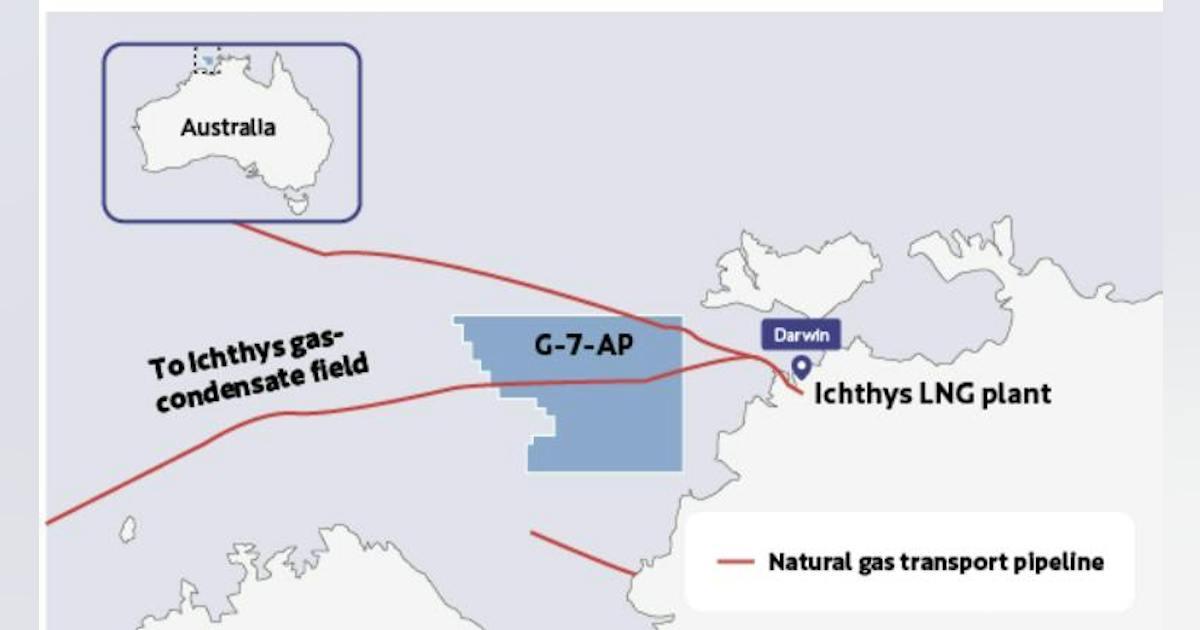
BW Offshore completed the Interim Performance Test (IPT) for the BW Opal floating production, storage, and offloading vessel (FPSO) as part of the commissioning program for the Santos Ltd.-operated Barossa LNG project about 285 km offshore from Darwin in the Northern Territory of Australia. The milestone is part of early-stage technical testing and adjustments following  first gas from the FPSO in September and the beginning of flow from subsea wells. BW Offshore confirmed that key production, processing, and utility systems on the FPSO were operating in an integrated manner and capable of delivering stable performance under production conditions. Following the restart of production in early May, BW Opal has continued gas production and export. Production is being managed in close coordination with Santos during this phase of the ramp-up and commissioning program. BW Opal contains a 358-m hull and accommodation for up to 140 personnel. It has gas handling capacity of 850 MMscfd and condensate handling capacity of 11,000 b/d. The FPSO will feed the Darwin LNG plant for the next two decades. The Barossa LNG project consists of the FPSO, a subsea production system, supporting in-field subsea infrastructure, a gas export pipeline, and a Darwin pipeline duplication. Up to eight subsea wells are planned (six wells from three drill centers) with contingency plans for an additional two wells. Gas and condensate is gathered from the wells through the subsea production system and then brought to the FPSO via a network of subsea infrastructure. Santos operates the Barossa LNG project (50%) with joint venture partners PRISM Energy International Australia Pty Ltd. (37.5%) and JERA Australia (12.5%).

Read More »

Equinor mulls additional Johan Sverdrup development phase

Equinor Energy AS is considering further development of the Johan Sverdrup area resources in the North Sea. Production from discoveries in Tonjer west and east and Geitungen would form the basis for the maturation of a potential phase 4 development in the northern part of the field. The volumes would be developed via subsea tieback to existing Johan Sverdrup infrastructure. Tonjer lies in the northernmost part of the Geitungen terrace in the Johan Sverdrup area. Oil was discovered in the area, but volumes and potential have been uncertain. The drilling of two appraisal wells and a sidetrack have provided a more precise assessment of the resource base.  Preliminary estimates for Tonjer and Geitungen combined are 20-30 MMboe. Further analyses of subsurface data will form the basis for more precise resource estimates. Phase 4 is now being matured towards an investment decision with a possible production start-up in 2029. Johan Sverdrup Johan Sverdrup, which accounts for about one third of Norwegian oil production, lies on the Utsira High (Utsirahøyden) in the central part of the North Sea, 65 km northeast of Sleipner field in water depths of 115 m. The main reservoir contains oil in Upper Jurassic intra-Draupne sandstone. The reservoir depth is 1,900 m. The quality of the main reservoir is excellent with very high permeability. The remaining oil resources are in sandstone in the Upper Triassic Statfjord Group and Middle to Upper Jurassic Vestland Group, as well as in spiculites in the Upper Jurassic Viking Group. Oil was also proven in Permian Zechstein carbonates. Equinor is operator of Johan Sverdrup (42.62%) with partners Aker BP (31.57%), Petoro (17.36%), and TotalEnergies (8.44%).

Read More »

You can’t build sovereign infrastructure with Broadcom, says CISPE

CISPE has cited several reasons why VCF doesn’t fit the bill, in particular highlighting its lack of portability. This means that it doesn’t qualify as resilient under CISPE’s Sovereign and Resilient Cloud Framework. Earlier this month, the EU unveiled proposals for its Cloud and AI Development Act (CADA) to strengthen Europe’s digital economy. CADA will encourage investment in European research, lay down conditions for European data centers, and provide a single EU-wide assessment framework for cloud and AI sovereignty. CISPE said that Broadcom is a long way short of fulfilling the conditions proposed for CADA. Broadcom would fail to meet anything but a Level 1 certification under the CADA sovereignty framework, CISPE said, adding that Broadcom’s terms and conditions offer limited maintenance commitments, no source-code escrow, no substitution plan and no Data Act certification, all likely to fall foul of CADA’s recommendations.

Read More »

Break legacy lock-in: Strategic options for enterprises facing the vSphere 8 deadline

The acquisition of VMware by Broadcom has caused many enterprise IT leaders to reexamine their infrastructure strategies. For organizations running vSphere 8, the October 2027 end-of-support deadline is rapidly becoming a planning priority. What may appear to be a routine upgrade is driving bigger discussions about cost, flexibility, cloud strategy, and long-term infrastructure direction.  Many organizations have not only begun evaluating alternatives but also are leaving VMware.  “VMware has been a great, innovative company,” says Harsha Kotikela, senior director of product and solutions marketing at Nutanix. “But since the acquisition, their business model has fundamentally changed, and that is what is forcing IT leaders to adapt.” Sticker shock, vendor lock-in, and the need for flexibility One of the biggest catalysts has been licensing costs. Organizations that had grown accustomed to predictable contracts have encountered significant pricing increases, creating what Kotikela describes as “sticker shock.” At the same time, some enterprises are reevaluating their vendor relationships due to concerns about support availability and changes in partner engagement models. Beyond immediate operational concerns, IT leaders are also focused on future requirements. Hybrid cloud environments have become the norm, with applications and data distributed across data centers, public clouds, and edge locations. AI initiatives are adding another layer of complexity, requiring infrastructure that can support workloads wherever they need to run. “The future is about flexibility,” Kotikela says. “If enterprises want to implement AI at the edge, in the data center, or in the cloud, they need the capability to manage that environment without creating silos.” That flexibility is becoming a critical factor in infrastructure decisions. Organizations increasingly want platforms that support multiple deployment models, open APIs, and cloud-native technologies to minimize the risk of vendor lock-in. How a future-ready platform addresses IT and business requirements Nutanix positions its architecture around openness and choice, according to

Read More »

Qualcomm’s $3.9 billion purchase of Modular aims to change the data center dynamic

“Nvidia has something like 85% of the AI accelerator chip market,” he pointed out. “Sure, they have nowhere to go but down, but that’s still going to take them a while. More importantly, they have literally spent decades working with practitioners in AI and ML and compute-intensive fields, indoctrinating them into their CUDA software ecosystem. Rewriting that tool chain will take institutional change at most organizations, which means years, if not decades, to uncouple.” “Organizations that think they’ve achieved agnosticism because they’re using high-level abstractions like PyTorch, well,  they have come closest,” he observed. “But just cutting and pasting the same code into AMD Instinct can lead to memory and dependency errors. It’s like VM lift and shifts to the public cloud 10 years ago. Easier, but still possible to screw up.” Nonetheless, Annand said that the deal, if it goes through, is still good news for enterprises. 

Read More »

KKR Bets Big on AI Infrastructure With Helix Launch, Tapping Former AWS CEO Adam Selipsky to Build a New Hyperscale Model

To close industry watchers, it’s really no secret that the AI infrastructure race has entered another phase; one where capital formation itself may become as strategically important as GPUs, power procurement, or liquid cooling. And in launching Helix Digital Infrastructure, investment giant KKR is making a calculated wager that hyperscalers no longer simply need developers or financiers. They need a partner capable of orchestrating capital, energy, connectivity, and data center execution as a unified platform. The significance of that strategy is underscored by the executive chosen to lead it. Adam Selipsky, the former CEO of Amazon Web Services and one of the industry’s most experienced cloud operators, will serve as Co-Founder and CEO of Helix, bringing firsthand experience from the very class of customers the new venture intends to serve. A New Model for AI Infrastructure Helix launches with more than $10 billion in long-duration committed capital from founding investors including KKR, the Kuwait Investment Authority (KIA), NVIDIA, and Vistra. But the headline number tells only part of the story. The company has been structured around an increasingly important thesis: that AI infrastructure can no longer be assembled piecemeal. Rather than treating data centers, electrical supply, transmission capacity, and fiber connectivity as separate procurement exercises, Helix proposes a vertically coordinated approach in which a single organization manages and finances the entire infrastructure stack. According to KKR, the objective is to reduce execution risk and accelerate deployment for hyperscale customers facing unprecedented AI demand. As AI factories grow from hundreds of megawatts toward gigawatt-scale campuses, synchronization among land acquisition, utility planning, financing, construction, and technology deployment has emerged as one of the industry’s defining challenges. Helix is effectively positioning itself as an operating platform designed to simplify that complexity. Why Selipsky Matters The appointment of Adam Selipsky may be the announcement’s

Read More »

Beyond Hyperscale: Why Enterprise Data Centers Still Matter in the AI Era

“The enterprise data centers, even the new ones, tend to be far, far smaller than new hyperscale deployments,” Killian said. “Not uncommon to see enterprises deploy a quarter meg or one meg or two, maybe up to 10 megs. Whereas the hyperscale guys are deploying 40 up to 300 meg facilities.” But scale alone does not tell the story. For every one of the roughly 20 hyperscale users that dominate headlines, Killian noted, there may be 50 to 100 times as many large and mid-sized enterprise users. Those companies run critical business systems, purchase hardware, software, telecom and services, employ large data center teams, and often operate multiple facilities across domestic, edge, EMEA and Asia-Pacific footprints. In other words, enterprise demand may be smaller in unit size, but it remains massive in aggregate. And as AI shifts from training to inference, the enterprise data center could become newly strategic. Enterprise AI Is Not Hyperscale AI Killian’s central point is that enterprise infrastructure requirements differ materially from hyperscale requirements. Hyperscalers are primarily optimizing for massive scale and speed to market. Enterprises, by contrast, tend to prioritize reliability, flexibility, integration into broader IT systems, and audit and compliance. That difference has major implications for developers and colocation providers. “The real industry opportunity is to take some of the innovation and the economies of scale that we’re seeing from the hyperscale builds to deliver smaller chunks of data center capacity,” Killian said. That might mean adapting lessons from 40 MW or 100 MW campuses into enterprise-ready deployments of 2 MW, 4 MW or 8 MW. Killian pointed to providers such as DataBank and Flexential as examples of companies working to deliver hyperscale-derived efficiencies in smaller enterprise increments. He also noted that QTS and other large campus developers may reserve portions of multi-building campuses

Read More »

Revolutionizing Data Center Cooling: Innovations for AI and HPC Growth

This is a crucial point for AI infrastructure. In some markets, water can be as politically and operationally difficult as power. Evaporative cooling and cooling towers can consume large volumes of water, while discharge permits can slow projects or limit operations. Gradiant claims HyperSolved can expand access to alternative sources such as municipal reuse and impaired supplies, reduce reliance on freshwater, protect cooling performance through integrated treatment and AI-enabled operations, and minimize discharge through high-recovery concentration and reuse. The platform uses containerized systems for immediate or temporary capacity while also supporting permanent infrastructure and lifecycle operations from commissioning onward. That fits the AI data center buildout, where developers may need bridge capacity during construction, phased water infrastructure, or interim systems while permanent treatment plants are completed. This can address the speed of deployment issue that plagues many data center solutions. Water is becoming a siting and scaling variable that has to be addressed. A site may have land and power prospects, but if water sourcing, reuse, or discharge cannot be solved, the project will face higher costs, delays, and local opposition. Gradiant is positioning itself as the managed water layer for hyperscale AI, similar to how power providers, cooling vendors, and network suppliers each own critical infrastructure domains. The Pattern: Hybridization, Standardization, and Industrial Scale The announcements included here make it clear that cooling is seeing significant attention from technology vendors, and not just state-of-the-art new technologies such as direct-to-chip, but also traditional data center air cooling. T-Global and SiPearl are working on high-conductivity materials and two-phase modules for HPC chips. Castrol is providing fluids for direct-to-chip and immersion environments. These are technologies aimed at the heat source itself, where higher chip power and rack density are overwhelming conventional approaches. The reference design offerings from Johnson Controls acknowledges the importance

Read More »

Microsoft will invest $80B in AI data centers in fiscal 2025

And Microsoft isn’t the only one that is ramping up its investments into AI-enabled data centers. Rival cloud service providers are all investing in either upgrading or opening new data centers to capture a larger chunk of business from developers and users of large language models (LLMs).  In a report published in October 2024, Bloomberg Intelligence estimated that demand for generative AI would push Microsoft, AWS, Google, Oracle, Meta, and Apple would between them devote $200 billion to capex in 2025, up from $110 billion in 2023. Microsoft is one of the biggest spenders, followed closely by Google and AWS, Bloomberg Intelligence said. Its estimate of Microsoft’s capital spending on AI, at $62.4 billion for calendar 2025, is lower than Smith’s claim that the company will invest $80 billion in the fiscal year to June 30, 2025. Both figures, though, are way higher than Microsoft’s 2020 capital expenditure of “just” $17.6 billion. The majority of the increased spending is tied to cloud services and the expansion of AI infrastructure needed to provide compute capacity for OpenAI workloads. Separately, last October Amazon CEO Andy Jassy said his company planned total capex spend of $75 billion in 2024 and even more in 2025, with much of it going to AWS, its cloud computing division.

Read More »

John Deere unveils more autonomous farm machines to address skill labor shortage

Join our daily and weekly newsletters for the latest updates and exclusive content on industry-leading AI coverage. Learn More Self-driving tractors might be the path to self-driving cars. John Deere has revealed a new line of autonomous machines and tech across agriculture, construction and commercial landscaping. The Moline, Illinois-based John Deere has been in business for 187 years, yet it’s been a regular as a non-tech company showing off technology at the big tech trade show in Las Vegas and is back at CES 2025 with more autonomous tractors and other vehicles. This is not something we usually cover, but John Deere has a lot of data that is interesting in the big picture of tech. The message from the company is that there aren’t enough skilled farm laborers to do the work that its customers need. It’s been a challenge for most of the last two decades, said Jahmy Hindman, CTO at John Deere, in a briefing. Much of the tech will come this fall and after that. He noted that the average farmer in the U.S. is over 58 and works 12 to 18 hours a day to grow food for us. And he said the American Farm Bureau Federation estimates there are roughly 2.4 million farm jobs that need to be filled annually; and the agricultural work force continues to shrink. (This is my hint to the anti-immigration crowd). John Deere’s autonomous 9RX Tractor. Farmers can oversee it using an app. While each of these industries experiences their own set of challenges, a commonality across all is skilled labor availability. In construction, about 80% percent of contractors struggle to find skilled labor. And in commercial landscaping, 86% of landscaping business owners can’t find labor to fill open positions, he said. “They have to figure out how to do

Read More »

2025 playbook for enterprise AI success, from agents to evals

Join our daily and weekly newsletters for the latest updates and exclusive content on industry-leading AI coverage. Learn More 2025 is poised to be a pivotal year for enterprise AI. The past year has seen rapid innovation, and this year will see the same. This has made it more critical than ever to revisit your AI strategy to stay competitive and create value for your customers. From scaling AI agents to optimizing costs, here are the five critical areas enterprises should prioritize for their AI strategy this year. 1. Agents: the next generation of automation AI agents are no longer theoretical. In 2025, they’re indispensable tools for enterprises looking to streamline operations and enhance customer interactions. Unlike traditional software, agents powered by large language models (LLMs) can make nuanced decisions, navigate complex multi-step tasks, and integrate seamlessly with tools and APIs. At the start of 2024, agents were not ready for prime time, making frustrating mistakes like hallucinating URLs. They started getting better as frontier large language models themselves improved. “Let me put it this way,” said Sam Witteveen, cofounder of Red Dragon, a company that develops agents for companies, and that recently reviewed the 48 agents it built last year. “Interestingly, the ones that we built at the start of the year, a lot of those worked way better at the end of the year just because the models got better.” Witteveen shared this in the video podcast we filmed to discuss these five big trends in detail. Models are getting better and hallucinating less, and they’re also being trained to do agentic tasks. Another feature that the model providers are researching is a way to use the LLM as a judge, and as models get cheaper (something we’ll cover below), companies can use three or more models to

Read More »

OpenAI’s red teaming innovations define new essentials for security leaders in the AI era

Join our daily and weekly newsletters for the latest updates and exclusive content on industry-leading AI coverage. Learn More OpenAI has taken a more aggressive approach to red teaming than its AI competitors, demonstrating its security teams’ advanced capabilities in two areas: multi-step reinforcement and external red teaming. OpenAI recently released two papers that set a new competitive standard for improving the quality, reliability and safety of AI models in these two techniques and more. The first paper, “OpenAI’s Approach to External Red Teaming for AI Models and Systems,” reports that specialized teams outside the company have proven effective in uncovering vulnerabilities that might otherwise have made it into a released model because in-house testing techniques may have missed them. In the second paper, “Diverse and Effective Red Teaming with Auto-Generated Rewards and Multi-Step Reinforcement Learning,” OpenAI introduces an automated framework that relies on iterative reinforcement learning to generate a broad spectrum of novel, wide-ranging attacks. Going all-in on red teaming pays practical, competitive dividends It’s encouraging to see competitive intensity in red teaming growing among AI companies. When Anthropic released its AI red team guidelines in June of last year, it joined AI providers including Google, Microsoft, Nvidia, OpenAI, and even the U.S.’s National Institute of Standards and Technology (NIST), which all had released red teaming frameworks. Investing heavily in red teaming yields tangible benefits for security leaders in any organization. OpenAI’s paper on external red teaming provides a detailed analysis of how the company strives to create specialized external teams that include cybersecurity and subject matter experts. The goal is to see if knowledgeable external teams can defeat models’ security perimeters and find gaps in their security, biases and controls that prompt-based testing couldn’t find. What makes OpenAI’s recent papers noteworthy is how well they define using human-in-the-middle

Read More »