
Stay Ahead, Stay ONMINE

Valero wraps St. Charles FCC project, reports record earnings

Valero Energy Corp. has completed the $230-million fluid catalytic cracking (FCC) unit optimization project on schedule and within budget at its 340,000-b/d St. Charles refinery in Norco, St. Charles Parish, La., about 25 miles west of New Orleans, the San Antonio-based operator said in reporting its third-quarter 2026 earnings on Oct. 22. The FCC upgrade […]

Valero Energy Corp. has completed the $230-million fluid catalytic cracking (FCC) unit optimization project on schedule and within budget at its 340,000-b/d St. Charles refinery in Norco, St. Charles Parish, La., about 25 miles west of New Orleans, the San Antonio-based operator said in reporting its third-quarter 2026 earnings on Oct. 22.

The FCC upgrade enhances the refinery’s ability to produce higher-value products, particularly alkylate and gasoline, positioning the site to capture premium margins as refining fundamentals remain underpinned by limited global capacity additions, Valero said.

Originally announced in 2021 as part of Valero’s long-term capital allocation strategy, the St. Charles FCC unit optimization is now operational and anticipated to strengthen the refinery’s competitive position in heavy crude processing and product slate optimization.

In its April presentation to investors, Valero said the FCC project was to include installation of a new compressor and upgrading of existing equipment to achieve an incremental 15,000-b/d FCC throughput rate using residual feedstock.

The project aims to improve product yields to increase the refinery’s incremental production of propylene by 3,000 b/d to fill the site’s downstream alkylation unit capacity to produce an incremental 6,000 b/d of high-value alkylate.

The FCC upgrade is also anticipated to yield an 8,000-b/d Incremental production of gasoline, according to the April presentation.

Completion of the FCC project marks a strategic milestone for Valero as the company delivered third-quarter 2026 results underscored by exceptional financial performance and operational execution. Valero reported net income of $6.8 billion for the third quarter, compared with $1.1 billion during the same period a year earlier.

Adjusted net income for the quarter was $6.8 billion, which was six times higher than its $1.1-billion adjusted net income in third-quarter 2025.

Refining segment powers windfall

The refining segment delivered the bulk of earnings gains, with the company reporting operating income of $8.8 billion for third-quarter 2026, nearly sevenfold higher than the $1.6 billion posted in third-quarter 2025. Adjusted operating income matched the reported figure at $8.8 billion, compared with $1.7 billion a year earlier.

Refining throughput across the operator’s total system averaged 3 million b/d for the quarter, maintaining near-record system-wide utilization rates.

“Our refineries operated at near-record utilization rates, providing a reliable supply of critical transportation fuels during the quarter,” said Lane Riggs, Valero’s chairman, chief executive officer, and president. The company’s ability to sustain high throughput reflects strong demand fundamentals and operational excellence, attributes that management said it expects to remain supportive through yearend.

Riggs noted that third-quarter 2026 performance underscores “the quality of our assets and our consistent operational, commercial, and financial performance,” attributing results to “the long-term strategy that we’ve been committed to for well over a decade.” Management’s remarks suggest Valero sees continued strength in refining fundamentals, driven by demand growth and constrained industry capacity expansions.

For 2026, Valero expects capital investments of about $1.7 billion, with about $1.4 billion directed to sustaining capital and the remainder allocated to optimization and growth projects across its refining and ethanol operations.


Shape
Shape
Stay Ahead

Explore More Insights

Stay ahead with more perspectives on cutting-edge power, infrastructure, energy,  bitcoin and AI solutions. Explore these articles to uncover strategies and insights shaping the future of industries.

Shape

Aker BP, Höegh Evi secure EU funding for Atlas CCS project

Aker BP and Höegh Evi have been awarded €223 million (about US$250 million) from the European Union Innovation Fund to support development of the Atlas carbon capture and storage (CCS) project in Norway. The Atlas project is designed as a large-scale CCS network linking industrial CO2 emitters in Europe with

Read More »

Extreme wants to use idle network compute capacity for local AI

“We’ve spent decades building networks that reach every corner of the enterprise, and those networks hold a lot of idle compute. Exchange zones will put that compute to work, letting AI run locally on infrastructure customers already own. That delivers sovereignty, local inferencing, and better economics than sending everything to

Read More »

GeoPark awarded Corralera Noreste block in Vaca Muerta bid round

The block was awarded through Neuquén Province’s Ronda 1/2026 licensing round, conducted by provincial energy company Gas y Petróleo del Neuquén (GyP). GeoPark plans to advance the block through a phased appraisal program beginning with the drilling and completion of two horizontal wells, followed by extended testing to evaluate productivity and resource quality. Future appraisal and development spending will depend on technical results and project economics, the company said. Corralera NE lies near Rincón de los Sauces in the northern Vaca Muerta trend. The award adds about 26,900 gross acres (24,200 net acres) to GeoPark’s portfolio at a total committed cost, including the entry bonus, of about $95 million. GeoPark estimates the block contains about 200 MMboe of unrisked gross resource potential based on two landing zones, with additional upside from two further prospective horizons. The company said potential gross peak production from the initial two landing zones could reach 40,000-50,000 boe/d, subject to successful appraisal and development.

Read More »

Valero wraps St. Charles FCC project, reports record earnings

Valero Energy Corp. has completed the $230-million fluid catalytic cracking (FCC) unit optimization project on schedule and within budget at its 340,000-b/d St. Charles refinery in Norco, St. Charles Parish, La., about 25 miles west of New Orleans, the San Antonio-based operator said in reporting its third-quarter 2026 earnings on Oct. 22. The FCC upgrade enhances the refinery’s ability to produce higher-value products, particularly alkylate and gasoline, positioning the site to capture premium margins as refining fundamentals remain underpinned by limited global capacity additions, Valero said. Originally announced in 2021 as part of Valero’s long-term capital allocation strategy, the St. Charles FCC unit optimization is now operational and anticipated to strengthen the refinery’s competitive position in heavy crude processing and product slate optimization. In its April presentation to investors, Valero said the FCC project was to include installation of a new compressor and upgrading of existing equipment to achieve an incremental 15,000-b/d FCC throughput rate using residual feedstock. The project aims to improve product yields to increase the refinery’s incremental production of propylene by 3,000 b/d to fill the site’s downstream alkylation unit capacity to produce an incremental 6,000 b/d of high-value alkylate. The FCC upgrade is also anticipated to yield an 8,000-b/d Incremental production of gasoline, according to the April presentation. Completion of the FCC project marks a strategic milestone for Valero as the company delivered third-quarter 2026 results underscored by exceptional financial performance and operational execution. Valero reported net income of $6.8 billion for the third quarter, compared with $1.1 billion during the same period a year earlier. Adjusted net income for the quarter was $6.8 billion, which was six times higher than its $1.1-billion adjusted net income in third-quarter 2025. Refining segment powers windfall The refining segment delivered the bulk of earnings gains, with the company reporting

Read More »

Tight product supplies lift US summer refinery utilization to highest level since 1998

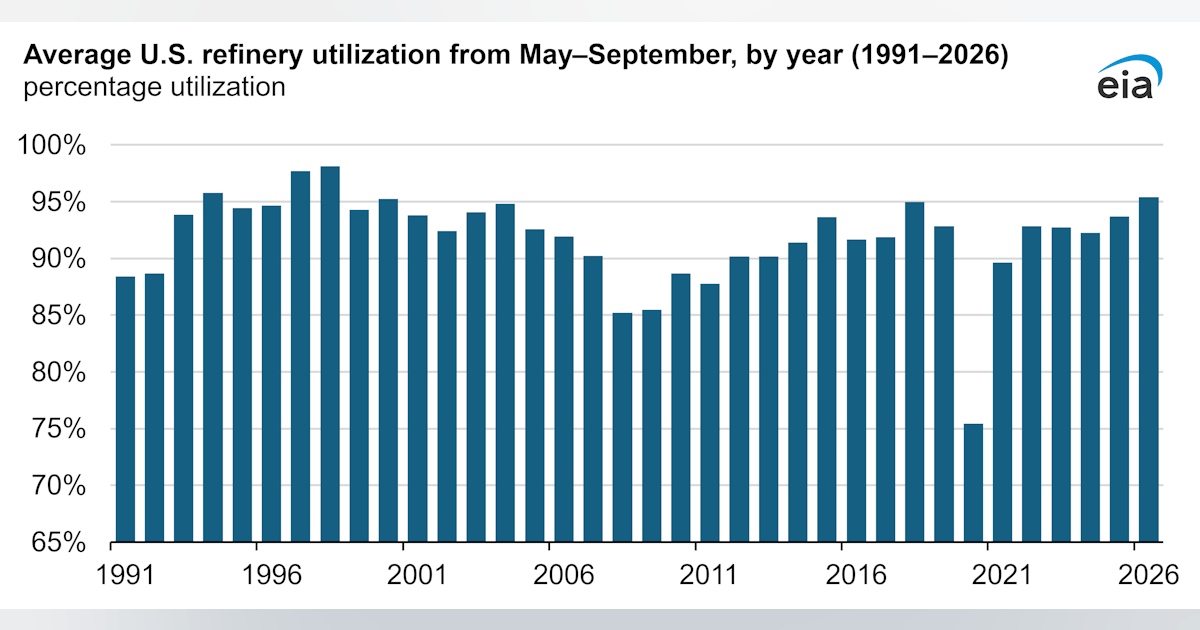
US refinery utilization averaged more than 95% during May–September 2026, the highest for those months since 1998, as tight global product supplies, particularly for diesel, strengthened margins, and demand for US exports, according to the US Energy Information Administration (EIA). The strong operating rates coincided with a widening profitability gap between US refiners and those in Europe and Asia. In its October Oil Market Report, the International Energy Agency (IEA) said relatively inexpensive crude supplies helped US refiners achieve record margins in September, while rising feedstock and freight costs squeezed competitors overseas. Despite elevated utilization, total US refinery output reached only its highest level since 2019. US refining capacity has declined 4% since then, limiting the output gains available from higher operating rates, EIA said. Utilization eased during the first 3 weeks of October from its summer highs, but remained above the 2021–25 seasonal average. US margins outperform IEA’s US Gulf Coast light sweet cracking margin indicator averaged $49.84/bbl in September, up $5.97/bbl from August. Heavy sour coking margins rose $11.57/bbl to $61.36/bbl, reflecting the advantage of access to lower-cost crude. By comparison, light sweet cracking margins averaged $30.15/bbl in Northwest Europe and $19.26/bbl in Singapore, down $5.97/bbl and $7.34/bbl, respectively. Medium sour cracking margins briefly turned negative in both regions during September. Record tanker freight rates widened regional crude cost differences, helping US refiners outperform competitors in Europe and Asia. IEA warned that deteriorating profitability could prompt some European refiners to reduce runs despite tight product supplies and low inventories. US product inventories also remained tight despite high refinery activity. Combined gasoline, jet fuel, and gasoil/diesel stocks entered October at 352 million bbl, their lowest seasonally adjusted level since 2008, according to IEA. Robust exports and autumn maintenance added pressure on inventories, while unplanned Midwest refinery outages further supported

Read More »

EIA: US crude oil inventories down 3.1 million bbl

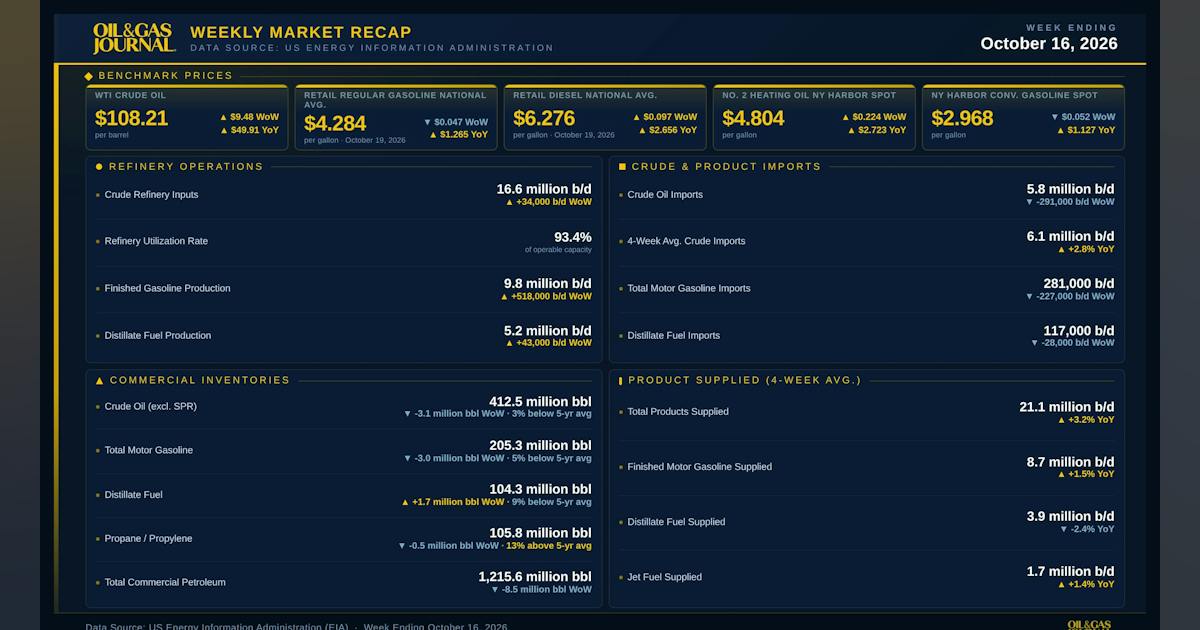
US crude oil inventories for the week ended Oct. 16, excluding the Strategic Petroleum Reserve, decreased by 3.1 million bbl from the previous week, according to data from the US Energy Information Administration (EIA). At 412.5 million bbl, US crude oil inventories are 3% below the 5-year average for this time of year, the EIA report indicated. Gasoline inventories decreased 3.0 million bbl, 5% below the 5-year average. Propane-propylene inventories decreased 500,000 bbl, 13% above the 5-year average. Total commercial petroleum inventories decreased by 8.5 million bbl for the week. Distillate inventories increased 1.7 million bbl, 9% below the 5-year average. US crude oil refinery inputs averaged 16.6 million b/d for the week ended Oct. 16, which was 34,000 b/d more than the previous week’s average. Refineries operated at 93.4% of capacity. Gasoline output averaged 9.8 million b/d, and distillate production increased to 5.2 million b/d. Crude oil imports decreased 291,000 b/d to 5.8 million b/d. The 4-week average of 6.1 million b/d is 2.8% above the year-ago level. Gasoline imports averaged 281,000 b/d; distillate imports averaged 117,000 b/d. Over the past four weeks, total product supplied averaged 21.1 million b/d, up 3.2% year over year. The 4-week average for gasoline product supplied increased 1.5% year over year to 8.7 million b/d, while the 4-week average for distillate product supplied decreased 2.4% to 3.9 million b/d. The 4-week average for jet fuel product supplied increased 1.4% year over year.

Read More »

Adura gets NSTA consent to develop Jackdaw North Sea gas field

Adura Energy has received North Sea Transition Authority (NSTA) consent to develop Jackdaw natural gas and condensate field, off the coast of northeast Scotland, following consideration of the company’s environmental statement and agreement to the grant of consent.  NSTA originally granted development consent for Jackdaw to Shell UK in June 2022. But this consent was deemed unlawful and overturned by the Scottish courts in January 2025, following findings that initial environmental approvals had failed to account for the impact of secondary emissions. Estimated reserves at Jackdaw are 72-200 MMboe. The new approval clears the way for Jackdaw to start supplying gas to British homes, power stations, and businesses within weeks, according to Adura, substantially all of the project’s physical infrastructure already having been completed. Alongside Jackdaw’s reapproval, the UK government announced it will launch a £2-billion ($2.7-billion) energy wealth fund fueled by North Sea oil and gas tax revenues to reinvest directly into renewable projects. Adura is a joint venture formed when Shell and Equinor ASA merged their UK offshore oil and gas businesses. The associated Rosebank oil field is following Jackdaw in the regulatory process. An NSTA decision on it is anticipated in the coming weeks. A spokesperson for INEOS Group Ltd. said that “Jackdaw approval is welcome, but the government must stop taxing the North Sea into decline. Approving Jackdaw is the right decision, but this does not stop the damage being done to the North Sea. And it appears Rosebank remains stuck in political limbo.”

Read More »

Energy Department Authorizes Exchange from Northeast Home Heating Oil Reserve

WASHINGTON— The U.S. Department of Energy today announced a Request for Proposal for an exchange of up to 315,000 barrels of ultra-low sulfur distillate (fuel oil) from the Northeast Home Heating Oil Reserve (NEHHOR). This solicitation is structured to mitigate supply chain challenges disrupting fuel oil supply. The announced exchange underscores the Trump Administration’s commitment to reliable energy access and lowering costs. Under the terms of the exchange, borrowing companies must return the same volume of fuel oil plus a premium, ensuring that NEHHOR is refilled ahead of the 2027–2028 heating season. “The Trump Administration is committed to doing everything in our power to lower energy costs for the American people,” said U.S. Secretary of Energy Chris Wright. “After receiving Senators Collins’ and Kings’ letter and extensive discussions with Senator Collins, I have directed the Department to exchange barrels from our Northeast Home Heating Oil Reserve to mitigate heightened home heating oil costs during the upcoming winter. Of course, this is a temporary measure to solve a temporary supply disruption. I encourage the governors of New York and New England to work with the Trump Administration to build the Constitution Pipeline and replace home heating oil with low-cost natural gas. Doing so would save their residents billions of dollars in home heating and electricity costs.” DOE will exchange up to 315,000 barrels of fuel oil from NEHHOR storage sites in South Portland, Maine; Boston, Massachusetts; and New Haven, Connecticut. Fuel transfers or deliveries are scheduled to be completed by November 13, 2026. The minimum offer quantity is 25,000 barrels, but not to exceed 30,000, and the volume available per site shall not exceed 150,000. Offerors may submit multiple offers. This approach ensures a competitive bidding process in which both fuel retailers and terminal holders can participate and that product can

Read More »

AI’s Fragmented Regulatory Landscape Becomes a Data Center Design Challenge

Designing for Verifiable Operations For an operator serving tenants across jurisdictions, a claim about where a workload runs must be one that the responsible service provider can substantiate. That means identifying who can administer the workload, how data moves between regions, where backups are maintained, and which records document those arrangements. A tenant promising to run a workload within a particular jurisdiction needs assurance that its data, backups, and access arrangements satisfy the applicable requirements. Workload placement alone cannot establish where a backup resides or from where an administrator can access a system. Those questions must be addressed across compute, storage, network paths, security controls, and third-party access, with responsibilities established during procurement and verified before service begins. Not all of those controls necessarily reside with the data center operator. A colocation provider may be responsible for physical access, facility security, and designated infrastructure services, while a tenant or cloud provider controls the applications, storage configuration, backup locations, and logical access to workloads. The operating agreement must distinguish between what the facility provider can verify directly and what remains within the tenant’s systems. The EU AI Act makes that division of responsibility particularly important. Its requirements for covered high-risk AI systems include logging, documentation, human oversight, robustness, and cybersecurity, subject to the law’s applicable implementation dates. These obligations attach to the relevant providers and deployers of AI systems, rather than automatically to every company hosting them. A data center operator may nevertheless be required by contract to provide physical-access records, security evidence, or information about infrastructure location so that a tenant can substantiate its own compliance. A further distinction concerns data residency. The AI Act is not itself a general requirement to keep all AI workloads or associated data within the European Union. Geographic restrictions may instead arise from data-protection

Read More »

Microsoft exits UK AI data center project over electricity delays

“We remain committed to both the Loughton project and the UK, and we are exploring alternative power sources for the site, as well ​as other expansion sites in the UK,” Nscale added. “This decision relates to a single ​site,” a Microsoft spokesperson said of its termination of an agreement for the data ​center in Loughton, Essex, where Nscale had faced delays, with electricity grid ⁠officials telling the AI company they did not expect to supply power to the site ​until the 2030s. “Our relationship with Microsoft remains strong and long-term, and this unfortunate London-wide grid ​issue has no impact on our other contracts,” a spokesperson for Nscale told Reuters.

Read More »

AI networks drive SONiC boom

Aviz Networks: Aviz, which received early funding help from Cisco, offers a pre-tested, multi-ASIC, hardware agnostic, enterprise-ready SONiC distro with added features such as bug fixes, telemetry and support. Hedgehog Networks: Founded by former Cisco exec Marc Austin in 2022 to bring SONiC-based disaggregated networking to the enterprise, Hedgehog’s mission is to simplify the deployment of private cloud AI networks with automation and orchestration based on Kubernetes. Upscale AI: This startup has raised $500 million with the goal of building a new networking platform from ground up, starting with its own silicon. The company is targeting AI data centers as its sole market and is using SONiC as the NOS. Most recently, Upscale introduced Token Fabric architecture, which combines the company’s own SkyFabriX scale-up silicon, scale-out systems built on Nvidia Spectrum-X Ethernet, and a common software layer for operations. General availability is planned for early 2027. The announcement builds on two earlier milestones. Upscale, based in Santa Clara, Calif., emerged from stealth in September 2025 with a $100 million seed round. In June, it raised an additional $190 million  4. SONiC expands beyond the data center Community support is the lifeblood of any open-source project. Under the Linux Foundation, the SONiC community has grown to more than 4,300 contributors. Heavyweight members include Alibaba, Arista, Broadcom, Cisco, Dell, Google, Microsoft, Nokia, and Nvidia. The SONiC community is currently working to extend the technology from the data center to the network edge. The PoE Edge Networks with SONiC (PENS) workgroup, led by Aviz, Wistron, Cisco and Celestica, is working to adapt SONiC for edge LANs. Specifically, the group is integrating protocols consistent with Wi-Fi networks and IoT devices, such as Power Over Ethernet (PoE) and 802.1x.

Read More »

SONiC momentum continues at OCP Global Summit

This will complete SONiC integration across the Cisco multi-silicon Nexus switching portfolio, according to a blog post by Surbhi Paul, director, product management, for data center AI networking at Cisco.  “For organizations deploying Cisco 8000 Series across WAN backbones and core transport, extending Cisco-validated SONiC to the Nexus switches creates a unified, end-to-end, open network fabric,” Cisco stated. “Customers eliminate vendor silos, leveraging a single supply chain, shared FRR routing tools, and one Technical Assistance Center (TAC) contract from the WAN edge deep into the data center core.” “Built for AI infrastructure providers scaling 8000 to 32,000+ GPU clusters. High-density 400G/800G Cisco Nexus (N9100) switches (NVIDIA Spectrum-X) and Cisco Nexus (Cloud Scale) switches allow architects to tune RoCEv2 congestion algorithms (PFC/ECN) within SONiC, maximizing GPU training efficiency without risking multi-vendor support fragmentation,” Cisco stated.

Read More »

AI’s GPU Refresh Cycle Is Becoming a Stranded-Capital Problem

The AI infrastructure buildout is measured in gigawatts and successive generations of accelerators. But as operators bring new compute capacity online, a less visible question is gaining financial urgency: What happens to GPU systems when their first production assignment ends? For hardware that remains functional but no longer meets the performance or efficiency requirements of a leading-edge AI cluster, retirement need not mean obsolescence. Equipment may be redeployed, resold, harvested for components or processed to recover materials. The outcome depends on decisions made long before a system leaves its rack. That was the central argument advanced by Linda Li, chief strategy officer of Re-Teck and its parent company, Li Tong Group, in the latest onsite installment of the DCF Show podcast, hosted by Data Center Frontier Contributing Editor Doug Black at the DCF Trends Summit 2026 in Northern Virginia. For Li, the acceleration of GPU refresh cycles is making lifecycle management a question of capital preservation, facilities design and executive governance—not merely IT asset disposition. Plan for the Exit Before the Equipment Arrives Li draws on more than two decades of her company’s work in reverse supply chains for consumer electronics and telecommunications equipment. Both sectors have managed rapid generational shifts without assuming that every displaced device had exhausted its useful life. “We are dealing with a totally different organism,” she said, describing the combination of rapid accelerator iterations, rising rack power density and increasingly sophisticated thermal requirements. The response, in her view, has two levels. The first is physical infrastructure: facilities designed to accommodate successive generations of servers without extensive reconstruction. Scalable power distribution, adaptable raceways, modular rack systems and high-capacity air and liquid cooling can create room for hardware transitions that may arrive sooner than originally expected. The second is the network of partners and contracts around the

Read More »

Beyond Colossus: 5C Advances $575M Memphis AI Factory Expansion

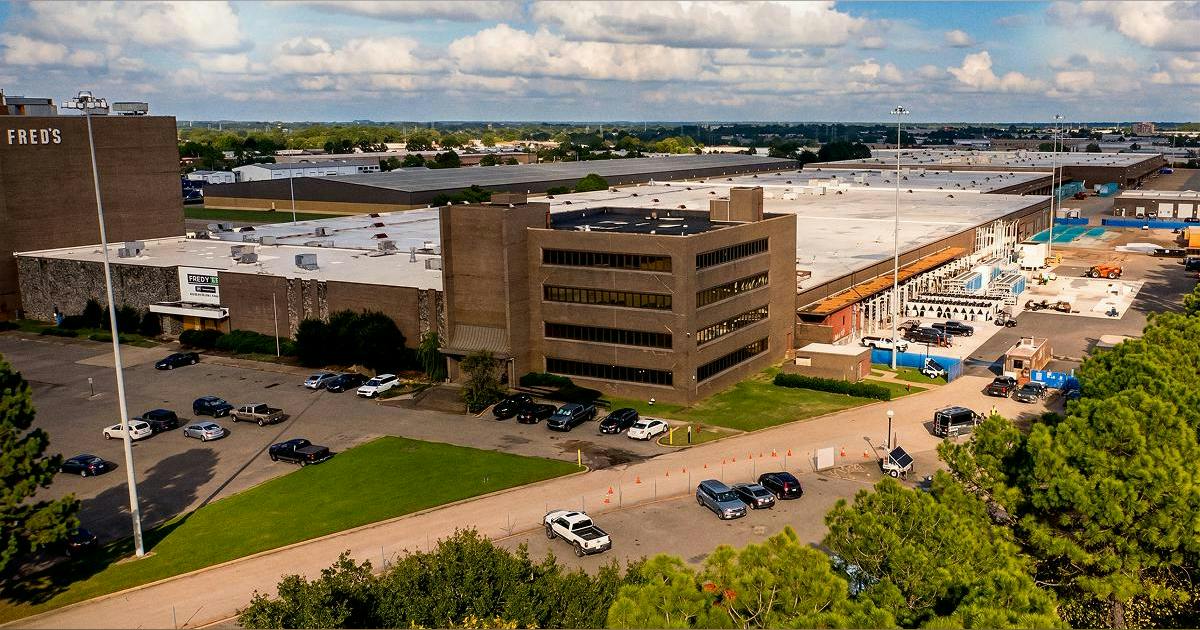
Memphis has emerged as a major center of AI infrastructure development, driven largely by the extraordinary scale of xAI’s Colossus supercomputing operations. But the city’s growing AI computing market extends beyond Elon Musk’s flagship project. At the former headquarters and distribution complex of discount retailer Fred’s, 5C Data Centers is developing another substantial AI computing facility, combining industrial adaptive reuse with a phased expansion strategy and plans for behind-the-meter power generation. On October 6, 2026, a $575 million commercial alteration permit application was filed for the fourth phase of 5C’s MEM01 data center at 4300 Getwell Road. The application covers approximately 504,000 square feet of the property’s 1.1 million-square-foot building, representing the largest construction phase yet proposed at the site. MEM01 is already operating. According to September reporting from The Daily Memphian, 5C had established operations in approximately 200,000 square feet of the former Fred’s property, leaving substantial additional space available for conversion. The latest permit application marks a significant escalation in the scope of the development. The expansion also introduces a major new element to 5C’s power strategy. On October 11, 5C Group Chief Revenue Officer Brad Nimri told The Daily Memphian that the company plans to increase available power at MEM01 from approximately 20 MW to 84 MW over the next six months, using fuel cell technology to supply the additional capacity rather than relying on a corresponding increase in electricity from Memphis Light, Gas and Water (MLGW). Like Colossus, which began with the conversion of a former Electrolux manufacturing facility, 5C’s development reflects the growing role of industrial adaptive reuse in AI infrastructure. The projects differ considerably in scale and their approaches to on-site power generation, but both illustrate the challenge of transforming existing industrial properties into high-density computing environments with substantial electrical requirements. As Memphis considers

Read More »

Microsoft will invest $80B in AI data centers in fiscal 2025

And Microsoft isn’t the only one that is ramping up its investments into AI-enabled data centers. Rival cloud service providers are all investing in either upgrading or opening new data centers to capture a larger chunk of business from developers and users of large language models (LLMs).  In a report published in October 2024, Bloomberg Intelligence estimated that demand for generative AI would push Microsoft, AWS, Google, Oracle, Meta, and Apple would between them devote $200 billion to capex in 2025, up from $110 billion in 2023. Microsoft is one of the biggest spenders, followed closely by Google and AWS, Bloomberg Intelligence said. Its estimate of Microsoft’s capital spending on AI, at $62.4 billion for calendar 2025, is lower than Smith’s claim that the company will invest $80 billion in the fiscal year to June 30, 2025. Both figures, though, are way higher than Microsoft’s 2020 capital expenditure of “just” $17.6 billion. The majority of the increased spending is tied to cloud services and the expansion of AI infrastructure needed to provide compute capacity for OpenAI workloads. Separately, last October Amazon CEO Andy Jassy said his company planned total capex spend of $75 billion in 2024 and even more in 2025, with much of it going to AWS, its cloud computing division.

Read More »

John Deere unveils more autonomous farm machines to address skill labor shortage

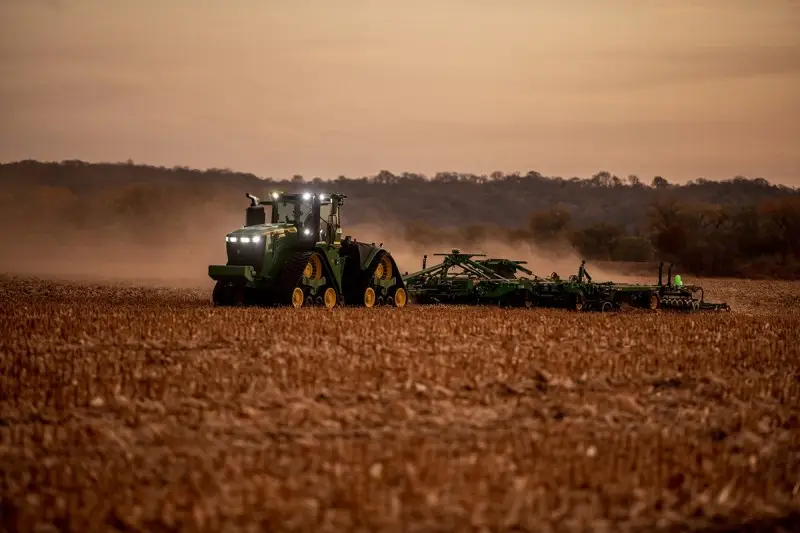
Join our daily and weekly newsletters for the latest updates and exclusive content on industry-leading AI coverage. Learn More Self-driving tractors might be the path to self-driving cars. John Deere has revealed a new line of autonomous machines and tech across agriculture, construction and commercial landscaping. The Moline, Illinois-based John Deere has been in business for 187 years, yet it’s been a regular as a non-tech company showing off technology at the big tech trade show in Las Vegas and is back at CES 2025 with more autonomous tractors and other vehicles. This is not something we usually cover, but John Deere has a lot of data that is interesting in the big picture of tech. The message from the company is that there aren’t enough skilled farm laborers to do the work that its customers need. It’s been a challenge for most of the last two decades, said Jahmy Hindman, CTO at John Deere, in a briefing. Much of the tech will come this fall and after that. He noted that the average farmer in the U.S. is over 58 and works 12 to 18 hours a day to grow food for us. And he said the American Farm Bureau Federation estimates there are roughly 2.4 million farm jobs that need to be filled annually; and the agricultural work force continues to shrink. (This is my hint to the anti-immigration crowd). John Deere’s autonomous 9RX Tractor. Farmers can oversee it using an app. While each of these industries experiences their own set of challenges, a commonality across all is skilled labor availability. In construction, about 80% percent of contractors struggle to find skilled labor. And in commercial landscaping, 86% of landscaping business owners can’t find labor to fill open positions, he said. “They have to figure out how to do

Read More »

2025 playbook for enterprise AI success, from agents to evals

Join our daily and weekly newsletters for the latest updates and exclusive content on industry-leading AI coverage. Learn More 2025 is poised to be a pivotal year for enterprise AI. The past year has seen rapid innovation, and this year will see the same. This has made it more critical than ever to revisit your AI strategy to stay competitive and create value for your customers. From scaling AI agents to optimizing costs, here are the five critical areas enterprises should prioritize for their AI strategy this year. 1. Agents: the next generation of automation AI agents are no longer theoretical. In 2025, they’re indispensable tools for enterprises looking to streamline operations and enhance customer interactions. Unlike traditional software, agents powered by large language models (LLMs) can make nuanced decisions, navigate complex multi-step tasks, and integrate seamlessly with tools and APIs. At the start of 2024, agents were not ready for prime time, making frustrating mistakes like hallucinating URLs. They started getting better as frontier large language models themselves improved. “Let me put it this way,” said Sam Witteveen, cofounder of Red Dragon, a company that develops agents for companies, and that recently reviewed the 48 agents it built last year. “Interestingly, the ones that we built at the start of the year, a lot of those worked way better at the end of the year just because the models got better.” Witteveen shared this in the video podcast we filmed to discuss these five big trends in detail. Models are getting better and hallucinating less, and they’re also being trained to do agentic tasks. Another feature that the model providers are researching is a way to use the LLM as a judge, and as models get cheaper (something we’ll cover below), companies can use three or more models to

Read More »

OpenAI’s red teaming innovations define new essentials for security leaders in the AI era

Join our daily and weekly newsletters for the latest updates and exclusive content on industry-leading AI coverage. Learn More OpenAI has taken a more aggressive approach to red teaming than its AI competitors, demonstrating its security teams’ advanced capabilities in two areas: multi-step reinforcement and external red teaming. OpenAI recently released two papers that set a new competitive standard for improving the quality, reliability and safety of AI models in these two techniques and more. The first paper, “OpenAI’s Approach to External Red Teaming for AI Models and Systems,” reports that specialized teams outside the company have proven effective in uncovering vulnerabilities that might otherwise have made it into a released model because in-house testing techniques may have missed them. In the second paper, “Diverse and Effective Red Teaming with Auto-Generated Rewards and Multi-Step Reinforcement Learning,” OpenAI introduces an automated framework that relies on iterative reinforcement learning to generate a broad spectrum of novel, wide-ranging attacks. Going all-in on red teaming pays practical, competitive dividends It’s encouraging to see competitive intensity in red teaming growing among AI companies. When Anthropic released its AI red team guidelines in June of last year, it joined AI providers including Google, Microsoft, Nvidia, OpenAI, and even the U.S.’s National Institute of Standards and Technology (NIST), which all had released red teaming frameworks. Investing heavily in red teaming yields tangible benefits for security leaders in any organization. OpenAI’s paper on external red teaming provides a detailed analysis of how the company strives to create specialized external teams that include cybersecurity and subject matter experts. The goal is to see if knowledgeable external teams can defeat models’ security perimeters and find gaps in their security, biases and controls that prompt-based testing couldn’t find. What makes OpenAI’s recent papers noteworthy is how well they define using human-in-the-middle

Read More »