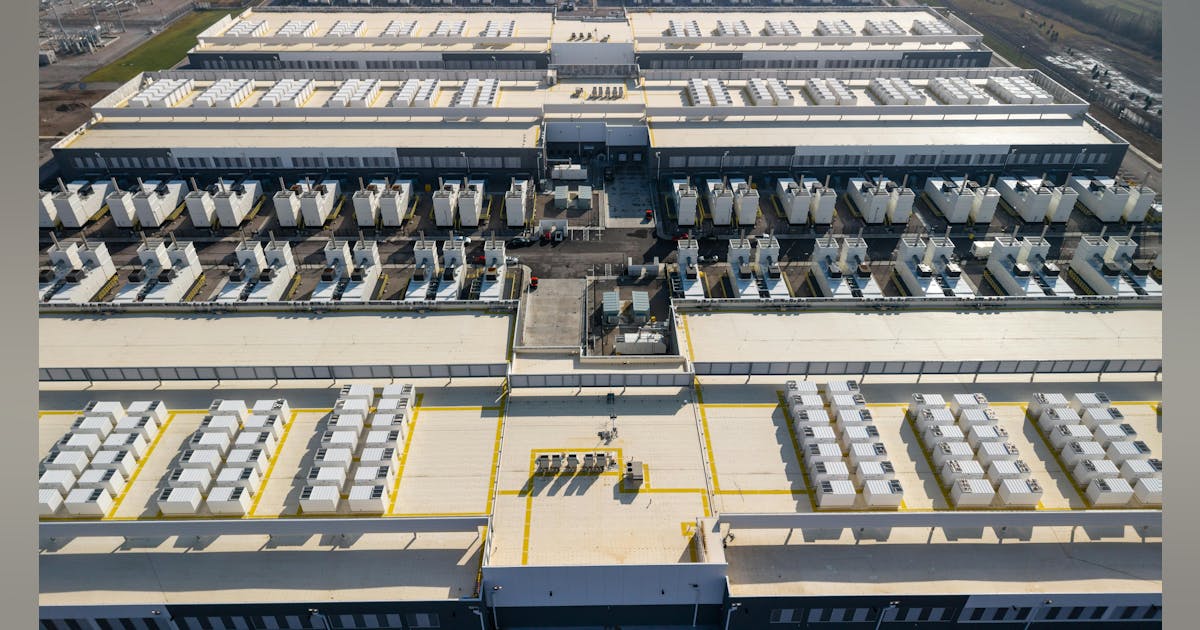
For several years, the Prince William Digital Gateway represented data center ambition at its largest scale: a proposed 2,100-acre technology corridor near Gainesville, Virginia, capable of accommodating tens of millions of square feet of digital infrastructure.
Its location also made it uniquely contentious. The corridor bordered Manassas National Battlefield Park and other historic, environmental and residential resources, drawing the data center development debate beyond its usual industry and land-use constituencies. Opposition increasingly centered not only on the project’s scale, but on whether development of that magnitude belonged alongside one of the country’s most significant Civil War landscapes.
In July 2026, that vision effectively ended.
QTS Data Centers terminated its participation in the Digital Gateway and withdrew its remaining petitions before the Supreme Court of Virginia. The decision followed Compass Datacenters’ withdrawal in April, leaving neither of the project’s original developers pursuing the corridor. QTS said it reached the decision after “careful consideration,” while emphasizing that Virginia remains an important market for the company.
From Proposed Capacity to Executable Capacity
The collapse of the Digital Gateway is more than the cancellation of one unusually large development. It comes as the data center industry confronts a widening gap between announced capacity and executable capacity.
Power remains the most visible constraint. But permitting discipline, environmental review, community acceptance and the durability of political support are increasingly determining whether a project can progress from land control and conceptual capacity to construction and operation.
A separate development in New York underscored that shift less than two weeks after QTS withdrew.
On July 14, Gov. Kathy Hochul issued Executive Order 62, establishing what the state describes as the nation’s first statewide moratorium on new hyperscale data centers. The order temporarily holds in abeyance certain incomplete state environmental permit applications for data centers capable of drawing at least 50 MW while New York prepares a Generic Environmental Impact Statement and develops new approaches to grid-cost allocation and community investment.
The New York action was not a response to the Digital Gateway’s collapse, and the two cases involve different legal and regulatory issues. But together they illustrate the same emerging development reality.
Communities and state governments are no longer treating large data centers primarily as commercial real estate projects. They are increasingly evaluating them as major industrial and energy infrastructure whose environmental effects, grid costs, community benefits and procedural approvals must withstand a much higher level of scrutiny.
That adds a new dimension to site selection. The central question is no longer simply where land and power can be identified, but where the approvals, infrastructure commitments and political support needed to reach energization can remain durable over the full development cycle.
From Landmark Proposal to Legal Jeopardy
The Digital Gateway originated with an effort by landowners along Pageland Lane to assemble more than 200 properties into a technology corridor near existing transmission and fiber infrastructure. In November 2022, Prince William County approved a comprehensive plan amendment that opened the area to as much as 27 million square feet of data center development. County estimates projected nearly $25 billion in investment and up to $400 million in annual tax revenue.
Compass Datacenters subsequently sought to rezone approximately 825 acres, while QTS proposed a campus spanning roughly 800 acres. Opposition emerged early because of the corridor’s proximity to Manassas National Battlefield Park, Conway Robinson State Forest, rural neighborhoods and other historic and environmental resources.
The debate also anticipated many of the issues that now surround large AI infrastructure projects nationwide: transmission expansion, water demand, equipment noise, backup generation, land conversion and the visual impact of massive industrial buildings.
By April 2023, Compass and QTS were pursuing a combined 23 million square feet of development over approximately a decade. The companies responded to local concerns with commitments involving forest preservation, wildlife corridors, cultural-resource protections, stormwater and water management, road improvements and noise mitigation.
The proposal therefore became a test of whether a campus of unprecedented scale could coexist with a historically and environmentally sensitive landscape. But the mitigation commitments did not resolve the underlying dispute over whether development of that magnitude belonged in the area at all.
The developers secured rezoning approval in December 2023, but only after a prolonged and deeply divided process. The Prince William Board of County Supervisors approved the applications by a 4-3 vote following an extended public hearing. The county Planning Commission and professional planning staff had both recommended denial, and litigation was widely anticipated.
Those legal challenges would ultimately turn not on the broader merits of data center development, but on whether the county had followed the procedural requirements necessary to make its approvals valid.
A Procedural Failure With Strategic Consequences
In August 2025, Prince William Circuit Court Judge Kimberly A. Irving voided the rezonings that would have enabled the Digital Gateway developments, finding that the county had failed to comply with state and local public-notice requirements. The Court of Appeals of Virginia affirmed that ruling on March 31, 2026.
The appellate decision did not amount to a judicial rejection of data centers, AI infrastructure or the county’s economic-development objectives. It focused on the mechanics of the land-use approval process.
The county failed to ensure that required newspaper notices were published at the proper intervals, did not make the proposed ordinances available for public inspection when required and held the public hearing too soon after the final notice. Those deficiencies rendered the three rezoning ordinances void from the outset.
For developers, that distinction matters. The Digital Gateway did not unravel because demand disappeared, financing collapsed or Northern Virginia ceased to be a strategic data center market. It unraveled after years of planning because the legal foundation beneath its entitlements could not withstand judicial review.
By April 2026, the county’s political position had also changed. The Prince William Board of County Supervisors voted unanimously not to continue pursuing the appeals. Compass concluded that the court rulings and mounting regulatory obstacles had eliminated a viable path forward and withdrew its application on April 29.
QTS continued its legal effort, filing petitions for appeal with the Supreme Court of Virginia. But on July 2, the company terminated the project and withdrew those petitions, bringing the remaining effort to revive the Digital Gateway to an end.
The episode offers a blunt lesson for the AI infrastructure era. A project’s development stack includes more than land, capital, power and customers. It also includes public-notice procedures, document availability, hearing requirements, political continuity and an administrative record capable of surviving legal challenge.
A weakness in any of those areas can strand years of engineering, community engagement and entitlement expense.
Scale magnifies that exposure. A conventional data center may still be evaluated as a discrete industrial use. A corridor encompassing dozens of buildings, major substations, new transmission infrastructure and potential regional environmental effects is far more likely to become a defining local political issue.
The larger and more geographically consequential the development, the more likely it is to attract organized scrutiny—and the less tolerance courts, communities and public officials will have for procedural weakness.
The Social License Becomes an Underwriting Variable
The Prince William experience demonstrates that even extensive community engagement and mitigation commitments cannot overcome a fundamental disagreement about whether a project belongs at a particular site.
Compass and QTS developed detailed plans addressing water and stormwater management, forest preservation, historic cemeteries, equipment noise, traffic, recreational space and other community concerns. Those commitments were substantial. But they could not fully resolve the underlying objection to placing development of this scale alongside historic landscapes, rural neighborhoods and environmentally sensitive resources.
That distinction matters. Community engagement is essential, but it is not a substitute for site compatibility. Nor can a mitigation package guarantee durable support when residents and public officials remain divided over the proposed land use itself.
Recent DCF coverage has described community acceptance as part of power underwriting. A site may appear viable in megawatts while remaining weak in permitting certainty, political support or local trust. In that sense, prospective power capacity is only as valuable as the approvals and community relationships required to reach energization.
The Digital Gateway represents an extreme case, but the implications extend well beyond Prince William County. Local governments are increasingly likely to expect developers to identify grid requirements, water demand, construction impacts, environmental safeguards and tangible community benefits earlier in the approval process.
That is expanding the scope of development diligence. In addition to confirming land, power, financing and customer demand, developers will need greater confidence that local procedures have been followed precisely, commitments are enforceable and approvals can survive litigation, elections and changes in political leadership.
The social license to operate is therefore becoming more than a communications objective. At the scale of today’s AI infrastructure projects, it is becoming a material component of development risk.
New York Moves the Debate to the State Level
New York’s moratorium moves many of these questions beyond the local zoning chamber and into statewide environmental and energy policy.
Executive Order 62 directs the Department of Public Service to prepare a Generic Environmental Impact Statement examining the potential effects of data center construction and operation, including energy demand, water use and quality, air quality, noise and disproportionate impacts on disadvantaged communities.
Until that review is complete, the Department of Environmental Conservation must hold in abeyance applications for discretionary state permits, approvals and licenses related to the construction or expansion of covered data centers that had not been deemed complete before July 14.
The pause does not apply to local government approvals or to DEC applications already deemed complete. The order covers data centers that consume or are capable of consuming at least 50 MW, while exempting facilities used primarily for manufacturing, research, education or medical care.