Stay Ahead, Stay ONMINE

CBRE: Record Data Center Construction Fails to Ease Capacity Crunch

The North American data center industry built at record scale during the first half of 2026. It still wasn’t enough to loosen the market. Primary-market supply increased 33.7% year over year to a record 10,903 MW, according to CBRE’s newly released North America Data Center Trends H1 2026. Yet vacancy moved in the opposite direction, […]

The North American data center industry built at record scale during the first half of 2026. It still wasn’t enough to loosen the market.

Primary-market supply increased 33.7% year over year to a record 10,903 MW, according to CBRE’s newly released North America Data Center Trends H1 2026. Yet vacancy moved in the opposite direction, falling from 1.6% a year earlier to another record low of 1.4%.

Net absorption reached 1,456.2 MW, up 11.7%, as hyperscale cloud and AI infrastructure operators continued competing for increasingly scarce blocks of contiguous power and capacity. Construction climbed 24.8% to a record 7,481.1 MW, surpassing the previous peak of 6,350.1 MW set in the second half of 2024.

Perhaps the most telling number in the report is 80.4%. That is the share of primary-market capacity under construction that has already been preleased, up from 74.3% a year ago. CBRE estimates that less than 1,500 MW of all capacity currently under construction remains available—roughly six months of demand at the current absorption rate.

The resulting picture is less one of a construction shortage than a race between infrastructure delivery and an AI demand curve that keeps absorbing capacity before it reaches the market.

And increasingly, CBRE argues, securing the megawatts is only part of that race.

Power, Permitting and Local Approval Converge

Power availability and infrastructure delivery timelines remain the primary determinants of where data centers can be built. But CBRE’s H1 report places another constraint alongside them: community acceptance.

“Local opposition has also become a serious obstacle,” the report states, with community resistance, zoning disputes and entitlement delays increasingly capable of stopping projects even after developers identify viable power and fiber.

CBRE goes further in its outlook, describing community engagement as a development constraint now “on par with power procurement.” In practical site-selection terms, securing local approval has become nearly as consequential as finding electricity and fiber.

That dynamic plays out differently across each of North America’s eight primary data center markets.

Atlanta Takes the Construction Lead

The headline market change in H1 came in Atlanta, which for the first time surpassed Northern Virginia in total capacity under construction.

Atlanta had 2,882 MW underway, an increase of 52.3% year over year. That makes the Georgia market the largest active construction market in North America even as Northern Virginia remains substantially larger in installed inventory.

CBRE says single-tenant leasing remains particularly strong. Turnkey facilities are being preleased roughly a year before completion, while build-to-suit projects are securing tenants approximately two-and-a-half years in advance.

Georgia continues to benefit from tax incentives, construction labor availability, an established data center supply chain and comparatively low operating costs. Electric membership cooperatives are also increasingly working with third-party generation providers, giving developers more options around power delivery, collateral requirements and long-term energy pricing.

Development is simultaneously pushing outside metropolitan Atlanta. CBRE notes announced gigawatt-scale campuses across South Georgia and other rural areas, where transmission availability, lower entitlement risk and state support for rural economic development are opening new territory.

Pricing is following demand. Atlanta recorded increases across all four requirement tiers tracked by CBRE, with rates for 10-MW-plus deployments rising 14.5% in H1.

Northern Virginia Gets Even Tighter

Atlanta may now lead construction, but Northern Virginia remains the heavyweight.

Inventory reached 4,496.5 MW in H1, by far the largest primary-market total. Northern Virginia also led all primary markets with 467.6 MW of net absorption, while vacancy fell to approximately 0.2%; CBRE’s market chapter puts the rate more precisely at 0.24%.

Capacity under construction rose 16.5% to 2,420.2 MW. CBRE characterizes that growth as slower than Atlanta’s in part because land, permitting and power constraints are making further expansion harder.

All Northern Virginia capacity scheduled to deliver during 2026 has already been committed, pushing preleasing deeper into 2027 and beyond. Just 10.8 MW of supply remains available, while finding even 5 to 10 MW of contiguous capacity has become difficult.

The region nevertheless delivered more than 1.6 GW of capacity across 2025 and the first half of 2026.

Dominion Energy’s batching process continues to lengthen power delivery timelines for prospective projects, increasing the value of entitled sites with established power positions. For 10-MW-plus requirements, CBRE reports asking rates of roughly $160 to $185 per kW per month.

Capital continues chasing the market as well. Digital Realty agreed to purchase Blackstone-affiliated interests in three fully leased data centers, AWS acquired another 122 acres in Loudoun County, and STACK Infrastructure topped out the first of 19 planned buildings at its 1-GW Stafford County campus.

Dallas-Fort Worth: Massive Pipeline, Almost None of It Available

Dallas-Fort Worth remains one of the clearest examples of how headline construction numbers can overstate the amount of capacity an occupier can actually obtain.

More than 765 MW is currently under construction, according to CBRE. About 95% of that capacity has already been preleased.

Developers have another 3.7 GW of greenfield development planned but not yet under construction, illustrating both the extraordinary scale of interest in North Texas and the gap between a proposed campus and deliverable capacity.

Powered-land prices continue to climb. Behind-the-meter projects are gaining acceptance as grid timelines stretch, while demand is growing for sites below 75 MW as restrictions surrounding very large loads complicate bigger developments.

CBRE also sees Texas’ evolving batch approach to interconnection as a potential mechanism for working through the queue backlog and creating a more predictable route to power.

Projects are increasingly appearing around Fort Worth outside the traditional 30-mile Infomart radius, while the rising capital required simply to hold a utility queue position has created another role for equity investors: financing interconnection deposits before construction begins.

Chicago Pushes Outward

Chicago entered H1 with continued demand from hyperscalers, neoclouds and enterprises, bringing vacancy down to 2.2%.

Near-term large blocks are effectively gone. CBRE says no contiguous space of 5 MW or more will be available during 2026, and the next large contiguous projects are not expected until late 2027 at the earliest. Even projects scheduled to deliver through the end of 2027 have less than 10% vacancy.

That scarcity is pushing development farther from Chicago’s established clusters and placing still greater emphasis on where power can actually be secured.

Aligned Data Centers and Tract are each planning 1-GW campuses in Coal City and Morris, respectively, while Microsoft leased Compass Datacenters’ Hoffman Estates campus.

Policy has become another variable. Illinois paused processing new agreements under its Data Center Investment Program beginning July 1 while Gov. JB Pritzker seeks a broader data center regulatory framework during the fall veto session.

CBRE also reports a 9.7% H1 increase in pricing for 10-MW-plus deployments.

Hillsboro Reaches 0.21% Vacancy

Hillsboro may offer the starkest vacancy number in the report.

Vacancy fell to just 0.21%, and CBRE says there is no facility in the Oregon market offering at least 5 MW of contiguous available capacity.

More than 90% of the 170.3 MW currently under construction has already been preleased.

At the same time, Oregon’s changing tax environment is introducing another development variable. HB 4084 temporarily restricts new data center participation in the state’s standard Enterprise Zone property-tax exemption program, while Hillsboro has separately imposed a temporary land-use moratorium on new and expanded data center projects.

STACK Infrastructure remains one of the market’s most active developers, announcing a 121-MW expansion of its Hillsboro campus.

Despite extraordinary scarcity, asking rates for deployments above 10 MW were unchanged during H1—less an indication of soft demand than of the lack of transactions available to reset pricing.

New York-New Jersey: Scarcity Meets a Moratorium

CBRE characterizes New York and New Jersey as a market defined by a persistent imbalance between growing demand and constrained supply.

Occupiers needing more than 5 MW have few alternatives. With little meaningful supply relief visible, prices continue to climb; rates for requirements above 10 MW increased 19% during H1, the largest increase among CBRE’s primary markets.

Regulation is now tightening the equation further.

New York Gov. Kathy Hochul issued a one-year pause in July on state environmental permitting for new data centers requiring 50 MW or more while the state develops a new regulatory framework. New Jersey is also weighing additional restrictions on large-scale data center development.

Scarcity is changing occupier behavior. CBRE notes that a major financial-services company bought a 249,000-square-foot data center rather than continue competing for leased capacity.

Operators are also investing directly in power resilience. Iron Mountain announced a 23-MW battery energy storage project at its Edison, New Jersey campus intended to ease on-site grid constraints.

Phoenix Absorbs More Than 260 MW

Phoenix absorbed more than 260 MW of colocation capacity during H1, driven by enterprise digital transformation and continued cloud demand.

Three additional colocation projects are under construction for expected delivery in H2, bringing badly needed supply into a market where demand continues rising. Average lease terms have stretched to approximately seven years.

But powered land is becoming harder to obtain as utility limitations, municipal restrictions and community opposition narrow the universe of viable sites.

Arizona also enacted a three-year pause on new data center sales-tax exemptions. The policy triggered a rush of applications before the moratorium took effect, but it adds another cost consideration for projects that did not secure eligibility beforehand.

The development pipeline nevertheless remains active. CBRE points to major projects from Prime Data Centers, STACK, Aligned, QTS and Vantage as evidence that operators continue to see long-term value in the Arizona market.

Silicon Valley Sells Certainty at a Premium

In Silicon Valley, near-term power has become a premium product.

CBRE says occupier demand continues pushing rents to record levels, particularly for deployments capable of delivering both available power and near-term occupancy. Vacancy remains near historic lows, preleasing is standard, and expansion rights are becoming an increasingly important part of lease negotiations as occupiers try to reserve future capacity.

Powered-shell development is also becoming more prevalent as developers seek faster delivery schedules and allow large customers greater flexibility in configuring high-density infrastructure.

The constraints remain familiar: scarce land, limited power and long development timelines.

Even so, significant projects continue advancing. San Jose selected Prologis to develop a 159-acre city-owned site where the company plans four 99-MW data centers. Prologis is separately advancing another 99-MW project in South San Jose.

Microsoft has begun construction on a North San Jose project expected to deliver between 49 and 99 MW. CoreSite acquired three office properties zoned for data center redevelopment, while Equinix bought approximately 16 acres adjacent to its Great Oaks campus for future expansion.

Pricing Pressure Moves Down the Size Curve

The capacity squeeze is no longer confined to hyperscale blocks.

Average asking rates for 250-to-500-kW requirements rose 4.3% during H1, nearly twice the 2.5% increase recorded a year earlier.

The largest increase came in the 3-to-10-MW range, where rates rose 8.3%, followed by deployments from 500 kW to 3 MW at 7.9%. Rates for requirements above 10 MW increased 6.7%.

CBRE sees that pattern as evidence that pricing momentum is moving toward smaller capacity tiers, where transactions remain possible even as giant contiguous blocks disappear from mature markets.

Capital Keeps Finding Ways Into the Buildout

Power and permitting may constrain development, but capital has not disappeared.

Data center investment sales totaled $1.7 billion during H1. Much more money is moving through development financing, securitization and platform investments.

Issuers raised approximately $27.8 billion across 12 high-yield bond offerings during the half. Meridian Arc alone priced $5.7 billion of bonds at a 6.25% yield to support development of a 430-MW Indiana campus fully leased to Fluidstack.

Related Digital and Blackstone secured $16 billion in construction financing for an Oracle-leased campus in Saline Township, Michigan.

Single-asset, single-borrower data center CMBS issuance totaled another $4.9 billion, representing 9% of all SASB CMBS issuance across property types. QTS secured a $2.1 billion note to refinance facilities in Virginia, Illinois and Georgia, while Switch raised approximately $768 million through an ABS transaction involving its Reno operations.

Platform capital is scaling as well. Blackstone Digital Infrastructure Trust raised $1.75 billion in a May IPO, and KKR launched Helix Digital Infrastructure with more than $10 billion of commitments spanning data centers, power generation and connectivity.

AI Infrastructure Is Becoming a Network Story Too

CBRE also connects the data center expansion directly to a parallel fiber buildout.

More than 20,000 route miles of new fiber projects have been announced during 2026, according to the report, as Zayo, Lumen, BIG Fiber and other providers build long- and medium-haul infrastructure linking established hubs with emerging AI clusters.

Consolidation among regional networks is creating larger fiber platforms, while securitizations, private credit and asset-backed financing are supplying capital for national and regional network expansion.

The implication is straightforward: moving AI infrastructure into new power markets does not eliminate the network requirement. It increases the importance of extending high-capacity connectivity to wherever the compute lands.

The Data Center Contract Is Changing

Tight capacity is also beginning to alter how space and power are leased.

CBRE sees colocation operators increasingly experimenting with triple-net structures that shift taxes, common-area maintenance and insurance costs toward occupiers.

“Take or pay” power floors are becoming more common as well. Minimum utilization requirements now range from roughly 60% to 85% of allocated capacity, meaning tenants can be required to pay for a substantial portion of reserved power whether or not their servers are consuming it.

Meanwhile, ready-for-service dates are stretching as mechanical, electrical and plumbing equipment constraints affect both new builds and existing facilities. Converting an air-cooled facility for liquid-cooled AI hardware can push those timelines beyond six months.

Behind-the-meter and other bridging-power strategies continue gaining traction where utility delivery dates miss tenant schedules.

CBRE also sees renewed momentum for smaller urban deployments. Demand for 2-to-20-MW infill facilities is beginning to emerge, initially supported by hyperscaler network deployments and eventually by enterprise AI, robotics and other latency-sensitive workloads.

In emerging markets, the firm sees another potentially important workload band developing around 25 to 75 MW as inference and enterprise AI move compute closer to end users.

West Texas, Alberta and Indiana Enter the Conversation

The primary markets remain exceptionally tight, but the report offers several clues about where the next layer of North American capacity could develop.

West Texas projects in Armstrong, Wilbarger, Haskell, Gray, Roberts, Ector and Reeves counties continued reaching energization milestones during H1. Based on projects already approved in the construction pipeline, CBRE expects West Texas to become one of North America’s five largest colocation markets by 2028.

Alberta is attracting hyperscale attention around abundant energy, inexpensive land and a deregulated electricity structure that gives developers more latitude to contract for or generate their own power. CBRE highlights major planned investments including Meta’s $13 billion development north of Edmonton and Amazon’s $4.3 billion campus near Calgary.

Indiana is emerging for a different combination of reasons: sales-tax incentives, connectivity to Chicago, large agricultural sites and a central geographic position. CBRE points specifically to increasing large-scale activity around New Carlisle and Lebanon.

Those markets illustrate the central tension running through the entire H1 report.

North America is not running out of proposed data centers. Developers have identified enormous amounts of land and capital for the next generation of infrastructure.

What remains scarce is deliverable infrastructure: power that can be energized on a usable schedule, fiber that can support the workloads, equipment that can arrive when needed, permits and entitlements that survive local review, and capacity that has not already been promised years before the doors open.

That is how the industry can add 33.7% more primary-market supply in a year and still end the period with only 1.4% vacancy.

For the AI infrastructure buildout, construction volume is no longer the most important measure of supply. Increasingly, the question is how much of that capacity can actually reach the market—and how much is still available when it does.


Shape
Shape
Stay Ahead

Explore More Insights

Stay ahead with more perspectives on cutting-edge power, infrastructure, energy,  bitcoin and AI solutions. Explore these articles to uncover strategies and insights shaping the future of industries.

Shape

Intel unwraps three-pronged architecture strategy to go after agentic AI

While Diamond Rapids handles the general-purpose side of the equation, Crescent Island is aimed directly at inference. Intel describes the accelerator as a relatively low-power, air-cooled GPU designed to deliver higher token throughput while accommodating larger models, longer context windows and more concurrent AI agents. Crescent Island uses 32 Xe3P-based

Read More »

DOE Selects Community Partners to Receive Waste to Energy and Materials Recovery Technical Assistance

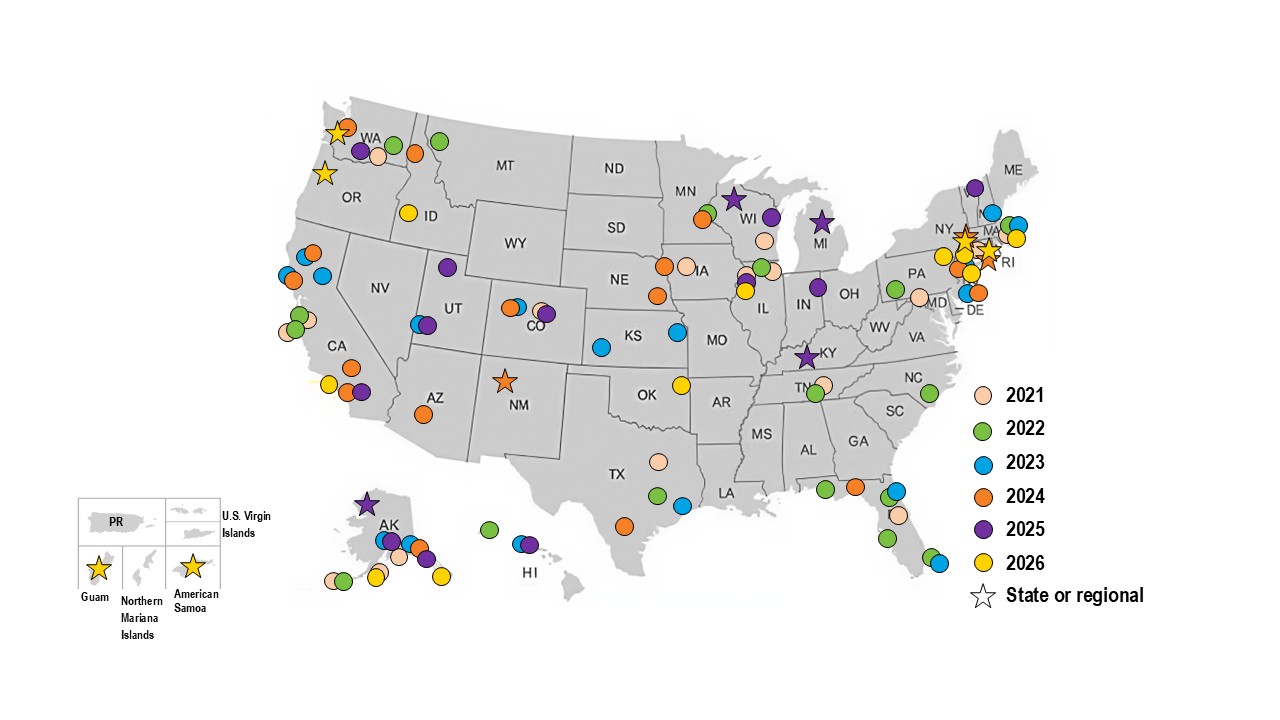
WASHINGTON—The U.S. Department of Energy’s Alternative Fuels and Feedstocks Office (AFFO) and the National Laboratory of the Rockies (NLR) have selected recipients for the FY26 Waste to Energy and Materials Technical Assistance program. Through this program, NLR will provide free guidance to state, local, and Tribal governments to use new technologies that turn waste into energy or recover valuable materials like critical minerals.  The program aims to help local officials create sensible solutions for their waste management issues, fill knowledge gaps, and plan and carry out implementation approaches that fit their communities. This year, the program has expanded to include additional municipal solid waste streams like electronics, industrial wastewater, and other byproducts.  Now in its sixth year, the technical assistance program has supported 67 entities in 31 states and territories. FY26 selections include: Community Name American Samoa Power Authority City of Boise, Idaho Cherokee Nation Natural Resources, Oklahoma Village of Coal Valley, Illinois Guam Energy Office Hudson Valley Regional Council, New York Kodiak Island Borough, Alaska Los Angeles County Public Works, California Metlakatla Indian Community, Arkansas Township of Montclair, New Jersey City of New Bedford, Massachusetts Oregon Department of Energy, Oregon South Central Regional Council of Governments, Connecticut Thompson Township, Pennsylvania Ulster County Resource Recovery Agency, New York Washington State Department of Commerce, Office of Renewable Fuels To learn more about the technical assistance program, visit NLR’s Waste to Energy and Materials Technical Assistance for State, Local, and Tribal Governments webpage. If you have questions, please see frequently asked questions or contact the Waste to Energy and Materials Technical Assistance Team.

Read More »

Santos targets Q4 2026 FID for Papua LNG plant

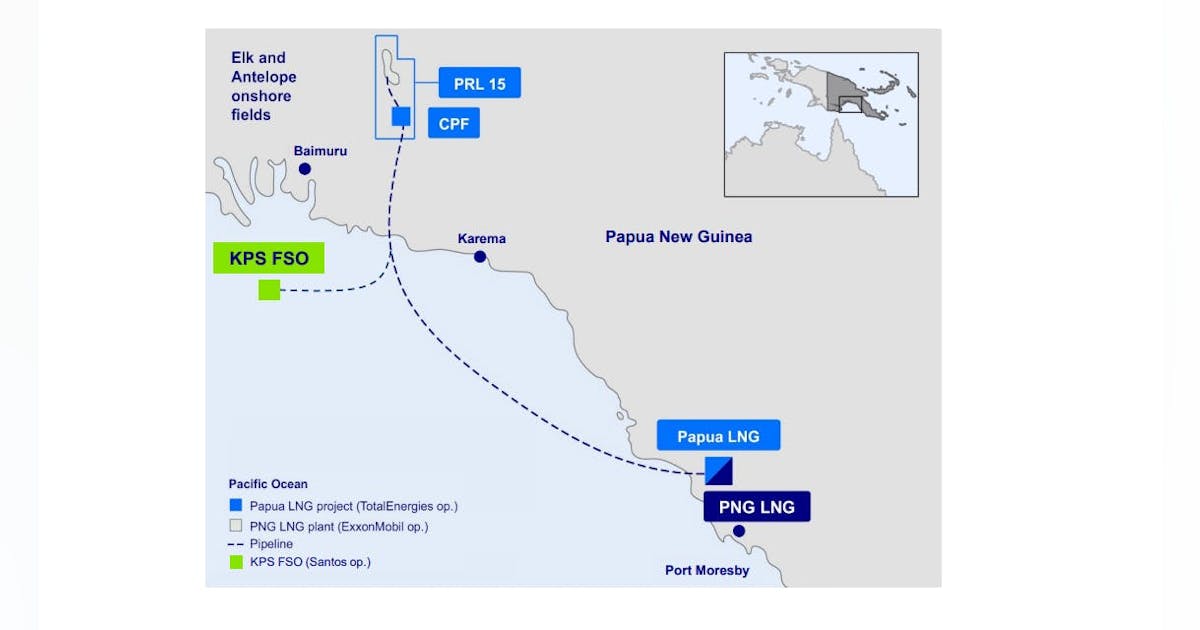
Santos Ltd. is on track to take fourth-quarter 2026 final investment decision (FID) on the 5.6 million tonne/year (tpy) Papua LNG plant at Caution Bay, Papua New Guinea, with project financing and government-led development discussions advancing. At plateau, Papua LNG would contribute about 1 million tpy of Santos equity LNG and roughly 11 million boe/year of equity oil, the company said in its first-half 2026 earnings report and call. Papua LNG would use 4 million tpy of production from new electric liquefaction trains and as much as 2 million tpy of tolling production from ExxonMobil Corp.’s already operating 8-million tpy PNG LNG plant, in which Santos is also a partner. Santos recently took FID on its PNG LNG oil infill drilling campaign, and expects to start drilling fourth-quarter 2026. Santos said it has several options to backfill PNG LNG production if Papua LNG does not proceed but emphasized that all parties remain focused on reaching a Papua LNG FID this year. The company cited Muruk, P’nyang, and Usano as possible resources for such backfill. Muruk has estimated natural gas resources of 1-3 tcf and P’nyang estimated recoverable reserves of 4.36 tcf. Usano, in the PD-L2 production license area, is primarily an oil project, with an estimated 85 million bbl of oil in place but would produce associated gas as well. Santos plans to drill a test well on it in early 2028. TotalEnergies SE holds 40.1% interest in Papua LNG and it the project’s operator. ExxonMobil holds 37.1% interest, with Santos and the state holding the bulk of the balance. Santos equity is 17.7-22.8% depending on government exercise of its back-in rights. ENEOS (formerly JX Nippon) holds a minor participating interest.

Read More »

North American rig count drops 8 units, erasing last week’s gain

The rig count in North America is down 8 units this week, according to data from Baker Huges Inc. With 804 rigs running across North America for the week ended Aug. 21, the drop erased the previous week’s 8-unit gain. There were 5 fewer rigs drilling in the US this week for a total of 588. The count is 50 more than were drilling during the same period last year. A 2-unit drop in offshore rigs left 10 working this week. One fewer rig was drilling in inland waters, leaving 2 still working. The number of rigs drilling on land decreased by 2 to 576. That count is up 53 from the same period in 2025. Three fewer rigs were oil-directed in the US and its waters this week for a total of 452. There were 127 gas-directed rigs working, down one from last week. The number of unclassified rigs working this week decreased by 1 unit to 9. Of the major US oil and gas producing states, Texas saw the largest increase. Four rigs were added to the state’s total this week to bring the count to 281, 41 more than were drilling during the same period last year. New Mexico and Louisiana each dropped 3 rigs to end the week with counts of 96 and 35, respectively. Wyoming’s rig count fell by a single unit this week to leave 9 rigs working. The overall rig count in Canada fell by 3 units to 216. The count is up 36 units from this time a year ago. Of those 216 rigs working, 148 were drilling for oil, down 3 from last week. The number of gas-directed rigs in Canada was unchanged at 65. Three units were unclassified, unchanged from last week.

Read More »

Ring’s 2027 target: 10% growth for 10% less

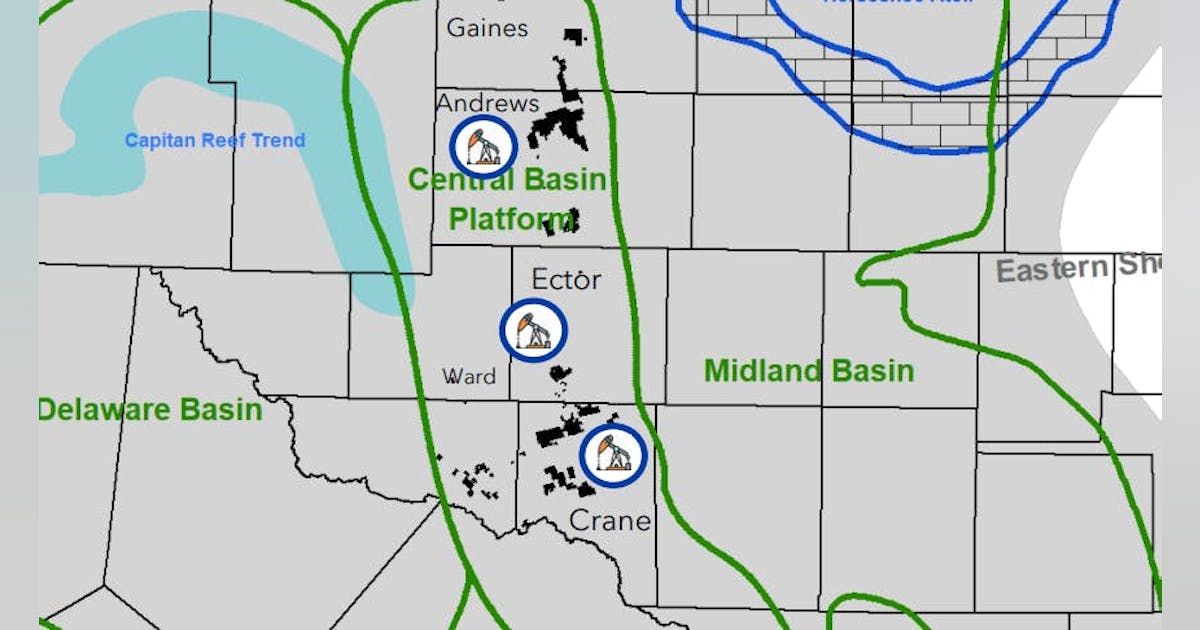
Boosted by an increase in horizontal drilling across its Central Basin Platform (CBP) operations, the leaders of Ring Energy Inc., The Woodlands, Tex., expect a big pop in the company’s 2027 financials. Speaking Aug. 18 at the EnerCom Denver conference, chairman and chief executive officer Paul McKinney said the Permian basin-focused operator has “an incredible runway of high-return opportunities” in the CBP using technologies refined by operators in the Midland and Delaware basins on either side of Ring’s holdings. Recent developments, he said, have made it easier for Ring and others active in the CBP, which has shallower reservoirs, to drill longer wells. Two years ago, half of the wells Ring drilled were horizontal. This year, that figure is on pace to be 81%. The length of new wells is similarly shifting to being at least 1.5 miles: In 2024, new wells of that length accounted for only 5% of Ring’s activity but that will be 70% this year. Those advancements are set to create a big payoff for Ring, which had total production of just under 20,000 boe/d in the second quarter. “The capital is kind of the story,” McKinney told EnerCom attendees. “We believe that we will deliver 10% production growth for 10% less capital in 2027 […] All this means meaningful upside in adjusted free cash flow. It means a significant increase in earnings.”

Read More »

Federal judge allows Sable Offshore to continue California pipeline operations

Despite affirming the jurisdictional shift, Wilson also ordered Sable to pay $1.5 million for violating a federal consent decree. Through its acquisition of the assets, Sable assumed obligations under the decree, including management and reporting requirements and provisions requiring state waivers before restarting operations. “Sable has violated the express provisions of the consent decree, without justification,” Wilson wrote. The judge said California’s proposed injunction “is not the proper remedy.” For one, he said, “the consent decree has been modified to replace OSFM as the regulatory authority with PHMSA, and the pre-restart requirements of the State Waivers are no longer applicable. Nor, too, are OSFM’s approval of a Restart Plan or authorization. PHMSA, the current regulator, has authorized Sable to restart the pipeline. Therefore, Sable is no longer in violation of the Consent Decree, and proactive, injunctive relief is inappropriate,” Wilson wrote. “Rather, the appropriate penalty for Sable’s violations is dictated by the consent decree.” Sable resumed transporting crude oil from the Santa Ynez Unit (SYU) through SYPS in March under the DPA order. The order and company statements indicate gross oil throughput is expected to reach about 50,000 b/d following ramp-up. Current production from six wells is estimated at about 6,000 b/d. SYPS has capacity of up to 200,000 b/d.

Read More »

US threatens sanctions against countries, companies buying Iranian oil

@import url(‘https://fonts.googleapis.com/css2?family=Inter:wght@100..900&display=swap’); .ebm-page__main h1, .ebm-page__main h2, .ebm-page__main h3, .ebm-page__main h4, .ebm-page__main h5, .ebm-page__main h6 { font-family: Inter; } body { line-height: 150%; letter-spacing: 0.025em; } button, .ebm-button-wrapper { font-family: Inter; } .label-style { text-transform: uppercase; color: var(–color-grey); font-weight: 600; font-size: 0.75rem; } .caption-style { font-size: 0.75rem; opacity: .6; } #onetrust-pc-sdk [id*=btn-handler], #onetrust-pc-sdk [class*=btn-handler] { background-color: #c19a06 !important; border-color: #c19a06 !important; } #onetrust-policy a, #onetrust-pc-sdk a, #ot-pc-content a { color: #c19a06 !important; } #onetrust-consent-sdk #onetrust-pc-sdk .ot-active-menu { border-color: #c19a06 !important; } #onetrust-consent-sdk #onetrust-accept-btn-handler, #onetrust-banner-sdk #onetrust-reject-all-handler, #onetrust-consent-sdk #onetrust-pc-btn-handler.cookie-setting-link { background-color: #c19a06 !important; border-color: #c19a06 !important; } #onetrust-consent-sdk .onetrust-pc-btn-handler { color: #c19a06 !important; border-color: #c19a06 !important; } US Treasury Secretary Scott Bessent Aug. 24 threatened secondary sanctions on any nation or entity maintaining economic ties with Iran, including buying its oil. He specifically warned Tehran’s trading partners (China, Turkey, and the UAE) to sever economic links or face direct US financial retaliation.  The Treasury plan, Operation Economic Outcast, does not immediately impose the secondary sanctions; it was framed as a deadline-driven warning to give violators time to comply. Bessent said President Trump was already contacting world leaders to request formal cooperation in isolating Tehran in hopes of ending the 6-month-plus old war. The sanctions package continues to crack down the ‘shadow fleet’ by expanding tracking and blacklisting the oil tankers, shipping insurers, and others that help smuggle Iranian crude. It also targets financial intermediaries that help channel oil sales into usable revenues. China, the largest buyer of Iranian crude oil, issued a formal order directing Chinese companies to disregard US sanctions. China purchases 80-90% of Iran’s exported oil. Beijing also vowed to take all “necessary measures” to defend its energy security and trading rights.

Read More »

AMD Helios Takes AI Infrastructure Fight to Rack Scale

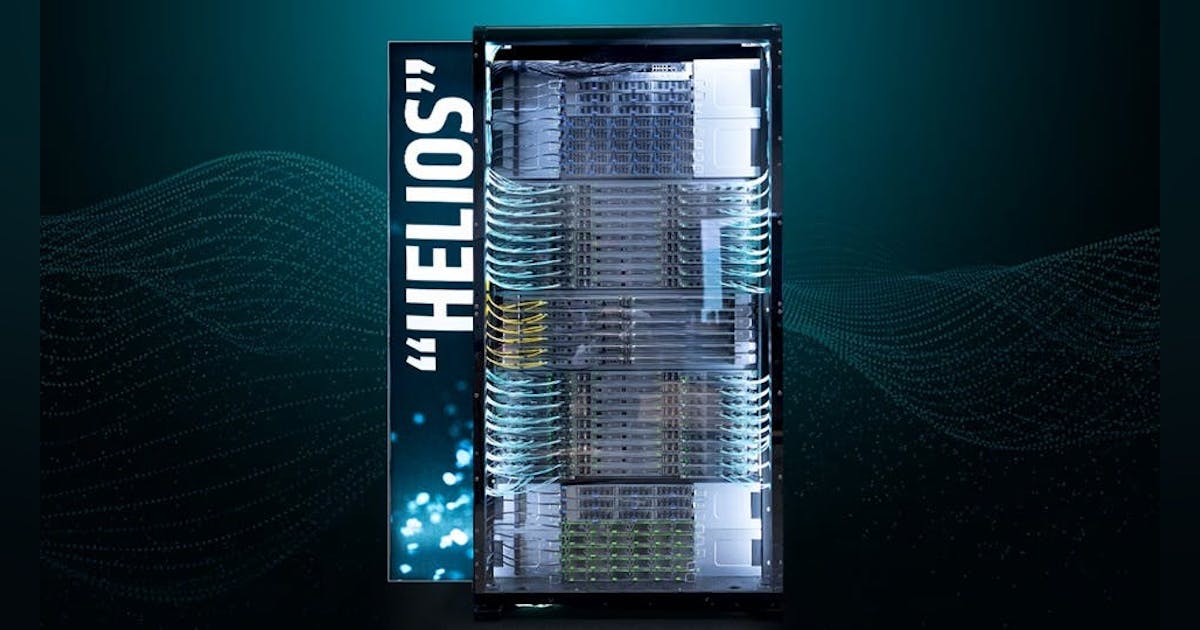
AMD is escalating its challenge to Nvidia with Helios, a rack-scale AI system that puts the company squarely into the race to define how the next generation of AI factories are built. Unveiled in production form at AMD’s Advancing AI 2026 event in San Francisco, Helios combines 72 Instinct MI455X GPUs with sixth-generation EPYC “Venice” CPUs, Pensando networking and AMD’s ROCm software stack. The significance goes beyond another generation of faster accelerators. Like Nvidia’s Vera Rubin platform, Helios treats the rack as an integrated compute system in which GPUs, CPUs, memory, networking, power delivery and cooling increasingly have to be engineered together. For data center operators, that means the competitive battle between the two chip companies is moving directly into infrastructure design. AMD said Helios is now in production, with deployments beginning during the second half of 2026. The Rack Becomes the System Helios is built around AMD’s Instinct MI455X, a liquid-cooled accelerator based on the company’s CDNA 5 architecture and equipped with HBM4 memory. A complete Helios rack delivers 72 GPUs along with EPYC host CPUs and Pensando networking for front-end, scale-up and scale-out traffic. AMD is positioning the platform for both large-scale training and increasingly important inference workloads. AMD says Helios can deliver up to 30% more inference tokens per dollar than a competing system. The company also claims the MI455X provides more peak AI compute and substantially greater memory capacity than Nvidia’s Rubin GPU. Those numbers are AMD benchmarks rather than independent comparisons. But the larger architecture may matter more than the percentages. AI infrastructure is rapidly moving beyond the model of servers being installed as largely independent pieces of IT equipment. Accelerators have to exchange enormous volumes of data with each other while CPUs orchestrate workloads and networking connects increasingly large clusters across rows, halls and

Read More »

Moses Lake Moves From Bitcoin to AI and HPC

Moses Lake and the Quincy Effect Moses Lake should not be understood as an isolated rural data center project. It sits within the larger Grant County infrastructure ecosystem that helped make nearby Quincy one of the defining hyperscale markets of the cloud era. Keel has called Moses Lake “adjacent to one of the most proven data center markets in the United States,” noting that hyperscale infrastructure has operated around Quincy for nearly two decades. In its Q1 remarks, management argued that increasingly constrained regional power leaves operators seeking incremental Pacific Northwest capacity with fewer options. The Grant County Economic Development Council’s data center inventory includes Microsoft, NTT Data, Sabey, Vantage, Intuit and other operators. The organization counts more than 1.5 million square feet of data center operations in the county and points to a diverse fiber network and Grant County PUD’s Columbia River hydroelectric resources as core advantages. That existing cluster changes the equation for an 18-MW project. The headline AI developments of 2026 are increasingly measured in hundreds of megawatts or gigawatts. But another market exists underneath those megacampus announcements: operators that need tens of megawatts in the right geography on a timeline measured in quarters rather than many years. An 18-MW facility with power, fiber, equipment and construction underway can therefore be strategically more relevant than its relatively modest capacity suggests. Keel had previously secured an option for another 10 MW near Moses Lake, but management said during its second-quarter call that it has relinquished that option and is now focused exclusively on the existing 18 MW. The decision further distinguishes Moses Lake from the industry’s race to advertise ever-larger pipelines. This project is about getting capacity online. A Second Life for Crypto Power That may ultimately be the larger Moses Lake story. Bitcoin miners assembled portfolios around

Read More »

ISE Expo 2026: DCF Takes Stage with JLL, TIA

AI Infrastructure’s New Calculus: Speed, Quality and the Race to Revenue NASHVILLE — The defining question in data center development has become brutally simple: How quickly can a site get to revenue? Power availability sits at the center of that calculation. But as AI pushes development into new geographies and compresses construction schedules, an increasingly complicated set of infrastructure dependencies sits behind the megawatts — equipment, suppliers, construction capacity, fiber, optical connectivity, workforce and the quality systems needed to make all of it work reliably. That tension framed a Data Center Frontier-led fireside discussion at EndeavorB2B’s ISE Expo 2026 between Sean Farney, Vice President of Data Center Strategy at JLL, and Dave Stehlin, CEO of the Telecommunications Industry Association (TIA). The conversation began with a new data center quality initiative. It quickly expanded into something larger: an examination of what happens when time to revenue becomes the organizing principle for an entire infrastructure industry. “There is absolutely, positively no room for pause right now,” Farney said. DCE 9000 Meets the AI Buildout For TIA, the answer begins with a problem Google brought to the association last year. According to Stehlin, Google was seeing recurring quality and delivery problems among operational technology suppliers — the companies providing equipment such as generators, cooling systems and other physical infrastructure required to make a data center operate. TIA responded by developing DCE 9000, or Data Center Excellence 9000, a third-party-certifiable quality management standard for the data center infrastructure supply chain. Stehlin said more than 70 companies are now participating in the effort, ranging from hyperscalers and data center operators to major infrastructure manufacturers. The first draft is expected in September. That is an unusually compressed development cycle for an industry standard. “Typically standards take five years to get implemented,” Stehlin said. “In nine months, we’re

Read More »

The Phantom Data Center Effect: When Perception Precedes Project Reality

Moving Beyond Speculation The answer is not simply earlier marketing campaigns or more aggressive public relations programs. Effective engagement requires understanding local concerns, motivations and political dynamics—and recognizing when community opposition reflects a durable constraint rather than a communications problem. We need to realize when no means no, and not interpret it as “try harder.” Phantom perception also can’t be handled by any one operator in any one market; this must be a collective, such as a crowd-sourced data platform, market by market. What our industry needs are clearer frameworks for evaluating digital infrastructure against these additional community-readiness criteria, because speculation is increasingly filling information gaps before formal projects reach the public process. Organizations such as OIX have begun working toward that objective. Its Digital Infrastructure Framework is modeled on traditional master planning and is intended to help communities evaluate what infrastructure they have, what they need and what they want as they plan for future technology requirements. The framework includes assessment criteria spanning investment readiness, policy, risk, sustainability and resilience. Greater transparency can narrow the gap between perception and reality. But greater transparency will not eliminate speculation, and unfortunately, it also won’t eliminate fear. Large infrastructure projects have always attracted public interest and scrutiny, and data centers are unlikely to become invisible again as AI demand accelerates. The question is how the industry responds to that visibility. The Next Stage of Data Center Development Community reaction to perceived data center development represents another potential source of site-selection intelligence. If communities begin reacting to a project before a developer has formally advanced one, that response can offer an early indication of whether a market is receptive to large-scale digital infrastructure or already approaching its political limit. This gives operators and investors another axis to measure: not just megawatts, fiber routes,

Read More »

Corvex Tests a Faster Path to Liquid-Cooled AI Infrastructure

The customer agreement expanded an earlier commitment and includes dedicated high-speed storage and CPUs in addition to GPUs. Corvex initially delivered capacity during the first quarter and continued deployment through the second and third quarters. By its Aug. 14 earnings update, the company said the multi-year Blackwell agreement had been fully delivered. Corvex reported approximately $22 million in contracted annualized recurring revenue from compute that was live and accepted by customers. The expansion was financed through debt, customer prepayments and cash on hand rather than additional equity issuance. But the most noteworthy aspect of the project may be the deployment itself. Corvex installed high-density, liquid-cooled NVIDIA HGX B200 systems inside an existing air-cooled data center and says it commissioned the capacity approximately two weeks after the equipment arrived. Instead of rebuilding the facility around a central liquid-cooling system, Corvex worked with Lenovo to use Lenovo Neptune liquid-to-air cooling technology. Liquid removes heat from the servers and transfers it to the existing air-cooled facility infrastructure. The cluster uses Lenovo ThinkSystem systems equipped with NVIDIA HGX B200 GPUs, NVIDIA Quantum-2 QM9700 InfiniBand for GPU traffic, NVIDIA Spectrum SN5600 switches for storage networking and SN2201 switches for management traffic. Corvex says the design allowed it to place high-density Blackwell infrastructure into the existing facility without a conventional facility-wide liquid-cooling conversion. Lenovo, in a case study of the deployment, contrasts the approximately two-week commissioning period with what it describes as typical data center upgrade timelines of seven to 12 months or more. That has significance beyond a single cluster. Power availability and suitable data center capacity increasingly constrain GPU deployment. If the approach proves repeatable, liquid-to-air cooling could allow some existing air-cooled facilities with sufficient power and other supporting infrastructure to accommodate higher-density AI systems without first undergoing a full central liquid-cooling conversion. For

Read More »

CBRE: Record Data Center Construction Fails to Ease Capacity Crunch

The North American data center industry built at record scale during the first half of 2026. It still wasn’t enough to loosen the market. Primary-market supply increased 33.7% year over year to a record 10,903 MW, according to CBRE’s newly released North America Data Center Trends H1 2026. Yet vacancy moved in the opposite direction, falling from 1.6% a year earlier to another record low of 1.4%. Net absorption reached 1,456.2 MW, up 11.7%, as hyperscale cloud and AI infrastructure operators continued competing for increasingly scarce blocks of contiguous power and capacity. Construction climbed 24.8% to a record 7,481.1 MW, surpassing the previous peak of 6,350.1 MW set in the second half of 2024. Perhaps the most telling number in the report is 80.4%. That is the share of primary-market capacity under construction that has already been preleased, up from 74.3% a year ago. CBRE estimates that less than 1,500 MW of all capacity currently under construction remains available—roughly six months of demand at the current absorption rate. The resulting picture is less one of a construction shortage than a race between infrastructure delivery and an AI demand curve that keeps absorbing capacity before it reaches the market. And increasingly, CBRE argues, securing the megawatts is only part of that race. Power, Permitting and Local Approval Converge Power availability and infrastructure delivery timelines remain the primary determinants of where data centers can be built. But CBRE’s H1 report places another constraint alongside them: community acceptance. “Local opposition has also become a serious obstacle,” the report states, with community resistance, zoning disputes and entitlement delays increasingly capable of stopping projects even after developers identify viable power and fiber. CBRE goes further in its outlook, describing community engagement as a development constraint now “on par with power procurement.” In practical site-selection terms,

Read More »

Microsoft will invest $80B in AI data centers in fiscal 2025

And Microsoft isn’t the only one that is ramping up its investments into AI-enabled data centers. Rival cloud service providers are all investing in either upgrading or opening new data centers to capture a larger chunk of business from developers and users of large language models (LLMs).  In a report published in October 2024, Bloomberg Intelligence estimated that demand for generative AI would push Microsoft, AWS, Google, Oracle, Meta, and Apple would between them devote $200 billion to capex in 2025, up from $110 billion in 2023. Microsoft is one of the biggest spenders, followed closely by Google and AWS, Bloomberg Intelligence said. Its estimate of Microsoft’s capital spending on AI, at $62.4 billion for calendar 2025, is lower than Smith’s claim that the company will invest $80 billion in the fiscal year to June 30, 2025. Both figures, though, are way higher than Microsoft’s 2020 capital expenditure of “just” $17.6 billion. The majority of the increased spending is tied to cloud services and the expansion of AI infrastructure needed to provide compute capacity for OpenAI workloads. Separately, last October Amazon CEO Andy Jassy said his company planned total capex spend of $75 billion in 2024 and even more in 2025, with much of it going to AWS, its cloud computing division.

Read More »

John Deere unveils more autonomous farm machines to address skill labor shortage

Join our daily and weekly newsletters for the latest updates and exclusive content on industry-leading AI coverage. Learn More Self-driving tractors might be the path to self-driving cars. John Deere has revealed a new line of autonomous machines and tech across agriculture, construction and commercial landscaping. The Moline, Illinois-based John Deere has been in business for 187 years, yet it’s been a regular as a non-tech company showing off technology at the big tech trade show in Las Vegas and is back at CES 2025 with more autonomous tractors and other vehicles. This is not something we usually cover, but John Deere has a lot of data that is interesting in the big picture of tech. The message from the company is that there aren’t enough skilled farm laborers to do the work that its customers need. It’s been a challenge for most of the last two decades, said Jahmy Hindman, CTO at John Deere, in a briefing. Much of the tech will come this fall and after that. He noted that the average farmer in the U.S. is over 58 and works 12 to 18 hours a day to grow food for us. And he said the American Farm Bureau Federation estimates there are roughly 2.4 million farm jobs that need to be filled annually; and the agricultural work force continues to shrink. (This is my hint to the anti-immigration crowd). John Deere’s autonomous 9RX Tractor. Farmers can oversee it using an app. While each of these industries experiences their own set of challenges, a commonality across all is skilled labor availability. In construction, about 80% percent of contractors struggle to find skilled labor. And in commercial landscaping, 86% of landscaping business owners can’t find labor to fill open positions, he said. “They have to figure out how to do

Read More »

2025 playbook for enterprise AI success, from agents to evals

Join our daily and weekly newsletters for the latest updates and exclusive content on industry-leading AI coverage. Learn More 2025 is poised to be a pivotal year for enterprise AI. The past year has seen rapid innovation, and this year will see the same. This has made it more critical than ever to revisit your AI strategy to stay competitive and create value for your customers. From scaling AI agents to optimizing costs, here are the five critical areas enterprises should prioritize for their AI strategy this year. 1. Agents: the next generation of automation AI agents are no longer theoretical. In 2025, they’re indispensable tools for enterprises looking to streamline operations and enhance customer interactions. Unlike traditional software, agents powered by large language models (LLMs) can make nuanced decisions, navigate complex multi-step tasks, and integrate seamlessly with tools and APIs. At the start of 2024, agents were not ready for prime time, making frustrating mistakes like hallucinating URLs. They started getting better as frontier large language models themselves improved. “Let me put it this way,” said Sam Witteveen, cofounder of Red Dragon, a company that develops agents for companies, and that recently reviewed the 48 agents it built last year. “Interestingly, the ones that we built at the start of the year, a lot of those worked way better at the end of the year just because the models got better.” Witteveen shared this in the video podcast we filmed to discuss these five big trends in detail. Models are getting better and hallucinating less, and they’re also being trained to do agentic tasks. Another feature that the model providers are researching is a way to use the LLM as a judge, and as models get cheaper (something we’ll cover below), companies can use three or more models to

Read More »

OpenAI’s red teaming innovations define new essentials for security leaders in the AI era

Join our daily and weekly newsletters for the latest updates and exclusive content on industry-leading AI coverage. Learn More OpenAI has taken a more aggressive approach to red teaming than its AI competitors, demonstrating its security teams’ advanced capabilities in two areas: multi-step reinforcement and external red teaming. OpenAI recently released two papers that set a new competitive standard for improving the quality, reliability and safety of AI models in these two techniques and more. The first paper, “OpenAI’s Approach to External Red Teaming for AI Models and Systems,” reports that specialized teams outside the company have proven effective in uncovering vulnerabilities that might otherwise have made it into a released model because in-house testing techniques may have missed them. In the second paper, “Diverse and Effective Red Teaming with Auto-Generated Rewards and Multi-Step Reinforcement Learning,” OpenAI introduces an automated framework that relies on iterative reinforcement learning to generate a broad spectrum of novel, wide-ranging attacks. Going all-in on red teaming pays practical, competitive dividends It’s encouraging to see competitive intensity in red teaming growing among AI companies. When Anthropic released its AI red team guidelines in June of last year, it joined AI providers including Google, Microsoft, Nvidia, OpenAI, and even the U.S.’s National Institute of Standards and Technology (NIST), which all had released red teaming frameworks. Investing heavily in red teaming yields tangible benefits for security leaders in any organization. OpenAI’s paper on external red teaming provides a detailed analysis of how the company strives to create specialized external teams that include cybersecurity and subject matter experts. The goal is to see if knowledgeable external teams can defeat models’ security perimeters and find gaps in their security, biases and controls that prompt-based testing couldn’t find. What makes OpenAI’s recent papers noteworthy is how well they define using human-in-the-middle

Read More »