Moses Lake and the Quincy Effect
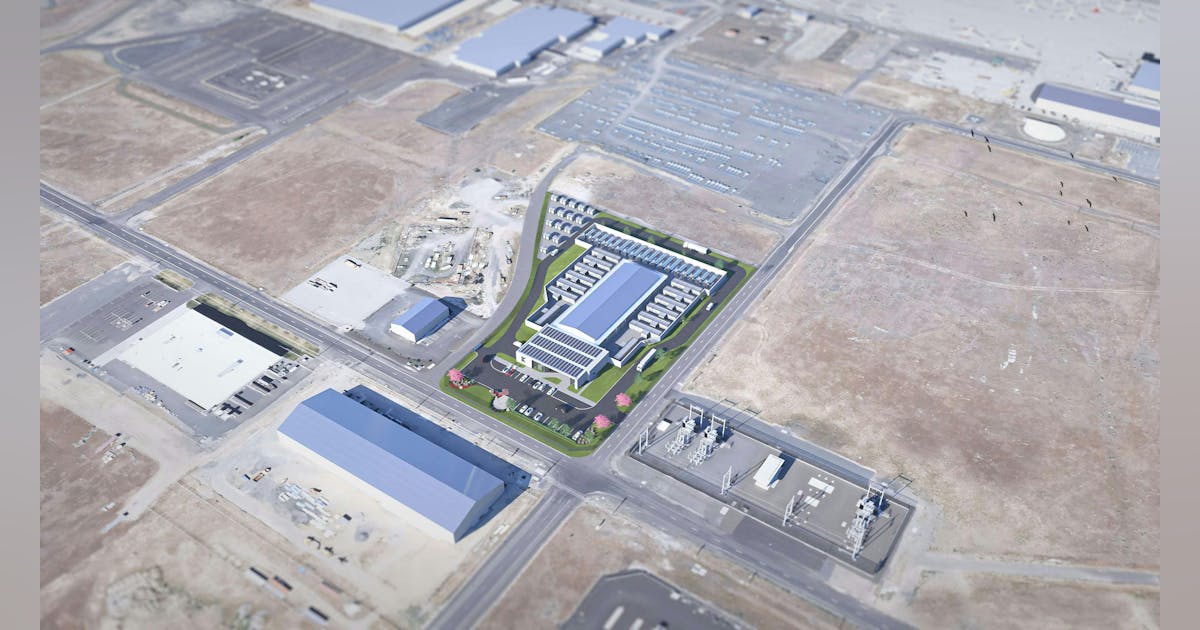
Moses Lake should not be understood as an isolated rural data center project. It sits within the larger Grant County infrastructure ecosystem that helped make nearby Quincy one of the defining hyperscale markets of the cloud era.
Keel has called Moses Lake “adjacent to one of the most proven data center markets in the United States,” noting that hyperscale infrastructure has operated around Quincy for nearly two decades. In its Q1 remarks, management argued that increasingly constrained regional power leaves operators seeking incremental Pacific Northwest capacity with fewer options.
The Grant County Economic Development Council’s data center inventory includes Microsoft, NTT Data, Sabey, Vantage, Intuit and other operators. The organization counts more than 1.5 million square feet of data center operations in the county and points to a diverse fiber network and Grant County PUD’s Columbia River hydroelectric resources as core advantages.
That existing cluster changes the equation for an 18-MW project.
The headline AI developments of 2026 are increasingly measured in hundreds of megawatts or gigawatts. But another market exists underneath those megacampus announcements: operators that need tens of megawatts in the right geography on a timeline measured in quarters rather than many years.
An 18-MW facility with power, fiber, equipment and construction underway can therefore be strategically more relevant than its relatively modest capacity suggests.
Keel had previously secured an option for another 10 MW near Moses Lake, but management said during its second-quarter call that it has relinquished that option and is now focused exclusively on the existing 18 MW. The decision further distinguishes Moses Lake from the industry’s race to advertise ever-larger pipelines.
This project is about getting capacity online.
A Second Life for Crypto Power
That may ultimately be the larger Moses Lake story.
Bitcoin miners assembled portfolios around one resource the AI industry is now struggling to obtain: large blocks of electricity. Their mining buildings are generally not interchangeable with high-availability AI data centers, which require substantially different cooling, redundancy, networking and power-distribution architectures.
But land, electrical infrastructure, utility relationships and existing interconnections can give those sites a development head start. Keel is spending heavily to bridge the considerable infrastructure gap between those two types of computing.
Its overall development pipeline is 2.2 GW, spanning Washington, Pennsylvania and Quebec. Yet Moses Lake — at just 18 MW — is expected to be Keel’s first fully commissioned and energized AI/HPC data center and its first source of HPC revenue.
That makes the small Washington project unusually important. Quincy demonstrated what inexpensive hydroelectric power, fiber and available land could do for the first great wave of hyperscale cloud infrastructure.
Moses Lake may now help answer a different question: how quickly can existing powered infrastructure be transformed to serve the AI era?
The Bitcoin mine is already gone. The next test is whether 18 MW of existing power can be turned into AI capacity faster than the market can build it from scratch.