The North American data center industry built at record scale during the first half of 2026. It still wasn’t enough to loosen the market.
Primary-market supply increased 33.7% year over year to a record 10,903 MW, according to CBRE’s newly released North America Data Center Trends H1 2026. Yet vacancy moved in the opposite direction, falling from 1.6% a year earlier to another record low of 1.4%.
Net absorption reached 1,456.2 MW, up 11.7%, as hyperscale cloud and AI infrastructure operators continued competing for increasingly scarce blocks of contiguous power and capacity. Construction climbed 24.8% to a record 7,481.1 MW, surpassing the previous peak of 6,350.1 MW set in the second half of 2024.
Perhaps the most telling number in the report is 80.4%. That is the share of primary-market capacity under construction that has already been preleased, up from 74.3% a year ago. CBRE estimates that less than 1,500 MW of all capacity currently under construction remains available—roughly six months of demand at the current absorption rate.
The resulting picture is less one of a construction shortage than a race between infrastructure delivery and an AI demand curve that keeps absorbing capacity before it reaches the market.
And increasingly, CBRE argues, securing the megawatts is only part of that race.
Power, Permitting and Local Approval Converge
Power availability and infrastructure delivery timelines remain the primary determinants of where data centers can be built. But CBRE’s H1 report places another constraint alongside them: community acceptance.
“Local opposition has also become a serious obstacle,” the report states, with community resistance, zoning disputes and entitlement delays increasingly capable of stopping projects even after developers identify viable power and fiber.
CBRE goes further in its outlook, describing community engagement as a development constraint now “on par with power procurement.” In practical site-selection terms, securing local approval has become nearly as consequential as finding electricity and fiber.
That dynamic plays out differently across each of North America’s eight primary data center markets.
Atlanta Takes the Construction Lead
The headline market change in H1 came in Atlanta, which for the first time surpassed Northern Virginia in total capacity under construction.
Atlanta had 2,882 MW underway, an increase of 52.3% year over year. That makes the Georgia market the largest active construction market in North America even as Northern Virginia remains substantially larger in installed inventory.
CBRE says single-tenant leasing remains particularly strong. Turnkey facilities are being preleased roughly a year before completion, while build-to-suit projects are securing tenants approximately two-and-a-half years in advance.
Georgia continues to benefit from tax incentives, construction labor availability, an established data center supply chain and comparatively low operating costs. Electric membership cooperatives are also increasingly working with third-party generation providers, giving developers more options around power delivery, collateral requirements and long-term energy pricing.
Development is simultaneously pushing outside metropolitan Atlanta. CBRE notes announced gigawatt-scale campuses across South Georgia and other rural areas, where transmission availability, lower entitlement risk and state support for rural economic development are opening new territory.
Pricing is following demand. Atlanta recorded increases across all four requirement tiers tracked by CBRE, with rates for 10-MW-plus deployments rising 14.5% in H1.
Northern Virginia Gets Even Tighter
Atlanta may now lead construction, but Northern Virginia remains the heavyweight.
Inventory reached 4,496.5 MW in H1, by far the largest primary-market total. Northern Virginia also led all primary markets with 467.6 MW of net absorption, while vacancy fell to approximately 0.2%; CBRE’s market chapter puts the rate more precisely at 0.24%.
Capacity under construction rose 16.5% to 2,420.2 MW. CBRE characterizes that growth as slower than Atlanta’s in part because land, permitting and power constraints are making further expansion harder.
All Northern Virginia capacity scheduled to deliver during 2026 has already been committed, pushing preleasing deeper into 2027 and beyond. Just 10.8 MW of supply remains available, while finding even 5 to 10 MW of contiguous capacity has become difficult.
The region nevertheless delivered more than 1.6 GW of capacity across 2025 and the first half of 2026.
Dominion Energy’s batching process continues to lengthen power delivery timelines for prospective projects, increasing the value of entitled sites with established power positions. For 10-MW-plus requirements, CBRE reports asking rates of roughly $160 to $185 per kW per month.
Capital continues chasing the market as well. Digital Realty agreed to purchase Blackstone-affiliated interests in three fully leased data centers, AWS acquired another 122 acres in Loudoun County, and STACK Infrastructure topped out the first of 19 planned buildings at its 1-GW Stafford County campus.
Dallas-Fort Worth: Massive Pipeline, Almost None of It Available
Dallas-Fort Worth remains one of the clearest examples of how headline construction numbers can overstate the amount of capacity an occupier can actually obtain.
More than 765 MW is currently under construction, according to CBRE. About 95% of that capacity has already been preleased.
Developers have another 3.7 GW of greenfield development planned but not yet under construction, illustrating both the extraordinary scale of interest in North Texas and the gap between a proposed campus and deliverable capacity.
Powered-land prices continue to climb. Behind-the-meter projects are gaining acceptance as grid timelines stretch, while demand is growing for sites below 75 MW as restrictions surrounding very large loads complicate bigger developments.
CBRE also sees Texas’ evolving batch approach to interconnection as a potential mechanism for working through the queue backlog and creating a more predictable route to power.
Projects are increasingly appearing around Fort Worth outside the traditional 30-mile Infomart radius, while the rising capital required simply to hold a utility queue position has created another role for equity investors: financing interconnection deposits before construction begins.
Chicago Pushes Outward
Chicago entered H1 with continued demand from hyperscalers, neoclouds and enterprises, bringing vacancy down to 2.2%.
Near-term large blocks are effectively gone. CBRE says no contiguous space of 5 MW or more will be available during 2026, and the next large contiguous projects are not expected until late 2027 at the earliest. Even projects scheduled to deliver through the end of 2027 have less than 10% vacancy.
That scarcity is pushing development farther from Chicago’s established clusters and placing still greater emphasis on where power can actually be secured.
Aligned Data Centers and Tract are each planning 1-GW campuses in Coal City and Morris, respectively, while Microsoft leased Compass Datacenters’ Hoffman Estates campus.
Policy has become another variable. Illinois paused processing new agreements under its Data Center Investment Program beginning July 1 while Gov. JB Pritzker seeks a broader data center regulatory framework during the fall veto session.
CBRE also reports a 9.7% H1 increase in pricing for 10-MW-plus deployments.
Hillsboro Reaches 0.21% Vacancy
Hillsboro may offer the starkest vacancy number in the report.
Vacancy fell to just 0.21%, and CBRE says there is no facility in the Oregon market offering at least 5 MW of contiguous available capacity.
More than 90% of the 170.3 MW currently under construction has already been preleased.
At the same time, Oregon’s changing tax environment is introducing another development variable. HB 4084 temporarily restricts new data center participation in the state’s standard Enterprise Zone property-tax exemption program, while Hillsboro has separately imposed a temporary land-use moratorium on new and expanded data center projects.
STACK Infrastructure remains one of the market’s most active developers, announcing a 121-MW expansion of its Hillsboro campus.
Despite extraordinary scarcity, asking rates for deployments above 10 MW were unchanged during H1—less an indication of soft demand than of the lack of transactions available to reset pricing.
New York-New Jersey: Scarcity Meets a Moratorium
CBRE characterizes New York and New Jersey as a market defined by a persistent imbalance between growing demand and constrained supply.
Occupiers needing more than 5 MW have few alternatives. With little meaningful supply relief visible, prices continue to climb; rates for requirements above 10 MW increased 19% during H1, the largest increase among CBRE’s primary markets.
Regulation is now tightening the equation further.
New York Gov. Kathy Hochul issued a one-year pause in July on state environmental permitting for new data centers requiring 50 MW or more while the state develops a new regulatory framework. New Jersey is also weighing additional restrictions on large-scale data center development.
Scarcity is changing occupier behavior. CBRE notes that a major financial-services company bought a 249,000-square-foot data center rather than continue competing for leased capacity.
Operators are also investing directly in power resilience. Iron Mountain announced a 23-MW battery energy storage project at its Edison, New Jersey campus intended to ease on-site grid constraints.
Phoenix Absorbs More Than 260 MW
Phoenix absorbed more than 260 MW of colocation capacity during H1, driven by enterprise digital transformation and continued cloud demand.
Three additional colocation projects are under construction for expected delivery in H2, bringing badly needed supply into a market where demand continues rising. Average lease terms have stretched to approximately seven years.
But powered land is becoming harder to obtain as utility limitations, municipal restrictions and community opposition narrow the universe of viable sites.
Arizona also enacted a three-year pause on new data center sales-tax exemptions. The policy triggered a rush of applications before the moratorium took effect, but it adds another cost consideration for projects that did not secure eligibility beforehand.
The development pipeline nevertheless remains active. CBRE points to major projects from Prime Data Centers, STACK, Aligned, QTS and Vantage as evidence that operators continue to see long-term value in the Arizona market.
Silicon Valley Sells Certainty at a Premium
In Silicon Valley, near-term power has become a premium product.
CBRE says occupier demand continues pushing rents to record levels, particularly for deployments capable of delivering both available power and near-term occupancy. Vacancy remains near historic lows, preleasing is standard, and expansion rights are becoming an increasingly important part of lease negotiations as occupiers try to reserve future capacity.
Powered-shell development is also becoming more prevalent as developers seek faster delivery schedules and allow large customers greater flexibility in configuring high-density infrastructure.
The constraints remain familiar: scarce land, limited power and long development timelines.
Even so, significant projects continue advancing. San Jose selected Prologis to develop a 159-acre city-owned site where the company plans four 99-MW data centers. Prologis is separately advancing another 99-MW project in South San Jose.
Microsoft has begun construction on a North San Jose project expected to deliver between 49 and 99 MW. CoreSite acquired three office properties zoned for data center redevelopment, while Equinix bought approximately 16 acres adjacent to its Great Oaks campus for future expansion.
Pricing Pressure Moves Down the Size Curve
The capacity squeeze is no longer confined to hyperscale blocks.
Average asking rates for 250-to-500-kW requirements rose 4.3% during H1, nearly twice the 2.5% increase recorded a year earlier.
The largest increase came in the 3-to-10-MW range, where rates rose 8.3%, followed by deployments from 500 kW to 3 MW at 7.9%. Rates for requirements above 10 MW increased 6.7%.
CBRE sees that pattern as evidence that pricing momentum is moving toward smaller capacity tiers, where transactions remain possible even as giant contiguous blocks disappear from mature markets.
Capital Keeps Finding Ways Into the Buildout
Power and permitting may constrain development, but capital has not disappeared.
Data center investment sales totaled $1.7 billion during H1. Much more money is moving through development financing, securitization and platform investments.
Issuers raised approximately $27.8 billion across 12 high-yield bond offerings during the half. Meridian Arc alone priced $5.7 billion of bonds at a 6.25% yield to support development of a 430-MW Indiana campus fully leased to Fluidstack.
Related Digital and Blackstone secured $16 billion in construction financing for an Oracle-leased campus in Saline Township, Michigan.
Single-asset, single-borrower data center CMBS issuance totaled another $4.9 billion, representing 9% of all SASB CMBS issuance across property types. QTS secured a $2.1 billion note to refinance facilities in Virginia, Illinois and Georgia, while Switch raised approximately $768 million through an ABS transaction involving its Reno operations.
Platform capital is scaling as well. Blackstone Digital Infrastructure Trust raised $1.75 billion in a May IPO, and KKR launched Helix Digital Infrastructure with more than $10 billion of commitments spanning data centers, power generation and connectivity.
AI Infrastructure Is Becoming a Network Story Too
CBRE also connects the data center expansion directly to a parallel fiber buildout.
More than 20,000 route miles of new fiber projects have been announced during 2026, according to the report, as Zayo, Lumen, BIG Fiber and other providers build long- and medium-haul infrastructure linking established hubs with emerging AI clusters.
Consolidation among regional networks is creating larger fiber platforms, while securitizations, private credit and asset-backed financing are supplying capital for national and regional network expansion.
The implication is straightforward: moving AI infrastructure into new power markets does not eliminate the network requirement. It increases the importance of extending high-capacity connectivity to wherever the compute lands.
The Data Center Contract Is Changing
Tight capacity is also beginning to alter how space and power are leased.
CBRE sees colocation operators increasingly experimenting with triple-net structures that shift taxes, common-area maintenance and insurance costs toward occupiers.
“Take or pay” power floors are becoming more common as well. Minimum utilization requirements now range from roughly 60% to 85% of allocated capacity, meaning tenants can be required to pay for a substantial portion of reserved power whether or not their servers are consuming it.
Meanwhile, ready-for-service dates are stretching as mechanical, electrical and plumbing equipment constraints affect both new builds and existing facilities. Converting an air-cooled facility for liquid-cooled AI hardware can push those timelines beyond six months.
Behind-the-meter and other bridging-power strategies continue gaining traction where utility delivery dates miss tenant schedules.
CBRE also sees renewed momentum for smaller urban deployments. Demand for 2-to-20-MW infill facilities is beginning to emerge, initially supported by hyperscaler network deployments and eventually by enterprise AI, robotics and other latency-sensitive workloads.
In emerging markets, the firm sees another potentially important workload band developing around 25 to 75 MW as inference and enterprise AI move compute closer to end users.
West Texas, Alberta and Indiana Enter the Conversation
The primary markets remain exceptionally tight, but the report offers several clues about where the next layer of North American capacity could develop.
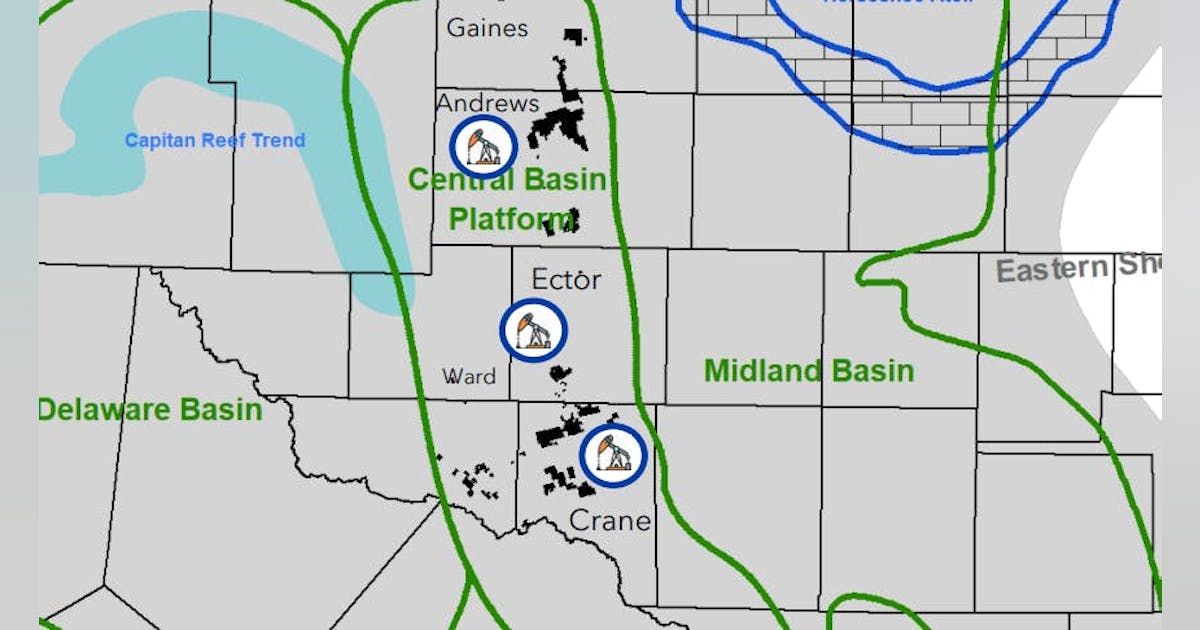
West Texas projects in Armstrong, Wilbarger, Haskell, Gray, Roberts, Ector and Reeves counties continued reaching energization milestones during H1. Based on projects already approved in the construction pipeline, CBRE expects West Texas to become one of North America’s five largest colocation markets by 2028.
Alberta is attracting hyperscale attention around abundant energy, inexpensive land and a deregulated electricity structure that gives developers more latitude to contract for or generate their own power. CBRE highlights major planned investments including Meta’s $13 billion development north of Edmonton and Amazon’s $4.3 billion campus near Calgary.
Indiana is emerging for a different combination of reasons: sales-tax incentives, connectivity to Chicago, large agricultural sites and a central geographic position. CBRE points specifically to increasing large-scale activity around New Carlisle and Lebanon.
Those markets illustrate the central tension running through the entire H1 report.
North America is not running out of proposed data centers. Developers have identified enormous amounts of land and capital for the next generation of infrastructure.
What remains scarce is deliverable infrastructure: power that can be energized on a usable schedule, fiber that can support the workloads, equipment that can arrive when needed, permits and entitlements that survive local review, and capacity that has not already been promised years before the doors open.
That is how the industry can add 33.7% more primary-market supply in a year and still end the period with only 1.4% vacancy.
For the AI infrastructure buildout, construction volume is no longer the most important measure of supply. Increasingly, the question is how much of that capacity can actually reach the market—and how much is still available when it does.