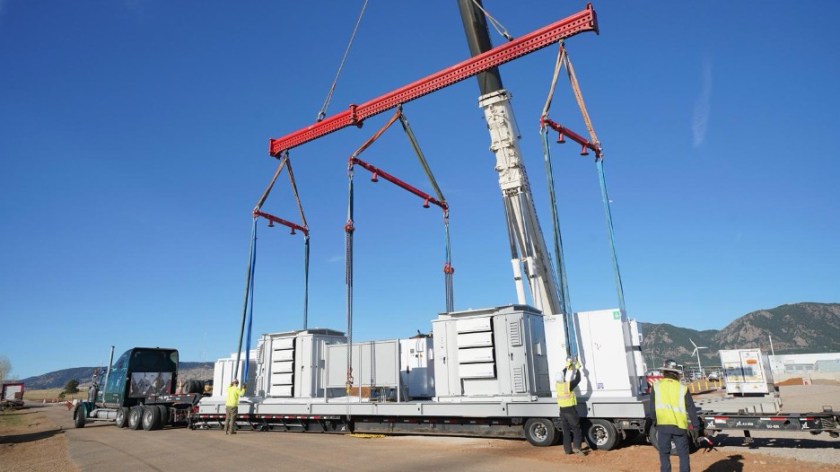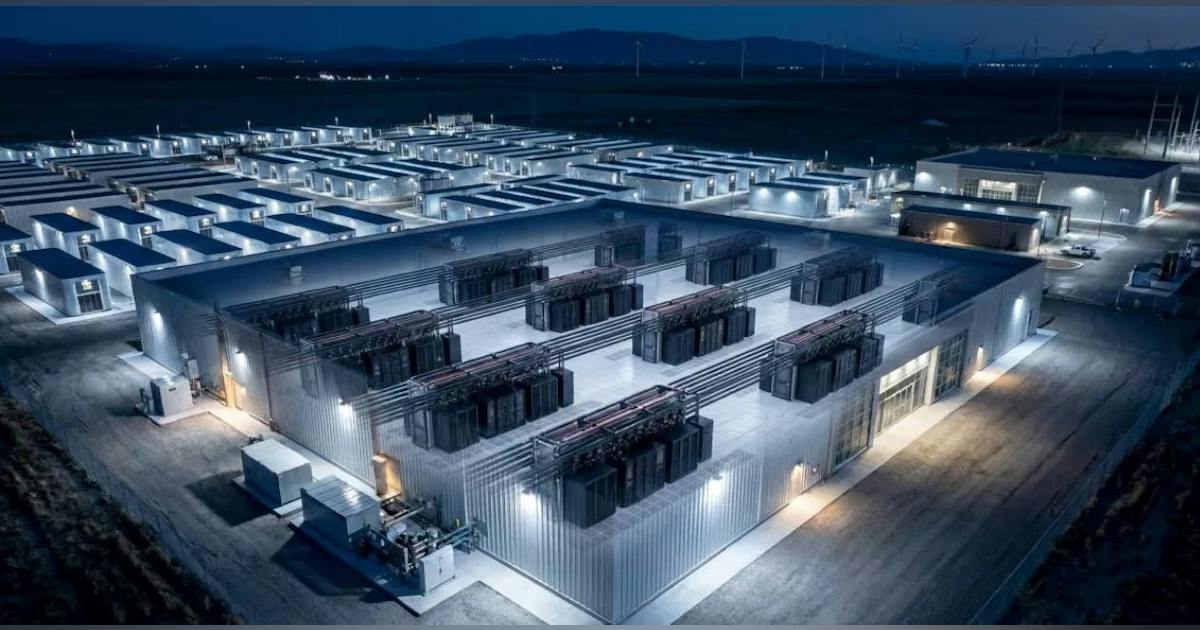
The joint reference design appears in Trane’s Continuum Rubin DSX and Eaton’s Beam Rubin DSX platforms. The goal is a pre-coordinated architecture stretching from grid power to the chip rather than requiring developers and engineering teams to independently assemble electrical and mechanical systems for each project.
The systems are also intended to exchange operating data. Rather than cooling and electrical systems responding independently, the systems can instead exchange leading indicators and respond more dynamically to changing operating requirements. This is an approach that closely mirrors NVIDIA’s larger DSX philosophy.
Trane and Eaton are also designing the architecture to accommodate future liquid-cooling and direct-current power-distribution technologies. That future-proofing matters as rack power densities continue to rise. An electrical and cooling plant optimized for one GPU generation may otherwise become a constraint several hardware generations later.
The Broader DSX Buildout
The Lancium, Cloverleaf and Trane/Eaton agreements are part of a considerably wider expansion of the DSX ecosystem. Earlier deals show NVIDIA moving into many of the same infrastructure layers through partnerships spanning powered land, electrical design, digital twins and even project financing.
In May, NVIDIA and IREN announced plans to support as much as 5 GW of DSX-aligned AI infrastructure across IREN’s global development pipeline, with the companies identifying IREN’s 2 GW Sweetwater campus in Texas as an expected flagship DSX deployment. NVIDIA also received a five-year right to purchase up to 30 million IREN shares at $70 each, representing a potential investment of as much as $2.1 billion.
The infrastructure ecosystem has widened as well. Siemens, NVIDIA and Fluence, incorporating nVent design considerations, have developed a DSX Vera Rubin-aligned electrical, power and controls architecture extending from the utility connection to the rack. ABB is integrating digital models of medium-voltage switchgear, power-distribution equipment and UPS systems into the Omniverse DSX Blueprint, while Vertiv is integrating its SmartRun infrastructure digital twin with DSX workflows.
Together, those efforts push NVIDIA’s reference architecture deeper into the systems engineers use to design and validate the physical data center before construction begins.
NVIDIA is also extending the model into financing. In August, the company announced agreements with Apollo, BlackRock, Blackstone, Brookfield, Goldman Sachs and KKR aimed at creating financing platforms capable of mobilizing more than $500 billion of third-party capital for AI infrastructure. NVIDIA explicitly positioned those pools of capital as a mechanism for helping customers finance and build DSX AI factories.
The geographic footprint continues to expand. On September 9, NVIDIA announced plans with Firmus, Sharon AI, IREN, ResetData, Megaport, CDC, NEXTDC and AirTrunk for as much as 2 GW of Australian AI infrastructure by 2027. NVIDIA described the effort as an expansion of land, power and shell capacity intended to support multiple generations of DSX AI factories. The participating infrastructure providers will operate the facilities, while NVIDIA supplies the DSX platform, accelerated computing, networking, software and ecosystem support.
The pattern reinforces the larger point: DSX is increasingly less a specification for what goes inside an AI data center than a framework for coordinating the infrastructure, capital and operating systems required to get one built and keep it productive.
The AI Factory Becomes One Machine
What connects the Lancium, Cloverleaf and Trane/Eaton deals is NVIDIA’s push toward what could be described as infrastructure co-design. The data center is increasingly being treated less like a building containing IT equipment and more like a single engineered machine. The components of the AI factory end up getting determined by a number of non-traditional factors:
· Site and interconnection conditions constrain available power.
· Workload and GPU architecture establish rack-level power requirements.
· Rack density drives cooling requirements.
· Power and cooling architecture determine facility overhead.
· Facility efficiency affects how much site power reaches compute.
· GPU operating points ultimately affect AI throughput and token economics.
DSX is an attempt to create an architecture connecting those decisions, which helps explain NVIDIA’s repeated emphasis on performance per megawatt and token cost rather than traditional infrastructure metrics alone. In a power-constrained market, adding another 5% or 10% of computing capacity without the need to acquire another 5% or 10% of utility power can have enormous economic value.
NVIDIA has already described power as the limiting resource in AI factory development. Its March DSX announcement cited more than 200 GW of projects waiting in U.S. interconnection queues and more than $300 billion of equipment backlogs associated with the energy infrastructure challenge.
Powered Land Is Not Deployed Capacity
There are nevertheless important distinctions to make between the scale described in these announcements and infrastructure actually operating today.
1. Lancium’s more than 15 GW figure represents its powered-land development pipeline, not 15 GW of installed NVIDIA infrastructure. The company says 4 GW is currently under lease.
2. Cloverleaf says it has advanced multiple GW-scale projects, but the NVIDIA partnership does not announce a specific amount of new computing capacity or a construction timetable.
3. The efficiency, copper and construction-cost reductions cited by Eaton and Trane are projected benefits of their reference architecture rather than measurements from a large fleet of completed operating facilities.
Reference designs do not create transmission capacity, shorten every utility interconnection queue, manufacture transformers, secure environmental permits or guarantee community approval. But they can potentially help developers extract more computing output from the infrastructure that does become available and reduce the engineering uncertainty involved in deploying it.
From GPU Vendor to AI Infrastructure Architect
NVIDIA says cloud infrastructure providers including CoreWeave, Crusoe, IREN, Lambda, Nebius, Nscale and others are deploying components of DSX, while Dell Technologies, HPE, Lenovo, Supermicro and numerous manufacturers are developing DSX-ready systems.
NVIDIA is now investing in companies controlling the powered land on which AI factories may be built. It is working with developers during the earliest stages of site and utility planning. And its partners are creating integrated electrical and mechanical designs intended specifically for its future computing platforms. That suggests DSX could become one of NVIDIA’s more important mechanisms for extending its role across the design and operation of AI infrastructure.