Executives from Chevron Corp. and ExxonMobil Corp. spoke at the Barclays 40th Annual Energy-Power Conference in New York this week, expanding on how they’re approaching the next phase of upstream growth, highlighting opportunities from Venezuela to Guyana, and offering clues about how major operators are evaluating future resource development opportunities.
As OGJ did following , we’ve gathered notable comments from company leaders about the opportunities and challenges shaping their businesses.
Chevron
Unsurprisingly, a significant share of the conversation between Barclays analyst Betty Jiang and Chevron Corp. chief financial officer Eimear Bonner focused on the company’s ambitions in Venezuela, where the company last week signed a deal to over the next 5 years.
Bonner reiterated the attractive financial picture for Chevron, pointing to operating costs below $20/bbl and a goal of hitting 600,000 b/d in 2031 (from today’s roughly 280,000 b/d) just from primary recovery. Chevron teams expect that production will plateau between 600,000 and 700,000 b/d for most, if not all, of the 2030s.
“There’s a lot more upside there,” Bonner said. “This is growth at low cost and very attractive returns.”
Helping to solidify Chevron’s financial equation, Bonner added, is that the company’s existing infrastructure in Venezuela is in good shape and that its expansion plans won’t require major capital projects but will instead lean on pipeline and utility expansion work.
“The best way to think about this is we are developing or intend to develop this like the way we develop the Permian,” Bonner said. “It really is just another factory-type development. There will be a period of investment and a period of plateau. We’re looking forward to adopting and scaling and implementing all the lessons learned from the factory experience that we have.”
ExxonMobil
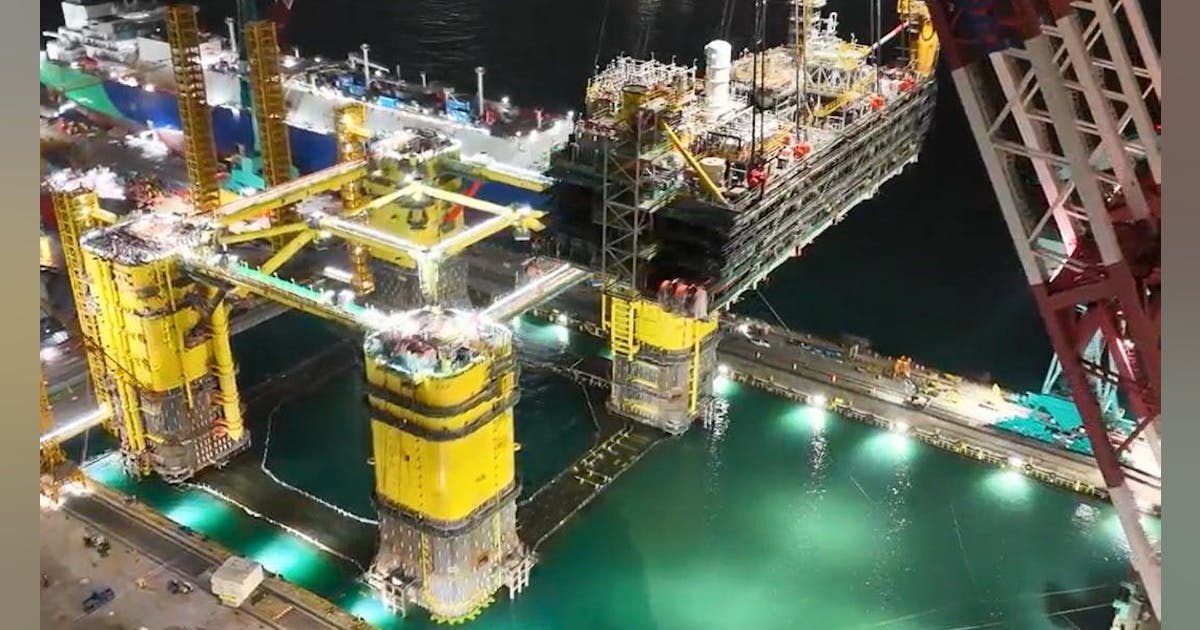
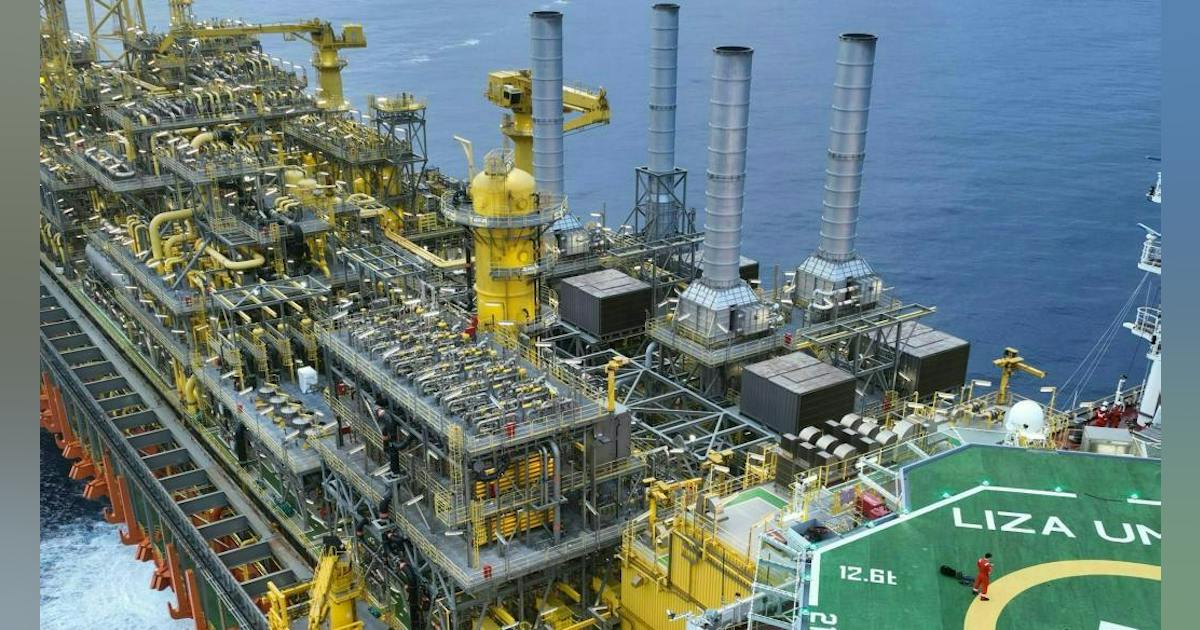
With a next quarter in the Stabroek block offshore Guyana, ExxonMobil Corp. is on pace to start generating billions of dollars from what executives have in the past called a once-in-a-lifetime opportunity.
Speaking to Jiang on Sept. 9, chief financial officer Neil Hansen said the success achieved and —where Exxon holds an operated 45% interest with partners Chevron (30%) and China National Offshore Oil Corp. (25%)—hasn’t changed the Exxon team’s emphasis on continuing to invest in future upstream opportunities. That could mean going after discovered but undeveloped resources or pushing on frontier exploration projects. Hansen pointed out that Exxon has “never deviated” from looking to what’s next.
What is new in the wake of Guyana emerging as something of a modern-day model for how to evaluate and start to develop opportunities? Hansen said country leaders who used to favor a more open bidding process have started leaning toward a more intimate process.
“What’s changed over the last 5 to 10 years is this recognition of resource owners [that] who operates and who develops matters,” Hansen added. “You can destroy a lot of value if you have the wrong operator. I think that dynamic has changed quite a bit. Again, it’s opened more one-on-one type of discussions with the resource owners.”