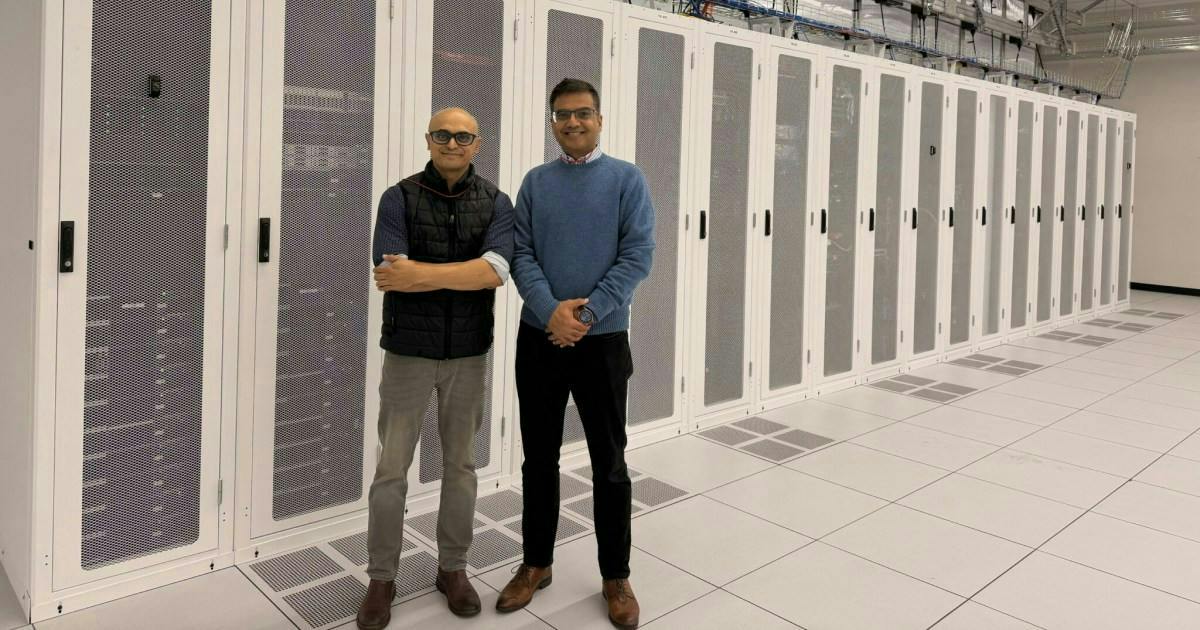
The data center industry’s race for power has become a contest against time. Developers are pursuing new generating capacity, transmission upgrades, utility interconnections, and increasingly elaborate behind-the-meter strategies to satisfy an AI infrastructure market whose demand keeps outrunning delivery schedules.
Yet another possibility is emerging alongside the construction boom: Some of the power needed to expand AI computing may already be available inside operational facilities, committed to customers but not consistently consumed.
That is the proposition behind Hammerhead AI, a Redwood City, California-based company developing software to coordinate electrical infrastructure, cooling systems, and computing workloads. Rather than treating a data center’s power allocation as a fixed ceiling that can only be raised through construction, Hammerhead argues that more compute can be accommodated by managing existing resources dynamically.
In a new episode of the Data Center Frontier Show, Hammerhead AI founder and CEO Rahul Kar discussed the company’s approach with DCF Editor-in-Chief Matt Vincent, examining how reinforcement learning and workload orchestration could convert otherwise idle electrical capacity into revenue-producing AI infrastructure.
The idea arrives at a consequential moment for the colocation market. DCF’s analysis of CBRE’s first-half 2026 data center market report found North American primary-market vacancy at just 1.4%, even as new construction reached record levels. Power commitments, delivery timelines, and access to ready infrastructure continue to determine where and when additional compute can be deployed.
Hammerhead’s central argument is that the industry should examine how much of its already allocated capacity can be made productive before assuming that every increment of computing demand requires another increment of physical infrastructure.
The commercial opportunity is substantial. Whether it can be realized without undermining the reliability expectations of mission-critical facilities is the harder question.
A Power Shortage, or a Utilization Problem?
Kar begins with a distinction between the electricity infrastructure available to serve demand and the amount of that infrastructure being used at any particular time.
“The grid as we know it is about 30% utilized,” he told Vincent, arguing that the industry’s power challenge reflects both insufficient infrastructure in constrained markets and inefficient use of existing capacity.
Kar characterized the problem as two-sided. AI developers need more electricity infrastructure, but many facilities also consume considerably less power than the amount reserved or available to them. Hammerhead’s business focuses on that second condition.
The 30% figure requires qualification. Grid utilization varies widely by geography, system component, measurement method, and time of day. Nor does low average utilization necessarily indicate that an equivalent amount of additional continuous demand can be safely accommodated.
Recent utility disclosures illustrate the distinction. According to October 2026 reporting on Virginia’s first grid-utilization filings, Dominion Energy reported average annual distribution utilization of 41% between July 2025 and July 2026, compared with approximately 80% during infrequent peak periods. Appalachian Power reported considerably lower annual utilization.
Those differences matter. Electrical infrastructure must accommodate peak demand, contingency conditions, equipment outages, and other reliability requirements. Average unused capacity cannot simply be treated as firm, continuously available power.
The same principle applies inside a data center, where installed electrical capacity, contracted customer allocations, actual power consumption, and available operational headroom are different measurements.
Vincent pressed Kar on precisely that distinction: How does an operator establish that an apparently unused megawatt is genuinely available to monetize, rather than capacity being preserved for reliability?
Kar acknowledged the challenge.
“Between power availability or operational headroom and when it’s ready for compute monetization or producing tokens, there is a journey that needs to happen,” he said.
Hammerhead’s answer is to combine analytical methods with AI-based control systems to determine how additional workloads can operate within existing limits. The goal is to identify usable flexibility while maintaining safeguards against conditions that could threaten established operations.
That makes the company’s proposition more specific than simply discovering idle megawatts. It is attempting to establish the operating conditions under which those megawatts can support additional computing activity.
ORCA: Bringing Power, Cooling, and Compute Under One Control Layer
Hammerhead’s technology platform, known as ORCA, or Orchestrated RL Control Agents, is designed to coordinate systems that have traditionally been managed separately.
Within a typical data center, electrical power management, cooling infrastructure, server operations, and application workloads operate through different layers of hardware and software. Each has its own control mechanisms, performance requirements, and operating constraints.
The challenge grows as high-density AI infrastructure places greater demands on both electrical and thermal systems. As DCF recently reported, synchronized GPU workloads can create fast, volatile power swings, while supporting infrastructure must respond within its own equipment limits.
Kar explained that ORCA integrates with the controls made available by individual facilities, rather than requiring every site to follow an identical design.
“Every data center has its unique design,” he said. “Some are repeatable, some are not. So what we have built is a standardized way of dealing with these kinds of differences.”
That standardized approach uses reinforcement learning, a machine-learning technique in which control policies are developed and evaluated against defined objectives and constraints.
According to Kar, ORCA can integrate information from uninterruptible power supplies, racks, chillers, coolant distribution units, and other infrastructure components. It also extends into IT systems, including rack-level monitoring and controls affecting individual GPUs.
Each component contributes to the facility’s overall electrical demand, and each may offer some degree of operational flexibility.
The system is intended to observe those relationships and coordinate available controls to fit more computing activity inside the existing power allocation.
“We have the controls and the lens of seeing how much power is consumed at every layer within the data center, starting from the GPUs, going up to the meter,” Kar explained.
In practical terms, this places ORCA alongside existing building management, electrical power monitoring, cooling control, and IT management systems as an orchestration layer rather than a wholesale replacement.
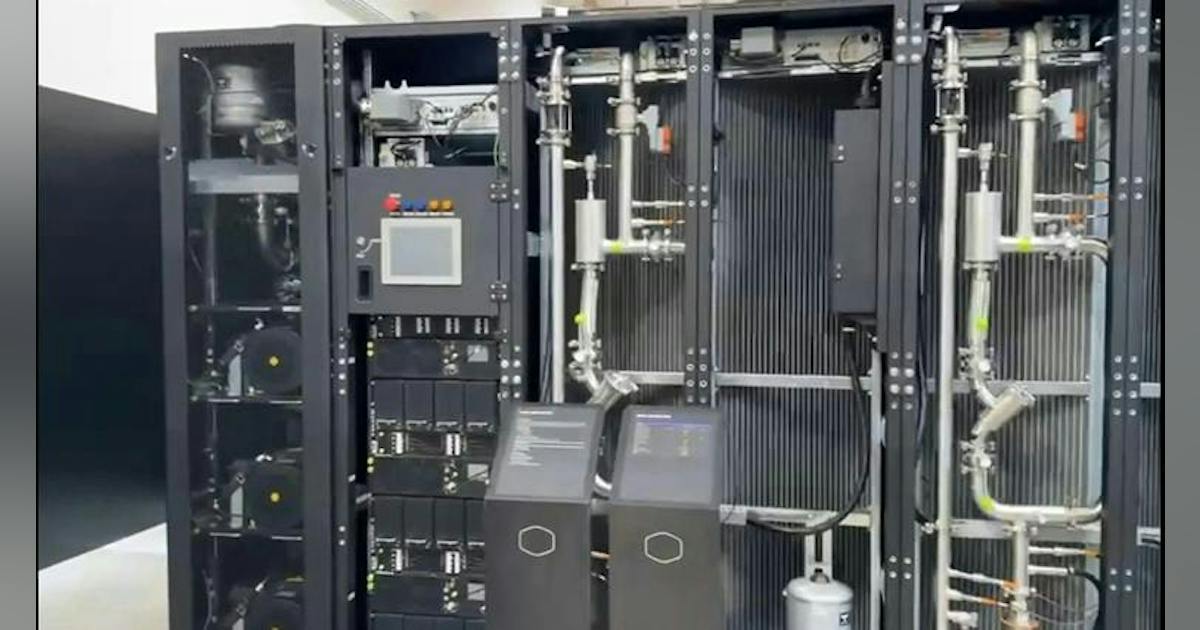
The physical deployment model also matters. Kar said Hammerhead installs a small rack inside the customer facility, where operational data and control functions reside.
AI models are trained in the cloud and subsequently deployed to that on-premises equipment. Kar described the operating system as air-gapped from a control perspective, meaning an external controller cannot directly take over facility operations through the cloud layer.
That separation is important in mission-critical environments where external connectivity, cybersecurity, and operational autonomy are significant concerns.
The architecture nevertheless raises engineering questions about integration, control response times, failure handling, and how operating policies are tested before deployment. Kar described the general control architecture but did not provide specific reaction-time measurements or detailed fail-safe procedures during the interview.
Hammerhead has also begun examining these issues through a research collaboration with Columbia University announced October 6. The work, involving researchers led by Professor Clifford Stein, focuses on reinforcement learning, simulation, and the evaluation of control policies within operating, safety, and reliability constraints.
The collaboration underscores a central engineering requirement: In a data center, a control strategy must do more than improve utilization. It must demonstrate that optimization remains within the facility’s permissible operating boundaries.
The Performance Bargain: Protecting Existing Customers
The difficult part of Hammerhead’s proposition is not identifying workloads that could consume additional power. It is accommodating them while preserving the service commitments already made to tenants.
In a multitenant colocation facility, customers may hold contractual rights to electrical capacity that exceeds their instantaneous consumption. That unused portion can represent potential computing capacity, but it is not automatically available for another operator to use.
Vincent presented Kar with a hypothetical situation involving an existing customer whose power allocation and service-level agreement must remain protected.
How could additional workloads use that reserved headroom without compromising the original customer’s ability to consume its full contracted allocation?
Kar’s answer depends on the added workloads being flexible.
“If you have already promised power and strict SLAs to an existing customer, there is no way we are going to touch that,” he said. “They will always have that power at any instance of time that they want.”
Under Hammerhead’s proposed model, software monitors unused capacity and permits suitable inference workloads to operate against that headroom. When the original customer’s consumption increases, the additional workloads must accommodate the change.
Kar likened the arrangement to an Airbnb model, in which a resource can be temporarily occupied by another user while remaining available to its primary customer.
The analogy is straightforward. The operational requirements are not.
For the model to function reliably, flexible compute must be capable of reducing its power draw quickly enough to preserve established commitments. The system must also account for the behavior of cooling equipment, electrical distribution infrastructure, and the aggregate effect of changing loads.
Importantly, reserved capacity cannot be assumed to be commercially transferable. Tenant agreements, facility operating policies, and applicable service commitments would have to permit any arrangement that effectively shares capacity between customers.
Kar emphasized that under normal operating conditions, users should not notice a meaningful performance difference.
During a limited number of peak operating hours, however, flexible workloads may need to accept slower completion times.
He offered the example of transcribing a podcast. For a task without an immediate deadline, receiving the completed transcript in 45 minutes instead of 30 may be an acceptable trade-off.
That distinction is fundamental to Hammerhead’s model. The technology does not make electrical constraints disappear. Instead, it attempts to coordinate when and how available computing resources are consumed, assigning the performance concessions to workloads able to tolerate them.
The value proposition therefore depends as much on workload classification and contractual arrangements as on the sophistication of the control algorithms.
Why AI Inference Changes the Equation
Kar sees AI inference as the most promising market for this kind of infrastructure orchestration.
Unlike model training, which frequently involves highly coordinated computing clusters, inference encompasses a growing range of applications with different performance requirements.
Some require immediate responses. Others can tolerate delays, operate asynchronously, or distribute processing across multiple computing environments.
Kar pointed to NVIDIA CEO Jensen Huang’s remarks at GTC 2026, where Huang declared that the inference inflection had arrived, reflecting the industry’s transition toward increasingly intensive use of deployed AI models.
For Kar, the importance is not merely that inference demand is growing. It is that inference creates distinct classes of workloads that can be matched to different infrastructure operating conditions.
Latency-sensitive applications, including certain robotics and real-time systems, require tightly controlled response times. They are poor candidates for opportunistic reductions in available computing power.
Other inference tasks offer more flexibility. Batch processing, document analysis, content generation, and certain agentic workflows may be able to tolerate delays or execute across distributed resources.
This does not make all agentic AI inherently latency-tolerant. Interactive agents and sequential reasoning tasks can be highly sensitive to response times. The degree of flexibility depends on the application and its service requirements.
Kar nevertheless argues that the expanding diversity of inference workloads creates opportunities to match computing demand with available electrical capacity.
“The bigger the pool is, the more flexible the compute becomes,” he said.
That observation carries implications for colocation and enterprise infrastructure.
As inference deployment expands beyond a relatively small number of massive training facilities, distributed computing environments may offer additional opportunities for workload placement and power-aware orchestration.
For Hammerhead, this creates a potential market in which existing infrastructure becomes more valuable not necessarily because it has more electrical capacity, but because software can use that capacity more productively.
What the Reported 30% Capacity Gain Actually Means
Hammerhead has published results suggesting that the approach can increase GPU capacity inside a fixed power allocation.
In a February 2026 proof of concept conducted with GPU optimization company Dheyo, Hammerhead reported that the combined technologies accommodated 30% more GPU capacity without increasing the original power envelope.
The test involved workload-level GPU optimization and facility-aware power orchestration. Importantly, the increase in installed or available GPU capacity did not translate into an identical increase in completed work.
According to Hammerhead’s published results, the demonstration produced an 18–20% increase in completed text-to-video inference jobs. Existing workloads retained their original completion times, while additional latency-tolerant jobs experienced execution times approximately 10–25% longer.
Those measurements illustrate the performance bargain underlying the technology.
More GPUs were accommodated inside the same electrical allocation, and total completed work increased. The additional capacity came with a measurable latency trade-off for workloads selected to absorb it.
The results also require appropriate limits in interpretation. They represent a company-reported proof of concept involving a particular workload and optimization configuration, not independent evidence that every operating data center can recover 30% more commercially usable power.
Likewise, a 30% increase in GPU capacity should not be confused with a 30% increase in available utility power, or even a universal 30% improvement in computing throughput.
The distinction matters because Hammerhead’s broader business case depends on translating technical optimization into repeatable results across different facilities, electrical architectures, customer contracts, and workload mixes.
An operator evaluating the technology would need to establish not only the amount of headroom available, but also the incremental work completed, performance variability, operational risk, and financial return from using that headroom.
For AI inference providers, that analysis increasingly revolves around the number of useful tokens or completed jobs produced per unit of power, rather than the nominal amount of GPU hardware deployed.
Who Captures the Value of a Recovered Megawatt?
If additional computing capacity can be brought online without expanding a facility’s original electrical allocation, the economic implications extend beyond its operator.
Vincent asked Kar who ultimately captures the benefit: the data center owner, existing tenant, AI cloud provider, or equipment supplier.
Kar’s response was expansive.
“A recoverable megawatt is a megawatt that you don’t have to build,” he said.
For data center operators, additional workloads could generate revenue from infrastructure that has already been constructed and energized.
For inference providers, access to capacity within an existing facility could shorten deployment schedules and reduce exposure to lengthy utility interconnection processes.
Hardware manufacturers and infrastructure suppliers could benefit from equipment deployments made possible by better utilization of existing electrical systems.
Kar characterized the opportunity as both a revenue improvement and a more efficient use of capital across the industry.
Yet the economics are more complicated than the phrase recovered megawatt might suggest.
Power made available dynamically is not necessarily equivalent to firm, continuously available capacity. Its value depends on the frequency and duration of availability, the cost of managing flexible workloads, the equipment required for additional computing, and the contractual terms governing the arrangement.
A facility may be able to support more revenue-generating activity without increasing its utility service, while still needing additional racks, cooling capacity, networking equipment, and operational support.
That distinction is particularly relevant for colocation providers, whose business models already reflect complex relationships between leased power, measured consumption, and contractual commitments.
The commercial question is therefore not simply whether unused power exists. It is whether operators can establish a reliable, contractually permissible product around its availability.
Moving From Technical Demonstrations to Commercial Scale
Kar told DCF that Hammerhead is no longer operating solely at the proof-of-concept stage.
“We are actually in full commercial operations and in production,” he said, adding that the company expects to expand significantly in 2027.
He described strong market interest and ongoing collaboration with major industry participants, with additional announcements anticipated over the next six months.
The company has already disclosed several steps toward commercialization.
In September, Hammerhead announced a distribution agreement with TD SYNNEX, positioning ORCA within the distributor’s Destination AI program. The agreement is intended to provide resellers and system integrators with a more standardized offering for identifying and utilizing available power in both new and existing data centers.
The October Columbia University collaboration addresses another dimension of the business: the research and validation necessary to coordinate complex infrastructure safely through AI-based control policies.
Most recently, on November 2, Hammerhead appointed technology industry executive Bobby Napiltonia as president, bringing a former Twilio chief revenue officer and Salesforce AppExchange executive into a role focused on commercial expansion. The announcement follows the company’s $10 million seed financing and identifies collaborations with TD SYNNEX and Schneider Electric among its growth initiatives.
These developments suggest a company attempting to move from an emerging technical proposition toward broader distribution and deployment.
Still, Hammerhead has not publicly established the full operational scale of ORCA through independently documented production results. During the DCF interview, Kar did not identify specific customer facilities, the total megawatts recovered in production, or aggregate performance measurements across deployed sites.
Those details will become increasingly important as the company seeks to demonstrate that its orchestration approach can perform consistently beyond individual proof-of-concept environments.
Optimization Will Not Eliminate the Need for New Power
Despite his emphasis on utilization, Kar does not suggest that software optimization can replace the industry’s continuing infrastructure expansion.
The distinction became clear when Vincent asked whether recovering usable capacity could reduce the need for new behind-the-meter generation, including natural gas turbines, fuel cells, energy storage, and potentially nuclear power.
Kar expects AI demand to continue increasing as applications expand into scientific research, medicine, advanced materials, and other fields.
Greater efficiency, in his view, may encourage further adoption rather than permanently reduce the need for new capacity.
Consequently, both infrastructure development and improved utilization will remain necessary.
“You need new builds to build new frontier models,” Kar said. “But you also have to be smart in order to be able to use the infrastructure to the best possible utilization as it’s capable of.”
He also drew a boundary around Hammerhead’s immediate business.
Although Kar spent approximately 15 years working on virtual power plants and grid flexibility, including projects totaling nearly 8 GW by his account, Hammerhead is not primarily pursuing grid-interactive data center services.
Other companies are addressing how data centers can adjust their demand in response to utility or grid requirements. Hammerhead’s focus is what happens within the facility itself: using available electrical infrastructure to support more productive computing.
The distinction matters as data center power strategies become increasingly layered. New generation, grid flexibility, battery storage, and operational optimization can address different constraints, and the effectiveness of one does not eliminate the need for the others.
Kar believes the industry’s eventual response to AI demand will combine new builds, distributed infrastructure, and emerging technologies.
Looking three to five years ahead, he offered a broader prediction.
“I think one prediction that I would have is that we will start building more responsibly going forward to serve this AI demand,” he said.
For the data center industry, that prospect presents a practical test of what more responsible infrastructure development actually means.
Building additional power and computing capacity will remain essential. But extracting more useful work from infrastructure already in service could become an increasingly important part of the equation, provided it can be accomplished without compromising reliability.
The next frontier in the power race may therefore involve two complementary challenges: delivering new megawatts quickly enough to meet demand, and proving how much more computing value can be obtained from the megawatts the industry already has.