Stay Ahead, Stay ONMINE

The Download: controlling AI agents and “Super Intelligence” loyalty tests

This is today’s edition of The Download, our weekday newsletter that provides a daily dose of what’s going on in the world of technology. How “reverse game theory” could keep AI agents in check A new approach known as “reverse game theory” aims to control powerful AI models by designing systems that incentivize them to stick to the rules. While game theory predicts how rational actors behave under particular rules, reverse game theory designs rules to elicit the behavior we want. Think of splitting a cake: if one person cuts it and the other gets first choice, the cutter has an incentive to make the portions equal. Researchers believe the approach could align AI more closely with our rules and instructions. But big questions remain about whether these mechanisms will work in practice. Here’s how reverse game theory could help make AI agents behave. —Amit Katwala Here’s who is falling in line for Trump’s “Super Intelligence” loyalty test At the end of September, President Trump signed an executive order with just one directive: government agencies must rebrand artificial intelligence as “Super Intelligence.” One month on, the rebrand is slowly appearing across government websites and documents, but it hasn’t caught on with everyone. Even some of the biggest names in tech still use “AI.” But the bigger concern is the new term becoming a political loyalty test: Those who use it signal allegiance to the administration. Those who don’t become targets for attacks. So one month in, who’s on board? —James O’Donnell This story is from The Algorithm, our weekly AI newsletter. Sign up to receive it in your inbox every Monday. The must-reads I’ve combed the internet to find you today’s most fun/important/scary/fascinating stories about technology. 1 Today’s midterms will test AI’s influence on US politicsCandidates are betting that AI regulation will sway voters to their side. (Axios)+ Angry constituents could derail Elon Musk’s Republican bets. (BI)+ Tech investors are on edge about the results. (Reuters $)+ America is divided over AI regulation. (MIT Technology Review) 2 Nvidia is ordering data centre clients to limit their business with China It told providers that the majority of their sales must be non-Chinese. (FT $)+ The move follows pressure from Washington. (Bloomberg $)+ Chinese AI has ruptured the White House. (MIT Technology Review) 3 Hackers have turned supermarket fridges into a food security riskAttacks in Europe have put US supermarket systems on alert. (CNBC)+ They’ve also sparked concerns over other domestic appliances.(BBC)+ It’s a good time for doing crime. (MIT Technology Review) 4 Scientists have detected signals at the smallest scale ever exploredThe discovery offers clues to a world of exotic new particles. (BBC)+ It came via CERN’s Large Hadron Collider. (The Times $) 5 Zapping part of the brain makes you think harder—at a costIt can both improve performance and reduce motivation. (New Scientist $)+ Neuropixels probes are transforming how we study the brain. (Nature) 6 Big tech is splurging on mega gas plants to power data centersThe projectsthreaten to reverse years of climate pledges. (WP $) 7 Google says an Android partner infected 1.3 million devicesThe malware infected TV boxes and other Android-based devices. (Verge) 8 Apple is trying to create its first robotIt’s proving a lot harder than expected, though. (Information $)+ AI robots are still a long way from useful. (MIT Technology Review) 9 China’s biggest shopping festival has a new product to sell: AIAI tokens have become a major new Singles’ Day category. (Reuters $) 10 A meteorite in the Sahara has revealed new clues about MarsIts chemistry may help explain how the planet lost its water. (Wired $) Quote of the day “Don’t spend money unduly by asking a human expert to enter into a debate with a robot expert.” —Steven Benmor, a family lawyer, tells the Wall Street Journal that clients increasingly need to pay human experts to correct advice they’ve received from chatbots. One more thing The noise we make is hurting animals. Can we learn to shut up? As human society has expanded, animals have started struggling to hear one another. For many birds, the noise has grown so loud that they’ve begun to sing with faster trills. Now, their mating calls aren’t as effective.  The growing hubbub can also increase bird-on-bird conflict, and entire species that can’t handle urban clamor simply leave town for good. But there are technological solutions to the noises hurting animals—and they could help humans, too. Read the full story. —Clive Thompson We can still have nice things A place for comfort, fun, and distraction to brighten up your day. (Got any ideas? Drop me a line.) + Watch five newborn cheetah cubs grow up on the Smithsonian’s livestream.+ Fifty years after Songs in the Key of Life, Stevie Wonder has released four lost tracks from the album.+ 50 air guitarists shredded absolutely nothing at the 30th Air Guitar World Championships in Finland.+ The Ocean Photographer of the Year winners show both the beauty of marine life and the perils it faces.



This is today’s edition of The Download, our weekday newsletter that provides a daily dose of what’s going on in the world of technology.

How “reverse game theory” could keep AI agents in check

A new approach known as “reverse game theory” aims to control powerful AI models by designing systems that incentivize them to stick to the rules.

While game theory predicts how rational actors behave under particular rules, reverse game theory designs rules to elicit the behavior we want. Think of splitting a cake: if one person cuts it and the other gets first choice, the cutter has an incentive to make the portions equal.

Researchers believe the approach could align AI more closely with our rules and instructions. But big questions remain about whether these mechanisms will work in practice.

Here’s how reverse game theory could help make AI agents behave.

—Amit Katwala

Here’s who is falling in line for Trump’s “Super Intelligence” loyalty test

At the end of September, President Trump signed an executive order with just one directive: government agencies must rebrand artificial intelligence as “Super Intelligence.”

One month on, the rebrand is slowly appearing across government websites and documents, but it hasn’t caught on with everyone. Even some of the biggest names in tech still use “AI.”

But the bigger concern is the new term becoming a political loyalty test: Those who use it signal allegiance to the administration. Those who don’t become targets for attacks.

So one month in, who’s on board?

—James O’Donnell

This story is from The Algorithm, our weekly AI newsletter. Sign up to receive it in your inbox every Monday.

The must-reads

I’ve combed the internet to find you today’s most fun/important/scary/fascinating stories about technology.

1 Today’s midterms will test AI’s influence on US politics
Candidates are betting that AI regulation will sway voters to their side. (Axios)
+ Angry constituents could derail Elon Musk’s Republican bets. (BI)
+ Tech investors are on edge about the results. (Reuters $)
+ America is divided over AI regulation. (MIT Technology Review)

2 Nvidia is ordering data centre clients to limit their business with China 
It told providers that the majority of their sales must be non-Chinese. (FT $)
+ The move follows pressure from Washington. (Bloomberg $)
+ Chinese AI has ruptured the White House. (MIT Technology Review)

3 Hackers have turned supermarket fridges into a food security risk
Attacks in Europe have put US supermarket systems on alert. (CNBC)
+ They’ve also sparked concerns over other domestic appliances.(BBC)
+ It’s a good time for doing crime. (MIT Technology Review)

4 Scientists have detected signals at the smallest scale ever explored
The discovery offers clues to a world of exotic new particles. (BBC)
+ It came via CERN’s Large Hadron Collider. (The Times $)

5 Zapping part of the brain makes you think harder—at a cost
It can both improve performance and reduce motivation. (New Scientist $)
+ Neuropixels probes are transforming how we study the brain. (Nature)

6 Big tech is splurging on mega gas plants to power data centers
The projectsthreaten to reverse years of climate pledges. (WP $)

7 Google says an Android partner infected 1.3 million devices
The malware infected TV boxes and other Android-based devices. (Verge)

8 Apple is trying to create its first robot
It’s proving a lot harder than expected, though. (Information $)
+ AI robots are still a long way from useful. (MIT Technology Review)

9 China’s biggest shopping festival has a new product to sell: AI
AI tokens have become a major new Singles’ Day category. (Reuters $)

10 A meteorite in the Sahara has revealed new clues about Mars
Its chemistry may help explain how the planet lost its water. (Wired $)

Quote of the day

“Don’t spend money unduly by asking a human expert to enter into a debate with a robot expert.”

—Steven Benmor, a family lawyer, tells the Wall Street Journal that clients increasingly need to pay human experts to correct advice they’ve received from chatbots.

One more thing

The noise we make is hurting animals. Can we learn to shut up?

As human society has expanded, animals have started struggling to hear one another. For many birds, the noise has grown so loud that they’ve begun to sing with faster trills. Now, their mating calls aren’t as effective. 

The growing hubbub can also increase bird-on-bird conflict, and entire species that can’t handle urban clamor simply leave town for good. But there are technological solutions to the noises hurting animals—and they could help humans, too.

Read the full story.

—Clive Thompson

We can still have nice things

A place for comfort, fun, and distraction to brighten up your day. (Got any ideas? Drop me a line.)

+ Watch five newborn cheetah cubs grow up on the Smithsonian’s livestream.
+ Fifty years after Songs in the Key of Life, Stevie Wonder has released four lost tracks from the album.
+ 50 air guitarists shredded absolutely nothing at the 30th Air Guitar World Championships in Finland.
+ The Ocean Photographer of the Year winners show both the beauty of marine life and the perils it faces.

Shape
Shape
Stay Ahead

Explore More Insights

Stay ahead with more perspectives on cutting-edge power, infrastructure, energy,  bitcoin and AI solutions. Explore these articles to uncover strategies and insights shaping the future of industries.

Shape

IBM aims to simplify mainframe modernization with AI-powered insight

“IBM Z Atlas’ system intelligence is built on a foundation of automated discovery, topology modeling, dependency analysis, natural-language interactions, and AI-powered workflows to create impact assessments and change evidence. Together, these capabilities are intended to create a continuously updated understanding of the IBM Z environment and the relationships between its

Read More »

CVR Energy to acquire Midcontinent refineries from Marathon Petroleum in $4.2-billion deal

CVR Energy Inc., Sugar Land, Tex., has agreed to acquire from Marathon Petroleum Corp. (MPC) and MPLX LP two Midcontinent refineries, related logistics assets, and a fuels marketing business for about $4.2 billion, plus inventory value. Upon closing, CVR Energy’s total crude throughput capacity will increase to about 384,000 b/d from 207,000 b/d, extending the company’s refining footprint into the Upper Midwest and Northern Great Plains and broadening its exposure to regional transportation-fuels demand. The 105,000-b/d St. Paul Park refinery in Minnesota processes sweet and heavy sour crude and manufactures gasoline, distillates, asphalt, propane, heavy fuel oil, and natural gas liquids and petrochemicals. Products are delivered from the refinery by truck, rail and barge. The 72,000-b/d Mandan refinery in North Dakota processes primarily sweet domestic crude oil from North Dakota and manufactures gasoline, distillates, propane, heavy fuel oil, and natural gas liquids and petrochemicals. Refined products are shipped via truck and rail. The acquired refineries have an average Nelson complexity index of about 7.8 and achieved an average utilization rate of 98% during 2023-25, excluding turnaround periods, CVR Energy said. Supporting midstream assets owned by MPLX include interests in a crude oil pipeline, storage infrastructure, and three terminals serving the refineries. “We are acquiring 2 well-maintained, highly productive refineries from Marathon that have generated more than $1.1 billion of EBITDA for the first 9 months of 2026,” said Dane Neumann, president and chief executive officer of CVR Energy. “In light of current favorable market conditions, we expect the acquired business to continue to generate substantial cash flows over at least the next 12 months.” CVR Energy said it expects to realize about $70 million/year of run-rate synergies, primarily from reductions in selling, general, and administrative costs as well as commercial and operational improvements across the combined system. The transaction also

Read More »

Dominion sees $137M net income boost from rate increase

Dominion Energy saw a 15% year-over-year rise in net income, including a $137 million increase associated with the rate increase its subsidiary Virginia utility received in 2025, the company announced during its Friday third-quarter earnings call. Dominion Energy Virginia also saw a $55 million increase associated with weather, and a $112 million boost from rider equity returns. Bob Blue, the company’s Chairman, President and CEO, said during the call that Dominion’s year-to-date operating earnings per share “benefited from better-than-budgeted sales, better-than-normal weather, and higher-than-expected 45Z credit income, combined with strong overall financial and operational execution.” 45Z is the Inflation Reduction Act’s technology-neutral clean fuel production tax credit. Dominion installed 44 of 176 turbines at its Coastal Virginia Offshore Wind project, representing more than 640 MW of generating capacity out of CVOW’s total anticipated 2.6 GW of nameplate capacity, Blue said during the call. He noted that installation of the 45th turbine was happening “now,” and that turbine installation “continues to average approximately two days.” CVOW is around 85% complete, according to Dominion’s presentation slides, and construction is still on track to conclude by the end of 2027. To date, project investment totals $10.1 billion with $1.5 billion remaining in project costs – $800 million of which will be funded by Dominion. As state and federal regulators weigh NextEra Energy’s proposal to acquire Dominion, Blue said during the call that he is “looking forward” to the Virginia State Corporation Commission’s first evidentiary hearing on the merger, scheduled for Nov. 17th. In response to an analyst’s question about the 57 conditions that SCC staff proposed Dominion and NextEra commit to before the commission approve the merger, Blue said, “a chunk of them are conditions that we had already voluntarily proposed, so I think it’s important to keep that in mind.” “But fundamentally, as you heard

Read More »

MARAD approves ST LNG’s deepwater port license application

The US Maritime Administration (MARAD) on Oct. 28 approved ST LNG LLC’s application for a deepwater port license for an $8.2-billion LNG export plant planned about 10.4 miles offshore Matagorda County, Tex. MARAD said construction would begin in 2027 with in-service in 2029. At full capacity of 8.4 million tonnes/year (tpy), the plant would include 20 fixed offshore platforms, 4 LNG floating storage units, 4 mooring systems, 4 liquefaction systems, and 7.7 miles of pipeline. ST LNG expects to develop the project in 4 independent phases, each with a nominal liquefaction capacity of 2.1-million tpy.   The approval clears a major federal regulatory hurdle, but ST LNG still must meet outstanding federal and state requirements, secure customer commitments, arrange financing and reach a final investment decision. The privately held company’s proposed plant would be its first LNG export project. ST LNG plans to obtain feed gas from the Tres Palacios Natural Gas Storage and Trading Hub and the Williams Markham Gas Processing Plant through an existing 36-in. OD Transcontinental Gas Pipe Line (Transco) pipeline about 5.6 miles northeast of the port. The project includes a proposed 5.6-mile pipeline lateral connecting the offshore plant to the existing pipeline, along with 2.1 miles of interconnecting pipelines between the four phases. MARAD said it completed the project’s Final Environmental Impact Statement in 410 days, about 3.7 years faster than the historical average. The agency called it the fastest deepwater port license review in more than 20 years. In a statement, MARAD Administrator Stephen M. Carmel said ST LNG represents the Trump administration’s third deepwater port license approval. The US Department of Energy on Apr. 22 authorized ST LNG to export LNG equivalent to 460 bcf/year of natural gas to countries with which the US has qualifying free trade agreements (FTA). DOE is separately

Read More »

ADIPEC 2026: ADNOC takes FID on Ruwais Diyab unconventional gas development

Abu Dhabi National Oil Co. (ADNOC) has taken final investment decision (FID) on its Ruwais Diyab unconventional gas development in Abu Dhabi. The company made this announcement at Abu Dhabi International Petroleum Exhibition and Conference (ADIPEC), underway now, and described the project as “advancing its integrated global gas growth strategy and unlocking a new source of reliable energy for the domestic and international markets.” Ruwais Diyab will deliver 345 MMscfd of raw gas from 2029 over a 25-year span, with the potential to reach up to 1 bscfd, ADNOC said. Gas will be processed on site and connected to the UAE’s gas network through new pipeline infrastructure, strengthening domestic supply and supporting the company’s LNG export plans. FID followed technical studies, field testing, and subsurface analysis, delivered by ADNOC Onshore under a design-build-operate model, to reduce development risk. ADNOC’s 9.6-million tonne/year Ruwais LNG project will be the region’s first all-electric plant, with commercial production expected by second-half 2028. The plant will more than double ADNOC Gas PLC’s LNG production. The company earlier this year took FID on Phases 2 and 3 of its rich-gas development project and let an engineering, procurement, and construction contract to Maire SPA subsidiary Tecnimont SPA, describing the project as its largest-ever gas processing expansion. The UAE holds the seventh-largest gas reserves in the world, according to ADNOC, with 298 tscf of conventional gas and 160 tscf of unconventional gas resources.

Read More »

San Mateo to expand Delaware basin gas processing capacity under new producer agreements

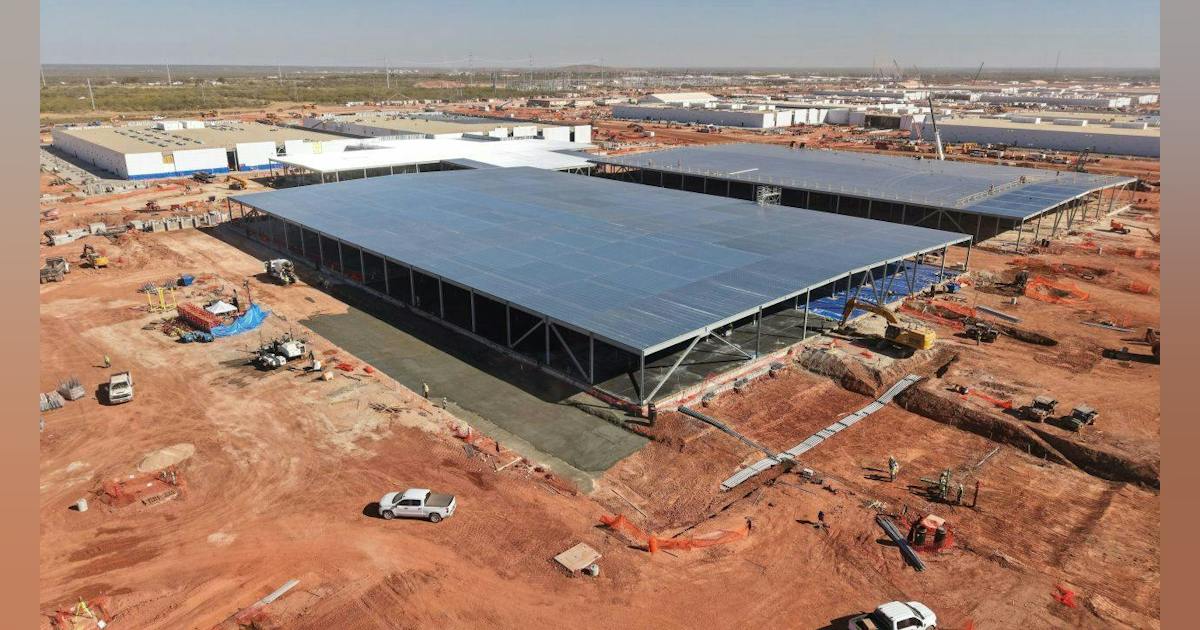
Subject to permitting, procurement, and construction activities, the Marlan expansion is targeted for completion by yearend 2028. The company said the project will increase its expected 2026 midstream capital expenditures by about $25 million, raising its estimated midstream capital budget for the year to $170-190 million. Commercial agreements The agreements consist of a new long-term fixed-fee gas gathering and processing contract and an extension of an existing gas gathering and processing agreement. Under the new agreement, San Mateo will gather and treat natural gas from newly dedicated acreage in Lea and Eddy Counties, NM, and process the volumes at the Marlan complex. The agreement includes a large-scale acreage dedication in the northern Delaware basin. Separately, San Mateo amended an existing gas gathering and processing agreement covering production from Eddy County. Under the extension, gas will continue to be gathered, treated, and processed at the Black River gas processing plant in Eddy County for several years beyond the original contract term. The extension builds on a gas gathering and processing agreement San Mateo announced in October 2018, the company noted. Upon completion of the Marlan expansion, San Mateo’s total natural gas processing capacity will exceed 1.3 bcfd, nearly tripling the 460-MMcfd capacity it had before Matador contributed Pronto Midstream LLC to the venture in December 2024.

Read More »

ADIPEC 2026: TotalEnergies to acquire operated interest in gas fields offshore Malaysia

TotalEnergies has agreed to acquire an operated stake in the SK410B Lang Lebah and B14 fields off the coast of Sarawak, offshore East Malaysia, through a series of farm-out agreements. The agreements, signed with Petronas Carigali Sdn Bhd (PCSB), PTTEP, and KUFPEC, will give TotalEnergies a 30% operated interest in Lang Lebah, one of Malaysia’s largest offshore gas discoveries, and the nearby B14 field. An integrated development plan is expected to unlock more than 6.5 tcf of gas resources to supply the existing Malaysia LNG liquefaction plant with a production plateau of around 10 billion cu m/year, the company said. “The development of Lang Lebah and B14 resources will allow the creation of another large-scale gas hub in Malaysia, leveraging shared infrastructure, to supply gas to Malaysia LNG and meet the growing LNG demand in Asia,” and follow previous deals in the country with SapuraOMV in 2024 and Petronas in 2025, said Patrick Pouyanné, chairman and chief executive officer of TotalEnergies.  Upon completion of the transactions, which are subject to regulatory approvals, TotalEnergies will hold a 30% operated interest in both fields, alongside PTTEP (25%), KUFPEC (25%) and PCSB (20%). The parties commemorated the agreements during a signing ceremony Nov. 1, 2026, in conjunction with Abu Dhabi International Petroleum Exhibition and Conference (ADIPEC) under way in Abu Dhabi, UAE.

Read More »

Data Center Jobs: Engineering, Construction, Commissioning, Sales, Field Service and Facility Tech Jobs Available in Major Data Center Hotspots

Each month Data Center Frontier, in partnership with Pkaza, posts some of the hottest data center career opportunities in the market. Here’s a look at some of the latest data center jobs posted on the Data Center Frontier jobs board, powered by Pkaza Critical Facilities Recruiting. Looking for Data Center Candidates? Check out Pkaza’s Active Candidate / Featured Candidate Hotlist  Lead Mechanical Engineer – Data Center Design Dallas, TX / Remote This position is also available in: Denver, CO; Indianapolis, IN; Cedar Rapids, IA; Austin, TX; White Plains, NY; New York, NY; Richmond, VA; Ashburn, VA; Charlotte, NC; Atlanta, GA; Phoenix, AZ; Salt Lake City, UT; Kansas City, MO; Chicago, IL; Los Angeles, CA; Seattle, WA or San Jose, CA. Our client is a leading engineering design and commissioning company that is a subject matter expert in the data center space. They will provide design coordination and construction administration, consulting and management support for the data center / mission critical facilities space with the mindset to provide reliability, energy efficiency, and sustainable design expertise when providing these consulting services for enterprise, colocation and hyperscale companies. This career-growth minded opportunity offers exciting projects with leading-edge technology and innovation as well as competitive salaries and benefits. Electrical Commissioning Agent – Data Centers Phoenix, AZ (limited travel) Non-traveling CxA positions available in: Indianapolis, IN; Cedar Rapids, IA; Atlanta, GA and Columbus, OH. Traveling CxA based near any major airport, otherwise traveling to: New York, NY; White Plains, NY; Montvale, NJ; Richmond, VA; Boydton, VA; York, SC; Charlotte, NC; Salt Lake City, UT; Kansas City, MO; Chesterton, IN or Chicago, IL. *** Also looking for a lead EE and ME CxA agents and CxA PMs *** This opportunity is with a leading EPC company of data center design / build / commissioning solutions. This company provides a

Read More »

OCP 2026: Cooler Master Scales Liquid Cooling from Cold Plates to 2.5 MW CDUs

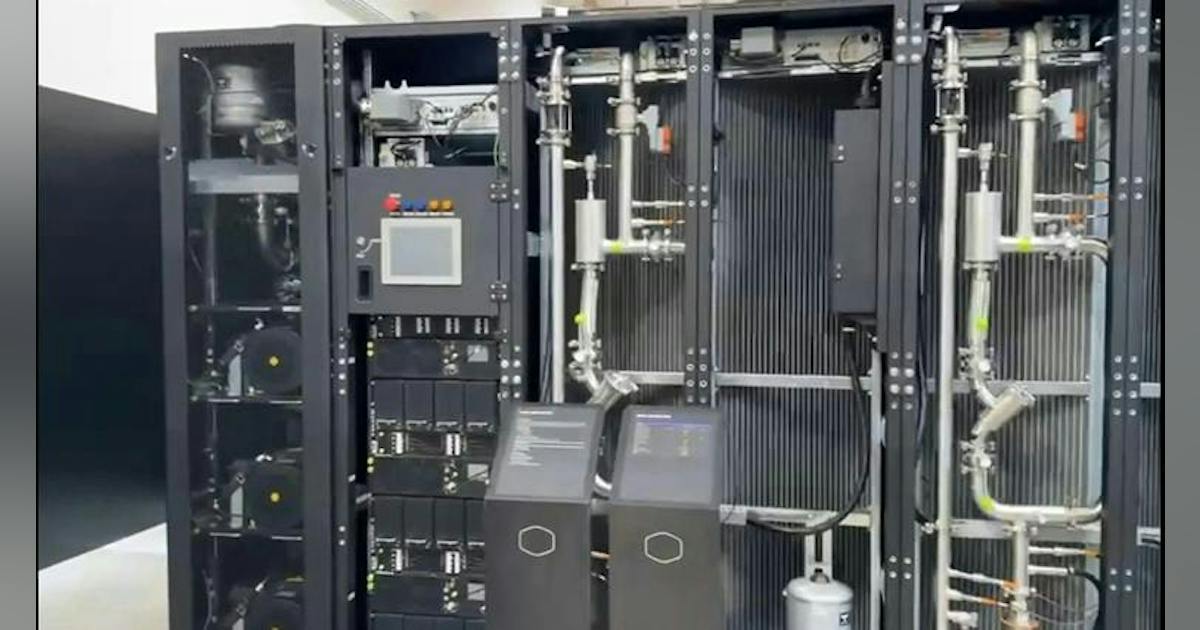
Modular Air-Assisted Cooling Targets Existing Data Centers One of the most instructive systems examined during the tour was Cooler Master’s 300 kW Air-Assisted Liquid Cooling (AALC) CDU, a modular liquid-to-air design intended for data centers without an existing facility water distribution system. Rather than transferring server heat into a building’s chilled-water or facility-water loop, the AALC system circulates coolant through the IT equipment and rejects the captured heat through fan-driven radiators. The distinction matters for operators seeking to introduce liquid-cooled AI racks into facilities that were not built with dedicated liquid cooling infrastructure. Although air-assisted systems still require sufficient facility airflow and heat rejection capacity, they offer an alternative to extending a new water distribution network throughout the data hall. The approach is already finding applications in the field. As DCF recently reported, Corvex deployed liquid-cooled NVIDIA Blackwell infrastructure inside an existing air-cooled data center, using Lenovo Neptune technology to avoid a conventional facility-wide liquid cooling conversion. Cooler Master’s 300 kW design separates the pumping equipment from its radiator assemblies. During the tour, a company representative explained that the system can be configured with a central pump rack and either one or two radiator racks, each providing a nominal 150 kW of cooling capacity. This modular arrangement allows cooling capacity to be matched more closely to the installation, rather than requiring every deployment to use the full 300 kW configuration. Serviceability is a major feature of the design. The system uses redundant pumps in a 2+1 arrangement, with two pumps supporting normal operation and a third providing standby capacity. Pump modules are designed for replacement without interrupting cooling operations. Other field-replaceable components include fans, filters, expansion tanks, and power-related assemblies. The product also incorporates redundant filtration and monitoring capabilities intended to help operators identify faults and maintain cooling performance. The

Read More »

7×24 Fall 2026: AI Frontier Futurist Meets Data Center OG

A 1988 Data Center Becomes a 20 MW AI Asset The second presentation, Converting a 1990 Enterprise Data Center to 20MW AI Workloads, featured Coe alongside Ari Chernikoff, vice president of development at Legacy Investing, and Dan Amundson, project manager at Gardner Builders. The project centered on 1001 Third Avenue South in downtown Minneapolis, a financial-services computing facility originally constructed in 1988. The building had supported earlier generations of enterprise computing before portions were converted to commercial office space and smaller colocation operations. Although its remaining operating data center load had declined to approximately 500 kilowatts by the time the AI redevelopment began, the property retained substantial infrastructure inherited from its original mission-critical design. Tall ceilings, robust floor loading, raised access floors, existing medium-voltage substations, and established utility connections made the building an unusually strong candidate for conversion. These characteristics, Chernikoff explained, can determine whether an existing building offers a practical path to high-density computing or proves economically unsuitable for redevelopment. Legacy Investing had identified a market opportunity in what Chernikoff called the industry’s “missing middle”: facilities generally ranging from 20 MW to 80 MW, rather than the 100 MW-plus campuses increasingly associated with hyperscale and frontier AI development. The company viewed existing buildings with available power and favorable infrastructure characteristics as potential shortcuts to deployment, particularly where demand for AI inference and other latency-sensitive workloads favored proximity to major urban markets. Following an AI tenant commitment in summer 2024, the development team faced an aggressive initial requirement: Deliver the first 5 MW of capacity by the end of that year. The first phase was ready for service approximately four months after Gardner’s involvement became formalized, followed by another 5 MW in 2025 and an expansion program ultimately reaching 20 MW over roughly 20 months. All of this had to

Read More »

Gartner warns $3.5T in AI infrastructure spending could be at risk by 2030

Musk predicted that more than 200 neocloud companies could face significant financial distress, predicting that only a small number would survive the coming shakeout. He also said SpaceX would not acquire any of the companies, describing such purchases as “pointless.” The chickens are already coming home to roost on the neoclouds. CoreWeave, Nebius, Applied Digital and TeraWulf have reported quarterly losses over the past year, while IREN has failed to turn a profit in its past three quarters. Shares of CoreWeave, Nebius and IREN have fallen more than 30% during October, according to Reuters. Building AI data centers requires substantial upfront investment in GPUs, networking equipment, power systems, cooling infrastructure and facilities. Operators must then generate enough revenue from leasing computing capacity to cover operating expenses, interest payments and equipment replacement.

Read More »

The 50-Gigawatt Test: SemiAnalysis Sees a Historic Data Center Surge in 2027

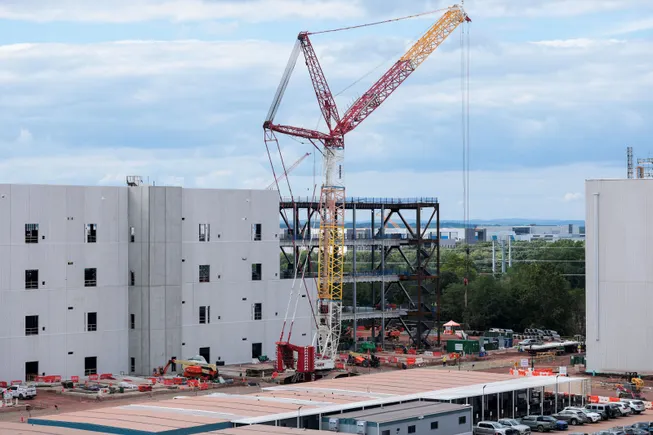
The global data center industry is approaching a potentially historic test of its ability to turn artificial intelligence investment into operational infrastructure. In a provocative new forecast, semiconductor and AI infrastructure research firm SemiAnalysis predicts that approximately 51.2 gigawatts of net data center IT capacity will be added globally, excluding China, during 2027. That would represent more than double the 25 GW the firm expects to be added in 2026. Published October 19, the report, Datacenters 2027: The Year of Acceleration, +50GW in a Single Year, makes a forceful argument that much of this unprecedented expansion is already visible in the industry’s construction pipeline. Authored by Jeremie Eliahou Ontiveros, Reyk Knuhtsen and Dylan Patel, the analysis draws on SemiAnalysis’ proprietary tracking of construction starts, individual buildings, hyperscale leasing commitments, equipment procurement and project financing. Its researchers identify more than 60 GW of data center capacity under construction. Among the 40 largest campuses they examined, more than 24 GW is reportedly in advanced stages of development, with much of that capacity expected to be delivered in 2027. The forecast is not entirely composed of projects already under construction, however. SemiAnalysis’ capacity chart includes approximately 11.9 GW of 2027 additions associated with projects still classified as planned. The remainder is associated with facilities already operating or under construction, according to the model’s building-status categories. SemiAnalysis argues that the volume and maturity of projects already underway make a dramatic acceleration increasingly likely, despite well-documented constraints involving electricity, construction labor, equipment and capital. But the prediction has also become the subject of a revealing industry debate, with competing forecasts and new corporate disclosures raising questions about how much infrastructure can actually be delivered on schedule. The disagreement is no longer principally about whether AI infrastructure demand is real. It is about whether the industrial

Read More »

HPE’s Quantum Computing Bet: A Multi-Vendor Path to the Data Center

QuEra Deal Targets On-Premises Quantum Integration Under the expanded collaboration, HPE and QuEra intend to develop integrated testbeds, software interoperability, hybrid algorithms and performance benchmarks to support future quantum deployments alongside HPE Cray supercomputing infrastructure. The work is intended to address the practical requirements of coordinating quantum processors with the classical computing systems that prepare workloads, process results and support quantum error correction. QuEra Chief Commercial Officer Yuval Boger, who previously discussed the development of hybrid quantum-classical infrastructure on the DCF Show, emphasized that integrating quantum hardware into an HPC environment presents different engineering challenges than providing access through the cloud. Boger said, “HPE’s deep experience in supercomputing gives organizations the benefit of working with a partner who can solve that problem at the scale they need.” The collaboration envisions deploying future fault-tolerant quantum hardware at customer facilities rather than requiring organizations to rely exclusively on cloud-based quantum computing services. That option could appeal to national laboratories, defense organizations, pharmaceutical researchers and other institutions managing classified information, proprietary intellectual property or data subject to sovereignty requirements. QuEra’s neutral-atom architecture uses individual atoms as qubits, manipulating them with lasers and electromagnetic controls. Unlike superconducting quantum processors, which generally require dilution refrigerators operating at temperatures measured in millikelvin, neutral-atom systems can operate without extreme cryogenic refrigeration. They still require specialized laser systems, vacuum equipment, precision optics and environmental controls, presenting facility requirements substantially different from those of conventional servers. On-premises quantum-HPC integration is already being tested. In Japan, the National Institute of Advanced Industrial Science and Technology (AIST) operates QuEra’s 260-physical-qubit Gemini neutral-atom computer as part of its ABCI-Q research platform, which also incorporates an NVIDIA H100-based AI supercomputer. An October 26 case study published by QuEra describes Gemini operating in a separate building approximately 350 meters from the main GPU installation,

Read More »

Microsoft will invest $80B in AI data centers in fiscal 2025

And Microsoft isn’t the only one that is ramping up its investments into AI-enabled data centers. Rival cloud service providers are all investing in either upgrading or opening new data centers to capture a larger chunk of business from developers and users of large language models (LLMs).  In a report published in October 2024, Bloomberg Intelligence estimated that demand for generative AI would push Microsoft, AWS, Google, Oracle, Meta, and Apple would between them devote $200 billion to capex in 2025, up from $110 billion in 2023. Microsoft is one of the biggest spenders, followed closely by Google and AWS, Bloomberg Intelligence said. Its estimate of Microsoft’s capital spending on AI, at $62.4 billion for calendar 2025, is lower than Smith’s claim that the company will invest $80 billion in the fiscal year to June 30, 2025. Both figures, though, are way higher than Microsoft’s 2020 capital expenditure of “just” $17.6 billion. The majority of the increased spending is tied to cloud services and the expansion of AI infrastructure needed to provide compute capacity for OpenAI workloads. Separately, last October Amazon CEO Andy Jassy said his company planned total capex spend of $75 billion in 2024 and even more in 2025, with much of it going to AWS, its cloud computing division.

Read More »

John Deere unveils more autonomous farm machines to address skill labor shortage

Join our daily and weekly newsletters for the latest updates and exclusive content on industry-leading AI coverage. Learn More Self-driving tractors might be the path to self-driving cars. John Deere has revealed a new line of autonomous machines and tech across agriculture, construction and commercial landscaping. The Moline, Illinois-based John Deere has been in business for 187 years, yet it’s been a regular as a non-tech company showing off technology at the big tech trade show in Las Vegas and is back at CES 2025 with more autonomous tractors and other vehicles. This is not something we usually cover, but John Deere has a lot of data that is interesting in the big picture of tech. The message from the company is that there aren’t enough skilled farm laborers to do the work that its customers need. It’s been a challenge for most of the last two decades, said Jahmy Hindman, CTO at John Deere, in a briefing. Much of the tech will come this fall and after that. He noted that the average farmer in the U.S. is over 58 and works 12 to 18 hours a day to grow food for us. And he said the American Farm Bureau Federation estimates there are roughly 2.4 million farm jobs that need to be filled annually; and the agricultural work force continues to shrink. (This is my hint to the anti-immigration crowd). John Deere’s autonomous 9RX Tractor. Farmers can oversee it using an app. While each of these industries experiences their own set of challenges, a commonality across all is skilled labor availability. In construction, about 80% percent of contractors struggle to find skilled labor. And in commercial landscaping, 86% of landscaping business owners can’t find labor to fill open positions, he said. “They have to figure out how to do

Read More »

2025 playbook for enterprise AI success, from agents to evals

Join our daily and weekly newsletters for the latest updates and exclusive content on industry-leading AI coverage. Learn More 2025 is poised to be a pivotal year for enterprise AI. The past year has seen rapid innovation, and this year will see the same. This has made it more critical than ever to revisit your AI strategy to stay competitive and create value for your customers. From scaling AI agents to optimizing costs, here are the five critical areas enterprises should prioritize for their AI strategy this year. 1. Agents: the next generation of automation AI agents are no longer theoretical. In 2025, they’re indispensable tools for enterprises looking to streamline operations and enhance customer interactions. Unlike traditional software, agents powered by large language models (LLMs) can make nuanced decisions, navigate complex multi-step tasks, and integrate seamlessly with tools and APIs. At the start of 2024, agents were not ready for prime time, making frustrating mistakes like hallucinating URLs. They started getting better as frontier large language models themselves improved. “Let me put it this way,” said Sam Witteveen, cofounder of Red Dragon, a company that develops agents for companies, and that recently reviewed the 48 agents it built last year. “Interestingly, the ones that we built at the start of the year, a lot of those worked way better at the end of the year just because the models got better.” Witteveen shared this in the video podcast we filmed to discuss these five big trends in detail. Models are getting better and hallucinating less, and they’re also being trained to do agentic tasks. Another feature that the model providers are researching is a way to use the LLM as a judge, and as models get cheaper (something we’ll cover below), companies can use three or more models to

Read More »

OpenAI’s red teaming innovations define new essentials for security leaders in the AI era

Join our daily and weekly newsletters for the latest updates and exclusive content on industry-leading AI coverage. Learn More OpenAI has taken a more aggressive approach to red teaming than its AI competitors, demonstrating its security teams’ advanced capabilities in two areas: multi-step reinforcement and external red teaming. OpenAI recently released two papers that set a new competitive standard for improving the quality, reliability and safety of AI models in these two techniques and more. The first paper, “OpenAI’s Approach to External Red Teaming for AI Models and Systems,” reports that specialized teams outside the company have proven effective in uncovering vulnerabilities that might otherwise have made it into a released model because in-house testing techniques may have missed them. In the second paper, “Diverse and Effective Red Teaming with Auto-Generated Rewards and Multi-Step Reinforcement Learning,” OpenAI introduces an automated framework that relies on iterative reinforcement learning to generate a broad spectrum of novel, wide-ranging attacks. Going all-in on red teaming pays practical, competitive dividends It’s encouraging to see competitive intensity in red teaming growing among AI companies. When Anthropic released its AI red team guidelines in June of last year, it joined AI providers including Google, Microsoft, Nvidia, OpenAI, and even the U.S.’s National Institute of Standards and Technology (NIST), which all had released red teaming frameworks. Investing heavily in red teaming yields tangible benefits for security leaders in any organization. OpenAI’s paper on external red teaming provides a detailed analysis of how the company strives to create specialized external teams that include cybersecurity and subject matter experts. The goal is to see if knowledgeable external teams can defeat models’ security perimeters and find gaps in their security, biases and controls that prompt-based testing couldn’t find. What makes OpenAI’s recent papers noteworthy is how well they define using human-in-the-middle

Read More »