This deal follows the industry trend shown in the Flex/EP² acquisition. One transaction targets engineered control and protection systems; the other targets high-power conductive components and value-added services around them. The clarity here is that data center growth is creating investable demand not just for chips and campuses, but for the industrial companies that make the electrical buildout possible.
AZIO AI and EVTV: EV maker to AI infrastructure
After multiple announcements of deals between the two companies, and the end of May, they decided a corporate merger was in order. The AZIO AI–EVTV merger turns Envirotech Vehicles Inc., from an electric-vehicle company into a prospective power-backed AI infrastructure and data center platform. The core impact is not just an increase in AI servers; it is the combination of compute hardware, controlled land, behind-the-meter power, fiber, modular deployment, and cooling validation building on the AI data center growth story.
AZIO describes the deal as part of EVTV’s strategic transformation into an AI infrastructure and compute platform focused on domestic AI deployment, data center operations, and long-term compute capacity expansion.
For data center ambitions, the most important element is power access. AZIO and EVTV say about 11 MW of power capacity has been identified at EVTV’s existing site, with hardware orders placed for an initial 6 MW deployment. They are also discussing long-term rights tied to as much as 500 MW of additional same-site capacity. That matters because AI data center development is increasingly constrained by power availability rather than just real estate or server supply. And with the modular infrastructure the company develops, having that power availability is the key to future site growth.
EVTV later said it had expanded its controlled development footprint to more than 548 acres, secured dedicated fiber for current and future operations, and was advancing natural gas interconnection work. The company described the platform as engineered to support up to 500 MW of planned behind-the-meter power capacity. With the combined company the planning shows a very current approach; secure the site and power stack first, then layer in compute, fiber, cooling, hosting, and customer offtake.
The merger also broadens the business model. After closing, the company expects revenue from GPU and server rack sales, co-developed AI data center infrastructure, company-operated bitcoin mining, and hosting or compute leasing as sites become operational. Note that the merger still requires SEC and shareholder approval.
AI Data Centers Are Driving a Power Architecture Reset
While these announcements cover different layers of the market, together they describe a new AI data center power stack, or at least an industry willingness to examine new solutions and business models to support what has become the standard development path for an energy-hungry AI data center.
At the top are large-scale energy platforms such as the Hitachi/X LABS energy park model, where power generation, storage, grid stabilization, and data center demand are planned together from the beginning. These are long-cycle, capital-intensive projects aimed at the gigawatt era.
At the facility level are operators such as DataBank, using rooftop solar to hedge electricity costs, reduce emissions exposure, and turn existing data center real estate into a source of on-site generation. These projects will not power AI campuses alone, but they improve the operating profile of facilities in constrained markets.
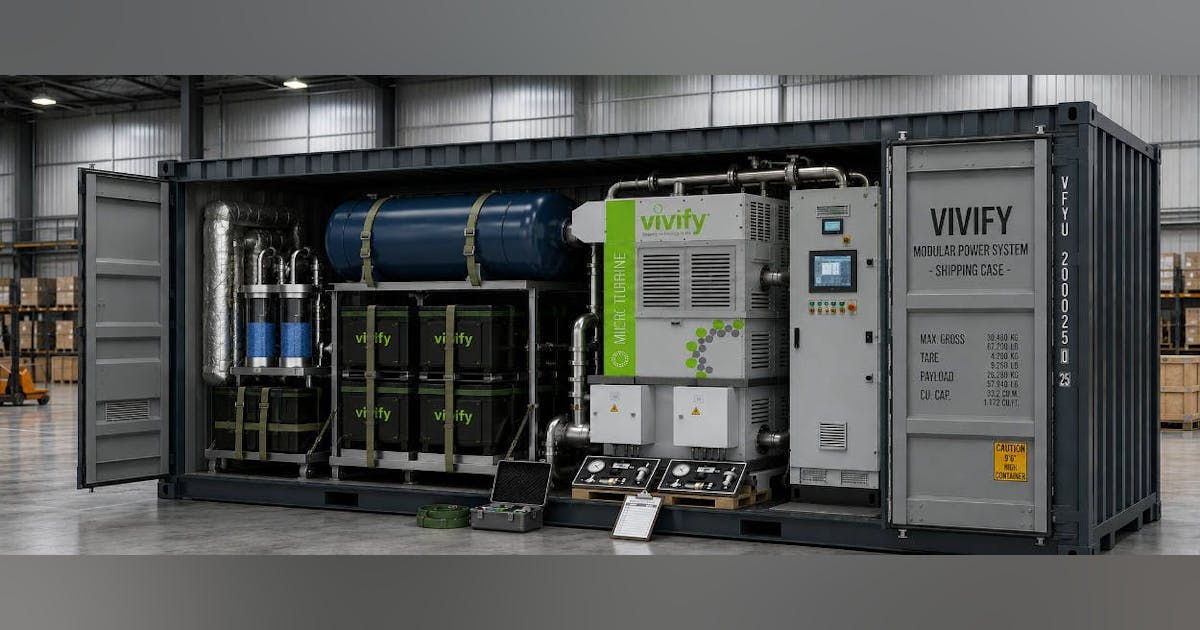
At the technology edge are companies like VIVIFY, proposing alternative power systems such as closed-loop hydrogen platforms that may offer modularity, reduced water draw, and grid independence if they can be proven at scale.
In the supply chain are Flex/EP² and S+S Industries, where the strategic value lies in the hardware required to control, protect, distribute, and physically carry power through increasingly dense infrastructure. Without that equipment, generation and compute cannot be connected at scale.
And at the modular deployment layer are AZIO AI and EVTV, where the strategy is to pair dedicated behind-the-meter generation with high-density AI compute in increments measured in megawatts rather than gigawatts.
The consistent message this range of power related announcement send is the same one we are seeing throughout the AI-demand driven development cycles. More controllable power, closer to the load, delivered through supply chains that can scale quickly enough to meet AI demand.