Stay Ahead, Stay ONMINE

FERC must take action to protect ratepayers from higher transmission costs in SPP

Listen to the article 5 min This audio is auto-generated. Please let us know if you have feedback. Paul Cicio is chairman of the Electricity Transmission Competition Coalition and president and CEO of the Industrial Energy Consumers of America. As electricity prices continue to surge, consumers cannot afford to pay more than necessary for the […]

Paul Cicio is chairman of the Electricity Transmission Competition Coalition and president and CEO of the Industrial Energy Consumers of America.

As electricity prices continue to surge, consumers cannot afford to pay more than necessary for the new transmission lines that deliver their power. Requiring utilities to compete with one another gives regulators a direct way to reduce those costs.

Paul Cicio is chairman of the Electricity Transmission Competition Coalition and president and CEO of the Industrial Energy Consumers of America.

Optional Caption

Permission granted by Paul Cicio

Earlier this year, the Southwest Power Pool decided to exempt four projects expected to cost $3.8 billion from competitive bidding by classifying them as short-term reliability projects under its 2025 Integrated Transmission Planning portfolio.

SPP’s tariff specifies that unless a project is required to be in service in three years or less, it must face competition in building new large transmission lines, consistent with Federal Energy Regulatory Commission Order 1000. But the projects SPP has designated as short-term in its 2025 portfolio are not expected to enter service until 2029 or 2030.

SPP violated its FERC-approved tariff by not requiring the transmission projects to face competition. It is misusing an exemption meant for urgent reliability needs to avoid competition in favor of incumbent utilities, contrary to the vital electricity affordability needs of ratepayers. As a result, ratepayers in the 17-state region could pay an estimated $750 million in higher electricity bills for these projects.

We at the Electricity Transmission Competition Coalition and the Industrial Energy Consumers of America have filed a complaint asking FERC to hold SPP accountable for violating its tariff and require the four projects to be competitively bid.

Time is of the essence.

Ratepayers are concerned because SPP has relied on this exemption before and the projects have grown larger and more expensive over time.

In 2024, SPP directly assigned $3.2 billion in projects to incumbent utilities based on short-term reliability need, without competitive bidding. The Industrial Energy Consumers of America opposed those projects in a January 2025 letter to SPP.

This past January, the ETCC urged the SPP Board of Directors to put its 2025 short-term reliability projects, which included new 765-kV lines, through competitive bidding. But SPP has continued to bypass competition over these and other stakeholder objections without providing sufficient justification or transparency.

If FERC allows SPP to continue, the short-term reliability exemption could become a routine way to avoid competition altogether, and the precedent would reach ratepayers across the country.

When utilities are required to compete with one another, they sharpen their pencils and contractually commit to cost containment provisions. Some include provisions that guarantee delivery of the project on time or pay a financial penalty.

None of the $3.2 billion projects SPP directly assigned in 2024 included a guaranteed in-service deadline or cost containment provisions.

Competition works. ETCC reviewed 19 transmission projects that went through competitive bidding and found an average cost reduction of 34%. ETCC’s review of 15 projects that did not go through competitive bidding found an average cost overrun of 89%.

Also, there is no evidence that assigning projects directly to incumbent utilities gets them built faster. For example, SPP competitively bid the Minco and Wolf Creek projects, which entered into service in 2025 and met their needed or expected in-service dates.

Competition can deliver on both reduced costs and on time start-up of the project. Ratepayers do not have to sacrifice reliability for lower costs. 

The nearly $3.8 billion price tag is only the beginning of what consumers could ultimately pay. When financing costs, utility profits and other expenses are factored in, the total cost to ratepayers could more than double over the life of these projects.

SPP’s decisions today will shape electricity costs for families and businesses across the region for decades to come. And SPP is poised to develop an even costlier transmission plan for 2027 that includes billions of dollars more in projects that would be exempted from competition.

The Federal Power Act is first and foremost a consumer protection act and FERC has a responsibility to ensure that consumers receive just and reasonable rates. FERC approved SPP’s tariff and has a duty to enforce it.

Electricity consumers will ultimately pay for the billions of dollars that grid operators commit to new transmission. FERC should hold SPP to competitive bidding as the standard for that spending, with exemptions limited to the narrow cases for projects that can be completed and placed into service in three years or less. 

The SPP complaint is yet another test for FERC. Will the commission stand with consumers or protect monopoly utility profits? There is a troubling pattern of inaction by FERC to enforce Order 1000. Consumers have filed four complaints at FERC dating back to 2022 without them taking action, despite electricity affordability being top of mind nationwide.     

Shape
Shape
Stay Ahead

Explore More Insights

Stay ahead with more perspectives on cutting-edge power, infrastructure, energy,  bitcoin and AI solutions. Explore these articles to uncover strategies and insights shaping the future of industries.

Shape

Pros and cons of running AI on consumer hardware

So, instead of going the cloud route, the company opted to do something else: to use three MacBook Pros at about $5,000 each. The hardware was also readily available, Patel says. “On the Apple side, there’s not many hardware restrictions at this time,” he says. Meanwhile, more robust and specialized

Read More »

Vår Energi to acquire ConocoPhillips’ Norway business, including Greater Ekofisk operatorship, in $4.4-billion deal

The acquisition gives Vår Energi operatorship of the Greater Ekofisk Area, including the Ekofisk, Eldfisk, Embla, Tor, and Tommeliten Alfa and Gamma fields.  “The transaction adds significant scale, reserves and operatorship, while creating the opportunity to unlock materially greater value from a high-quality asset base with substantial remaining resources and

Read More »

$251M electric bus facility opens in Miami-Dade County

Dive Brief: The South Dade Transit Operations Center in Miami-Dade County began full operations on Monday, following a ribbon-cutting ceremony last week. The facility can accommodate up to 100 articulated battery-electric buses and is home base for the transit agency’s Metro Express bus rapid transit service that connects the Dadeland South Metrorail Station in Kendall and Florida City, Florida along a 20-mile route with 14 stations. A voter-approved half-cent transportation surtax in Miami-Dade County helped fund the $250.6 million project. Dive Insight: Construction on the 20-acre site began June 25, 2024. The facility includes areas for charging, storage, maintenance, bus wash stations, parts storage and space for cleaning and detailing vehicles. It also provides bus dispatching and driver training. “We’ve built a facility that gives our teams the technology to serve riders better today and the room to grow with Miami-Dade,” Department of Transportation and Public Works Director and CEO Stacy Miller said in a statement. “This is how we build a transit system worthy of the trust our riders place in us every day.” A battery-electric bus parked under an overhead charger at the South Dade Transit Operations Center. Courtesy of Miami-Dade County Department of Transportation and Public Works The facility includes rapid charging stations and rooftop charging platforms, according to Hypower, the station’s utility contractor. Because lithium-ion batteries pose a fire hazard, the structure will be heat-insulated to prevent damage should a fire erupt, WSP Senior Vice President and Alternative Delivery Project Director Angel André Chavarria told Smart Cities Dive in 2024. Sprinklers will activate in an area just around the fire location rather than the entire building, he said. WSP provided design and construction services for the project. The site includes a reclaimed water system for landscaping. The operations center can also serve as an emergency command

Read More »

FERC must take action to protect ratepayers from higher transmission costs in SPP

Listen to the article 5 min This audio is auto-generated. Please let us know if you have feedback. Paul Cicio is chairman of the Electricity Transmission Competition Coalition and president and CEO of the Industrial Energy Consumers of America. As electricity prices continue to surge, consumers cannot afford to pay more than necessary for the new transmission lines that deliver their power. Requiring utilities to compete with one another gives regulators a direct way to reduce those costs. Optional Caption Permission granted by Paul Cicio Earlier this year, the Southwest Power Pool decided to exempt four projects expected to cost $3.8 billion from competitive bidding by classifying them as short-term reliability projects under its 2025 Integrated Transmission Planning portfolio. SPP’s tariff specifies that unless a project is required to be in service in three years or less, it must face competition in building new large transmission lines, consistent with Federal Energy Regulatory Commission Order 1000. But the projects SPP has designated as short-term in its 2025 portfolio are not expected to enter service until 2029 or 2030. SPP violated its FERC-approved tariff by not requiring the transmission projects to face competition. It is misusing an exemption meant for urgent reliability needs to avoid competition in favor of incumbent utilities, contrary to the vital electricity affordability needs of ratepayers. As a result, ratepayers in the 17-state region could pay an estimated $750 million in higher electricity bills for these projects. We at the Electricity Transmission Competition Coalition and the Industrial Energy Consumers of America have filed a complaint asking FERC to hold SPP accountable for violating its tariff and require the four projects to be competitively bid. Time is of the essence. Ratepayers are concerned because SPP has relied on this exemption before and the projects have grown larger and more expensive over

Read More »

TotalEnergies acquires interests in US gas assets from Continental Resources

@import url(‘https://fonts.googleapis.com/css2?family=Inter:wght@100..900&display=swap’); .ebm-page__main h1, .ebm-page__main h2, .ebm-page__main h3, .ebm-page__main h4, .ebm-page__main h5, .ebm-page__main h6 { font-family: Inter; } body { line-height: 150%; letter-spacing: 0.025em; } button, .ebm-button-wrapper { font-family: Inter; } .label-style { text-transform: uppercase; color: var(–color-grey); font-weight: 600; font-size: 0.75rem; } .caption-style { font-size: 0.75rem; color: color-mix(in srgb, currentColor 60%, transparent); } TotalEnergies SE has signed an agreement with Continental Resources Inc. to acquire interests in certain US natural gas upstream assets. A deal value was not disclosed. The transaction is expected to add about 150 MMscfd of net gas production, or roughly 26,000 boe/d, to TotalEnergies’ US portfolio by 2032, the company said Nov. 23. “We are pleased to further expand our cooperation with Continental Resources, a leading US operator in the region,” said Nicolas Terraz, president, exploration and production, TotalEnergies. “This transaction will strengthen our natural gas production in the [US] and consolidate TotalEnergies’ integrated position from upstream gas production to LNG exports.”   <!–> –> Sept. 29, 2025 <!–> –> <!–> Sept. 27, 2024 ]–> <!–> –> <!–> April 8, 2024 ]–> <!–> The deal follows TotalEnergies’ acquisition of non-operated interests with Continental in the Anadarko basin in 2025 and purchases in the Eagle Ford from EOG Resources and Lewis Energy in 2024. The newly acquired assets are described as low-cost, low-emission properties connected to existing midstream infrastructure. Combined with TotalEnergies’ operated Barnett shale position, the assets are expected to raise the company’s net US natural gas production to about 850 MMscfd, or more than 140,000 boe/d, beginning in 2032. TotalEnergies said it exported 19 million tonnes of US LNG in 2025, representing 18% of total US LNG exports. The company holds upstream gas production assets in Texas, Oklahoma, and the US Gulf of Mexico, interests in Cameron LNG and Rio Grande LNG, and LNG offtake

Read More »

Phillips 66 advances Humber refinery’s gasoline-improvement project

@import url(‘https://fonts.googleapis.com/css2?family=Inter:wght@100..900&display=swap’); .ebm-page__main h1, .ebm-page__main h2, .ebm-page__main h3, .ebm-page__main h4, .ebm-page__main h5, .ebm-page__main h6 { font-family: Inter; } body { line-height: 150%; letter-spacing: 0.025em; } button, .ebm-button-wrapper { font-family: Inter; } .label-style { text-transform: uppercase; color: var(–color-grey); font-weight: 600; font-size: 0.75rem; } .caption-style { font-size: 0.75rem; color: color-mix(in srgb, currentColor 60%, transparent); } Phillips 66 Co. has received major pieces of equipment for a previously announced project designed to enable production of higher-quality gasoline at its 221,000-b/d Humber refinery at South Killingholme in North Lincolnshire, UK, about 180 miles north of London on England’s eastern coast. On Nov. 20, the refinery received a delivery with a combined weight of more than 3,780 tonnes consisting of 55 shipping containers carrying 30 major pieces of equipment, as well as a mix of 30 mixed pre-assembled and self-contained units for further integration and assembly as part of the operator’s Humber gasoline quality improvement project, Phillips 66 UK said in separate posts to its official social media accounts. First announced in late 2025, the multiyear project at Humber site will allow the refinery to produce higher-value, higher-quality gasoline that will serve to strengthen UK domestic supply and support greater access to higher-value, premium export markets. While Phillips 66 has yet to reveal specific elements to be involved in the gasoline-quality upgrading works, the company reconfirmed in its latest November presentation to investors the project’s targeted completion remains on track for 2027.

Read More »

The grid’s hidden bottleneck: engineering capacity

The power system is undergoing an unprecedented transformation. Many of the reasons driving that change are well recognized and frequently discussed. Electricity demand from data centers, manufacturing and the electrification of transportation and building heating and cooling is surging. In fact, earlier this year the North American Electric Reliability Corporation (NERC) warned that grid reliability risks were increasing because demand was outpacing the new generation and transmission needed to serve it. Another challenge: the grid is old. The most recent American Society of Civil Engineers’ Infrastructure Report Card gave the nation’s energy system a D+, in part because of the age of the grid. Utilities have responded to an aging grid and skyrocketing electricity demand by making significant investments. The Edison Electric Institute (EEI) recently forecast that investor-owned utilities would spend $1.4 trillion through 2030 to meet customer demand for power. However, increased capital investment does not automatically translate into increased project execution. While funding, equipment availability and construction resources are critical, the engineering processes required to move projects from planning into construction represent another significant constraint. Utilities must not only invest in additional infrastructure but also rethink how that infrastructure is engineered and delivered. The engineering capacity squeeze Utilities are under pressure to move more projects through engineering and into construction, but experienced engineering resources are increasingly difficult to secure. While utilities can expand internal teams or engage additional engineering, procurement and construction (EPC) partners, scaling traditional engineering processes often introduces additional challenges. Different design tools, inconsistent engineering standards and repetitive manual work can limit productivity and increase coordination demands. That leaves utilities with a pressing question: how can they execute significantly more capital projects without a proportional increase in engineering resources? The substation engineering bottleneck Substation engineering provides a compelling example. While utilities have extensive engineering standards and established design practices, many

Read More »

Energy Secretary Keeps Critical Generation Available in Mid-Atlantic

WASHINGTON—U.S. Secretary of Energy Chris Wright today issued an emergency order to address critical grid reliability issues facing the mid-Atlantic region of the United States. The order directs PJM Interconnection L.L.C. (PJM), in coordination with Constellation Energy Corporation (Constellation Energy), to ensure Units 3 and 4 of the Eddystone Generating Station in Pennsylvania remain available to operate and to employ economic dispatch to minimize costs for the American people. The units were originally slated to shut down on May 31, 2025.   “The energy sources that perform when you need them most are the most valuable,” said U.S. Secretary of Energy Chris Wright. “President Trump and the Energy Department are committed to keeping critical generation available when demand is highest, reducing the risk of blackouts and ensuring Americans have affordable, reliable, and secure power—regardless of whether the wind is blowing or the sun is shining.”  Secretary Wright first ordered that the two Eddystone Generating Station units remain online past their planned retirement date in a May 30, 2025 emergency order. Subsequent orders were issued later in 2025 and 2026. Keeping these units operational has strengthened energy security in the PJM region, ensuring reliable electricity for American families and businesses. This order is in effect beginning on November 21, 2026, through February 18, 2027. 

Read More »

It’s the Roaring 2020’s for the HPC-AI Data Center Industry, But It Comes with Costs

It has been, and will very likely continue to be, the “Roaring 2020’s” for the HPC-AI data center industry. But similar to the generally healthy U.S. economy, affordability is a problem. Driven by demand for advanced computing technology, the HPC-AI data center infrastructure industry is generating tremendous growth, according to the latest market update figures released by industry analyst firm Hyperion Research. But with high demand come strains on supply chains that result in higher costs that restrain even higher growth. This is the picture presented this week by Hyperion at their annual breakfast at the SC26 Supercomputing Conference in Chicago. The customary large crowd turned out to hear Hyperion CEO Earl Joseph and colleagues discuss the state of the industry, some sectors of which are expanding at a clip Joseph said has never before been seen. “2025 was an extremely high growth year for the market…,” said Hyperion CEO Earl Joseph of on-premises servers for HPC, AI and data centers. “The first half of this year is growing at 20 percent… This is more than a doubling of historic growth. And then looking at the overall market in addition to servers, the storage, middleware, application services and spending for running HPC and AI for science workloads in the cloud…the market has just grown tremendously.” Among Hyperion’s key findings:         Overall HPC spending grew by just under 17 percent in 2025 reaching a total of more than $70 billion, including nearly 30 percent growth in cloud usage. Worldwide sales of on-prem for HPC and AI-for-science servers reached $29.4 billion, an increase of nearly 15 percent, with the EMEA region growing by roughly 10 percent. For the combination of HPC and AI-for-science on-prem servers plus cloud, the overall market is expected to double over the next five years,

Read More »

The Data Center Backlash Has a Playbook

The data center industry’s next development constraint may have less to do with megawatts than with the politics of where those megawatts are deployed. The warning became difficult to ignore on November 3, when American voters approved 33 local ballot measures restricting data center development or expressing opposition to it, according to Ballotpedia’s analysis of the 2026 midterm elections. The results included outright bans, partial prohibitions, temporary moratoriums, and new requirements for community oversight. Voters also rejected 13 measures that would have favored development or expressed support for it. For an industry accustomed to evaluating prospective sites through the availability of power, land, fiber, capital, and construction resources, the election results reinforced another increasingly consequential consideration: whether the communities hosting digital infrastructure are willing to accept its growing physical and economic footprint. As Data Center Frontier recently examined in its post-election assessment of the industry’s political future, the national push to accelerate AI infrastructure construction is colliding with a more complicated political reality at the state and local levels. Opposition crosses party lines, while questions surrounding utility rates, water, environmental impacts, and local economic benefits have moved from planning commission meetings into broader electoral debate. That changing environment was the subject of a conversation recorded at the DCF Trends Summit 2026 in Reston, Virginia, where DCF contributing editor Doug Black sat down with Adam Waitkunas, president of Milldam Public Relations, and Julia Chuang, founder of LocalQ Labs and an associate professor of sociology at the University of Maryland. Their discussion explored a fundamental shift in the development equation: community opposition is becoming more organized and politically consequential, but also more observable through data. The challenge for developers is to understand that risk early enough to influence site selection and project design, while recognizing that public trust cannot be manufactured through

Read More »

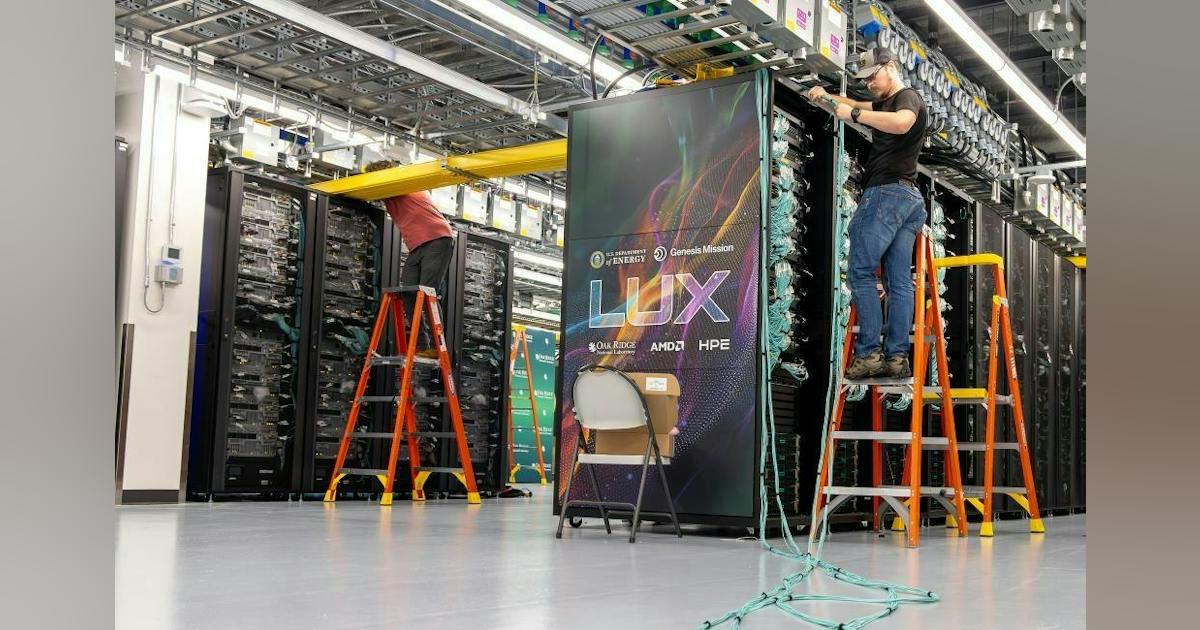
Oak Ridge’s AI Factory Moment: Lux, Nuclear Power, and the Next Data Center Frontier

For much of its history, Oak Ridge has been associated with the Manhattan Project and the subsequent development of America’s nuclear research and production capabilities. Established during World War II, the community became home to major facilities for uranium enrichment, nuclear materials processing, scientific research, and ultimately high-performance computing. Today, that legacy is being repurposed for a new generation of industrial development. The former K-25 uranium enrichment complex, once a critical part of the nation’s atomic weapons program, has been transformed into the East Tennessee Technology Park (ETTP), where extensive environmental cleanup and redevelopment have made former federal property available for commercial use. At an October 27 gathering in Oak Ridge, federal officials and nuclear industry representatives highlighted more than $15 billion in announced nuclear-related projects across the region, an investment wave subsequently documented in a November 17 DOE report on Oak Ridge’s emerging energy hub. The investment figure largely represents planned private-sector development rather than completed capital spending. Regional officials also anticipate demand for thousands of construction workers over the next five years, with additional permanent manufacturing and operating positions potentially following as projects advance. In March, DOE completed its largest Oak Ridge land transfer to date, conveying more than 700 acres for economic reuse. The transfer included a 624-acre parcel designated for Orano USA’s planned uranium enrichment complex and a 77-acre parcel associated with Oklo’s proposed nuclear fuel recycling development. Overall, more than 2,500 acres have been transferred from federal ownership for redevelopment, following decades of cleanup and the demolition of hundreds of former industrial structures. For nuclear developers, the appeal is straightforward: large industrial sites, existing utility and transportation infrastructure, proximity to federal laboratories, and an established community of nuclear engineers, technicians, researchers, and specialized manufacturers. For data center developers, the implications are somewhat different but no

Read More »

Dell and Microsoft drive private AI as enterprises seek greater data control

Dell Technologies and Microsoft are expanding their private cloud partnership with a new set of infrastructure offerings designed to let enterprises run AI models closer to their data, reduce reliance on public cloud services and maintain control over sensitive information. The announcement, made during Microsoft’s Ignite conference, extends Dell’s AI Factory with Nvidia initiative to Dell Private Cloud environments. It also reflects a growing industry push toward internally deployed AI inferencing, particularly among organizations dealing with sensitive corporate information, regulatory requirements and data residency restrictions, Dell stated. The expanded offering combines Dell Private Cloud, Microsoft Azure Local, Microsoft Foundry Local and Nvidia acceleration. The objective is to provide organizations with an integrated infrastructure for deploying heavy AI workloads inside their own data centers and firewalls, the companies said.

Read More »

StarlingX 13.0 updates the network stack for distributed edge deployments

Edge sites do not always come with the network gear that a data center takes for granted. That’s a challenge the open-source StarlingX project from the OpenInfra Foundation is now tackling in its 13.0 update. StarlingX is an open-source distributed cloud platform that combines Linux, Kubernetes, OpenStack, and Ceph. The OpenInfra Foundation hosts the project, and operators including Verizon, Vodafone, T-Systems and KDDI use it for 5G and Open Radio Access Network (O-RAN) infrastructure. Earlier this year, the StarlingX 12.0 update added precision timing capabilities to help networking stay on time. The 13.0 update tackles a different set of issues. Key features include: Gateway API support. Calico-based support is available to hosted applications, while platform services still use Ingress NGINX Optional certificate authority. The Enterprise Java Beans Certificate Authority (EJBCA) runs on the platform and serves certificates to hosted applications. Subcloud restore. A backup restores directly onto a factory-installed node at a subcloud, a remote edge site, with no operating system reinstall. Direct upgrades. Operators can upgrade from two releases back with a single reboot per host. Layer 2 switching. A new Open vSwitch application lets servers at sites with no router next to them bridge traffic and connect directly to aggregation routers. “The OpenvSwitch application adds Layer 2 switching to the K8S platform,” Greg Waines, a senior member of technical staff at Wind River and a StarlingX Technical Steering Committee member, told Network World. “A server can bridge traffic between its SR-IOV network interfaces and other servers, and it can forward traffic to the site routers.”

Read More »

Sovereign AI is about control, not just location

Guetari was open about the term itself being fuzzy. “Sovereignty is very vague and not always clear,” he told me. “It’s about control, auditability, observability.” He drew a line between data locality, meaning the data stays in-country, and sovereignty, which he described as being “more about control, control of what happens to your data and your workload.” He then made the case for why F5 belongs in that conversation: “This is what we have been doing for two decades.” F5 has always sat in the data path, deciding what an application can communicate with, enforcing security rules, and logging what happened. For a regulated bank or government agency, the ability to reconstruct exactly what happened after an incident is worth more than a press release about a data center’s location. The token is the new unit of economics The most interesting part of my conversation with Guetari wasn’t about security. It was about business models. He argued that every successful technology business has found the right unit to monetize. “The cloud is selling the unit of the cloud, which is the CPU core, very well. SaaS is the seat,” he said. “Telcos have been very successful early on using the voice minute, and then they moved to the gigabyte. Sooner or later, that unit will be the token, and most telcos will have to move to the token. And the ones who will not go to token, unfortunately, will be just pipes.”

Read More »

Microsoft will invest $80B in AI data centers in fiscal 2025

And Microsoft isn’t the only one that is ramping up its investments into AI-enabled data centers. Rival cloud service providers are all investing in either upgrading or opening new data centers to capture a larger chunk of business from developers and users of large language models (LLMs).  In a report published in October 2024, Bloomberg Intelligence estimated that demand for generative AI would push Microsoft, AWS, Google, Oracle, Meta, and Apple would between them devote $200 billion to capex in 2025, up from $110 billion in 2023. Microsoft is one of the biggest spenders, followed closely by Google and AWS, Bloomberg Intelligence said. Its estimate of Microsoft’s capital spending on AI, at $62.4 billion for calendar 2025, is lower than Smith’s claim that the company will invest $80 billion in the fiscal year to June 30, 2025. Both figures, though, are way higher than Microsoft’s 2020 capital expenditure of “just” $17.6 billion. The majority of the increased spending is tied to cloud services and the expansion of AI infrastructure needed to provide compute capacity for OpenAI workloads. Separately, last October Amazon CEO Andy Jassy said his company planned total capex spend of $75 billion in 2024 and even more in 2025, with much of it going to AWS, its cloud computing division.

Read More »

John Deere unveils more autonomous farm machines to address skill labor shortage

Join our daily and weekly newsletters for the latest updates and exclusive content on industry-leading AI coverage. Learn More Self-driving tractors might be the path to self-driving cars. John Deere has revealed a new line of autonomous machines and tech across agriculture, construction and commercial landscaping. The Moline, Illinois-based John Deere has been in business for 187 years, yet it’s been a regular as a non-tech company showing off technology at the big tech trade show in Las Vegas and is back at CES 2025 with more autonomous tractors and other vehicles. This is not something we usually cover, but John Deere has a lot of data that is interesting in the big picture of tech. The message from the company is that there aren’t enough skilled farm laborers to do the work that its customers need. It’s been a challenge for most of the last two decades, said Jahmy Hindman, CTO at John Deere, in a briefing. Much of the tech will come this fall and after that. He noted that the average farmer in the U.S. is over 58 and works 12 to 18 hours a day to grow food for us. And he said the American Farm Bureau Federation estimates there are roughly 2.4 million farm jobs that need to be filled annually; and the agricultural work force continues to shrink. (This is my hint to the anti-immigration crowd). John Deere’s autonomous 9RX Tractor. Farmers can oversee it using an app. While each of these industries experiences their own set of challenges, a commonality across all is skilled labor availability. In construction, about 80% percent of contractors struggle to find skilled labor. And in commercial landscaping, 86% of landscaping business owners can’t find labor to fill open positions, he said. “They have to figure out how to do

Read More »

2025 playbook for enterprise AI success, from agents to evals

Join our daily and weekly newsletters for the latest updates and exclusive content on industry-leading AI coverage. Learn More 2025 is poised to be a pivotal year for enterprise AI. The past year has seen rapid innovation, and this year will see the same. This has made it more critical than ever to revisit your AI strategy to stay competitive and create value for your customers. From scaling AI agents to optimizing costs, here are the five critical areas enterprises should prioritize for their AI strategy this year. 1. Agents: the next generation of automation AI agents are no longer theoretical. In 2025, they’re indispensable tools for enterprises looking to streamline operations and enhance customer interactions. Unlike traditional software, agents powered by large language models (LLMs) can make nuanced decisions, navigate complex multi-step tasks, and integrate seamlessly with tools and APIs. At the start of 2024, agents were not ready for prime time, making frustrating mistakes like hallucinating URLs. They started getting better as frontier large language models themselves improved. “Let me put it this way,” said Sam Witteveen, cofounder of Red Dragon, a company that develops agents for companies, and that recently reviewed the 48 agents it built last year. “Interestingly, the ones that we built at the start of the year, a lot of those worked way better at the end of the year just because the models got better.” Witteveen shared this in the video podcast we filmed to discuss these five big trends in detail. Models are getting better and hallucinating less, and they’re also being trained to do agentic tasks. Another feature that the model providers are researching is a way to use the LLM as a judge, and as models get cheaper (something we’ll cover below), companies can use three or more models to

Read More »

OpenAI’s red teaming innovations define new essentials for security leaders in the AI era

Join our daily and weekly newsletters for the latest updates and exclusive content on industry-leading AI coverage. Learn More OpenAI has taken a more aggressive approach to red teaming than its AI competitors, demonstrating its security teams’ advanced capabilities in two areas: multi-step reinforcement and external red teaming. OpenAI recently released two papers that set a new competitive standard for improving the quality, reliability and safety of AI models in these two techniques and more. The first paper, “OpenAI’s Approach to External Red Teaming for AI Models and Systems,” reports that specialized teams outside the company have proven effective in uncovering vulnerabilities that might otherwise have made it into a released model because in-house testing techniques may have missed them. In the second paper, “Diverse and Effective Red Teaming with Auto-Generated Rewards and Multi-Step Reinforcement Learning,” OpenAI introduces an automated framework that relies on iterative reinforcement learning to generate a broad spectrum of novel, wide-ranging attacks. Going all-in on red teaming pays practical, competitive dividends It’s encouraging to see competitive intensity in red teaming growing among AI companies. When Anthropic released its AI red team guidelines in June of last year, it joined AI providers including Google, Microsoft, Nvidia, OpenAI, and even the U.S.’s National Institute of Standards and Technology (NIST), which all had released red teaming frameworks. Investing heavily in red teaming yields tangible benefits for security leaders in any organization. OpenAI’s paper on external red teaming provides a detailed analysis of how the company strives to create specialized external teams that include cybersecurity and subject matter experts. The goal is to see if knowledgeable external teams can defeat models’ security perimeters and find gaps in their security, biases and controls that prompt-based testing couldn’t find. What makes OpenAI’s recent papers noteworthy is how well they define using human-in-the-middle

Read More »