Stay Ahead, Stay ONMINE

POSCO to acquire Chord’s Marcellus gas assets for $550 million

South Korea-based POSCO International Corp. has agreed to acquire the non-operated Marcellus position of a Chord Energy Corp. subsidiary for $550 million, gaining a producing US shale gas asset that it plans to use to generate immediate cash flow while expanding its LNG value chain. The acquisition includes about 32,000 net acres in the core […]

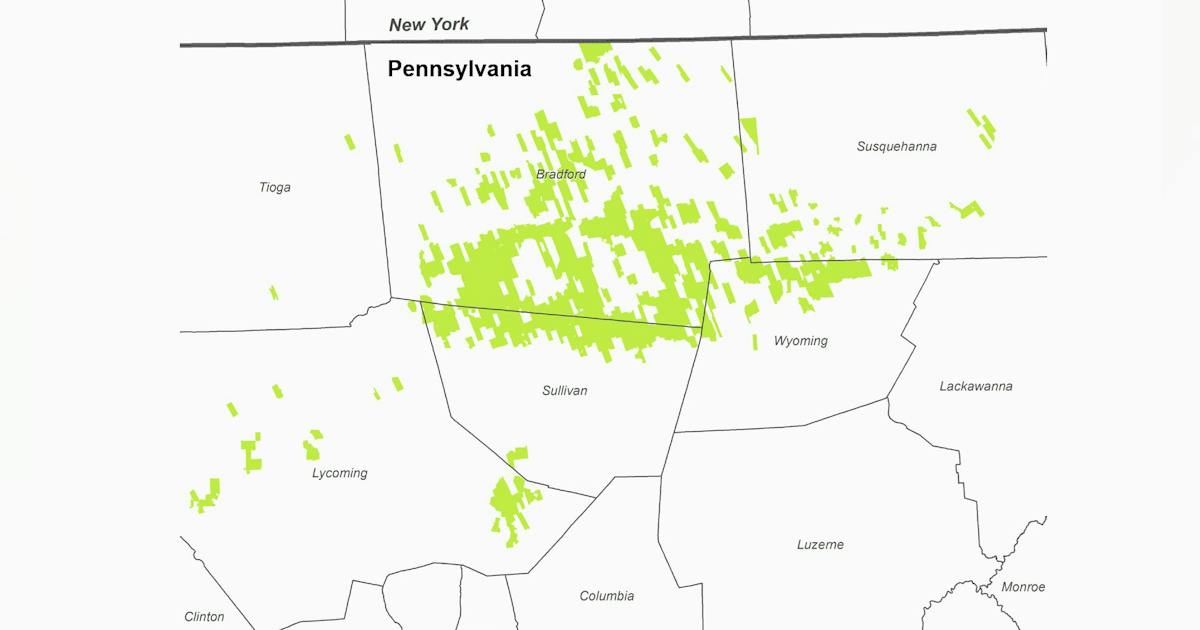
South Korea-based POSCO International Corp. has agreed to acquire the non-operated Marcellus position of a Chord Energy Corp. subsidiary for $550 million, gaining a producing US shale gas asset that it plans to use to generate immediate cash flow while expanding its LNG value chain.

The acquisition includes about 32,000 net acres in the core of the Marcellus play in Pennsylvania, trailing 12-month production of about 121 MMcfd, and 1.3 tcf of reserves, including 220 bcf of discovered potential, POSCO said in a briefing Sept. 16. The asset produces 100% residue gas with no NGLs and includes 2,006 wells, consisting of 1,305 producing wells and 701 development wells. POSCO said first-half 2026 production averaged about 124 MMscfd.

Field activities, including production, drilling, and permitting, will continue to be managed by an established local operator, POSCO said. The company plans to focus on gas marketing and downstream integration.

“This investment goes beyond the simple acquisition of a producing gas field,” said Dong-il Kim, head of POSCO International’s E&P Business Division. “It is an investment to expand the value chain by securing immediate returns through proven US upstream assets and connecting gas sales, liquefaction, LNG trading, and group demand.”

POSCO said that, under the current sales portfolio, about half of production is sold near production sites, with roughly 30% marketed into northeastern US and Ohio and another 20% supplied to Gulf Coast markets.

Beginning in 2029, the company plans to direct a portion of production to LNG liquefaction plants and market the resulting LNG through its trading subsidiary. 

Shape
Shape
Stay Ahead

Explore More Insights

Stay ahead with more perspectives on cutting-edge power, infrastructure, energy,  bitcoin and AI solutions. Explore these articles to uncover strategies and insights shaping the future of industries.

Shape

Cornelis lands $205M to make AI networks compute, not just connect

In Ethernet mode, the CN6000 can pair with switches from other vendors, including Broadcom’s Tomahawk line. Traffic sent over Ethernet still passes through an internal encapsulation layer built around Omni-Path. Spelman said that internal architecture preserves congestion management, credit-based flow control, and packet spraying, aimed at low latency and high

Read More »

POSCO to acquire Chord’s Marcellus gas assets for $550 million

South Korea-based POSCO International Corp. has agreed to acquire the non-operated Marcellus position of a Chord Energy Corp. subsidiary for $550 million, gaining a producing US shale gas asset that it plans to use to generate immediate cash flow while expanding its LNG value chain. The acquisition includes about 32,000 net acres in the core of the Marcellus play in Pennsylvania, trailing 12-month production of about 121 MMcfd, and 1.3 tcf of reserves, including 220 bcf of discovered potential, POSCO said in a briefing Sept. 16. The asset produces 100% residue gas with no NGLs and includes 2,006 wells, consisting of 1,305 producing wells and 701 development wells. POSCO said first-half 2026 production averaged about 124 MMscfd. Field activities, including production, drilling, and permitting, will continue to be managed by an established local operator, POSCO said. The company plans to focus on gas marketing and downstream integration. “This investment goes beyond the simple acquisition of a producing gas field,” said Dong-il Kim, head of POSCO International’s E&P Business Division. “It is an investment to expand the value chain by securing immediate returns through proven US upstream assets and connecting gas sales, liquefaction, LNG trading, and group demand.” POSCO said that, under the current sales portfolio, about half of production is sold near production sites, with roughly 30% marketed into northeastern US and Ohio and another 20% supplied to Gulf Coast markets. Beginning in 2029, the company plans to direct a portion of production to LNG liquefaction plants and market the resulting LNG through its trading subsidiary. 
Read More »

Plains to acquire Powder River Basin assets from Silver Creek for $585 million

Plains All American Pipeline LP and Plains GP Holdings, through a subsidiary, have agreed to acquire SCM PR II LLC (Silver Creek) from subsidiaries of Tailwater Capital and The Energy and Minerals Group for about $585 million in cash. The transaction will expand Plains’ Powder River Basin footprint, increase connectivity to producer supply and strengthen its Rockies crude oil gathering and transportation network, the company said in a release Sept. 16. “This is a highly strategic addition to Plains’ Rockies platform,” said Willie Chiang, chairman, chief executive officer, and president of Plains. “It expands our footprint in the Powder River Basin, a region supported by substantial remaining drilling inventory and an attractive outlook for continued producer development over the coming years.” Silver Creek owns and operates a large integrated crude oil gathering system in the Powder River Basin across Converse, Campbell, Johnson, and Natrona counties, Wyoming, providing producers access to Plains’ existing Rockies infrastructure through the Guernsey and Fort Laramie hubs. The acquired assets include about 600 miles of crude oil gathering and transmission pipelines, more than 350,000 b/d of operating capacity, about 1.2 million bbl of operational storage capacity, and Silver Creek’s 49% non-operated interest in the Tallgrass Energy-led Powder River Gateway Joint Venture, which owns and operates both the Iron Horse and Powder River Express pipelines. Plains said the acquisition will enhance producer access to its integrated transportation network, including gathering and transmission systems in the Powder River Basin and long-haul pipelines delivering crude oil to Cushing. The company also said the assets are supported by a diversified customer base, 915,000 dedicated acres under long-term acreage dedications and minimum volume commitments, and contracts with a weighted-average remaining term of more than eight years. Current throughput averages about 125,000 b/d. The transaction is expected to close in this year’s

Read More »

EPA repeals power plant GHG rules, clearing path for new gas-fired generation

The announcement, made at the G20 Energy Ministers’ Meeting in Houston, also included a proposal to eliminate remaining federal greenhouse-gas requirements for fossil-fueled power plants. The proposal could make it more difficult for future administrations to impose similar climate regulations on the power sector under the Clean Air Act. The Edison Electric Institute has previously said that “critically needed new natural gas-fired generation” is crucial to providing baseload and peaking power, supporting grid reliability and balancing renewable resources, and that a stable greenhouse-gas regulatory framework is important to new generation investment. EPA Administrator Lee Zeldin said the rollback would enable development of new generating infrastructure. Gas-fired development expands The change comes as developers are planning a significant expansion of US gas-fired generation to serve growing electricity demand. Global Energy Monitor reported in August that US gas-fired power capacity in development had risen 50% in first-half 2026 to 378 Gw. Of that, 189 Gw was associated with projects intended to serve data-center demand. While not all projects in development will be built, the scope points to significant potential additional demand for natural gas. The repeal could improve the prospects for projects that otherwise faced higher costs or operating restrictions under the Biden-era rules. US electric power-sector natural gas consumption increased 31% to an average 35.8 bcfd in 2025 from 27.3 bcfd in 2016, according to the Energy Information Administration (EIA). EIA now forecasts US electricity use will reach record levels in both 2026 and 2027, driven in part by data-center development and increased manufacturing activity. Overall US gas consumption also is forecast to reach record levels in both years, rising to 92.2 bcfd in 2026 and 94.3 bcfd in 2027 from 91.9 bcfd in 2025. More gas-fired generation would also create additional demand for gas pipelines and storage, particularly in regions

Read More »

Caturus plans to nearly double capacity of under-construction Commonwealth LNG plant

Caturus LLC plans to nearly double the expected capacity of its Commonwealth LNG plant currently under construction in Cameron Parish, La. The company is planning a five-train, 7.75 million tonnes/year (tpy) expansion, which would bring the site’s planned capacity to about 17.25 million tpy, the company noted in a release Sept. 15.  Caturus LLC in May reached final investment decision (FID) on the current design of a six-train, $13.5-billion Commonwealth LNG plant. That sanction included closing of $9.75 billion in project financing and marked the start of full construction of the 9.5 million tpy plant. Phase 1 operations are expected in 2030. Base project construction is progressing on schedule with operations targeted for 2030, with about 8.5 million tpy capacity subscribed under long-term sale and purchase agreements, the company said. The expansion project is targeted to enter service in the early 2030s. Caturus said the expansion reflects strong market demand for additional US LNG volumes and long-term supply security, while capitalizing on infrastructure and commercial momentum already established at Commonwealth LNG. The expansion would leverage land already controlled by Caturus and draw on the engineering, procurement, and construction program established for the initial phase of Commonwealth LNG. The company also said its integrated upstream-to-export model, including gas production from its South Texas acreage, would support the additional liquefaction capacity.

Read More »

US freezes Citgo board to protect pending $5.9-billion acquisition

The US Treasury Department Sept. 14 amended Venezuela’s sanctions license to prevent unauthorized changes to the governance of Citgo Petroleum Corp. and its two US corporate parent structures, PDV Holding Inc. and Citgo Holding Inc. The license now explicitly blocks any unauthorized “appointment, removal, or replacement of any director, officer, or other corporate governance official” at the three companies. The move comes as Venezuelan interim President Delcy Rodríguez works to regain control of the country’s overseas assets. Her administration has replaced law firms representing Venezuela and state-owned PDVSA in foreign litigation and arbitration, while opposition-appointed entities that have overseen Citgo are preparing to wind down. The license amendment freezes the current corporate boards until finalization of Amber Energy’s acquisition of PDV Holdings. The acquisition gives Amber Energy, owned by Elliott Investment Management, assets that include about 800,000 b/d of refining capacity on the US Gulf Coast and in the Midwest. It also obligates Amber to disperse $5.89 billion in a structured payout to 15 international creditors, including ConocoPhillips, whose assets were seized by the previous government. While a US federal court approved the deal, Amber still requires a US Treasury license to take title to the shares. The deal would also need to survive an appeal in the US Third Circuit Court of Appeals in Philadelphia, where the Venezuelan government is arguing the price is too low. Venezuela and state-owned PDVSA would still be on the hook for about $15 billion in remaining payouts to companies for seized assets.

Read More »

S&P Global: Refined product tightness deepens

Russian refinery runs remain near July 2026 lows and are likely to recover only gradually from September onward. Russia’s ban on diesel exports has already removed 10% of waterborne supply from the global market. Further decline in Russian refinery runs could amplify the risk to global diesel markets by leading Russia to import fuel to backfill domestic needs, compounding the outright loss of the near 1 million b/d of diesel exports. Limited spare capacity raises winter risks Meanwhile, the world’s remaining unconstrained refining capacity is already running at close to maximum levels. Refinery utilization in the US has approached 97% this summer, while Europe and North America continue to operate at or near multi-decade highs in response to record margins. The industry is now approaching fall turnaround season with a significant incentive to keep pushing and little spare capacity left to offset unexpected disruptions. “The market has survived the first phase of the crisis because inventories, trade flows, and refinery flexibility absorbed much of the shock. Those shock absorbers are not disappearing, but they are becoming progressively weaker. Markets are entering winter with less room for error than they had in the spring,” said Daniel Evans, global head of fuels and refining research, S&P Global Energy. For governments and policymakers, the challenge is increasingly likely to center on balancing energy price affordability, inflation, and security of supply. High diesel prices directly impact costs for freight transport, agriculture, construction, manufacturing, and residential heating. Although the market has so far avoided an outright supply crisis, persistently low inventories, high prices, and limited spare capacity have heightened the risk of government interventions. Diesel remains the fuel most vulnerable to shortages. With a surge in demand during the harvest season, the approach of winter heating needs, depleted inventories, and no immediate prospect of supply

Read More »

Axelera Europa targets enterprise data centers with far more efficient AI

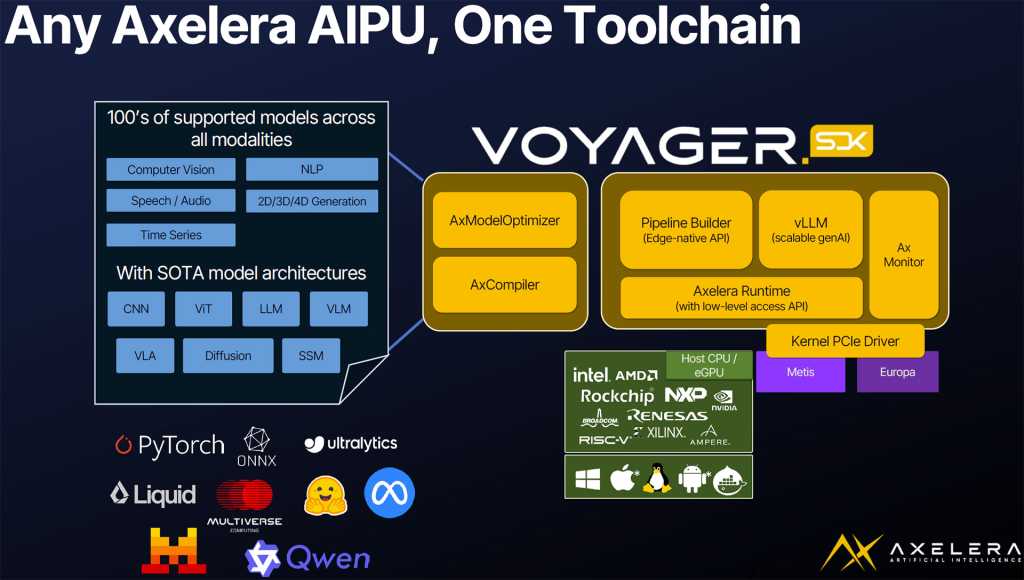
Software is still the gatekeeper Axelera In terms of software enablement, Axelera’s Voyager SDK spans its existing Metis products and the new Europa architecture, providing a common environment across embedded, edge and server deployments, with support for a multitude of computer vision models, LLMs, VLMs, diffusion models, speech and other AI workloads. To automate setup, Axelera’s Voyager Wingman uses natural-language prompts to help developers create or port inference pipelines, while AxeleraScript, or AxScript, provides a Python-enabled domain-specific language with lower-level AIPU control for custom operators and transformer models. This could prove every bit as important as Europa’s performance and efficiency. Enterprises already have models, development environments and application stacks. Extensive rewriting or specialized expertise adds development and operational costs that can quickly undermine savings on hardware and power.

Read More »

Scott Bergs, CEO of Kirkwood IG: Fiber and the AI Data Center Buildout

For years, fiber was one of the more forgiving elements of data center site selection. Developers could secure land, line up power, begin planning the facility and then work with carriers to establish the connectivity required by tenants. In a traditional multi-tenant data center, that model generally worked. At AI scale, Scott Bergs says it increasingly does not. “The architecture of those original communications service provider networks just don’t meet the latency and/or capacity needs” of today’s high-density compute environments, said Bergs, CEO of Kirkwood Infrastructure Group, during a recent episode of the Data Center Frontier Show. The result is a significant change in the data center development stack: network infrastructure can no longer be treated as something that gets solved after the site is chosen. For hyperscalers and neo-cloud providers, fiber route diversity, latency, physical security and future capacity increasingly need to enter the conversation alongside power and land. And as data center campuses follow available power farther from established digital infrastructure hubs, the scale of the network challenge is expanding with them. A connection between data center campuses that might once have extended two or 30 miles can now stretch 250 miles or more, Bergs said. What would traditionally have been considered a long-haul fiber route is increasingly becoming another piece of inter-campus infrastructure. That change is helping drive Kirkwood’s own expansion. From DF&I to Kirkwood Bergs previously led DF&I, a dark-fiber infrastructure platform concentrated in Northern Virginia and Maryland. Kirkwood Infrastructure Group is not simply DF&I under a new name, he said. Rather, it represents what Bergs described as a second phase in a broader infrastructure investment strategy developed originally through IPI Partners. IPI, an investment platform focused on digital infrastructure, backed DF&I after identifying communications infrastructure serving dense compute environments as an area requiring greater direct

Read More »

Cisco brings Splunk AI on premises, expands agent observability, monitors token costs

Cisco executives said during a press briefing that AI agents are operating across data centers, campuses, and branches, and interacting with enterprise resources and other agents. For example, if an agent deletes thousands of files, IT teams need to determine whether it malfunctioned or was compromised. On-premises option: Cisco AI POD for Splunk Aimed at enterprises that need to keep sensitive machine data within their own environments, Cisco AI POD for Splunk “brings Splunk AI to on-premises customers with new AI runtime software, Cisco infrastructure, Nvidia accelerated computing, and Kubernetes-based architecture, pre-validated and optimized for Splunk AI workloads,” according to Cisco. “One of the biggest roadblocks to enterprise AI today is that it’s too hard to deploy,” said Jeetu Patel, Cisco’s president and chief product officer, in a statement. “Customers want to know: Can I trust it to do the job? Can I afford it? And, most importantly, can I secure it? By running Splunk AI on the infrastructure customers already trust, they can move faster to put AI to work in their business with confidence and control.”

Read More »

Nuclear’s Next AI Test: Building at Scale

For data center developers facing multiyear utility interconnection queues and tightening power markets, nuclear energy is entering a different phase of its AI infrastructure story. The near-term opportunity still rests largely with the existing reactor fleet. Holtec International has moved the Palisades Nuclear Plant in Michigan into fuel loading, one of the final major stages before reactor startup activities. Constellation Energy, meanwhile, continues to work toward a 2027 restart of the former Three Mile Island Unit 1, now the Christopher M. Crane Clean Energy Center, under its long-term power agreement with Microsoft. Together, Palisades and Crane represent roughly 1.64 GW of existing nuclear capacity that could return to service without waiting for entirely new plants to be licensed, financed and constructed. That makes reactor restarts one of the few ways nuclear generation can materially intersect with data center power demand before the end of the decade. But the more consequential change may be taking place further upstream. A burst of activity from advanced nuclear developers at the end of August pointed increasingly toward the industrial systems required to move new reactor designs from demonstrations to repeatable infrastructure. X-energy, TerraPower, GE Vernova Hitachi, Oklo, Westinghouse, Kairos Power and others reported progress involving fuel supply, reactor testing, manufacturing, licensing and commercial deployment. None of these advanced reactor projects will solve the industry’s 2027 or 2028 power shortage. That is no longer the most useful test. The more important question is whether advanced nuclear can begin acquiring the characteristics of an industrial supply chain: dependable fuel, standardized manufacturing, repeatable construction, tested reactor systems and enough commercial certainty for large power customers to plan around deployment schedules measured in years rather than speculation. For data center infrastructure, that is the transition worth watching. Palisades Moves From Restoration to Startup The clearest near-term proof point

Read More »

The waste heat paradox: How data centers can cool AI with the heat AI creates

A 40-year-old technology built for this exact moment Absorption chillers produce chilled water the way a conventional chiller does, but they use heat instead of electricity to drive the refrigeration cycle. A generator uses hot water, steam, or exhaust gas to separate refrigerant vapor from a lithium bromide solution; the vapor condenses, evaporates under low pressure to produce the cooling effect, and is reabsorbed to close the loop. Because there’s no large electrically driven compressor, the electrical footprint is small: industry analysis puts absorption chillers at roughly 2 MW of cooling output for just 20–25 kW of electrical input, compared to 500 kW or more of electrical draw for a conventional chiller doing the same job. The technology has existed commercially for decades and never displaced electric chillers at scale, for one simple reason: it needs a steady, moderate-to-high-temperature heat source to run, and building a boiler specifically to feed one erased most of the savings. That missing piece is exactly what two current infrastructure trends are now supplying as a byproduct. Two trends CIOs are already funding that solve the “missing heat” problem 1. On-site power generation is becoming standard, not exceptional Grid interconnection delays in major data center markets now stretch into years, pushing hyperscale operators toward gas turbines, engines, and fuel cells built directly on campus — all of which reject substantial heat as a byproduct of making electricity. Bloom Energy already pairs its fuel-cell systems directly with absorption chillers at data center sites, using exhaust heat to generate chilled water and reduce reliance on the electric chiller plant. Some industry forecasts expect roughly a third of data centers to run fully on-site-powered campuses by 2030 — meaning this heat stream is a permanent feature of the infrastructure roadmap, not a one-off opportunity.

Read More »

DCF Poll: How Should Utilities Vet Real vs. ‘Ghost’ Data Center Demand?

Matt Vincent is Editor in Chief of Data Center Frontier, where he leads editorial strategy and coverage focused on the infrastructure powering cloud computing, artificial intelligence, and the digital economy. A veteran B2B technology journalist with more than two decades of experience, Vincent specializes in the intersection of data centers, power, cooling, and emerging AI-era infrastructure. Since assuming the EIC role in 2023, he has helped guide Data Center Frontier’s coverage of the industry’s transition into the gigawatt-scale AI era, with a focus on hyperscale development, behind-the-meter power strategies, liquid cooling architectures, and the evolving energy demands of high-density compute, while working closely with the Digital Infrastructure Group at Endeavor Business Media to expand the brand’s analytical and multimedia footprint. Vincent also hosts The Data Center Frontier Show podcast, where he interviews industry leaders across hyperscale, colocation, utilities, and the data center supply chain to examine the technologies and business models reshaping digital infrastructure. Since its inception he serves as Head of Content for the Data Center Frontier Trends Summit. Before becoming Editor in Chief, he served in multiple senior editorial roles across Endeavor Business Media’s digital infrastructure portfolio, with coverage spanning data centers and hyperscale infrastructure, structured cabling and networking, telecom and datacom, IP physical security, and wireless and Pro AV markets. He began his career in 2005 within PennWell’s Advanced Technology Division and later held senior editorial positions supporting brands such as Cabling Installation & Maintenance, Lightwave Online, Broadband Technology Report, and Smart Buildings Technology. Vincent is a frequent moderator, interviewer, and keynote speaker at industry events including the HPC Forum, where he delivers forward-looking analysis on how AI and high-performance computing are reshaping digital infrastructure. He graduated with honors from Indiana University Bloomington with a B.A. in English Literature and Creative Writing and lives in southern New Hampshire with

Read More »

Microsoft will invest $80B in AI data centers in fiscal 2025

And Microsoft isn’t the only one that is ramping up its investments into AI-enabled data centers. Rival cloud service providers are all investing in either upgrading or opening new data centers to capture a larger chunk of business from developers and users of large language models (LLMs).  In a report published in October 2024, Bloomberg Intelligence estimated that demand for generative AI would push Microsoft, AWS, Google, Oracle, Meta, and Apple would between them devote $200 billion to capex in 2025, up from $110 billion in 2023. Microsoft is one of the biggest spenders, followed closely by Google and AWS, Bloomberg Intelligence said. Its estimate of Microsoft’s capital spending on AI, at $62.4 billion for calendar 2025, is lower than Smith’s claim that the company will invest $80 billion in the fiscal year to June 30, 2025. Both figures, though, are way higher than Microsoft’s 2020 capital expenditure of “just” $17.6 billion. The majority of the increased spending is tied to cloud services and the expansion of AI infrastructure needed to provide compute capacity for OpenAI workloads. Separately, last October Amazon CEO Andy Jassy said his company planned total capex spend of $75 billion in 2024 and even more in 2025, with much of it going to AWS, its cloud computing division.

Read More »

John Deere unveils more autonomous farm machines to address skill labor shortage

Join our daily and weekly newsletters for the latest updates and exclusive content on industry-leading AI coverage. Learn More Self-driving tractors might be the path to self-driving cars. John Deere has revealed a new line of autonomous machines and tech across agriculture, construction and commercial landscaping. The Moline, Illinois-based John Deere has been in business for 187 years, yet it’s been a regular as a non-tech company showing off technology at the big tech trade show in Las Vegas and is back at CES 2025 with more autonomous tractors and other vehicles. This is not something we usually cover, but John Deere has a lot of data that is interesting in the big picture of tech. The message from the company is that there aren’t enough skilled farm laborers to do the work that its customers need. It’s been a challenge for most of the last two decades, said Jahmy Hindman, CTO at John Deere, in a briefing. Much of the tech will come this fall and after that. He noted that the average farmer in the U.S. is over 58 and works 12 to 18 hours a day to grow food for us. And he said the American Farm Bureau Federation estimates there are roughly 2.4 million farm jobs that need to be filled annually; and the agricultural work force continues to shrink. (This is my hint to the anti-immigration crowd). John Deere’s autonomous 9RX Tractor. Farmers can oversee it using an app. While each of these industries experiences their own set of challenges, a commonality across all is skilled labor availability. In construction, about 80% percent of contractors struggle to find skilled labor. And in commercial landscaping, 86% of landscaping business owners can’t find labor to fill open positions, he said. “They have to figure out how to do

Read More »

2025 playbook for enterprise AI success, from agents to evals

Join our daily and weekly newsletters for the latest updates and exclusive content on industry-leading AI coverage. Learn More 2025 is poised to be a pivotal year for enterprise AI. The past year has seen rapid innovation, and this year will see the same. This has made it more critical than ever to revisit your AI strategy to stay competitive and create value for your customers. From scaling AI agents to optimizing costs, here are the five critical areas enterprises should prioritize for their AI strategy this year. 1. Agents: the next generation of automation AI agents are no longer theoretical. In 2025, they’re indispensable tools for enterprises looking to streamline operations and enhance customer interactions. Unlike traditional software, agents powered by large language models (LLMs) can make nuanced decisions, navigate complex multi-step tasks, and integrate seamlessly with tools and APIs. At the start of 2024, agents were not ready for prime time, making frustrating mistakes like hallucinating URLs. They started getting better as frontier large language models themselves improved. “Let me put it this way,” said Sam Witteveen, cofounder of Red Dragon, a company that develops agents for companies, and that recently reviewed the 48 agents it built last year. “Interestingly, the ones that we built at the start of the year, a lot of those worked way better at the end of the year just because the models got better.” Witteveen shared this in the video podcast we filmed to discuss these five big trends in detail. Models are getting better and hallucinating less, and they’re also being trained to do agentic tasks. Another feature that the model providers are researching is a way to use the LLM as a judge, and as models get cheaper (something we’ll cover below), companies can use three or more models to

Read More »

OpenAI’s red teaming innovations define new essentials for security leaders in the AI era

Join our daily and weekly newsletters for the latest updates and exclusive content on industry-leading AI coverage. Learn More OpenAI has taken a more aggressive approach to red teaming than its AI competitors, demonstrating its security teams’ advanced capabilities in two areas: multi-step reinforcement and external red teaming. OpenAI recently released two papers that set a new competitive standard for improving the quality, reliability and safety of AI models in these two techniques and more. The first paper, “OpenAI’s Approach to External Red Teaming for AI Models and Systems,” reports that specialized teams outside the company have proven effective in uncovering vulnerabilities that might otherwise have made it into a released model because in-house testing techniques may have missed them. In the second paper, “Diverse and Effective Red Teaming with Auto-Generated Rewards and Multi-Step Reinforcement Learning,” OpenAI introduces an automated framework that relies on iterative reinforcement learning to generate a broad spectrum of novel, wide-ranging attacks. Going all-in on red teaming pays practical, competitive dividends It’s encouraging to see competitive intensity in red teaming growing among AI companies. When Anthropic released its AI red team guidelines in June of last year, it joined AI providers including Google, Microsoft, Nvidia, OpenAI, and even the U.S.’s National Institute of Standards and Technology (NIST), which all had released red teaming frameworks. Investing heavily in red teaming yields tangible benefits for security leaders in any organization. OpenAI’s paper on external red teaming provides a detailed analysis of how the company strives to create specialized external teams that include cybersecurity and subject matter experts. The goal is to see if knowledgeable external teams can defeat models’ security perimeters and find gaps in their security, biases and controls that prompt-based testing couldn’t find. What makes OpenAI’s recent papers noteworthy is how well they define using human-in-the-middle

Read More »