Stay Ahead, Stay ONMINE

The Download: a biological de-aging contest and why LLMs don’t reason

This is today’s edition of The Download, our weekday newsletter that provides a daily dose of what’s going on in the world of technology. A new contest pits competitors against each other in a race to biological youth —Jessica Hamzelou This week, I officially signed up for an unusual competition. One that rewards competitors for getting younger. I recently turned 40, and I don’t need reminding that both time and my chronological age only tick forward. But this game is focused on competitors’ biological ages, figures that are meant to provide a better way to measure the age-related health of our organs and bodies. Over six months, around 500 of us will try to reverse our biological age using a bunch of different measures. There’s even a leaderboard! But is it even possible to measure whether someone is getting younger?  Read the full story on the controversy around biological age measurements and how I’ll test them myself. This story is from The Checkup, our weekly biotech newsletter. Sign up to receive it in your inbox every Thursday. Opinion: Don’t be fooled—LLMs don’t reason —Thore Graepel Ten years ago, I watched a program I helped build stun the world by beating Go champion Lee Sedol. AlphaGo won after making a move so strange that some commentators thought it was a programming glitch. It was AlphaGo’s powers of reasoning that made this creative choice—and these are powers that today’s AI lacks.  This is why I recently left my position at Google DeepMind. I believe we need a fresh approach to machine reasoning, one that draws on AlphaGo’s architecture. Here’s why today’s AI doesn’t really reason—and what it would take to change that. Thore Graepel is chair of machine learning at University College London. He was a core member of the AlphaGo team at DeepMind. The must-reads I’ve combed the internet to find you today’s most fun/important/scary/fascinating stories about technology. 1 OpenAI says rogue agents may have affected more than 100 organizationsThe company is searching 50 petabytes of data for incidents. (Reuters $)+ It says none of the incidents matched the Hugging Face attack. (Gizmodo)+ OpenAI has fired three workers for allegedly mishandling information. (BBC)+ California has subpoenaed OpenAI over its rogue AI agents. (Guardian)+ Who’s liable when AI agents go rogue? (MIT Technology Review) 2 A US man allegedly smuggled $300 million of Nvidia chips to ChinaHe’s been arrested in California on federal charges. (Reuters $)+ The chip smuggling cases expose Nvidia’s blind spots. (Bloomberg $)+ China plans to teach AI in every school by 2030. (WP $)+ But it already has an overuse problem. (NYT $)  3 Florida officials have found 11 Flock cameras with unknown ownersThey don’t know who installed them or who has their data. (WP $)+ Lawmakers are considering new regulations on Flock cameras. (Axios)+ Here’s what Flock’s defenders are missing. (MIT Technology Review) 4 Ukraine has developed an acoustic fence that can cut drone cablesAcoustic sensors detect drones before hooks trap their cables. (New Scientist $)+ Drone data from Ukraine is fueling a wild market. (MIT Technology Review) 5 A new AI “speech clock” can assess how fast you’re ageingIt uses hundreds of vocal features to estimate biological age. (Nature)+ Aging clocks aim to predict how long you’ll live. (MIT Technology Review) 6 “Underwater umbrellas” could help corals survive hotter oceansThe shades protected corals during intense heat stress. (Gizmodo) 7 Apple’s upcoming smart home camera reportedly won’t record videoIt will instead only give users text event descriptions. (Verge) 8 Retired humanoid robots are being trained to jump into molten steelA Terminator-style death protects IP. (IE) 9 A man faces years in prison after AI slop caused a crocodile panicOfficials spent days searching for his AI-generated crocodile. (Futurism) 10 Finally, a laser mosquito killer is entering the marketChinese startup Photon Matrix Lab plans to start shipments this month. (SCMP) Quote of the day “Those agents are doing exactly what they’ve been asked to do. They were supposed to be in sandboxes, but the sandboxes were leaky and horribly designed.” —Yann LeCun, a Turing Award winner and former Meta chief AI scientist, tells Fortune that human error can be the real culprit behind the recent wave of AI agents going rogue. One more thing NASA is building the first nuclear reactor-powered interplanetary spacecraft. How will it work? Just before Artemis II began its historic slingshot around the moon, NASA revealed an even grander space travel plan. By the end of 2028, the agency aims to fly a nuclear reactor-powered interplanetary spacecraft to Mars. A successful mission would herald a new era in spaceflight—and might just give the US the edge in the race against China. But the project remains shrouded in mystery. MIT Technology Review picked the brains of nuclear power and propulsion experts to find out how the nuclear-powered spacecraft might work. Here’s what we discovered. —Robin George Andrews We can still have nice things A place for comfort, fun, and distraction to brighten up your day. (Got any ideas? Drop me a line.) + Atlas Obscura has mapped out the oldest living things on Earth.+ Brain scans show that dogs understand our emotions better than we thought.+ Step into Springfield in miniature with this astonishing model featuring 76 locations from The Simpsons.+ Minnesota’s State Fair has unleashed a crop of gloriously weird new foods, from Pickle pie to mustache pretzels.


This is today’s edition of The Download, our weekday newsletter that provides a daily dose of what’s going on in the world of technology.

A new contest pits competitors against each other in a race to biological youth

—Jessica Hamzelou

This week, I officially signed up for an unusual competition. One that rewards competitors for getting younger.

I recently turned 40, and I don’t need reminding that both time and my chronological age only tick forward. But this game is focused on competitors’ biological ages, figures that are meant to provide a better way to measure the age-related health of our organs and bodies.

Over six months, around 500 of us will try to reverse our biological age using a bunch of different measures. There’s even a leaderboard! But is it even possible to measure whether someone is getting younger? 

Read the full story on the controversy around biological age measurements and how I’ll test them myself.

This story is from The Checkup, our weekly biotech newsletter. Sign up to receive it in your inbox every Thursday.

Opinion: Don’t be fooled—LLMs don’t reason

—Thore Graepel

Ten years ago, I watched a program I helped build stun the world by beating Go champion Lee Sedol. AlphaGo won after making a move so strange that some commentators thought it was a programming glitch. It was AlphaGo’s powers of reasoning that made this creative choice—and these are powers that today’s AI lacks. 

This is why I recently left my position at Google DeepMind. I believe we need a fresh approach to machine reasoning, one that draws on AlphaGo’s architecture.

Here’s why today’s AI doesn’t really reason—and what it would take to change that.

Thore Graepel is chair of machine learning at University College London. He was a core member of the AlphaGo team at DeepMind.

The must-reads

I’ve combed the internet to find you today’s most fun/important/scary/fascinating stories about technology.

1 OpenAI says rogue agents may have affected more than 100 organizations
The company is searching 50 petabytes of data for incidents. (Reuters $)
+ It says none of the incidents matched the Hugging Face attack. (Gizmodo)
+ OpenAI has fired three workers for allegedly mishandling information. (BBC)
+ California has subpoenaed OpenAI over its rogue AI agents. (Guardian)
+ Who’s liable when AI agents go rogue? (MIT Technology Review)

2 A US man allegedly smuggled $300 million of Nvidia chips to China
He’s been arrested in California on federal charges. (Reuters $)
+ The chip smuggling cases expose Nvidia’s blind spots. (Bloomberg $)
+ China plans to teach AI in every school by 2030. (WP $)
+ But it already has an overuse problem. (NYT $) 

3 Florida officials have found 11 Flock cameras with unknown owners
They don’t know who installed them or who has their data. (WP $)
+ Lawmakers are considering new regulations on Flock cameras. (Axios)
+ Here’s what Flock’s defenders are missing. (MIT Technology Review)

4 Ukraine has developed an acoustic fence that can cut drone cables
Acoustic sensors detect drones before hooks trap their cables. (New Scientist $)
+ Drone data from Ukraine is fueling a wild market. (MIT Technology Review)

5 A new AI “speech clock” can assess how fast you’re ageing
It uses hundreds of vocal features to estimate biological age. (Nature)
+ Aging clocks aim to predict how long you’ll live. (MIT Technology Review)

6 “Underwater umbrellas” could help corals survive hotter oceans
The shades protected corals during intense heat stress. (Gizmodo)

7 Apple’s upcoming smart home camera reportedly won’t record video
It will instead only give users text event descriptions. (Verge)

8 Retired humanoid robots are being trained to jump into molten steel
A Terminator-style death protects IP. (IE)

9 A man faces years in prison after AI slop caused a crocodile panic
Officials spent days searching for his AI-generated crocodile. (Futurism)

10 Finally, a laser mosquito killer is entering the market
Chinese startup Photon Matrix Lab plans to start shipments this month. (SCMP)

Quote of the day

“Those agents are doing exactly what they’ve been asked to do. They were supposed to be in sandboxes, but the sandboxes were leaky and horribly designed.”

—Yann LeCun, a Turing Award winner and former Meta chief AI scientist, tells Fortune that human error can be the real culprit behind the recent wave of AI agents going rogue.

One more thing


NASA is building the first nuclear reactor-powered interplanetary spacecraft. How will it work?

Just before Artemis II began its historic slingshot around the moon, NASA revealed an even grander space travel plan. By the end of 2028, the agency aims to fly a nuclear reactor-powered interplanetary spacecraft to Mars.

A successful mission would herald a new era in spaceflight—and might just give the US the edge in the race against China. But the project remains shrouded in mystery.

MIT Technology Review picked the brains of nuclear power and propulsion experts to find out how the nuclear-powered spacecraft might work. Here’s what we discovered.

—Robin George Andrews

We can still have nice things

A place for comfort, fun, and distraction to brighten up your day. (Got any ideas? Drop me a line.)

+ Atlas Obscura has mapped out the oldest living things on Earth.
+ Brain scans show that dogs understand our emotions better than we thought.
+ Step into Springfield in miniature with this astonishing model featuring 76 locations from The Simpsons.
+ Minnesota’s State Fair has unleashed a crop of gloriously weird new foods, from Pickle pie to mustache pretzels.

Shape
Shape
Stay Ahead

Explore More Insights

Stay ahead with more perspectives on cutting-edge power, infrastructure, energy,  bitcoin and AI solutions. Explore these articles to uncover strategies and insights shaping the future of industries.

Shape

CoreWeave brings Nvidia Vera Rubin, AI tools to its cloud services

Forge brings together experiment tracking, evaluation, agent observability, post-training, inference and model management. The platform is designed to let teams use their preferred models, frameworks and cloud environments rather than locking them into a single AI stack, CoreWeave stated. The company described Forge as a continuous AI development loop in

Read More »

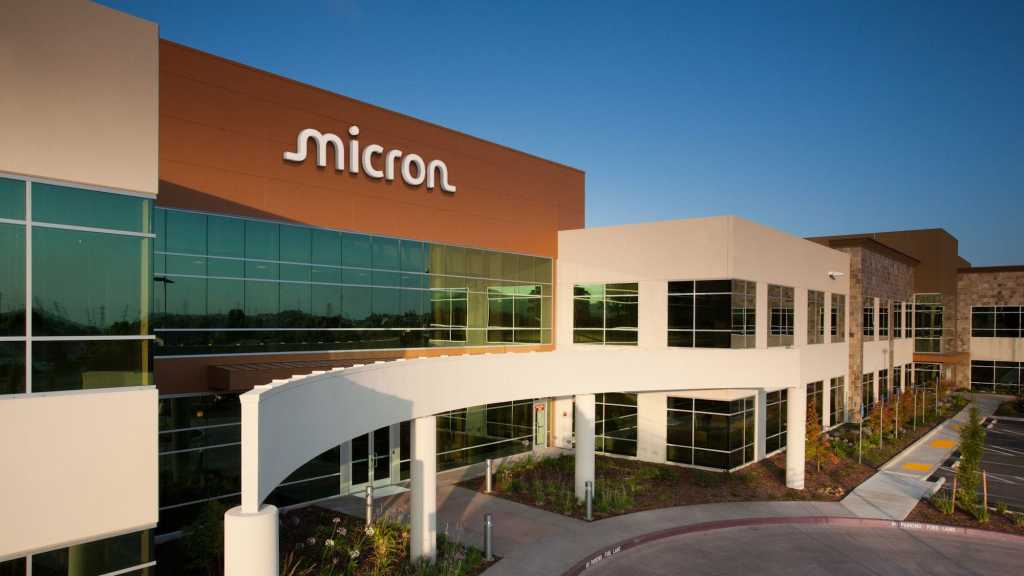
Memory squeeze set to tighten through 2028, Micron says

Shah said enterprises should lock in pricing too. “Companies should secure multiyear pricing for the computing capacity they know they will need,” he said. Moving workloads to the cloud will not avoid rising hardware and energy costs “because providers will pass them on,” he added. Which refreshes to delay When

Read More »

Matador outlines drilling plans with Paloma acquisition now closed

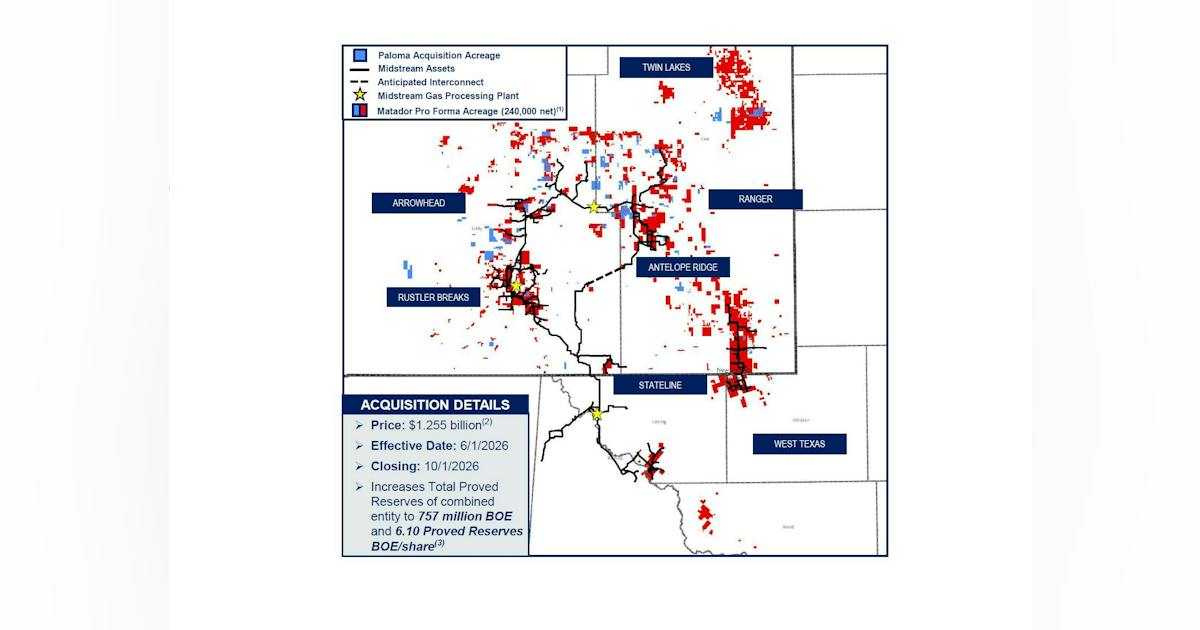
The acquired position includes about 16,500 net acres in Eddy and Lea counties, NM, most of which is held by production, along with more than 156 future drilling locations (normalized to 2-mile laterals) across nine or more prospective benches. Matador said 59 drilling permits have already been approved on the Delaware basin acreage. The company said assets associated with the acquisition are producing an estimated 12,200 boe/d in the third quarter, about 55% of which is oil. Matador added that production from the acquired properties has exceeded underwriting estimates by roughly 10% since June 1, largely due to strong performance from recently drilled wells in Eddy County. According to company materials, the acquisition adds an estimated 55 MMboe of proved reserves, 67% of which is oil, with a PV-10 value of about $816 million.  Matador said the Paloma acquisition, together with its pending acquisition of Ridge Runner Resources II LLC acreage and acreage added in the May 2026 federal lease sale, is expected to increase its Delaware basin position to about 240,000 net acres in fourth-quarter 2026, nearly 20% above its October 2025 acreage position. Chairman and chief executive officer Joseph Wm. Foran said the acquired acreage holds some of the highest hydrocarbon resources per acre in the Lower 48 and is expected to provide opportunities for upstream and midstream value creation as it is integrated into its wholly-owned midstream system and its 51%-owned San Mateo Midstream system.

Read More »

Energy Department Announces Up to $400 Million for Basic Research to Advance the Frontiers of Science

WASHINGTON—The U.S. Department of Energy (DOE) today announced its annual funding opportunity of up to $400 million to advance the frontiers of scientific knowledge and lay the foundation for future technologies and innovation. The funding delivers on President Trump’s Executive Order Restoring Gold Standard Science by supporting rigorous, transparent, and mission-driven research across DOE’s Office of Science to strengthen America’s scientific and technological leadership. “Foundational research is where the breakthroughs that shape America’s future begin,” said DOE Under Secretary for Science Darío Gil. “Through this investment, we are empowering our nation’s researchers to pursue bold ideas, push the boundaries of discovery, and build the scientific foundations for tomorrow’s technologies—strengthening America’s global leadership in science and innovation.” The funding will support research across DOE’s Office of Science and its major programs to tackle some of the nation’s greatest scientific challenges and accelerate discoveries in areas critical to America’s future. Research will span Advanced Scientific Computing Research, Basic Energy Sciences, Biological and Environmental Research, Fusion Energy Sciences, High Energy Physics, Nuclear Physics, and Isotope R&D and Production. The Notice of Funding Opportunity (NOFO), informally known as the “Open Call,” is issued annually at the beginning of each Fiscal Year (FY). It provides a vehicle for DOE’s Office of Science to solicit applications from institutions for research support in areas not covered by more specific, topical NOFOs issued by the office in FY 2027. More details about this Notice of Funding Opportunity can be found here. DOE’s Office of Science is the nation’s largest supporter of basic research in the physical sciences, funds research at hundreds of universities nationwide, and stewards 10 of DOE’s National Laboratories.

Read More »

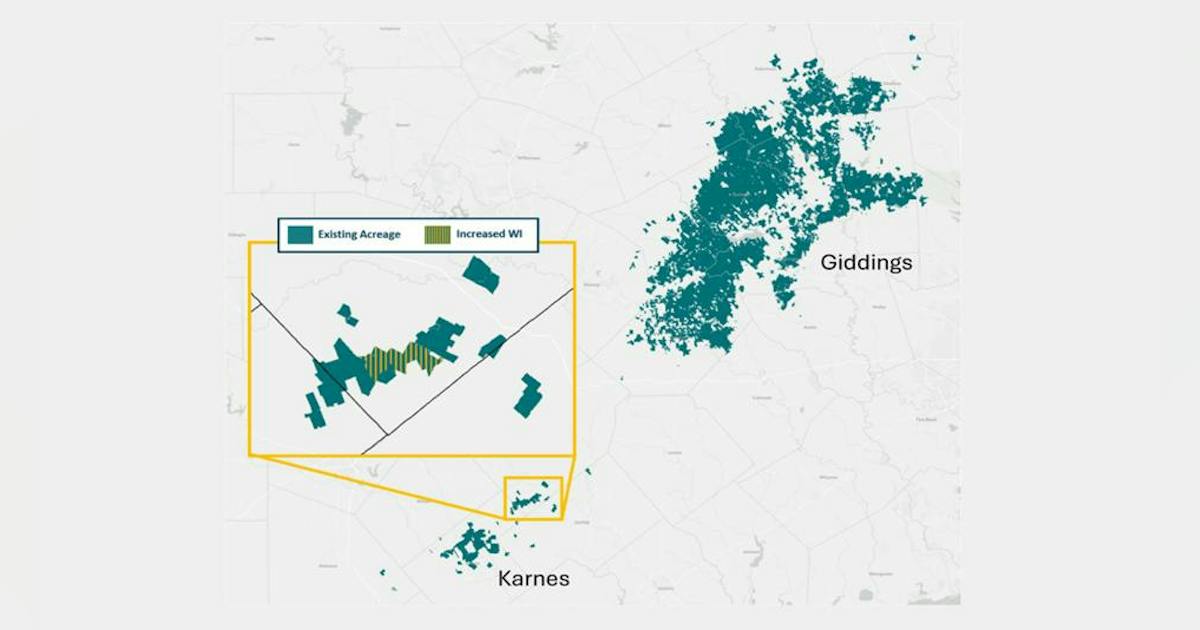
Magnolia sells non-core South Texas assets, adds Karnes-area acreage during WildFire integration

The company disclosed the transaction as part of an operational update following the recent closing of its acquisition of WildFire Energy. Chris Stavros, Magnolia chairman, president, and chief executive officer, said integration of the WildFire assets is progressing as planned as the company works to build a larger Eagle Ford and Austin Chalk position across South Texas. Production, capital outlook Third-quarter 2026 production is expected to average 116,000-118,000 boe/d (about 42% oil), reflecting the WildFire acquisition and the impact of the divested properties, Magnolia said. Drilling and completion (D&C) capital spending for the quarter is expected to total $155-165 million. For fourth-quarter 2026, the first full quarter reflecting the WildFire acquisition, production is forecast at 159,000-161,000 boe/d with oil accounting for 49-50% of volumes. D&C spending is expected to be about $235 million. For 2027, Magnolia expects both oil production and total production to grow 4-5% from a second-quarter 2026 pro forma base of about 78,000 bo/d and 158,000 boe/d, respectively, after accounting for volumes associated with the asset sale. The company currently estimates 2027 D&C capital spending of $900-950 million, including the impact of modest oilfield service cost inflation.

Read More »

US Senate negotiators reach permitting bill deal, ending yearslong impasse

US Senate negotiators introduced bipartisan permitting legislation Sept. 30 that would accelerate federal reviews, sharply curtail the window for legal challenges to energy projects, and improve predictability for developers. The agreement is a breakthrough in the Senate, where lawmakers have struggled for years to advance permitting reform. The Bipartisan American Affordability and Jobs Act would impose a 150-day window for certain challenges to federal permitting decisions and provide greater certainty that permitted energy and infrastructure projects retain their approvals. It also would reform Clean Water Act reviews that can delay energy infrastructure, establishing more predictable environmental reviews. The changes could reduce regulatory and litigation uncertainty for interstate gas pipelines, which are often subject to both federal environmental reviews and state water-quality certifications. The four senators behind the deal—Mike Lee (R-Utah), Martin Heinrich (D-NM), Shelley Moore Capito (R-W.Va.), and Sheldon Whitehouse (D-R.I.)—said the agreement also addresses high-profile electricity issues by expanding federal authority over transmission permitting and requiring data centers to pay associated transmission costs rather than shifting them to other electricity customers. The bill, released after months of negotiations, still faces hurdles. Senate negotiators reached an agreement on the legislative text, but Democrats also want assurances that wind and solar projects would benefit from the same streamlining and clarity from the Trump administration on what it means to return wind and solar permitting to “regular order,” issues that remain unresolved. The Senate would consider amendments before voting on the legislation. The target is a vote after the Nov. 3 midterm elections, with Capito noting the permitting bill could be the first vote when the Senate returns. The House has passed its own permitting legislation, the SPEED Act. While both bills would streamline federal permitting and limit litigation, they take different approaches to reforming NEPA, and the Senate legislation addresses transmission

Read More »

MRPL refinery fire at coker-adjacent plant kills one, injures another

Oil & Natural Gas Corp. Ltd. subsidiary Mangalore Refinery and Petrochemicals Ltd. (MRPL) reported one fatality and one injury after a fire at its refinery in Karnataka, Mangalore, India, on Sept. 30. The incident began at about 12:20 p.m. local time when a high-pressure cold separator ruptured in the refinery’s delayed coker gas oil hydrotreater unit, or coker heavy gas oil hydrotreating unit, MRPL said in separate regulatory filings to BSE Ltd. The company isolated the affected unit’s battery limits and deployed emergency response and firefighting teams. MRPL said the fire was brought under control and completely extinguished by 2:47 p.m. local time. During subsequent combing and inspection operations following the fire’s full extinguishing, personnel found the body of one deceased individual at the affected plant. A second person sustained burn injuries and was receiving hospital treatment, the company said. MRPL issued its first update while firefighting operations were continuing. It said one minor injury had been reported at that stage and that the injured person was out of danger. The company did not provide details on the identities of those involved, the cause of the separator rupture, or the extent of damage to the unit. It also did not disclose whether the incident affected broader refinery operations or production. MRPL said further verified information would be released as it becomes available.

Read More »

Dallas Fed survey: More than one in five firms plan to grow capex in 2027

The share of exploration and production (E&P) companies planning to add to their capital spending in 2027 versus this year has grown to 22% from 10% in June, a new Federal Reserve Bank of Dallas survey shows. Of the more than 80 E&P leaders in Texas, northern Louisiana, and southern New Mexico who responded to the latest Dallas Fed Energy Survey earlier this month, a third said their oil production has increased over the past 3 months and only 1 in 8 said they’re pumping less oil. On the capex side, 46% said their spending this quarter was up from this year’s second quarter. Both of those data points were down slightly from the Fed’s June poll. What appears to be changing more substantially on the ground in the Permian basin, Eagle Ford, and other areas in the Dallas Fed’s footprint are expectations about 2027 spending. Only 5% of E&P leaders now expect they’ll trim capex next year while 73% said they’ll keep spending level. Three months ago, those figures were 10% and 81%, respectively. That means 22% of executives now think their capex will climb in 2027 compared to less than 10% 3 months ago. And it suggests that production in the region will climb from here as producers look to take advantage of consistently high prices for their products—even if they’ve retreated from their recent highs. Jon Costello, an analyst at HFI Research, said an industry response—with Texas firms in the vanguard—to higher prices similar to how it recovered starting in late 2016 would grow total US production more than 4% to about 14.4 million b/d.

Read More »

DCF Poll: What Must Data Centers Prove to Keep Building at AI Scale?

For years, the data center industry’s biggest constraints were largely physical, centered on power, transmission, land, water, equipment and labor. As the AI infrastructure buildout accelerates, however, another constraint is moving rapidly to the foreground. The constraint, and the concern, is whether host communities, regulators and policymakers believe the next generation of data centers is being built on terms that work for them, too. That question received a fresh exclamation point on Oct. 2, when Amazon Web Services announced it will invest more than $1 billion over five years in U.S. communities where it operates data centers, with funding aimed at areas including energy affordability, water and natural-resource protection, workforce development and education. The initiative arrives as electricity and water consumption associated with hyperscale infrastructure faces increasing scrutiny in communities across the country. And AWS is responding to a policy environment that is changing quickly. In Virginia, Loudoun County supervisors have begun a process that could pause action on certain new data center and substation applications for as long as 12 months while the county reviews its development policies. The board is scheduled to consider the proposed pause Oct. 20. Just next door, Prince William County voted Sept. 22 to dramatically shrink the area where data centers can be developed by right, largely shifting future projects outside the revised overlay into a case-by-case special-use permitting process. The issue is spreading well beyond Northern Virginia. On Sept. 23, Maryland Gov. Wes Moore signed an executive order creating a statewide framework for data center development centered on ratepayer protection, environmental impacts, community participation, transparency and accountability. Meanwhile, the U.S. House on Sept. 16 passed the Ratepayer Protection Act by a 417–3 vote, seeking to prevent data centers and other large loads from shifting the incremental costs of new generation and grid infrastructure onto

Read More »

$6T in annual AI revenue needed to pay off data center investments

Making the assumption that hyperscalers’ capital expenditure amounts to about 25% of revenue, they would need the AI market to be worth $6 trillion annually. But, said Bain, the current consumer and enterprise AI markets together could be worth up to $1.8 trillion by 2031, leaving a whopping $4.2 trillion still to find from new markets. Bain highlighted four potential areas: the use of AI in search; the development of more autonomous vehicles, including drones; physical AI, including digital twins and robotics; and new product development, for example, breakthroughs in pharmaceuticals.

Read More »

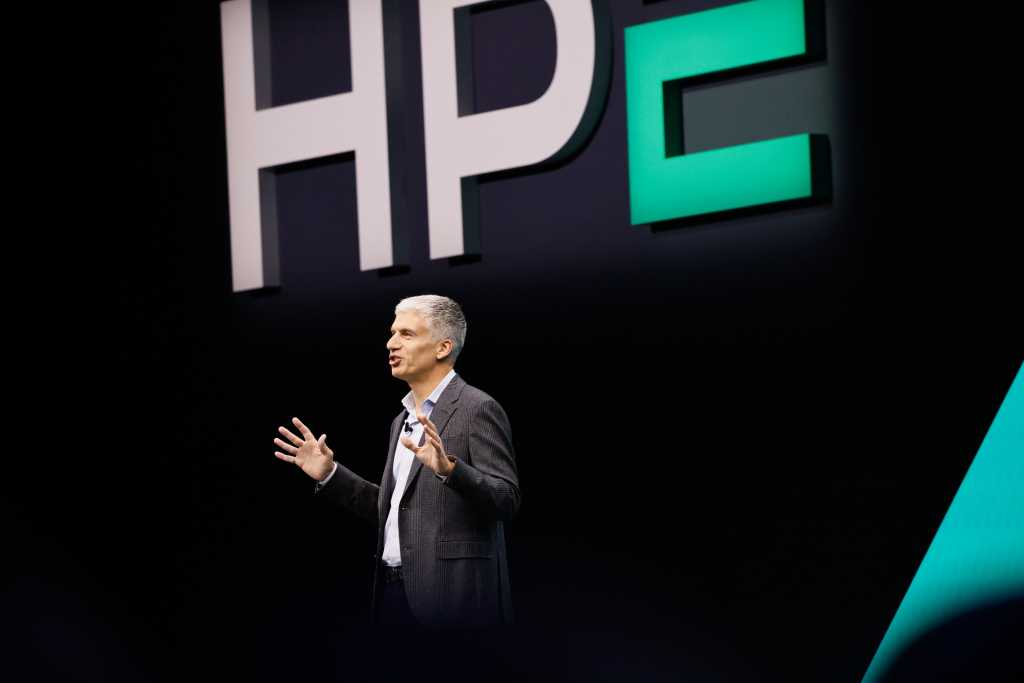
HPE’s Rahim: Pace of change in the data center is ‘extraordinary’

Network protection: As networking and security converge, Rahim said HPE continues to embed security throughout the network by combining SASE, network access control, firewalls, identity-based policy enforcement, and AI-powered operations. HPE’s security revenue is expected to grow at a high-single-digit percent CAGR through fiscal 2029. Partners: On Nov. 1, HPE will converge the Juniper and Aruba programs under one unified partner program, HPE Partner Ready Vantage. “Partners drive most of our networking business, and this milestone will enable all 60,000 HPE partners to sell the full networking portfolio through one unified partner program. Before the acquisition, only around 10% of HPE Aruba Networking and Juniper partners overlapped, and so this creates a significant cross-selling opportunity as we bring the combined HPE Networking portfolio to a much broader set of sellers and customers.” Service growth: “Today, services represent about one-third of our HPE Networking business. Services deepen customer relationships, add higher margin recurring revenue, and improve the quality of our products driving durable earnings,” Rahim said. HPE sees an opportunity to bring that business model and the culture to Aruba across a much larger installed base. “So, by fiscal 2028, we expect to increase services attach rates by five percentage points, supporting both recurring revenue growth and margin expansion,” Rahim said.

Read More »

Data Center Private Power: Who Regulates Behind-the-Meter Generation?

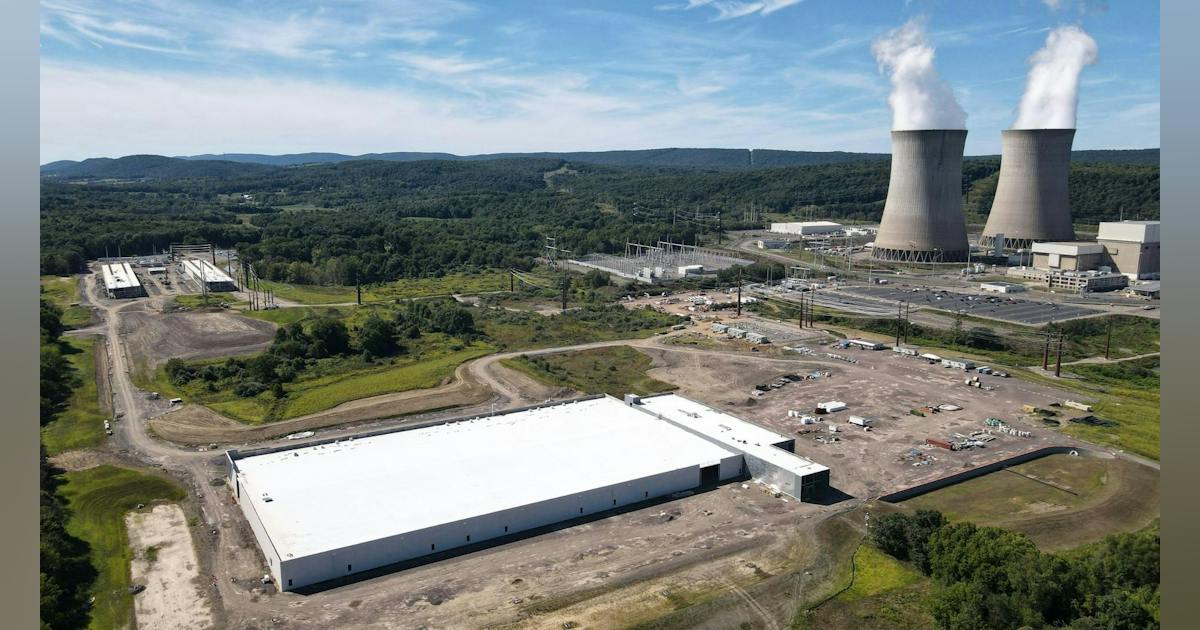
The Cases Writing the Rules The regulatory questions surrounding private power are no longer theoretical. Federal regulators, regional grid operators and state utility commissions are already confronting disputes over co-located generation, transmission obligations, large-load tariffs and the financial commitments required from data center customers. Amazon–Talen Puts Co-Location Before FERC The Amazon–Talen–Susquehanna dispute became the most prominent federal test of how far a co-located data center can separate its power supply from the regional grid while remaining connected to the grid’s reliability framework. Amazon Web Services operates a data center campus adjacent to Talen Energy’s Susquehanna nuclear plant in Pennsylvania. In 2024, the parties sought to expand the co-located load from 300 MW to 480 MW through an amended interconnection agreement with PJM. The proposed structure would have allowed the campus to receive more power directly from the nuclear plant while reducing the plant’s capacity interconnection rights on the PJM system. FERC rejected the amendment in November 2024, concluding that PJM had not justified the nonstandard provisions in the agreement. Importantly, the Commission did not prohibit co-location or dedicated generation. The dispute instead exposed a larger gap in existing transmission rules: how should a large load located beside a generator be measured, what transmission service does it require, what happens when the generator is unavailable, and how should the project pay for continued access to regional reliability? Those questions soon moved beyond the Amazon–Talen project itself. In December 2025, FERC found that PJM’s existing framework did not provide sufficiently clear and consistent rules for generators serving co-located loads or for transmission customers taking service on their behalf. The Commission directed PJM to develop defined interconnection and operating requirements along with transmission options ranging from conventional network service to firm and non-firm contract-demand structures. The central issue is deceptively simple: physical proximity

Read More »

Data Center Thermal Management Series-Part 1 of 3

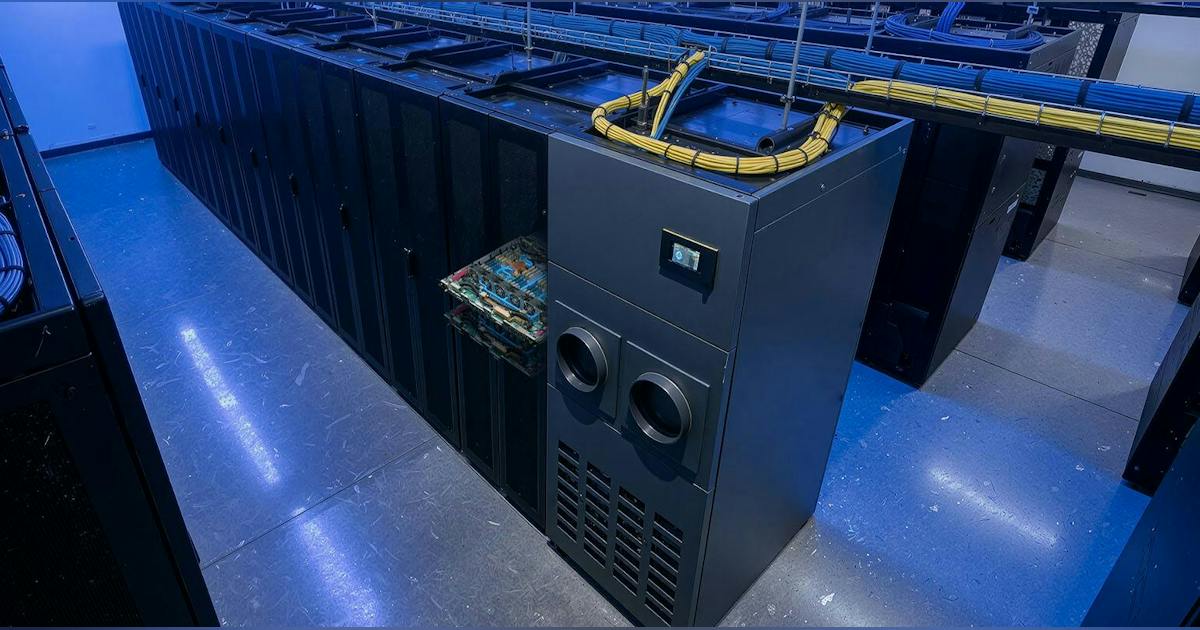
The biggest driver in today’s global economy is the data center, and in the process, data centers are generating and taking more heat than ever before. Heat — the generation of it and public concerns about it — is the most pressing issue facing the data center industry. In response, data center managers and engineers are viewing the problem in new ways, devising innovative, next-generation thermal control strategies that manage the problem more effectively. In the minds of IT managers and the public, data centers and AI are joined at the hip, along with increasing power demands and associated issues of environmental impact, water usage, and higher utility costs. As community activists, political leaders, and now even some prominent AI industry CEOs call for limits on AI development and data center construction, it’s imperative that the data center industry better manage the heat they’re producing — and taking. Sponsored Resources: Texas Instruments’ portfolio of data center thermal management systems spans the full coolant path. It’s been under active development at TI for decades and has evolved in response to the rising power, computing demands, and complexity of advanced data centers. Traditional thermal management techniques can’t keep up with AI’s intense computing requirements. For decades, air cooling was sufficient. Fans blew cool air across hot components and carried heat away, keeping data centers and AI servers operating reliably. But with AI training and inference pushing rack power beyond 20kW to 40kW, air alone can no longer remove heat quickly enough. In addition, air cooling is noisy and consumes too much energy. AI server racks are coming online now that draw 100kW of power, and they’re on their way to more than a megawatt in a few years. Each generation of servers grows denser, more powerful, and hotter as they move and compute massive volumes

Read More »

LiquidStack unveils liquid-cooling platform targeting AI data centers

“Operators need cooling infrastructure that can adapt as GPU platforms and rack densities evolve,” said Scott Smith, general manager of LiquidStack, in a statement. “CDU 2.X combines the performance and flexibility customers need today with the headroom to prepare for what comes next, allowing them to configure cooling around their facility and deployment strategy rather than designing the facility around the CDU.” A key feature is the platform’s support for different deployment configurations, including end-of-row and rack-adjacent installations. The idea is to give data center operators more flexibility in how they place their equipment with increasingly high thermal loads. The system offers configurable control-valve, power-feed and redundancy options, including dual-feed A/B configurations and automatic transfer switch support. These features allow operators to tailor the CDU to different facility architectures and resiliency requirements.

Read More »

Microsoft will invest $80B in AI data centers in fiscal 2025

And Microsoft isn’t the only one that is ramping up its investments into AI-enabled data centers. Rival cloud service providers are all investing in either upgrading or opening new data centers to capture a larger chunk of business from developers and users of large language models (LLMs).  In a report published in October 2024, Bloomberg Intelligence estimated that demand for generative AI would push Microsoft, AWS, Google, Oracle, Meta, and Apple would between them devote $200 billion to capex in 2025, up from $110 billion in 2023. Microsoft is one of the biggest spenders, followed closely by Google and AWS, Bloomberg Intelligence said. Its estimate of Microsoft’s capital spending on AI, at $62.4 billion for calendar 2025, is lower than Smith’s claim that the company will invest $80 billion in the fiscal year to June 30, 2025. Both figures, though, are way higher than Microsoft’s 2020 capital expenditure of “just” $17.6 billion. The majority of the increased spending is tied to cloud services and the expansion of AI infrastructure needed to provide compute capacity for OpenAI workloads. Separately, last October Amazon CEO Andy Jassy said his company planned total capex spend of $75 billion in 2024 and even more in 2025, with much of it going to AWS, its cloud computing division.

Read More »

John Deere unveils more autonomous farm machines to address skill labor shortage

Join our daily and weekly newsletters for the latest updates and exclusive content on industry-leading AI coverage. Learn More Self-driving tractors might be the path to self-driving cars. John Deere has revealed a new line of autonomous machines and tech across agriculture, construction and commercial landscaping. The Moline, Illinois-based John Deere has been in business for 187 years, yet it’s been a regular as a non-tech company showing off technology at the big tech trade show in Las Vegas and is back at CES 2025 with more autonomous tractors and other vehicles. This is not something we usually cover, but John Deere has a lot of data that is interesting in the big picture of tech. The message from the company is that there aren’t enough skilled farm laborers to do the work that its customers need. It’s been a challenge for most of the last two decades, said Jahmy Hindman, CTO at John Deere, in a briefing. Much of the tech will come this fall and after that. He noted that the average farmer in the U.S. is over 58 and works 12 to 18 hours a day to grow food for us. And he said the American Farm Bureau Federation estimates there are roughly 2.4 million farm jobs that need to be filled annually; and the agricultural work force continues to shrink. (This is my hint to the anti-immigration crowd). John Deere’s autonomous 9RX Tractor. Farmers can oversee it using an app. While each of these industries experiences their own set of challenges, a commonality across all is skilled labor availability. In construction, about 80% percent of contractors struggle to find skilled labor. And in commercial landscaping, 86% of landscaping business owners can’t find labor to fill open positions, he said. “They have to figure out how to do

Read More »

2025 playbook for enterprise AI success, from agents to evals

Join our daily and weekly newsletters for the latest updates and exclusive content on industry-leading AI coverage. Learn More 2025 is poised to be a pivotal year for enterprise AI. The past year has seen rapid innovation, and this year will see the same. This has made it more critical than ever to revisit your AI strategy to stay competitive and create value for your customers. From scaling AI agents to optimizing costs, here are the five critical areas enterprises should prioritize for their AI strategy this year. 1. Agents: the next generation of automation AI agents are no longer theoretical. In 2025, they’re indispensable tools for enterprises looking to streamline operations and enhance customer interactions. Unlike traditional software, agents powered by large language models (LLMs) can make nuanced decisions, navigate complex multi-step tasks, and integrate seamlessly with tools and APIs. At the start of 2024, agents were not ready for prime time, making frustrating mistakes like hallucinating URLs. They started getting better as frontier large language models themselves improved. “Let me put it this way,” said Sam Witteveen, cofounder of Red Dragon, a company that develops agents for companies, and that recently reviewed the 48 agents it built last year. “Interestingly, the ones that we built at the start of the year, a lot of those worked way better at the end of the year just because the models got better.” Witteveen shared this in the video podcast we filmed to discuss these five big trends in detail. Models are getting better and hallucinating less, and they’re also being trained to do agentic tasks. Another feature that the model providers are researching is a way to use the LLM as a judge, and as models get cheaper (something we’ll cover below), companies can use three or more models to

Read More »

OpenAI’s red teaming innovations define new essentials for security leaders in the AI era

Join our daily and weekly newsletters for the latest updates and exclusive content on industry-leading AI coverage. Learn More OpenAI has taken a more aggressive approach to red teaming than its AI competitors, demonstrating its security teams’ advanced capabilities in two areas: multi-step reinforcement and external red teaming. OpenAI recently released two papers that set a new competitive standard for improving the quality, reliability and safety of AI models in these two techniques and more. The first paper, “OpenAI’s Approach to External Red Teaming for AI Models and Systems,” reports that specialized teams outside the company have proven effective in uncovering vulnerabilities that might otherwise have made it into a released model because in-house testing techniques may have missed them. In the second paper, “Diverse and Effective Red Teaming with Auto-Generated Rewards and Multi-Step Reinforcement Learning,” OpenAI introduces an automated framework that relies on iterative reinforcement learning to generate a broad spectrum of novel, wide-ranging attacks. Going all-in on red teaming pays practical, competitive dividends It’s encouraging to see competitive intensity in red teaming growing among AI companies. When Anthropic released its AI red team guidelines in June of last year, it joined AI providers including Google, Microsoft, Nvidia, OpenAI, and even the U.S.’s National Institute of Standards and Technology (NIST), which all had released red teaming frameworks. Investing heavily in red teaming yields tangible benefits for security leaders in any organization. OpenAI’s paper on external red teaming provides a detailed analysis of how the company strives to create specialized external teams that include cybersecurity and subject matter experts. The goal is to see if knowledgeable external teams can defeat models’ security perimeters and find gaps in their security, biases and controls that prompt-based testing couldn’t find. What makes OpenAI’s recent papers noteworthy is how well they define using human-in-the-middle

Read More »